
Yasemin Özdemir

Our Town

21/02/26

Theatr Clwyd, Yr Wyddgrug

Why can’t everybody be like Michael Sheen? He’s an inspiration in the truest sense of the word: a dream combo of determination, integrity, generosity and vision. When the National Theatre of Wales lost its Arts Council funding and subsequently shut down, most of us wrung our hands and despaired. Not Mr Sheen. If Wales needed a national theatre, he thought, then the only question was how to deliver it.

And the answer was: he’d pay for it. He’s been a ‘not-for-profit’ actor since 2021, using his considerable income to fund social causes and charitable projects. And what could be closer to a Welsh thespian’s heart than an institution dedicated to producing, promoting and preserving his beloved Cymru’s theatrical culture?

And so the Welsh National Theatre was born, and here we are – Philip, Mum and I – at the newly-refurbished Theatr Clwyd, ready to see its inaugural production, Thornton Wilder’s Our Town. Although this quintessentially American play seems an odd choice for a Welsh debut, any doubts I have are soon expelled as the production gets underway. Despite the fact that the fictional Grover’s Corners has a very specific location (Wilder describes it as “in New Hampshire, just across the Massachusetts line,” and even provides us with fake co-ordinates), its gentle exploration of everyday life has a universal quality that makes it applicable to small towns everywhere.

Ultimately, Our Town is a celebration of community: an ensemble piece with no sensational storylines or great climactic moments. If that sounds boring, don’t be misled. The whole point of this play is to embrace the ordinary, to highlight the little things that make life worthwhile.

Sheen plays the Stage Manager, a meta-theatrical character who breaks the fourth wall and addresses the audience, narrating and commenting on the action as it unfolds over twelve years.

We first meet the townsfolk in Act 1 (“Daily Life”). It’s 1901 and neighbours Emily Webb (Yasemin Özdemir) and George Gibbs (Peter Devlin) are teenagers, about to graduate high school. Their respective parents, Editor and Mrs Webb (Rhodri Meilir and Nia Roberts) and Dr and Mrs Gibbs (Gareth Tempest and Sian Reese-Williams), represent the steady, family-focused nature of the town. They are good people, not especially ambitious, but determined to provide a secure base for their children, and hopeful that they too will lead decent, contented lives.

Act 2 (which follows without a break) is titled “Love and Marriage” and takes us forward in time to 1904. Emily and George, now 19 years old, are about to tie the knot. There are nerves, excitement, doubts and reassurances – and, ultimately, a joyful wedding.

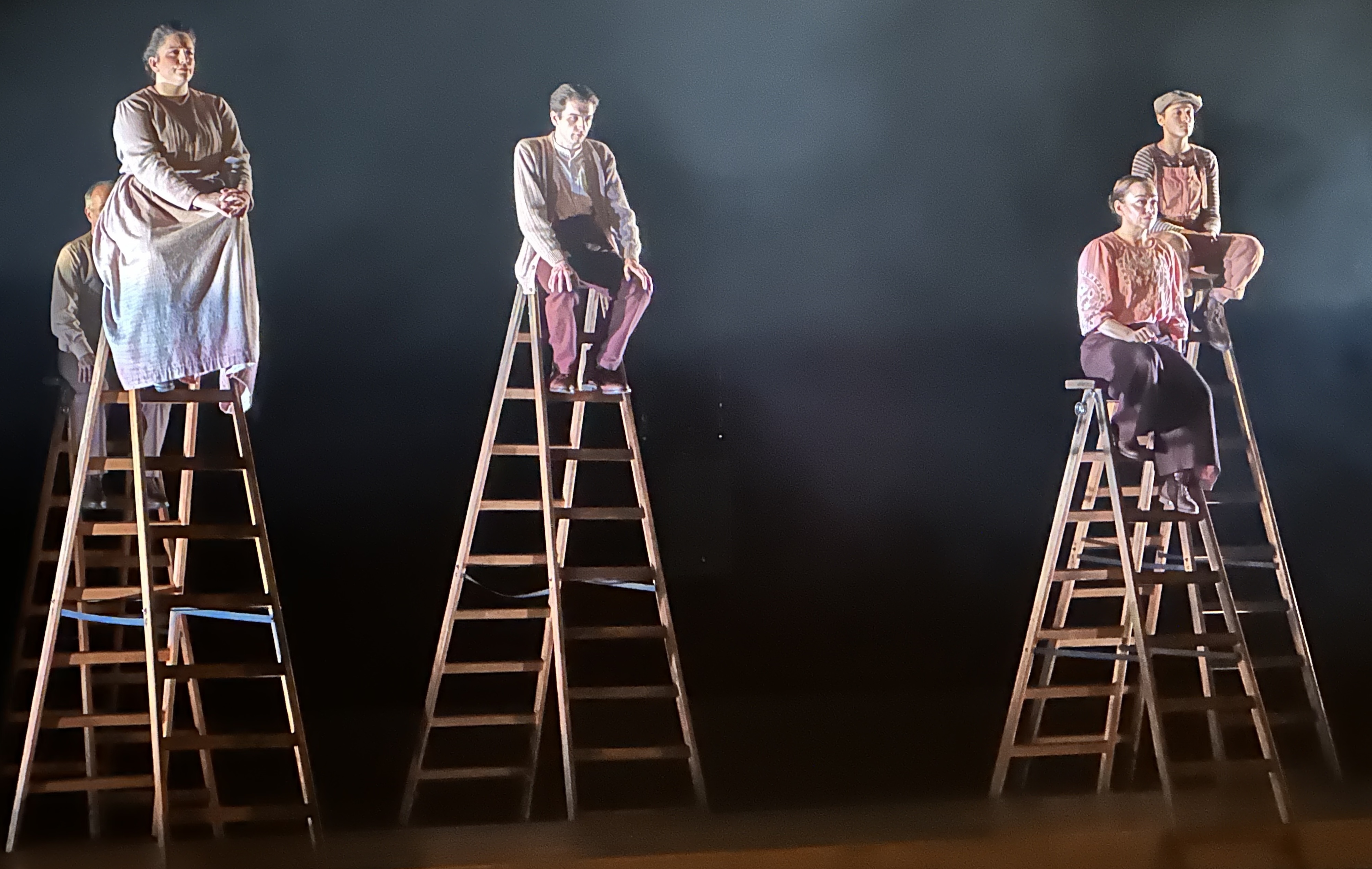
The twenty-minute interval precedes a distinct shift in tone. The third act (“Death and Eternity”) is almost unbearably poignant. Nine years have passed – and so have some of Grover’s Corners’ inhabitants, including Mrs Soames (Christina Modestou) and alcoholic choir director Simon Stimson (Rhys Warrington). Emily’s little brother, Wally (Aisha-May Hunte), has died of a burst appendix, while George’s mother has succumbed to pneumonia. Their ghosts perch on ladders in the cemetery, looking down on their loved ones as they grieve. The spirits lament the living’s incapacity to notice the small moments, their lack of appreciation for the minutiae of life.

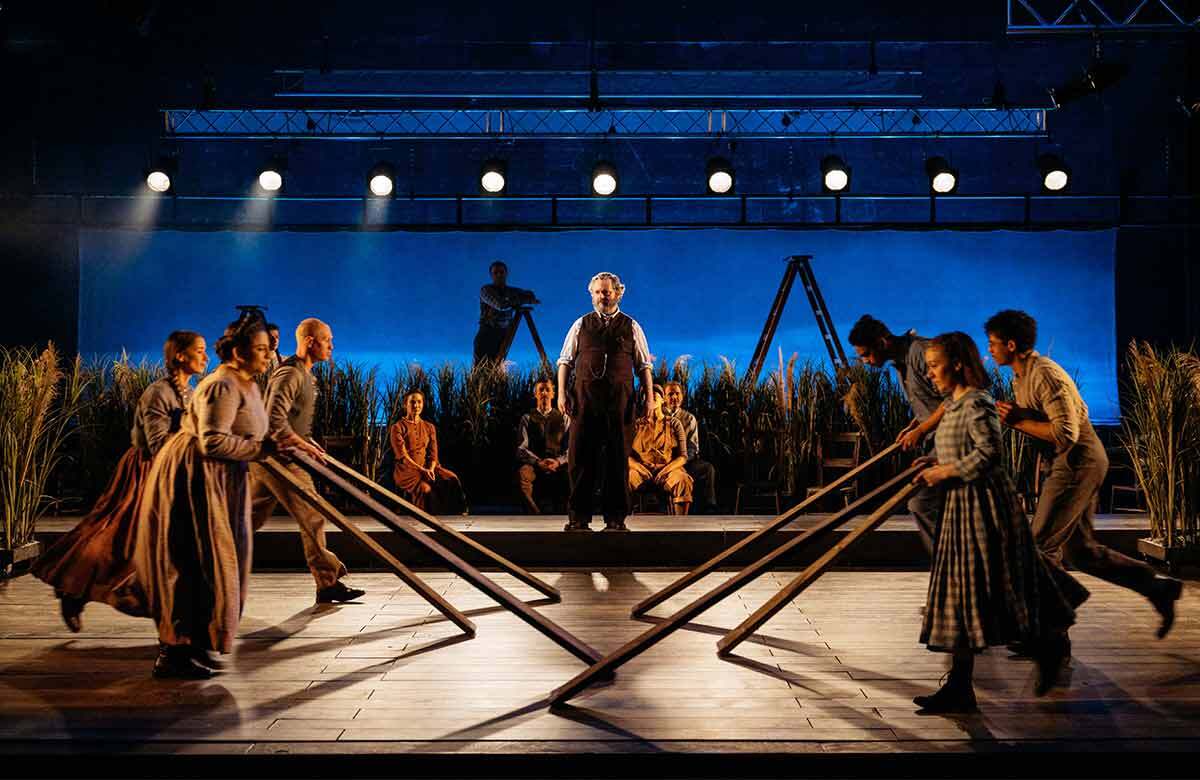
Director Francesca Goodridge manages the pace well: although Grover’s Corners is a tranquil town, the piece still feels vibrant and active, even as it slows down for its final, contemplative third. Movement director Jess Williams’ transitions emphasise the sense of community, as the cast work together to move the simple props, constructing ephemeral churches, public buildings and people’s homes, lending a meditative quality to the play.

In accordance with Wilder’s stage directions, the minimalist set works well: it’s amazing what can be achieved with a few planters and some planks of wood. But I’m especially impressed by the decision to use naturalistic props for the section when a ghost (I won’t reveal whose) goes back to relive a fondly-remembered birthday. Until now, everything has been mimed or suggested, but suddenly we have a real table, real chairs, actual bread dough being kneaded, bowls, cutlery, table cloths, the lot. I love the simplicity of the symbolism, as the ghost appreciates the details that the living take for granted.

Our Town is a triumph, a testament to what can be achieved when rich people give back to the communities that raised them.

Da iawn, Welsh National Theatre. And diolch yn fawr, Michael Sheen.

5 stars

Susan Singfield

Salty Irina

10/08/23

Roundabout at Summerhall, Edinburgh

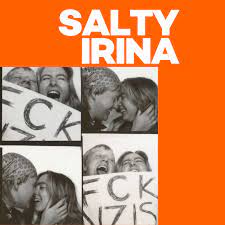
Eve Leigh’s Salty Irina, isn’t your average tale of first love, nor even of coming out – although it is both of those things. Instead, a much darker, more frightening theme emerges as Eirini (Yasemin Özdemir) and Anna (Hannah Van Der Westhuysen) embark on a reckless mission… 

They’re teenagers, so of course they think they’re invincible; of course they’re likely to take risks. Sitting in the audience, several decades ahead of them, I can only watch in horror as they convince themselves that infiltrating a far-right festival is a good idea. From a grown-up, liberal vantage point, it’s clearly a bad idea for anyone. For an immigrant? For lesbians? For two wide-eyed young girls with more idealism than guile? It can only end badly.

But Eirini and Anna want to do something. There’s been a spate of murders in their (unspecified) city and the police don’t seem to see the link. The victims are all immigrants, but – because they’re from different ethnic groups – each is being treated as an isolated case. So when the girls learn that a fascist group is holding an event nearby, it seems logical to them to don disguises and investigate. An older hippy in their squat says what the whole audience is thinking: “Don’t go!” But when have teenagers ever listened to boring know-it-all adults telling them what to do? 

It’s not until the final third of the play that Jana (Francesca Knight) appears. We’ve seen her before, acting as a stagehand, passing props, clearing the set; it’s a neat conceit. The threat she poses has always been there, in the shadows, but it’s only when the girls are isolated and vulnerable that she reveals herself.

If Eirini and Anna were older, the plot would be fantastical. Honestly, at first I think the whole thing is a bit far-fetched, but then I google ‘far-right festivals’ and discover that they really are a thing, even here in Scotland. (God knows what marketing I’ll be faced with now, as the internetty algorithms get to work.) But their age makes me ache for them: I absolutely believe that they would step boldly, naïvely into the fray, convinced that they are doing the right thing. 

Debbie Hannan’s direction is fresh and contemporary, all minimal props and non-literal interpretation. It feels as youthful as the play’s protagonists, the transitions snappy and impetuous. 

Van Der Westhuysen and Özdemir (last seen by us in Autopilot and You Bury Me respectively) are perfectly cast, embodying the journey from youthful innocence to devastating experience. 

4.5 stars

Susan Singfield

You Bury Me

08/03/23

Lyceum Theatre, Edinburgh

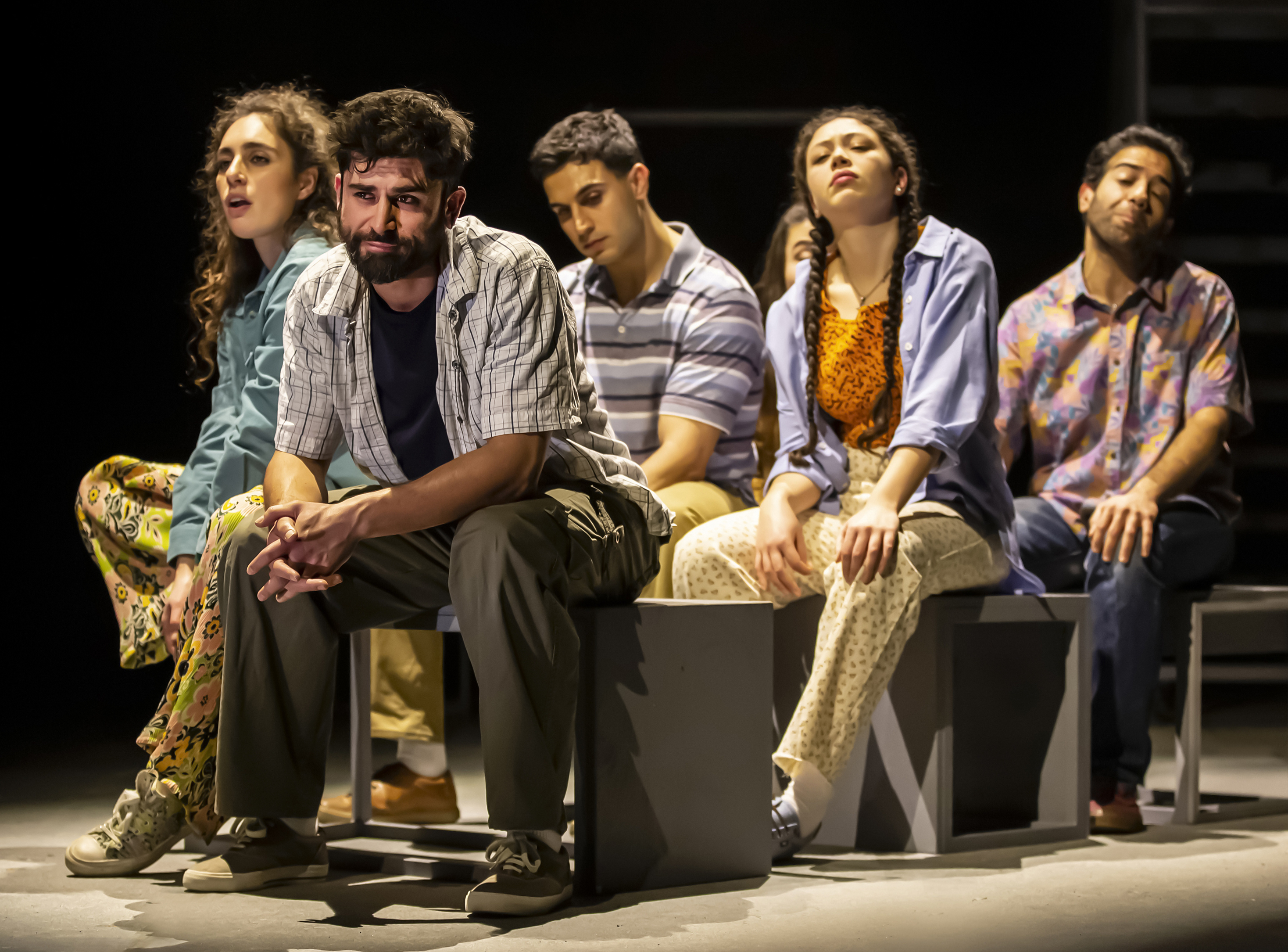
You Bury Me is a play about six young Egyptians coming of age in the aftermath of the Arab Spring – “a generation emerging from a national trauma, determined to live and love freely”. It’s a fascinating premise. I’m aware of the Arab Spring, of course; I read the news. But I don’t know anything about life in modern Egypt, nor of the ‘what happens next’. I’m keen to learn more.

Written by an anonymous playwright – under the alias ‘Ahlam’ – and directed by Katie Posner, the play is a co-production with the ever-dependable Paines Plough (among others), and the winner of 2020’s Women’s Prize for Playwriting. Its strength lies in the verve and vitality of the characters, all brimful of youthful energy, fighting to find their places in a changing world.

Alia (Hanna Khogali) and Tamer (Moe Bar-El) have both just graduated from university, but they’ve little experience of sex and relationships. They’re in love and want to get married, but it’s not as easy as all that. Alia is Muslim and Tamer is Christian; Alia’s family, who all work for the police, will not be pleased – and Cairo is a city where displeasing the police can have serious consequences…

Meanwhile, eighteen-year-old Maya (Yasemin Özdemir) is making the most of her last year of high school, attending every party she can, and making out with lots of guys. She’s bubbly and outgoing, and doesn’t care a jot about her ‘reputation’. New girl Lina (Eleanor Nawal) is shy and insecure, but opposites attract sometimes, and the two soon become firm friends – but is this enough for Lina?

Osman (Tarrick Benham) is Maya’s half brother, and he’s a political writer, publishing a blog that makes him a target for the authorities. We never see his girlfriend, Zeina, but we learn that she’s an activist too, so it’s no surprise to learn that Rafik (Nezar Alderazi) – who’s staying with Osman because his dad has kicked him out for being gay – thinks there are people watching the house. The two men fear for each other: Osman urges Rafik to delete Grindr, while Rafik wants Osman to stop writing his blog. But neither is prepared to sacrifice their sense of self in order to feel ‘safe’.

All six actors deliver lively and spirited performances, and I like the choral narration that provides context. Özdemir in particular really owns the stage; she is very charismatic, and Maya and Lina’s burgeoning friendship is always believable. Khogali and Bar-El make the most of the humour in Alia and Tamer’s fumbling sexual encounters, as well as inviting empathy for the lovers’ plight.

Although Benham and Alderazi both inhabit their roles well, their strand of the play is less satisfying, mainly because it is all told rather than shown. We don’t see any of Rafik’s dates, nor his family disowning him. Neither do we find out anything about what Osman is actually writing: the political discourse here is frustratingly vague. What is he saying that is so inflammatory, and how much danger is he really in? Without these details, Osman’s rage at his blog being deleted lacks context, and Rafik’s big emotional scene doesn’t elicit as much sympathy as it ought.

You Bury Me is eminently watchable – in the same way as an episode of Friends or Skins – and there are plenty of laughs, as well as moments of sadness. Ultimately, however, I don’t think it quite delivers on its political promise.

3.3 stars

Susan Singfield