Vanessa Kirby

The Fantastic Four: First Steps

24/07/25

Cineworld, Edinburgh

The world of superhero movies has become an unpredictable place. DC’s recent Superman film was dismissed as a sprawling mess by the majority of critics (me included), but proved to be a palpable hit with the public – which makes me somewhat nervous to announce that, for my money, Marvel’s latest offering is the studio’s best effort since Guardians of the Galaxy. Which probably earns it a one way ticket to ignominy.

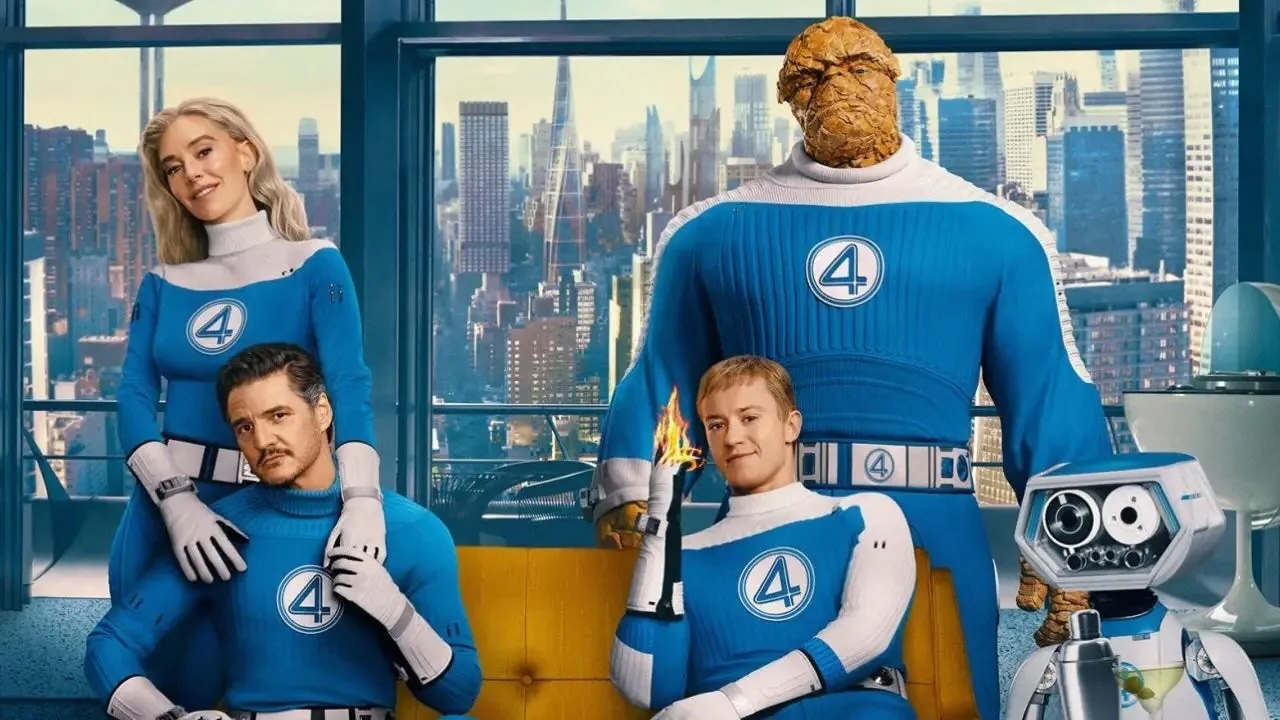
Stan Lee and Jack Kirby’s first superhero team, The Fantastic Four, have had a pretty rocky ride on the big screen. Previous attempts to capture their antics have been met with howls of derision from Marvel fans and a distinct lack of bums on seats at the box office. First Steps might suggest an origins movie, but this film begins four years after the space flight that dramatically changed the lives of its four crew members. That mission is only alluded to in a brief television interview, introduced by Ted Gilbert (Mark Gatiss). Now, Reed Richards (Pedro Pascal), Sue Storm (Vanessa Kirby), Johnny Storm (Joseph Quinn) and Ben Grimm (Ebon Moss-Bachrach) have been widely accepted as the Earth’s protectors. But, in a shot of realism rarely seen in this genre, married couple Reed and Sue are about to have their first child and are going to have to learn to go about their super-business with a baby on board.

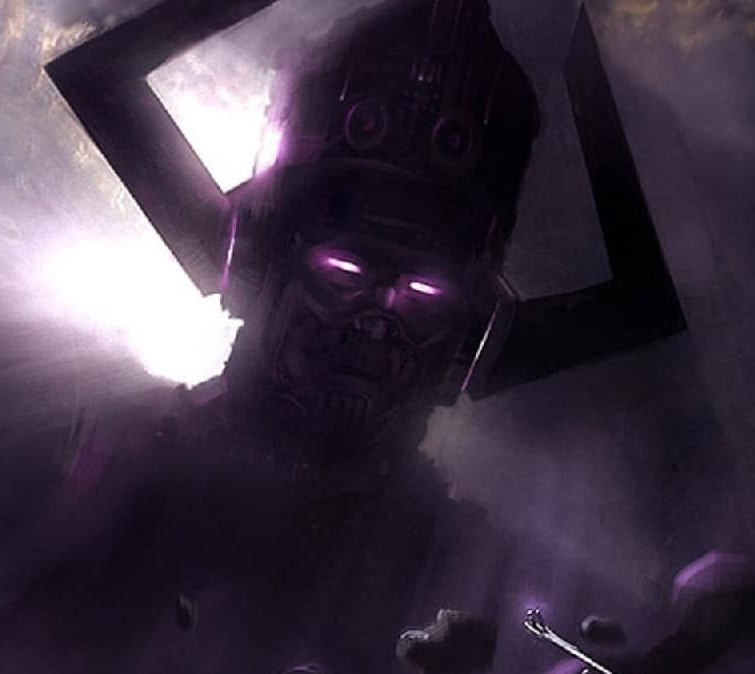
New York City receives an unexpected visit from Shalla-Bal (Julia Garner as the ex-girlfriend of The Silver Surfer, Stan Lee’s oddest hero), who points out that Earth is soon to be… ahem… eaten by Galactus (Ralph Ineson). He’s a suitably gargantuan alien, who has already gobbled up several other luckless planets and has made sure to leave room for pudding. It’s up to the four superheroes to devise a plan to save the world and carry it out, whilst taking care of new arrival, baby Franklin.

So… no pressure.

While the storyline is as batty as we’ve come to expect from Marvel, what really works here is the film’s overall aesthetic, which locates the story in an alternate nineteen-sixties (the era in which the source comics were conceived and created). The ensuing world-building is delightful, with that kooky style applied to every last detail. This results in a futuristic world where, for instance, mobile phones don’t exist. Cinematographer Jess Hall ensures that everything is filmed in vivid, eye-popping hues, while director Matt Shakman keeps the action propulsive enough to ensure that audiences don’t have time to consider how silly the storyline is.

The characterisations of the four leads are nicely handled, particularly by Pascal, who makes his Reed Richards a nerdy number-cruncher, who loves nothing better than scribbling equations on a chalkboard. The dialogue achieves just the right mix of funny and heartfelt, even if it did take seven writers; and for once, there aren’t too many characters to get a handle on. While I generally complain when everything comes down to a climactic punch-up – and this film is no exception to the rule – this one doesn’t overstay its welcome and, in its final furlong, manages to crank up some genuine moments of suspense. Mission accomplished.

So yes, it’s been a while since I enjoyed a Marvel movie to this degree. We’ll see how it fares over the following weeks but, in my humble opinion, First Steps deserves to succeed. Make sure you stay in your seats for the mid-credit sequence announcing… well, you’ll have to go and see for yourselves.

4.2 stars

Philip Caveney
Napoleon

25/11/23

Cineworld, Edinburgh

Over his long career, Ridley Scott has taken on all manner of subjects, in pretty much every genre you can name. It’s interesting to note that his very first feature film, The Duelists, was set during the Napoleonic era, so perhaps it was only a matter of time before he returned to the period and took on the story of the little Corsican – a subject that has brought many other directors to their personal Waterloo. In this particular case, it’s taken forty-six years to get there.

Some cinephiles will tell you that the ultimate Napoleon movie has already been realised way back in 1927, when Abel Gance produced a staggering version of the great man’s life under the same title. It was certainly remarkable and I speak as someone who sat through one of Kevin Brownlow’s restorations of the film in the early 80s – all five and a half hours of it (complete with a live symphony orchestra and several judicious toilet breaks). Compared to that, Scott’s two hours and thirty-eight minutes seems relatively jaunty.

Those who have complained that this version is historically inaccurate may be missing the point. Scott is clearly far more interested in the legend than the reality. It’s a matter of record, for instance, that Napoleon probably owes his defeat at Waterloo to the fact that he suffered from bleeding haemorrhoids and couldn’t sit on his horse – but that’s a film that nobody wants to see.

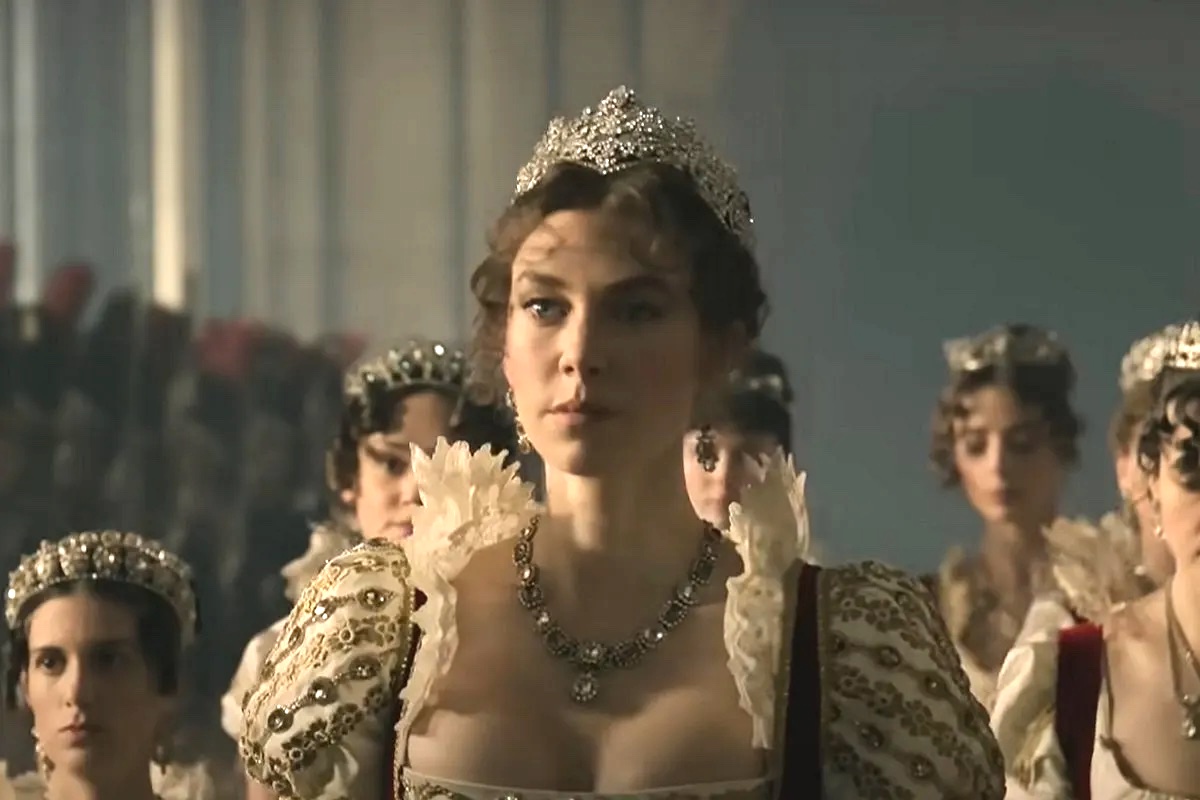
And yes, Joaquin Phoenix may be too old for this role, and surely needed some de-ageing for those early scenes, but he makes a great job of it, mining the man’s hubris and determination to the core, even descending into brattishness when taunted with the spectre of England’s superior navy. Vanessa Kirby offers up a more opaque Josephine, playing everything so close to her bosom that we’re never entirely sure if she actually loves her husband or merely sees him as her personal plaything. Their complex relationship is at the beating heart of this film and perhaps it would have been more fairly titled Napoleon and Josephine.

The inevitable result is that pretty much everybody else in the film is reduced to cameo roles, including Rupert Everett as the Duke of Wellington and an unusually hirsute Mark Bonnar as Napolean’s early confidante, Junot. David Scarpa’s screenplay makes a determined attempt to find some humour amidst all the pomp and misery.

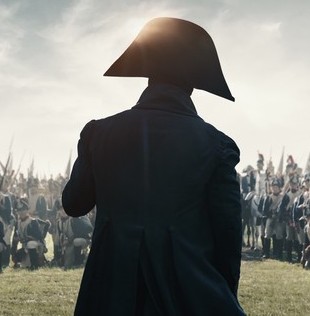
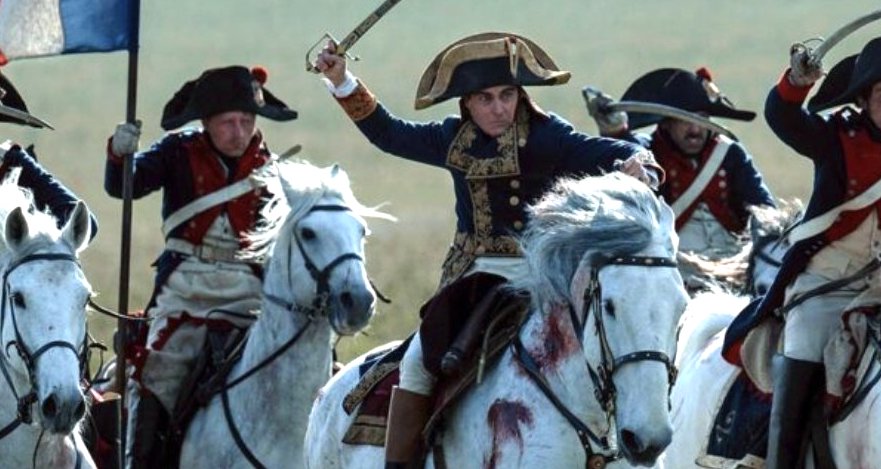
But of course, Scott is the king of spectacle and if it’s battle scenes you’re looking for, there are plenty of them here, so thrillingly recreated that I find myself wincing at every explosion, every visceral thrust of a sabre. Each of the major confrontations is depicted in a different way and I particularly relish the scenes set in the Russian winter, where Napoleon is left bewildered by the fact that his adversaries refuse to meet him on the battlefield, even choosing to torch Moscow rather that surrender it to him. This is stirring stuff, the awful choreography of destruction played with absolute conviction and I cannot think of a director who could have made a better job of it.

Producers Apple Films have already announced that a four hour plus director’s cut of Napoleon is waiting somewhere down the line, and while this has worked for Scott before with Kingdom of Heaven, I’m not convinced that a longer film can hope to add much to the exhilarating theatrical release, which has me gripped pretty much from start to finish.

4.4 stars

Philip Caveney

Mission Impossible: Dead Reckoning Part One

10/07/23

Cineworld, Edinburgh

Most long-running movie franchises start strong and steadily run out of steam. The Mission Impossible series, however, seems to be running in reverse. It kicked off way back in 1996 (inspired by Bruce Gellar’s groundbreaking 1960s TV series). Even with seasoned director Brian De Palma at the helm, the results were sort of so-so. Each successive film tried a new director with similar results and it wasn’t until Christopher McQuarrie came aboard for 2015’s Rogue Nation that the gears finally began to mesh. Indeed, 2018’s Fallout was an adrenalin-fuelled, five-star smash and I really didn’t see how McQuarrie and everybody’s favourite Sandi Toksvig-lookalike, Tom Cruise, could ever hope to reach such stratospheric heights again.

My doubts are reinforced when it’s revealed that Dead Reckoning is only Part One of a story. While I understand that films continually strive for ‘bigger’, if a tale cannot be fully encapsulated within the confines of a 163 minute running-time, then surely something is amiss?

But I’m happy to report that I’m wrong on this score. The latest instalment might not be the perfectly-crafted beast that was its predecessor, but it nonetheless runs a pretty close second.

This time around, the antagonist is not a person so much as a thing: an AI creation known as The Entity. (Brilliant timing on this, I have to say, with everyone and his dog looking at ChatGPT and predicting imminent doom.) When we first witness The Entity’s powers, it is taking out a Soviet nuclear submarine and pushing the world to the brink of destruction, so it’s pretty clear that Ethan Hunt and his merry crew are going to have their work cut out to bring this mission to a satisfactory conclusion.

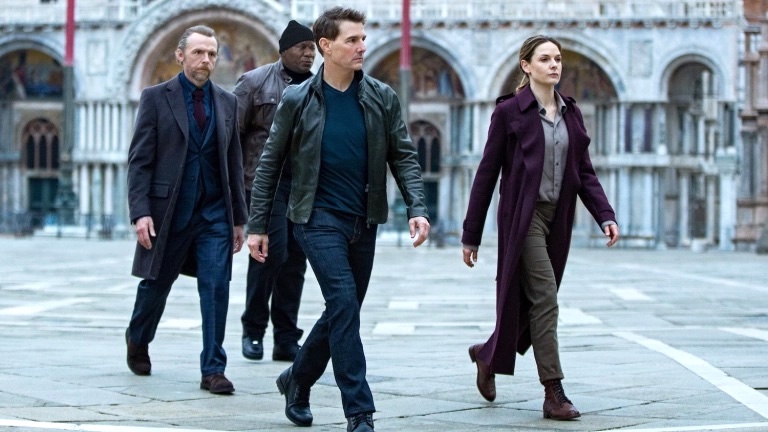
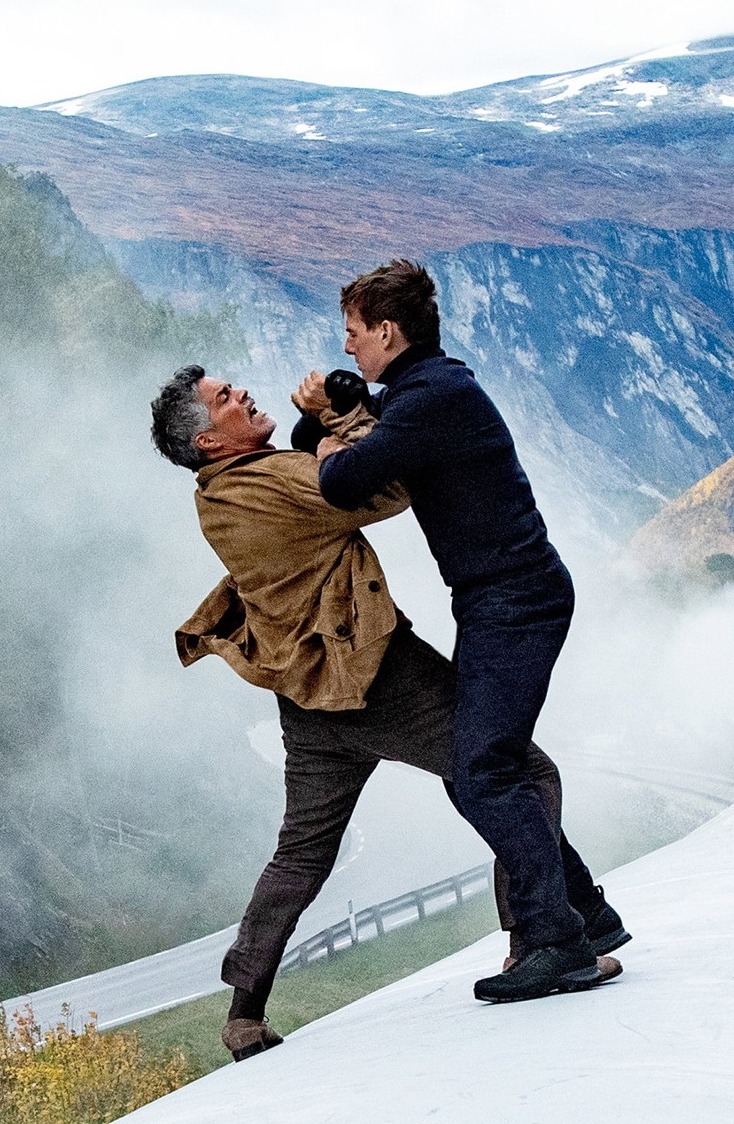
Said merry crew includes old hands, Luther (Ving James), Benji (Simon Pegg) and Ilsa (Rebecca Ferguson), and there’s also new recruit, Grace (Hayley Atwell), a talented pickpocket but – as it transpires – a pretty average driver. The boo-hiss brigade features the return of The White Witch (Vanessa Kirby), who is as smirkingly horrible as ever. The McGuffin this time around is a pair of interlocking keys, which have somehow become separated from each other. When combined, they will grant the possessor access to the sunken submarine where The Entity is currently housed. But the AI has a human ambassador called Gabriel (Esai Morales), who is accompanied everywhere by his enigmatic hit-woman, Paris (Pom Klementieff, without her Guardians of the Galaxy antennae). This formidable duo will go to any lengths to thwart Ethan.

Meanwhile, Hunt’s employer, Kittridge (Henry Czerny), continues to be as fiendish and unpredictable as the villains he’s supposedly trying to defeat. Which side is he on, anyway? I’m still not entirely sure.

As ever, the extremely complex plot is mostly an excuse to link together a whole smorgasbord of action set-pieces, which somehow manage to feel fresh and innovative, no matter how mundane they sound when listed: car chases and countdowns, punch-ups and explosions, mix-ups and murders – and, of course, Tom Cruise running across a variety of landscapes like Mo Farrah on poppers. All the usual suspects are here for your delectation and, it must be said, they are brilliantly executed. A final confrontation aboard an out-of-control Orient Express racks up the tension to such an unbearable degree, I’m virtually chewing my own fingers off.

And then…. Lalo Schifrin’s immortal theme music kicks in, the credits roll and, against all expectations, I find I’m still up for another instalment. Honestly, I can’t wait. Except I’ll have to. Dead Reckoning Part Two is currently scheduled for June 2024 and I’ll be one of the first in the queue – assuming AI hasn’t taken over mankind by then and turned us all into human kitty litter.

Just saying.

4.8 stars

Philip Caveney

The Son

15/04/23

Amazon Prime

The Son, Florian Zeller’s follow-up to the hugely successful The Father, is every bit as bleak as the first instalment in his adapted-from-the-stage trilogy. (The Mother – yet to be made into a film – is, by all accounts, no cheerier.) The Son is simpler and less complex, without any of the clever disorientation that earned its predecessor a ‘best picture’ gong. But that’s okay: the telling suits the tale.

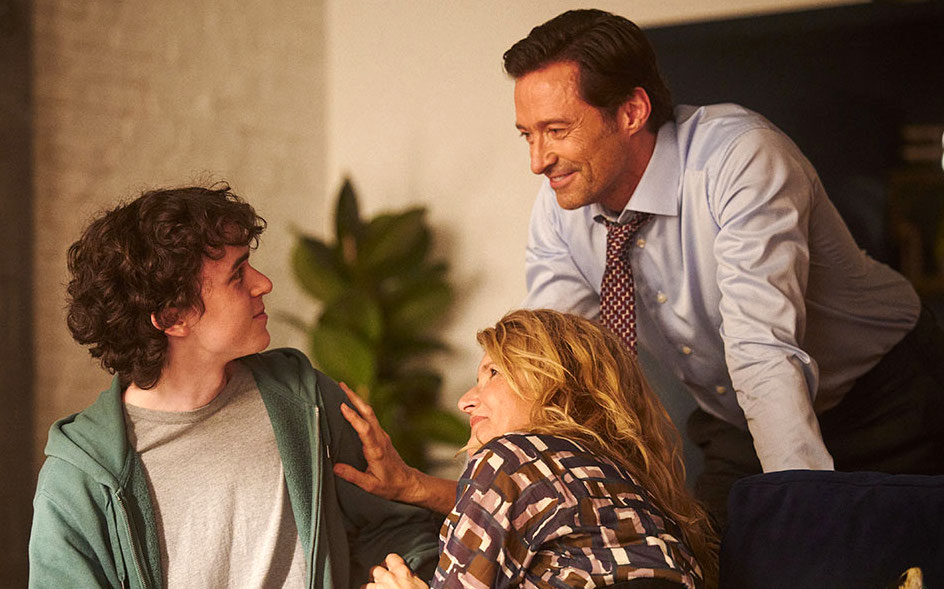
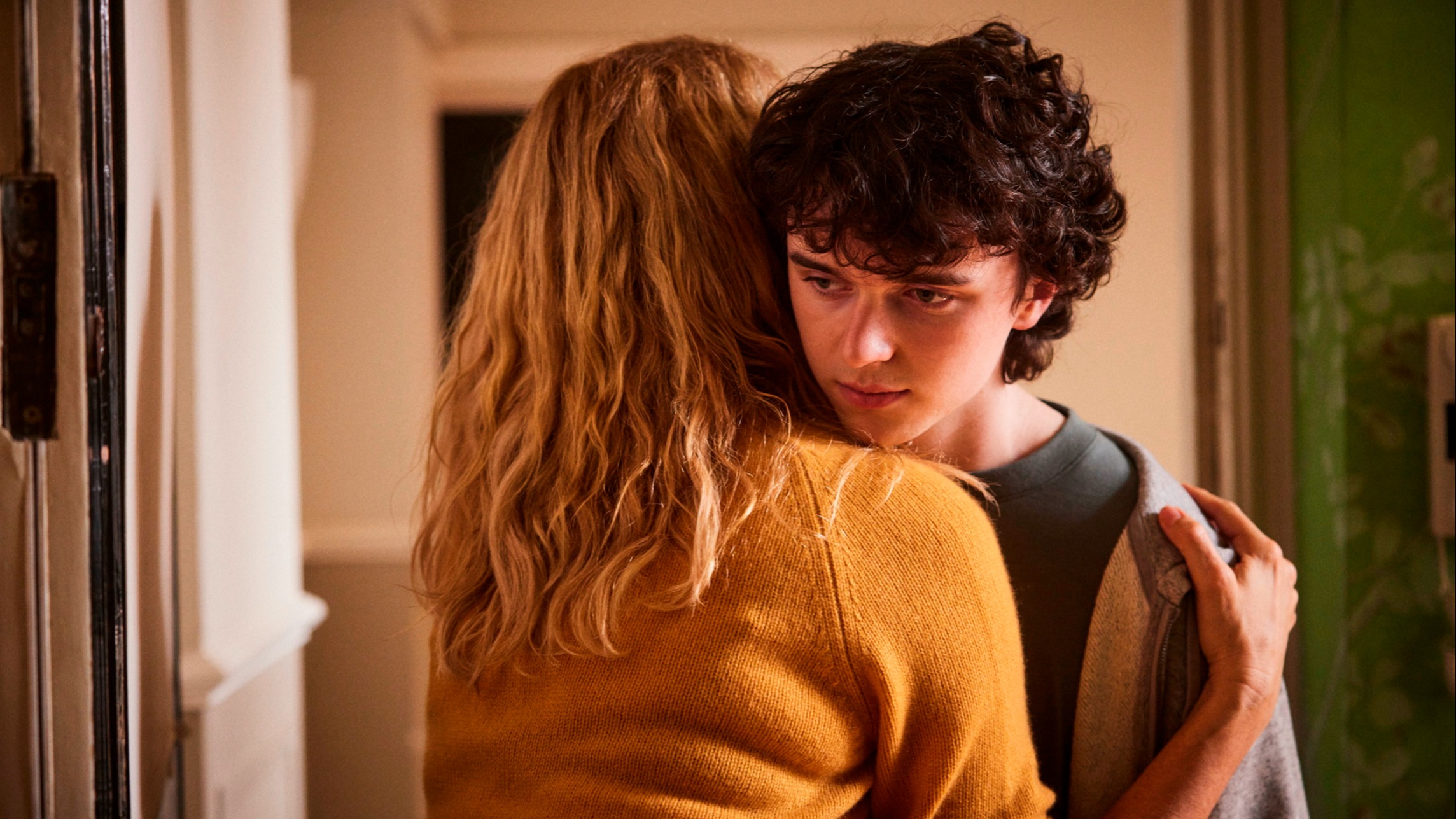
Although Zen McGrath plays Nicholas, the titular son, this is really Peter (Hugh Jackman)’s story: the focus is on his perception of his relationship with his child. Peter loves Nicholas, that much is clear, but his marriage to Kate (Laura Dern), Nicholas’s mum, is over. He’s got a new girlfriend, Beth (Vanessa Kirby), and a new baby boy, Theo (Max and Felix Goddard). The split has not been easy: Kate is devastated, unable to refrain from sharing her hurt with Nicholas, and Beth is struggling to cope with the demands of a new baby. “You’re working. All. The Time,” she tells Peter – repeatedly. Nicholas can’t cope. He feels lost and abandoned. He stops going to school and begins to self-harm. And then he asks to move in with his dad.

The Son is a detailed account of the myriad tensions that form relationships, the delicate threads we weave and break in our clumsy attempts to love. Despite all the trappings – good jobs, swish apartments, private schooling, therapists – the adults around Nicholas are clueless; they don’t know how to help him. It’s a convincing portrayal of depression seen from the outside: Nicholas is closed and inarticulate, angry that no one understands him, but unable to say what’s wrong. He veers between sullen silence and long, rambling attempts to explain his pain. None of it helps. Peter desperately wants to be a better dad than his own father (a scene-stealing cameo from Anthony Hopkins), whose ‘man up’ putdowns are breathtakingly cruel. But there’s a limit to what anyone can do. The film feels like an illustration of a tragic truth: depression is difficult to live with, and there’s not always a way to help someone ‘get over it’, no matter how much you love them.

McGrath inhabits his role convincingly, his misery etched large. Dern and Kirby also make the most of what are, it must be said, quite limited roles, circling around the pivotal father-son. But just as this is Peter’s story, so it is Jackman’s film, and he proves that he really is a triple threat. From Marvel hero to all-singing, all-dancing Showman, he’s done it all – and here, he’s demonstrating that he can do gravitas too.

Slow-paced and claustrophobic, The Son isn’t a big film like The Father. Instead, it’s a quiet and sometimes chillingly sad meditation on a young man’s mental health problems in a world that’s ill-equipped to deal with them.

The tragedy is that it seems so ordinary.

4 stars

Susan Singfield

Pieces of a Woman

10/01/20

Netflix

Pieces of a Woman is a hard film to like. It’s a powerful and, at times, harrowing account of a would-be mother’s experiences in contemporary America, highlighting the problems so often brought to light in a society predicated upon seeking blame for any failure – and where the consequences of such a failure inevitably entails a subsequent court case.

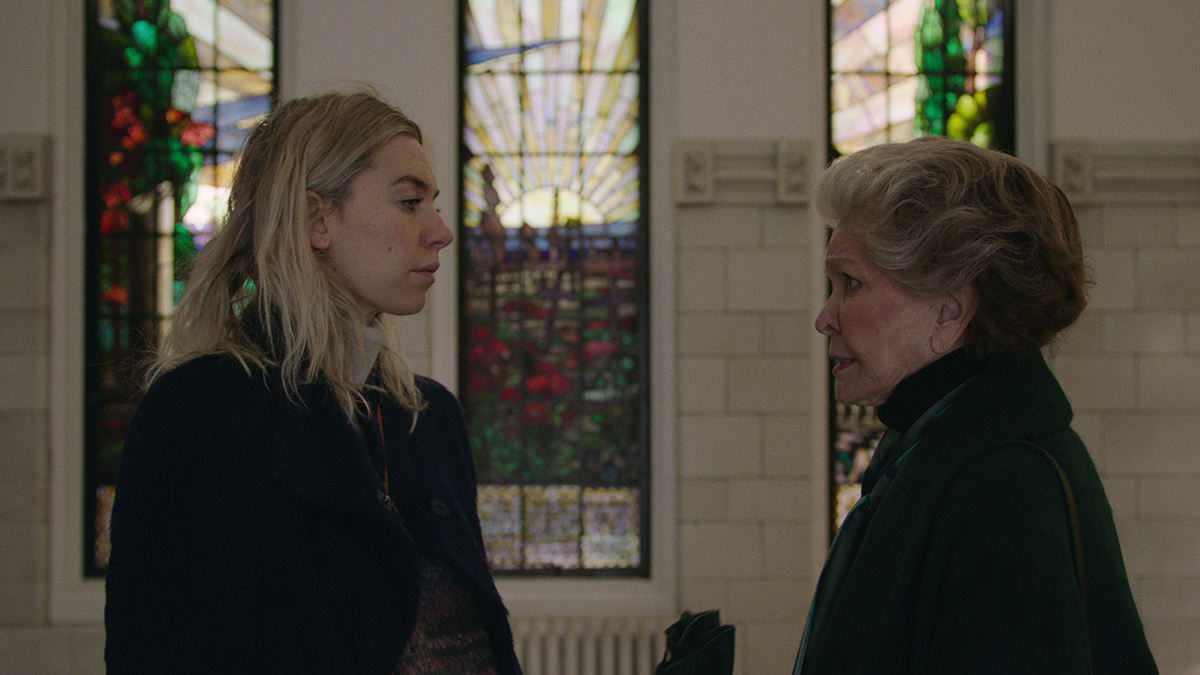
The would-be mother here is Martha (Vanessa Kirby). She and her construction-worker husband, Sean (Shia LaBeouf), are preparing themselves for the home-birth of their first child, which they already know is a girl. They are anticipating a magical experience. But, when their chosen midwife, Barbara, proves to be unavailable, a replacement is sent in the shape of Eva (Molly Parker). She appears to be perfectly competent and immediately establishes a rapport with Martha but, as the delivery develops, there are unforeseen complications, ones that ultimately lead to tragedy.

This first section is presented in real time and is compellingly performed by the cast, which only serves to make it all the more devastating – but it’s the year-long aftermath of this starting point that contains the film’s true message. As Martha struggles to come to terms with her loss, her wealthy and manipulative mother, Elizabeth (Ellen Burstyn), insists that blame must be apportioned for her daughter’s loss – and that Eva shall be the one to bear the brunt of it. The ensuing developments drive a wedge between Martha and Sean, that grows wider every day and their marriage suffers.

Writer Kata Wéber’s skilful narrative leads the viewer along a tortuous path. At first, it’s hard to like or feel sympathy for any of these characters, who all seem venal and self-centred, focused purely on their own happiness, and ready to crush anyone who stands in their way. It isn’t until the film’s closing sections that we finally find some redemption for them, and we realise that they are themselves broken by circumstance and by the overpowering weight of grief.

As I said, this is nobody’s idea of a fun night in watching Netflix, but it’s a story that will have resonance for many, and Kirby’s performance in the lead role is memorable. More than anything, it makes me thankful to live in a country where blame culture is less endemic, and where fewer lawyers lurk, waiting to monetise our misery.

4 stars

Philip Caveney