
Traverse

4Play: 4 New Plays by 4 Scottish Playwrights

12/12/25

Traverse Theatre, Edinburgh

Last year, 4Play comprised four full plays, performed over two nights. This time around, it’s a truncated affair, with excerpts rather than entire scripts. The first two pieces are only ten minutes long, while the second pair are given longer to develop their themes, each with a running time of approximately twenty-five minutes.

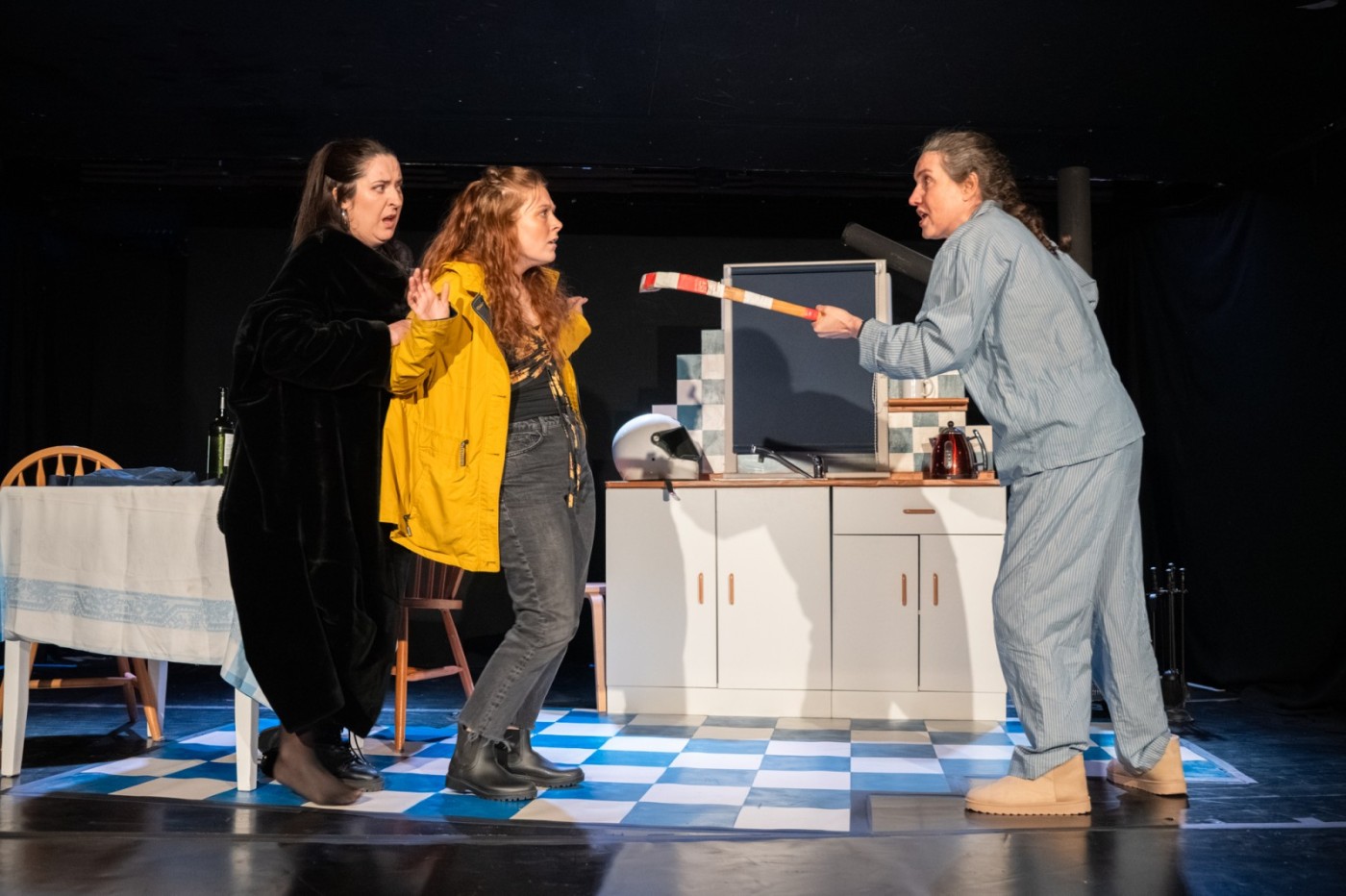
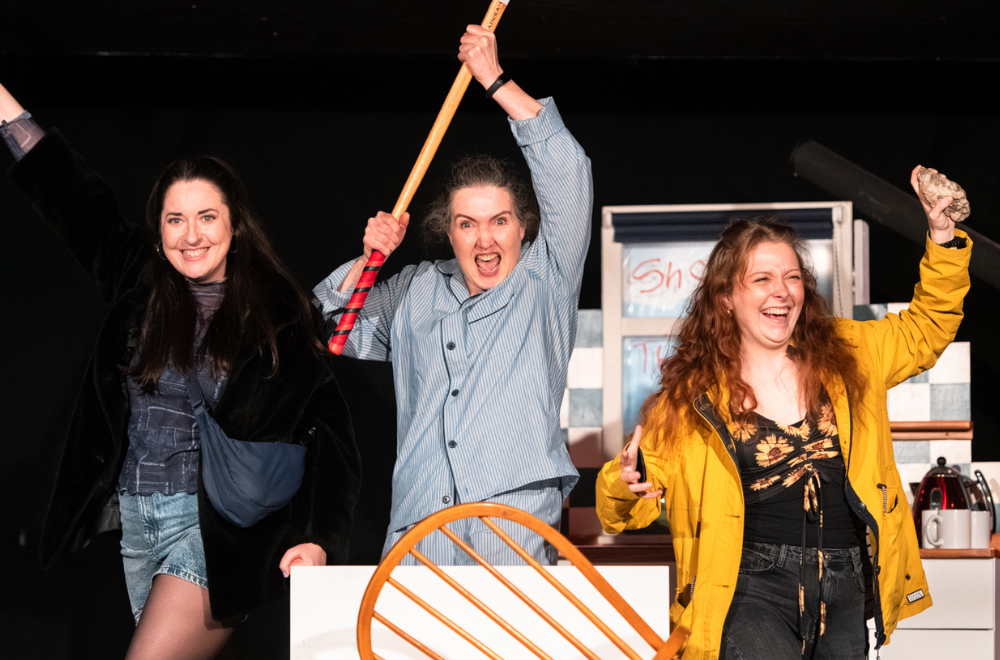
We open with a short extract from Ruaraidh Murray’s Chips, directed by Michael Nardone and Jake Sleet. Nothing to do with the California Highway Patrol, this is a fictionalised account of a true-life tale of… microchip theft. Apparently it was a thing in the 1990s. As if breaking, entering and taking apart computers wasn’t enough of a challenge, Kaz (Christie Russell-Brown) is heavily pregnant, and her partner-in-crime, Wan (Calum Manchip), isn’t exactly focused on the job…

The second piece is Brace, written by Geraldine Lang and directed by Matthew Attwood. Paul (Jack Elvey) and Lewis (Kieran Lee-Hamilton) are apprentice scaffolders, struggling to learn their trade without any real guidance. In their business, mistakes have material consequences, and it’s the people at the bottom of the pile who have to pay. Although I appreciate that the physicality of the boys’ work is key to the piece, I can’t help feeling that it’s a mistake to spend so much time constructing the scaffolding; I’d prefer to hear more dialogue and delve further into the plot.

After the interval, it’s Sunday Palms, which is by far our favourite of tonight’s plays. From the opening soundscape – an oddly unsettling aural representation of a man returning home from work to his empty flat – to the awkward dialogue that follows the unexpected appearance of a childhood friend, Sean Langtree’s script is utterly compelling. Directed by Grace Ava Barker, the piece is immediately intriguing, and I’m fascinated to know where the story leads. Why is Brian (Daniel Campbell) so alarmed by Nathan (Langtree)’s presence? Whose victory does the title presage? Langtree’s Nathan is perfectly observed – just that little bit too needy, too edgy – while Campbell nails Brian’s discomfort, his attempts to hold to societal norms in the face of Nathan’s peculiar demands.

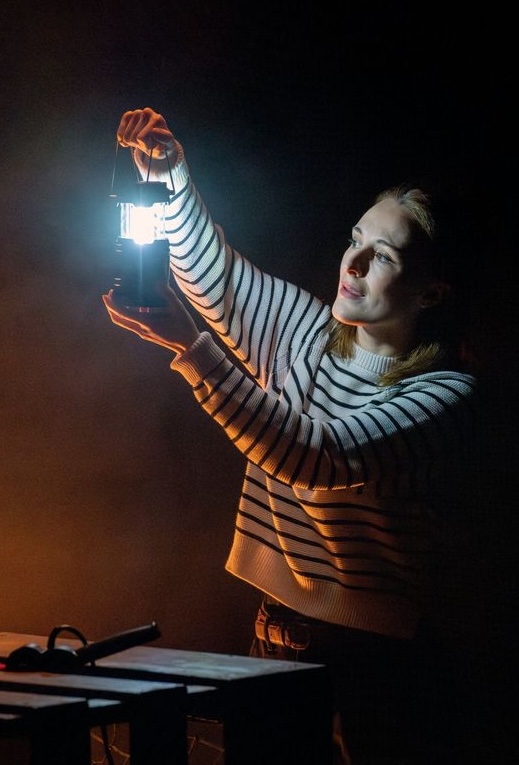
Last up, it’s Hunt by Andrea McKenzie, directed by Gwen M Dolan. We’re in the near future, and AI has taken over the cities. Mags (Deborah Whyte) and Joel (McKenzie) are yearning for a simpler life: to step away from their computers and connect with nature. The trouble is, they’re more familiar with tech than they are with tents, neither has remembered to pack the kettle – and how exactly do you light a fire? What’s more, Joel soon discovers that Mags hasn’t been entirely honest with her, and there’s more to this trip than she’s been told…

Reductions in length notwithstanding, 4Play – and other schemes like it – are vital to ensuring that new voices are heard in theatre. 4Play has had considerable success, introducing Katy Nixon’s Cheapo and Mikey Burnett’s Colours Run, which have both spread their wings and flown to critical acclaim. As Scotland’s new writing theatre, it makes perfect sense for the Traverse to support the event, and we’re delighted to have this opportunity to see emerging playwrights develop their skills.

3.2 stars

Susan Singfield

Maybe Tomorrow

14/10/25

Traverse Theatre, Edinburgh

Glamour and strife! Bigger than life!”

Siân Silver (Liz Ewing)’s showbiz career is careering towards the end of Sunthorpe-on-Sea’s dilapidated pier, where the seventy-five-year-old singer is gamely touting her outmoded razzle-dazzle to ever-smaller audiences for a measly £250 a week. It’s a long way from the stardom she dreamed of, but at least she’s still on stage, performing – until the theatre manager tells her she’s no longer required. Siân doesn’t know who she is if she’s not sparkling in the spotlight. What’s left when even the dregs she’s settled for are so cruelly stripped away?

Forced to confront her failure, Siân is visited by the ghost of Siânny past (Julia Murray). Young Siânny is brimming with hope and vitality, urging her future self to embody the spirit of her long-time heroine, Little Orphan Annie. Instead of bemoaning her hard-knock life, Siânny thinks Siân should focus on making the most of the years she has left. “Maybe now it’s time…”

At first, Siân’s having none of it but she soon realises she has nothing to lose. Why not step into the plucky red-head’s ankle socks and Mary Janes? After all, why should little girls have all the fun? The role of Annie is wasted on a ten-year-old! If she has to bow out, then she’ll do it on her own terms…

Written by Hannah Jarrett-Scott with music and lyrics by Brian James O’Sullivan, Maybe Tomorrow is a decidedly quirky piece of musical theatre, rife with heart and humour. The songs work well, paying homage to Charles Strouse’s original score without allowing it to overwhelm this play. Under Lesley Hart’s direction, Ewing shines as the protagonist (and not just because of her sequinned costumes), imbuing the fading performer with pathos. Siân is talented but unappreciated: of course she’s resentful; of course she’s angry at her producer-ex, who promised her centre-stage but left her in the wings. Murray provides excellent support, not only as the vivacious Siânny, but also as a series of minor male characters, with an impressive range of hats, accents and, um, farts.

An ageing Annie-fan myself, I enjoy this show immensely. It’s undeniably absurd, but somehow rather beautiful. It feels like the start of something that could easily evolve into a full-length musical production, where both themes and characters would have more space to breathe. Why not pop along to the Traverse this week and see for yourself? “You’re gonna have a swell time.”

4 stars

Susan Singfield

Cheapo

07/10/25

Traverse Theatre, Edinburgh

Last time we saw this play – back in December – I was a little confused by the title. This version comes with a strapline that makes things a whole lot clearer – “Cheapo: chess slang for a primitive trap, often set in the hope of swindling a win from a lost position.”

Cheapo‘s previous appearance at the Traverse was part of the annual 4PLAY programme, where four new plays are showcased over four nights. It was our favourite of last year’s quartet, and I’m delighted to have the chance to watch this new iteration.

Katy Nixon’s script still resonates: her writing is spare and succinct, capturing the teenage characters’ raw emotions with devastating precision.

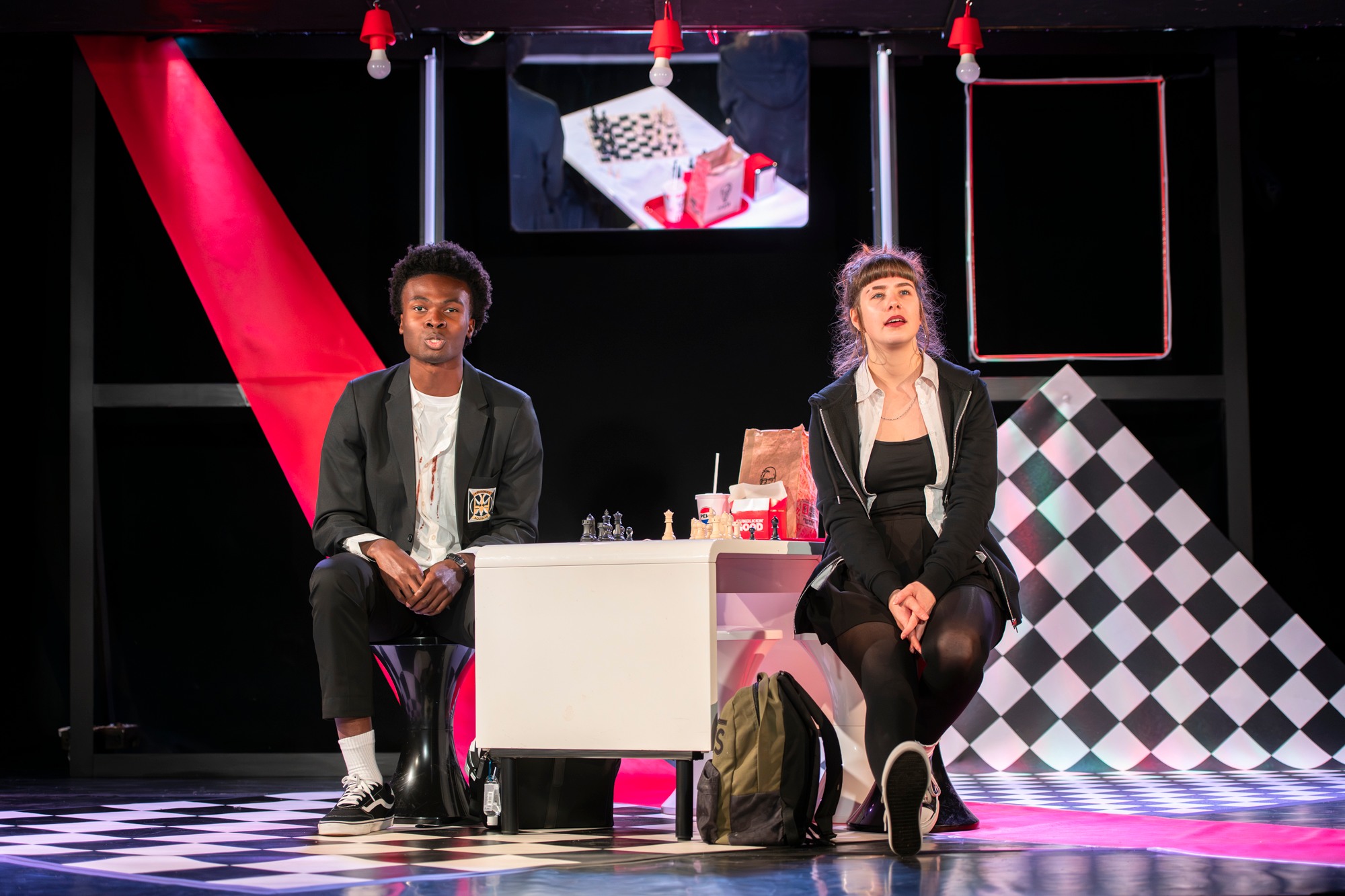
And their emotions are very raw. At a recent party, something dreadful happened to Kyla (Yolanda Mitchell) and she needs Jamie (Testimony Adegbite) to help her deal with the fallout. But Jamie isn’t prepared to renege on what he’s told the police – and he doesn’t understand why Kyla wants him to. In a not-especially-subtle-but-nonetheless-effective metaphor, they play a game of chess, arguing about their possible moves while fighting to avoid checkmate. The mounting tension is expertly undercut by some quirky flights of fancy, as the duo imagine how their lives might have played out in alternate universes – before coming back down to earth with a bump, still mired in the nightmare of their current reality.

The set, by Gillian Argo, is boldly emblematic: a crooked panel of black and white checkered flooring spreads up on to the wall, mirroring the chess board Jamie places on the table. A red carpet appears to signal the dangerous path the pair are on; again, the colour is repeated, this time in the takeaway food cartons that litter the table. It’s cunningly designed, with monochrome stools resembling giant pawns and strip lights that double as, um, light sabres.

Brian Logan is in the director’s chair this time, and the piece is perfectly paced, with long moments of stillness and contemplation punctuating the frenetic teenage energy. The movement is dynamic and I especially enjoy the dance sequences, as well as the way Kyla moves like a chess piece in the imaginary court scene.

Adegbite and Mitchell are perfectly cast: his earnest geek nicely contrasting with her streetwise façade. The exploration of misogyny and racism feels credibly rooted in their characters’ teenage experience, and their respective vulnerabilities and coping mechanisms are skilfully embodied.

Despite dealing with distressing themes, Cheapo is a witty and enjoyable piece of theatre, provocative but ultimately hopeful, that red carpet perhaps signifying something more positive than it first appears: an escape route for our young protagonists.

4.7 stars

Susan Singfield

Lost Lear

08/08/25

Traverse Theatre, Edinburgh

King Lear is my favourite Shakespeare play and, fittingly, Lost Lear is my favourite 2025 Fringe production (so far). Dan Colley’s interpretation of the tragedy sees a retired actor, Joy (Venetia Bowe), who is struggling with dementia, reliving her role as the eponymous monarch. The care home staff accede to Joy’s version of reality, willingly reading in for Goneril, Regan, Cordelia and the fool. It’s kinder than confronting her with the bleak, unhappy truth, says Liam (Manus Halligan) to Joy’s estranged son.

But Conor (Gus McDonagh) takes a little more convincing. He’s uncomfortable playing Cordelia. He doesn’t want to understand the play; he wants answers from the mother who gave him up at birth. Sadly, Joy is largely unreachable, and it’s only through the bard that the pair can connect.

Colley’s beautifully-conceived script intertwines excerpts from Lear with moments in the here and now, gently but relentlessly uncovering the horrors of cognitive decline. There is a stillness at the centre of the piece, belying the chaos of the “cataracts and hurricanoes” as Joy/Lear rages at a world s/he no longer understands. But there is layer upon layer here: this is as much an exploration of stagecraft, poetry and the nature of performance as it is of ageing, care work and the complexities of love. It’s not just a play to watch, it’s one to study too – and I make sure to buy the script as I leave the theatre, so that I can delve into it again after I’ve had some time to think.

Bowe is utterly compelling in the lead role: an imperious, querulous woman, quite difficult to like. But Liam and the other staff (Clodagh O’Farrell and Em Ormonde) treat her with such quiet respect that we take our cue from them, affording her the sympathy that everyone in her position needs. Halligan and McDonagh perform with absolute precision too, but theirs are very much supporting roles, the moons to Joy’s planet.

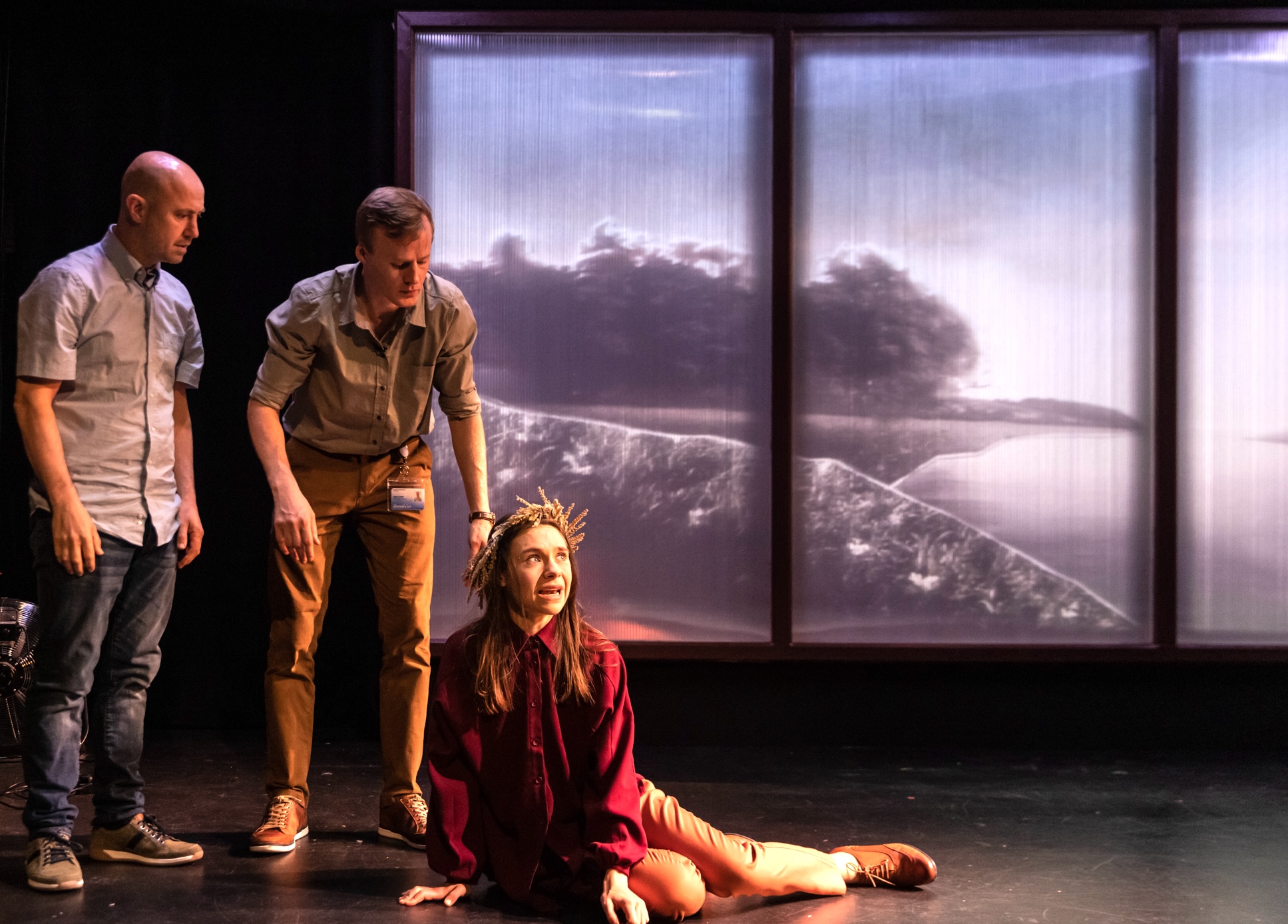
The set design (Andrew Clancy) and tech (Ross Ryder, Suzie Cummins, Kevin Gleeson) are integral to Lost Lear: cameras are used for extreme facial close-ups and there are microscopic projections too, creating the backdrops. I have rarely seen puppetry so well done as it is here, and never with such relevance. The tragedy is both miniaturised and magnified, viewed from inside and out.

As the metaphorical curtain falls, I turn to Philip and find him silently sobbing, his shoulders heaving, tears falling down his face, caught up in memories of his own mother’s battle with Alzheimer’s. Lost Lear feels worthy of its progenitor: a clever, multi-faceted drama; a treatise on the nature of life and death.

5 stars

Susan Singfield

The Beautiful Future is Coming

08/08/25

Traverse Theatre, Edinburgh

Flora Wilson Brown’s The Beautiful Future is Coming is a triptych: a thought-provoking meditation on the subject of climate change set over centuries. 

New York, 1856. Eunice (Phoebe Thomas) believes she has discovered evidence that sunlight and carbolic acid will one day have a dramatic effect on the world’s weather. She’s understandably keen to spread the word – obsessed with the notion – and she’s supported at every step by her well-meaning husband, John (Matt Whitchurch). However, nobody in the scientific community is prepared to take the word of an amateur – and what’s more, a woman – seriously.

In 2027, Claire (Nina Singh) and Dan (Jyuddah Jaymes) are based at a design agency in London where, ironically, they are working on an advertising campaign for Greenpeace. They begin a flirtation, which develops into a serious relationship. But when Dan’s mother home is flooded by a sudden, catastrophic weather event, Dan’s whole worldview is irrevocably tainted.

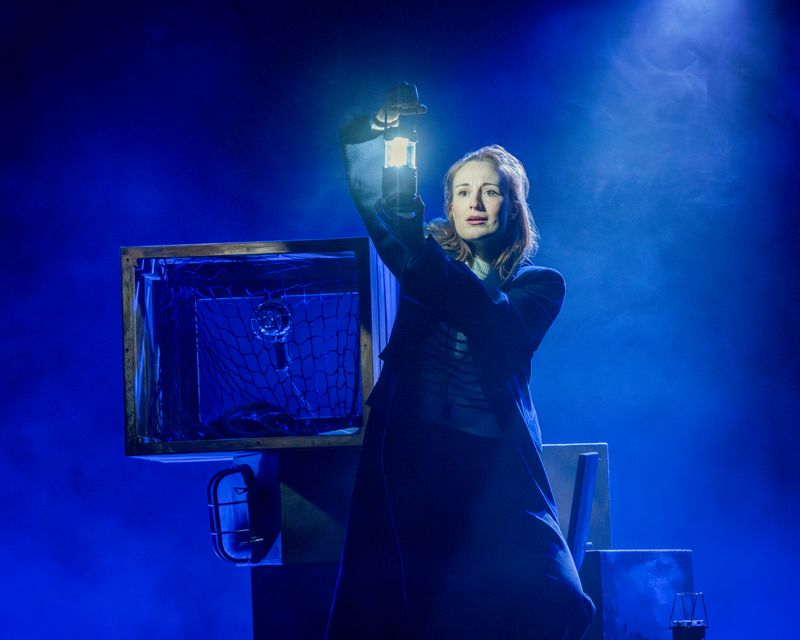
In 2100, scientists Malcolm (James Bradwell) and Ana (Rosie Dywer) are trapped in a research centre in Svalbard, Norway, where a storm has been raging for months. Ana is trying to conduct experiments on weather-resistant strains of wheat – and getting precisely nowhere. She is heavily pregnant and beginning to wonder if she can make it to safety before her baby arrives…

The story switches effortlessly back and forth in time, the scenes interconnecting almost seamlessly, the events occasionally echoing each other, as if to emphasise that, no matter how hard humanity tries to effect change, we hardly ever succeed. 

This complex tale is told with deceptive simplicity. The three couples move around Aldo Vázquez’s set like chess pieces on a board, while Elena Penãs atmospheric sound and Ryan Day’s lighting contribute to the play’s immersive atmosphere. For me, the only uncertain point here is Dan’s OTT reaction to his mother’s fate – there’s been no hint in his previously cheerful demeanour that such darkness lies within him.

But The Beautiful Future is Coming does have a profound impression on me, even if I can’t help feeling that the words ‘Don’t Hold Your Breath’ would make an apt suffix.

4 stars

Philip Caveney

She’s Behind You

03/08/25

Traverse Theatre, Edinburgh

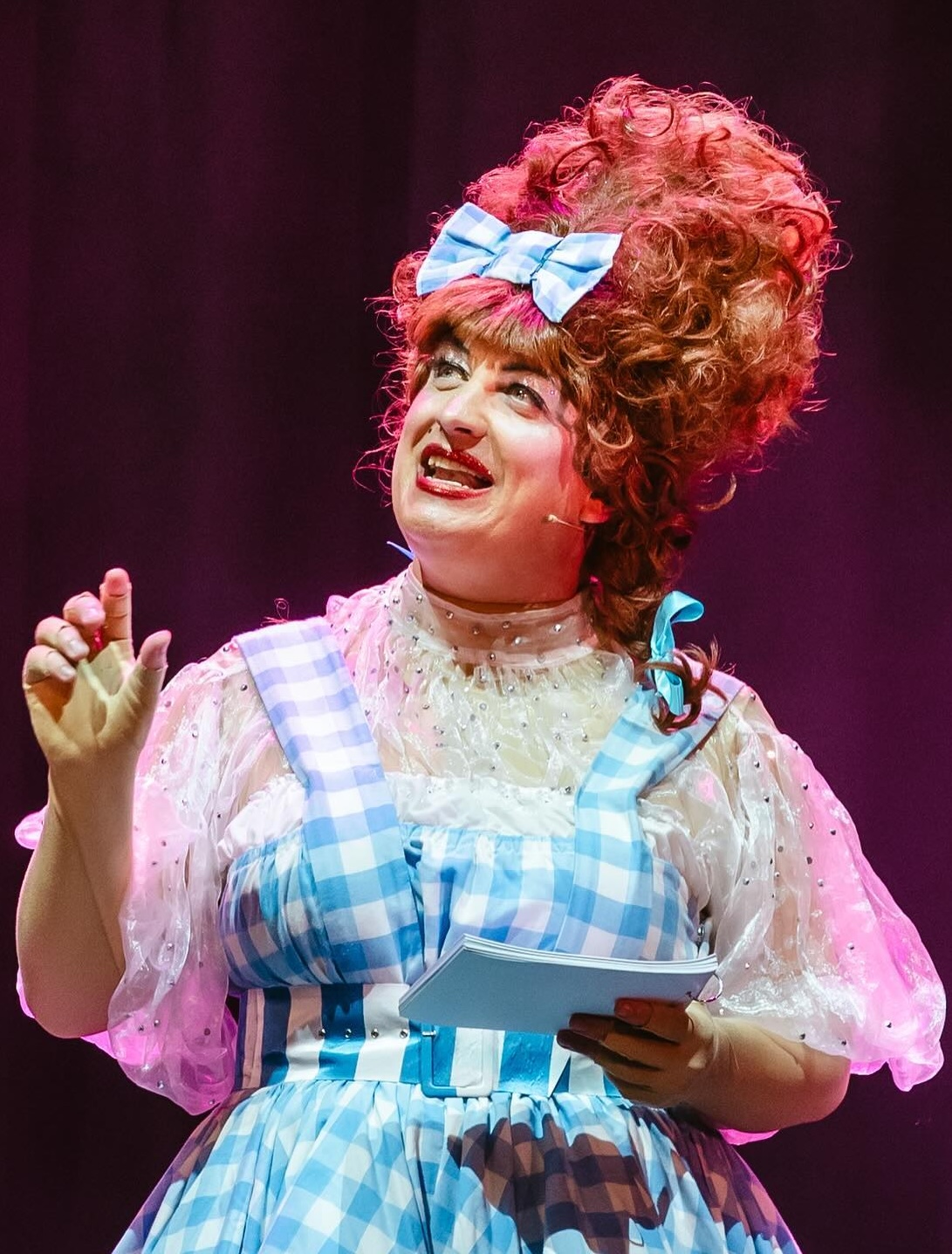
Johnny McKnight lifts the lid on all things panto in this hugely entertaining and informative one-dame show, directed by John Tiffany. She’s Behind You is an interesting hybrid, retaining all the bawdy glamour of Britain’s most popular theatrical form, while simultaneously offering a thoughtful commentary on its strengths and weaknesses. A seasoned writer and performer, McKnight has the audience in the palm of his spangly-gloved hands, eliciting gales of laughter as well as contemplative silences. He knows exactly how to tell his tale to best effect, effortlessly undercutting the more sombre moments with a raucous one-liner or comic song, carrying us along with him. It’s all beautifully designed by Kenny Miller and there’s a lightning-fast costume change (courtesy of Jennie Lööf) that will leave you breathless.

McKnight’s stage persona, Dorothy Blawna-Gale, is as warm as she is sassy, brash but never brutal – more Elsie Tanner than Cruella de Vil. “Punch up,” McKnight exhorts, reflecting on earlier iterations of his dame, where he followed in the footsteps of the Widow Twankeys and Ugly Sisters he’d so admired in his youth, making ‘harmless’ jokes about race, gender, sexuality and body size. “Times change,” he reminds us – and panto has to change with it. Some rules need to be kept – after all, the conventions of the genre date back to commedia dell’arte, a working-class art form that spurned elitism and focused on entertaining the masses – but some need to be broken.

For example, the gender imbalance doesn’t sit well any more, but most commercial panto casts are still at least 75% male, and the few women don’t get much agency, let alone the chance to tell jokes. There’s also an inherent homophobia, he tells us, which genuinely surprises me (I guess that’s my straight privilege showing). I’ve always thought of pantomime as gender fluid, sometimes sexist but never anti-gay. McKnight’s insider perspective opens my eyes, and I’m impressed by his efforts to walk the walk, writing scripts he can stand by and be proud of, serving his audiences rather than belittling them. Pantomime has survived so long by being adaptable and irreverent, so why is there so much resistance to challenging certain tropes?

But if all this sounds po-faced, then I’m doing McKnight a disservice, because – more than anything – She’s Behind You is a cyclonic blast, as big and bold as its glittering protagonist, and fully deserving the standing ovation it receives tonight.

So click your age-appropriate-but-sparkly orthotic heels together three times, and repeat, “There’s no place like the Traverse.” Dorothy Blawna-Gale will be waiting to see you. Oh yes she will!

5 stars

Susan Singfield

Night, Idiot

12/04/25

Traverse Theatre, Edinburgh

Night, Idiot promises to be a breezy comedy of manners, with a strong focus on inter-generational differences. Dani (Zoë Bullock) and her boyfriend, Paul (Andrew Barrett), have just moved into a new flat, and they’ve barely started unpacking when Paul’s mum, Ruth (Pauline Lynch), announces a visit. Zoë’s nervous: she’s only met Ruth once before and that didn’t go well. After all, it’s hardly Zoë’s fault that Paul is still working in a coffee shop, or that his great novel remains a concept rather than anything as concrete as a finished manuscript. So it’s Zoë’s job as a paralegal that pays the rent and bills; so what? That’s up to her and Paul. But Ruth has other ideas: she wants her son to fulfil his potential. And, more importantly, she wants grandchildren. Soon.

The first third is very funny, if sometimes a little far-fetched (surely no one is ever as blunt as Ruth in their criticism of their child’s partner?). But something is clearly troubling Dani…

And then things take a darker turn…

Directed by Shilpa T-Hyland, Night, Idiot is a dynamic piece of theatre: poignant, engaging and full of twists and turns. The script – by Bullock – is clever, offering clear insight into Dani’s mental anguish as she obsessively replays events, dwelling on every Sliding-Doors moment and pondering what might have been. These glimpses into the hypothetical are slick, and I like the fact that Bullock doesn’t offer any easy answers for us or Dani, and nor does she shy away from difficult themes.

Bullock and Lynch make an appealingly-fiery central duo, while Barrett ensures Paul is a sympathetic character, despite his uncommunicative nature and ultimate cowardice. Bullock in particular gets to show off her acting chops: watch out for her so-heavily-signposted-this-isn’t-a-spoiler rendition of Shrek and you’ll see exactly what I mean.

Night, Idiot is an ideal piece for A Play, A Pie and A Pint, with lots packed into the short running time. There’s emotional heft here and I find myself really rooting for the characters. Zoë Bullock is clearly one to watch.

4.3 stars

Susan Singfield

Eilidh, Eilidh, Eilidh

18/03/25

Traverse Theatre, Edinburgh

This three-hander, written and directed by Lana Pheutan, explores the rural housing crisis through the lens of drunken cousins, Eilidh (MJ Deans) and Eilidh Bheag (Chelsea Grace). The two women are in their late twenties, ready to embrace their adult lives but thwarted by the prevalence of AirBNBs on their native island, Skye. “I’m a teacher!” wails Eilidh. “I deserve my dream home…” While her sense of entitlement is quite comical – she’s been working for just a few years and her unemployed boyfriend isn’t even looking for a job – she’s not wrong in her assessment of a broken housing market, where flats are snapped up by remote investors before locals can even get a look in. But living back at her mum’s is starting to wear her down…

Her solution? To persuade Eilidh Bheag to break into a holiday let with her and then… um… Well. She hasn’t really worked out what should happen next. It just seemed like a good idea half an hour ago, when the pub landlord refused them a lock-in.

MJ Deans imbues Eilidh with lots of sass and self-righteousness, while Chelsea Grace’s Eilidh Bheag provides a calmer foil, tempering the former’s outrage with a few gentle home truths. After all, Eilidh Bheag is the one who’s stayed on Skye, while her cousin’s been living the high life in Glasgow for the past eight years. How dare she come back to the island and accuse her of pandering to tourists, being “part of the problem”? “You only care when it directly affects you,” snaps Eilidh Bheag at last, tired of being hectored. 

The altercation is disrupted by the unexpected arrival of Miss Nicille Mhicheil (Annie Grace), an elderly local resident. The dynamic changes, and an inter-generational element is added to the polemic, injecting more nuance. 

Pheutan’s direction is sprightly and the pace never drops, although the dialogue occasionally sounds a little too much like rhetoric, the issues taking precedence over the characters and their immediate situation. On the plus side, the occasional use of Gaelic serves as a reminder of the culture the community stands to lose, and also sounds very authentic (I’m from North Wales, so the pattern is a familiar one: it feels very natural to me to speak English with a smattering of Welsh phrases). 

Eilidh, Eilidh, Eilidh succeeds in raising awareness of an important problem – and even moots an answer, albeit a little simplistic.  All in all, this is a heartfelt and ultimately heartwarming piece of drama. 

4 stars

Susan Singfield

Mary: a Gig Theatre Show

20/12/24

Traverse Theatre, Edinburgh

Mary: A Gig Theatre Show takes a bold approach to the Queen of Scots’ story, weaving folk rock with poetic monologues to create a fresh and engaging perspective. While comparisons to SIX are inevitable – royal women of the 16th century reimagined in song for a modern audience – Mary is no direct descendant of the juggernaut Tudor musical. It’s altogether a much more intimate affair.

Writer/lead performer Rona Johnston plays the titular monarch, imbuing her with real humanity. It’s a pacy piece, covering Mary’s entire life in a mere fifty minutes, and it’s to Johnston’s credit that it feels neither rushed nor superficial. That said, this is no history lesson: the focus is firmly on Mary’s emotional journey and her experiences as a woman destined to endure a peculiarly complex set of circumstances.

Like the Queen, Johnston is ably supported by her band of multi-rolling Marys: Izzie Atkinson, Jodie Kirkwood, Hester Irving, Laura Coull and Alli von Hirschberg. Kirkwood provides the comic relief as Darnley, presented here as a puffed-up lech, while Atkinson’s Elizabeth I is a cold and intimidating presence.

Directed by Katie Slater, Mary: A Gig Theatre Show is made very accessible by its homespun vibe, the performers’ onstage camaraderie contrasting cleverly with their characters’ bitter rivalries. This juxtaposition is reflected in the costume design, featuring corsets and long skirts alongside tartan tights and denim waistcoats, effectively straddling six centuries.

The songs, composed by Johnston, are memorable and toe-tapping, ranging from lusty rock powered by Coull’s urgent drums to plaintive ballads that showcase the three vocalists sumptuous harmonies. A standout for me is the languorous duet Johnston performs with Atkinson, the two voices soaring as they hit the final chorus.

While it’s an impressive production in its own right, more than anything Mary: A Gig Theatre Show feels like the beginning of something: young theatre makers at the start of what are clearly promising careers. If this cleverly-written piece is indicative of Johnston’s talent, then I can’t wait to see what she does next.

4.2 stars

Susan Singfield

Detained

22/10/24

Traverse Theatre, Edinburgh

In a week when the Home Office has found the time to issue the fictional Paddington Bear with an official passport, it’s sobering to be faced with a stark reminder of the realities of the UK immigration system and the human lives caught up in it.

Playwright Michelle Chantelle Hopewell’s professional debut has a strong premise, exploring the uneven power dynamic between two friends, where a single impulsive moment of spite has a profound and devastating impact.

South African asylum seeker Yemi (Titana Muthui) is incarcerated in a detention centre, and she’s appalled to learn that she’s there because of her best friend, Bea (Laura Lovemore). The women work in the same restaurant, and Bea, catching her boyfriend in the arms of another waitress, has called the authorities to report her for being there illegally. She doesn’t know that Yemi’s visa has run out, that her ‘sister’ will get caught in the crossfire.

We’re witness to a series of visits spanning two years, as Yemi languishes in ‘jail’, refusing to open up about her traumatic past, even to the lawyer who might be able to assist her. Through her conversations with Bea, we learn how horribly dehumanising the process is, and how a simple oversight – such as not filling in a form on time – can change a person’s life. Bea is impacted too, learning to live with the guilt of what she’s done, trying – and failing – to compensate by campaigning for Yemi’s release.

Both Muthui and Lovemore are compelling in their roles, with Muthui in particular exuding a desperate dignity. Even though I want to shout at Yemi to tell the lawyer what he needs to know, I can’t help but be impressed by her quiet determination not to be forced to share her nightmares to appease others. Muthui makes this awful choice entirely credible.

Caitlin Skinner’s direction ensures that this wordy drama remains dynamic, and Heather Grace Currie’s simple set design manages to include both the barbed wire holding Yemi back and the blue skies still offering her a glimmer of hope.

Even for A Play, A Pie and A Pint, Detained is short, and doesn’t perhaps make the most of its potential, with a lot of ideas left unexplored. I’m also not convinced by the single section addressed to the audience by Yemi, which feels stylistically (but not tonally) different from the rest. I think for this to work, she would need to be revealing something we haven’t previously seen from her – a greater anger, maybe, or a deeper exploration of her situation.

A piece that asks more questions than it answers, Detained is certainly a play for our times. Let’s hope that fewer pretend bears and more actual people are afforded access to asylum over the coming years.

3 stars

Susan Singfield