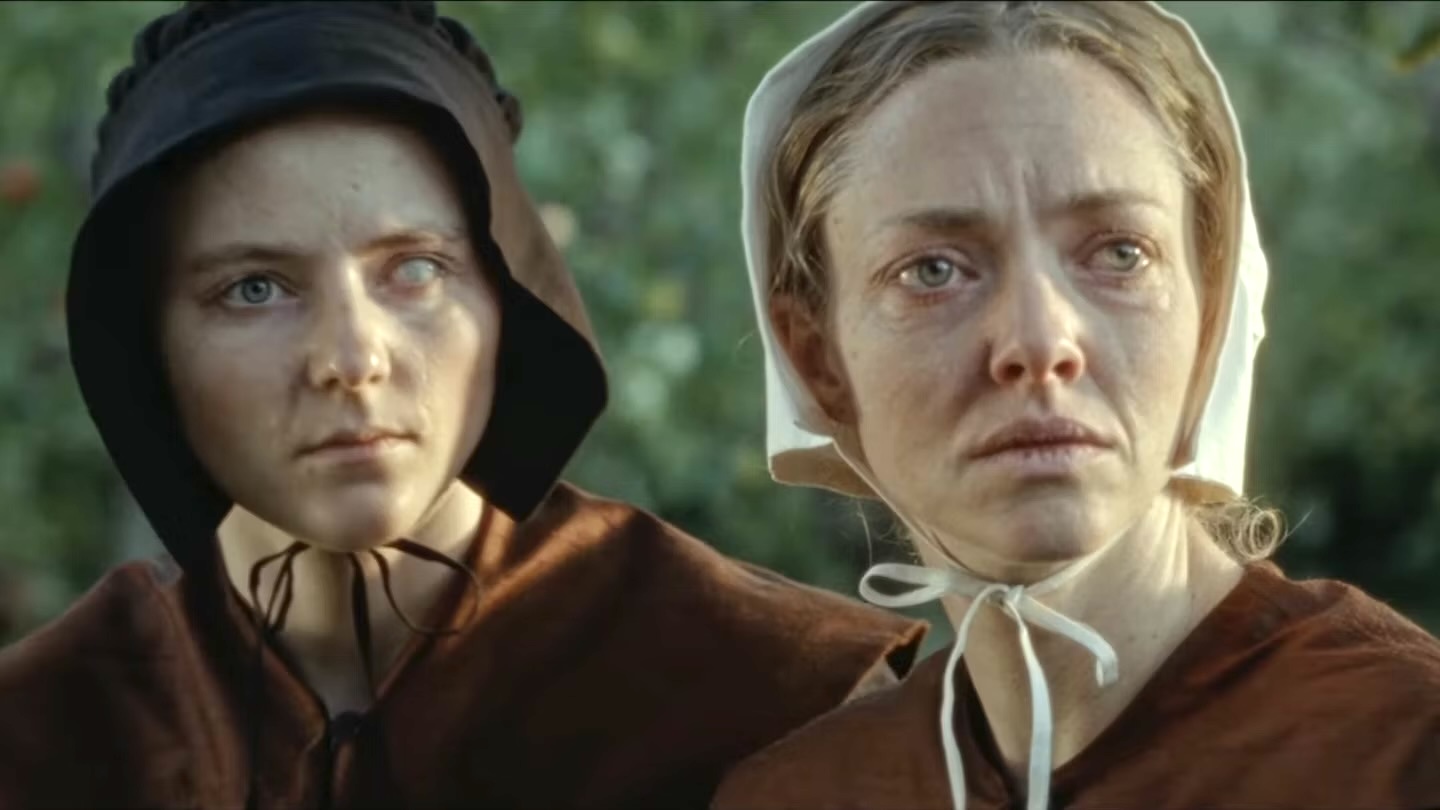
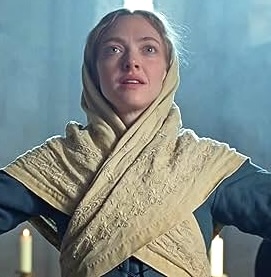
Thomasin McKenzie

Fackham Hall

14/12/25

Cineworld, Edinburgh

I’ve never fallen under the spell of Downton Abbey (even though I loved Gosford Park, the film that spawned it), so I’m more than happy to see the franchise lampooned – and that’s pretty much the motivation behind Fackham Hall. Based by an idea by comedian Jimmy Carr and his brother Patrick (and adapted by three other writers), this sprightly tale thunders along at full gallop, flinging out a whole deluge of jokes, sight gags and historical references as it proceeds. Anyone who’s come to this expecting subtlety has clearly come to the wrong place, but that’s not a criticism. I enjoy the experience and, if a joke occasionally falls flat, well it’s reassuring to know that there’ll be another one along in the blink of an eye.

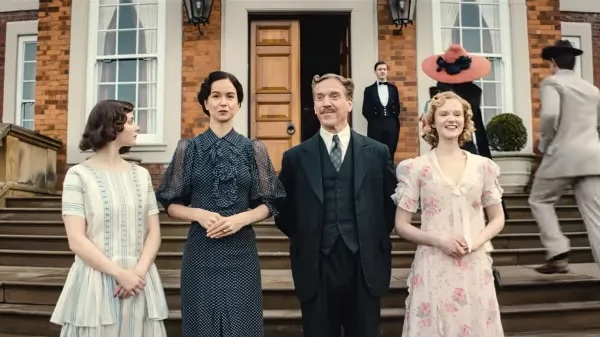
The titular hall is the ancestral home of Lord and Lady Davenport (Damian Lewis and Katherine Waterston). They have two daughters, Poppy (Emma Laird) and Rose (Thomasin McKenzie), and – in the time-honoured tradition of the upper classes – Poppy is due to marry her first cousin, the odious Archibald (Tom Felton), in order to keep their stately home in the family. But on the big day, Poppy simply cannot bring herself to do it – which inevitably puts a lot of pressure on Rose to step up and take one for the team.

But then handsome and homeless young pickpocket, Eric (Ben Radcliffe), is selected to deliver an urgent message to Lord Davenport and, on the way there, he and Rose cross paths. While this is unfortunate in one way – she’s at the wheel of a car and he’s on a bicycle – once they’ve set eyes on each other, it’s clear that romance is their destiny. But if Rose decides to be with Eric, what will happen to their family estate?

And then a key character is murdered – and the plot begins to thicken.

The recent reboot of The Naked Gun seems to have reignited the public’s taste for a decent spoof and, on that level, Fackham Hall doesn’t disappoint. I spend the film’s duration alternately chuckling, groaning and occasionally guffawing out loud at the film’s smörgåsbord of comic offerings. (The sight gags arrive so relentlessly, I’m actually in danger of missing some of them.)

Director Jim O’Hanlon keeps the pot bubbling nicely and the production is blessed with a cast of excellent actors, who appreciate that the secret of a spoof is to play everything absolutely straight. Anna Maxwell-Martin is great as the ruthless housekeeper, Mrs McCallister, and I love Tim McMullen’s deadpan performance as the butler, Cyril, who also doubles as a prototype AI assistant. Carr has a couple of funny cameos as a short-sighted vicar who specialises in making every sermon a series of tortuous misunderstandings. And I’m delighted by one of the Davenport’s house guests in particular: JRR Tolkien, who is working on what will become his best-known book, finding inspiration in the strangest places…

The big ‘reveal’ at the end will come as a surprise to absolutely nobody but, really, in something like this the usual rules of criticism feel somewhat superfluous. Some Downton diehards might clutch their pearls in outrage, but I have a lot of fun with this and no doubt many others – from both upstairs and downstairs – will find plenty to enjoy.

4 stars

Philip Caveney

Joy

23/11/24

Netflix

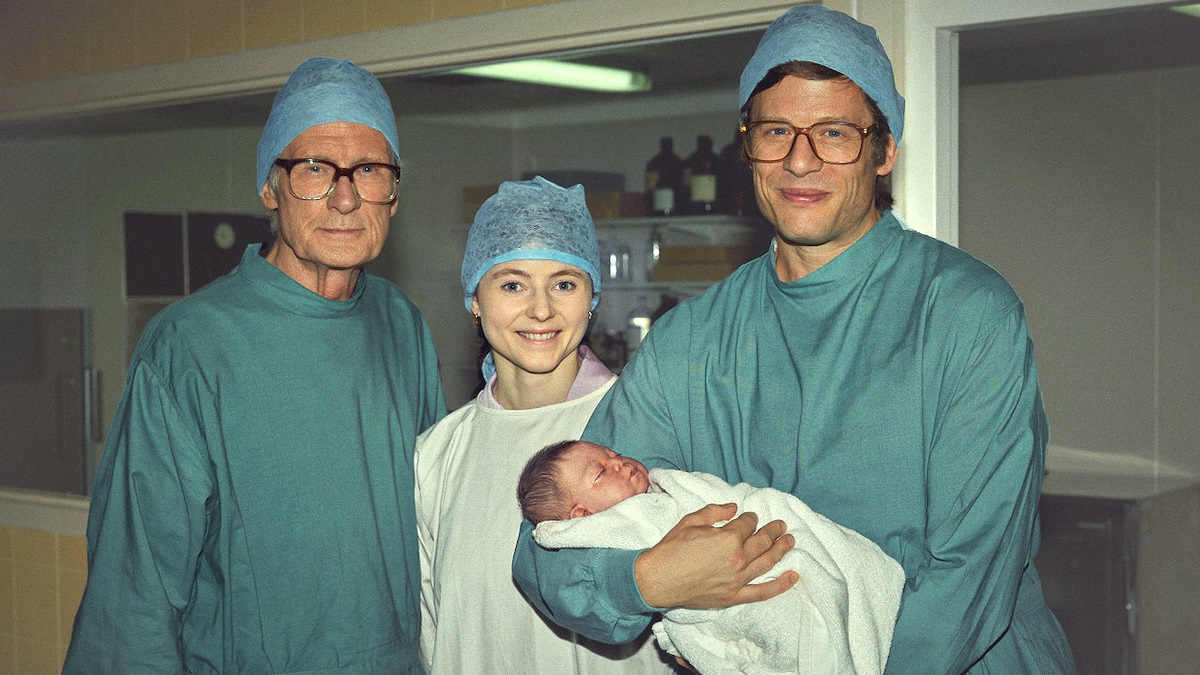
For people of a certain vintage, the name of Bob Edwards might ring a bell. He was, of course, the doctor who came up with the concept of Invitro Fertilisation and who, after years of tireless work, was behind the birth of Louise Brown – the first ‘test-tube baby’ as the press of the era dubbed her. You’ll probably also have heard of Patrick Steptoe, the surgeon whose advances in keyhole surgery made the whole process a possibility.

But the name Jean Purdy is certainly not as familiar. The third member of the team, an embryologist, Purdy worked alongside the two men (and, indeed, as this film suggests, was ultimately the driving force that brought their work to completion). And yet, to a great degree, her contribution has been largely airbrushed from history. She didn’t even merit a mention on the memorial plaque at Oldham General Hospital (Louise Brown’s birthplace) until 2015.

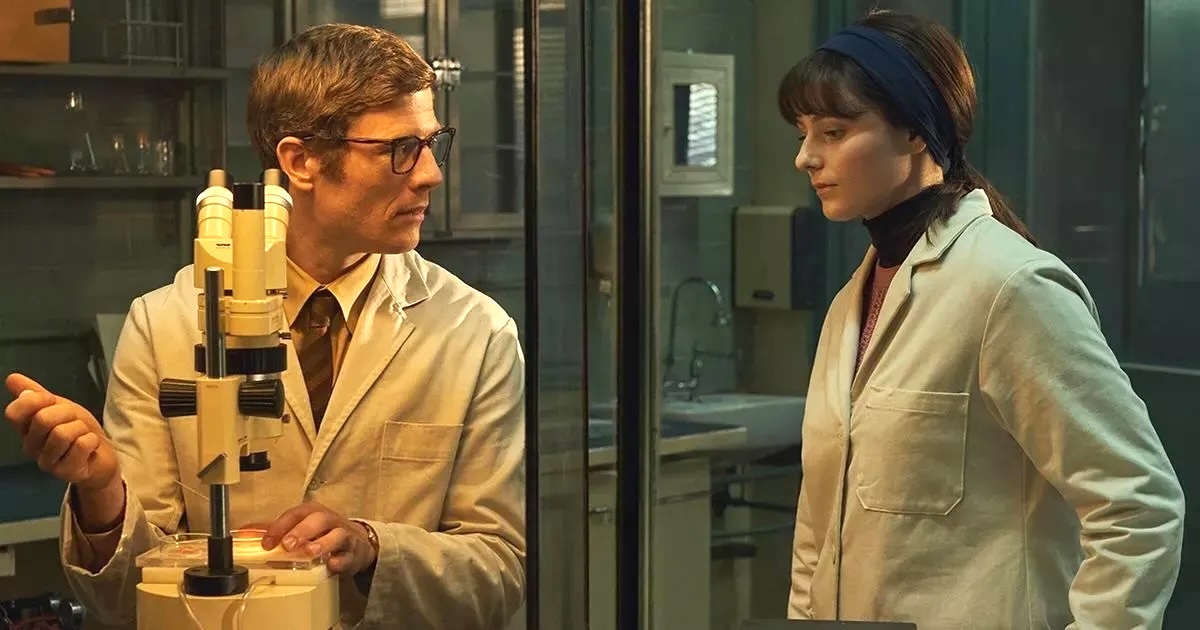
This story begins in 1965 when we meet Purdy (Thomasin McKenzie), freshly graduated from nursing school, being interviewed by Edwards (James Norton), who has recently embarked on the project that will occupy him for many years. His aim is simple: to provide an answer to all those would-be parents who have been prevented from having children because of a simple quirk of nature. Edwards and Purdy quickly become a duo. But their first goal is to enlist the help of Steptoe (Bill Nighy), who – though brusque and dismissive at first – is soon won over, largely by Purdy’s direct, no-nonsense approach.

The trio duly embark on years of experimentation as they work towards their ultimate goal. Underfunded and mocked by the tabloid press (who dub Edwards ‘Doctor Frankenstein’), it’s a long hard road – and it’s not until 1978 that their years of work finally bear fruit. Along the way, Jean’s relationship with her own mother is broken. Gladys (Joanna Scanlon) is deeply religious and sees this whole endeavour as ‘sinful’ and ‘unnatural.’ She cuts her daughter out of her life and even asks her not to attend the church they have both gone to for years. It’s only when Gladys falls ill that an uneasy alliance is finally established.

Purdy also nurtures a secret: she herself suffers from endometriosis and is unable to have the child that she has always longed for…

Jack Thorne’s screenplay is beautifully understated, as is Ben Taylor’s direction, which effortlessly catches the drab look and feel of the 60s and 70s. The three leads handle their roles with considerable aplomb and McKenzie in particular is wonderfully affecting, managing to convey her character’s inner turmoil with little more than a wistful look and a sidelong glance. As somebody who has personal experience of the benefits of IVF in the form of my much-loved daughter (and I fully appreciate how easy it was for me as the male in the relationship), I don’t mind admitting that some of the scenes here have me filling up.

Joy is a ‘small’ film, which probably accounts for the fact that it’s not competing with the likes of Gladiator 2 at your local multiplex and, instead, has gone straight to streaming. But it’s really worth the watch. It tells a fascinating true story of courage and determination.

And in its own quiet way, it’s a remarkable film.

4.3 stars

Philip Caveney

The Power of the Dog

04/11/21

Netflix

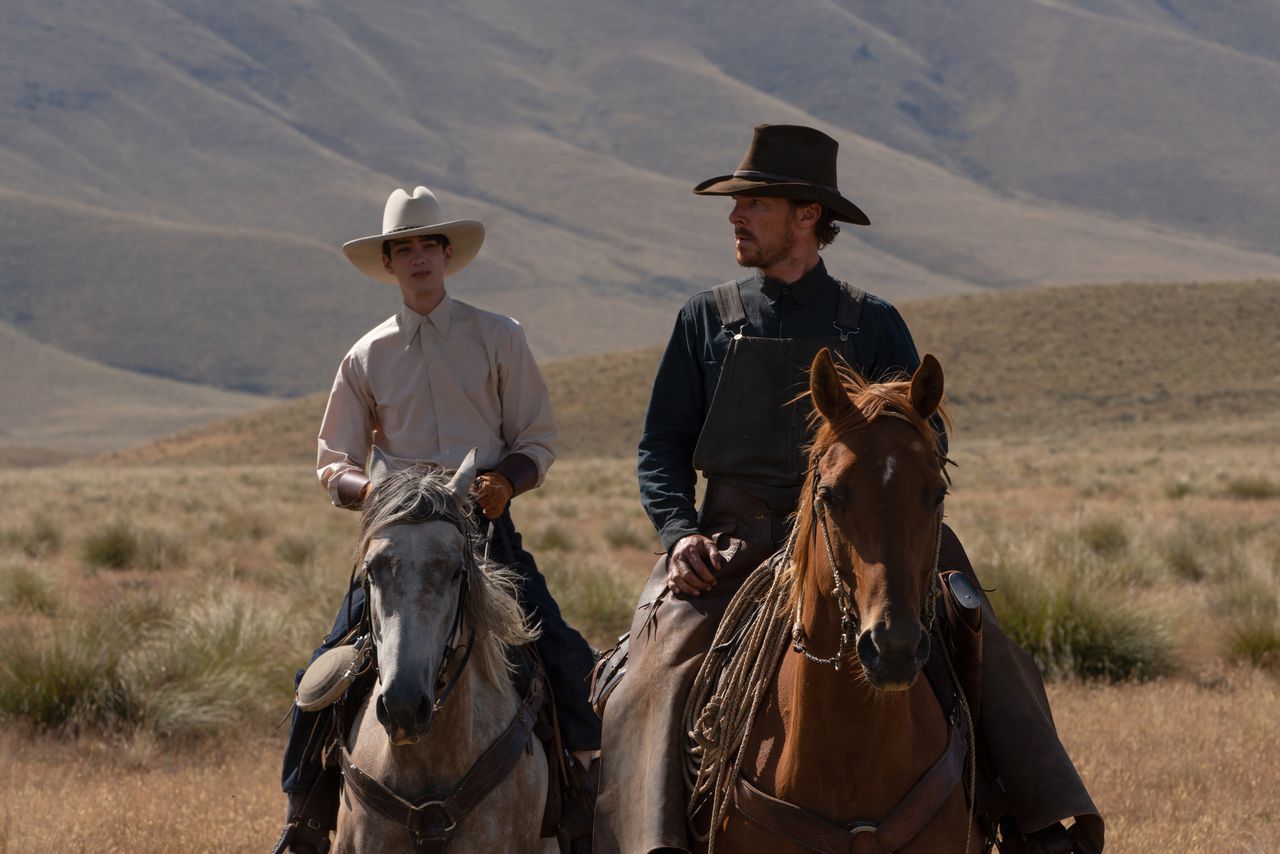
It’s been twelve years since Jane Campion directed a movie and now here’s The Power of the Dog, a ‘western,’ filmed in her native New Zealand, masquerading as Montana in 1925. It’s an interesting period in which to set a story. On the one hand we have cattle drives, carrying on pretty much as they have since the mid 1800s and, on the other, the streets are full of Ford automobiles, the new era clashing headlong with the old. Ari Wegner’s majestic cinematography recalls the best of John Ford, the machinations of mankind constantly in battle with the awesome wonders of the landscape.

It’s in this world that Phil Burbank (Benedict Cumberbatch) and his brother, George (Jesse Plemons), struggle to perpetuate the traditions of their family business, but they are dinosaurs, doomed to yield to the changing times. This is the first film in which writer/director Campion has chosen to feature a male lead and Phil is, perhaps inevitably, the consummate toxic male: cantankerous, vindictive and quick to demolish anybody who offers an alternative to his established way of life. Phil refers to his brother as ‘Fatso’ – to his face – and is not slow to heap disdain on anyone who stands in his path.

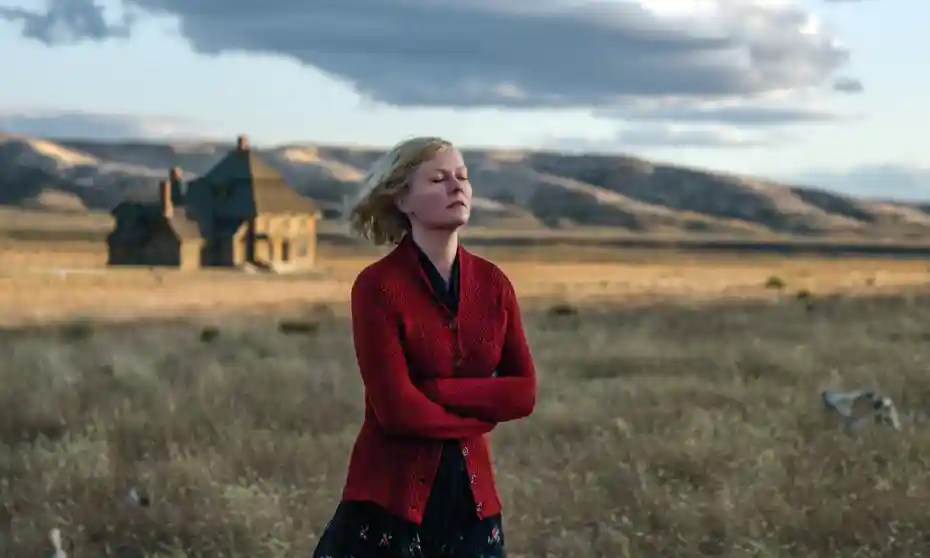
When George unexpectedly marries widow Rose Gordon (Kirsten Dunst), Phil is brutally critical of her, particularly when George encourages her to play the piano, something that she protests she’s actually not very good at. (She’s right, she’s not.) To rub salt into the wounds, Phil is an accomplished banjo player.

Rose has a son, Peter (Kodi Smit-McPhee), who has a predilection for making paper flowers and who is quietly studying to be a surgeon. Phil initially takes every opportunity to belittle him, encouraging the other ranch hands to mock him, because of his supposedly effeminate mannerisms.

But Phil has a secret. He is openly in thrall to the late cowboy Bronco Henry, the man who taught him to ride a horse, a man who he still keeps a shrine to in the stables. But as the story progresses, it’s clear that there was something more between the two of them, something that Phil hides from the eyes of the world. When Phil appears to soften and takes Peter under his wing, the scene is set for a psychological drama with a conclusion that you probably won’t see coming. I certainly don’t. It’s only after the credits have rolled that I’m able to piece the clues together.

Cumberbatch went ‘method’ for this and he inhabits the sweary, sweaty, alpha-male world of Phil Burbank with absolute authority. You’ll almost certainly despise him, which is, I think, Campion’s aim. Smitt-McPhee creates an enigmatic persona as Peter, a boy who keeps his cards close to his chest.

It’s perhaps unfortunate that Dunst’s character feels somewhat overshadowed in this male-dominated world, a woman who will allow herself to be driven to alcoholism rather than stand up for herself. What’s more, Thomasin McKenzie, a rising star after Last Night in Soho, has a thankless role as a housemaid with hardly a line of dialogue. I guess that’s simply a reflection of the era.

Plemons, as the monosyllabic George, is nicely drawn, though he’s mostly absent from the film’s second half and I miss the silent confrontation between the two brothers, where I think the story’s true power lies. Jonny Greenwood – who seems to be popping up all over the place at the moment – submits one of his quirky soundtracks.

Once again, Netflix has backed a winner. The Power of the Dog is a handsome film, expertly created and a genuine pleasure to watch. Cumberbatch has been hotly tipped for an Oscar and it won’t be a huge surprise if it comes to fruition.

4.2 stars

Philip Caveney

Last Night in Soho

30/10/21

Cineworld, Edinburgh

Some cinema releases are more anticipated than others.

I’ve been a fan of director Edgar Wright ever since Spaced – and, through the ‘Three Cornetto‘ trilogy, the odd-but-enjoyable misfire that was Scott Pilgrim, and the wildly inventive Baby Driver, he’s delivered some of the most watchable films in recent cinema history. So, as soon as Last Night in Soho was announced, I was counting the days to its release. Too much anticipation can sometimes be a problem, but not in the case of this powerful psychological thriller. Chung-hoon Chung’s dazzling cinematography, the twisty-turny script (by Wright and and Krysty Wilson-Cairns) and a sparky soundtrack of solid gold 60s bangers all work together to make this a thrill ride from the opening credits onward.

After her mum’s suicide, Ellie Turner (Thomasin McKenzie) has led a sheltered life in Cornwall with her Gran, Peggy (Rita Tushingham) – though Ellie’s late mother still has an unnerving habit of watching her from mirrors. Ellie has always longed to be a fashion designer, so she heads off to the big city to take her place at the London College of Fashion. From the very start, she is uncomfortable in this unfamiliar environment, suffering the predatory advances of a cab driver, whose lascivious gaze threatens her from his rear view mirror. On arrival in her halls of residence, she is immediately alienated from her fellow students, a sneering, superior bunch who regard her as some kind of weird country bumpkin. She decides to be proactive and rents a bedsit on Goodge Place, presided over by the mysterious Ms Collins (Diana Rigg, having a great time in her final screen role). The tiny flat feels like a throwback to the 1960s but Ellie doesn’t mind. As evidenced by her dress designs and her vinyl record collection, it’s long been her favourite era.

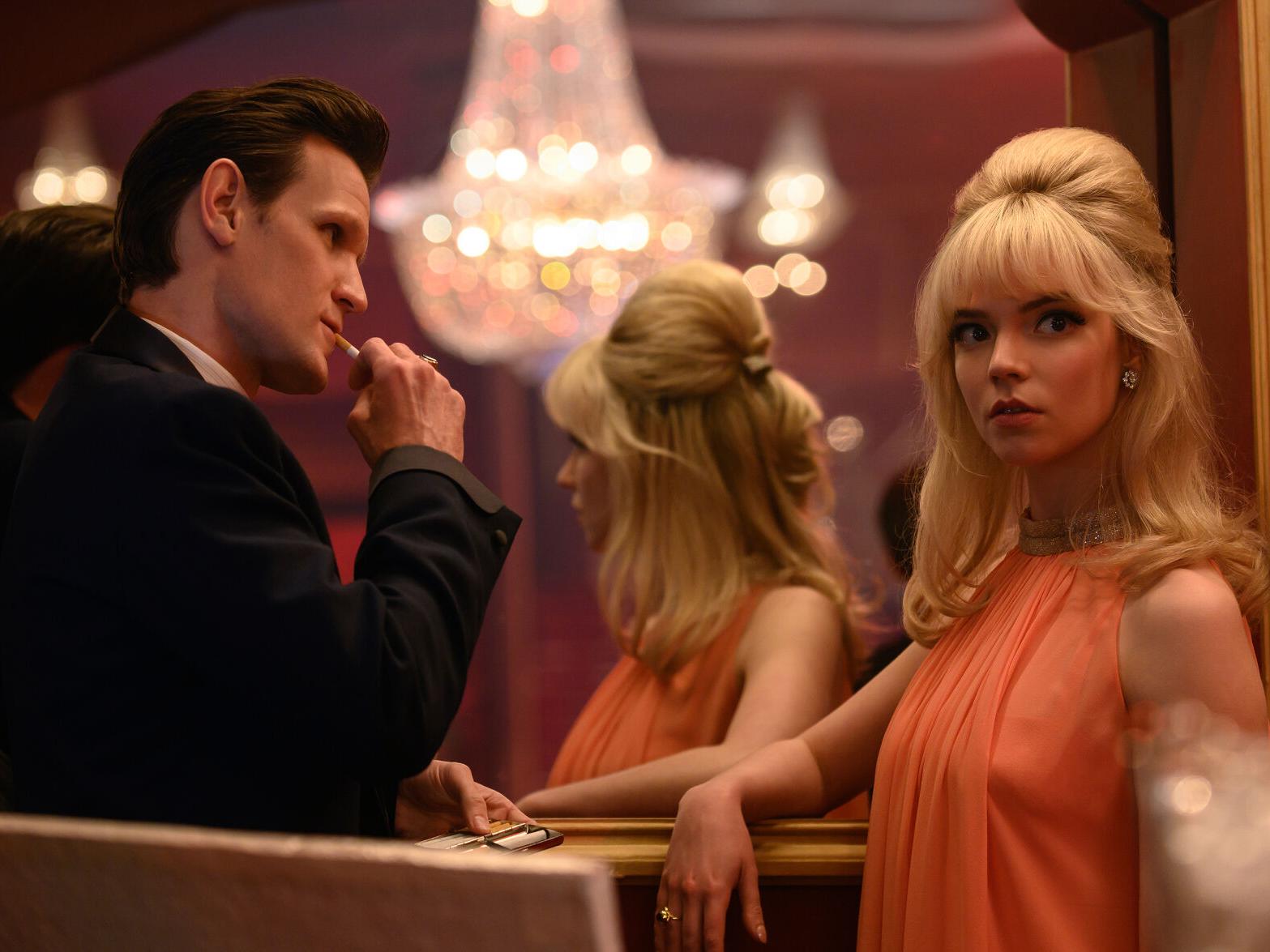
But from her first night there she has disturbing dreams about a young woman called Sandie (Anya Taylor-Joy), an aspiring pop star and would-be 60s fashion icon, who falls under the influence of sleazy ‘manager’ Jack (Matt Smith). Jack, it transpires, sees little difference between a pop star and a prostitute. The trouble is, Ellie is increasingly involved in the resulting relationship, finding herself observing – and then sharing – the indignities that are heaped upon Sandie at every turn. As these experiences become ever more violent, ever more carnal, Ellie begins a rapid descent into darkness. The problem is, to those around her in the present day, she appears to be losing her mind…

There’s nothing particularly new about this premise, but Wright’s approach to it is refreshingly different and, for the first forty minutes or so, he doesn’t put a foot wrong. The film swoops and soars and segues through the various unearthly set pieces with consummate skill, and, while terrible things happen to Ellie, she is never allowed to be ‘the victim.’ The underlying theme is the toxicity of Soho – the disturbing underbelly that lurks beneath the bright lights. This film is simultaneously a love letter to and a condemnation of the 1960s. Both McKenzie and Taylor-Joy are exceptional in their respective roles and the presence of Terence Stamp as the ‘silver haired gentleman’ is a wonderfully threatening addition (watching Stamp singing along to Barry Ryan’s Eloise is a masterclass in understated menace). There are also some real surprises packed into the script, ones that I genuinely don’t anticipate.

So what’s wrong, I hear you ask? Well, to be fair, not much, but to my mind there are a couple of missteps. The faceless armies of male ghosts that pursue Ellie relentlessly around the city are brilliantly realised, but there’s a moment where they start to feel overused. Haven’t we watched what is essentially the same scene a couple of times already? And… I’m being picky here… there’s John (Michael Ajao), Ellie’s only real friend from college, a man so sweet-natured he could rot your teeth at thirty paces, a fellow so forgiving, he would make Ghandi seem downright surly by comparison. It’s not Ajao’s performance that’s at fault but the dreadful lines of dialogue he’s obliged to come out with, quips that feel like they’ve been drafted in from an entirely more lighthearted project and are consequently jarring.

It’s only these two elements that make Last Night in Soho fall short of a perfect five stars. Niggles aside, the film is an absolute blast and another success to add to Wright’s growing score of brilliantly inventive movies. I haven’t stopped singing Cilla Black’s You’re My World since I stepped out of the cinema and, until you’ve seen it performed on a blazing staircase with an accompanying kitchen knife, you haven’t really experienced it at all.

Go see! You won’t be disappointed.

4.8 stars

Philip Caveney

Jojo Rabbit

16/12/19

After the massive success of Thor Ragnarok, Taika Waititi could probably have directed any film he fancied. But he decided to stick with Jojo Rabbit, a long-cherished project, based on a novel by Christine Leunens and written for the screen by Waititi himself. Before Thor, no studio wanted to touch ‘a coming of age comedy featuring the Hitler youth,’ and it’s really not difficult to understand why. On paper, it sounds batshit crazy and on the screen, it looks… well, pretty deranged. But mostly in a good way.

Ten-year-old Johannes (Roman Griffith Davis) is doing his best to fit in with the other kids in the local Hitler youth, and he’s helped along by his imaginary friend, Adolf (Taika Waititi), for whom Johannes has an unquestioning adoration. But a bullying incident soon earns Johannes the titular nickname of Jojo Rabbit. Meanwhile, he tries to figure out what’s going on with his secretive mother, Rosie (Scarlett Johansson), who clearly tolerates her son belonging to an organisation she detests, while taking every opportunity to instill in him the kind of worldview that the Nazis would certainly not approve of. And then, a chance discovery up in the attic leads Johannes to Elsa (Thomasin McKenzie), a Jewish girl, whom Rosie has given refuge to. Should he inform his sympathetic troop leader, Captain Klenzendorf (Sam Rockwell)? Or should he try to learn as much as he can about this mysterious creature whom he had been taught to believe is some kind of evil monster?

The film lurches audaciously between moments of slapstick humour and scenes of outright horror. Of course, this is all seen from a ten year old’s perspective, which accounts for the cartoonish feel of the film, but there’s sometimes the impression that characters are being brought on as added comic relief – Stephen Merchant’s chilling turn as a member of the Gestapo is a good case in point, great while he’s on, but then we barely see him again. Rebel Wilson, an actor whose popularity I struggle to understand, has a cameo role as Fräulein Rahm, occasionally dropping in to shout obscenities and burn books. Johanssen is delightful as Rosie, while Johannes’ interraction with his doleful best friend, Yorki (Archie Yates) is one of the film’s strongest suits. I love too that Elsa is depicted not as a victim, but as a strong, resourceful survivor.

It’s also true that, in a world that is increasingly drifting to the right, Jojo Rabbit has an added prescience. Here, the antics of fascists are held up for ridicule. If only what’s happening in the real world right now were anything like as funny.

4.4 stars

Philip Caveney