The Wicker Man

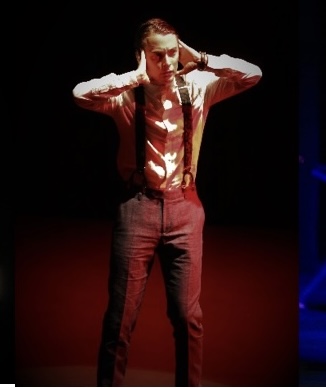
One-Man Poe: The Black Cat & The Raven

22/03/26

The Swallow Theatre, Ravenstone

We’re enjoying a short campervan trip to Dumfries and Galloway. Tomorrow, a 10k hike is planned on the Isle of Whithorn where we’ll explore the setting of the final scenes of the iconic 1973 film, The Wicker Man. But how should we pass a quiet Sunday evening? Well, obviously we’re not going to a theatre show, that really would be a busman’s holiday… but then a friend tells us about The Swallow Theatre, which proudly proclaims itself to be ‘the smallest theatre in Scotland.’ Originally set up by Jill and David Sumner in 1990, it now has new owners, and is currently celebrating its 30th year!

And what’s more, tonight’s show looks very interesting…

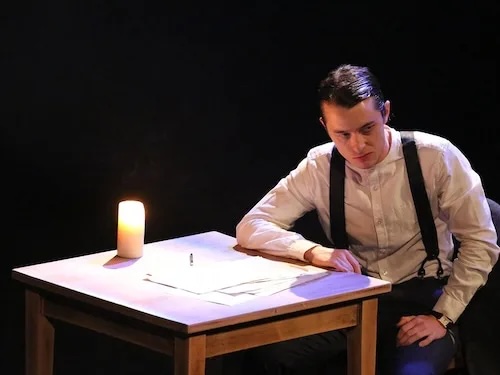
Almost before we know what’s happening, our seats are booked and we’re dodging pot holes as we drive along a remote country road, until we see welcoming lights ahead of us. Someone is waiting by the parking area to guide cars into their spaces and, once inside, we take seats in the convivial bar, where drinks and snacks are being dispensed. The new owners have been running the theatre since 2016 and seem to be able to turn their hands to just about everything. As curtain up draws near, we’re led out to the converted cow byre behind the cottage, where performer Stephen Smith is already seated at a desk, awaiting our arrival. Blankets are dispensed (it’s Scotland; it’s cold!), the lights dim and One-Man Poe begins.

In the opening monologue, Smith relates the author’s classic short story, The Black Cat, the tale of a disturbed man who cannot stop himself from indulging in random acts of cruelty, most of them directed at his titular pet. Smith is a confident and assured performer and he embodies the narrator with great skill, seizing upon the man’s every gesture, every sidelong glance: the way he suddenly pauses to stare intently at a member of the audience. There are nicely-judged moments of dread, subtly accentuated by sound and lighting effects.

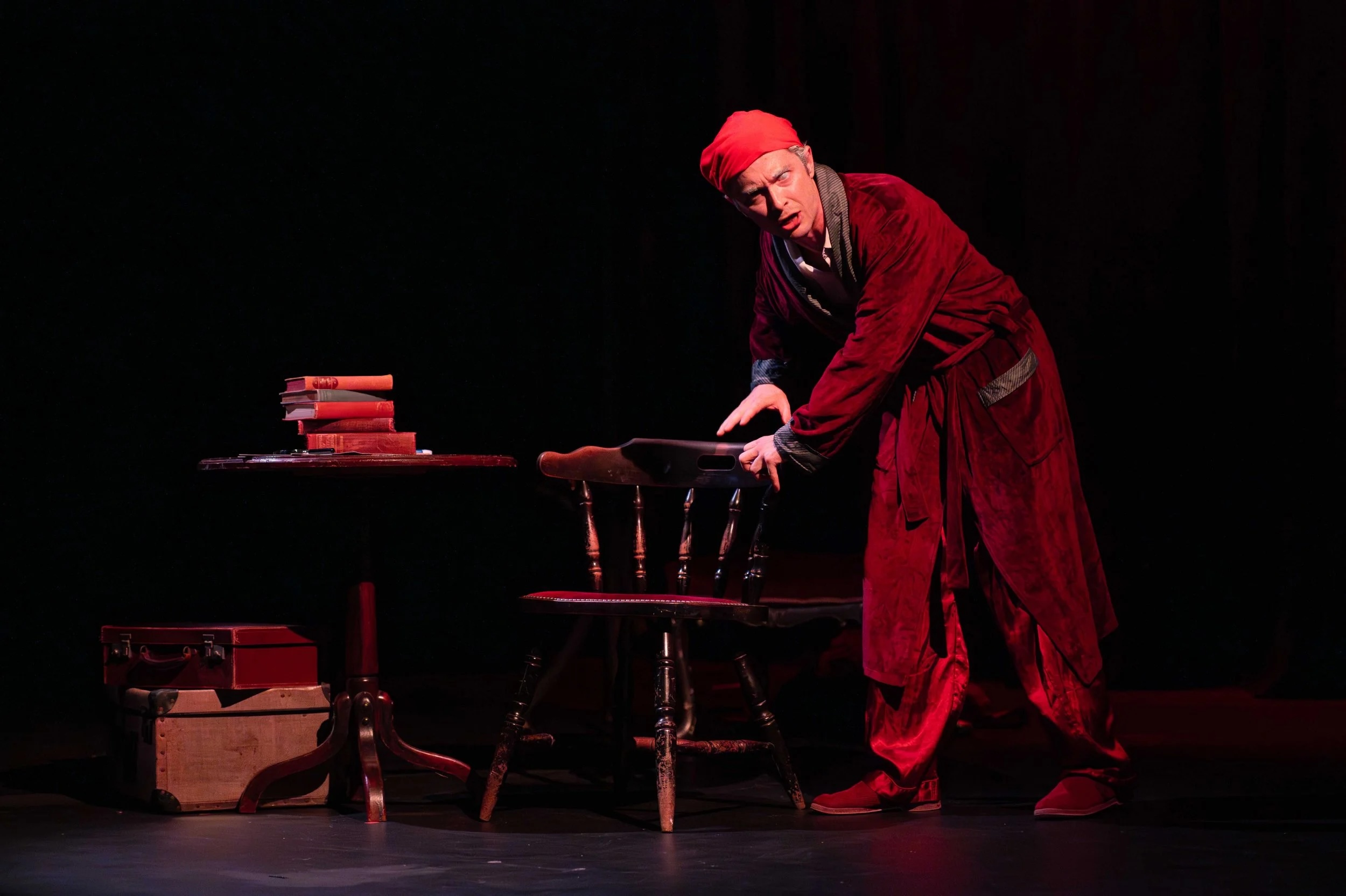
If the first half is impressive, the second is even more so as, in full view of the audience, Smith transforms himself into an entirely different character, the old man who relates Poe’s best-known poem, The Raven. This is stage craft of the highest order. We’ve seen Smith changing his clothes and applying his makeup, so why should we believe that he’s an elderly man approaching the end of his life? And yet, we absolutely do. It’s a mesmerising performance, during which the audience watches in spellbound silence as the familiar lines unfold.

Already a regular performer at the Edinburgh Fringe, Smith announces afterwards that he’s planning to return this August with two new pieces by Edgar Allen Poe. Something to check out at a later date, I think, but for now we return to our van, marvelling at what we’ve just watched and trying not to be aware of the countless pairs of glinting eyes watching us from the hedgerow…

4.4 stars

Philip Caveney
Rebecca

23/10/20

Netflix

Ben Wheatley is certainly a versatile director. Over a relatively short career, he’s given us surreal dark comedy in Sightseers, dystopian sci fi in High-Rise and a bloated snore-fest in the endlessly protracted action movie Free Fire. Now he plunges himself headlong into a remake of Rebecca, clearly undeterred by the fact that many cinephiles regard the 1940 version as Alfred Hitchock’s finest hour.

Daphne Du Maurier’s source novel is well-regarded but there’s little doubt that it’s a bit of a potboiler – albeit a brilliantly executed one. Essentially a contemporary riff on Jane Eyre, it has been memorably described as a ghost story without a ghost, which seems about right.

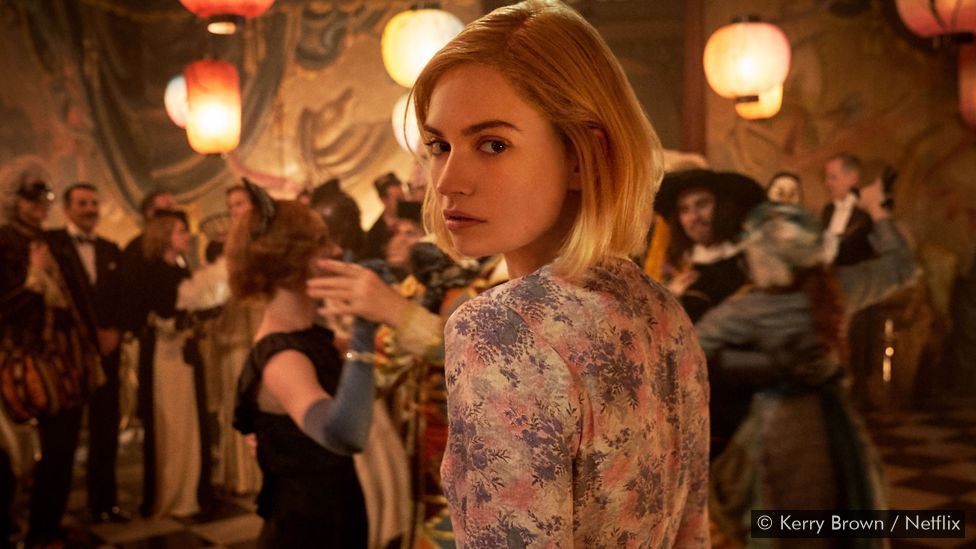
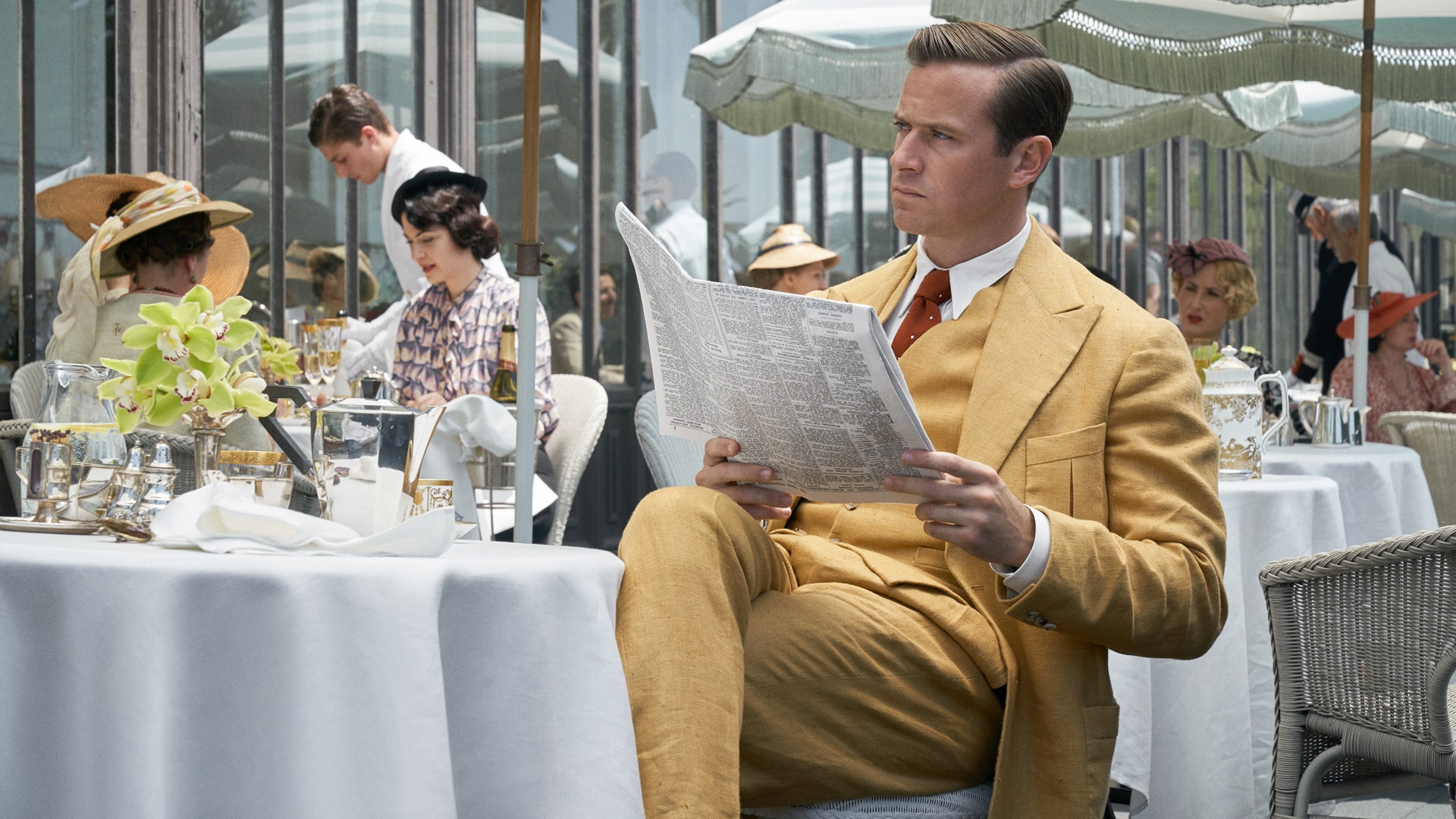
The unnamed protagonist of the story, played here by Lily James, is suffering through the thankless task of being a ‘lady’s companion’ to the extremely unpleasant Mrs Van Hopper (Ann Dowd, being effortlessly loathsome). Mind you, the suffering takes place on the French Riviera, so I can’t help feeling that things really could be a lot worse.

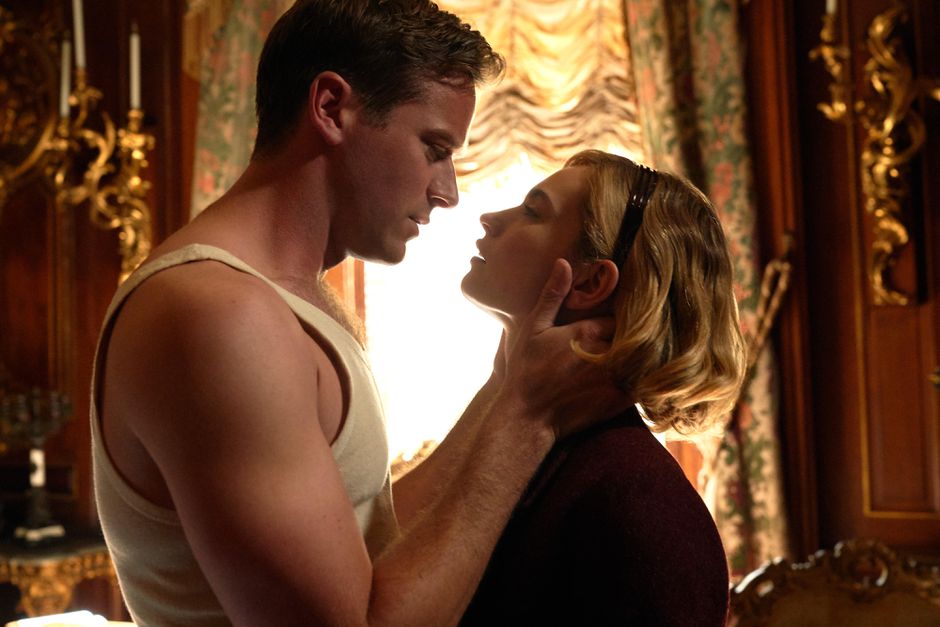
When she encounters eligible widower Maxim De Winter (Armie Hammer), she thinks herself to be completely out of his league, but a whirlwind romance duly ensues and it isn’t long before she’s whisked back to Manderley, his stately home in Cornwall, complete with battalions of servants and a baleful housekeeper, Mrs Danvers (Kristen Scott Thomas). The latter is clearly devoted to her employer but more particularly to the memory of his late wife. The newly married Mrs De Winter soon discovers that Rebecca is a tough act to follow – and that there’s something decidedly fishy about her death…

Jane Goldman’s screenplay gets quite a few things right and redresses omissions left out of the earlier film, mainly due to pressure from the Hayes Code. This version adheres to Du Maurier’s downbeat conclusion, which is a typically reckless move on Wheatley’s part, but it pays off.

Lily James nails the heroine’s awkward vulnerability, while Hammer gives us a much more likeable De Winter than Laurence Oliver’s rather saturnine performance. Furthermore, Scott Thomas is a perfect Mrs Danvers: cool, calculating – and with a prowling sexuality.

There are other good things too. In his sumptuous location photography, Laurie Rose opts for vivid colours rather than the usual muted tones and somehow captures the era perfectly. I also enjoy the inclusion of several traditional folk songs, which really shouldn’t work, but do, giving certain sequences a kind of Wicker Man vibe, helping to accentuate the lead character’s sense of alienation.

If I’ve a major criticism, it’s that this Rebecca is somewhat lacking in suspense – a quality that Mr Hitchcock knew all about. In the film’s latter stretches, where Mrs De Winter has to turn detective in order to save her husband’s reputation – and life – she seems to achieve her objective without breaking a sweat. Of course, the fact that she even wants to help him is itself a matter of some controversy.

Du Maurier’s story is ultimately nihilistic, as though her primary concern is to give the subject of romance a thoroughly good kicking. Wheatley colludes in this endeavour, and the result is well worth viewing.

4 stars

Philip Caveney

Midsommar

05/07/19

Rising star Ari Aster’s second movie, Midsommar, is a bucolic horror, a direct descendant of The Wicker Man. Starring Florence Pugh as the troubled Dani, it upends as many horror tropes as it embraces, the excesses building gleefully to a riotous, high-pitched finale.

The film opens with Dani worrying about her sister and pestering her reluctant boyfriend, Christian (Jack Reynor), for reassurance. He’s out with his flatmates: Josh (William Jackson Harper), Mark (Will Poulter) and Pelle (Vilhelm Blomgren), frustrated at being disturbed. He wants out of the relationship, he tells his friends, but he’s dithering, loathe to make a decision and act on it.

But then Dani’s parents die suddenly and he can’t ditch her; how can he? She’s clingy and needy, can’t be left alone. Christian feels trapped, compelled to invite her along on the trip he and his pals have planned, to visit the remote commune in Sweden where Pelle grew up, and take part in their midsummer festivities.

The tension here is nicely drawn: Christian caught in the middle between his girlfriend and his friends. Mark does not want Dani there and she is too fragile to let his animosity wash over her. The setup is promising.

From the dingy, gloomy hues of the opening reel, we are suddenly transported to the gloriously colourful and sunlit idyll of Pelle’s home with the Härga people. This is a daytime horror, no murky shadows where monsters lurk: these fiends are hiding in plain sight. Because, of course, not all is as it seems…

This is not a perfect film. There are some clear issues. Christian in particular is underwritten; his behaviour is inconsistent and lacking credible motivation. What we do know (he’s too weak to walk away from a failing relationship; he will deny a friendship, Judas-like) makes him unsympathetic, so it’s hard to care what happens to him. And then there’s Will Poulter. Mark starts off well enough, adding an interesting dynamic to the friendship group. But, once they arrive in Sweden, he seems to slowly fade from the film, a woeful underuse of such a fine actor. Perhaps, though, it’s the unthinking adherence to problematic clichés that causes me the most concern: exoticising the only disabled character; positioning naked elderly women as grotesques; suggesting mental illness is synonymous with violence and murderous intent.

Despite these problems, Midsommar is largely successful, not least for its bravura. Pugh is as compelling as ever, a real physical presence, dominating the screen. And there are some assured flourishes – a sequence where the protagonists’ car seems to quite literally start running upside-down along an inverted highway clearly shows Aster’s directorial chops. The mounting sense of dread is expertly manipulated, with even the silliest scenes adding a genuine disquiet. The fact that it all takes place in this sun-dappled pastoral hideaway only serves to highlight the brutality.

It’s worth noting too that all the horror here is human: we don’t need the supernatural; we are quite evil enough.

4.1 stars

Susan Singfield