
17/08/25
Pleasance Courtyard (Beneath), Edinburgh
Katia Haddad’s two-hander is an epic tale of love and loss spanning thirty years, exposing the quiet horrors of war: the tendrils that insinuate their way into ordinary people’s lives, strangling their hopes for happiness.
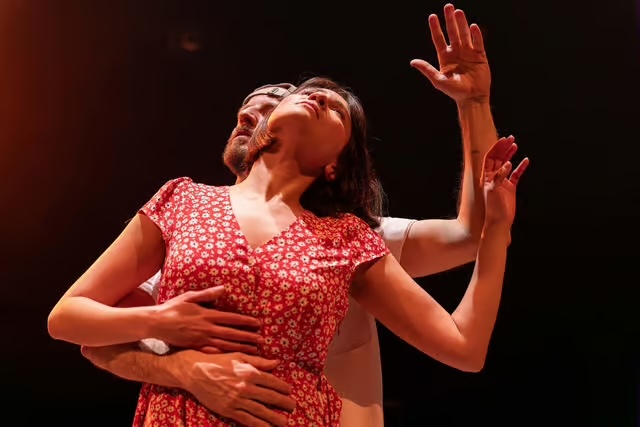
It’s 1992, a year after the dissolution of the USSR, when “Steve” and Galina (Oliver Gomm and Nathalie Barclay) meet at their friends’ wedding in the titular Ukrainian city. Steve (real name: Bondarenko, nicknamed for his karaoke renditions of Stevie Wonder songs) is a well-travelled naval officer, while Muscovite Galina is a literature student, who has so far only dreamed of seeing foreign lands. “You’re in a foreign land,” Steve reminds her, and he’s right: Ukraine is now an independent state. But it doesn’t feel foreign to Galina: “We speak the same language,” she says. And indeed they do, in more ways than one. But, after a whirlwind holiday romance on the picturesque Belosarayskaya Sandbank, it’s time for the two to say goodbye and return to their ‘real’ lives.
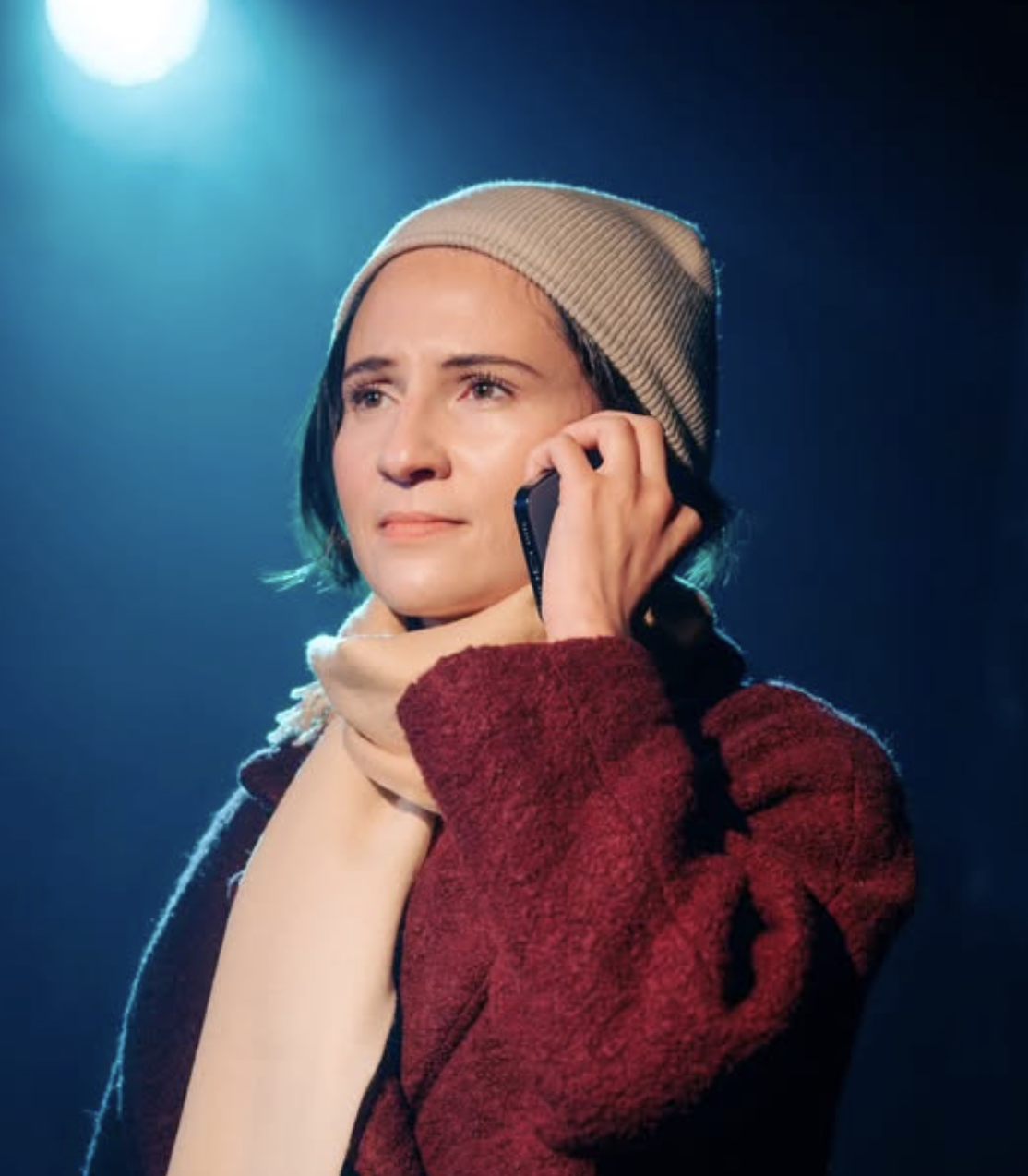
Three decades later, Russia invades Ukraine. Galina’s teenage son, a member of the Russian army, is captured by Ukrainian forces in Mariupol. She’s desperate to rescue him – and can only think of one person who might be able to help. But can Steve – who has lost everything and is fighting for his country’s very existence – really be expected to come to the aid of an enemy soldier?
Gomm and Barclay are both perfectly cast, delivering heartfelt but understated performances, which feel totally authentic. They seem to age before my eyes, and it’s impossible not to empathise with these two regular Joes, who ought to be free to focus on more mundane problems. Directed by Guy Retallack, Mariupol is an expertly-crafted piece of theatre, starkly illustrating the brutality of war without ever sensationalising it. Hugo Dodsworth’s monochrome video projections emphasise the awful devastation in Ukraine.
Of course, the ongoing nature of this particular conflict adds real urgency to the production, and I find myself crying as the dreadful human cost is laid bare. But tears are not enough. The play supports the David Nott Foundation, which trains doctors in countries impacted by conflict – including Ukraine – and I feel compelled to make a donation as soon as I get home. If you’d like to do the same, you can do so here: https://davidnottfoundation.com/.
A deeply moving and important play, Mariupol is horribly relevant but beautifully drawn.
4.7 stars
Susan Singfield
 Bouquets & Brickbats