The Cameo Cinema

Sasquatch Sunset

15/06/24

Cameo Cinema, Edinburgh

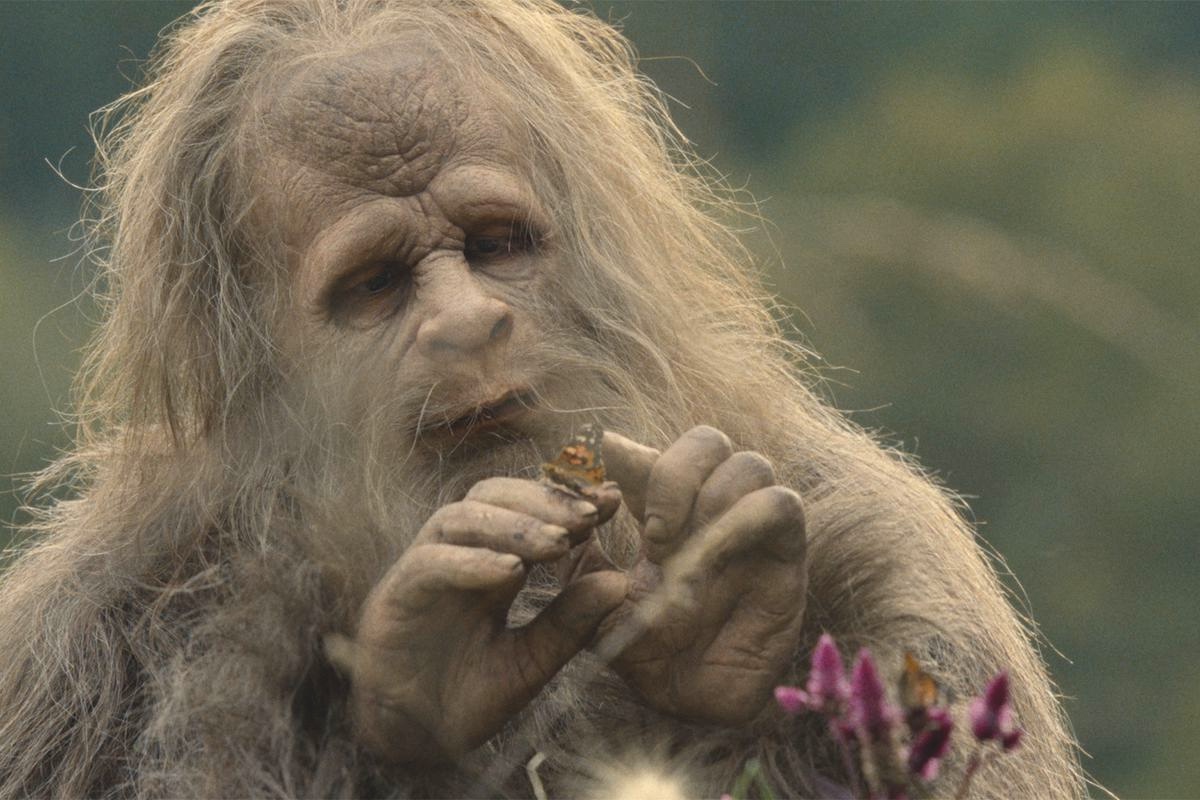
There’s a charming idea at the heart of Sasquatch Sunset, which follows, season by season, a year in the lives of four sasquatches (sasqui?). They live in a remote forest somewhere in North America. There’s an alpha male (Nathan Zellner), a beta male (Jesse Eisenberg), a pregnant female (Riley Keough) and a child (Christophe Zajac-Denek) and the four of them amble around the forest, foraging for food, attempting to procreate and every night constructing a crude shelter in which to sleep. They also spend time thumping tree trunks with branches in an attempt to contact others of their species – with no success.

The conceit of this film, conceived and directed by Nathan and David Zellner, is to treat it with all the seriousness of a nature documentary and, as our four protagonists go about their shuffling business in the tranquility of various woodland settings, there are indeed moments of wry amusement and occasionally some suspense as they stumble into peril.

The creature makeup is pretty convincing – though the film’s budget clearly didn’t extend to making a new-born sasquatch look convincing – and there are surely some cogent observations about the process of survival that can easily be extended to endangered species in the real world. Sasquatch Sunset is, I suppose, an allegory and it doesn’t take a Sherlock Holmes to work out what it’s really about.

But ultimately, there isn’t really enough here to fill the film’s (relatively short) running time and, by the halfway mark, I find myself longing for some more progression. Though the film flirts with the possibility of the creatures encountering humans, this never happens. It would have made an excellent short but, to my mind at least, as a feature-length movie it feels like an interesting failure.

2.8 stars

Philip Caveney

La Bête (The Beast)

08/06/24

Cameo Cinema, Edinburgh

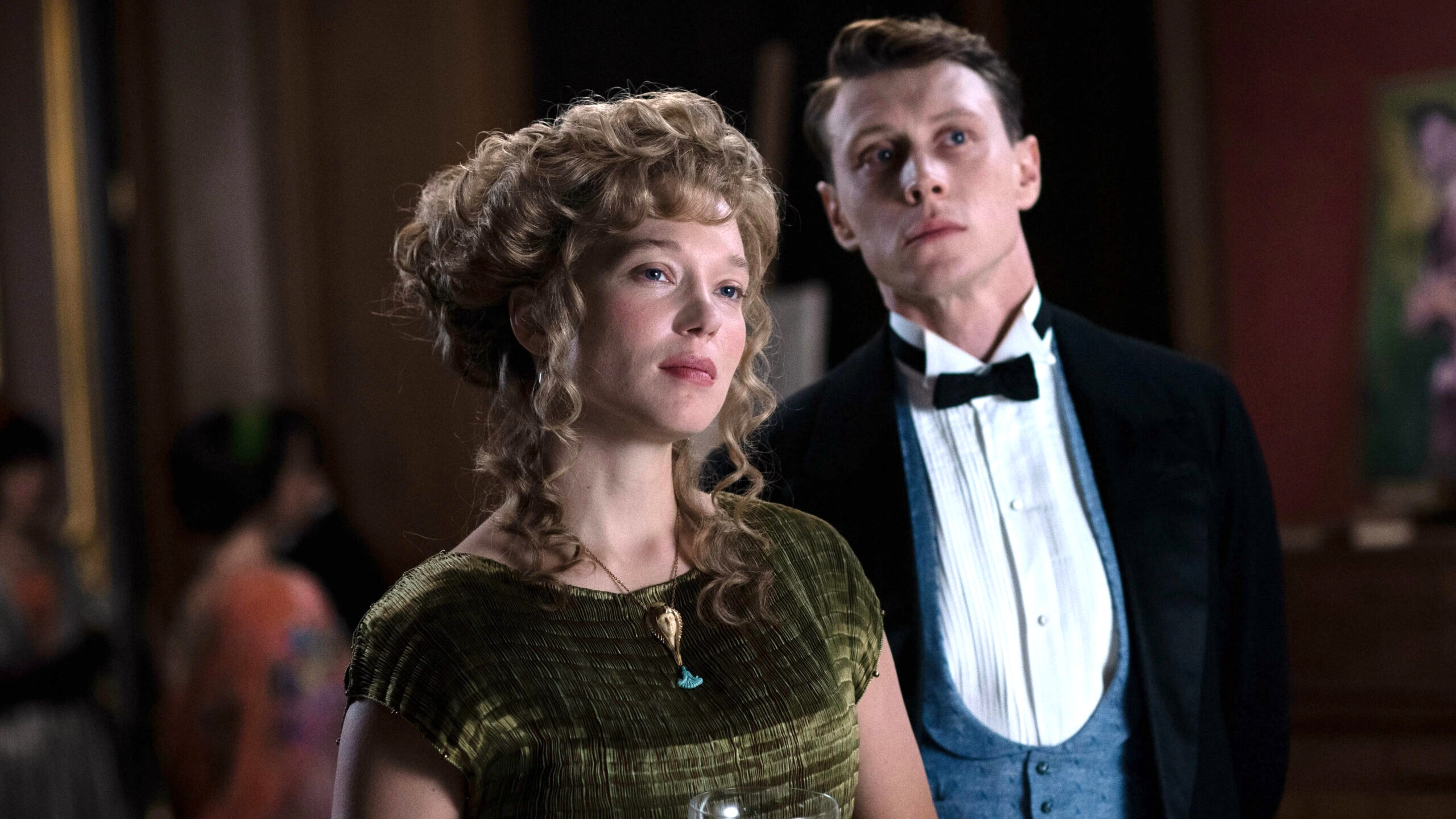
Some films almost defy logical analysis and Bertrand Bonello’s La Bête is one such er… beast, depicting as it does three distinct time-strands, each one featuring different versions of the same two characters. We first meet Gabrielle (Léa Seydoux) in a green-screen room, where the film’s director is talking her through a scene where she must pick up a knife from a kitchen table. This instantly alerts the audience to the fact that what we are about to see is an elaborate construct.

The story begins in 2044, where AI has pretty much taken over everyone’s lives, leaving them with precious little to do. Gabrielle is struggling to come to terms with a thankless job, which requires her to put her hand on a glass screen every so often. She decides to undergo ‘purification’, a procedure which will remove all of her troublesome human emotions. Meanwhile, she is offered the companionship of a doll, Poupée Kelly (Guslagie Malanda), who will do anything that Gabrielle asks of her.

As the purification begins events flash back to Paris in the year 1910, where Gabrielle meets Louis (George McKay) at a society party. In this version of her life, Gabrielle is a talented musician and she’s happily married to Georges (Martin Scali), a doll-maker, but her chance encounter with Louis clearly strikes a significant chord with both of them.

Have they already met somewhere else? Gabrielle confides to Louis that for most of her life she has lived with the fear that something terrible is going to happen to her. And just when that’s starting to sink in, we flash forward again to the year 2014, where Gabrielle is trying to make a living as a model and Louis is a terrifying incel, spewing hatred onto social media, intent on destroying all those women who have so callously spurned him over the years…

Bonello’s film is the very definition of a slow-burner, a whole series of events and repetitions gradually building to relate a mystifying narrative. Gina (Marta Hoskins), a blank-eyed clairvoyant, keeps popping up to put an even more disturbing spin on what’s happening. If I claimed to absolutely understand everything that happens in the film’s two hours and twenty-six minutes, I’d be exaggerating. I’m also unsure if a climactic scene, which appears to echo David Lynch’s Blue Velvet, is an intentional homage or just a coincidence.

Whatever, as the story moves assuredly through its many (often startling) twists and turns, I find myself increasingly fascinated with what I’m watching. Seydoux is fabulous in all of her versions and McKay (who took over the role of Louis at very short notice – and also learned to speak French into the bargain) continues to be a chameleon, seemingly able to transform himself into whatever is asked of him.

La Bête arrives heavily laden with five-star reviews and, though I’m not quite in that camp, I do feel this is a bold, ambitious film that goes to places where few others have dared to tread. I also readily accept that it won’t be for everyone.

Please note, in place of the usual rolling credits, viewers are offered the opportunity to scan a QR code instead, something I did for the purposes of this review. I urge everyone to do the same, only because there’s also a short clip on there that offers yet another piece to this enigmatic puzzle of a film.

4.2 stars

Philip Caveney

Good: NT Live

28/04/23

Cameo Cinema, Edinburgh

We miss the first screening of Good due to health issues and are resigned to our fate, but happily The Cameo Cinema offers this encore screening just as we’re scratching our heads and wondering what we should see tonight.

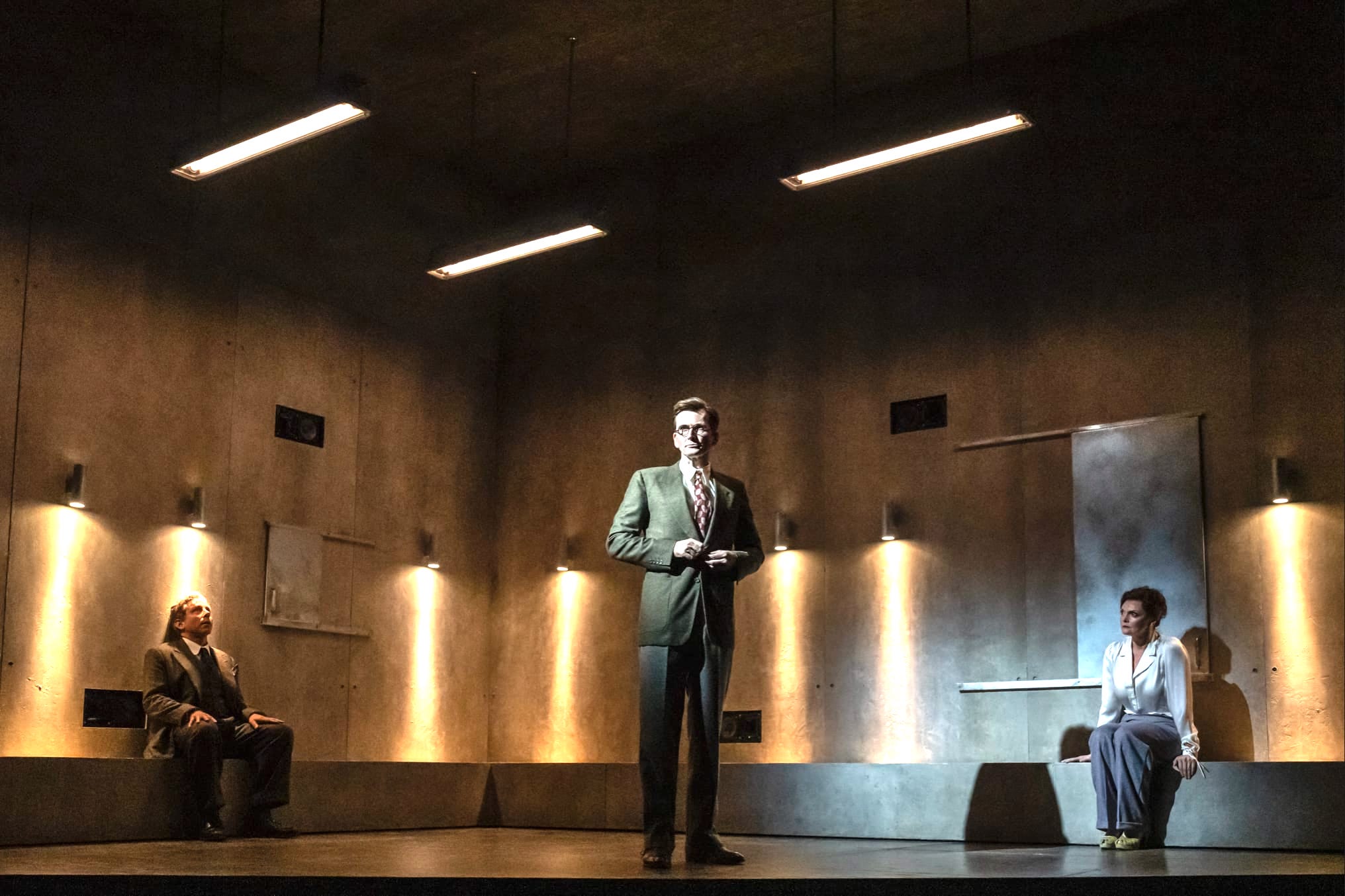
Written by the comparatively little known C P Taylor (who tragically died soon after Good had its London premiere in 1981) this excoriating piece of theatre feels weirdly askew from the opening scene. Why has set designer, Vicki Mortimer opted to use so little of the Harold Pinter Theatre’s stage, confining the action to a narrow, wedge shaped, performance space, which only really opens up at the play’s startling conclusion?

Well, it’s this confined quality which emphasises the chilling claustrophobia of the piece, the story of a man consumed by his own hubris and his willingness to repeatedly spin his own heinous crimes as the actions of a ‘good’ person.

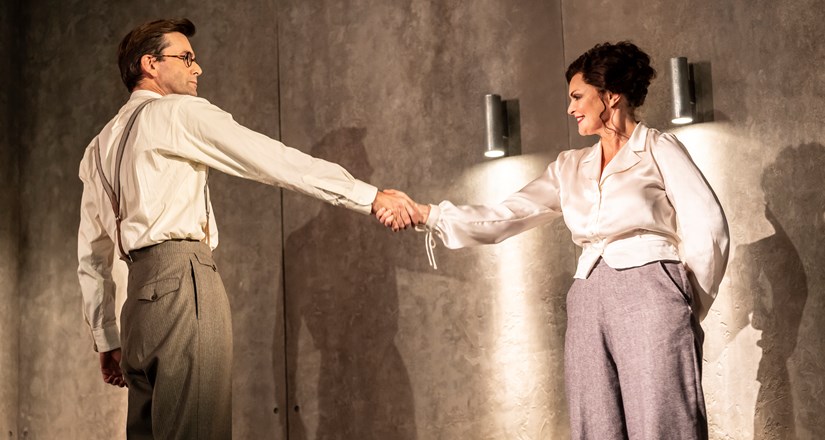
The man in question is Halder (David Tennant), a German literary professor whose published works catch the eyes of important people in the rising Nazi party, and who is invited to join their swelling ranks. But there’s an obvious problem with this suggestion: Halder’s best friend, psychiatrist Maurice (Elliot Levey), is Jewish and doesn’t see why he should be expected to hide the fact. Meanwhile, Halder is struggling to maintain a marriage to his hapless wife, Helen (Sharon Small), whilst looking after his mother, who is stricken by dementia – and he’s also starting an affair with one of his students, Anne. How is he going to square all these issues to his own satisfaction whilst proudly taking his place in the ranks of the SS? And at what point will he decide that he’s being asked to go too far?

Tennant, making his long awaited return to the West End, is incredibly assured in the complex role of Halder, switching from slyly funny to chillingly mercenary with aplomb. At one point, he even sings and dances with absolute authority, personifying the charmer with a steely inner self. Levy too is excellent, both as Maurice and in the other roles he inhabit, but for me it’s Small who really commands the stage, flicking effortlessly between her three female characters – and the persona of an alpha male SS commandant – simply by changing her voice and her posture. It’s a superbly nuanced performance that ensures I’m always fully aware of who she is embodying at any given moment.

Essentially a three-hander (although the play does feature other performers in its final stages), Good is an ambitious and original piece of theatre that makes me wonder what Taylor might have achieved if only he’d lived longer.

4 stars

Philip Caveney

Heathers: The Musical

28/03/23

Cameo Cinema, Edinburgh

In 1988, I was seventeen – and so was Veronica Sawyer. “You’re right; it really blows.” Luckily for me, high school in Abergele wasn’t quite as combative as it was in Sherwood, Ohio, and I never had to murder anyone. I did love Heathers though, and not just because Winona Ryder starred in it.

Written by Daniel Waters and directed by Michael Lehmann, the gloriously anarchic Heathers soon gained cult film status, so it’s no surprise that it morphed into a musical a decade or so later, nor that this stage version also has longevity. Here we are in 2023; unlike me, Veronica is still a teenager, still navigating the halls of Westerberg High, still trying to fit in.

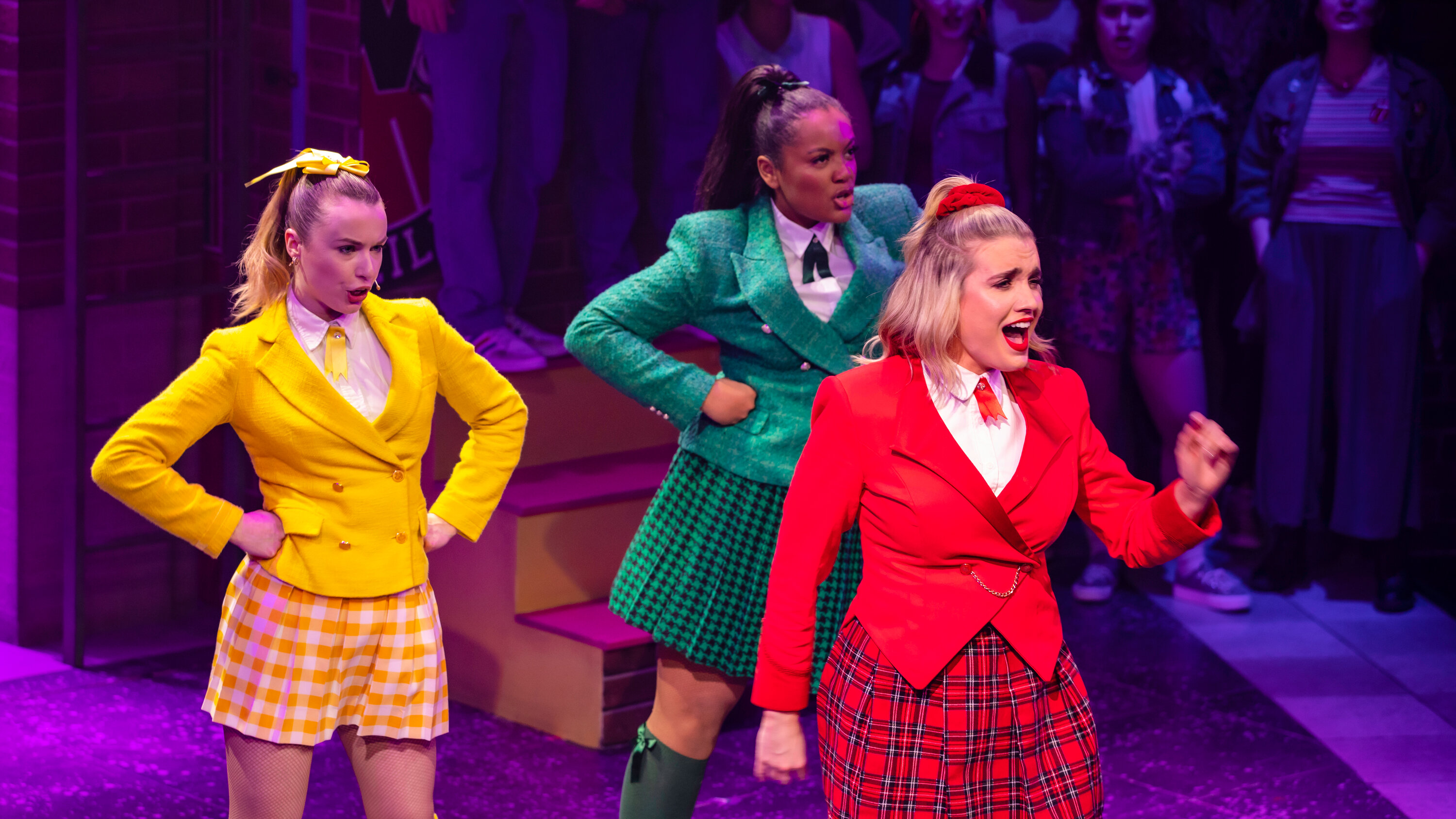
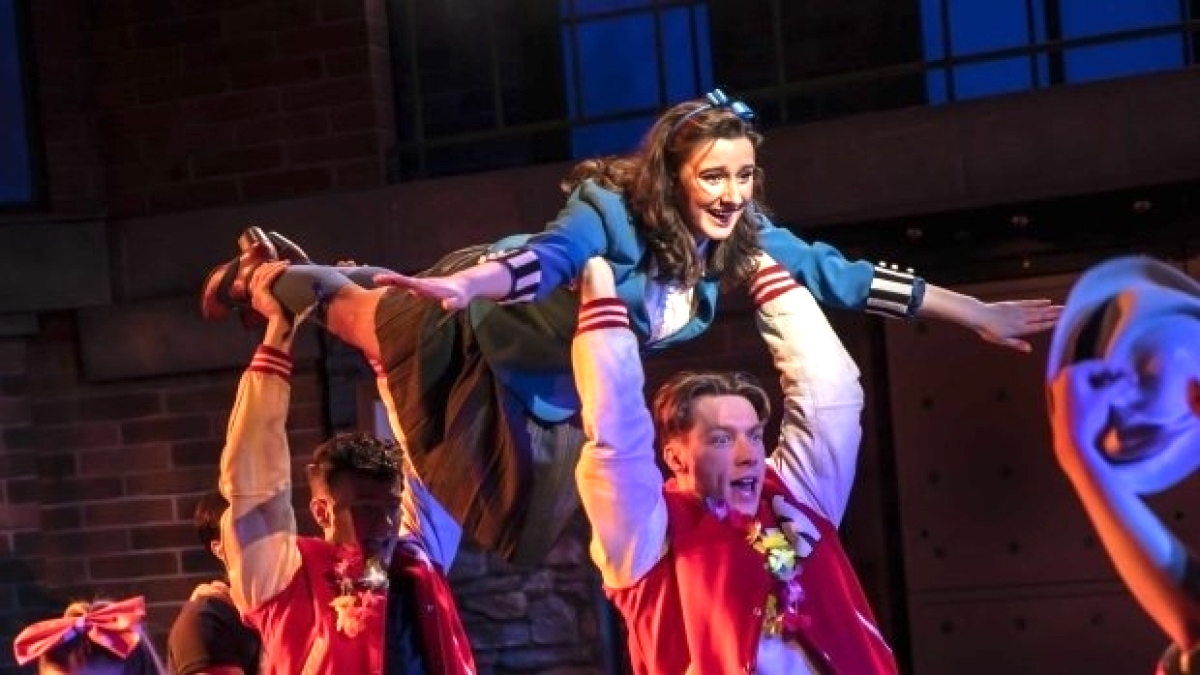
The plot is sprawling and bonkers, the humour dark. Tired of being bullied, Veronica (Ailsa Davidson) comes up with a cunning plan: she will use her excellent forgery skills to bribe the three most popular girls at school into letting her hang around with them. In return for a fake hall pass or two, Heathers Duke, McNamara, and Chandler (Vivian Panka, Teleri Hughes and Maddison Firth) give Veronica a makeover and the status she craves. And sure, she feels bad about turning her back on her best pal, Martha (Mhairi Angus), but it’s a matter of survival, right?

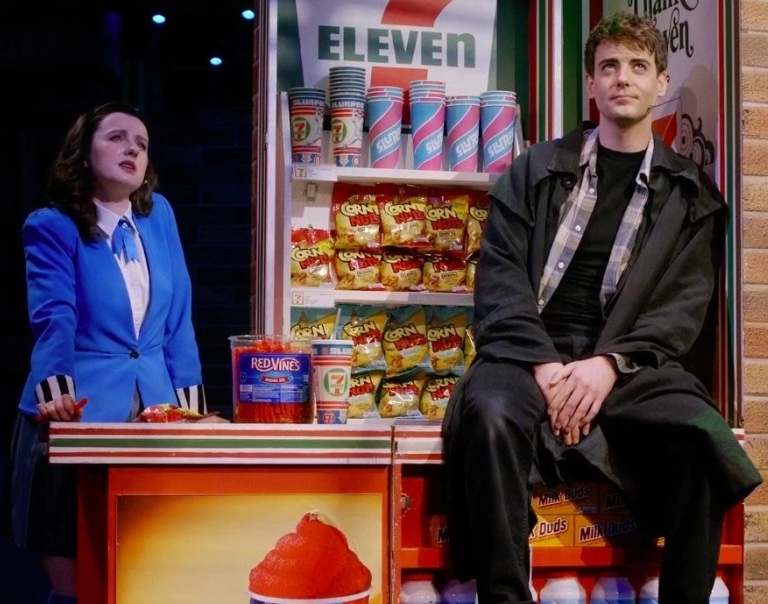
Except not everyone survives. Heather Chandler’s cruelty becomes too much for Veronica, and she longs to escape the stifling ‘friendship’. Enter bad boy JD (Simon Gordon). He takes an interest in Veronica’s problems – and offers some pretty drastic solutions. For a while, Veronica is drawn to his sexy brand of nihilism, but soon realises he is dangerous. Can she extricate herself before even more damage is done?

It’s no easy feat to make a rambunctious, feelgood musical about murder, attempted rape, homophobia, suicide and school shootings, but writers Kevin Murphy and Laurence O’Keefe seem to have done just that. Despite its age, the show clearly still resonates: tonight’s screening is full, and the audience is mostly young women – who probably only know Winona from her role in Stranger Things. It’s an unabashedly schlocky piece of theatre, as camp as Christmas and – despite the body count – just bursting with life. I like the slight softening of JD’s character (he’s less sympathetic in the film, without as much backstory), and the constant presence of Heather Chandler’s kimono-clad ghost works well: she’s the most dynamic character in the play, and it would be a shame to lose her in the first act.

Directed by Andy Fickman, the chorus numbers are vibrant and the choreography suitably zippy, maximising the potential of The Other Palace Theatre’s small stage. Davidson shines in the lead role, her vocals impressive and her characterisation spot on. With its bright colour palette and bold delivery, Heathers provides the same kind of high-octane girl-power as Six.

“I know who I’m eating lunch with on Monday. Do you?”

4.3 stars

Susan Singfield

White Noise

13/12/22

The Cameo, Edinburgh

Noah Baumbach’s latest film – based on the 1985 novel by Dom Delillo – is mostly about death: humanity’s fear of it, the inevitability of it and the final irrefutable truth that one day it comes to us all. If this makes White Noise sound about as much fun as a car crash at a funeral, don’t be misled. It’s a fascinating film, by turns absurdly funny, deeply puzzling and profoundly worrying. If, ultimately, it attempts to bite off a little more than it can chew, it’s nonetheless an ambitious and bravely experimental slice of filmmaking.

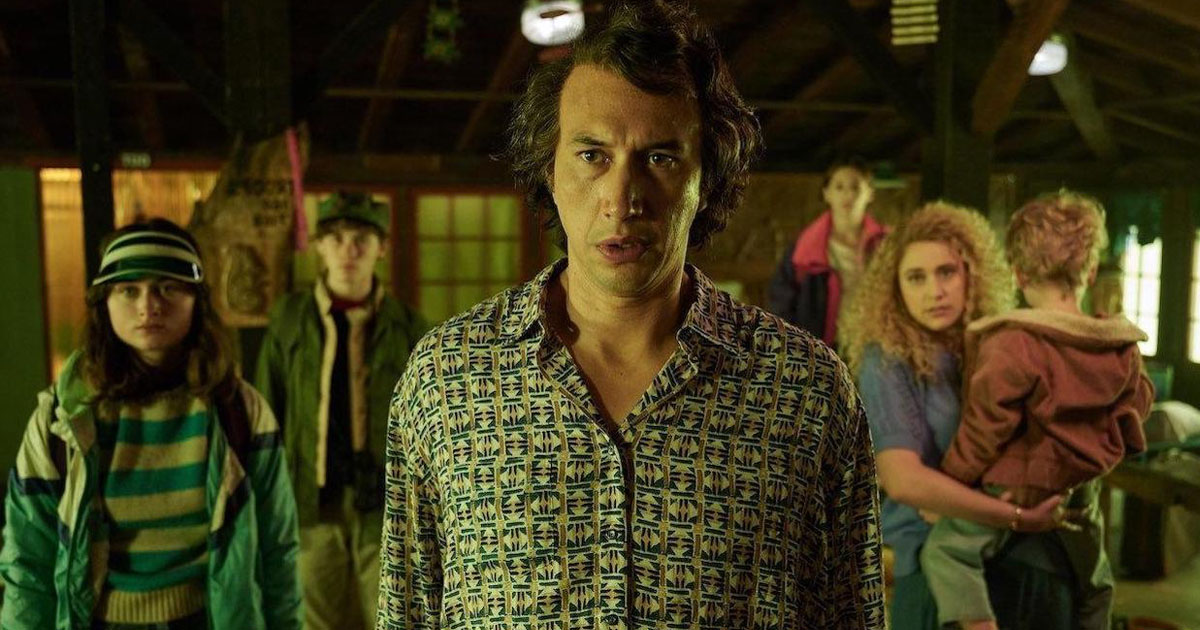
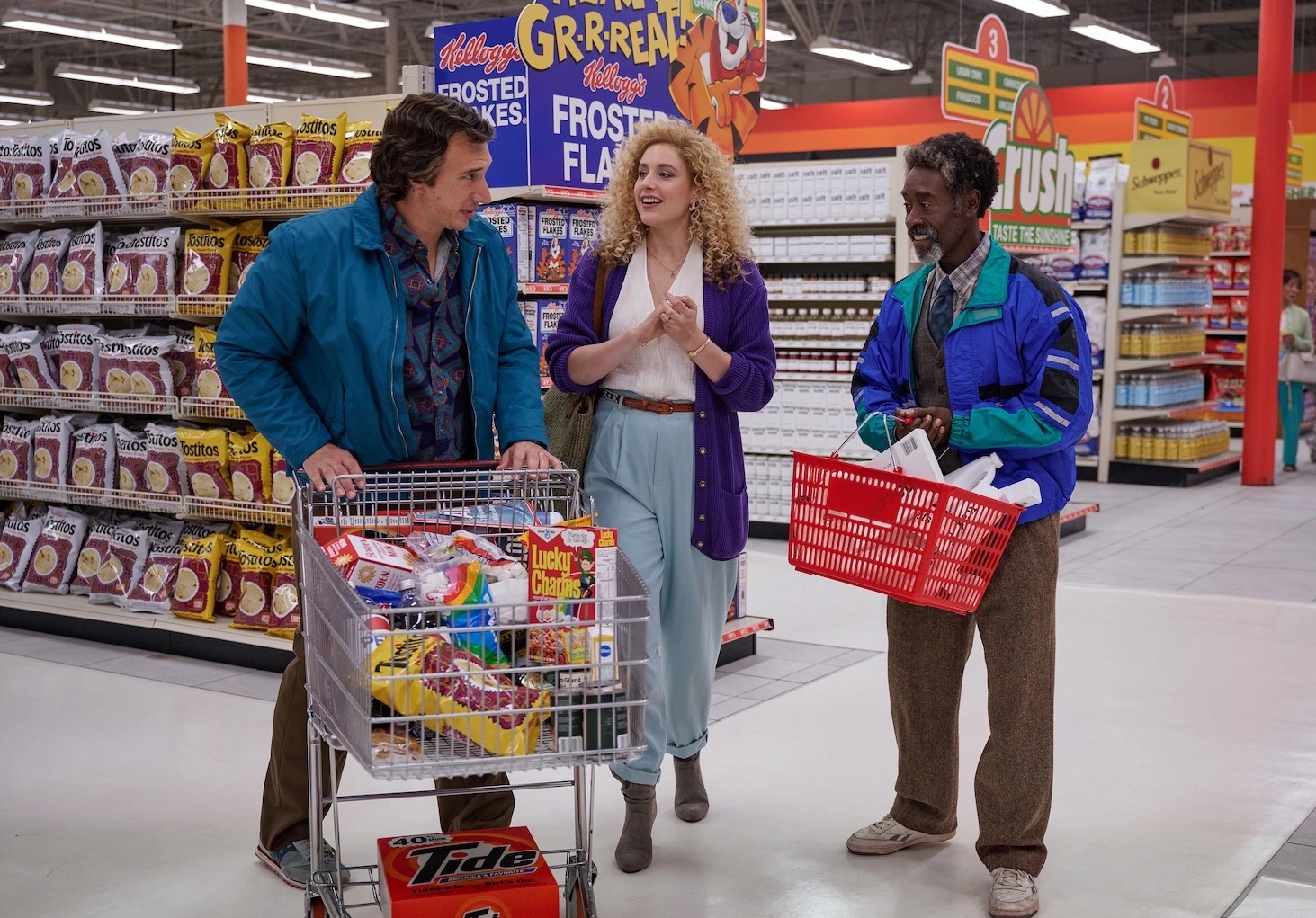
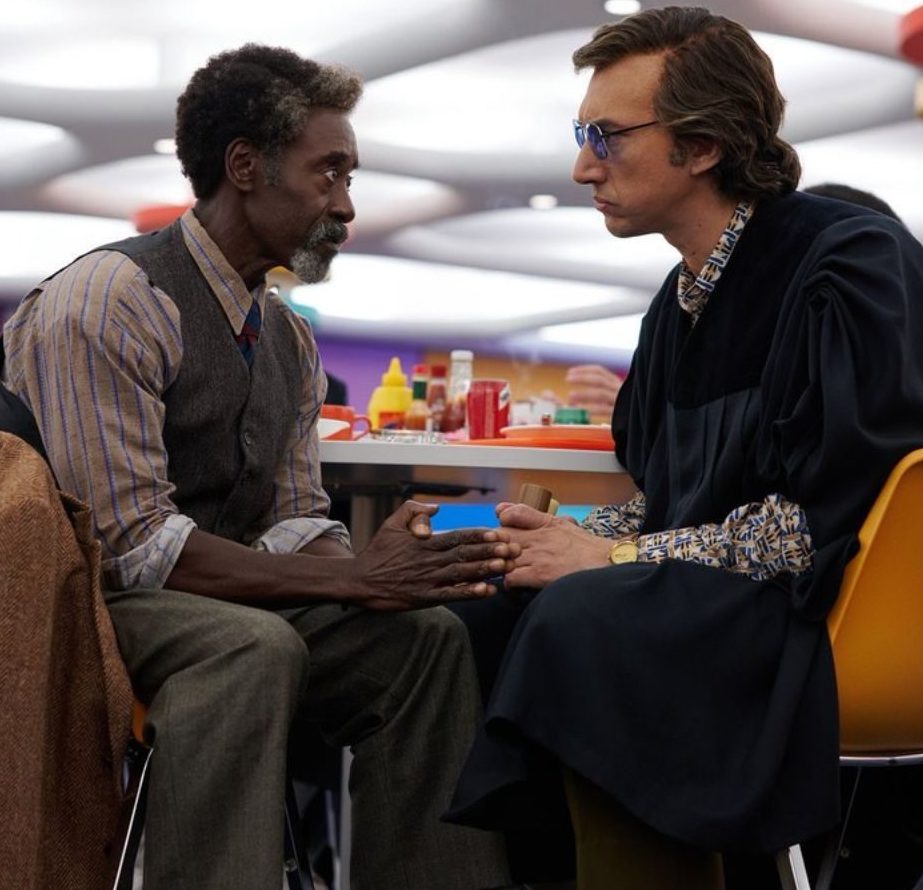
We’re somewhere in the American midwest where Jack Gladney (Adam Driver) is ‘Professor of Hitler Studies’ at the prestigious ‘College on the Hill’, where he’s fond of waxing lyrical about the rise of the Nazis without, it seems, any inkling of how distressing a subject it actually is. He’s also hiding the embarrassing fact that he can’t speak a word of German. Jack enjoys an adversarial friendship with another lecturer, Murray Siskind (Don Cheadle), who specialises in two main subjects, Elvis and er… car crashes. A scene where the two men attempt to engage in a kind of intellectual battle of wits in front of a spellbound class is a particular highlight.

Jack lives with his wife, Babette (Greta Gerwig), and their extended family. Both have had previous marriages and the gaggle of kids who live with them are all better informed than either of their parents. The family lives in a bubble of domestic bliss, interspersed with regular trips to a gigantic, day-glo supermarket, which seems to hold for them the importance of a church. But not everything is quite as cosy as it seems. What are those pills that Babette is secretly taking? And why, when challenged, does she deny their very existence?

Matters take a dramatic turn for the worse when a freight train laden with dangerous chemicals collides with an articulated lorry, carrying something equally nasty. The result in an ‘airborne toxic event’ which sends clouds of deadly fumes into the sky. The Gladney family – and just about everybody else in the vicinity – vacate their home in a desperate attempt to escape. But what exactly are they fleeing from? And what’s the prognosis if you’re exposed to those ‘deadly’ clouds? Nobody seems to know.

White Noise offers as many questions as it does answers. If not everything we’re offered here quite comes off, much of it works brilliantly. Baumbach’s vision of suburban America is packed full of surprises, from doctors who clearly don’t care about the welfare of their patients to a Mother Superior who rubbishes the idea of heaven and angels. There are perfectly judged performances from Driver and Gerwig (particularly the latter who plays her role as if in a permanent drug daze) and Lol Crawley’s cinematography gives everything an unearthly sheen.

In the film’s final third, Jack finds himself driven to seek out the person responsible for Babette’s addiction, but even that doesn’t follow the lines you’d generally expect to encounter in such a narrative. It’s here that the film begins to feel a little too unhinged, though the enterprise is rescued by a delightful end-credit sequence.

It’s an ingenious device that keeps me glued to my seat until the screen finally fades to black.  

3. 8 stars

Philip Caveney

Decision to Leave

26/10/22

Cameo Cinema, Edinburgh

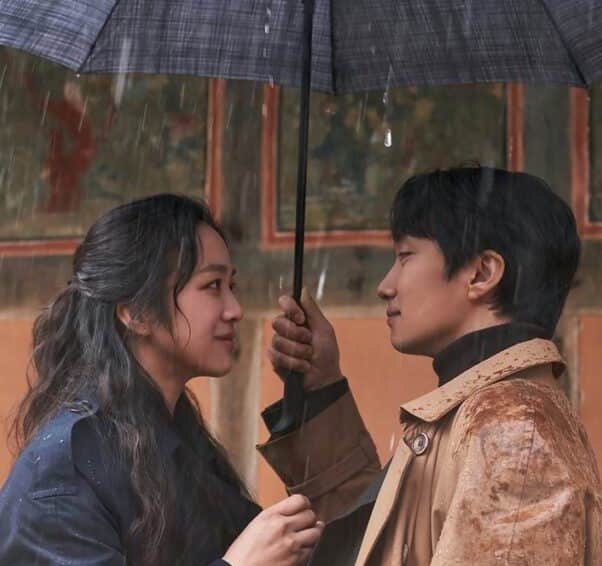
A new release from Park Chan-wook is always a cause for celebration, but anyone expecting the unbridled sexuality of The Handmaiden may be surprised to learn that Decision to Leave is a much more chaste affair. Yes, there’s passion here, but it’s portrayed almost entirely in words (in some cases via a Chinese-Korean translation app) and in discreet sidelong glances.

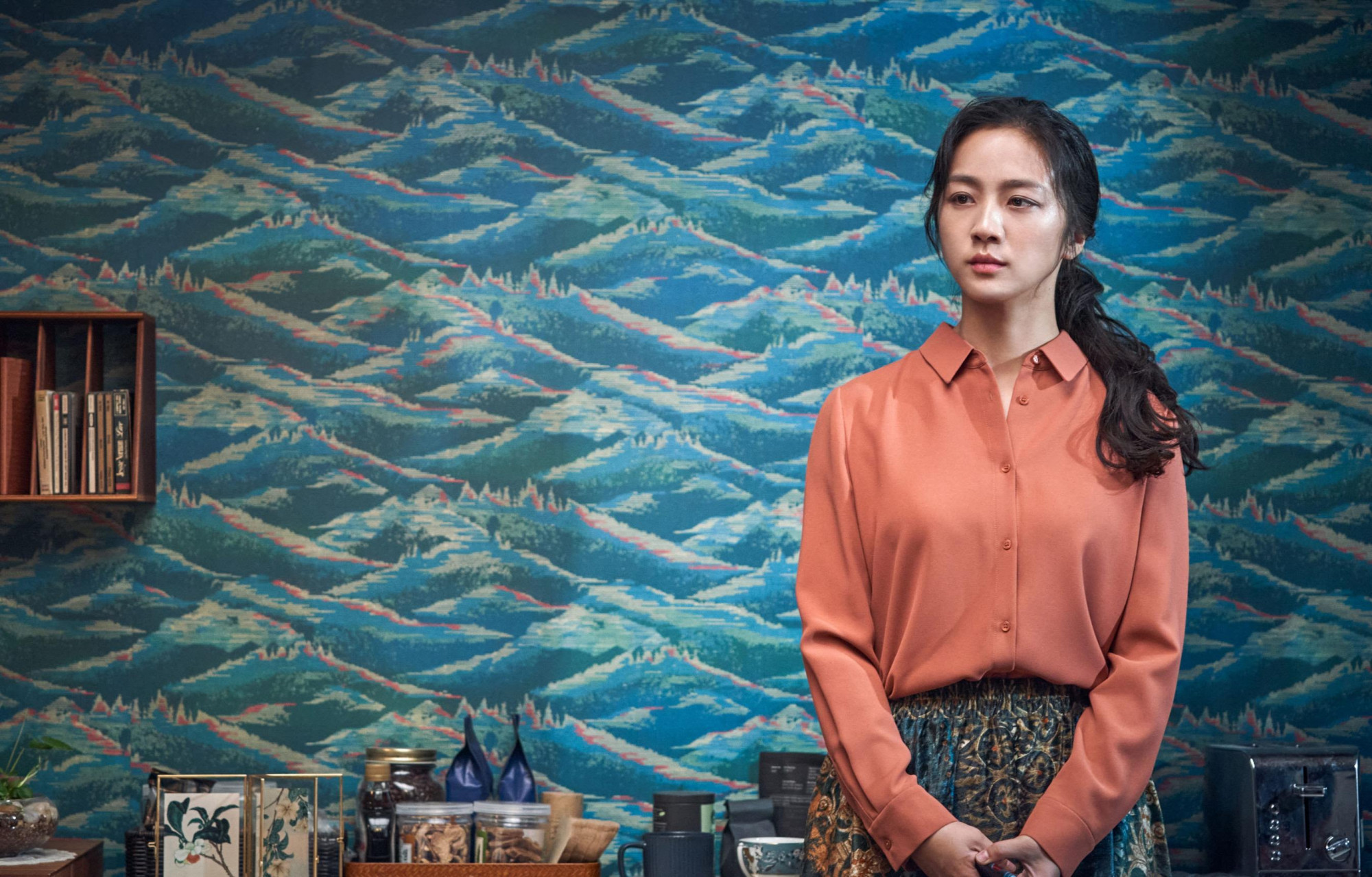
Workaholic Detective Hae-jun (Park Hae-il) is summoned to investigate the death of a mountain climber who has fallen from a great height. But did the man jump or was he pushed? Suspicion soon falls on his Chinese wife, Seo-rei (Tang Wei), and Hae-jun, who is already suffering from chronic insomnia, starts to spend his nights surveilling her. He follows her around Busan, studies her routines and chronicles her every move. And then he begins to realise that he is falling in love with her and that what began as professional interest is turning into something much more compelling…

This is one of those films where it would be criminal to give too much of the plot away – and besides, the ensuing story is so labyrinthine, so full of unexpected twists and turns, it would be pretty much impossible to do that even if I wanted to. Armchair detectives will have a field day trying to figure out the mysteries wrapped up in this story and I’m fairly certain that very few are likely to guess at the baffling solution to this strange, enigmatic puzzle of a film.

Park Chan-wook’s distinctive visual style – aided and abetted by cinematographer Kin Je-yong – is to the fore throughout and, as ever, he relishes playing tricks on the viewer, constantly tinkering with our perceptions and expectations. Both the leads dazzle in their roles, and are ably supported by a fine cast, particularly by Lee Jung-hyun as Hae-jun’s statistic-obsessed wife, Jung-an – but this is essentially a two-hander.

With a running time of two hours and nineteen minutes, I do occasionally find myself wishing that the pace wasn’t quite so glacial, but the great director has never been one to hurry himself over anything and, despite my reservations, Decision to Leave manages to hold me in a powerful grip right up to its chilling final frame.

4 stars

Philip Caveney

Jack Absolute Flies Again

18/10/22

NT Live: The Cameo, Edinburgh

Daytime cinema always feels like playing hooky. A sign that – for today – fun has priority. And NT Live screenings have the same ‘getting away with something’ vibe. I’m watching a play in London, but – shhh, whisper it – I haven’t left Edinburgh. So this afternoon’s indulgence, Jack Absolute Flies Again, is the double whammy: a National Theatre production at lunch time on a Tuesday! And in our favourite picture house too…

Based on Sheridan’s The Rivals, Richard Bean and Oliver Chris’s production exemplifies ‘rollicking’. It’s a silly, frothy, feelgood piece of theatre – and I absolutely love it.

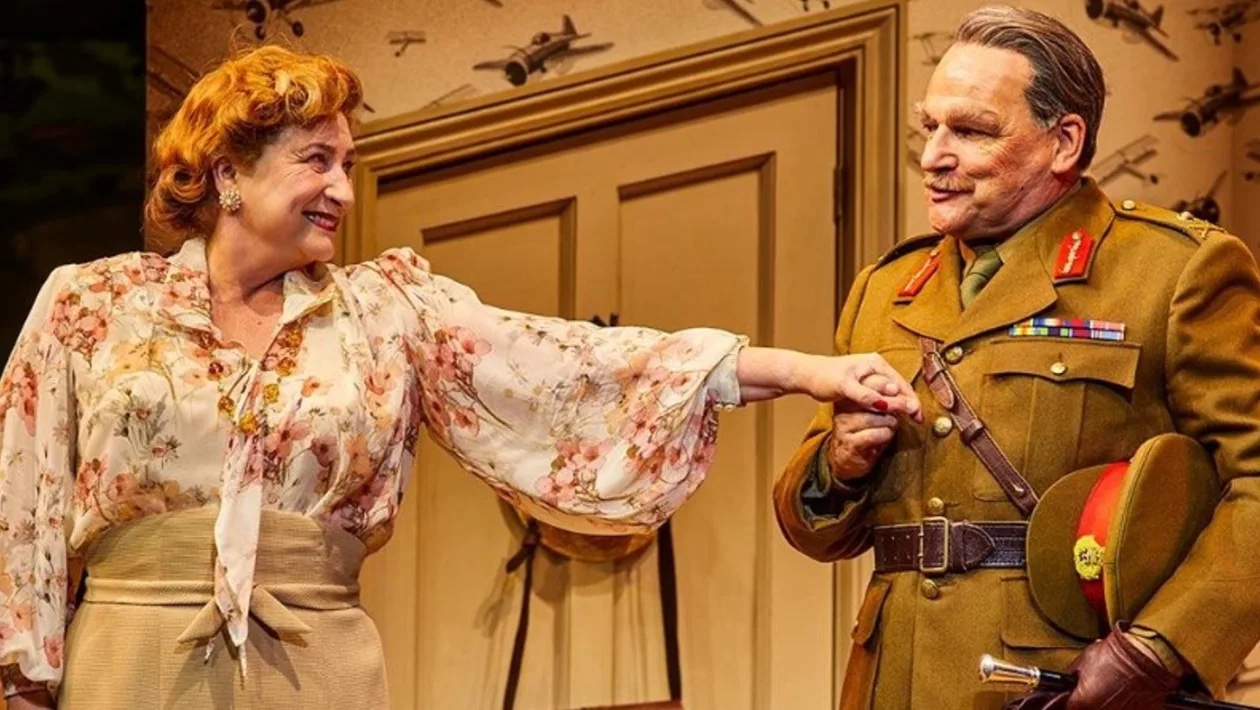
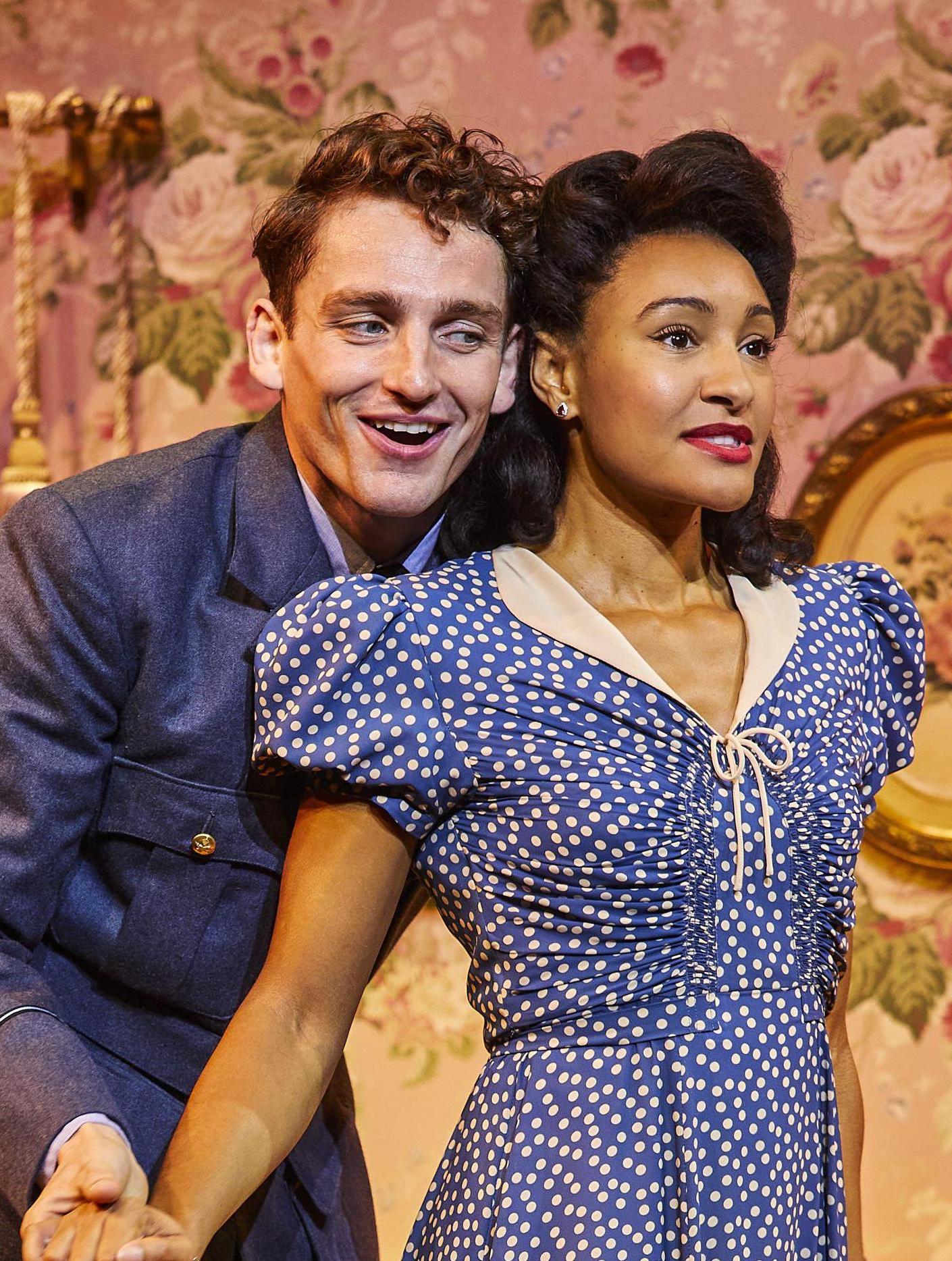
The action has moved from the late 18th century to the early 20th – specifically to World War 2 – and Malaprop Mansion has been requisitioned by the RAF. The titular Jack (Laurie Davidson) is a pilot, stationed in the grounds. He’s in love with fellow pilot, Lydia Languish (Natalie Simpson), who just happens to live in the mansion with her aunt, Mrs Malaprop (Caroline Quentin). Lydia, however, is infatuated with northern mechanic, Dudley Scunthorpe (Kelvin Fletcher), who, in turn, has a thing for Lydia’s maid, Lucy (Kerry Howard). Throw in a couple of other pilots vying for Lydia’s attention, a jealous fiancé and the ever-present spectre of death (these are military people, after all), not to mention Mrs Malaprop’s attraction to Jack’s father, Sir Anthony Absolute (Peter Forbes), and you’ve got quite the heady mix…

This comedy of errors is beautifully handled, all knowing nods to the audience, and perfectly executed groan-out-loud jokes. Sure, we can see the punchlines coming from cruising height, but that’s the point: the laughs are garnered in the gap, the moment when we know what’s coming before it lands. Quentin is particularly funny, clearly relishing the Malapropisms that litter her speech. They are so plentiful they make Sheridan look positively restrained, but their abundance works, again prompting us to pre-empt what she might say (Chekhov’s clematis, if you will). Howard also proves to have that comic edge, and I like her character’s frequent references to the theatricality of the piece, reminding the audience of the genre and what they ought to expect.

The set is delightful: all bucolic beauty and architectural elegance. Its chocolate box design suits the tone of the piece, and I especially like the doll’s house effect, when the mansion opens to reveal the rooms within. Ironically, the only things that don’t translate well to the cinema are, well, the cinematic sequences. I’m sure they’re impactful in the vast Olivier auditorium, but they are diminished by the live-screening process.

The ending is something of a shock, deliberately jarring. I won’t go into any detail (no spoilers here), but – on reflection – I think it works. It’s a brave choice, but probably the only one that makes sense, given the context. It feels tonally different from the rest of the piece, but I guess that’s the point. We all plod along, don’t we, dealing with the minutiae while the big stuff happens around us. Until…

There are a few more ‘encore’ screenings of Jack Absolute over the next month or so. If you’re in need of a laugh, take advantage of NT Live and give your local cinema a much-needed boost at the same time. You won’t regret it.

4.2 stars

Susan Singfield

Prima Facie

21/07/22

NT Live, The Cameo, Edinburgh

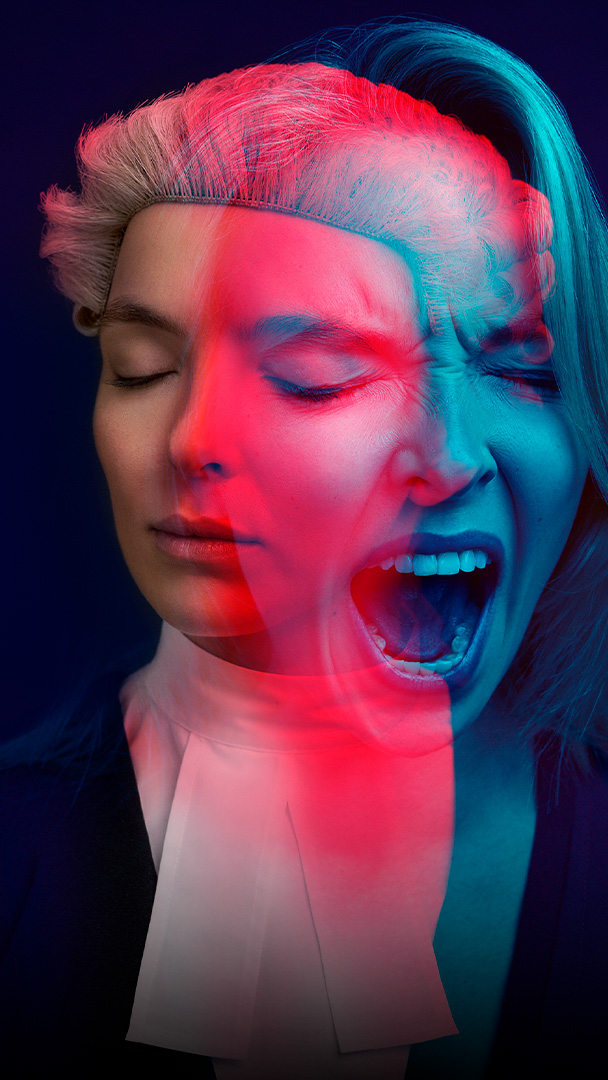
It is a truth universally acknowledged that Jodie Comer is a formidable talent, and I am more than happy to add my voice to the fangirl choir. Not only is she a chameleon, she’s also bristling with charisma, and she’s perfectly cast to play this complex, demanding role. The only difficulty is in believing this is her stage debut – because she seems born to it. She is a theatrical tour de force.

Prima Facie is, essentially, a feminist polemic, and a much-needed one. Art, as Aristotle sort of said, is multi-purpose, and can be used to educate as well as simply entertain. And boy, do we need educating. In the UK, a shocking 99% of reported rapes don’t even make it to court, and – of those that do – fewer than a third lead to a guilty verdict. When we take into consideration the enormous number of sexual assaults that are never reported at all (an estimated 83%), there’s only one conclusion to draw: the system isn’t working. Rape is a horrendous crime, but it’s one you’re likely to get away with.

Australian playwright Suzie Miller is on a mission to address this. She used to be a criminal defence lawyer, specialising in human rights, and she realised then that something was amiss. The law, she says, is built on assumptions that don’t acknowledge the realities of rape, without any real understanding of what consent looks like in practice, nor of how a victim might present. And so Prima Facie, directed by Justin Martin, comes howling into the void, forcing us to consider the urgency of change. The sold-out run at London’s Harold Pinter theatre, and the packed live-streamings at cinemas across the land, suggest there’s a lot of support for the idea (as well as a lot of Killing Eve fans, of course).

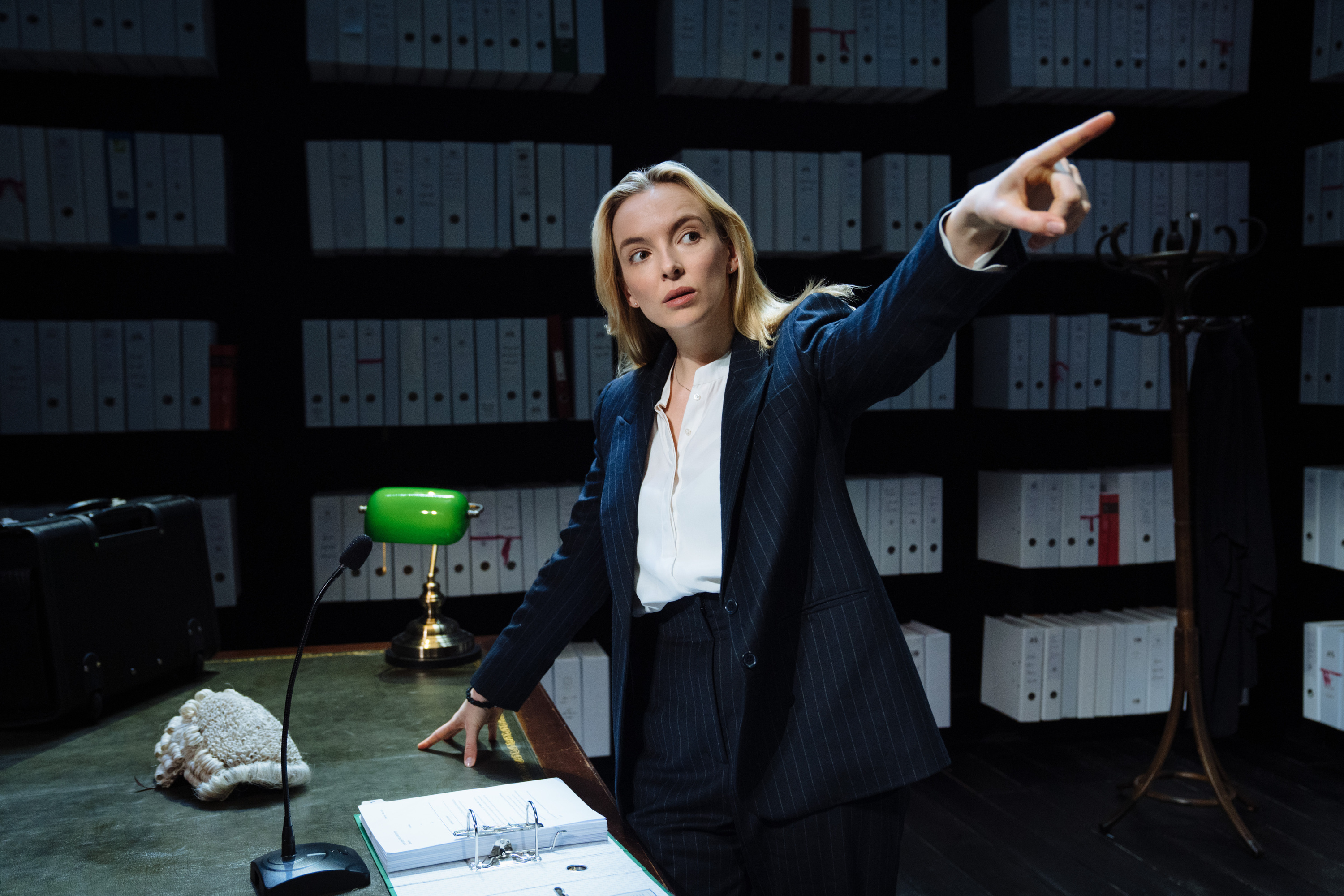
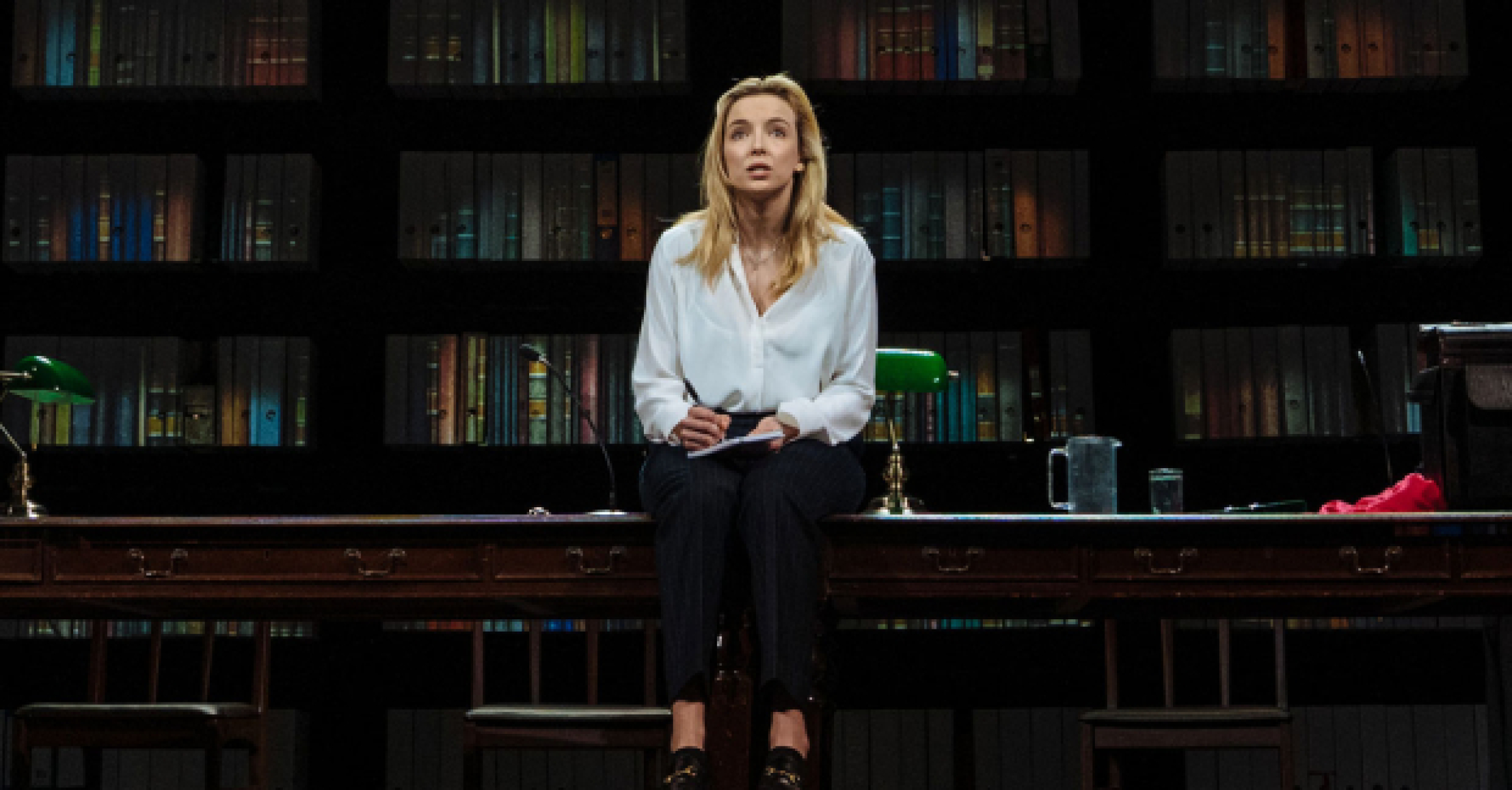
Comer plays Tessa, a brilliant young woman, who’s made it against the odds. Her first battle – as a state-educated Scouser – was getting into Cambridge law school; her second was graduating; her third becoming a barrister. She’s on the up, winning, sniggering at a young wannabe who asks of a rapist, ‘But is he guilty?” – because objective truth isn’t what she seeks. It’s “legal truth” that matters, which lawyer is best at playing the game. And she’s a fine player, one of the best. Lots of accusees are walking free because of her.

Until, one day, Tessa is raped. It’s a messy, complicated case, the type she knows she’ll never win. She was drunk; she’d had sex with the perpetrator before; she hasn’t any evidence. The whole legal edifice – the thing she’s dedicated her life to – comes crumbling down; the scales fall from her eyes. Her rapist will get off scot-free, thanks to someone like her, just doing their job. And the change in her is utterly and devastatingly believable. She’s always been determined. This might be a losing battle, but she’ll go down fighting.

The staging (by Miriam Buether) is an interesting blend: the piece opens in the naturalistic confines of a stuffy, traditional chambers, but the tables are soon being utilised as a courtroom, the chair as a toilet; costume changes happen slickly, on stage: Comer is her own dresser, as well as her own stage hand. Out on the street, after the assault, rain falls almost literally on her parade, washing away her former swagger. The lights change, the stage becomes a suffocating black box, and a projected calendar reveals the shocking truth of just how many days it takes to get your case to court. Years are lost.

The score, composed by the ever-fabulous Self-Esteem (Rebecca Lucy Taylor) perfectly complements the piece – it’s an intelligent marriage of art forms.

I won’t reveal whether Tessa wins; you can consider the statistics and place your bets. What she does do is deliver a final speech that, while it isn’t necessarily believable, is a perfect piece of wish-fulfilment. It’s all the conversations she’s had in her head during the three years she’s been waiting; it’s her fantasy moment, raising her voice and finally being heard.

This is a call to action that walks the walk, directly supporting The Schools Consent Project, “educating and empowering young people to understand and engage with the issues surrounding consent and sexual assault”. It’s also a powerful, tear-inducing play.

More, please.

5 stars

Susan Singfield

All My Friends Hate Me

10/16/22

Cameo Cinema, Edinburgh

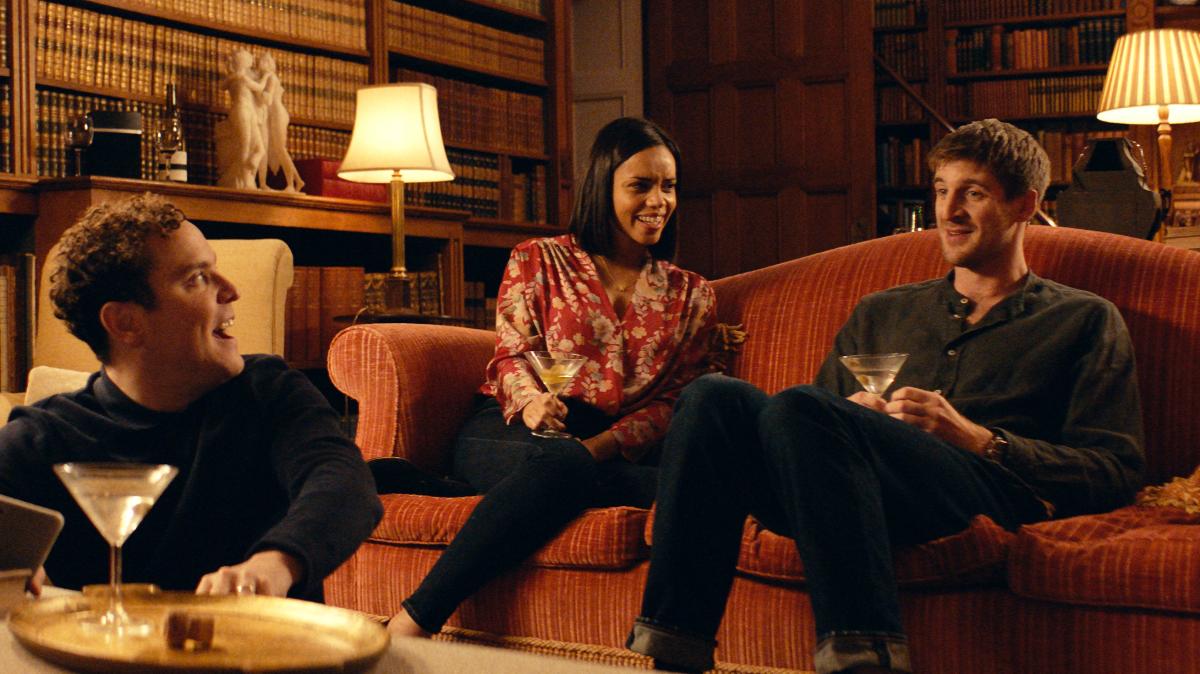
What do you do when a joke goes too far? When does humour turn to cruelty? And at what point do you need to speak out when your friends are making you unhappy? These questions are cleverly addressed in All My Friends Hate Me. Written by Tom Stourton and Tom Palmer, and directed by Andrew Gaynord, this dark comedy is a slippery exercise in steadily-mounting paranoia.

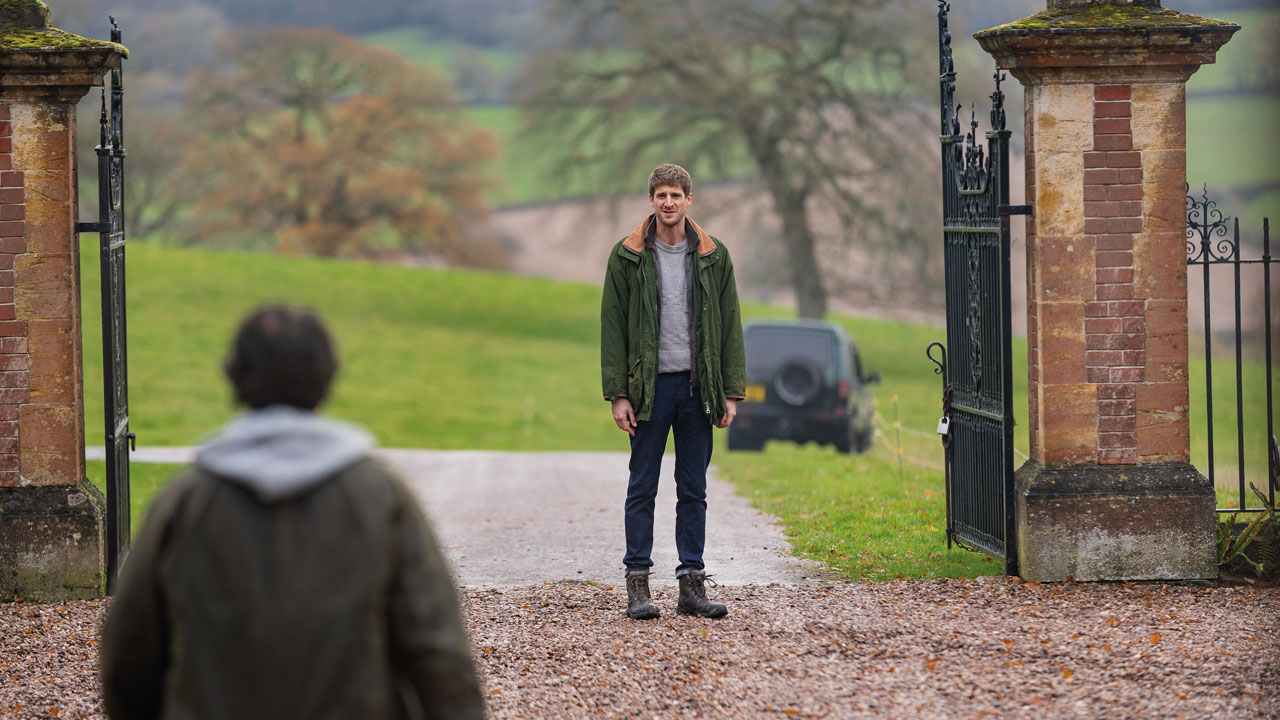
Pete (Stourton) is about to turn thirty-one and is proud of the work he’s been doing at an overseas refugee camp – and which he’s prone to mention at every opportunity. He’s also considering proposing to his partner, Sonia (Charlie Clive), but first there’s the little matter of an invitation he’s had from his old university chum, George (Joshua McGuire), to go to his swanky house in the country for a long weekend of celebration with the rest of the old uni crew. Sonia is tied up with work, but promises to follow him down later, so Pete gets into his car and sets off with high hopes for a memorable birthday.

Well, it’s certainly that, but for all the wrong reasons.

From the very beginning, things go wrong for him. He gets lost near to his destination and asks for directions from the creepy Norman (Christopher Fairbank, looking suitably sepulchral); he has a misadventure with a man sleeping rough in a car; and, when he finally reaches George’s house, he’s dismayed by what he finds.

His friends have invited a mysterious stranger along. Harry (Dustin Demri-Burns) is somebody they’ve ‘met in the pub,’ and he turns out to be quite obnoxious. As the weekend proceeds, Pete – who is socially anxious at the best of times – is subjected to a barrage of practical jokes, hurtful comments and mysterious encounters. Somebody seems to have stolen the herbal pills he takes to keep himself calm – and why does Harry keep writing down things in a little book?

Everything that happens is seen from Pete’s point of view – we share his discomfort every step of the way. One of the guests is Claire (Antonia Clarke), his old flame from college days, and people can’t seem to stop mentioning the fact. Pete hopes things will improve when Sonia finally shows up, but she dutifully arrives – and they don’t.

The ensuing misadventures are by turns toe-curling, darkly funny, deeply embarrassing and occasionally genuinely frightening. I love that the creators of this film steadfastly refuse to take things into the realms of the unbelievable. A Hollywood version of the same story would likely have ventured into bloodshed, mayhem and revenge, but this is all the stronger for avoiding that.

Astute, credible and – at times – even horribly familiar, All My Friends Hate Me keeps me hooked right up to its final unsettling moment. Those planning a birthday celebration away from home may want to wait until after they’ve returned before watching this. Because, well… just because people say they’re your friends, it doesn’t mean they really are.

4.2 stars

Philip Caveney

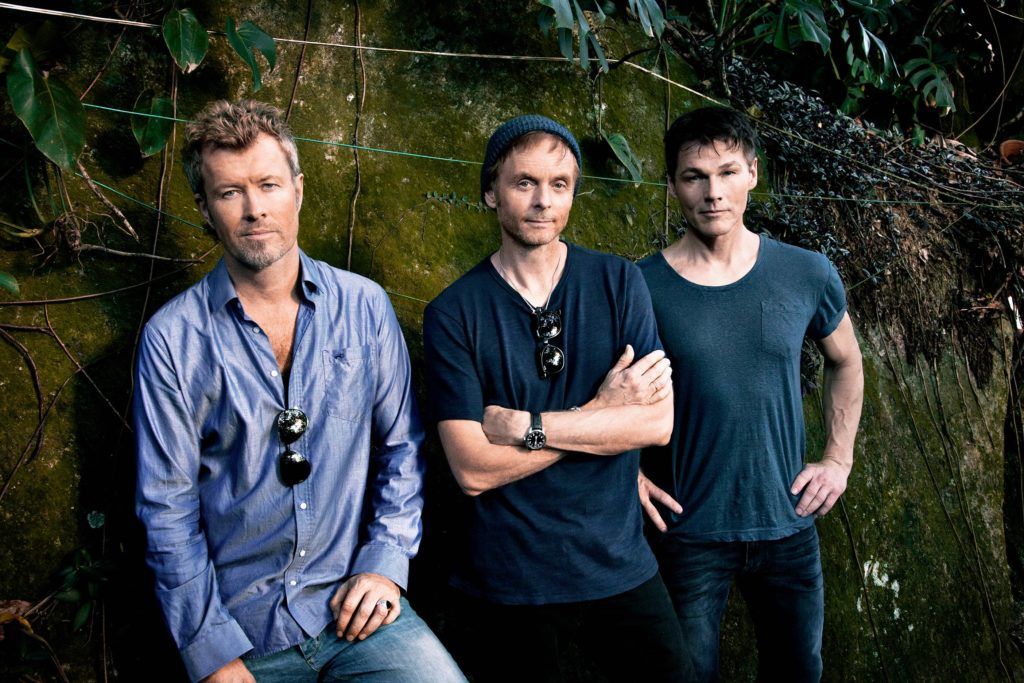
A-ha: The Movie

20/05/22

The Cameo, Edinburgh

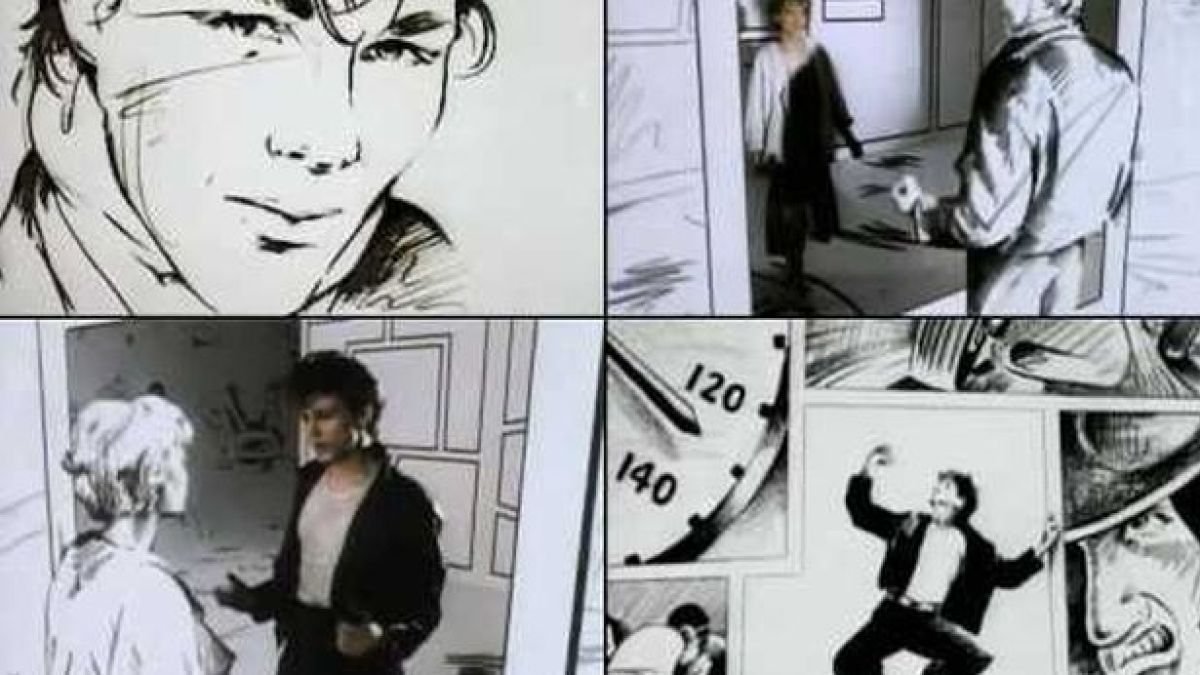
I was never a big A-ha fan, but I was a teenager in the 80s, so I couldn’t miss them – and there was never any denying that Take on Me was a banging tune with a mightily impressive video. And yes, a few plaited leather bands might have made their way onto my wrists and, okay, I might have covered my French book with a Smash Hits centrefold of Morten Harket – I mean, I had to cover it in something, right? But I didn’t know much about them, apart from their names and that they were Norwegian. I wasn’t interested.

But now, I discover, there’s more to them than met the eye.

Until now, I’ve never realised that they had real musical ambition. I’ve filed them under ‘pretty boy band’ in my mind, and paid them little heed. This fortieth anniversary documentary reveals my ignorance: there’s some serious musical ability here, obscured by the way they were marketed back in the day.

I hadn’t known they were still going – have been going all along, albeit with breaks. They seem tethered to one another, despite some pretty serious tension.

Magne Furuholmen (or ‘Mags’) emerges as the most compelling character. He’s in thrall to songwriter/guitarist Pål Waaktaar, who’s been his friend and bandmate since they were twelve. He’s resentful of him too: Pål insisted Mags should relinquish his beloved guitar in order to play keyboards, and then refused to give him a writing credit for Take on Me, despite the fact that the catchy synth riff was indisputably Mags’ creation. The rancour has clearly been festering for years, but there’s respect and nostalgia and maybe even love in the mix; they’re like brothers, I suppose, bound together by something bigger than any grievance. Still, Mags’ broken heart is more than just a metaphor.

Morten is the glamorous outsider, with a beautiful face and the voice of an angel. Pål knows exactly how to write for his voice, to showcase his skill. Harket seems more content than the others, despite his self-avowed perfectionism and constant self-criticism. He knows where to draw the line – when to remove himself from the fray; how to remain level-headed, even in the presence of two-hundred-thousand adoring fans.

Thomas Robsahm and Aslaug Holm’s film provides a fascinating insight, not just into the band themselves, but also into the industry around them: I’ve never seen a producer’s impact so clearly depicted. Nor have I ever been so aware of a PR machine shaping the way celebs are seen: at the height of their fame, there was a huge chasm between A-ha’s projected image and how they saw themselves.

In the end, I’m left feeling sad for these three seemingly lovely men, none of whom seems to be enjoying life, despite their indisputable success in a field they all profess to love. Maybe this is why they keep returning: hoping against hope that the next tour, the next album, will finally be the one to bring them that elusive happiness.

4 stars

Susan Singfield