Steven Spielberg

Twisters

17/07/24

Cineworld, Edinburgh

If ever I were asked to compile a list of the least eagerly anticipated movie sequels, Twisters would figure fairly high on it. After all, though Jan De Bont’s original was a commercial hit back in 1996, it has receded from public consciousness. The only image I can recall from it is a sequence featuring an airborne cow. But Lee Isaac Chung’s sequel has been co-financed by no less than three big studios and is executive-produced by Steven Spielberg, so clearly somebody has high expectations of it.

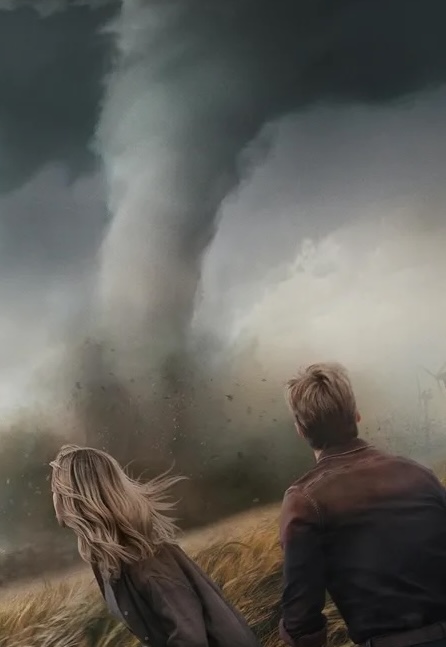
Twisters stars Daisy Edgar Jones as Kate Carter, an impetuous young meteorologist with the uncanny ability to ‘sniff out’ tornadoes before they actually happen. (Yes, really.) Along with boyfriend Jeb (Daryl McCormack) and a bunch of enthusiastic friends, including Javi (Anthony Ramos), she drives around Oklahoma in a ramshackle truck, chasing twisters – not for kicks, but to collect data for her PhD project.

Which is all great fun, until something bad happens.

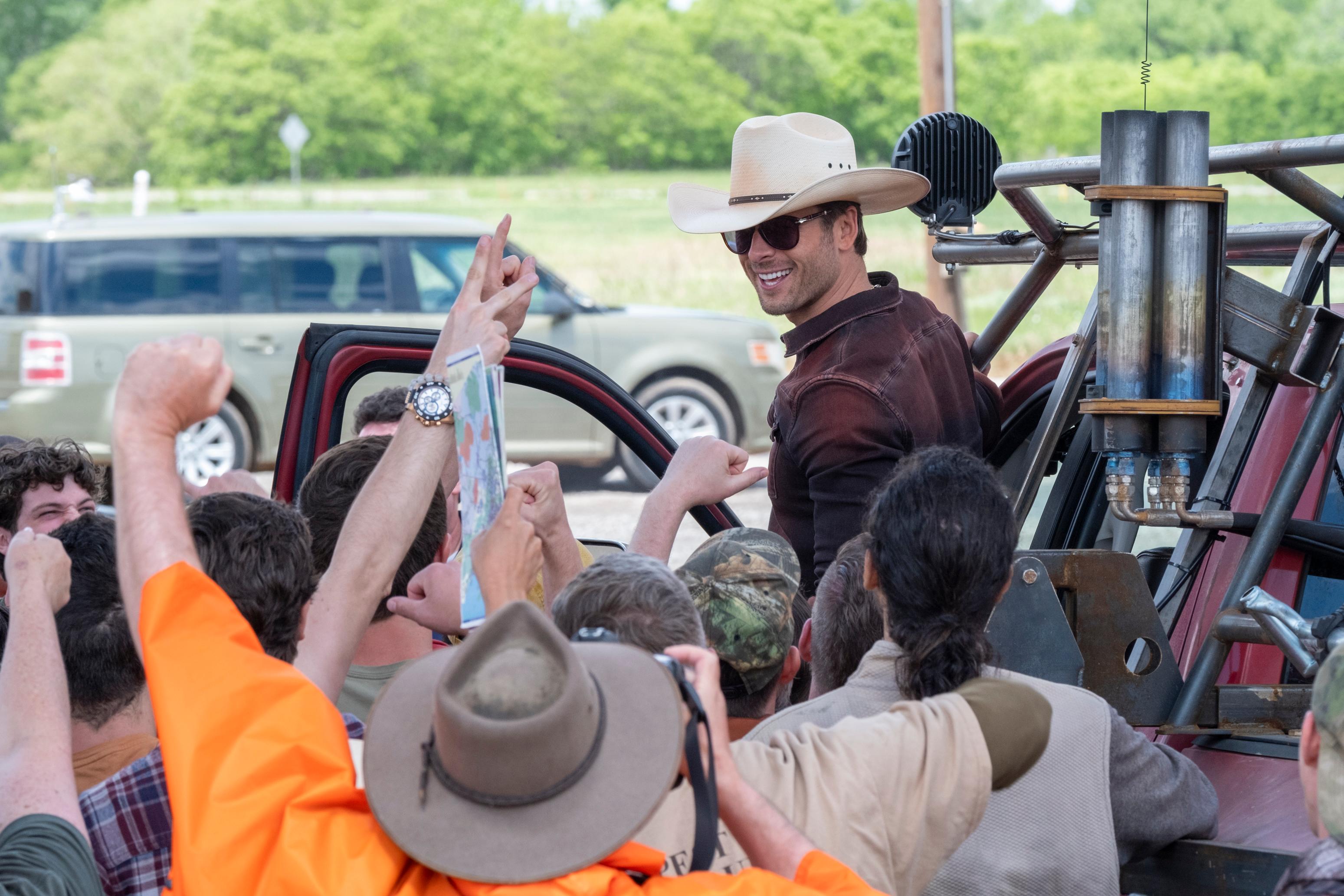
Five years later, she’s working in an office in New York, wearing a sensible suit and being very risk averse. She’s approached by Javi, who has recently been in the military and now has access to some state-of-the-art tech which will allow him to capture tornado data as it’s never been done before. Would Kate like to spend a week with him, helping him reap the whirlwind? Pretty soon, she’s back in action and running with a whole crowd of action-seekers, including Tyler Owens (Glen Powell), a redneck heartthrob with a huge online following and T-shirt sales to go with it. As he is fond of saying, “You don’t chase your dreams, you ride them.” Inevitably Kate and Glen find themselves bumping up against each other and, equally inevitably, sparks begin to fly…

Essentially, Twisters is a big-budget action romp, with a massive special effects budget, some eye-popping cinematography courtesy of Dan Mindel and, if I’m honest, not a great deal else. It’s a series of thrills and spills, featuring people who survive and others who do not. Every so often characters mumble stuff about the different chemicals that they’re pumping into the tornadoes in an apparent attempt to er… snuff them out? At least, I think that’s what they’re trying to do. I’m not sure how much scrutiny the technical side of this film can withstand.

Really, it’s just an excuse to throw people into a series of action set-pieces and make an audience worry about what’s going to happen to them. Since the unfortunate victims who lose the gamble are whisked away in an instant, there’s are no horribly mangled corpses to bother the 12A certificate. And, unlike its predecessor, Twisters does at least have the honesty to address the destructive nature of storms. Yes, there’s the occasional grudging references to global warming and climate catastrophe, but it all feels a little disingenuous.

There’s also a ‘will they won’t they?’ question overhanging Kate and Tyler throughout proceedings but, rather like those storm-related deaths, it’s all kept offscreen. Nothing to frighten the horses.

Don’t get me wrong, this all makes for an entertaining couple of hours in the cinema, but when you consider that Lee Isaac Chung’s last film was the brilliant and heartwarming Minari, it’s hard to get too excited about a summer blockbuster, which is full of sound and fury and… well, you know the rest.

3.2 stars

Philip Caveney

The Color Purple

01/02/24

Cineworld, Edinburgh

Not so much an adaptation of Alice Walker’s 1982 novel (or Steven Spielberg’s 1985 film, for that matter), this ambitious production is based on the Broadway musical which first got to strut its stuff in the early 2000s and has gone through several iterations since. Inevitably, much of the novel’s more hard-hitting elements have been sanded and burnished for consumption by a mass audience.

Directed by Blitz Bazawule, with music composed by Kris Bowers, the result is a film that occasionally bursts into exuberant, joyful life but just as often feels bowdlerised as it struggles to make a song and dance about incidents that don’t quite fit the medium.

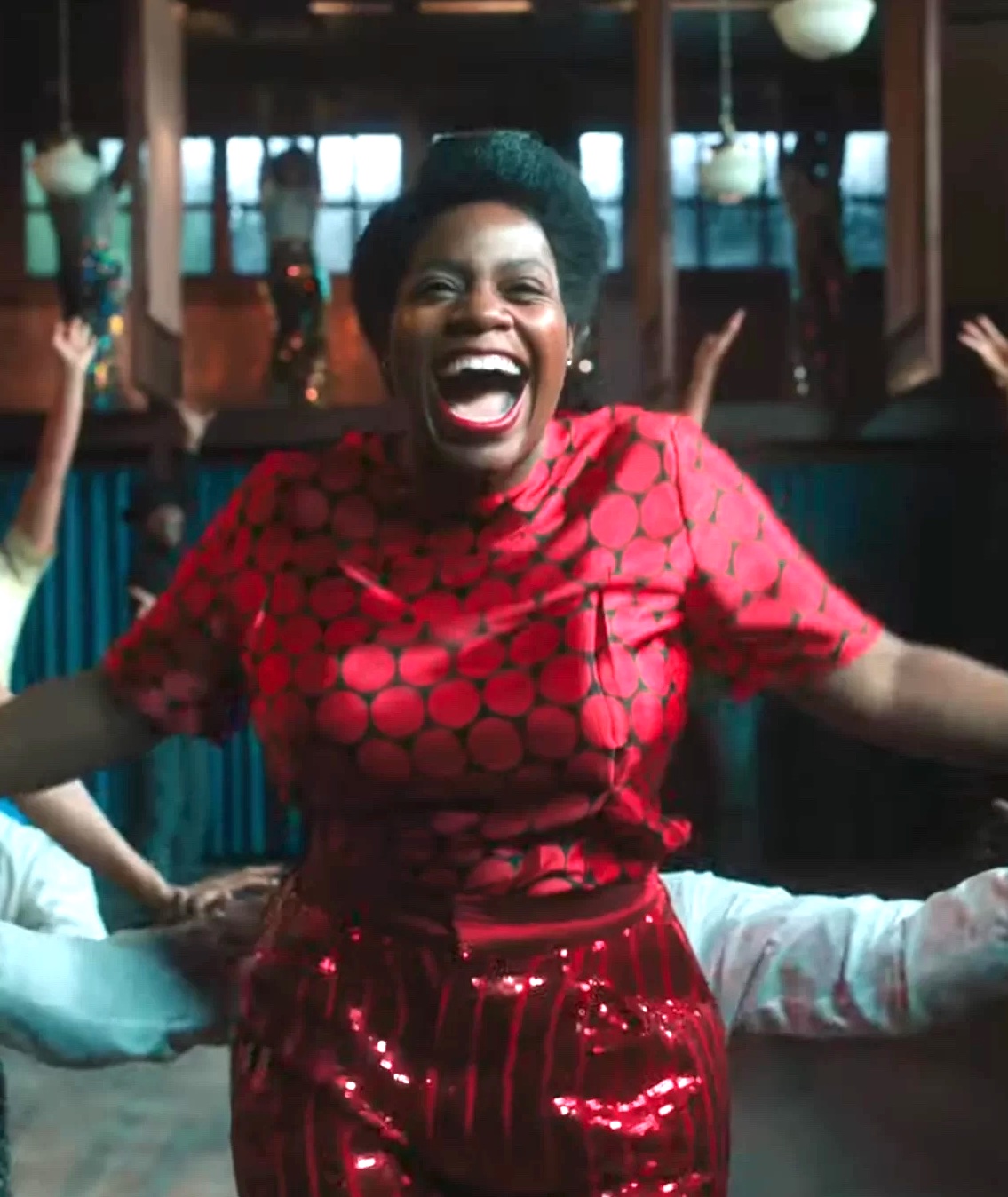
We first meet Celie (Phylicia Pearl Mpasi) when she’s a teenager, pregnant with her second child – by her father, Alfonso (Deon Cole). Mpasi brilliantly portrays Celie’s loneliness and distress, especially when, as he did with the previous baby, Alfonso takes the infant away from Celie without any explanation. Shortly thereafter, he offers her up as a bride to the heinous ‘Mister’ (Colman Domingo), a musician of sorts who has several motherless kids to care for in his ramshackle home down by the swamp. He needs somebody to get the place in shape and, if Celie is slow in following his orders, he’s all too ready to let his fists do the talking. Colman too, is utterly convincing as a man who’s never had his authority challenged by anyone.

Celie sets to work, determined to look after her new ‘family’ but when her beloved sister, Nettie (Halle Bailey), turns up saying that Alfonso has been making moves on her, Celie begs Mister to allow Nettie to move in with them. He agrees and inevitably, it isn’t long before he attempts to sexually assault her. When she dares to hit back, he throws her out of the house telling her never to return – and Celie has nobody to fight her corner.

The years move inexorably on – a scene where Celie views the changing seasons through the windows of the house as she ages is brilliantly handled. Celie (now played by Fantasia Barrino) has become inured to her own suffering, but redemption arrives in the form of vivacious blues singer, Shug Avery (Taraji B Henson), the woman who Mister reveres above all others and whom he’ll go to any lengths to please. When Celie and Shug form an unlikely alliance, it’s clear that change is in the air…

To give The Color Purple its due, Bazawule brings a whole host of invention to the difficult task of directing this piece, constantly exploring different approaches to a complex project. Cinematographer Dan Lautsen makes everything look luminous and remarkable and I particularly love a fantasy sequence set on a huge gramophone turntable. For me, the film is at its most successful during the big, ensemble pieces with scores of dancers whirling and leaping to vibrant, blues-inflected songs. I should also mention Danielle Brooks’ remarkable performance as Sophia, a powerful and assertive woman, eventually brought to heel by the injustice of the age. Brooks brings genuine verve to her portrayal and the scenes where she languishes in a prison cell provide the film’s most heartbreaking moments.

The relationship between Celie and Shug has been not so much downplayed as eradicated. In the book, it’s explicitly sexual; here it amounts to a quick snog in the cinema and a few meaningful looks, which I think speaks volumes about what makes contemporary American audiences uncomfortable. Why the subject of rape is deemed acceptable for depiction but a concensual lesbian relationship isn’t remains something of a head scrambler. Go figure.

The story’s conclusion, where everybody gathers to let bygones be bygones, feels every bit as unlikely as it did in the original story and, if I’m honest, it’s in this sequence where it all gets a little too schmaltzy for my liking. 

So, once again, here is another of those curate’s egg productions (a phrase I use far too often). It’s good in parts (sometimes very good) but elsewhere, I find the ingredients a little too bland for my taste.

3.6 stars

Philip Caveney

Indiana Jones and the Dial of Destiny

28/06/23

Cineworld, Edinburgh

Steven Spielberg’s Raiders of the Lost Ark (1981) was a near-perfect movie, a fast-paced action adventure that harked back to the classic serials of the 1940s. It made a huge profit off a comparatively low budget, so – inevitably – there were going to be sequels. Indiana Jones and the Temple of Doom (1984) and Indiana Jones and the Last Crusade (1989) may not have had the perfection of their whip-tight progenitor, but were decent enough efforts in their own right. And that’s probably where the whole enterprise should have ended. 2008’s The Kingdom of the Crystal Skull was – to put it mildly – a major miscalculation, despite being helmed by the usually dependable Spielberg. For a very long time, there were vague rumours of a fifth outing which remained exactly that. Rumours.

After all, Harrison Ford was getting a bit long in the tooth, so… maybe not?

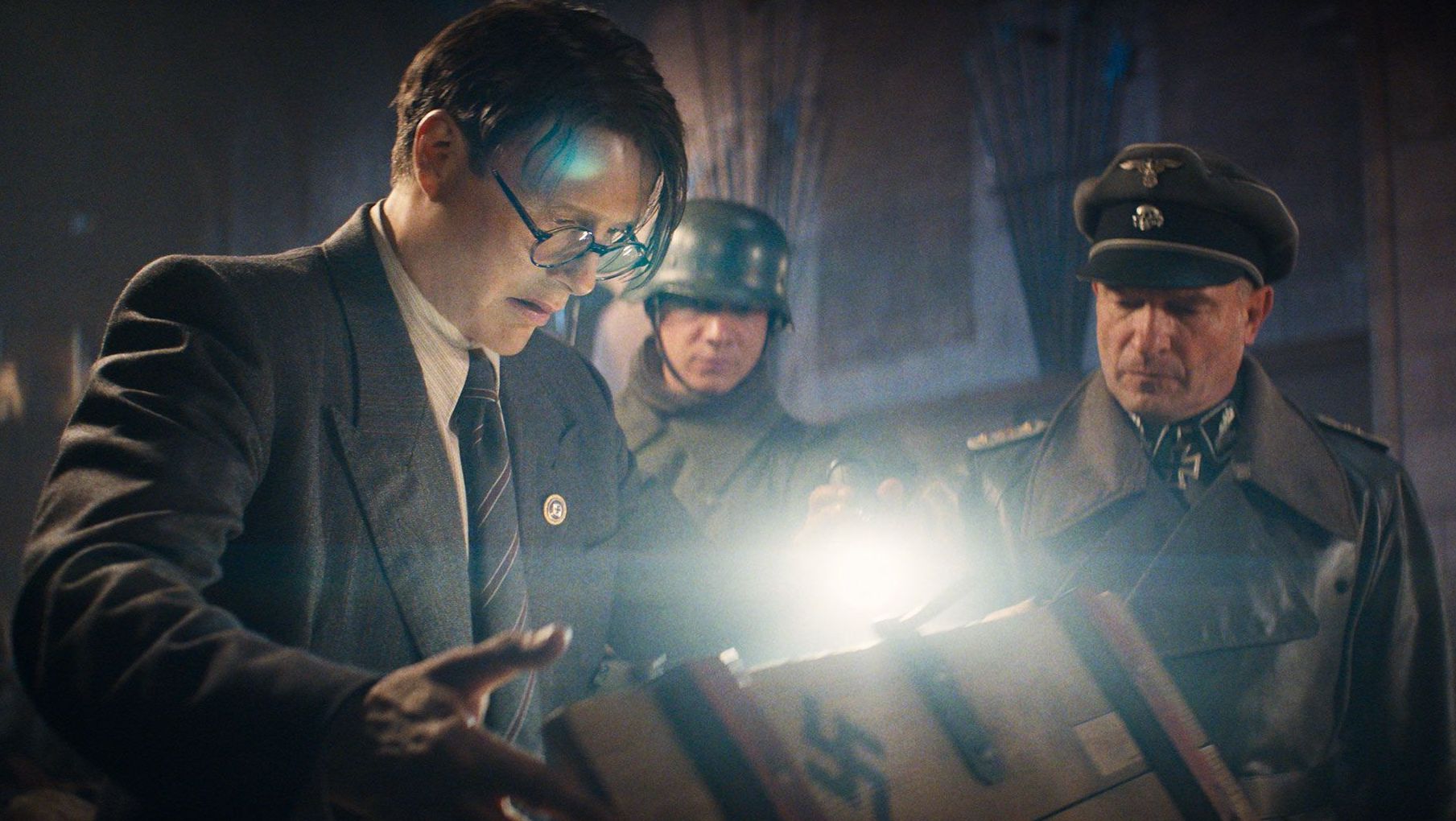
But now, directed by James Mangold, and written (mostly) by Jez Butterworth and his brother John Henry, everyone’s favourite archeologist is back in the game. When we reunite with him it’s via a flashback. It’s 1944, the Germans are rapidly losing the war and, thanks to the wonders of de-aging software, Indy looks like his former self. He’s working alongside his old pal Basil Shaw (Toby Jones) and the two of them are attempting to rescue an ancient antiquity, the Lance of Longinus, from a Nazi train packed with loot. Indy has just been taken prisoner, but needless to say, he’s soon free and wandering the length of the train, looking for the artefact. Also present is Dr Voller (the always excellent Mads Mikkelson), who has already decided the lance is a fake but has discovered instead, on the same train, the titular device (or at least half of it), built by Archimedes and capable of… well, that would be telling. A lengthy action set-piece ensues and it’s pretty good, serving as a promising opener.

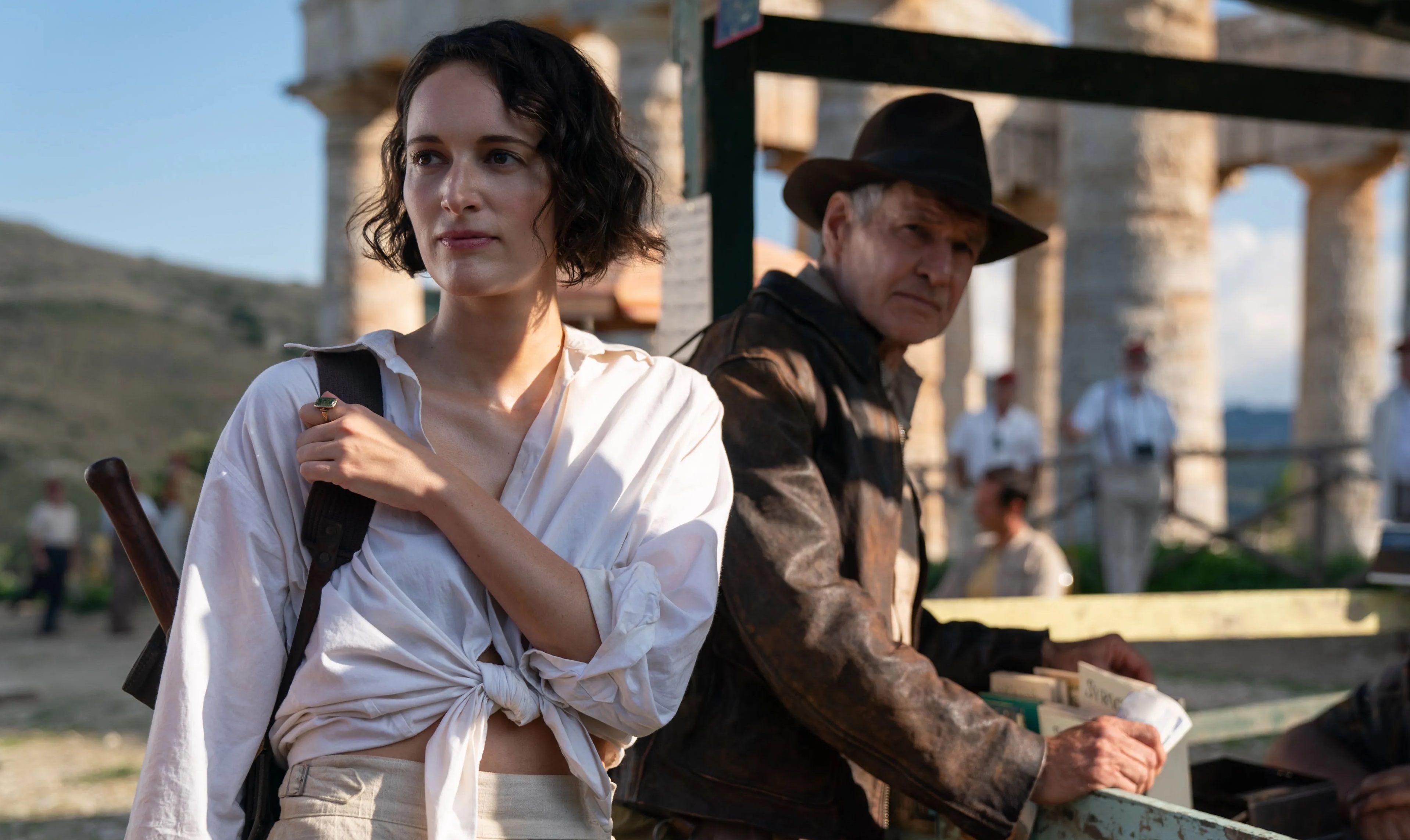
But then we move to 1969. Mankind has just landed on the moon and Dr Jones is now earning a crust as a University lecturer, though his students seem much more interested in listening to rock music and smoking dope. Retirement beckons and it’s made very clear that Indy has lost his mojo. Then along comes his Goddaughter, Helena (Phoebe Waller-Bridge), who is also very interested in the Dial of Destiny, but mostly because she plans to sell it to the highest bidder. To give her fair credit, Waller-Bridge gives the franchise a much-needed update, and she’s good on the smart-arse wisecracks, but I’m not sure I quite buy her as an adrenalin-powered action hero. Then again, if I can accept an eighty-year-old male in the role, maybe anything is possible.

The bad guys soon come a-calling and, what do you know, they’re being led by Dr Voller, who has his own unthinkable plans for Archimedes’ invention and won’t hesitate to carry them out. Indy and Helena team up and a game of cat and mouse ensues with some protracted chases. A lengthy sequence featuring Ford on horseback (or at least, his stunt double) is perhaps the film’s standout, but the problem here is that there are just too many of these pursuits. A really complicated one featuring our heroes in a tuk tuk definitely overstays its welcome.

There are frequent nods to those earlier films – some of which work, others which feel meh – and there’s a surprisingly touching scene when Indy tells Helena about what happened to his son and why he and Marion Crane (Karen Allen) are no longer an item. John Rhys-Davies shows up once again as Sallah, but is given very little to do here and, naturally, Helena has a keen young assistant in the shape of Teddy (Ethan Isadore), who seems able to turn his hand to most things, including at one point piloting a plane. As you do.

With a running time over two-and-a-half hours, it’s to Dial of Destiny’s credit that it never really runs out of steam and, if the final conceit is hard to swallow, well, this is a series that’s known for it’s supernatural reveals. (Just don’t overthink the space-time continuum stuff because, on reflection, much of it really doesn’t add up.) I leave feeling that I’ve been suitably entertained but, before I’ve even made the short walk home, I’ve thought of at least half a dozen questions that remain maddeningly unanswered.

So, this is far from the disaster I anticipated but, when held up against that brilliant opening shot of Raiders, it’s frankly not in the same league. I can’t help feeling that, now it’s out in the world, this particular treasure chest should be triple-locked and left in a quiet place to gather dust.

3.8 stars

Philip Caveney

The Fabelmans

28/01/23

Cineworld, Edinburgh

In the wake of the pandemic, several film directors seem to be have been inspired to take a closer look at at their own roots. Already this year we’ve had Sam Mendes’s Empire of Light, Alejandro G Innarutu’s Bardo and James Gray’s Armageddon Time – though good luck tracking down any cinema or streaming service showing the latter.

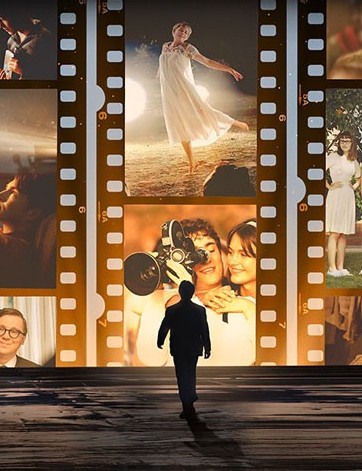
Now comes the turn of Steven Spielberg, arguably one of our greatest living directors, who is clearly looking to settle some old ghosts with The Fabelmans. The film is preceded by a short clip featuring an avuncular-looking Spielberg, humbly thanking the audience for coming to the cinema to see his latest offering. What we are about to watch, he tells us, is his most personal film ever.

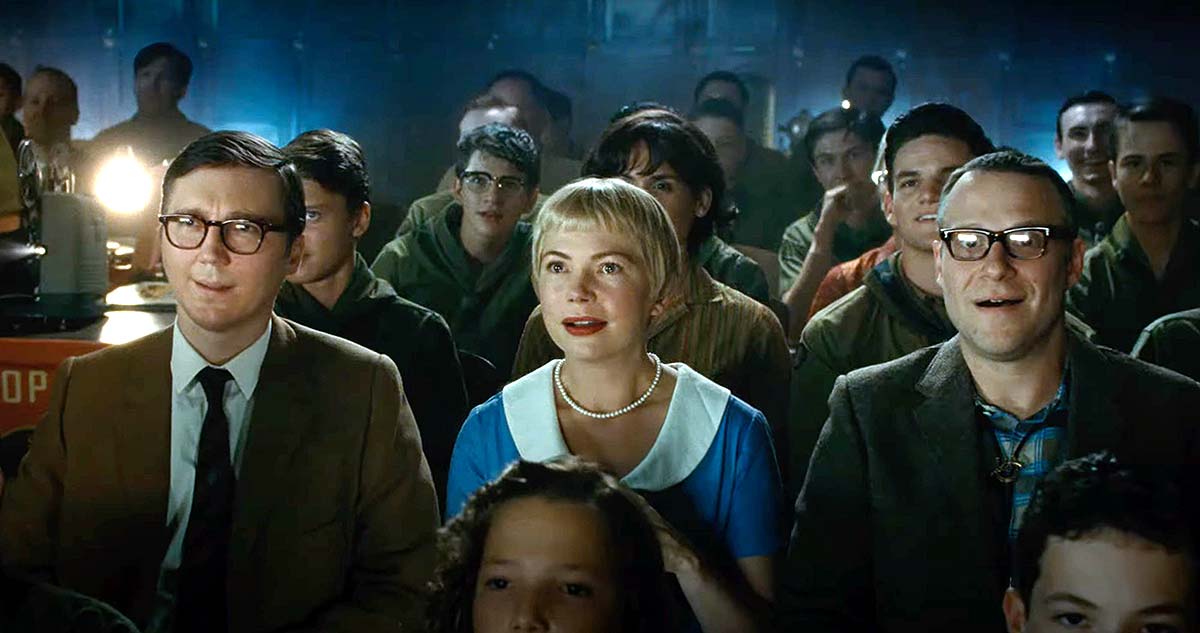
It begins in 1952, when the young Sam Fabelman (Mateo Zoreyan) goes to his very first picture show along with his parents, Burt (Paul Dano), a computer programmer, and Mitzi (Michelle Williams), a talented pianist. Sam is initially apprehensive about the upcoming experience – he’s heard terrible things! – but is transfixed by Cecil B DeMille’s The Greatest Show on Earth, particularly an extended sequence that depicts an epic train crash. That Christmas, Sam is given a lovely toy train set and he cannot stop himself from attempting to recreate what he saw in the movie and, inevitably, capturing it on film.

Time rolls on, and a teenage Sam (Gabrielle LaBelle) is living in Arizona, where Burt has gone for work. He’s still obsessively making amateur movies, aided by his willing schoolmates (including the famous World War 2 on a budget epic Escape to Nowhere) and thinks nothing of the fact that Burt’s friend, ‘Uncle’ Bennie (Seth Rogan), is a constant presence in the family’s life. It’s only when he is editing a film about a recent family camping trip that the camera reveals something he has previously had no inkling of…

The Fabelmans is essentially a family drama, but one that encompasses some weighty topics: mental health issues, the prevalence of anti-semitism and the expectations that parents can sometimes place on their children. Above all hovers the love of cinema, the almost magical ability it has to transform a viewer’s world, to allow them to escape from reality into a variety of uncharted realms. This is a warm and affectionate study of the director’s beginnings and, if it occasionally ventures perilously close to schmaltz, Spielberg is deft enough to repeatedly it snatch back from the abyss. The world he creates here is utterly believable.

There’s plenty to enjoy. I love the brief appearance by Judd Hirsch as all-round force of nature, Uncle Boris – a former silent movie actor, who recognises the nascent director lurking inside Sam and calls him to do something about it. There’s a beautifully nuanced performance from the ever-impressive Williams as a woman who has sacrificed her own creative ambitions to the demands of her family and is suffering because of it, and there’s a delicious, foul-mouthed cameo from (of all people) David Lynch. Throw in Janusz Kaminski’s gorgeous cinematography and legendary composer John Williams’ music, and you’ve got something a little bit special.

And while The Fabelmans is not quite the five-star masterpiece that so many critics have declared it to be, it’s nonetheless a fascinating look at the filmmaker’s roots and one that never loses momentum throughout its duration.

So don’t wait for streaming. See it where it belongs, and Steven will thank you in person.

4.6 stars

Philip Caveney

West Side Story

16/12/21

Cineworld, Edinburgh

Though an admitted fan of musicals, Steven Spielberg has never attempted one: until now, that is.

It’s perhaps typical of the man that he’s taken on one of the most acclaimed musicals in history and he’s quick to point out that this reboot isn’t based on Robert Wise and Jerome Robin’s 1961 motion picture, but on the original stage version, created by Leonard Bernstein, Stephen Sondheim and Arthur Laurents. In essence, the great director hasn’t changed so very much. The setting is still New York, some time in the 1950s, but here, we’re made aware from the opening sequence that the neighbourhood is undergoing major demolition in order to accommodate the building of the swishy new Lincoln Centre. The place is already doomed.

Spielberg has also settled some worries from the original film version, where white actors wore brown makeup in order to look ‘authentically’ Puerto Rican. He’s also added a non-binary character called Anybodys (Iris Menas) and has left some stretches of Spanish dialogue un-subtitled, relying on non-Spanish-speaking audiences being able to work out what’s actually being said. But mostly he’s left it to the sweeping cinematography of Hanusz Kaminsky and of course that series of solid gold songs to carry us through a world of finger-clicking dance routines and declarations of eternal love.

There’s part of me that wishes he’d tinkered a bit more than he has. But still…

I won’t waste time on needless plot details. If you’re familiar with Romeo and Juliet, you pretty much know what to expect.

The Romeo figure here is Tony (Ansel Elgort), recently released from prison after one punchup too many and literally towering over his diminutive love interest, Maria (Rachel Zegler). But of course, Tony is a former member of The Jets gang, while Maria’s brother, Bernardo (David Alvarez), is the leader of their Puerto Rican rivals, The Sharks, who hate all Jets as a matter of principle – and the feeling is mutual.

It can only end in bloodshed.

West Side Story 2021 is handsomely mounted and uniformly well acted – Ariana DeBose as Anita is a particular standout – and it’s also lovely to see Rita Moreno (who played Anita in the 1961 film) cast here as Valentina, the owner of the local drug store, from where she delivers her own haunting version of Tonight. But the film is at its best during the big ensemble numbers – a rousing rendition of America, played out on the busy streets of New York is fabulous and the climactic rumble between the two gangs, in a deserted salt warehouse is also visually striking.

What’s more, Spielberg even manages to make the cheesy I Feel Pretty – a song that has previously brought me out in hives – much more palatable, by the simple expedient of setting it in the flashy department store where Maria and her girl friends work – as cleaners.

So why does the film fail to thrill me? It could be, I suppose, that there are simply too few surprises. Perhaps if I were seeing the story for the very first time, I’d be more excited, but apart from some judicious airbrushing and those magnificent production values, I’m suffering from a bad case of ‘seen it all before.’ Viewers who weren’t even born in 1961 will doubtless have an entirely different view of it.

In the end, I admire it… but I don’t love it.

3.8 stars

Philip Caveney

Gremlins

06/12/19

If ever I were given the task of choosing the grimmest Christmas-themed movie in existence, Gremlins would have to be a strong contender for the title. This weird yet strangely entertaining fantasy, with its back story of a dead dad stuck up a chimney and dressed as Santa Claus, is (unbelievably) thirty-five years old – and here’s the anniversary re-release to prove it. Produced by Steven Speilberg shortly after the success of ET had powered him to prominence, it’s directed by his protégée Joe Dante.

Randall Peltzer (Hoyt Ashton) is an inventor of (mostly useless) kitchen gadgets. It’s coming on Christmas and he finds himself in an unfamiliar town, desperate to purchase a last minute gift for his ‘kid,’ Billy (Zachary Gilligan). The fact that Billy is in his twenties, with a dull but responsible job in a bank, feels decidedly odd. Why not make him a teenage boy? Surely that would be more convincing?

Anyway, in a bizarre little shop on a quiet back street, Randall buys Gizmo – a cute little animal called a ‘Mogwai’ – and he comes away with just three care instructions. He must never expose Gizmo to bright light, never get him wet and, most importantly of all, he must never NEVER feed him after midnight. (This third instruction is annoyingly vague. At what time after midnight is it OK to start feeding him again? Go figure.)

Of course, Billy blithely disregards all the instructions, whereupon the little ‘Wonderful Life’-style town he lives in finds itself overrun with voracious, scaly beasties who seem determined to over-indulge in all the vices associated with the festive season, half destroying the town in the process.

I haven’t seen this film since its cinematic release in 1984 and my memories of it were that it was ‘quite scary,’ but, in 2019, it plays more like the the Muppets on acid. It’s great fun provided you can overlook the sheer unlikelihood of the plot and the inescapable fact that the majority of characters here act like no real person ever would in such a situation. Also, there’s fun to be had spotting things you might not have been quite so aware of first time around. Isn’t that Steven Spielberg making a silent cameo as an inventor at a convention? Look how young Corey Feldman is! (I’d like to kid myself this is his screen debut but according to IMDB, it’s actually his 28th.) And wait… that hopelessly inept local cop with the oddly shaped nose. Isn’t that Jonathan Banks, AKA Mike Ehrmantraut from Breaking Bad? With hair! It is, you know! (And just for the record, this is his 48th screen appearance.)

Like many films from the 80s, there are elements that don’t pass muster now. Making the proprietor of the shop where Gizmo is found, an ‘exotic,’ half-blind, pipe-smoking, Chinese man, for instance, is not something that any responsible filmmakers would attempt in this day and age. But there’s also plenty to enjoy, not least the extended sequence where Billy’s Mom, Lynn (Frances Lee McCain), takes on five Gremlins that have invaded her house and uses a range of electrical kitchen implements to despatch them. I love the fact that the evil invaders personify everything that’s wrong with seasonal over-indulgence. And Chris Walas’s scaly creations – while representing what was state-of-the art animatronics thirty five years ago, and now looking a littly bit shonky – are still never less than a delight.

4 stars

Philip Caveney


Ready Player One

31/03/18

If ever there was a man to qualify as ‘World’s Greatest Living Film Director,’ Steven Spielberg would surely be a strong contender for the title. Few movie makers have his longevity – his first cinematic release, Duel, was released in 1971. Even fewer can boast his extensive range. Here is a man who is happy to film pure popcorn crowd pleasers like Raiders of the Lost Ark or Jurassic Park, but who is equally at home helming powerful dramas of the ilk of Munich or Schindler’s List. Recently the recipient of Empire Magazine’s ‘Legend of Our Lifetime’ Award, it’s hardly surprising that few people have bothered to put up voices of dissent. He really is that accomplished. With his latest release, he takes on the world of virtual reality gaming and it would have been so easy to come a cropper here, an older man desperately trying to be ‘down with the kids.’ But, as ever, Spielberg passes his self-appointed test with flying colours.

Set in the year 2045, the story is set in a dystopian vision of America (has there ever been an optimistic cinematic view of its future, I wonder?). Most of the population is addicted to virtual gaming and, like our hero, Wade (Tye Sheridan), spend nearly all of their leisure hours in a pixellated environment called The Oasis. Wade competes there using his more handsome avatar, Parzival, and he’s not just playing to escape from the drudgery of his life, oh no. He’s in search of three special keys, hidden there by the Oasis’s late creator, Halliday (Mark Rylance). The finder of those keys will inherit his world and the billions of dollars it generates in revenue.

Whilst in the Oasis, Wade regularly interacts with the avatars of gamer friends who he has never actually met in real life. Then he meets a new one, Art3emis (Olivia Cooke), who, he soon realises, is somebody he really would like to know better. Their introduction – during a riotous vehicle chase – sets the tone for the story that follows and makes The Fast and the Furious look like a Sunday drive in the suburbs. In the midst of all the excitement, Wade is blissfully unaware that he has a major adversary in the real world. Sorrento (Ben Mendelsohn) is a ruthless businessman, intent on securing the Oasis for himself and ready to go to any lengths to eliminate his competitors.

In terms of plot, that’s pretty much all you need to know. Suffice to say that Spielberg and his team have concocted a dazzling, fast-paced riot of sound and fury, with visual references to so many of Spielberg’s movie influences (plus several images from his own films) that you will be constantly trying to spot them all. Some are obvious, and actually contribute to the story, while others are onscreen for the briefest of glimpses. If ever a film demanded repeat viewings, this is the one – if only to allow the geeks in the audience to tick the various references off their list. If I may be allowed to single out one particular  sequence for praise, it’s the extended homage to Stanley Kubrick’s The Shining.

Okay, so this is definitely one to go on the ‘popcorn’ side of Spielberg’s resumé, but oh my goodness, what succulent popcorn it is! After the relatively lacklustre BFG, and the rather straight laced The Post, this puts him back where he belongs, as the foremost purveyor of cinematic wonder. Where will he go next? Well, that’s anybody’s guess, but I would venture to suggest that, close to fifty years since his low budget debut, Spielberg’s well seems a long way from running dry.

4.6 stars

Philip Caveney

The BFG

maxresdefault

22/07/16

It sounded like a marriage made in heaven – Steven Spielberg takes on one of Roald Dahl’s best-loved tales, with a screenplay by ET author Melissa Mathison (who recently died of cancer and to whom this film is respectfully dedicated). And there’s surely much to admire in this handsomely mounted, big screen production. Newcomer Ruby Barnhill, who plays the role of Sophie, is leagues away from the usual cheesy Hollywood starlet and, as the titular big friendly giant, Mark Rylance is perfectly charming, his features projecting a whole range of emotions to camera. And yet… there’s something curiously inert about this film. Every image might look like something you could put in a gilt frame but the story itself is… dare I say it? A bit dull. There’s none of the peril that you’ll usually find in a Dahl story; indeed, the plot here is thin and, at times, downright illogical. And then, of course, there’s Spielberg’s inevitable proclivity for the sentimental, something that Dahl (bless him) could never have been accused of.

In 1980s London, young Sophie dwells in a peculiar sort of orphanage. In the small hours of the morning, she looks out of the window and spots a giant wandering the alleyways of the city and, because she has seen him, he grabs her and takes her away to ‘Giant Country,’ where she quickly discovers that this big friendly giant is, in fact, a bit of a runt, constantly bullied by other, bigger giants. She accompanies him to his work, where he catches dreams and stores them in bottles – it’s never really clear why.

The audience this afternoon is largely made up of youngsters but it’s quickly apparent by all the restless trips to the toilet that the film isn’t really grabbing them. An extended farting sequence at Buckingham Palace has them laughing but it’s over much too quickly,  and they’re soon back to fidgeting and chatting. I’m afraid I am in total agreement with them. Spielberg is the closest you could reasonably expect to provide  a capable set of hands at the tiller of any celluloid voyage but this particular journey soon finds itself becalmed and that’s a genuine shame.

3 stars

Philip Caveney