

18/05/24
Cineworld, Edinburgh
Written, produced and directed by John “A Quiet Place” Krasinski, IF is quite a departure for the filmmaker. Instead of the unsettling horror and dread he’s renowned for, this sentimental kids’ film is essentially an exhortation not to put away childish things. “You have to stop,” says twelve-year-old Bea to her prankster dad, who needs surgery for his broken heart. “Never!” he responds, twirling his IV pole in a tango, smiling into the googly eyes he’s placed on its bag.
Bea (Cailey Fleming) has been through the mill. Her mom (Catharine Daddario) died of cancer a few years ago, so she’s understandably terrified when her dad (Krasinski) falls ill. His hospital is in New York, so Bea stays with her granny (Fiona Shaw) in Brooklyn Heights for the duration. It’s close enough for her to visit every day, and also gives her a chance to reconnect with some early memories – although she’s quick to remind her well-meaning granny that she’s not a kid any more.
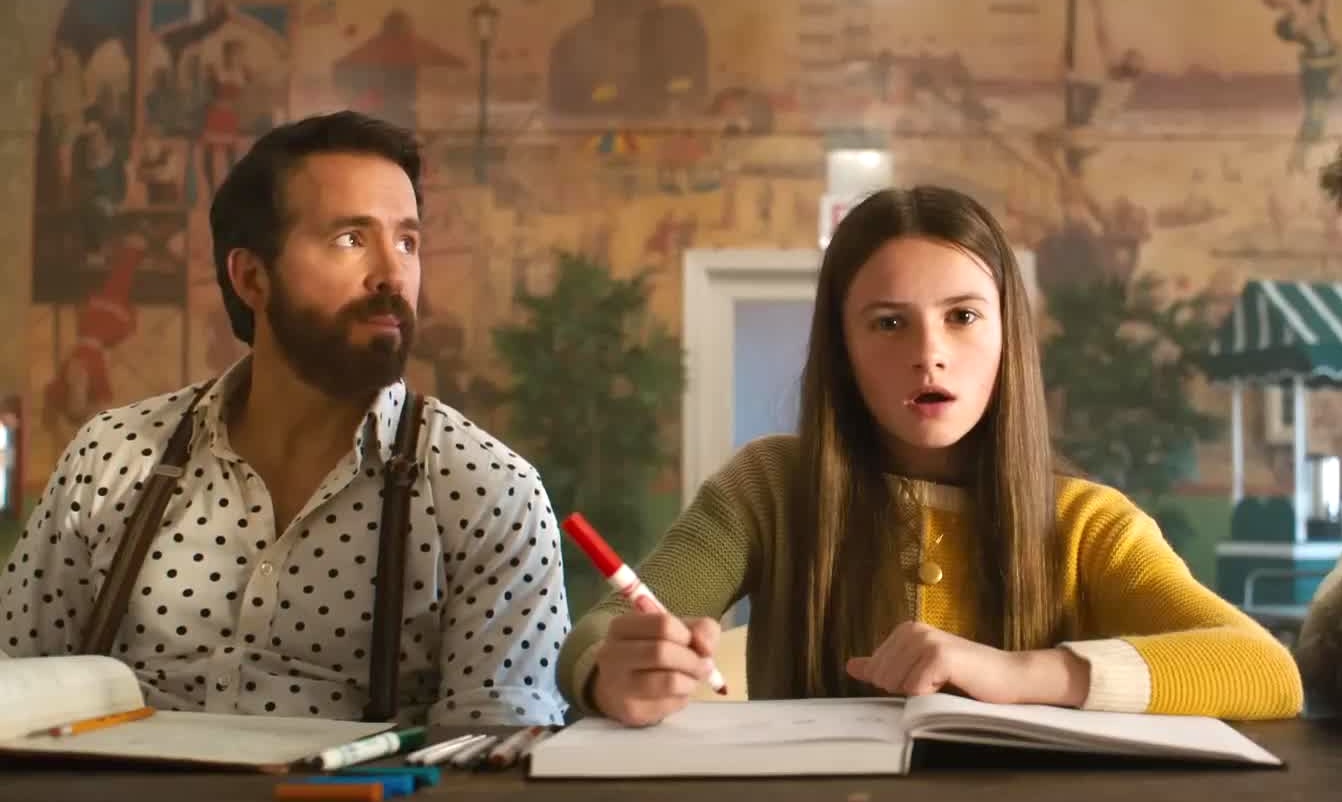
But Bea soon realises that something strange is happening in the apartment building. Catching a glimpse of a girl-sized ballerina-butterfly, she follows it up the stairs, where she discovers a room inhabited by a man called Cal (Ryan Reynolds), whose job is to care for the abandoned IFs of the title: imaginary friends whose children have grown up and forgotten them.
The IFs provide a welcome distraction. Of course, at twelve Bea is far too old for an IF of her own, but she’s more than happy to help Cal find new placements for all those languishing in a retirement home in Coney Island…
There’s a lot to like: Fleming is a delightful performer, there’s an impressive array of stars voicing the IFs, and the whole thing looks wonderful, the blend of live action and animation beautifully realised. The underlying message, though simple, is nicely conveyed, and there are some memorable set pieces, including a jubilant dance number to Tina Turner’s Better Be Good To Me.
But IF is a frustrating film. The storyline is muddled, with gaping flaws in its internal logic and some unconvincing details that distract from the flow. If it’s a contemporary piece – as it’s meant to be – why does no one have a smartphone? And why is a twelve-year-old girl allowed to wander around a strange city at night alone? The one time her granny asks where she’s been, Bea simply shrugs and tells her, “Out with friends.” If this were a tale of benign neglect, then that might suffice, but nothing else in the story suggests that’s the case.
What’s more, for something that’s supposed to be a comedy, it’s not very funny. Giant cuddly-monster Blue (voiced by Steve Carrell) sneezes a lot and blunders around banging into things, but never quite reaches the level of clowning that elicits a laugh. The emotional stuff is better: Bea’s fear of losing her father is tangible, as is her granny’s inept desire to make her happy. But even here, there are untapped resources: Nurse Janet and Benjamin, a sick little boy in the same hospital as Bea’s dad, are two great characters played by two great actors (Liza Colón-Zayas and Alan Kim), both criminally under-used.
All in all, IF is a perfectly watchable film – but there’s a better one in there, struggling to get out.
3 stars
Susan Singfield


 Bouquets & Brickbats