
Shetland

Àma Gloria

03/07/24

Mareel, Lerwick, Shetland

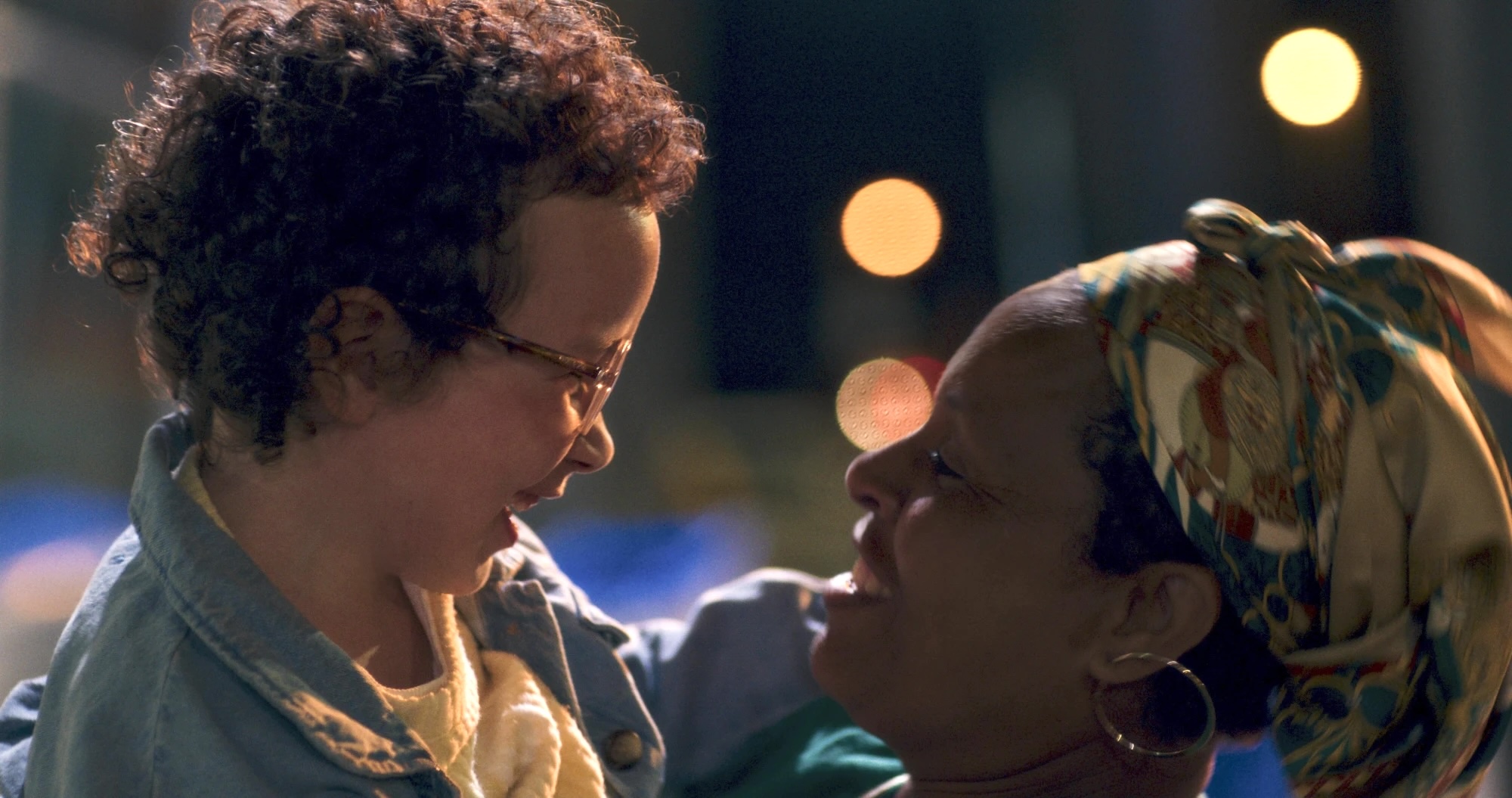
Six-year-old Cléo’s dad, Arnaud (Arnaud Rebotini), clearly loves her very much, but he’s busy with work and still grieving for the little girl’s mum, who died a few years before this story starts. He can’t manage on his own. Thank goodness for Gloria (Ilça Moreno Zego), a nanny, who forges a close bond with the child. In her care, Cléo (Louise Mauroy-Panzani) is happy: she laughs; she learns; she lights up the rooms of their Paris apartment.

But there’s a darker side to Gloria’s story. An immigrant, she’s come to France to earn the money to pay for her own children’s education. They’re back in Cape Verde, being cared for by Gloria’s mum. And when she dies, Gloria knows it’s time to go back home, and try to build the hotel she’s been saving for. Cléo is devastated by the loss of a second ‘mother’.

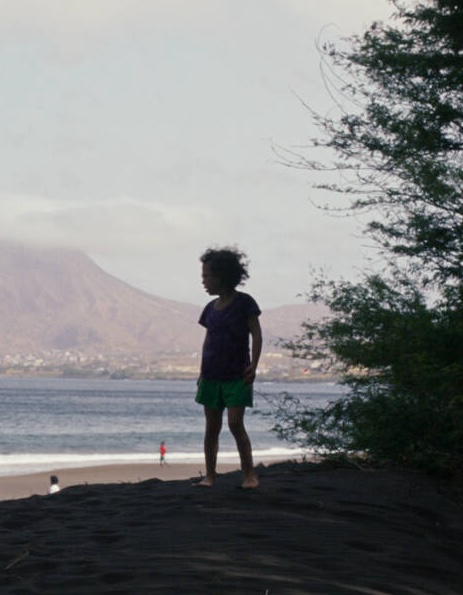
Arnaud and Gloria come up with a plan to ease the little girl’s pain: she can visit Gloria for a holiday. In Cape Verde, we see that Cléo is not the only motherless child: ten-year-old César (Fredy Gomes Tavares) is resentful of the Parisian who stole his mum from him. His older sister, Nanda (Abnara Gomes Varela), is more welcoming, but when she gives birth to her own son – Gloria’s first grandchild – Cléo experiences a powerful jealousy…

Written and directed by Marie Amachoukeli-Barsacq, Àma Gloria is a beautifully understated film, anchored by an extraordinary performance from its young co-lead. Mauroy-Panzani is luminous, her emotional reactions heart-wrenchingly convincing. Moreno Zego is excellent too: she imbues Gloria with both dignity and heart.

The animated sequences (by Marie and Pierre-Emmanuel Lyet) work really well, their soft edges lending them a dream-like quality, their blurriness suggestive of Cléo’s vision when she takes off her glasses. They magnify key points in the drama, slowing down the action so that we have to focus on the moment.

In fact, not much happens, but the what-might-have-beens are expertly placed so that, even when they don’t occur, we have already imagined them; they form part of our experience of the film. It’s a clever touch.

Heart-breaking, life-affirming, thought-provoking and delicate, Àma Gloria is a lovely, affecting film.

4.4 stars

Susan Singfield
Da Steak Hoose

02/07/24

Mounthooly Street, Lerwick, Shetland

We’re in Shetland for an author visit and until today the weather has been relentlessly dreich. This afternoon though, after the book event, the clouds disappear so we visit St Ninian’s Isle. After a long hike, we find ourselves in the mood for a slap-up meal. We can hardly fail to notice Da Steak Hoose, which literally adjoins the charming Airbnb where we’re staying.

First impressions aren’t promising. From the outside the place looks unprepossessing, almost forbidding, with no way of seeing what actually lies behind those blacked-out windows, and we start to wonder if it’s still doing business. But then we notice a sheet of faded paper in the window announcing that the establishment won a ‘Best Scottish Steakhouse Award’ in 2023 and so we make the (one minute) journey and head upstairs to the restaurant.

It quickly becomes clear that those first impressions were deceptive. There’s a large, roomy dining area, already half full of cheerful, friendly customers. The staff are charming and we’re soon sipping drinks and perusing the menu. We note that other diners are happily tucking in to generously-sized starters, which look enticing, but we resolve to cut straight to the main course and leave some room for pudding.

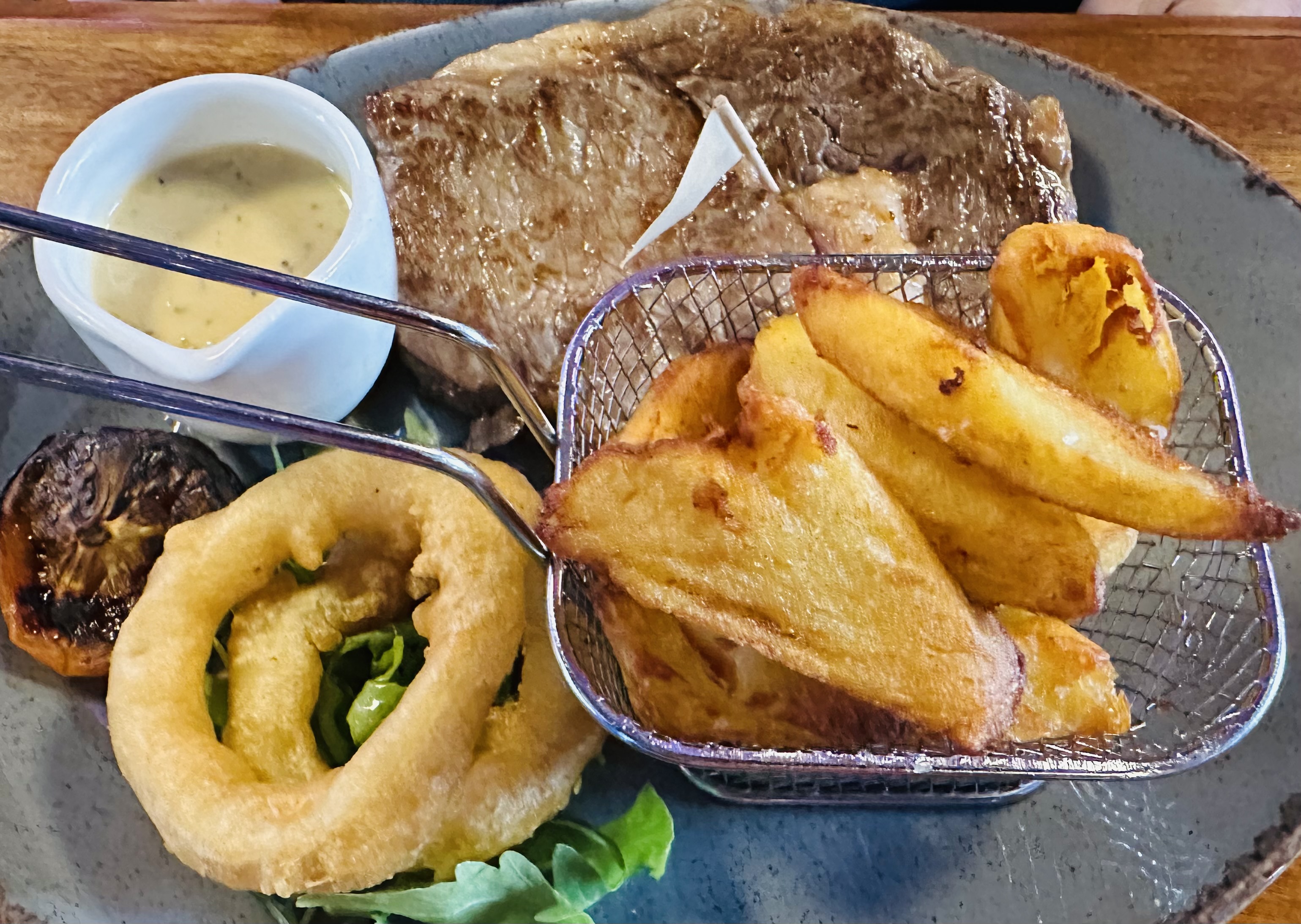
I order the rib-eye steak with a pepper corn sauce, and Susan opts for the sirloin. Soon enough, the meals arrive and we don’t require any urging to get stuck in. The medium-rare steaks are succulent, easy to slice and gloriously juicy. They are accompanied by baskets of chips, which are amongst the best I’ve eaten, with dry crispy exteriors and a soft floury centre: exactly what fried potatoes ought to be but so often aren’t. There’s a little green salad, a slice of intensely flavoured sweet tomato and some crispy onion rings. It’s all handsomely presented and it goes down a treat.

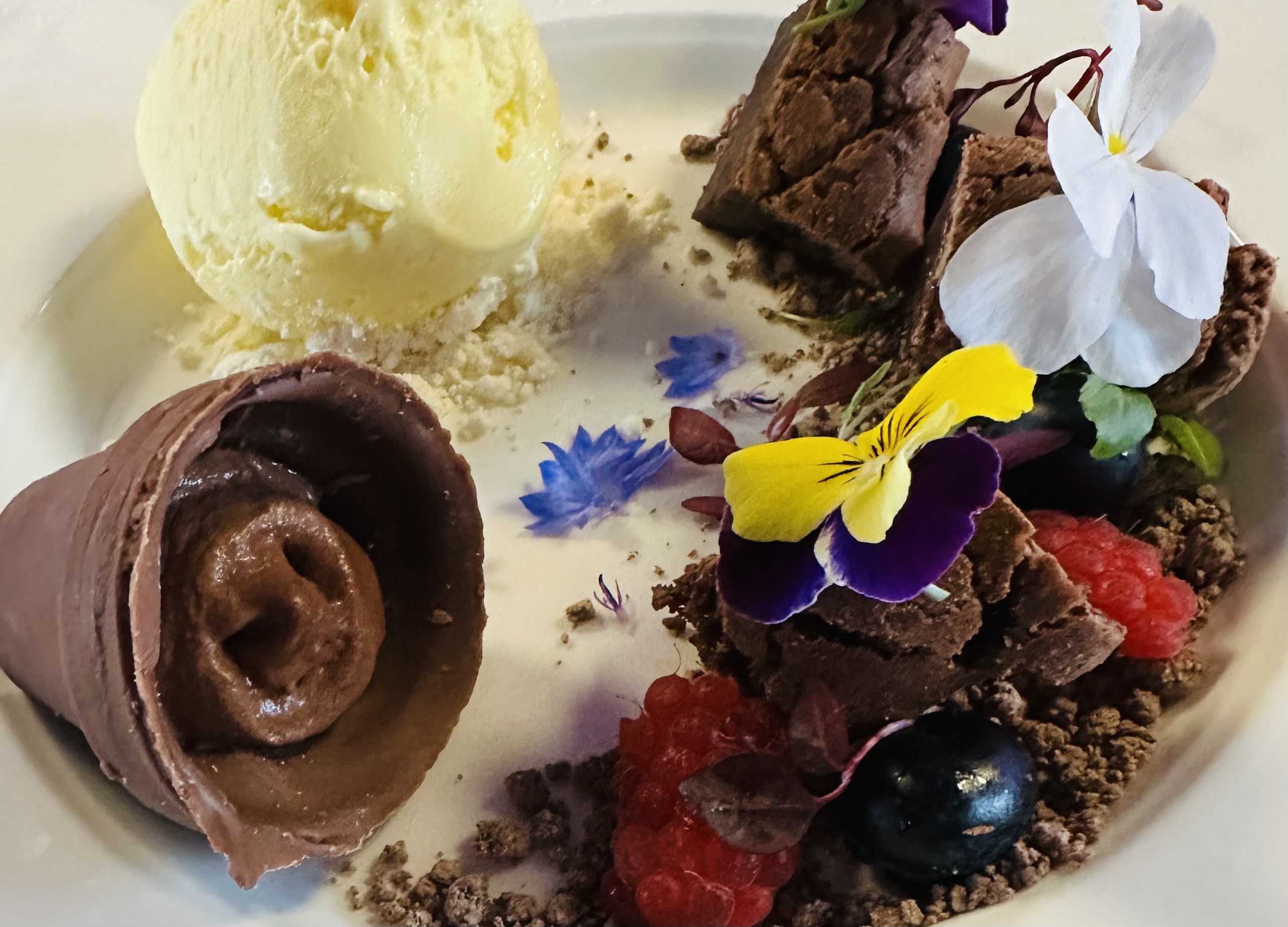
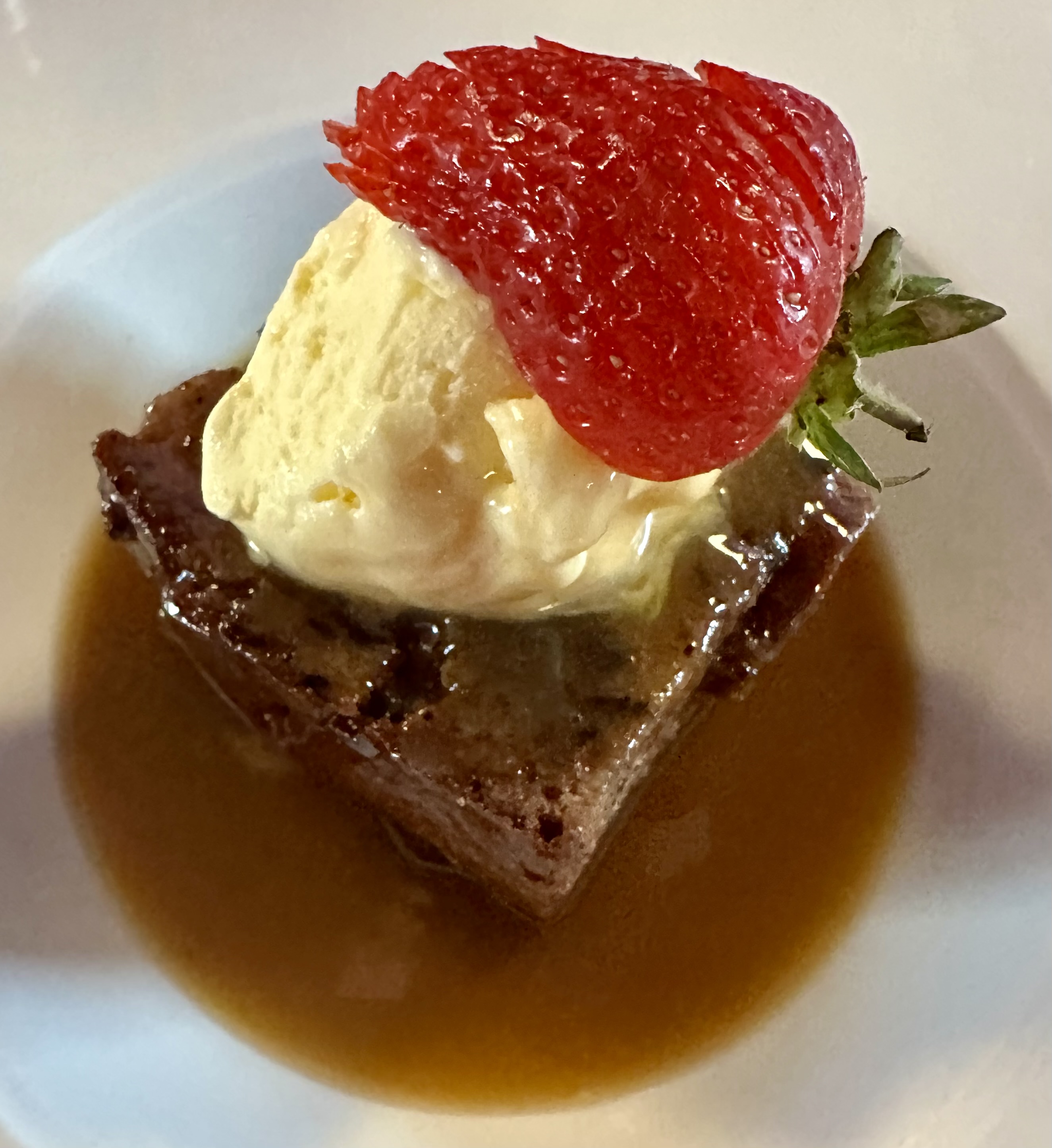
There’s a choice of just four puddings so we decide to share two of them. There’s a sticky toffee pudding, which is soft and scrumptious and full of dates, served with a scoop of vanilla ice cream and a fresh strawberry. It’s nicely judged, sweet but not too sweet. The chocolate flowerpot brownie is also a delight, the chunk of brownie gooey and indulgent, the flowerpot even more so, the chocolate shell stuffed with a thick chocolate mousse, the whole thing decorated with raspberries, chocolate crumb and edible flowers. It tastes every bit as delicious as it looks.

So, should you ever make it out to Shetland – and there are plenty of reasons why you should – Da Steak Hoose should be on every carnivore’s bucket list.

4.2 stars

Philip Caveney

The Hermit of Treig

14/04/22

Mareel, Lerwick, Shetland

When we book our tickets for the The Hermit of Treig, it seems very fitting: we’ll be watching a documentary about a recluse living in a remote Scottish location, while we’re in a remote Scottish location! Such perfect symmetry! And it’d be a good idea, if it weren’t for the fact that Mareel – despite being the UK’s most northerly music, cinema and creative industries centre – doesn’t feel remote at all. It’s a bustling, vibrant place, and the Thursday evening showing is all but sold out.

Not that we’re complaining. We feel right at home. (In fact, Mareel is very much like HOME, one of our favourite Manchester venues). We sit in the sun-soaked, glass-walled bar for an hour before showtime, sipping beer and Prosecco, enjoying the buzz. The staff are friendly and the place pristine. It’s a real find.

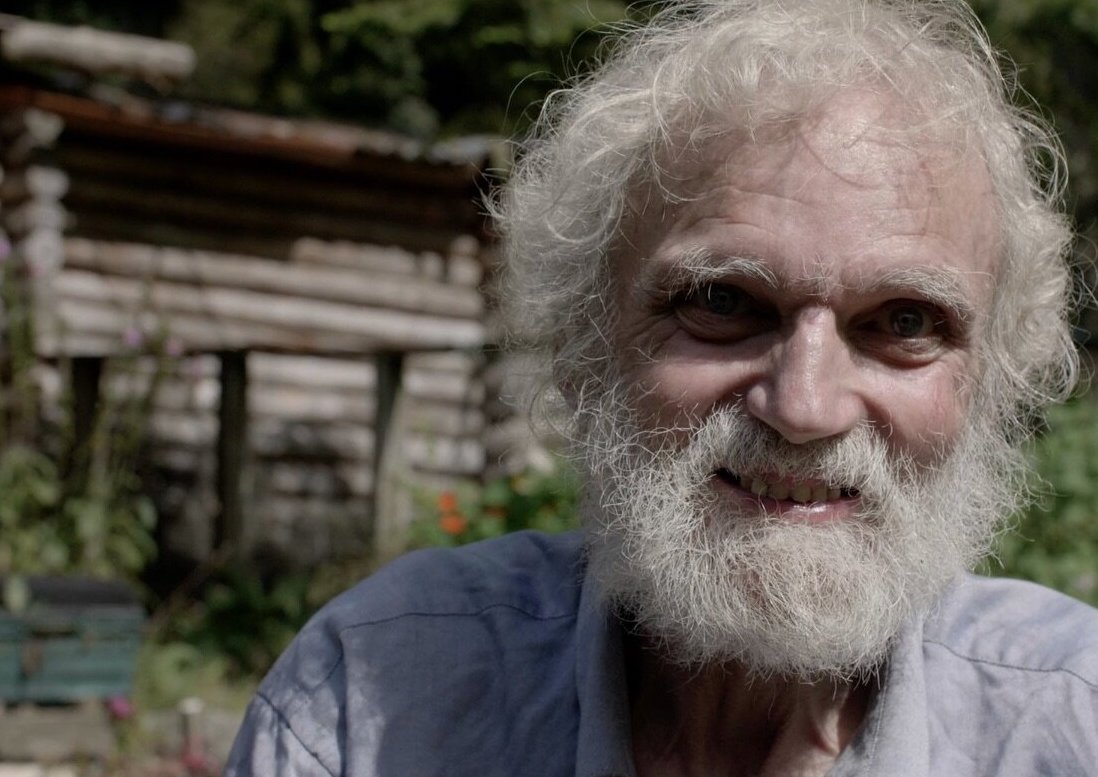
And Lizzie MacKenzie’s debut film is a find too. She’s spent ten years following Ken Smith, the eponymous hermit. And, over those years, a real friendship seems to have emerged. He may have turned his back on civilisation, but he’s an amiable sort: chatty and engaging and happy to share his musings.

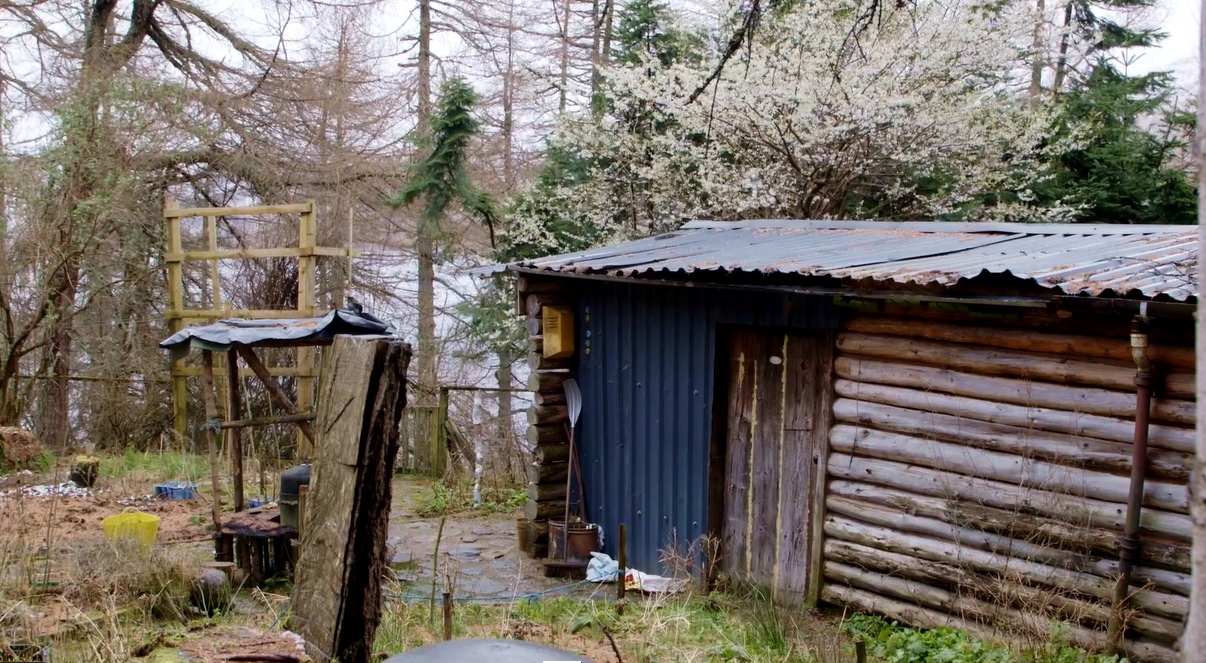
When he was twenty-six, Ken was viciously attacked, and suffered a brain haemorrhage as a result. His doctors feared he would never speak or walk again. But Ken pulled through and, as soon as he was well enough, he set off to live his life on his own terms. He went to Canada and lived wild in Yukon for a few years, before returning to the UK and heading north to Scotland. He walked the length and breadth of the country he says, before finally deciding to stay put near Loch Treig. And this is where the young film-maker finds him, living off-grid in a home-made wooden cabin, far far from any beaten track, foraging for food and revelling in his splendid isolation.

It’s a lovingly crafted film, with a tender heart; it’s easy to see why MacKenzie won the audience award at this year’s Glasgow Film Festival. It’s not just the cinematography (MacKenzie’s) and photography (Smith’s) that dazzle with their natural beauty; the documentary shimmers with kindness and humanity too. Ken is seventy-two years old now. He’s not as strong as he was. He’s had a stroke. How long will he be able to manage?

It’s heart-warming to see the local (okay, local-ish) community rally round. Everyone’s so respectful of Ken’s way of life. They try to help him, but they don’t dictate; they don’t attempt to change him. And Ken’s pretty accepting too: hopeful that he’ll be able to continue living independently in his beloved hut, but pragmatic about the possibility that he might not.

There are some gaps in the narrative that I’d like explained. Is Ken allowed to just build a home in the woods? How does he get his photographs developed? What was the story behind his first cabin being destroyed? There are tantalising hints at avenues left unexplored.

Still, just like Mareel, The Hermit of Treig isn’t what we expect. And, like Mareel, that’s absolutely a good thing.

4 stars

Susan Singfield

The Dowry

12/03/22

Commercial Street, Lerwick

We’re in Shetland, mainly for the purposes of researching a book I’m working on. But it would be rude, wouldn’t it, to pass up the opportunity to try out some of the local dining venues? We’re based in Lerwick and a wander around the town doesn’t reveal anywhere that looks particularly promising. However, an online check reveals that a place called The Dowry has several good reviews, and it turns out the place is only a short walk away from where we’re staying.

It’s a lively cafe bar, run by friendly young people and we’re soon enjoying a convivial drink while we peruse the menu and listen to a selection of Manchester music. Hang on, isn’t that Blossoms? Susan used to teach drama to the keyboard player! A case of synchronicity, I suppose.

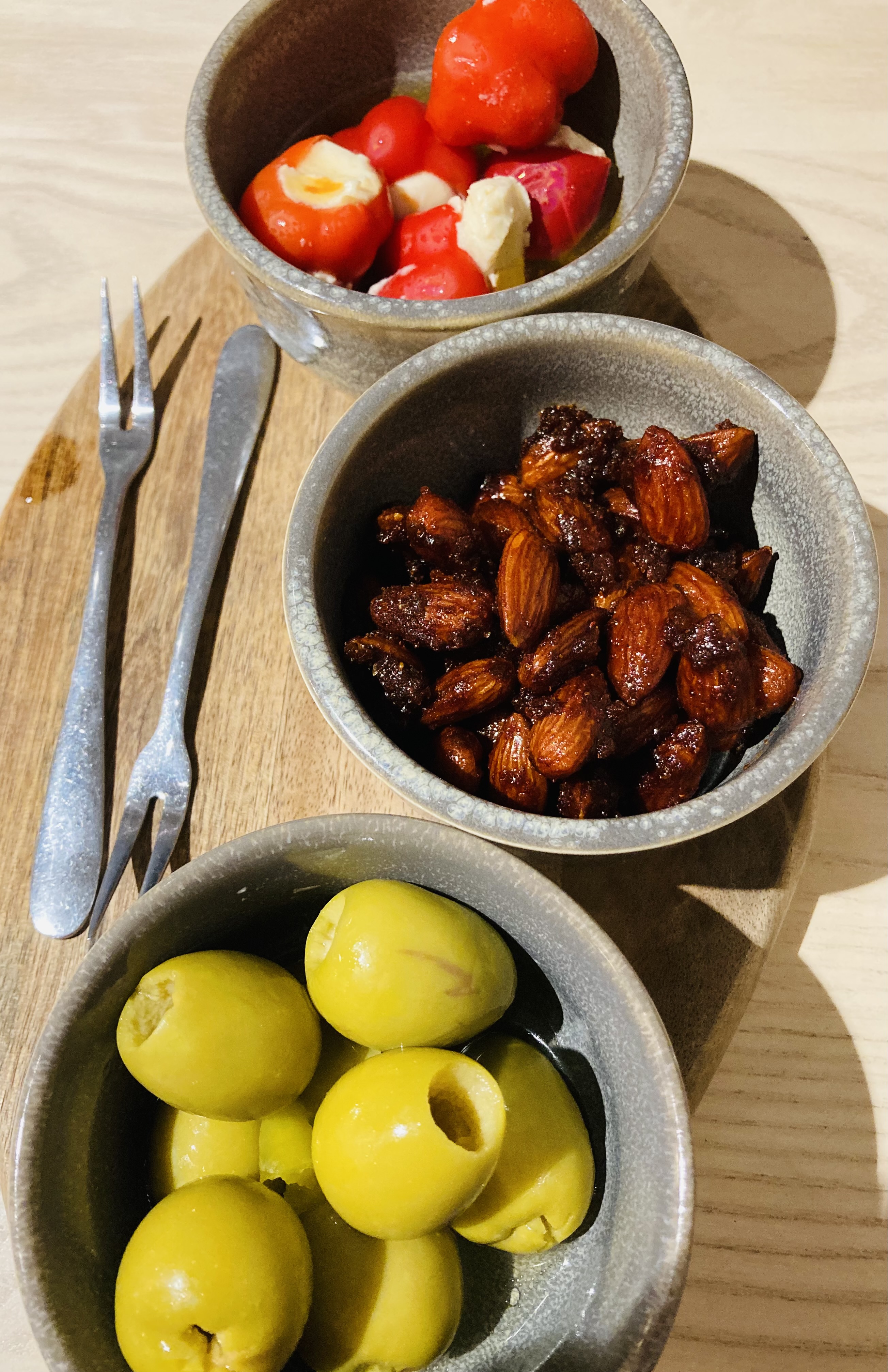
The concept here is shared plates so we order a starter of Gordal olives, sweet bell peppers and smoked almonds. Of course, there isn’t much preparation involved here but it’s a little triumph, the huge firm smoked olives making all other olives seem meh by comparison, the bell peppers sweet and stuffed with a creamy cheese filling and the almonds – though the first spicy/salty mouthful is disconcerting – quickly grow on me until they’ve become incredibly more-ish.

Next up we share a small plate of sesame Halloumi, which comes on a bed of Tabouleh, and is liberally decorated with blobs of yoghurt. There are two generously-sized chunks of cheese and, while this is a little bland, it’s more than made up for by the rich Moroccan flavours of the tabouleh and that tangy yoghurt.

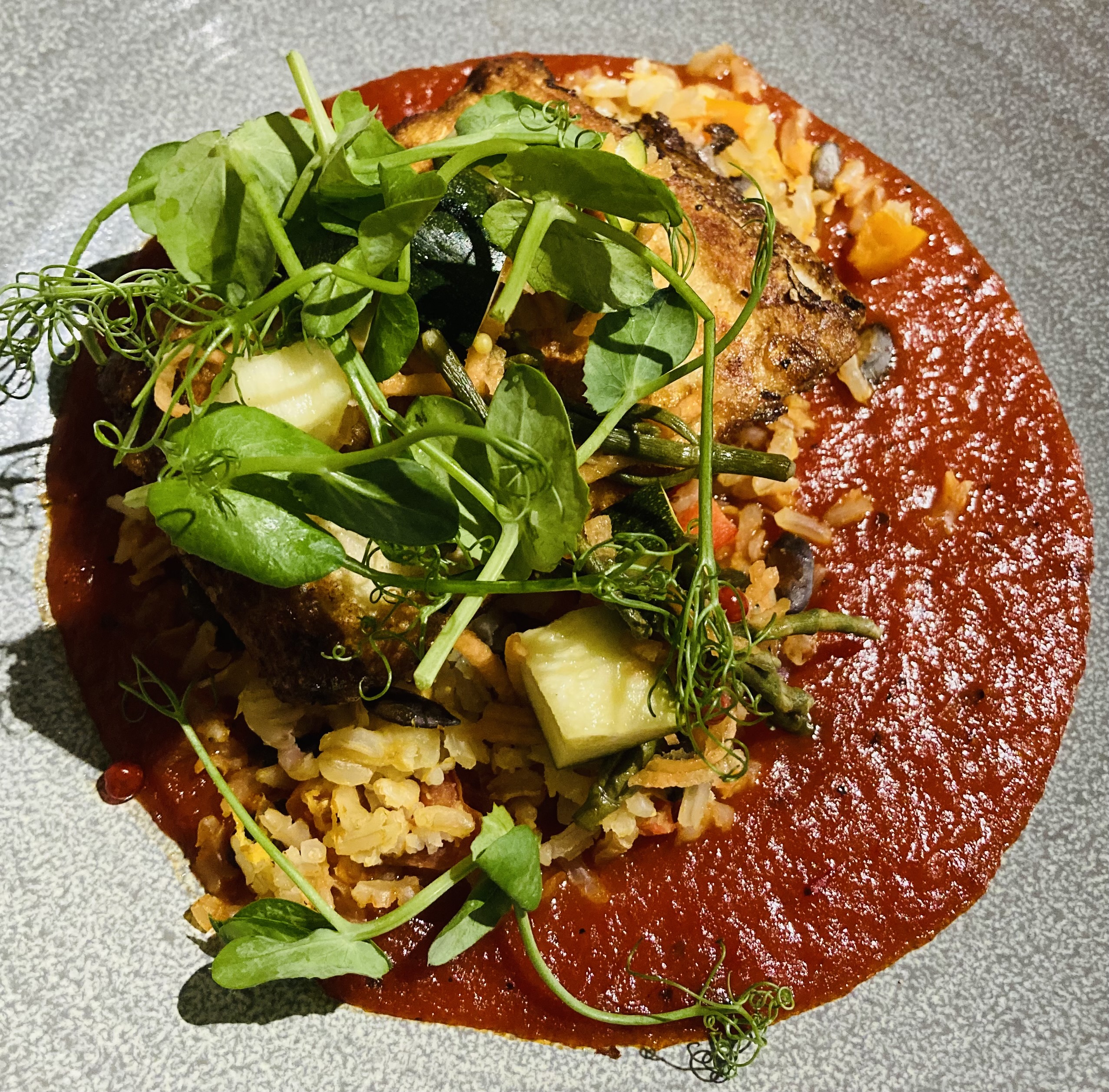
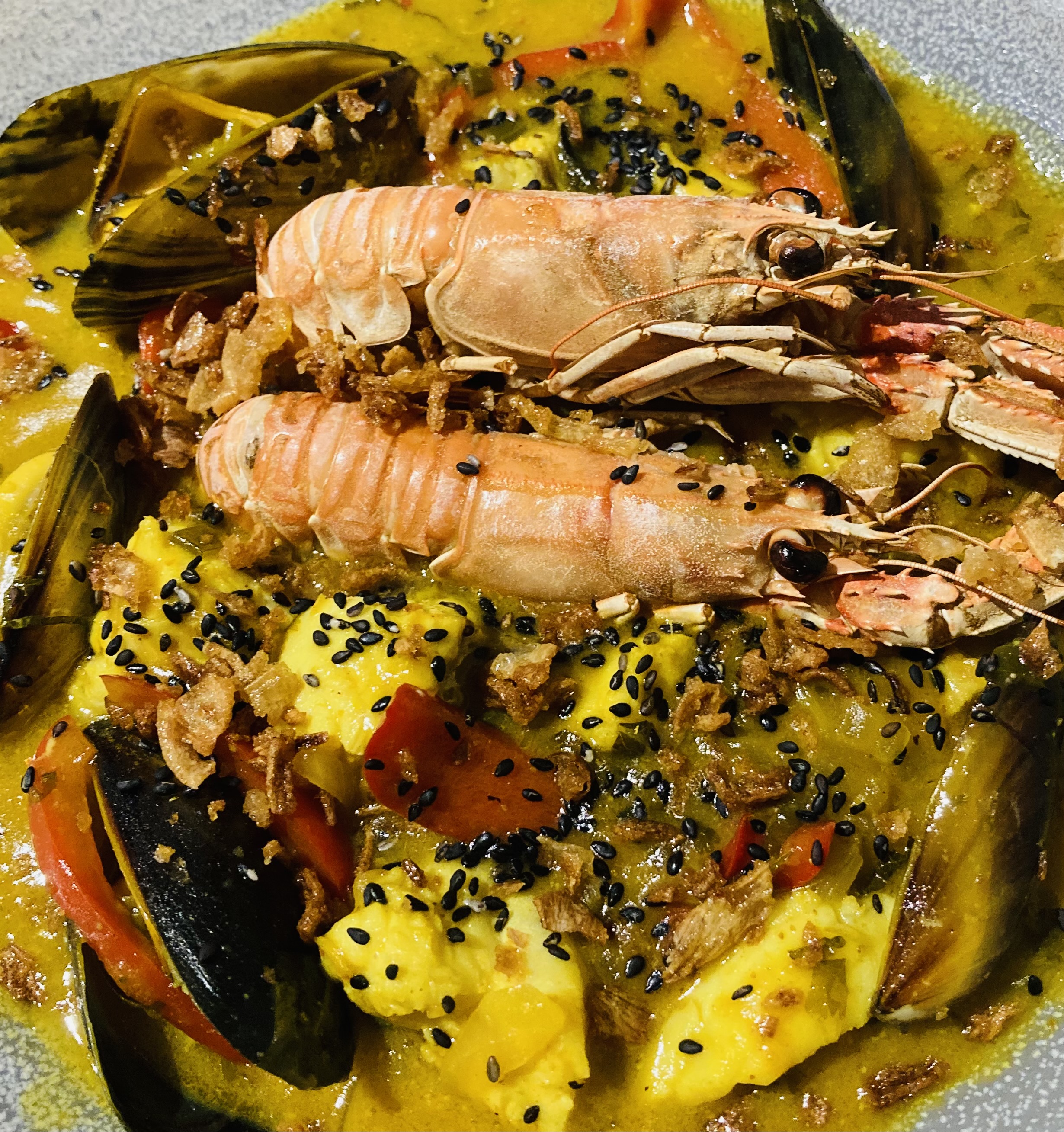
Two large, colourful plates follow. There’s a lovely pan-fried halibut which comes with brown rice, pickled veg and a deliciously sweet red pepper purée. The fish is perfectly cooked, a delightful flakiness under the crispy fried coating. There’s also a seafood stew, which features a couple of langoustines, some exemplary mussels, several beautifully cooked scallops, ling and monk – all ladled with a sublime lemongrass and coconut sauce. Everything on the plate is good save for the langoustines (and this is by no means the fault of The Dowry), which offer the usual dispiriting evisceration of heads, legs, carapace, only to leave an insubstantial scrap of flesh, which is gone in seconds. I’m beginning to feel the same way about lobster. It always looks so imposing on the plate yet hardly seems worth the effort. But I digress.

Overall, this is a thoroughly enjoyable dining experience: the food adventurous, the atmosphere buzzing and it’s excellent value for money. Unusually, we’re both too full to sample the puddings, though they sound worthy of further investigation another time.

So, if in Lerwick, do check out the Dowry. It’s worth your while.

4.2 stars

Philip Caveney

We Are in Time

04/03/20

Traverse Theatre, Edinburgh

About ten minutes into the performance of We Are in Time, Susan taps me on the shoulder. She leans in close and whispers two words into my ear.

‘It’s tosh!’

I stare at her in bewilderment. I mean, there are many words I would use to describe this show – unique, audacious, beautiful – but ‘tosh’ certainly isn’t one of them. She notes my puzzled expression and shakes her head, then points surreptitiously to The Narrator, a young woman whose face has been naggingly familiar from the moment she walked onstage. The penny drops. Of course! It’s Alison O’Donnell, best known for playing DS Alison ‘Tosh’ McIntosh in the TV detective drama, Shetland. And I have to say, ‘Tosh’ is a long way from her regular beat.

I relax and go back to being enraptured.

It’s hard to describe exactly what this show is, but I’ll try. The set has all the stark, clinical lines of an operating theatre, complete with two illuminated tables. Instead of being peopled by a team of surgeons, however, there are a dozen musicians, sawing industriously away at their respective instruments – violin, viola, cello, double bass – creating a series of mournful, haunting melodies. Meanwhile, the recently deceased Jay (Jodie Landau) wanders calmly amongst them, singing lines that seem to have originated in a medical textbook, while Stella (Ruby Philogene) gratefully prepares to receive his donated heart. Every so often, O’Donnell chimes in with detailed information about the various procedures that are observed in such situations. Behind the performers, a large screen conveys a series of related images.

Through the various streams of information, we follow the progress of the heart, which travels from Jay’s chest cavity, halfway across the globe, until it finally finds its new home in Stella. In the process, a compelling and complex human drama is enacted through music, song and imagery. The result is eerily haunting, surprisingly informative and even suspenseful.

Written by Pamela Carter, with music composed by Valgeir Siguròsson and beautifully performed by the Scottish Ensemble, We Are in Time is quite simply an extraordinary theatrical experience. In all my years of theatre-going, I can honesty say that have never seen anything quite like it before.

And that, in my book, is a major recommendation.

4.6 stars

Philip Caveney