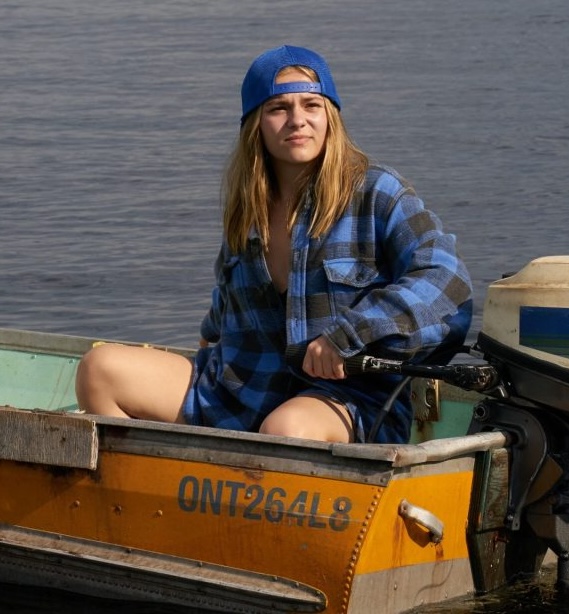
Saoirse Ronan

My Old Ass

26/11/24

Amazon Prime

Maybe because it’s lumbered with what must rank as one of the most unprepossessing titles in cinematic history, this charming film failed to make it into UK multiplexes and can only be found lurking amidst the ‘recently added’ section on Amazon Prime. Written and directed by Megan Park, it’s an engaging story, anchored by a tremendously appealing central performance by Maisy Stella.

She plays Elliott, a teenage girl living in the wilds of Canada. She’s recently finished school and is preparing to head off to university in Toronto. Meanwhile, she’s intent on enjoying her remaining days at home: making out with an attractive female assistant at her local coffee shop (an ambition that’s quickly ticked off the ‘to do’ list), and then heading off with her two pals, Ruthie (Maggie Ziegler) and Ro (Kerrice Brooks), for an unconventional birthday celebration. The trio have laid their hands on some hallucinogenic mushrooms and plan to spend the night in the local woods, getting utterly wasted. (With typical teenage insensitivity, Elliott is blissfully unaware that her family are waiting at home for her with a birthday cake).

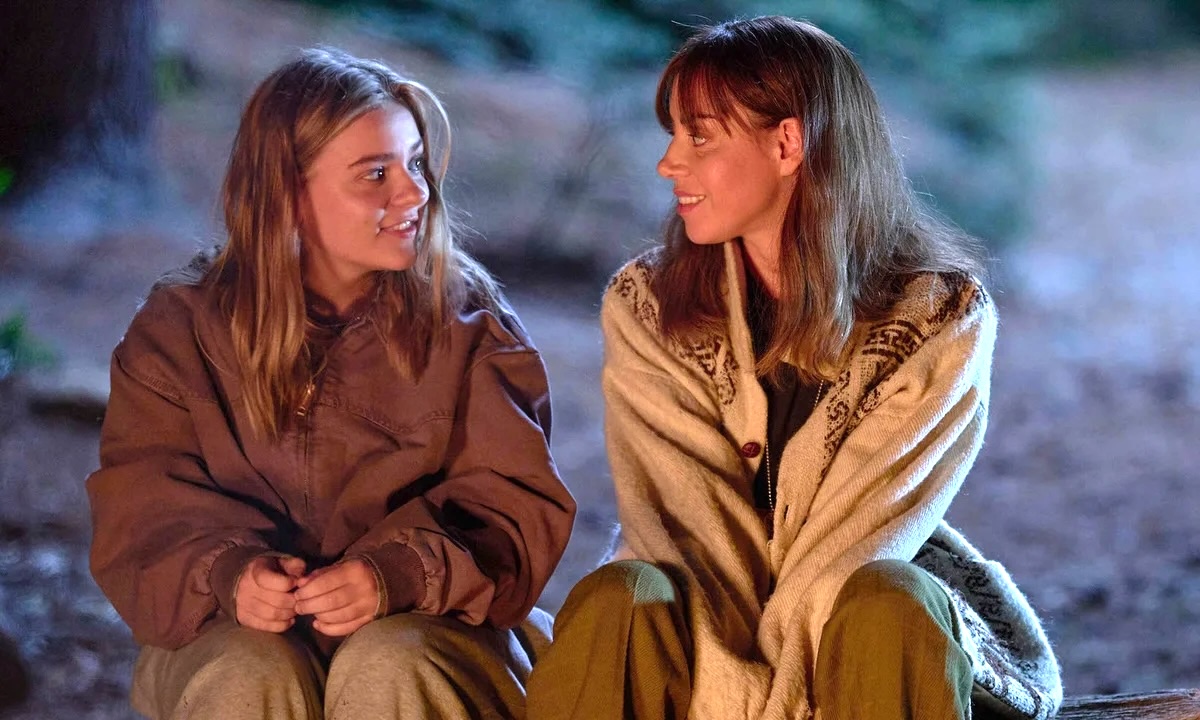
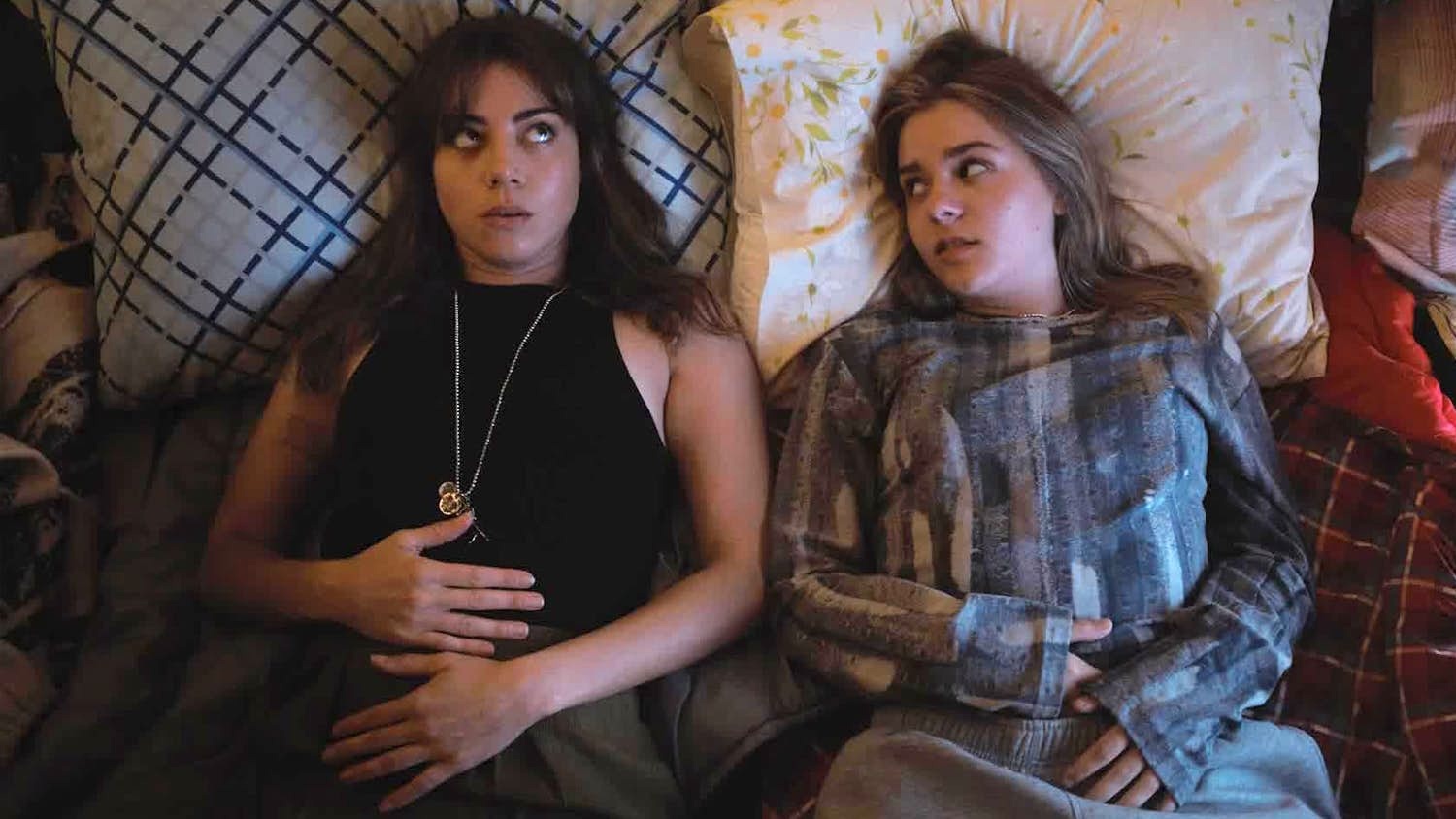
The resulting trip has some unexpected consequences. Elliott encounters a version of herself from the future. Older Elliott (Aubrey Plaza) is thirty-nine, still in college and, judging by the scant information she gives away, living in a dark and unpredictable world. She has only one bit of advice for her younger self. Stay away from somebody called ‘Chad.’ (She refuses to say any more on the subject.)

The following morning, older Elliott has disappeared but she has left her phone number and, it turns out, the two of them can talk to each other across the decades, even exchange text messages. And then young Elliott bumps into a handsome and charming stranger (played by Percy Hynes White) and, despite her previous aversion to boys, she begins to feel powerfully attracted to him.

His name? You guessed it. Chad.

My Old Ass is a charming, bitter-sweet story that celebrates the freedom of youth and, at the same time, points out the futility of trying to deny your inner longings and the inevitability of change. As I said, Stella is tremendous in this and I expect to see her in more movies in the not too distant future. Elliot’s relationship with her mother, Kathy (Maria Dizzla), and her two brothers, Max (Seth Isaac Johnson) and Spencer (Carter Trozzolo), are effectively drawn – I particularly enjoy Spencer’s obsessive preoccupation with the actor, Saoirse Ronan – and the picturesque Canadian settings are beautifully utilised.

Aubrey Plaza makes a welcome addition to any film (she was the best thing about Francis Ford Coppola’s Megalopolis) and my only complaint is that here she’s somewhat underused, popping up only twice in person. But it doesn’t prevent the story from keeping me intrigued and hooked to its charming – and sometimes quirky – worldview.

So, the next time you’re stuck for something new to watch, head to Amazon Prime and give this a whirl. It’s a delight.

4 stars

Philip Caveney

Blitz

09/11/24

Cameo Cinema, Edinburgh

Steve McQueen is always a fascinating filmmaker and I love the fact that I never quite know what to expect from him. Blitz is an Apple Original, destined to start streaming soon, but I would urge anyone interested to seek out an independent cinema where it’s showing, because this is a film that deserves to be seen on the big screen. As the name suggests, it’s set in 1940 as London undergoes the Blitzkreig, bombed on an almost nightly basis by the Luftwaffe.

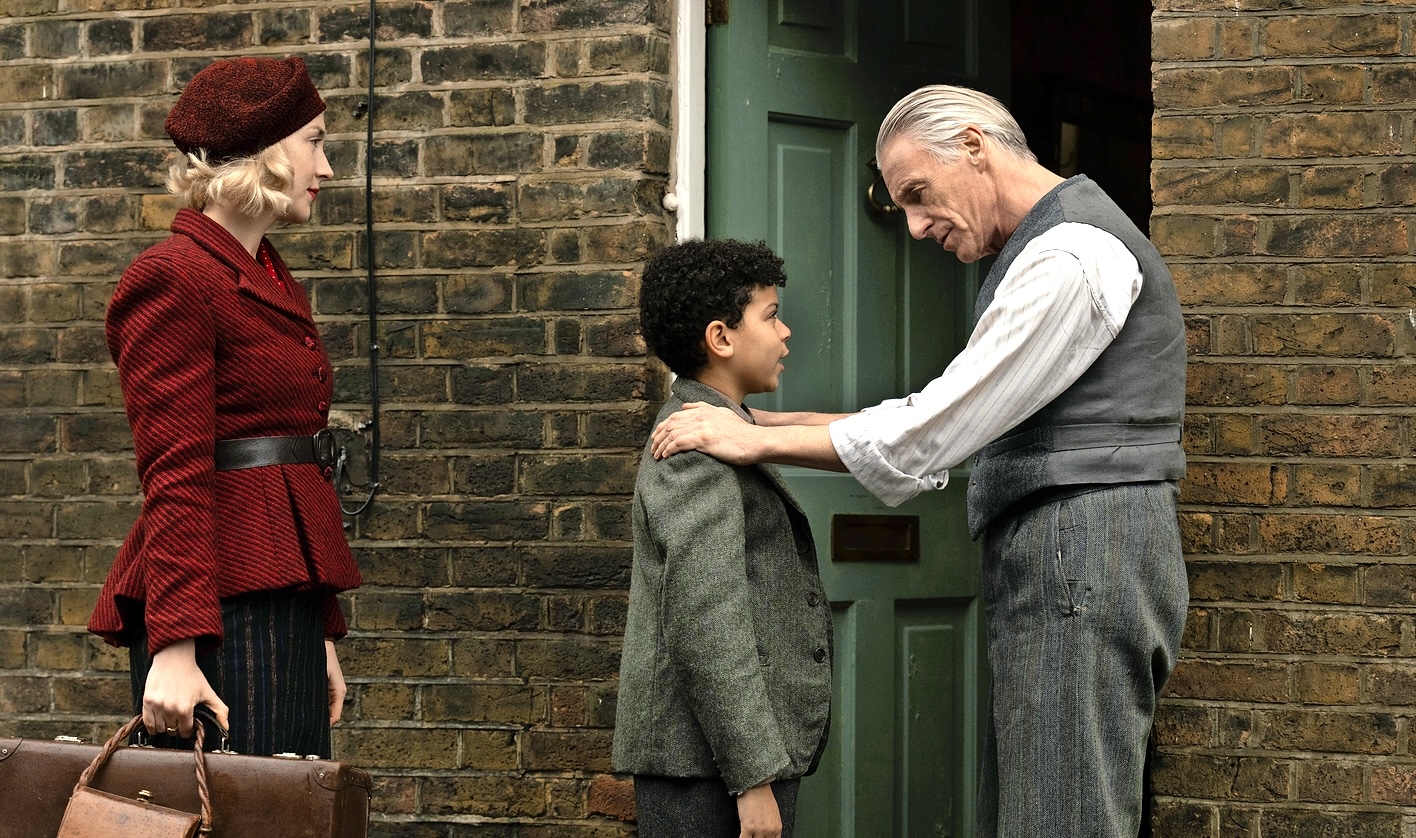
The story is centred around George (Elliott Heffernan), a young mixed-race boy, who lives with his mum, Rita (Saoirse Ronan), and his grandad, Gerald (Paul Weller), in a little terraced house in the city. George has never met his father, who we learn (in flashback) has been deported back to Grenada for entirely nefarious reasons. As the bombing becomes more intense, the government’s plan for the mass evacuation of children from the city is announced. George is reluctant to leave his mum but, together with a bunch of other youngsters, he’s put aboard a train heading for the safety of the countryside.

But George has other plans and, at his first opportunity, he jumps off the train and starts to make his way back along the track in the direction of home…

What ensues repeatedly puts me in mind of a YA adventure as George encounters a whole selection of characters on his way home: kindly Black air-raid warden, Ife (Benjamin Clémentine); callous Fagin-esque thieves, Albert (Stephen Graham) and Beryl (Kathy Burke); and a trio of friendly young boys who keep challenging George to do ever more reckless things. His odyssey is intercut with scenes of what’s happening to Rita: working in a munitions factory; heading out on the town with her friends, Doris (Erin Kellyman) and Tilda (Hayley Squires); even performing a song for the BBC when a live series visits the factory. Episodic it most certainly is but, unlike most of the Sunday evening dramas it might be compared to, the stakes here are perilously high and happy endings are by no means assured. Whenever the story is in any danger of heading towards sentimentality, McQueen (who also wrote the screenplay) finds a way to snatch it back and amp up the jeopardy, never allowing us to forget that these are dangerous, unpredictable times – and not everybody is destined to make it to the end of the line.

The production values are first-class throughout, the depictions of the war-torn city sometimes awe-inspiring, occasionally verging on high art. Blitz also offers a fresh insight into the era, the war seen from the point of view of a boy who suffers from racial slurs on a daily basis. A scene where George wanders through a deserted shopping arcade looking at an exhibition depicting the subjugation of slaves is particularly affecting; so too, an extended sequence at the Café de Paris which depicts a Black orchestra playing for the entertainment of exclusively white, upper-class customers – a frantic, sexually-charged show which is destined to be interrupted in heart-stopping fashion.

Ronan, as ever, portrays her character with absolute assurance and even demonstrates a decent singing voice but it’s Heffernan who is handed the biggest challenge here, carrying this powerful and affecting film with absolute authority. I’ve seen some decidedly lukewarm advance reviews for this, and am at a loss to understand why some critics have failed to appreciate its evident charms. It’s epic filmmaking of the highest order. As I said, it will be on your televisions soon, but it won’t look as awesome as it undoubtedly does on a cinema screen.

4.6 stars

Philip Caveney

The Outrun

27/09/24

Cineworld, Edinburgh

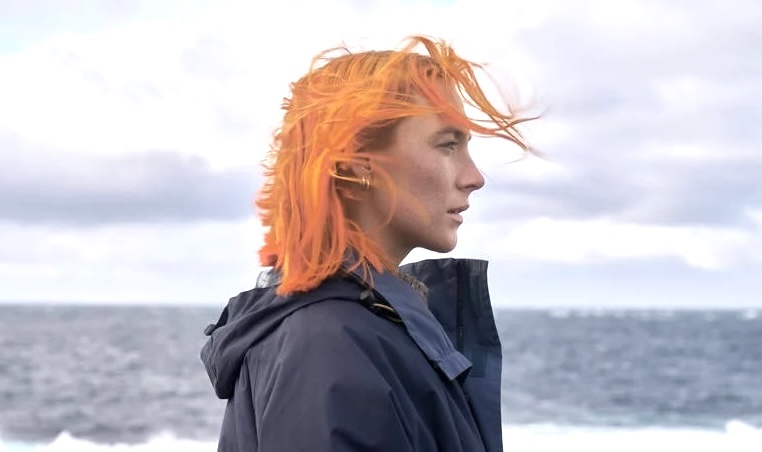
Rona (Saoirse Ronan) has issues with alcohol. At first, it’s all good fun as she downs drink after drink and dances the night away with boyfriend Daynin (Papa Essedieu), becoming ever more playful, ever more gregarious, the life and soul of every party. But she never knows quite when to accept that enough is enough and, inevitably, it all ends in tears and recrimination. Pretty soon, Daynin has had enough of her unpredictability – so Rona heads back home to the island of Orkney, where her separated parents live, in the hope of getting her act together.

But finding help is difficult. Her father, Andrew (Stephen Dillane), still runs a sizeable sheep farm, but is now living in a caravan, plagued by the bi-polar episodes that have affected him for most of his life. Mum, Annie (Saskia Reeves) has found religion and has made friends in the church community. Of course she cares about what’s happening to her daughter, but she is hard pressed to know what to do for the best.

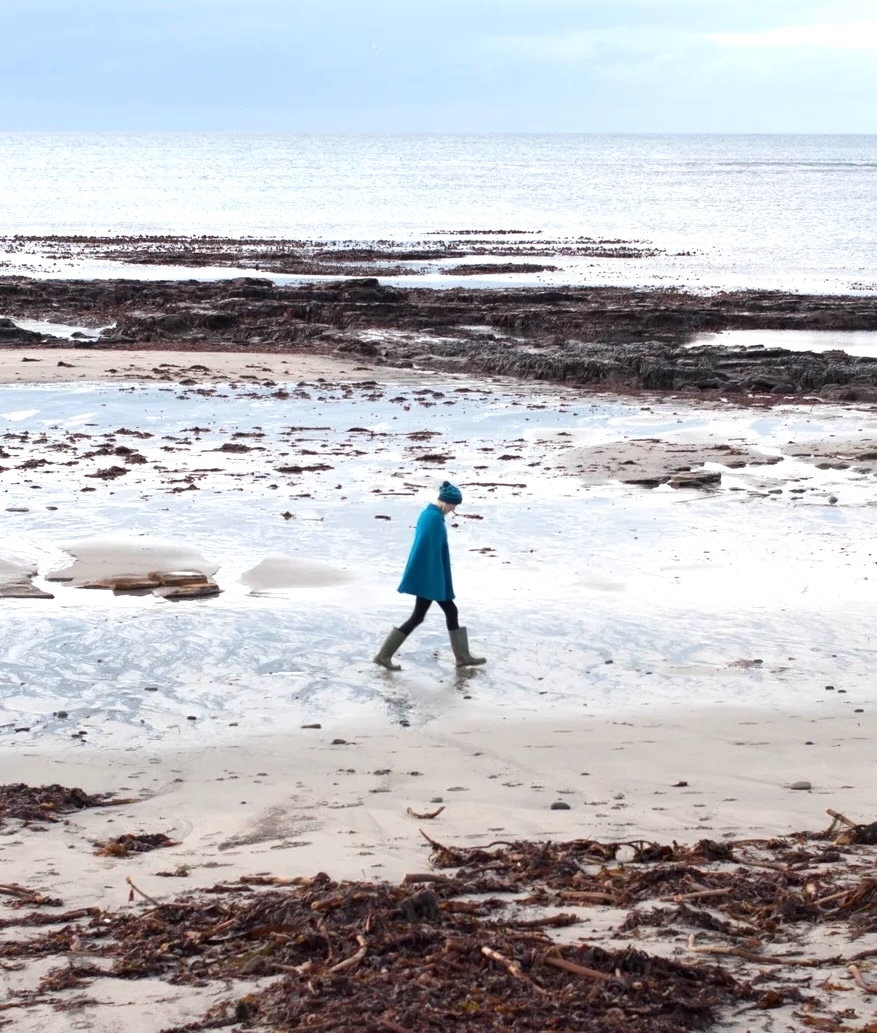
Rona is determined to free herself from the powerful grip of booze. So she embarks on the 12 step programme pioneered by Alcoholics Anonymous – and, when she begins to falter, she takes a post with the RSPB on the even more remote island of Papa Westray, where she will spend her time living in a tiny hut while she searches for an endangered bird, the corncrake…

On paper, it sounds like a pretty grim premise, but this dazzling feature, based on a memoir by Amy Liptrot, with a screenplay co-written by Liptrot and Daisy Lewis, never puts a foot wrong. Nora Fingscheidt (who directed the wonderful System Crasher) keeps her foot on the accelerator, cutting and swerving back and forth between Rona’s turbulent childhood, her hedonistic escapades in London and her gradually evolving relationship with the power and beauty of the ancient landscape of her new/old home.

The different settings bleed effortlessly into each other, powered by regular bursts of pulsing electronic music. A frenzied nightclub session can suddenly appear to be taking place underwater, with seals (selkies?) as Rona’s dance partners – and her interactions with the people of Papa Westray are warm and totally authentic. All the various strands are brilliantly pulled together in a powerful crescendo. A thrilling climax, where Rona is confronted by a stunning realisation, is absolutely overwhelming.

Of course, a film as free-wheeling as this one this can only work when it’s anchored around an extraordinary performance – and Ronan is mesmerising in the fractured central role, moving through such a variety of different guises that it’s sometimes hard to believe that it’s all the work of just one actor. The film’s message rings out loud and clear.

I haven’t seen a movie that so eloquently pins down the destructive nature of alcohol since Thomas Vinterberg’s Another Round. And that’s high praise, indeed.

4.6 stars

Philip Caveney

See How They Run

14/09/22

Cineworld, Edinburgh

The recent success of Rian Johnson’s Knives Out seems to have rekindled a cinematic interest in whodunits. Johnson’s sequel, Glass Onion, is due out soon (on Netflix) but, meanwhile, on the big screen there’s See How They Run, a lighthearted spin on the genre, directed by Tom George (previously best known for TV’s This Country) and written by Mark Chappell.

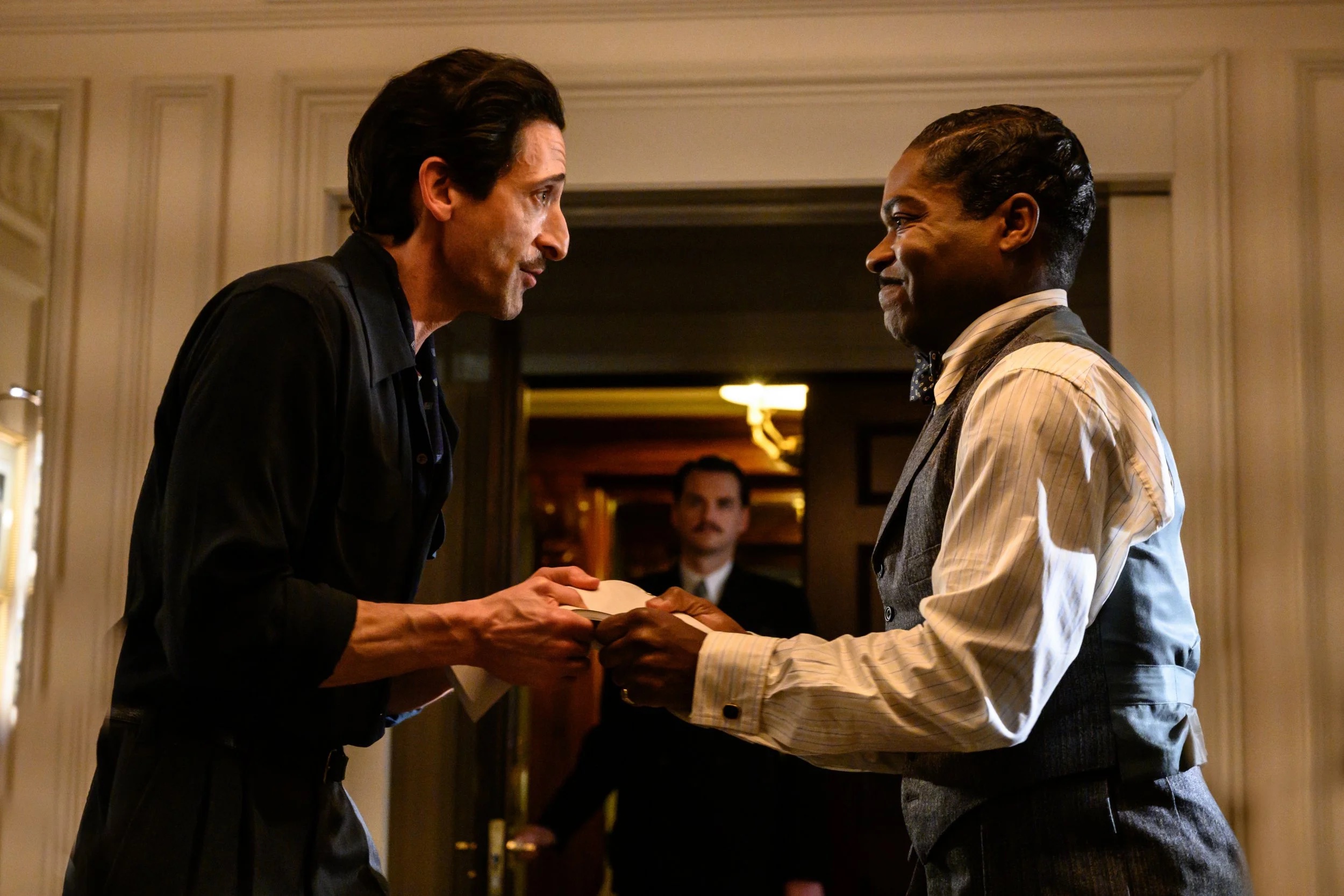
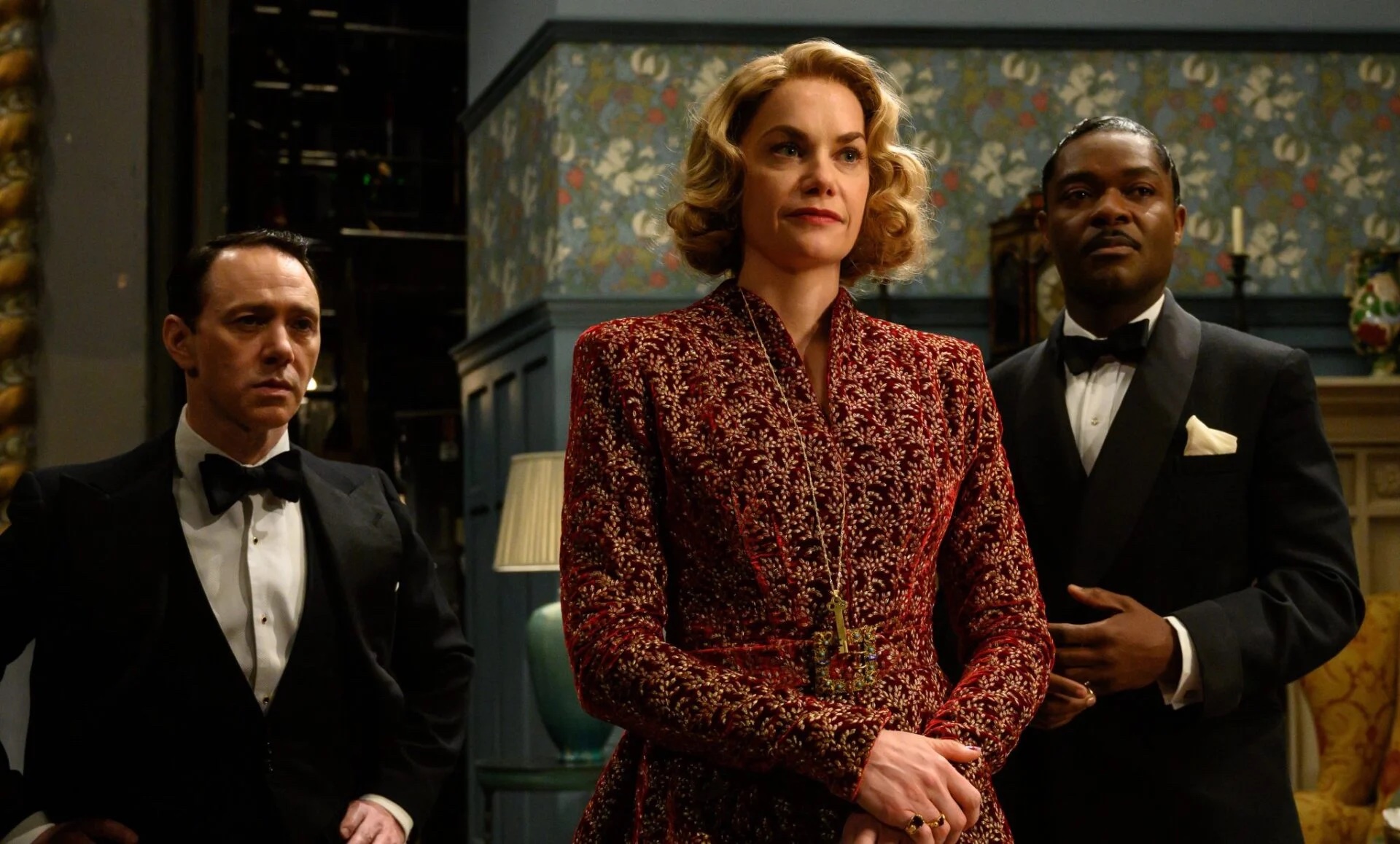
It’s 1953 and Agatha Christie’s The Mousetrap is already approaching its one hundredth performance. Moves are afoot to turn it into a motion picture, spearheaded by odious American screenwriter Leo Kopernick (Adrien Brody) who wants the chosen screenwriter, Mervyn Cocker-Norris (David Oyelowo), to amp up the sex and violence to make it more screen-worthy. Okay, so there is a clause in the play’s contract, stating that it can never make the transition into film until its theatrical run has ended… but that won’t be long, surely?

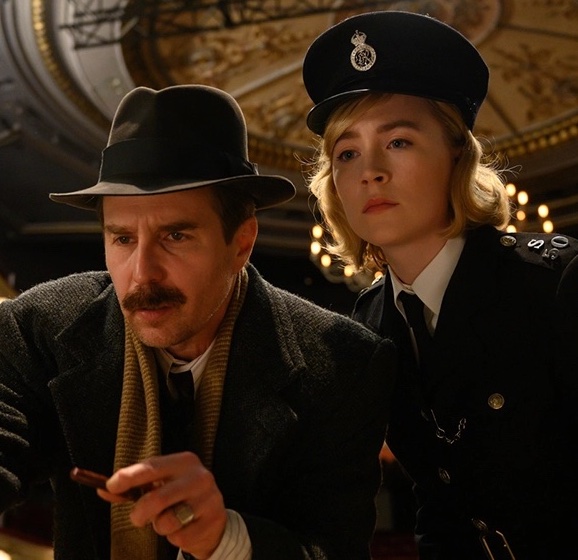
Kopernick quickly winds up dead (don’t worry, this is in no way a spoiler) and suspicion initially falls on Cocker-Norris. But, as rumpled, hard-drinking Inspector Stoppard (Sam Rockwell) soon begins to discover, there are lots of people in the cast and crew who have reasons to bear a grudge – and anyway, he has his hands pretty full with his over-eager assistant, Constable Stalker (Saoirse Ronan).

See How They Run is a tremendously likeable film, virtually stuffed to the gills with big-name actors having a ball in small roles, many of them based on real life characters. Harris Dickinson offers a nicely judged Richard Attenborough (who starred in The Mousetrap‘s original production) and Pearl Chanda is excellent too as his wife and co-star, Sheila Sim. Rockwell does a suitably world-weary turn as Stoppard, but for my money it’s Ronan who really makes this fly, creating an absolutely adorable character, determined to make her mark in a world that has until now been entirely dominated by men. Plaudits should also go to comedian Tim Key, who does a brilliant job of embodying a loathsome police commissioner.

As you might expect, the script is as meta as you like, with plenty of in-jokes and sly references for theatrical fans to pick up on – but, more importantly perhaps, this is funny throughout, with some perfectly timed pratfalls thrown in for good measure. While it’s hardly destined to linger for long in a viewer’s mind, it’s nonetheless a very pleasant way to spend a well-paced hour and thirty-eight minutes.

4.2 stars

Philip Caveney

Ammonite

26/03/21

Apple TV

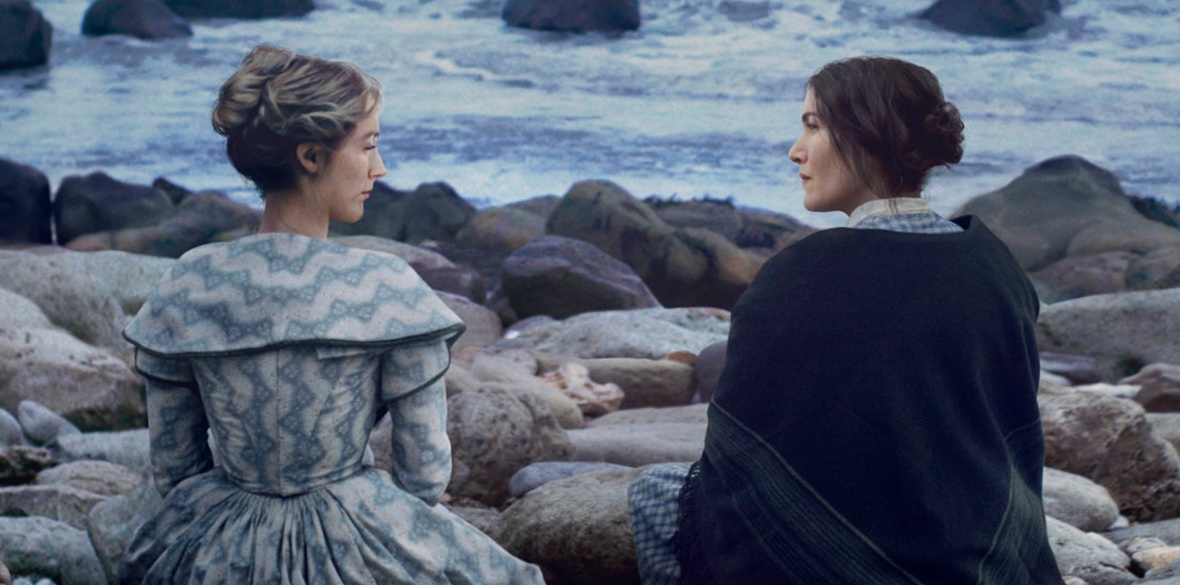
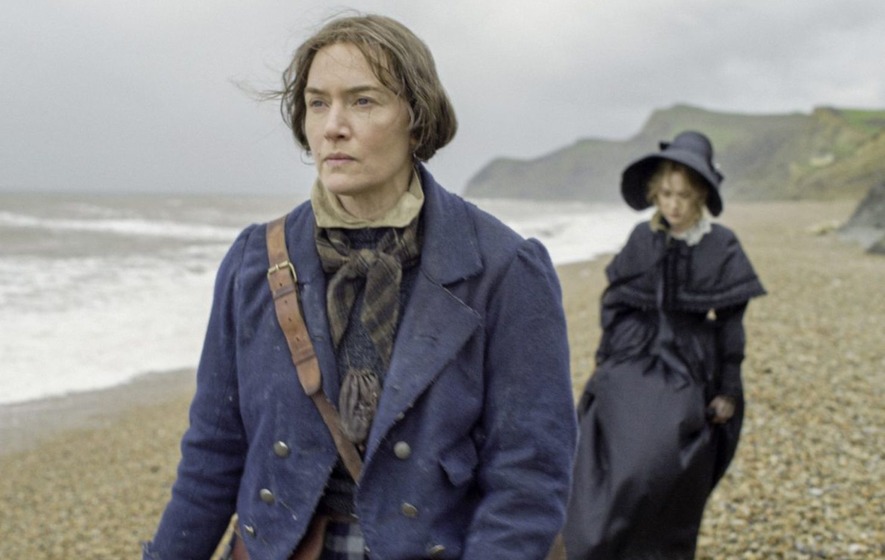
Francis Lee’s God’s Own Country was one of the most powerful film debuts of recent years – a visceral, unflinching exploration of rural life that would have had James Herriot hiding behind the sofa. For his sophomore effort, Lee has changed the era and the mood, taking us to Lyme Regis in the eighteen hundreds, where fossil hunter Mary Anning (Kate Winslet) plies her trade, selling the smaller pieces she finds on her daily visits to the seashore to holidaymakers. The larger pieces are sold to her male colleagues, who then blatantly take the credit for discovering them. Mary is all too aware of this and, as a result, she’s become a prickly and insular character, a quality that comes across as cantankerous to strangers.

Mary is approached by celebrated palaeontologist Roderick Murchison (James McCardle), who wants to learn from her. He brings with him his young wife, Charlotte (Saoirse Ronan), who is mourning a recent miscarriage and is quite unable to pull herself out of her melancholy. When Murchison is obliged to move on, he leaves Charlotte with Mary for a few weeks, hoping that working alongside the older woman will help her to recover. Mary is at first horrified at the idea – she values her privacy. But Murchison is wealthy and willing to pay for his wife’s internship – and Mary needs the money.

When Charlotte falls ill with a fever, Mary is obliged to nurse her – and, as the days unfold, the two women manage to breach the wall that has kept them apart – and start to realise they are falling in love…

Mary Anning was, of course, a real person, and very little is known about the reality of her personal life. Lee (who also wrote the screenplay) has been heavily criticised for portraying her as a lesbian, accused of taking liberties with the ‘truth’ about her – though I’m willing to bet that, if the film had featured a fictional heterosexual relationship, nobody would have turned a hair. But, having read up on her, it’s impressive to note how much of the story sticks closely to what we do know about the real Mary Anning. What’s most important here is that, because of her gender, she was discriminated against on a daily basis – even though it is now widely accepted that she was one of the most knowledgable people in her field. Like so many Victorian women, she was a victim of the patriarchy, robbed of the credit for so much of what she achieved.

Winslet is simply terrific in the central role, conveying Anning’s awkwardness and inner turmoil in the stolid set of her shoulders, the furtive glances that seem constantly to be seeking escape. She is a misfit, struggling to survive in a world she’s not cut out for. Ronan too, is completely believable as a young woman searching for consolation after an overwhelming loss – and finding it in an unexpected love affair. Shot in what looks like genuinely horrible weather conditions, Stéphane Fontaine’s cinematography captures the bleak, rugged beauty of Dorset and this is echoed by a sumptuous score courtesy of Volker Bertelmann and Dustin O’Halloran. If that’s not enough to entice you, there’s also a lovely cameo performance from Fiona Shaw as Mary’s old flame, Elizabeth.

Ammonite may not have the immediate impact of God’s Own Country, but it’s an exquisitely handled film with an absorbing tale to tell. Lee’s central premise seems to be about the trophies we collect in life, from fossilised remains in glass cases to the lives of those who follow us through the twists and turns of history. It’s well worth your attention.

4.4 stars

Philip Caveney

Little Women

15/12/19

Here, at last, are screen versions of the Little Women I’ve had in my head since I read the book when I was eight. Headstrong, unconventional Jo, born to write and desperate for a bigger life; romantic Meg, yearning for riches but choosing (relative) impoverishment with her one true love; shy, saintly, not-long-for-this-world Beth; and Amy, little Amy, all drive and ambition, always trying to impress (or beat) Jo.

I grew up with these girls, and every adaptation I’ve seen has failed to realise them convincingly. Except Jo, of course; there are lots of lovely screen-Jos (Katherine Hepburn, June Allyson, Winona Ryder). She’s the most captivating character, the Lizzie Bennett: it’s easy for a good actor to capture her spirit. But her movie sisters have always been a disappointment to me, even when played by talented performers. They’ve never felt right. Until now.

Saoirse Ronan makes a marvellous Jo (of course she does); Emma Watson perfectly embodies Meg’s earnest longing; Eliza Scanlen imbues Beth with strength as well as a sweet nature. But it’s Florence Pugh’s pugnacious, jealous Amy that has me almost exclaiming with delight. Here she is: a proud and lively girl, both friend and rival to her big sister Jo. She’s bloody brilliant.

Writer-director Greta Gerwig shows us once again how talented she is: this is Little Women writ large, barely deviating from the source material, but bringing contemporary resonances to the fore. There’s less piety and sermonising here than there is in Alcott’s novel, and the chronology is disrupted, so that we first meet Jo as an already published, ambitious woman, negotiating the terms for her latest stories while working in New York. The girls’ childhood is shown through a series of flashbacks, and we flit back and forth in time, never confused, even though the same actors perform throughout, ageing ten years through hairstyles, clothing, poise and gait. This structure gives prominence to the women the girls become, contrasting their childhood aspirations with what they actually achieve.

There’s such vivacity and energy here, it’s impossible not to be charmed; Gerwig has captured the very heart of Alcott’s fictionalised autobiography. The story arc actually works better in the film, and the audacious ending is a genuine master-stroke.

Timothée Chalamet is an inspired choice for Laurie, depicting with ease the neighbour’s loneliness and need for love, as well as his playful decadence. Laura Dern makes an excellent Marmee, and who else but Meryl Streep could have played Aunt March to Ronan’s Jo?

I have a couple of quibbles. I don’t know why middle-aged, paunchy, German Professor Bhaer is replaced with a young, handsome Frenchman (Louis Garrel);  why shouldn’t Jo establish a less conventional friendship? And I would like to see more of Meg: her character is well-established, but her storylines are too truncated, I think.

But honestly, these are just tiny niggles. This movie makes me really happy; indeed, the last ten minutes have me grinning so widely I actually hurt my face. Bravo! A fabulous film to end the year.

5 stars

Susan Singfield

Mary Queen of Scots

18/01/19

The Tudors are common parlance Chez B&B these days; since downloading the Six The Musical soundtrack, we’ve barely listened to anything else. Of course, this new film is a very different beast, but it does share a few key players, and our recently-discovered interest in the period makes us extra keen to see what’s on offer here.

What Mary Queen Of Scots has in common with Six is its telling of ‘herstory,’ with female experiences placed firmly and unapologetically in the spotlight. The perspectives belong to the women. Not just because they’re the main characters, but because the directors (Josie Rourke and Lucy Moss respectively) are women too, and so everything is reflected through this – sadly still unusual – prism.

Saoirse Ronan is Mary, and she’s every bit as impressive as you’d expect this extraordinary young actor to be. She’s strong and commanding, warm and vulnerable: the heart and heroine of this tale. Margot Robbie, as Mary’s English cousin and counterpart, has arguably the harder role: Elizabeth is less likeable, and burdened with the fact that (spoiler alert!) she has Mary imprisoned and then killed. But Robbie is more than equal to the task, imbuing the English queen with both formidable resolve and an unexpected frailty. The parallels between the two women – and the tragedy that they can not be allies – are central to the film.

The brutality of the era is clearly evoked, with bloody murders a-plenty. Thankfully, there are no extended battle sequences here (I’m a little weary of them); instead, the skirmishes are short and definitive, the armies as small as I suppose they really must have been, the power-grabs and politicking as baffling and depressing as they remain to this day.

The men might be peripheral, but they’re played with panache by such stalwarts as David Tennant (virtually unidentifable as John Knox, with his strange hat and straggly beard), Jack Lowden (as the loathsome, weak-willed Henry Darley) and Guy Pearce (playing William Cecil, chief advisor to his Neighbours stablemate, Robbie). The structural power bias is evident in the way these men succeed in out-manouevring even the redoubtable Mary, and in Elizabeth’s cannier recognition that the only way she can retain her position is by disavowing her gender, and surrendering her happiness.

A fascinating film, and – if the sold-out screening we’re at is anything to go by – one that is likely to do well. Mind you, we are in Edinburgh. And Mary is the Queen of Scots.

4.2 stars

Susan Singfield

Film Bouquets 2018

Bouquets&Brickbats

Bouquets&Brickbats

Bouquets&Brickbats

2018 has yielded a lot of interesting films, and it’s been hard to choose which most deserve Bouquets. Still, we’ve managed it, and here – in order of viewing – are those that made the cut.

Downsizing

Downsizing 2

Alexander Payne’s brilliant satire had its detractors, mostly people who had expected a knockabout comedy –  but we thought it was perfectly judged and beautifully played by Matt Damon and Hong Chau.

Coco

coco3.jpg

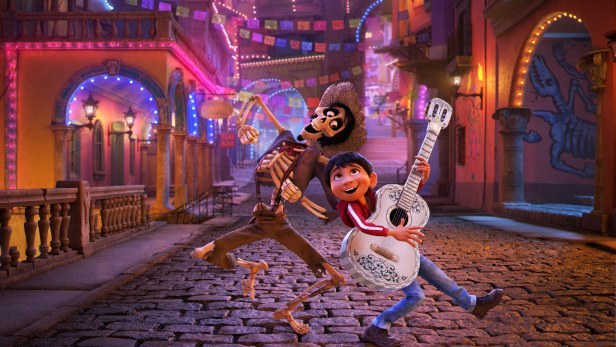
A dazzling, inventive and sometimes surreal love letter to Mexico, this Pixar animation got everything absolutely right, from the stunning artwork to the vibrant musical score. In a word, ravishing.

The Shape of Water

shapeofwater3.jpg

Guillermo del Toro’s spellbinding fantasy chronicled the most unlikely love affair possible with great aplomb. Endlessly stylish, bursting with creativity, it also featured a wonderful performance from Sally Hawkins.

Lady Bird

ladybird1.jpg

This semi-autobiographical story featured Saoirse Ronan as a self-centred teenager, endlessly at war with her harassed mother (Laurie Metcalfe). Scathingly funny but at times heart-rending, this was an assured directorial debut from Greta Gerwig.

I, Tonya

itonya1.jpg

Imagine Good Fellas on ice skates and you’ll just about have the measure of this stunning biopic of ice skater Tonya Harding, built around an incandescent performance from Margot Robbie, and featuring a soundtrack to die for.

A Quiet Place

quietplace3.jpg

This film had audiences around the world too self-conscious to unwrap a sweet or slurp their cola. Written and directed by John Kransinski and starring Emily Blunt, it was one of the most original horror films in a very long time – and we loved it.

The Breadwinner

breadwinner3.jpg

Set in Kabul, this stunning film offered a totally different approach to animation, and a heart-wrenching tale of a young woman’s fight for survival in a war-torn society. To say that it was gripping would be something of an understatement.

American Animals

animals1.jpg

Based on a true story and skilfully intercutting actors with real life protagonists, Bart Layton’s film was a little masterpiece that gleefully played with the audience’s point of view to create something rather unique.

Bad Times at the El Royale

el-royale3.jpg

Drew Goddard’s noir tale brought together a brilliant cast in a unique location, and promptly set about pulling the rug from under our feet, again and again. There was a superb Motown soundtrack and a career making performance from Cynthia Erivo.

Wildlife

wildlife-2.png

Based on a Richard Ford novel, this subtle but powerful slow-burner was the directorial debut of Paul Dano and featured superb performances from Carey Mulligan, Jake Gyllenhaal and newcomer, Ed Oxenbould.

The Ballad of Buster Scruggs

buster1.jpg

The Coen brothers were in exquisite form with this beautifully styled Western, which featured six separate tales of doom and despair, enlivened by a shot of dark humour. But, not for the first (or the last) time, we heard those dreaded words ‘straight to Netflix.’

Roma

Street-Scene.jpg

Another Netflix Original (and one that’s hotly tipped for the Oscars), this was Alfonso Cuaron’s lovingly crafted semi-autobiographical tale off his childhood in Mexico, and of the nanny who looked after him and his siblings. It was absolutely extraordinary.

Philip Caveney & Susan Singfield

The Seagull

09/09/18

The name Anton Chekov inevitably brings with it an expectation of lashings of doom and gloom. How many visits to the theatre have yielded hours of miserable people staring bleakly out at fields of wheat and talking about suicide? So it’s heartening to note that this version of The Seagull, directed by Michael Mayer and adapted by Steve Karam, has a lightness of touch about it that makes it feel downright sprightly – not a word you’d usually associate with the Russian playwright.

The action takes place on the country estate of Pjotr (Brian Dennehey), the ailing older brother of successful actress Irina (Annette Bening). Here, upstate New York stands in for the Russian countryside, but manages to look convincing enough, at least to my untrained eye. Irina’s son, budding playwright Konstantin (Billy Howle), also lives on the estate, and is currently involved in a romance with local girl, Nina (Saoirse Ronan), who is his muse and the main actress in his fledgling symbolist play, which they are planning to perform for their summer visitors. Irina arrives from Moscow with her latest conquest in tow. He is the incredibly successful writer, Boris Trigorin (Corey Stoll) and, therefore, a bit of a trophy for Irina to show off. Konstantin is already intensely jealous of the man’s success and that’s before Nina starts flirting outrageously with him.

Meanwhile, Konstantin is completely oblivious to the fact that the estate steward’s daughter, Masha (Elizabeth Moss), is completely besotted with him; she, in turn, is devoutly loved by impoverished local schoolmaster, Mikhail (Michael Zegen), of whom he has a very low opinion. It’s clearly going to end badly and, this being Chekov, of course, there is some tragedy waiting in the wings, but the journey towards it passes so pleasurably, it’s never feels like an imposition.

Bening’s performance as the incredibly vain and manipulative Irena, is an absolute joy, while Moss (top-billed here, no doubt because of the success of The Handmaid’s Tale) manages to make Masha’s drink-fuelled gloom at her own failings quite hilarious. Ronan is every bit as good as she always is and I particularly enjoy John Tenney’s portrayal of the pragmatic Doctor Dorn, a man who spends all of his time pouring oil onto troubled waters, consoling the lovelorn and tending the wounded.

Chekov can be a bit like medicine. You know it’s good for you and you know you really ought to have it, but he can sometimes leave a bad taste. Not here though. I can’t remember when I last enjoyed the playwright’s work as much as this.

4.4 stars

Philip Caveney

On Chesil Beach


27/05/18

I’m surprised to realise I haven’t read On Chesil Beach. I’ve read most of Ian McEwan’s ouvre, but not this slim novella. Maybe I’ve just balked at paying a standard paperback price for so few pages. Whatever. When friends suggest we meet up and make a day of it – a film in the afternoon; a meal in the evening – I’m more than happy to give this one a go.

It’s a decent movie, adapted by the author. Saoirse Ronan and Billy Howle give excellent central performances as Florence and Edward, the clever young couple whose love for one another is evident, but who cannot negotiate the weight of expectation on their wedding night. They are wounded and humiliated by their failure to consummate their marriage; their naivety and innocence is heartbreaking to see. Too angry, too proud, too fragile, they don’t give themselves a chance, and their relationship is over before it’s even really begun. Their excruciating attempts to initiate sex are depicted here in agonising detail, their awkwardness and vulnerability cleverly conveyed.

We learn their history through flashbacks, which is quite effective in slowing down the pace and emphasising the couple’s interminable embarrassment. They meet when Edward blunders into an Oxford student CND meeting, bursting with the news that he’s gained a first in his degree. With no one to tell, he turns to a stranger – and Florence, who has just graduated with the same grade, is happy to help him celebrate. They come from very different backgrounds: she from the status-obsessed upper middle-classes, with an academic mother (Emily Watson) and an angrily competitive father (Samuel West); he from a more bohemian country life – his mild-mannered father (Adrian Scarborough) is head teacher of the village school; his mother (Anne-Marie Duff) is an artist, ‘brain-damaged’ after an accident. No matter; Florence and Edward fall in love. And, after their disastrous wedding night, they fall apart.

Much has been made of McEwan’s ingenuity in condensing the rest of the couple’s lives to a kind of footnote, thus highlighting the significance of their failure on that fateful day. But –  for me at least – this is the film’s failing. It feels like a careful set-up followed by a sketchy summary, and I am disappointed by the broad strokes of the final third.

Still, I’m glad I’ve seen it. It’s a sad tale of an experience that is hopefully far less commonplace, now that the silly notion of ‘saving oneself’ for a wedding night is a thing of the distant past.

3.8 stars

Susan Singfield