Samuel Holmes

Calamity Jane

15/04/25

Festival Theatre, Edinburgh

As a kid, I was a little bit obsessed with Western movies and I still have a powerful recollection of sitting in a UK cinema, watching enthralled as Doris Day rode a stagecoach across a desert landscape belting out a stirring rendition of The Deadwood Stage. (Checking on the dates, I can see that I was only three years old when Calamity Jane was released, so clearly this was some time after that. I’m guessing I was maybe nine or ten.) When I hear that a touring version of the stage musical is coming to Edinburgh, I’m naturally eager to revisit it.

If Calamity (real name Martha Jane Canary) hadn’t actually existed, she’d seem an impossibly far-fetched invention: a cross-dressing stagecoach driver/gambler/gold prospector/rodeo star, she really did have a relationship with the legendary Bill Hickok, before going on to star in Buffalo Bill’s Wild West Show. Adapted from Hames O’ Hanlon’s 1953 screenplay by Charles K Freeman and featuring songs by Sammy Fain and Paul Francis Webster, this is a rootin’ tootin’ barnstormer of a show, that has no higher ambition than to entertain an audience, an aim which it effortlessly achieves.

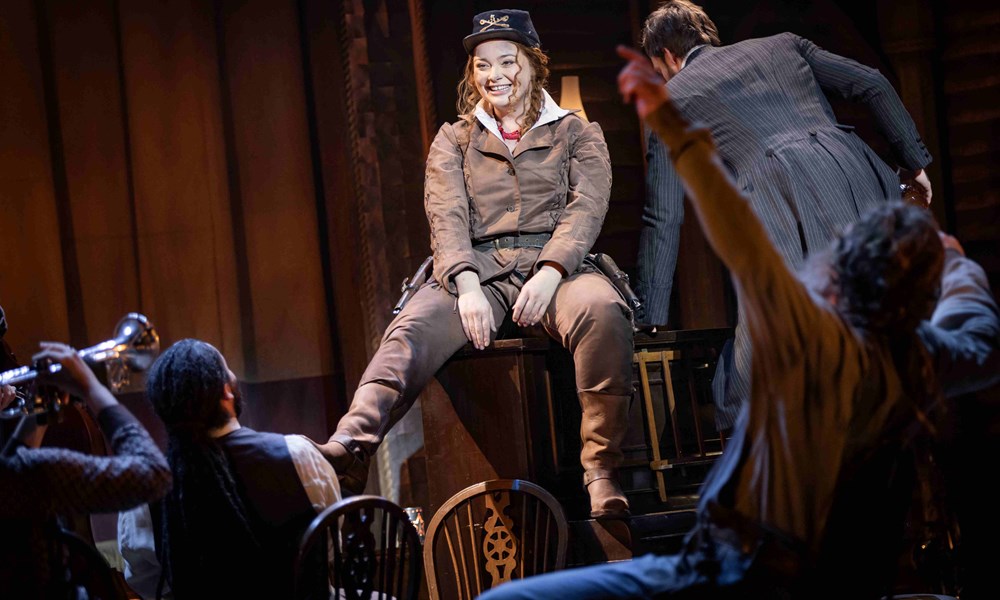
Carrie Hope Fletcher dons the buckskins to play the larger-than-life title role, attacking the more upbeat numbers like Windy City with absolute gusto and bringing a thrilling resonance to the show’s most enduring song, Secret Love. Tomas Wolstenholme handles the role of Wild Bill Hickok with panache and submits a lovely acoustic version of Higher Than a Hawk. There are assured performances from Samuel Holmes as effete song-and-dance man, Francis Fryer, and from Seren Sandham-Davies as Katie Brown, both of whom are victims of mistaken identity. But this is a true ensemble piece, with just about every member of the large cast ready and able to play an instrument at the drop of a stetson. This approach gives the show a propulsive energy that never falters, racing from one roistering set-piece to the next.

The episodic storyline is based around a series of misunderstandings, each perhaps too readily resolved by the indefatigable Calamity, but it would be hard to imagine a more downright enjoyable night at the theatre. Tonight’s packed audience rises to the occasion, clapping enthusiastically along to the final hoedown at a volume that threatens to blow the roof off the theatre. You could grumble that songs like A Woman’s Touch and Tis Harry I’m Planning to Marry are a tad reductive, but this piece is completely unapologetic about its origins and, apart from a few minor tweaks, sticks closely to the original screenplay.

I come out humming The Black Hills of Dakota; if you can manage to resist the impulse, then you’ve clearly got a lot more control than I have. If you’re looking for simple, unfettered fun, then why not mosey on down to the Festival Theatre where Calamity and her posse will be kicking up a storm every night until the 19th of April?

4.4 stars

Philip Caveney
The Dresser

15/02/22

King’s Theatre, Edinburgh

The Dresser is about a poorly actor. He’s famous – a big draw – and the company fears that his illness might preclude him from appearing on stage as the eponymous King Lear (itself a play where the lead character is afflicted by old age and ill health). It’s somewhat ironic, then, that Julian Clary, in the titular role of Norman, has been obliged to drop out of tonight’s performance, and we have an understudy in his place.

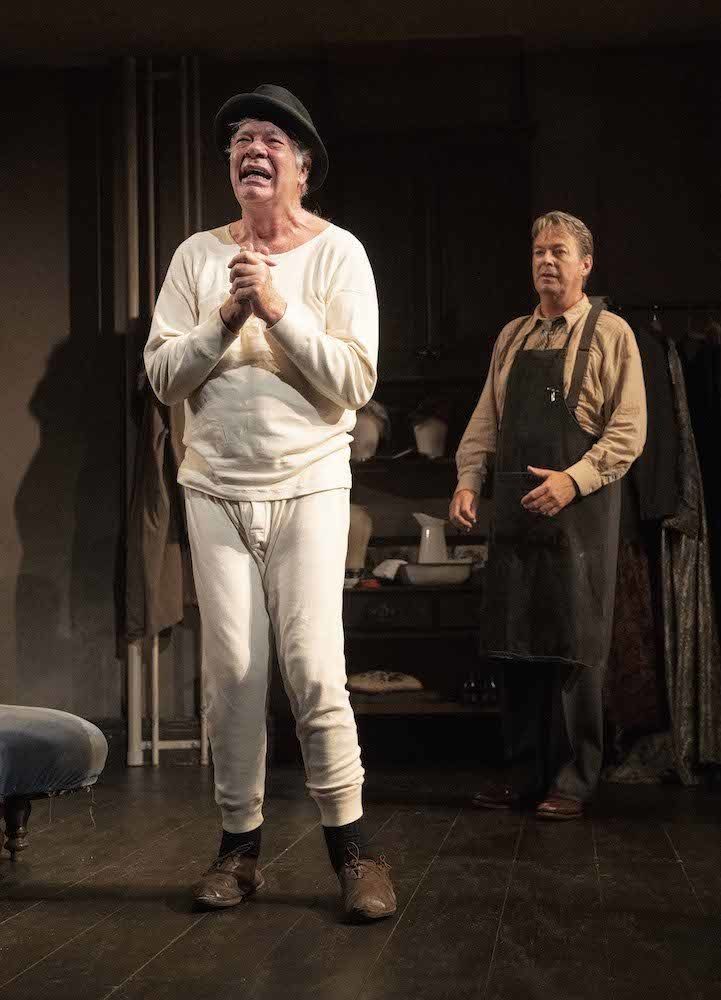
But it’s an ill wind that blows nobody any good and Clary’s absence provides an opportunity for supporting actor Samuel Holmes to step into his shoes and I’m happy to report that he nails the camp, manipulative Norman with aplomb. How would Clary have handled the role? I’ll probably never know. That’s show business.

It’s 1941 and the London theatres are struggling through the rigours of the blitz. As the minutes tick relentlessly by towards yet another performance, actor-manager ‘Sir’ (Matthew Kelly) is nowhere to be found. His wife, ‘Her Ladyship’ (Emma Amos), due to play Cordelia opposite him, tells Norman that she’s just left him on a hospital ward. Stage manager Madge (Rebecca Charles) wants to call off the show but Norman vehemently stalls her, insisting that the man he has been dressing for so many years has never missed a performance yet. He’ll be there.

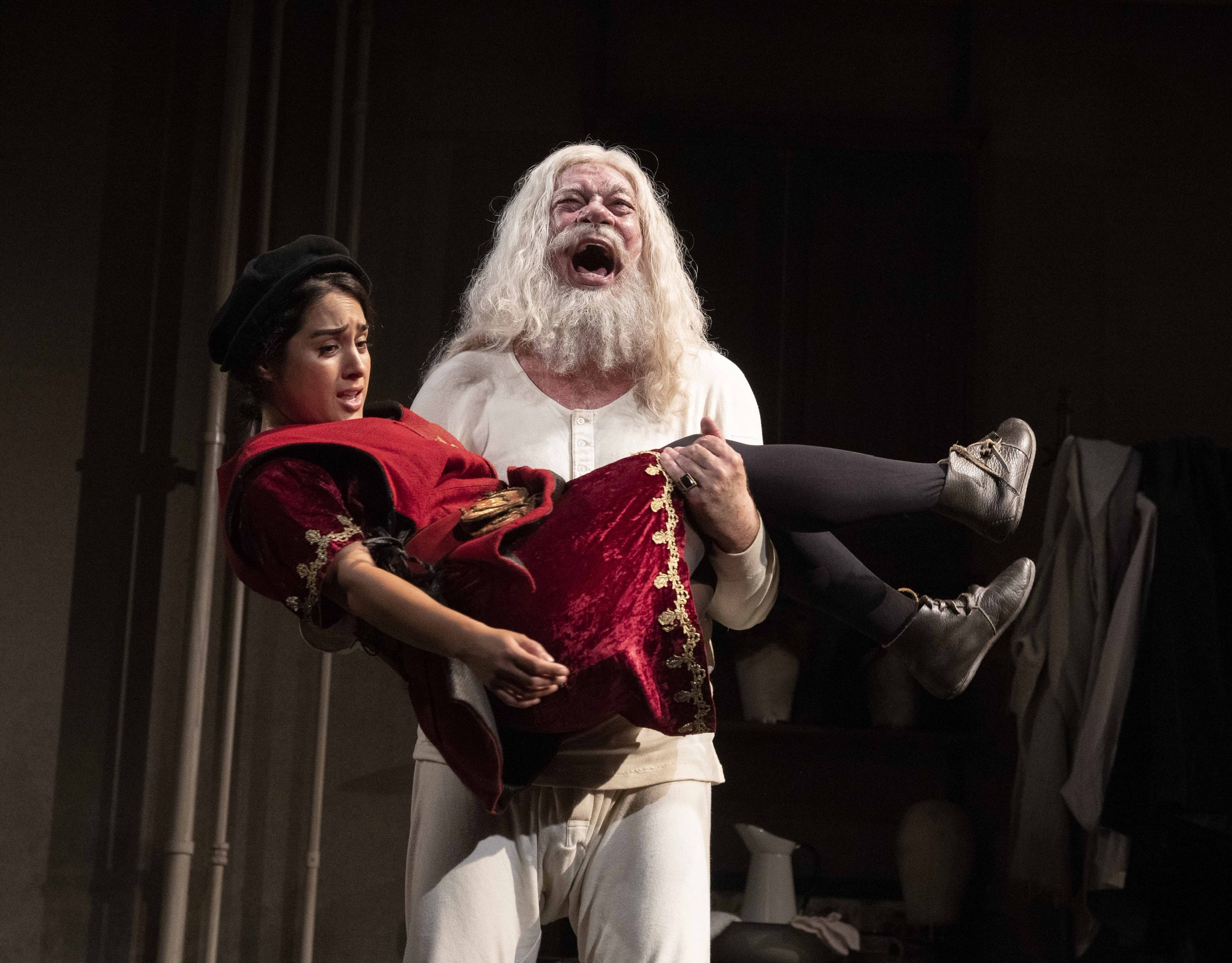
Sure enough, Sir comes plodding dutifully in, looking like he’s gone ten rounds with a heavyweight boxer. Of course he’ll go on! If only he could remember which of the bard’s plays he’s actually supposed to be doing tonight … and if only he was still strong enough to carry his wife onstage for her final scene.

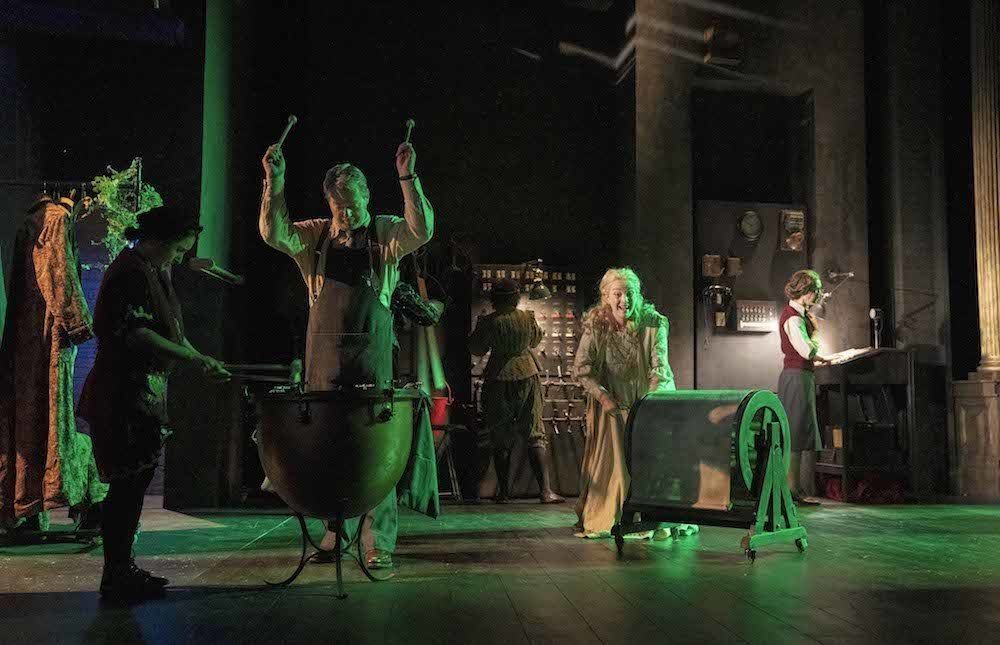
Ronald Harwood’s play (memorably filmed in 1983 with Tom Courtenay and Albert Finney) is inspired by the five years that Harwood spent working as a dresser to Sir Donald Wolfit – a situation I can relate to, as I worked briefly as a dresser to Sylvester McCoy, when he was Puck in Theatr Clwyd’s A Midsummer Night’s Dream. It depicts an age when the term ‘the show must go on’ really earned its stripes, when actor-managers like Sir really did keep the theatrical wheels turning. It’s cleverly staged: a seedy dressing room rises magically to reveal the wings of a theatre, where anxious cast and crew can look out onto whatever’s happening on stage.

While the play feels rather static, full of complex speeches, it’s nevertheless beautifully written and there are some bitterly funny lines to savour, particularly from Norman, who is adept at slaying his adversaries with acerbic one-liners. He also has a faultless memory of every town the company has played in and seems to reserve special contempt for Colwyn Bay (hailing from North Wales, we’re acutely aware of this one!).

The parallels between Sir’s current situation and those of the character he’s depicting are astutely drawn and there’s a brilliant onstage metamorphosis, where Sir, a rambling shivering figure in grubby underwear, gradually transforms into Shakespeare’s king. And of course, there are also the parallels between Lear and his fool – a relationship that’s echoed in the play’s poignant conclusion.

Kelly is terrific in his role – endlessly self-aggrandising but caught in the headlights of his advancing senility – while congratulations should go to Holmes, who must have been rehearsing those lines up to the opening, and who never fluffs one of them.

All the best to Mr Clary for a swift recovery.

4 stars

Philip Caveney