Rupert Friend

Jurassic World Rebirth

17/07/25

Cineworld, Edinburgh

Since its release in 1993, Steven Spielberg’s Jurassic Park has suffered from a bad case of recurring sequelitus – Jurassic Park Parts 2 and 3, Jurassic World and its three increasingly dodgily-titled offspring, not to mention knockoff fodder like Jurassic Shark and Jurassic Whoops I Can’t Think What to Call This. (Okay, so I made the last one up, but you get the idea.)

When this latest instalment was announced, I was initially reluctant to go and see it but, as soon as I heard that it was to be helmed by Gareth Edwards, my interest was piqued. Edwards’ 2023 sci-fi movie The Creator was one of our choices for the best films of that year – a completely original concept and, moreover, a film that looked like it cost millions of dollars more than it actually did. Perhaps inevitably, it fared badly at the box office. This may explain why Edwards decided to throw his hat into the ring for the latest Jurassic spin-off, authored by the franchise’s original writer, David Koepp. Well, it’s sure to have a good storyline, right?

It’s thirty-odd years after the events of the first film and, it seems, dinosaurs have fallen out of favour with the general public. Stegosaurs? Been there, done that. Consequently, dinosaur theme parks are now closing around the world because everyone’s bored with watching tyrannosaurs and allosaurs. Now these mighty critters only exist in remote tropical jungles on the equator, where people are warned never to venture. But shady entrepreneur Martin Krebs (Rupert Friend) still thinks there’s potential gold in them there beasts. He has devised a plan to extract blood from three different types of dinosaur in order to produce a serum that will dramatically reduce the rates of heart disease around the world… yes, really. And the problem is the serum must be extracted while the creatures are still alive. Er… right. As you might guess from his malignant name, Krebs is not just doing this because he’s a nice guy, but because he’s expecting to make big bucks from the pharmaceutical industry.

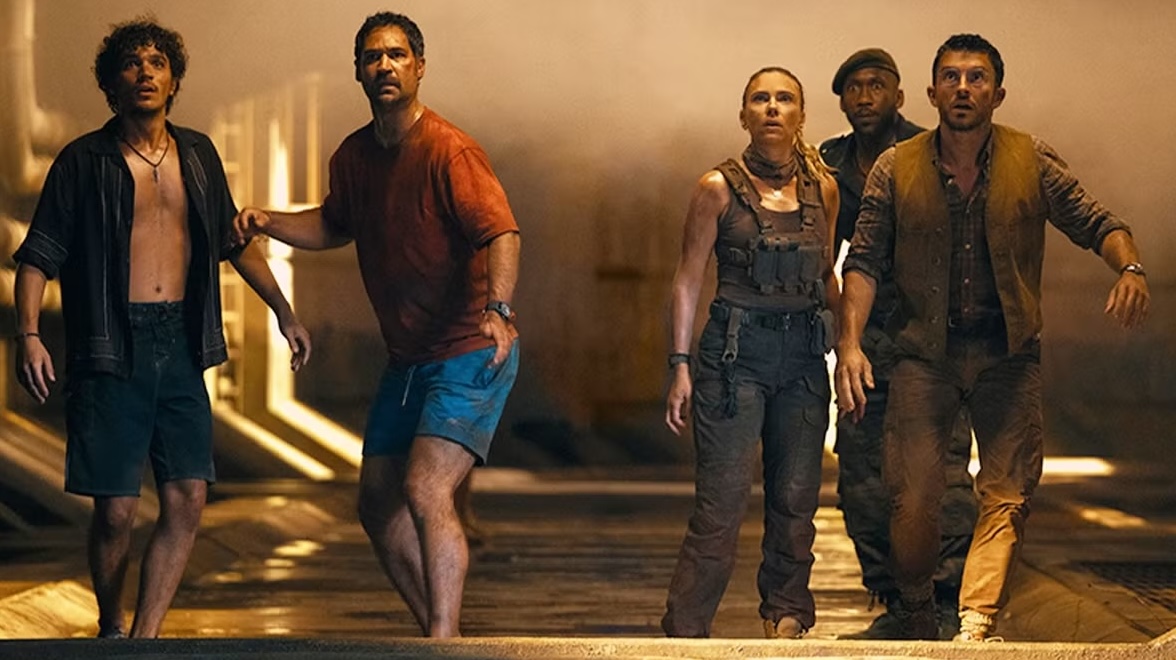
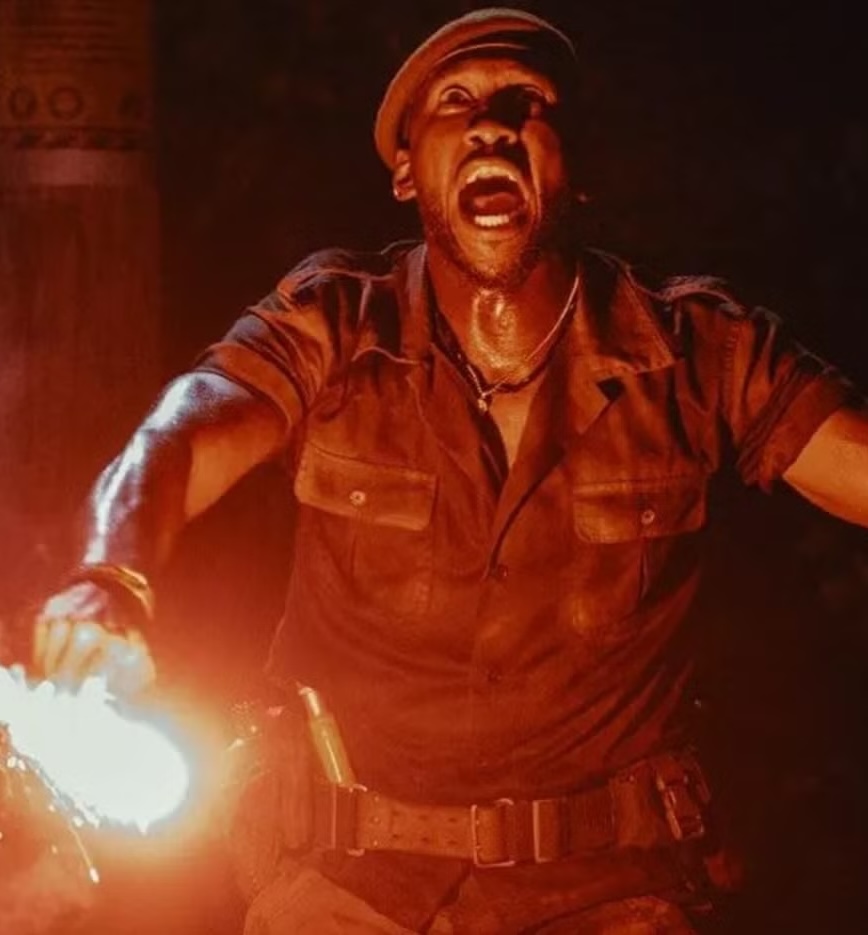
He recruits special operative Zora Bennett (Scarlett Johansson) to head up the operation, ably assisted by her former military chum, Duncan Kincaid (Mahershala Ali). Also in the team is dinosaur expert, Dr Henry Loomis (Jonathan Bailey) – well, you have to have somebody who knows a bit about dinosaurs, don’t you? And there’s a bunch of assistants, who may as well have numbers on their foreheads designating the order in which they will be turned into dino-dinner. The motley crew set sail for a remote island that’s home to the three species they’re looking for.

On the way there, they rescue a party of four Mexican holidaymakers, out for an ill-advised leisure cruise through reptile-infested waters, their reasoning being that, well, there’s hardly any amphibious dinos left, so what are the chances of being attacked? One of the crew is a cute little girl called Isabella (Audrina Miranda) because, of course, there has to be a wide-eyed youngster for the audience to care about.

To give Edwards his due, there are three genuinely exciting set pieces here that actually have me on the edge of my seat as they unfold – for some reason, the water-bound sections are particularly effective. Once again, Edwards manages to bring in the film on a much lower budget than its predecessors, though it’s still in the region of 180 million dollars, which is nobody’s idea of cheap and cheerful.

But the two main problems here are: A – that eyebrow-raising storyline, which seems to revel in making itself increasingly unbelievable as it goes along; and B – the fact that the human characters feel under-developed, somehow less convincing than the CGI beasts that surround them. It’s ironic to see high-calibre actors like Johansson and Ali desperately trying to emote in the midst of all the giant lizard action, but no doubt they were handsomely paid for their efforts, so good luck to them. There are several inevitable visual references to the original film (viewers may as well be issued with a list to tick off). I prefer the delightful little tribute to stop-motion wizard Ray Harryhausen, with a brief clip from The Valley of Gwangi showing on a random TV screen.

If everything were been up to the standard of those mighty set pieces, I’d be much happier with the film, but what do I know? Based upon it’s opening week, it looks as though this is going to make a handsome profit, so inevitably, there are sure to be more titles to follow.

Jurassic World Afterbirth? Hmm. Maybe not.

3. 4 stars

Philip Caveney

The Phoenician Scheme

26/05/25

Cineworld, Edinburgh

Cinema fans can hardly have failed to notice that a new Wes Anderson movie is on general release. As ever, it features his usual bag of tricks: impeccably-framed images arranged in perfect symmetry on the screen; an extended set of famous faces, all of whom show up for every successive project and seem happy to put in cameo performances for shirt buttons; and, as ever, a plot that appears to have been created simply to redefine the term ‘off-beat.’

Anderson has long been a disciple of Verfremdungseffekt – the distancing technique devised by playwright Bertolt Brecht, employed to prevent an audience from easy identification with his characters. It’s always been there in Anderson’s work to some degree but, this time around, I can’t help feeling that it might have been too enthusiastically applied.

Call me old-fashioned, but I do like a character I can root for. Here, there really isn’t one.

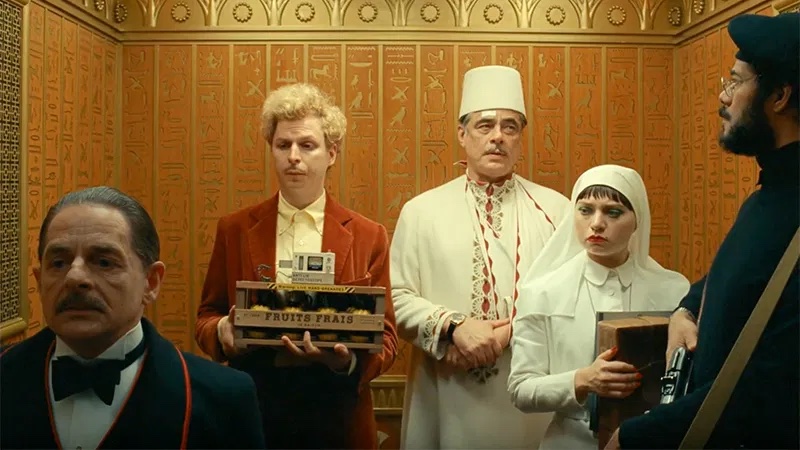
Wealthy and indomitable business magnate Zsa zsa Korda (Benicio del Toro) continues to thrive, despite the many assassination attempts that have been made on him by his rivals. After a near-fatal plane crash, he gets in touch with noviciate nun, Liesl (Mia Threapleton), who may just be his only daughter. (Korda has nine sons, several of them adopted, but he tends to spend as little time with them as possible.) Now, realising that he might be getting close to the end of his life, he has decided to offer Liesl a trial run as the sole heir to his considerable estate. He also takes on a new assistant, Bjørn Lund (Michael Cera), his last sidekick having been blown in half in the aforementioned plane crash.

The threesome must now travel around the fictional country of Phoenicia, where Korda has heavily invested in several major projects. A shadowy cabal of businessmen, led by Mr Excalibur (Rupert Friend), have raised the price of an all-important rivet used in the manufacturing process. This means that, unless Korda can persuade his business associates to take smaller profits, he is at risk of losing everything…

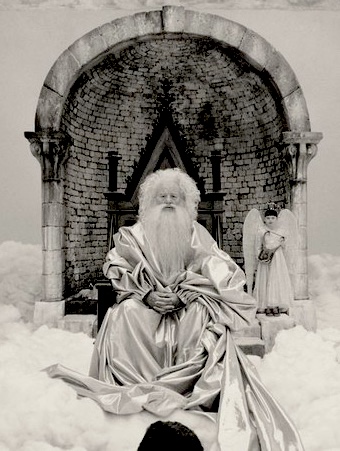
Even as I write this plot outline, I wonder why I’m bothering. Wes Anderson films are like art exhibitions. Some you love, though you cannot exactly pinpoint why. And others leave you flat for no easily-discernible reason. I’m not saying that The Phoenician Scheme is without merit. I sit watching it unfold, approving of its incomparable look and style, occasionally chuckling at some absurd lines of dialogue, even spotting the occasional movie reference. That Moroccan style club run by Marseille Bob (Mathieu Amalric), that’s a nod to Casablanca, right? And the black and white dream sequences, where Korda meets up with God (Bill Murray, naturally), are surely a reference to…

But this is pointless. I loved Anderson’s previous release, Asteroid City, which many viewers dismissed as another exercise in style over content. But this time, even I can’t seem to make myself care enough about the many characters I’m presented with. Korda’s growing relationship with Liesl could perhaps have been the hook that pulled me in, but that element feels somewhat under-developed.

That said, Anderson is one of the few film makers who walks his own path and refuses to compromise his vision. With names like Tom Hanks, Scarlett Johannsson and Benedict Cumberbatch ready and willing to bury their egos in walk-on roles, he’s in the rare position of being free to do exactly as he wishes.

So, why not give this a go? Chances are, you’ll completely disagree with me.

3.6 stars

Philip Caveney

Pride and Prejudice

24/05/25

Netflix

It’s hard to believe that Joe Wright’s adaptation of Pride and Prejudice is already twenty years old – and, while it’s been rereleased into selected cinemas to mark the occasion, it’s also right there on Netflix, all ready for re-examination at the touch of a button. I remember liking it back in the day and feeling that it was much more realistic than the widely-admired 1995 TV mini-series, which I found a little too chocolate-boxy.

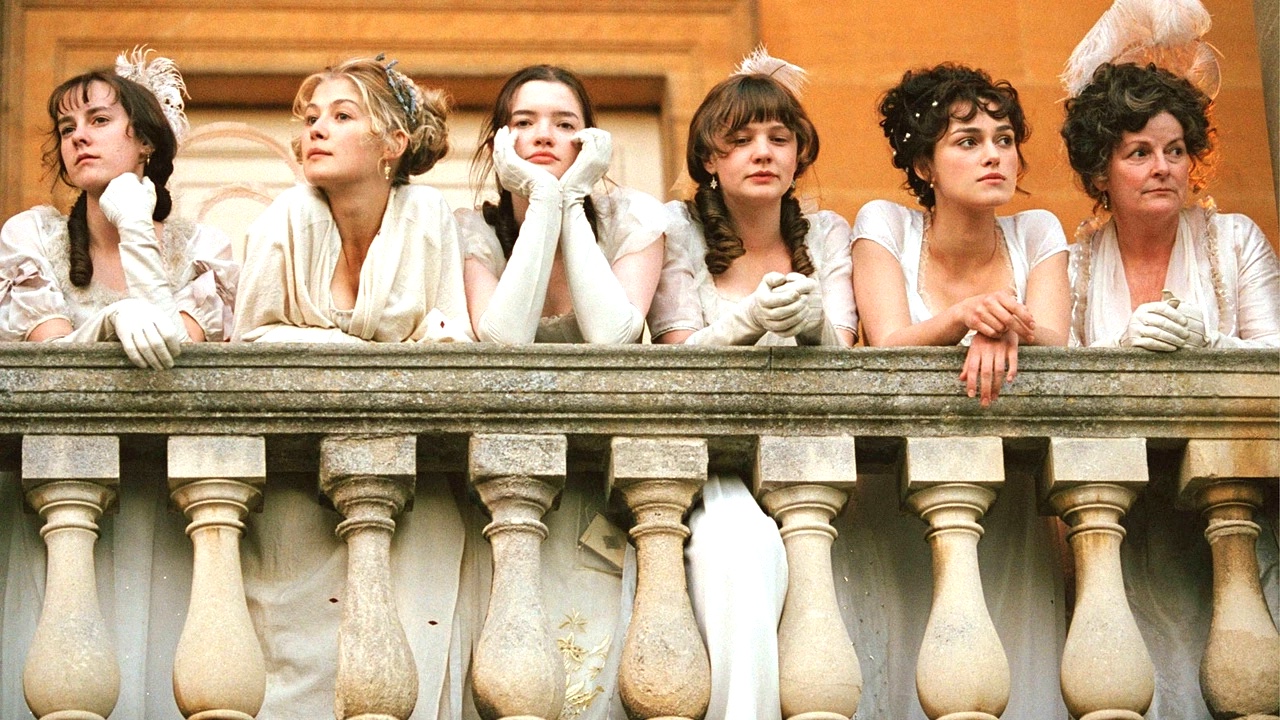
Wright’s version, though offering a tranquil and bucolic adaptation of Jane Austen’s novel, actually succeeds in showing the slightly down-at-heel and ramshackle nature of the Bennet family. In this version, a viewer fully understands the mounting desperation of Mrs Bennet (a wonderfully scatty Brenda Blethyn) as she seeks to find suitable husbands for her daughters, aware all the time that the clock is ticking and the women of the family stand on the edge of penury. Mr Bennet (Donald Sutherland) is useless, looking on in mystified wonder as his wife goes about her earnest business.

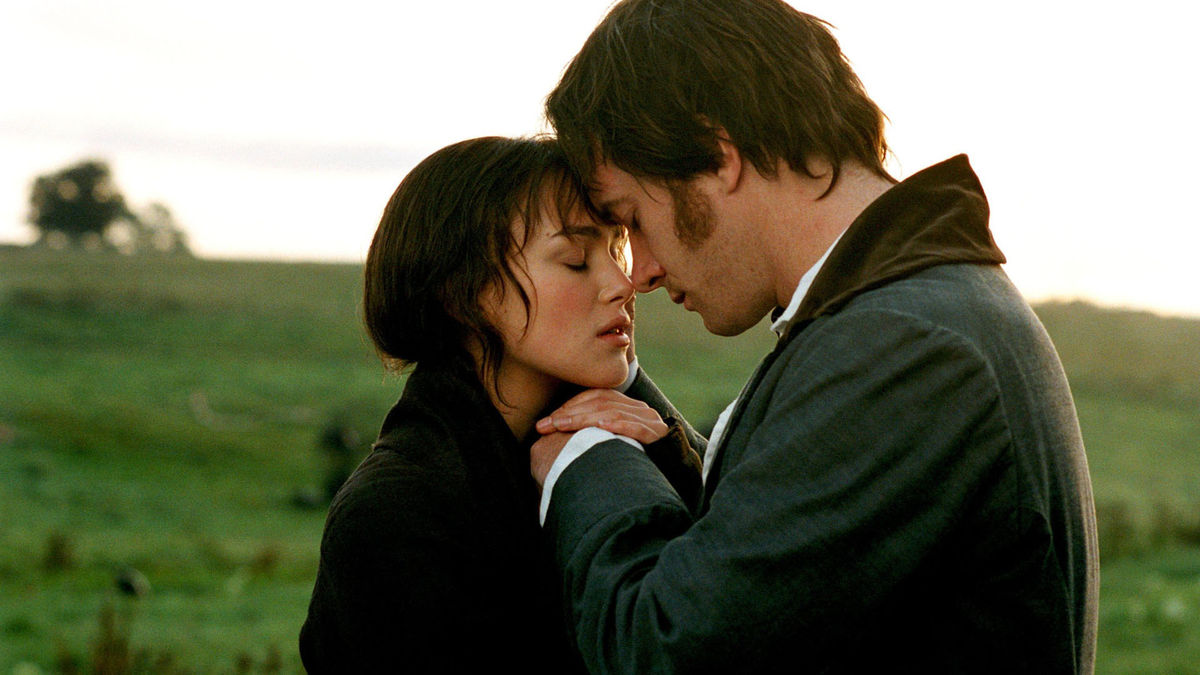
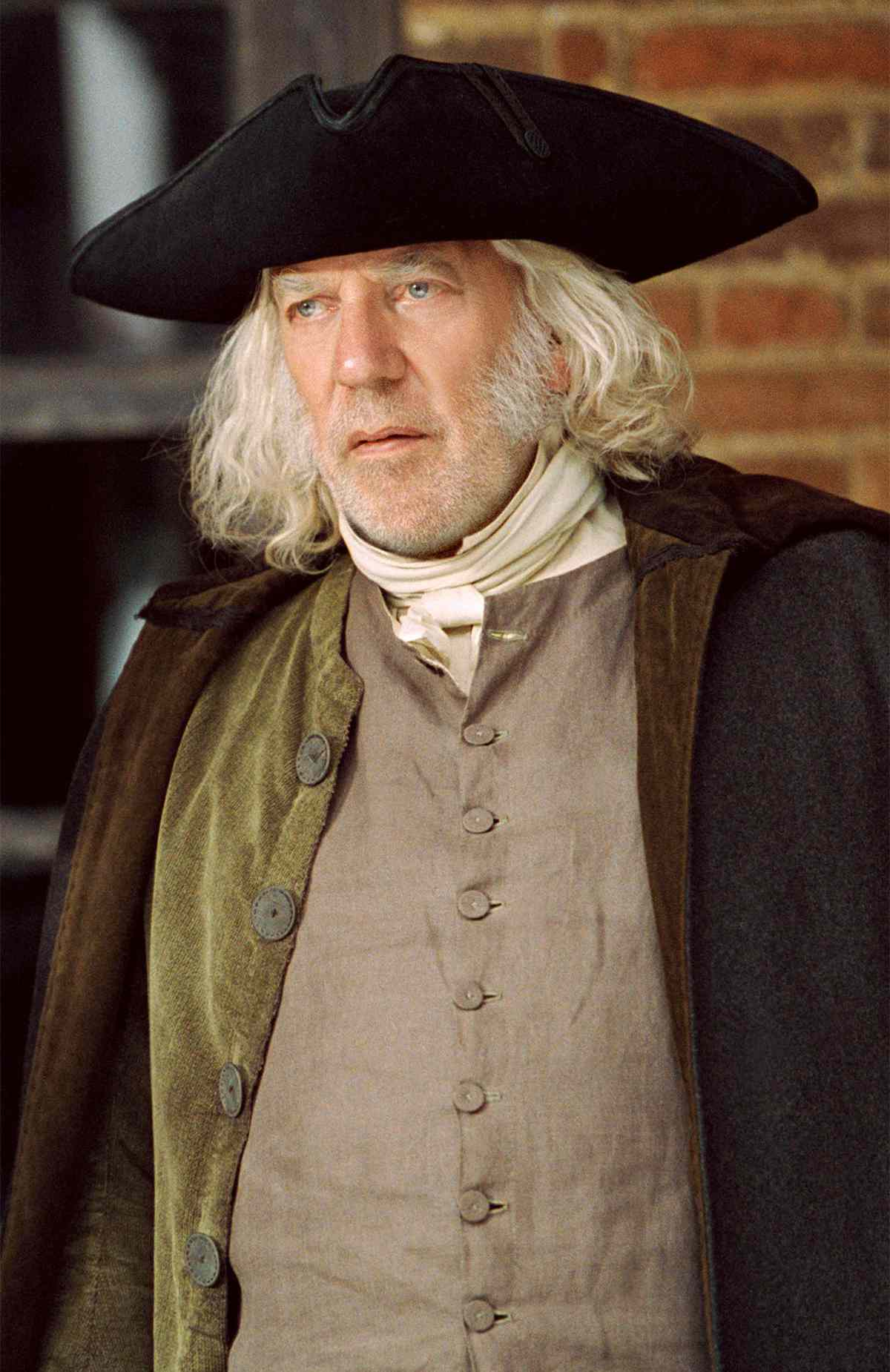
As the wilful and opinionated Elizabeth, Keira Knightley is an inspired choice. Why so many critics have taken against her acting abilities is quite beyond me, but here she plays Lizzie with considerable skill, scathing in her early encounters with Mr Darcy (a deliciously-sombre Matthew Macfadyen) and loving and playful in her interplay with Jane (Rosamund Pike) and her other sisters (look out for an early appearance by Carey Mulligan as Kitty). There’s a splendid turn from Rupert Friend as the caddish Mr Wickham, while Judi Dench struts her inimitable stuff as the acid-tongued Lady Catherine and Tom Hollander is wonderfully obsequious as Mr Collins, the reverend with an earnest desire to impress her.

The source novel has been cleverly adapted by Deborah Moggach, with additional (uncredited) dialogue by Emma Thompson, who had already earned herself an Oscar for her work on Ang Lee’s version of Sense and Sensibility. Wright never lingers too long on a scene and consequently the running time of two hours and nine minutes seems to positively flash by.

There are so many simple yet effective moments that have stayed with me since my first viewing. I love the scene where the Bennets’ prize pig wanders through their living quarters as though it’s a perfectly natural state of affairs, and the scene where Elizabeth and Darcy, enacting a complicated dance routine in the midst of a frenetic party are, quite suddenly, dancing completely alone. Roman Osin’s lush cinematography makes every landscape look suitably ravishing yet never overplays its hand. A scene where a pensive Elizabeth is taken from bright morning sunlight into the dark shadows of evening in one slow take is so understated, it barely registers.

This is Wright’s debut full-length feature and yet it feels like the work of a more experienced director. He would go straight on from this to his adaption of Atonement, another extraordinary literary film, once again with Knightley in a key role.

Sometimes when you return to a film after a long interval, you wonder what made you like it so much on first viewing. In the case of Pride and Prejudice, I feel I enjoy it even more.

4.6 stars

Philip Caveney

Companion

02/02/25

Cineworld, Edinburgh

Occasionally I find myself wishing that I haven’t already seen the trailer for a film and Companion is a good case in point. 

Writer/director Drew Hancock’s debut feature is a spirited genre mash-up, part sci-fi, part horror, part comedy. The aforementioned trailer has no qualms about alerting potential viewers to a major plot reveal in the story. (Even the film’s poster is a dead giveaway!) Okay, the revelation occurs only twenty or so minutes into proceedings and, yes, there are a whole bunch of hints along the way but still… when the revelation occurs, I can’t help thinking what a delicious shock it would have been if only I hadn’t known this was coming. No matter, because there are a whole bunch of other surprises studded throughout the audacious, twisty-turny storyline that ensure I still have plenty of fun.

We open with a flashback as Iris (Sophie Thatcher, last seen interviewing Hugh Grant in Heretic) wanders dreamily through a Stepford Wives sort of supermarket and has a meet-cute with Josh (Jack Quaid). In a voice-over, she tells us about something major that is going to happen later on. Another spoiler? Yes, but weirdly that’s not the one I’m worried about.

We cut back to now (somewhere in the near future). Iris and Josh are an established couple and are heading off in their self-driving car to the swish lakeside home of  mega-rich Russian oligarch, Sergey (Rupert Friend). Sergey happens to be dating one of Josh’s friends, Kat (Megan Suri), and we learn early on that Kat isn’t keen on Iris. Also invited along for the weekend are Josh’s friends Eli (Harvey Guillén) and his devoted partner, Patrick (Lucas Gage).

From the beginning it’s clear that there’s something different about Iris; she’s almost too perfect, too well-informed about a whole variety of subjects… and well, that’s because she isn’t human, but a highly sophisticated AI companion, or as Josh puts it a tad more bluntly, a ‘fuckbot.’ (Always nice to know you’re appreciated.) It turns out that the aforementioned meet-cute between Iris and Josh is actually just a manufactured memory, picked at random from a list of possibilities, designed to enforce Iris’s abiding devotion to the man who is her, er… boyfriend? 

Companion is the kind of film that isn’t shy about swinging for the fences and really, the less I reveal about the plot from this point, the better. Suffice to say, whenever it seems in danger of petering out or treading on over-familiar territory, Hancock throws in something totally unexpected – something violent, or something funny – and even when the film appears to be heading into a straightforward chase scenario, Iris finds herself faced with yet more unexpected situations. Of course, we’re all familiar with those ‘evil AI’ plots, but Companion turns that idea on its head and makes me feel sorry for Iris and hoping that she can extricate herself from the mess that she’s been dropped into. As her woes steadily mount, so the film’s subtext becomes increasingly feminist.

Thatcher is terrific in the lead role, managing to convey her Uncanny Valley persona with great skill and I’m sure we’re going to see more of her on the big screen in due course. I’ve noticed a few ‘too cool for school’ reviews that have slammed the film as being ‘not as clever as it thinks it is,’ but I beg to differ. For my money, this is an assured debut and I’m already fascinated to see what Hancock comes up with next.  

Companion gets a big thumbs-up from B & B and I would urge you to go and see it at your earliest opportunity. And, if you haven’t seen the trailer… so much the better. 

4. 4 stars

Philip Caveney

Roald Dahl/Wes Anderson

29/10/23

Netflix

A new film by Wes Anderson is always an interesting proposition. Four new films – the longest of which has a running time of just thirty-seven minutes – is a downright intriguing one.

It must be said from the start that these are less motion pictures than illustrated stories (imagine, if you will, a kind of turbo-charged Jackanory and you’ll get the general idea). First up, there’s the aforementioned longest entry in the quartet, The Wonderful Story of Henry Sugar, which – to begin with – is told by Dahl himself (uncannily impersonated by Ralph Fiennes). The author begins to relate the story of the mysterious Imdad Khan (Ben Kingsley), a man who can see without using his eyes. Khan’s story is then picked up by two doctors (Dev Patel and Richard Ayoade) and they, in turn, transfer their attention to the titular character (played by Benedict Cumberbatch), a man who becomes obsessed with the notion of becoming an expert card cheat. (As you do.)

It’s all delivered as narration (at a breakneck pace) and, of course, the set dressing has the usual Anderson style: a series of exquisite puzzle-boxes, expertly linked together, opening and closing as the tale unravels. It’s beautiful to watch, but ultimately the story leaves me with a powerful sensation of so what?

The Swan (narrated by Rupert Friend) is, for me, the strongest narrative here, the distressing tale of a young boy called Peter (Asa Jennings), who is horribly bullied by a couple of local lads with access to a rifle (always a recipe for trouble) and which culminates in a poignant and rather distressing conclusion. The story is delivered by Friend as he wanders along a series of labyrinthine passageways and this is perhaps the most kinetic of the films.

The Rat Catcher features Fiennes as the central character, a rather creepy individual who visits a garage and offers his services to the proprietor (Friend again), while the tale is told by a narrator (Ayoade). The subtext of this one is rather less straightforward, as is the style. I can’t remember ever seeing an actor miming invisible objects in a film before! The rat catcher has assimilated all the qualities of the creatures he’s supposed to be eradicating and, when he fails in his attempts to locate them (in a haystack), he tries to make up for his failure in a demonstration of unpleasantness. Again, I feel that the story’s conclusion is rather underwhelming.

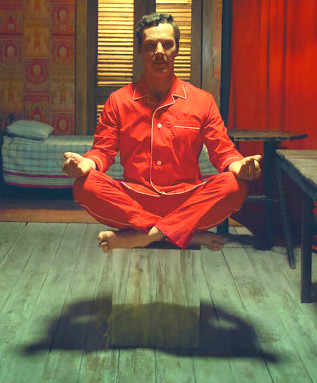
Finally there’s Poison, an account set in post-colonial India, in which Harry (Cumberbatch) lies in bed convinced that a krait (a venomous snake) is lying asleep on his chest and that the slightest move will cause it to bite him. A local police officer (Patel) and a doctor (Kingsley) are enlisted to resolve the situation and, to give them their fair due, they do their level best. The story culminates in a short and rather shocking demonstration of racism, which some viewers will find unsettling, but is surely the whole point of Dahl’s story – that former white rulers will always refuse to acknowledge their own failings. Strangely, Poison seems to have a similar theme to its predecessor.

With such brevity, it seems fairest to judge the four films as a whole – and indeed, Anderson has said that what attracted him to the idea is the notion that they comprise a kind of interlocking narrative. While this quartet is always visually compelling, I can’t help wishing that this inimitable director had settled on some better examples from Dahl’s extensive back catalogue. There are plenty to choose from.

If you have Netflix, they’re certainly worth clicking through. If nothing else, you’ll be charmed by their quirkiness and the uncompromising style that exemplifies Anderson’s approach to cinema.

3.4 stars

Philip Caveney

At Eternity’s Gate

14/11/19

Here’s one I missed at the cinema, but – as is increasingly the case these days – it’s right there on Netflix for anyone to see at the click of a button. While this would definitely benefit from the immersive qualities of a big screen, beggars can’t be choosers.

Julian Schnabel’s film of Vincent Van Gogh concentrates on his years in Arles and, later, at Auvers Sur Oise. Willem Dafoe stars in what is possibly the role he was born to play, so convincingly does he settle into the great man’s persona, and he greatly deserved his Oscar nomination.

This is far from a straightforward biopic, however. Indeed, anybody who prefers a clear narrative arc will probably have a tough time with this. There’s a lot of footage of the artist, easel strapped to his back, wandering for miles across the French countryside in search of the elusive ‘perfect light’ and the film takes its own sweet time over those sections. But there’s no doubting the power of the sumptuous cinematography of Benoit Delhomme, which really does capture the unique look of Van Gogh’s paintings.

A lot of big names pop up in cameo roles. Oscar Isaac is a suitably swashbuckling Paul Gaugin, Rupert Friend is Vincent’s endlessly patient brother, Theo, and Mads Mikkelsen gets the dubious honour of portraying the priest at an asylum, who unashamedly informs the artist that his work is ‘ugly and without merit.’ Dafoe, meanwhile, suffers for his art in utterly convincing style and generates pity for Vincent as well as anger at the horrible treatment he receives on an almost daily basis.

There’s a powerful payoff when, after his mysterious death (which is frustratingly skipped over), we witness Vincent lying in his coffin, surrounded by his paintings and we cannot help but see that the mourners are already taking more interest in his work than they ever did when he was alive.

An interesting effort, then, and – while it lacks the jaw-dropping power of Finding Vincent – it’s still essential viewing for fans of one of history’s greatest artists.

3.8 stars

Philip Caveney


The Death of Stalin

23/10/17

If there was a prize for ‘Most Unlikely Subject for a Comedy’, the death of Russian premier Joseph Stalin would probably figure on the list of prime contenders. I mean, how amusing can that actually be? But Armando Iannucci clearly isn’t interested in such preconceptions. Against all the odds, he’s fashioned a funny and subversive entertainment from this unpromising source, based on the graphic novel by Fabien Nury.

It’s March, 1953, and Russia is cowering under the brutal regime of ‘Uncle Joe’ Stalin. People can be rounded up and shot for the most spurious of reasons – perhaps they’re intellectuals. Perhaps they belong to the wrong organisation. Perhaps their faces just don’t quite fit. The atmosphere of paranoia is amply portrayed in the film’s opening sequence, where radio director Comrade Andryev (Paddy Considine), is forced to restage a live performance by a symphony orchestra, simply because Stalin has phoned up and asked for a recording of it – and unfortunately no such recording has actually been made. ‘Don’t worry,’ Andryev assures his bemused audience as he ushers them frantically back to their seats. ‘You won’t be killed. I promise.’

Armando Iannucci’s comedy of terrors is a brave and wonderfully assured undertaking, finding comic mileage in the absurdity of day-to-day existence under the jackboot of a tyrant – and from the unexpected possibilities that are unleashed when that tyranny finally comes to an end. When Stalin unexpectedly drops dead from a heart attack, the various members of his government begin the complex task of jockeying for position in the new order and the results are a joy to behold.

The film has been criticised in some quarters for its lack of authenticity, but to be fair, there’s no real attempt to make it feel authentic. Characters talk in a mix of accents from regional British to (in the case of Steve Buscemi’s Nikita Krushchev) broad American, and the script misses no opportunity to go for a well-timed belly laugh.  

The cast is stellar – I particularly like Simon Russell Beale as head of the secret police, Lavrentiy Beria, a smiling assassin who hides his vile nature under a mask of cheerful bonhomie. Jeffrey Tambour is also excellent as Georgy Malenkov, Stalin’s second in command, who suddenly finds himself simultaneously having to lead the country in its collective grief and incapable of coming to a rational decision about anything. Rupert Friend has a lot of fun with the role of Vassily, Stalin’s loose-canon, vodka-swilling son. But the film’s undoubted comic highlight is Jason Isaacs as straight talking ‘Marshall of the Soviet Union’, Georgy Zhukov, the hilarity aided no end by the fact that he talks with a pronounced Yorkshire accent. I’ve no idea why that’s so funny, it just is.

Okay, so this isn’t quite the comic masterpiece that some have dubbed it. The film suffers somewhat from the age-old problem of having nobody in particular to root for, since they all appear to be lying, double-dealing creeps – unless of course, you count Olga Kurylenko’s Maria Yudina, a concert pianist who seems to be the only person in the film brave enough to speak her mind about Stalin’s cruelty; but hers is a cameo role, acted out on the sidelines. The only other character we remotely care about is Stalin’s hapless daughter, Svetlana (Andrea Riseborough), who can only watch the carnage that unfolds in the wake of her father’s death and hope against hope that she’ll somehow make it out of there alive.

Weighing in at a relatively sprightly 106 minutes, The Death of Stalin is a clever and accomplished movie, well worth investigating. This is Iannucci playing to his strengths as a political satirist and mostly coming up with the goods. Interesting though, that despite a script peppered with crackling dialogue, the film’s funniest scene is an entirely visual one. Go figure.

4.2 stars

Philip Caveney