

09/11/25
Cineworld, Ediburgh
The year is 1916 and in the fictional Yorkshire town of Ramsden, the local choral society is drawing up plans for its next production – but the depredations of war have taken their inevitable toll. Most of the village’s males are either away fighting or already dead. Yet, ironically, with so many of them buried on the Western Front, the most under-employed person on the society’s committee is Mr Trickett (Alun Armstrong), the local undertaker.
The choral’s leader, Alderman Bernard Duxbury (Roger Allam), is painfully aware that his own voice is at best, average but, as the man who provides most of the funds for these productions – and who badly needs distraction after the death of his own son in the trenches – he presses ahead with his plans for the next show, in which he fully expects to sing the lead.
With the former musical director recently enlisted, Duxbury is keen to acquire the services of Dr Henry Guthrie (Ralph Fiennes) as his replacement, but here too lie problems. Guthrie makes no secret of the fact that he lived and worked for several years in (whisper it) Germany! There are many locals who feel this taints him irrevocably – and why does he spend so much time in the library checking out news articles about the German navy? But other members of the committee, Mr Fyton (Mark Addy) and Mr Horner (Robert Emms), have to grudgingly admit that the man is a real talent.
But once they have him on board, what piece of music can the society possibly perform? Nearly every title they come up with has been written by a German! Eventually, Guthrie alights upon The Dream of Gerontius by Edward Elgar, a suitably British composer. Duxbury gives the title role his best endeavour, but it’s clear that something’s not working…
This original screenplay by Alan Bennett, directed by Nicholas Hytner, could so easily be one of those traditional feel-good features, with the plucky inhabitants of Ramsden coming together to create a masterpiece and performing it to a packed auditorium of spellbound locals – and, while this isn’t so very far from what’s actually delivered here, the telling steers clear of schmaltz and offers something more gritty, nuanced and realistic.
Guthrie enlists many of his performers from the local hospital where soldiers, recovering from their injuries, are happy to have something else to concentrate on. And for the role of Gerontius, how about young soldier, Clyde (Jacob Dudman)? He has returned to his hometown minus his right arm, only to find that the girl he loves, Bella (Emily Fairn), has fallen for another boy in his absence. If ever there was someone with a real understanding of loss, here he is – and luckily, he has a decent voice.
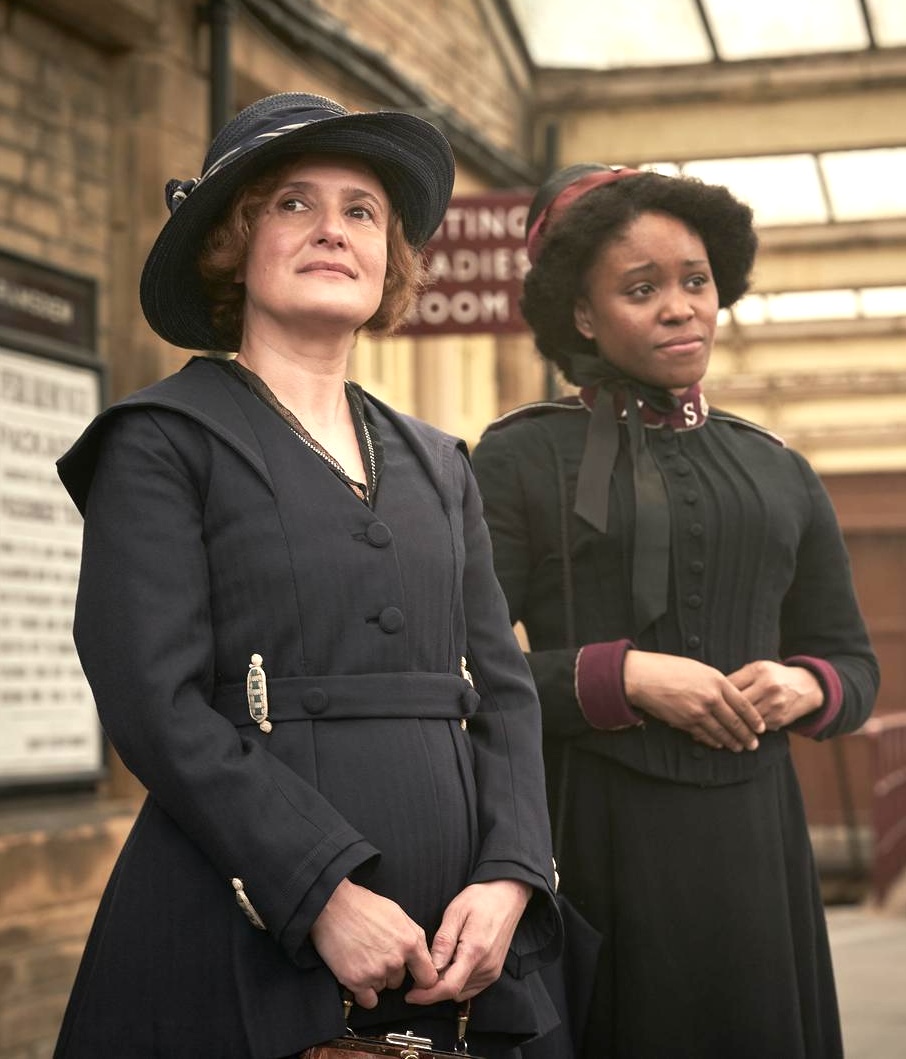
The production gradually starts to come together. When Salvation Army worker, Mary (Amara Okereke), innocently invites Sir Edward Elgar (Simon Russell Beale) along to see a rehearsal, nobody expects that he’ll actually turn up… or that he will turn out to be such a self-aggrandising bellend, maybe the one man who can stop the show in its tracks. There’s a genuine sense of jeopardy as realisation dawns.
But the element of The Choral that I find the most affecting is the depiction of the youths of the town, who use the whole enterprise as a means to meet members of the opposite sex, to have some fun and enjoy a laugh, all the time painfully aware that the clock is ticking, and that their 18th birthdays are fast approaching… along with their call-up papers.
The Choral is an engaging and melancholic piece that serves as a reminder of the awful injustice of war, and the healing power of communal art in times of tribulation.
4 stars
Philip Caveney


 Bouquets & Brickbats