Richard Conlon

Cinderella: A Fairytale

29/11/25

Royal Lyceum Theatre, Edinburgh

Look, I love a good panto as much as the next drama queen. Still, I have to admit there is something very special about this chance to see a Christmassy rendition of one of the world’s most famous fairy-tales without the distraction of all the boo-hiss-he’s-behind-you-wink-wink-nod-nod stuff. Cinderella‘s plucky orphan narrative is a compelling one, not least because of its moral certainty, where the good are rewarded and the bad are well and truly punished: there’s vengeance at play here, as well as virtue. And, in this version by Sally Cookson, Adam Peck and the Original Company, that dichotomy is writ large.

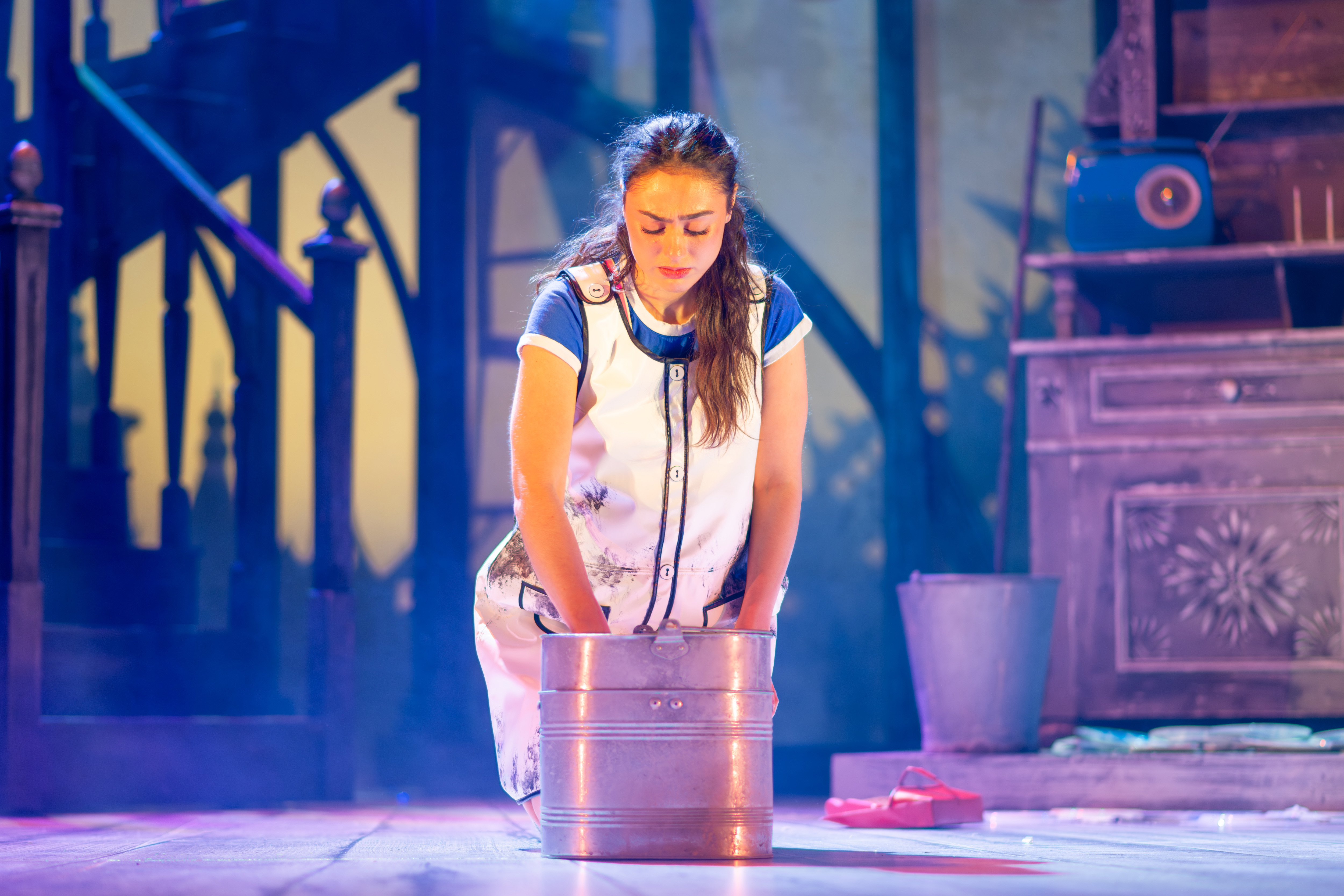
Ella (Olivia Hemmati) lives in a gloriously-realised enchanted forest, all dappled sunlight and multi-coloured birds. The home she shares with her dad (Richard Conlon) is one of those idyllic, romantically-ramshackle cottages where poor people live in story books, and she’s happy there. But when Father marries Mother (Nicole Cooper), everything changes: not only does her step-mum impose a whole raft of irritating rules, she also brings along her own two children, Sister (Christina Gordon) and Brother (Matthew Forbes), who are so priggish and uptight that Ella can’t stand them. And then, just as she’s getting used to the new regime, Father dies, leaving a grieving Ella at Mother’s mercy…

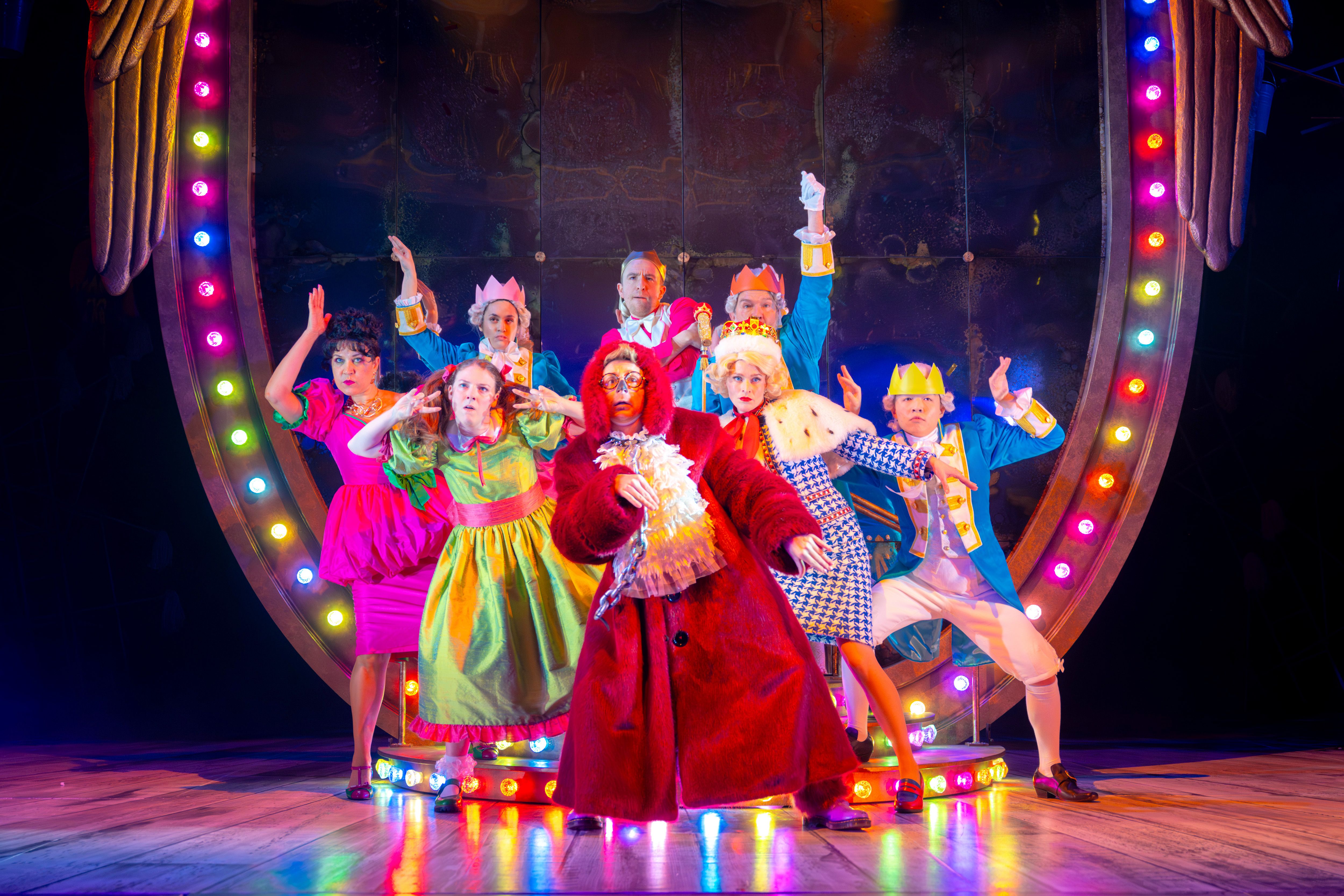
The strength of this show lies in its aesthetic: Francis O’Connor’s set and costume design evoke an ethereal other-worldliness, where magic feels eminently possible. The bird puppets (directed by Forbes and manned by Leo Shak, Stephanie Cremona and the cast) are fabulous, their rainbow plumes as appealing as they are fantastical. Even as a middle-aged woman, I’m completely captivated; how alluring must this staging be for the children in the audience?

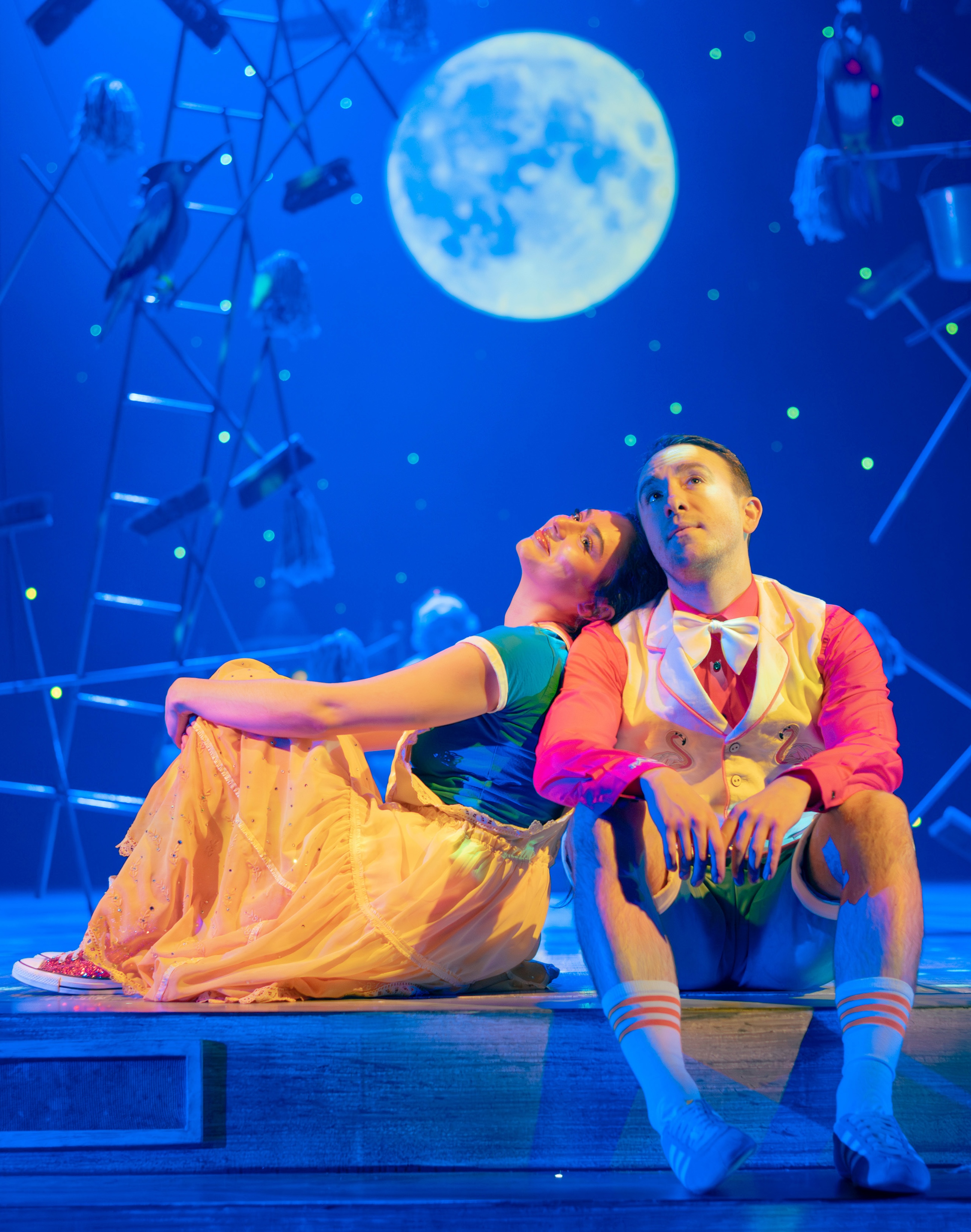
The love story element is underplayed: Prince (Sam Stopford) is a nerdy teenage ornithologist and he and Ella strike up such a lovely, convincing friendship that the idea of their marriage seems jarring and incongruous. Director Jemima Levick wisely eschews any overt wedding pageantry, but I do wonder if it would be better to remove the romance entirely, focusing instead on the simple affection between the pair. After all, it’s not as if there’s the same financial imperative for this Ella, who seems to be living in a whimsical approximation of the contemporary world, as there was for her Grimm progenitor, who needed a husband to escape her servitude.

Cooper is obviously having a whale of a time as the odious Mother, camping up her tantrums and cruelty to create a deliciously-devilish interpretation of the character. The protracted toe-chopping sequence – the production’s only real nod to the folk story’s dark heart – is a gruesome highlight. Meanwhile, Gordon and Forbes’ Ugly Siblings are more sympathetic and nuanced than their traditional counterparts, frightened and corrupted by their toxic mum – and clearly redeemable. Carly Anderson has less to do as Queen, who appears here as a slightly-sozzled, benignly-bemused socialite. It’s an interesting take on the role but she is under-used.

Jon Beales’ music and Emily Jane Boyle’s choreography complement each other perfectly, enhancing the story and ensuring the pace never flags.

All in all, this is a delightful production, and one that is sure to enthral audiences of all ages this festive season.

4.2 stars

Susan Singfield
The Snow Queen

25/11/23

Lyceum Theatre, Edinburgh

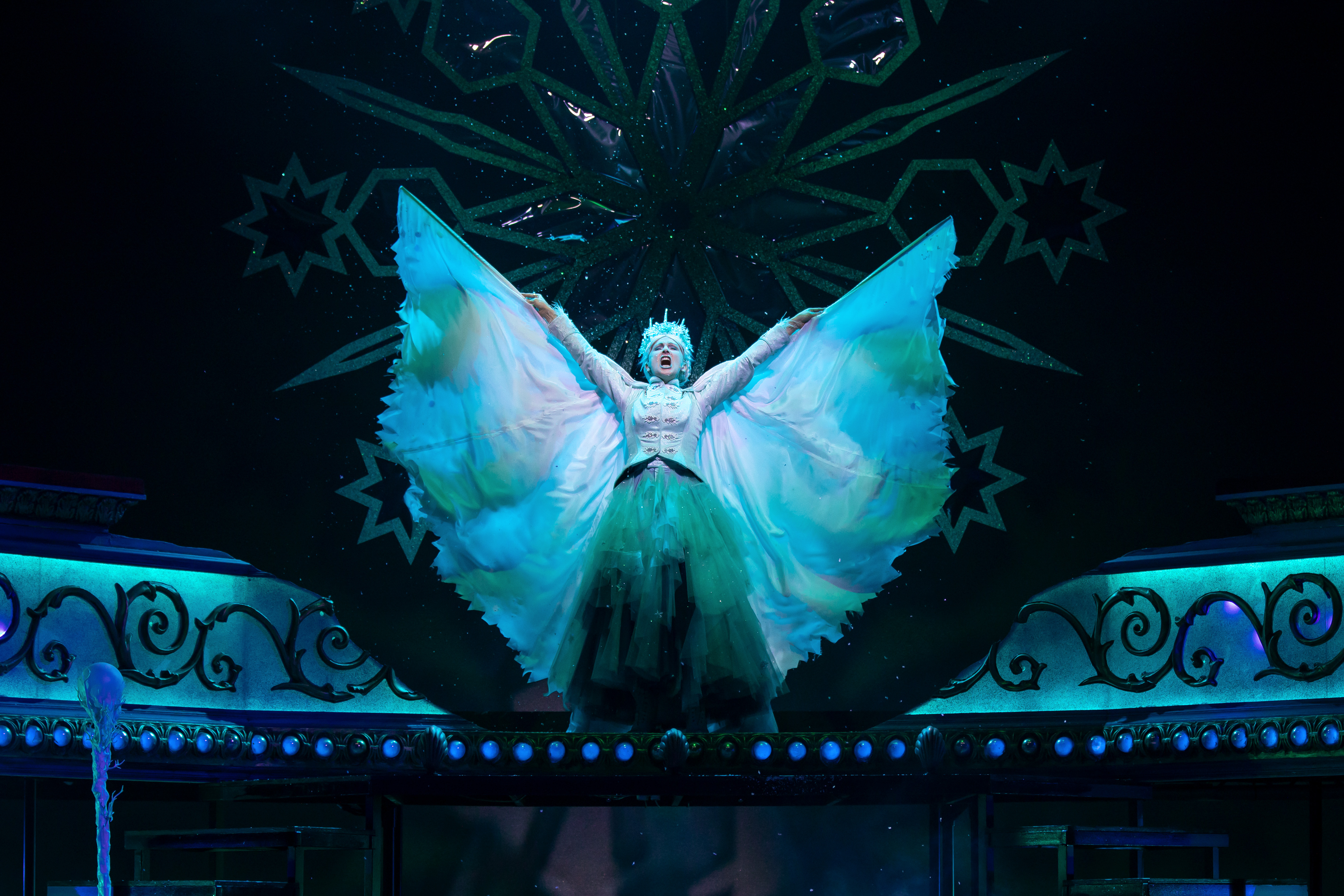
Hans Christian Andersen’s The Snow Queen has never been my favourite fairytale. Although there are plenty of gloriously memorable images – and the book I had as a child was beautifully illustrated – I’ve always found the plot unwieldy. Happily, in this very Scottish adaptation, Morna Young does an excellent job of clearing the dead wood, jettisoning some of the unnecessary complications and illuminating the story’s season-appropriate warm heart.

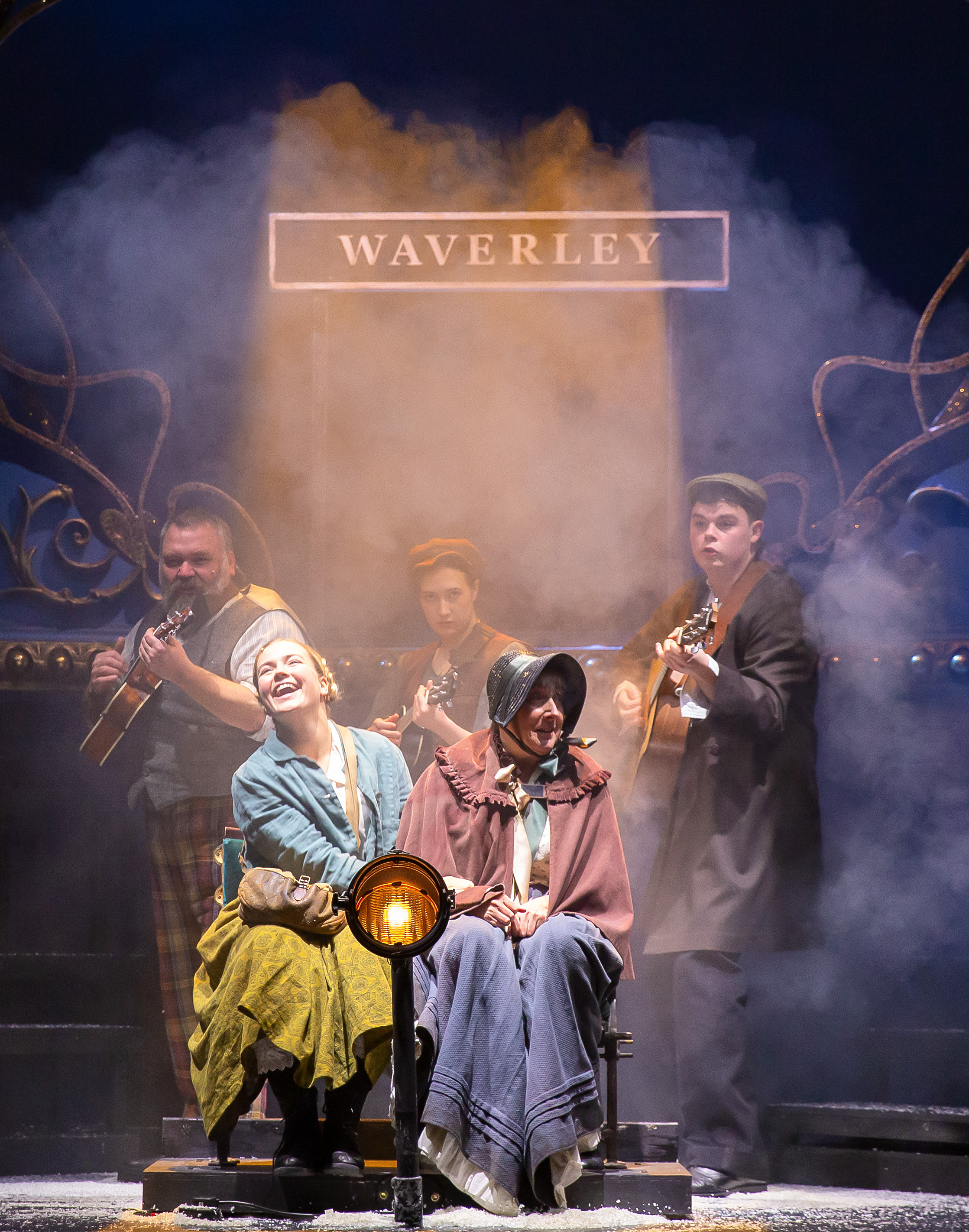
We start off in Victorian Edinburgh, where we were for last year’s An Edinburgh Christmas Carol. But we don’t stay there long: The Snow Queen is about a quest, so of course there’s an epic journey to be made. Best friends Gerda (Rosie Graham) and Kei (Sebastian Lim-Seet) are orphans, living with their respective grandparents. Every evening, they climb up onto the roof of their tenement to tend to their pot plants and plan for the future. Kei dreams of going to university, while Gerda wants to see the world.

Meanwhile, in another realm, some trolls have broken a magic mirror and its shards have caused havoc, turning Beira, the Scottish Queen of Winter, into the evil Cailleach Bheur (Claire Dargo), determined to reign forever, and never relinquish her power to Bride, the Queen of Spring. Bride (Naomi Stirrat) isn’t strong enough to overpower the Snow Queen, but she does manage to slow her down – by planting five seeds of spring inside five human beings. So far, the Snow Queen has tracked down four… and now she thinks she knows where the fifth one lies. Kei doesn’t stand a chance. Corrupted by the magic mirror, he turns against Gerda and follows the Cailleach Bheur to her icy lair. But the Snow Queen has reckoned without Gerda, and underestimated the power of true friendship…

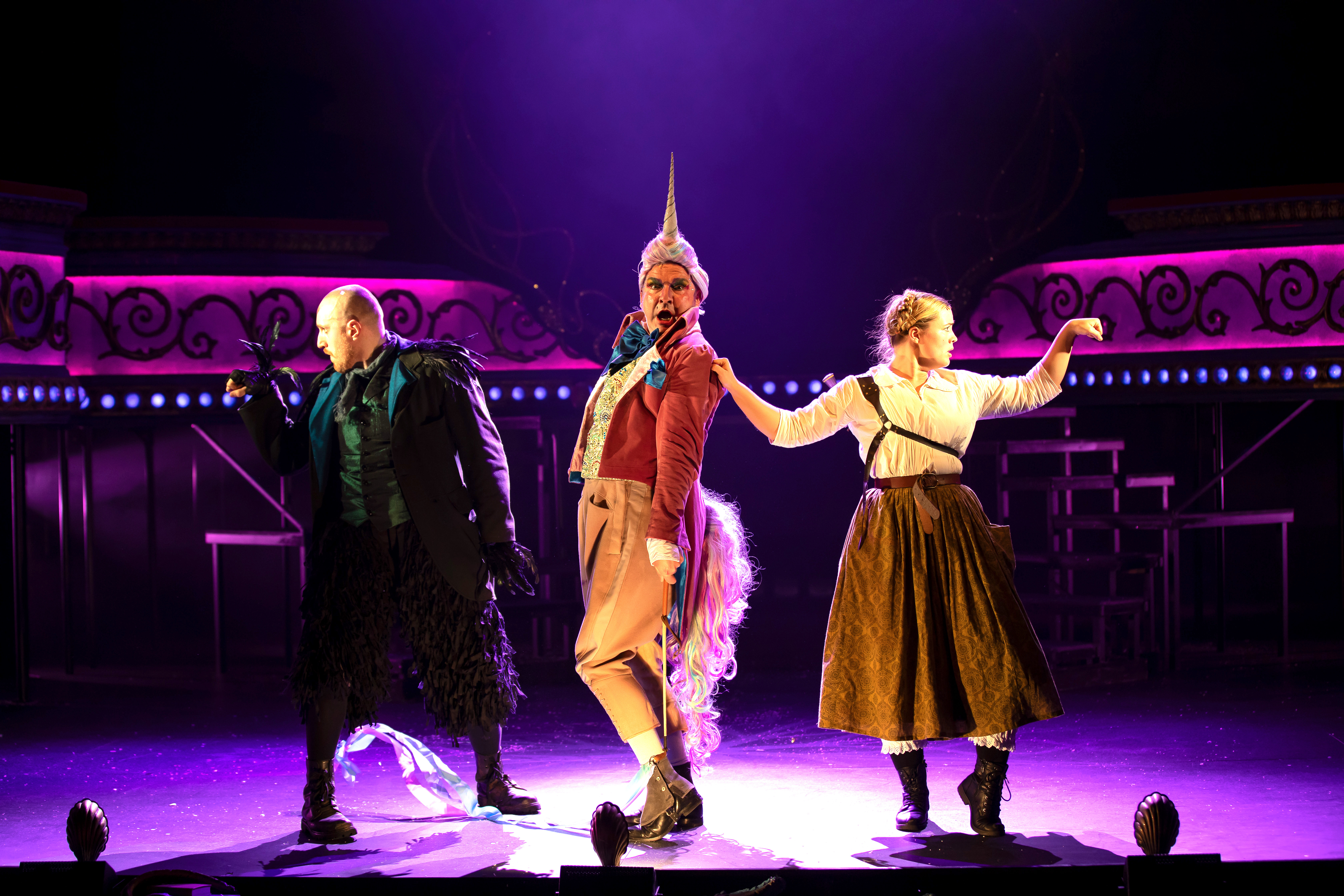
With a lively score by Finn Anderson and some very memorable songs – including Quines Gotta Fight and the innuendo-rich A Horse with a Horn – this production is as bold and vivacious as everything we’ve seen Cora Bissett direct. Graham and Lim-Seet convince as sweet and wholesome children, while Dargo’s white witch is suitably scary. Samuel Pashby – who plays Corbie, the Snow Queen’s corvid assistant – is an excellent clown, his gymnastic capers always engaging. But it’s Hamish the Unicorn (Richard Conlon) who steals the show, which does unbalance things a little – but, honestly, it doesn’t matter a jot. After all, this is a piece of festive family fun, and it’s hardly surprising that a rainbow-farting magical beast should be the mane (sorry) attraction.

I’m a little bit in love with Emily James’ set, which mirrors (and thus closes) the Lyceum’s dress circle, reflecting the theatre back at us. It’s huge and imposing and difficult for the actors to negotiate – and therein lies its beauty. The image is as in-your-face as it gets, too direct to count as subtext, and I admire its audacity. It’s impossible to ignore. James’ costumes are wonderfully opulent too: I’m drawn to the bright colours of the flowers in the fairy garden, and to the Cailleach Bheur’s shimmering pastels.

The Snow Queen straddles the line between theatre and panto, Hamish’s broad humour contrasting with the more serious underlying themes. For the most part, I think this works, although some of the jokes don’t land as well as they might, eliciting titters rather than belly laughs. Perhaps it would be an idea to have Hamish and Corbie engage more directly with the audience, signalling the tonal change. Nonetheless, the enthusiasm with which the final rendition of A Horse with a Horn is sung suggests that even the youngest attendees are fully on board.

A sparkling delight.

4 stars

Susan Singfield

Write-Off

21/03/23

Traverse Theatre, Edinburgh

The A Play, A Pie and a Pint season continues its cracking run with this intriguing two-hander, written by Aodhan Gallagher and directed by Irene McDougall. It’s a play about writers and writing, so naturally I’m fascinated to see what it has to say about the subject – and, as it turns out, it has plenty. What’s more, I’m delighted to note how many unexpected twists and turns are packed into a brisk fifty-minute running time.

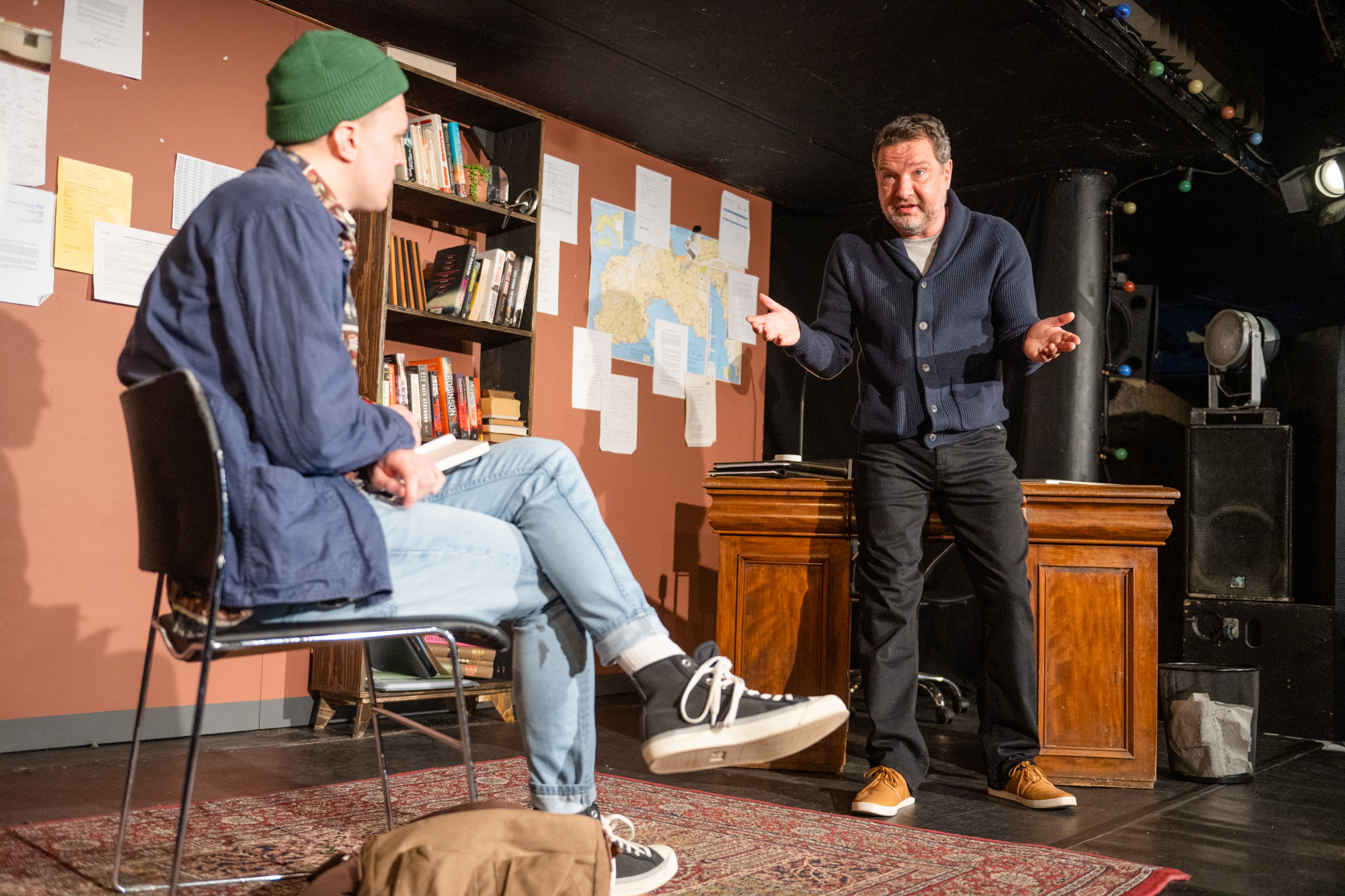
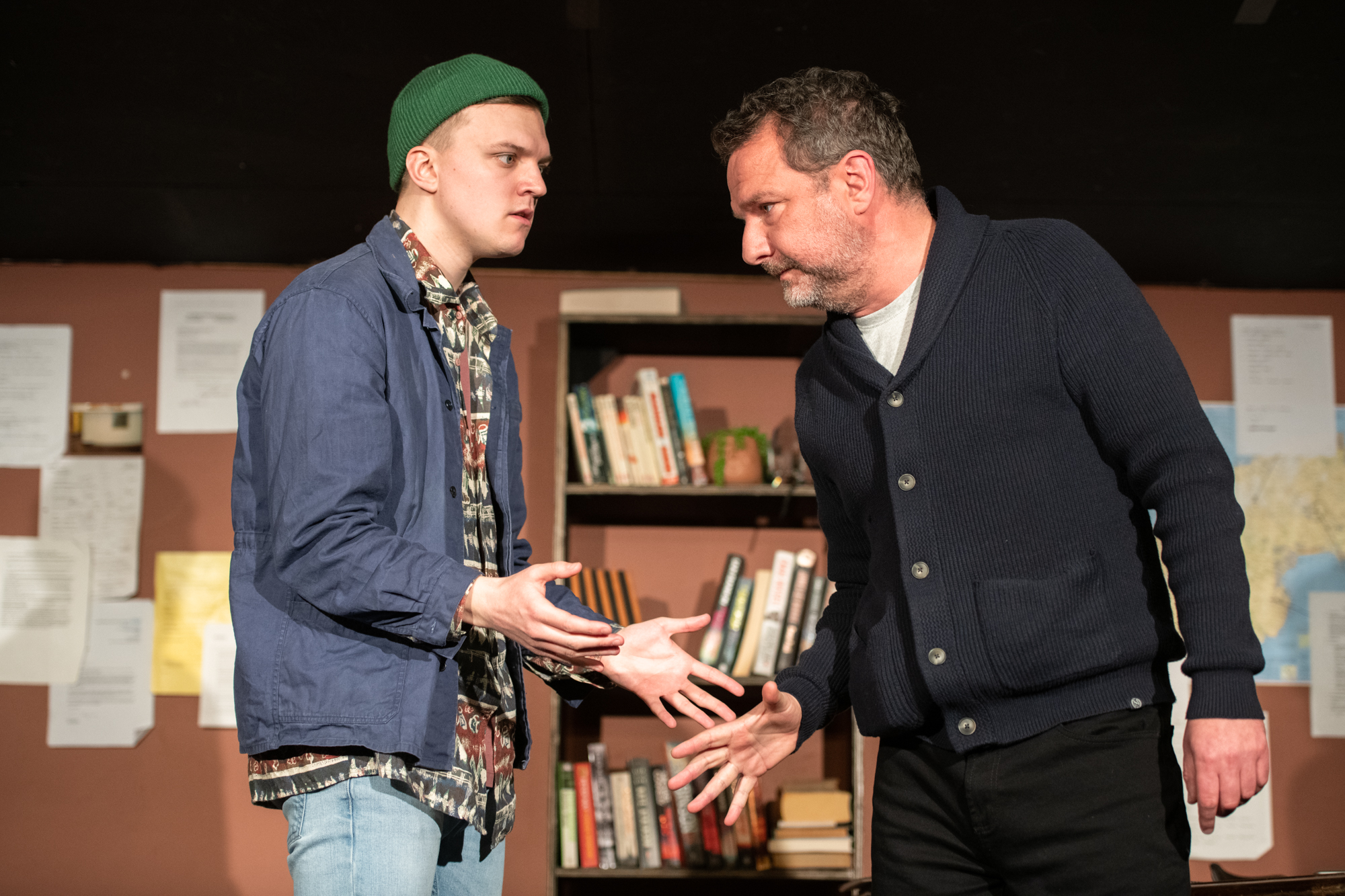
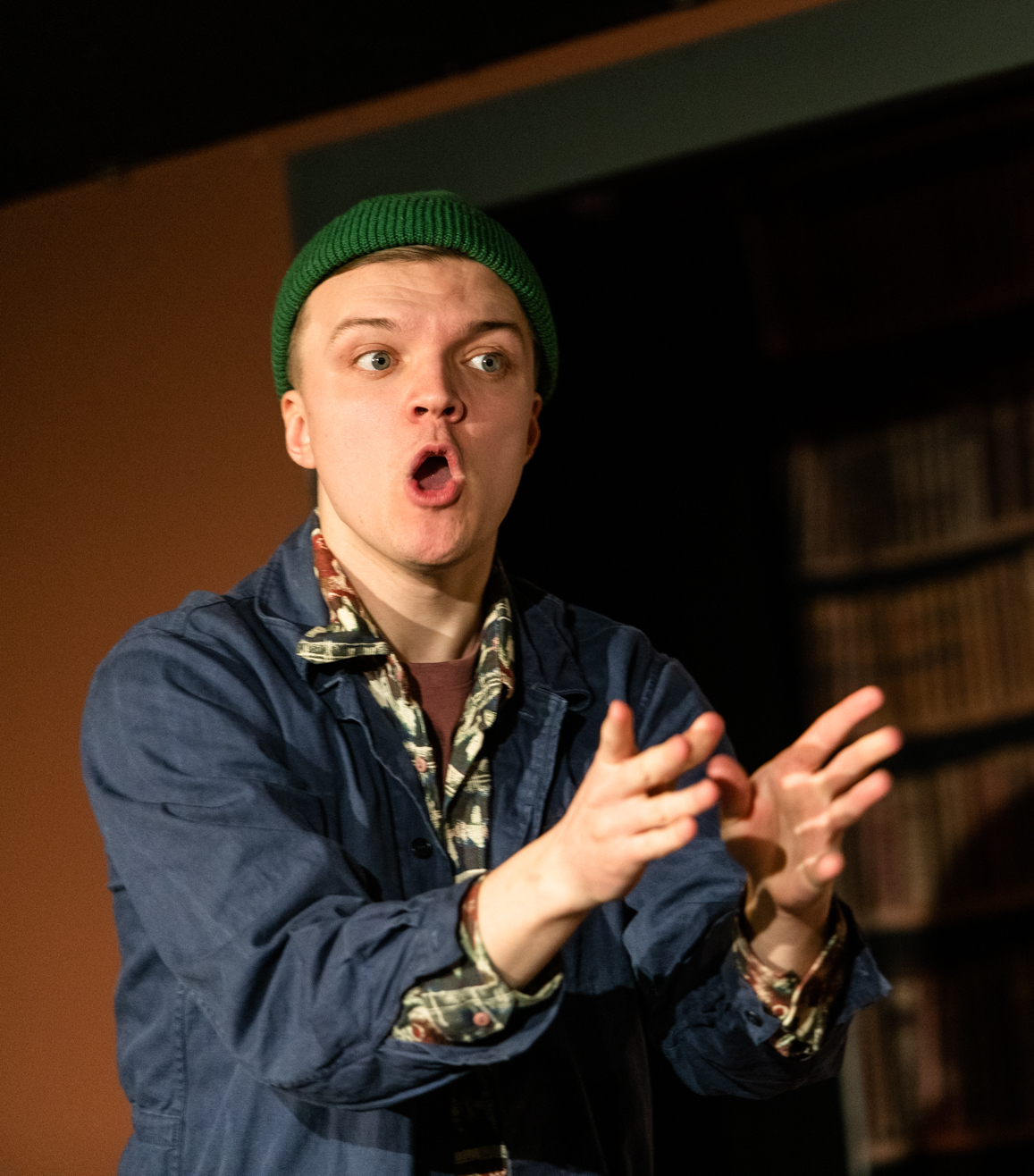
Freddie (Richard Conlon) is a long-established fiction writer, currently preparing to start work on a new novel – most of which is already a stack of crumpled notes in his wastebasket. He’s never seen the necessity for incorporating elements from his own life into the gritty psychological thrillers he’s made his reputation on. These are brutal tales filled with violence and action. But lately, Freddie’s publishers have become a little twitchy, pointing out that his earlier work is increasingly being perceived as ‘problematic’. 

With this in mind, they’ve suggested that this time around, he might want to employ a ‘sensitivity reader’, somebody more attuned to contemporary issues. Enter Ben (Bailey Newsome), the promising student of one of Freddie’s literary acquaintances. Ben is young, gay and confidently in touch with the zeitgeist. He sports a beanie hat and trendy footwear. He also has an unpublished novel of his own that he’s very keen to get noticed…

Write-Off’s acerbic dialogue hooks me from the get-go and my sympathies bounce from character to character as the two men, by turns adversaries and allies, discuss their respective ambitions, beliefs and motives. One moment I’m laughing out loud at Freddie’s caustic observations, the next I’m gasping at some new revelation from Ben, which I genuinely haven’t seen coming. Can these two men ever hope to settle their differences enough to work together on a project?

The performances of the two actors are utterly believable and while it could be argued that this is a piece that’s completely predicated on its quickfire dialogue – and might work just as effectively as a radio play – it’s nonetheless a compelling and challenging production that maintains its propulsive edge right up to the final scene.

I head straight from the play to The National Library of Scotland where – inevitably – I’m working on my new novel. Who says life doesn’t imitate art?

4 stars

Philip Caveney

Jumpy

29/10/16

Lyceum Theatre, Edinburgh

Jumpy is a cracker of a show, at once funny and appalling, familiar and uncomfortable. It’s an episodic tale, a series of vignettes that combine to give a frank and detailed examination of a middle-class family life.

Primarily, this is the tale of Hilary and Tilly, a  mother and daughter struggling with their relationship. Hilary (Pauline Knowles) has just turned fifty, her marriage is stale and she’s about to lose her job. She’s in the habit of pouring a glass of wine as soon as she sets foot inside her home, and she’s frustrated by the way her daughter dismisses her. Tilly (Molly Vevers) is a truculent young woman, happy when she’s with her friends and angry with Hilary. Her anger isn’t specific – Hilary has done nothing wrong – it’s more of a howl against the world, where a fifteen-year-old can’t quite be free. She’s tugging at the apron strings, but of course still needs her mum.

Make no mistake, at its core this is a comedy, and the teenage angst is played for laughs. The way Vevers tuts and scowls and contorts her body stays just the right side of parody: this is adolescence writ large – played for humour but with enough realism to keep us all on side. And while Knowles’ portrayal of Hilary is touchingly vulnerable – she really seems to ache with the difficulty of it all – it’s still funny, in a wry, sardonic way.

There’s a great supporting cast too, most notably Gail Watson as Frances, whose burlesque routine is as impressive as it is hilarious, and Richard Conlon as Roland, the spineless cad who can’t see beyond his own shallow needs. And Stephen McCole’s Mark makes an interesting counterpoint, straight man to the comedians, the solid centre at the heart of Hilary’s life.

It’s brutal in places; it’ll make you question and evaluate the relationships you have with other people, the world, with politics (and wine). But that’s all to the good. April De Angelis’s play is definitely one to see. So get yourself a ticket, and catch it while you can.

4.6 stars

Susan Singfield