
21/03/24
Cineworld, Edinburgh: National Theatre Live
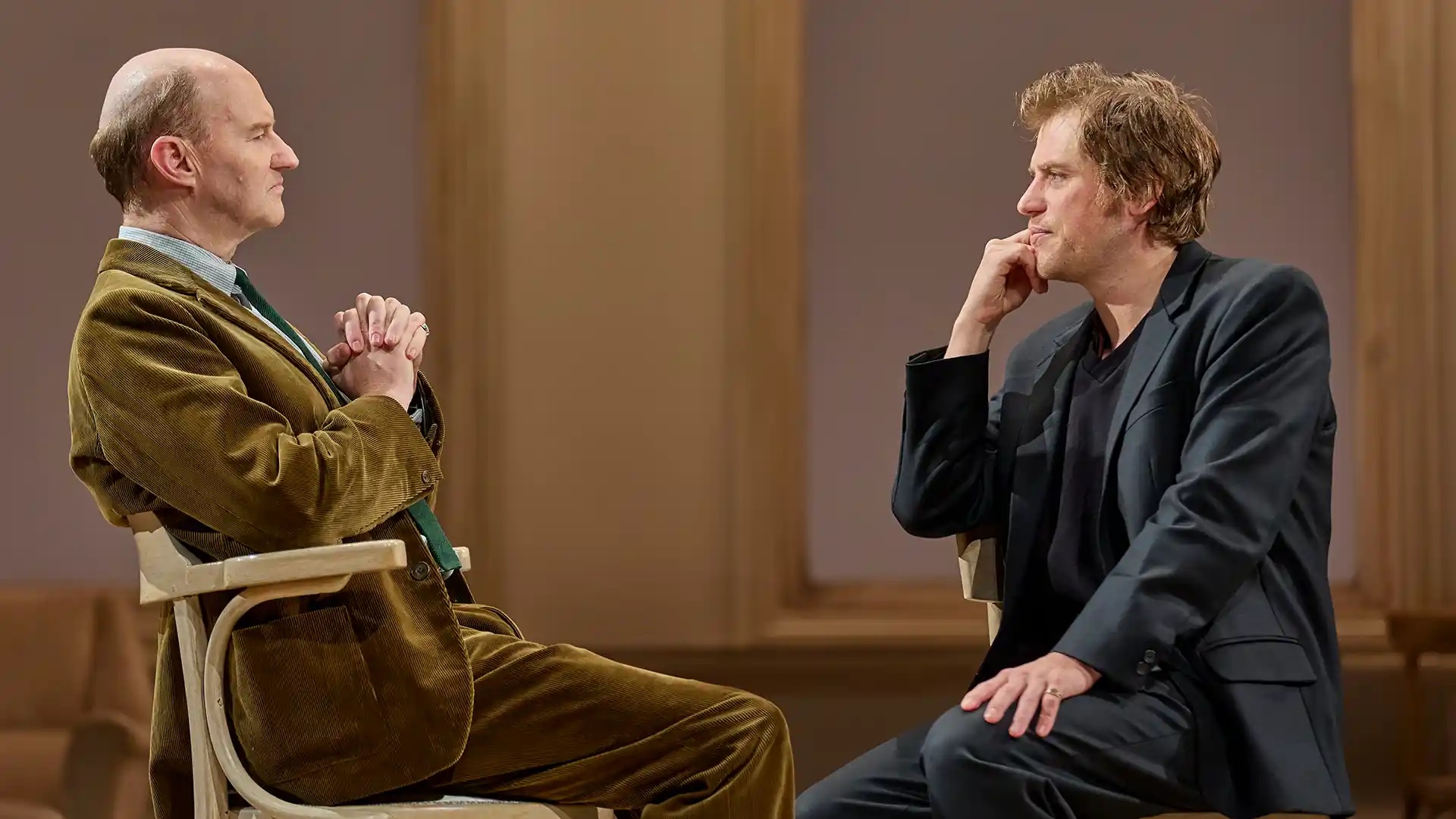
It’s 1964 and Welsh superstar Richard Burton (Johnny Flynn) has decided to turn down some lucrative film offers in order to perform Hamlet on Broadway. (We’ve all been there.) He’s decided that the director should be John Gielgud (Mark Gatiss). Now in his sixties and considered something of a has-been, he famously played the Danish prince to great acclaim as a young actor.
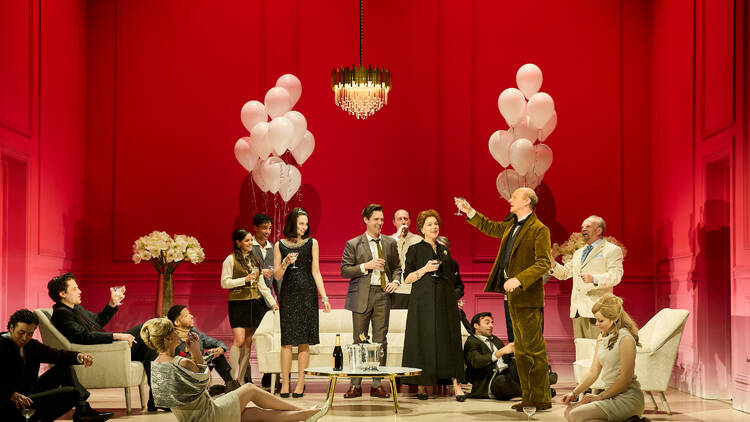
To complicate matters, Burton has recently married Elizabeth Taylor (Tuppence Middleton) – for the first time – and she reluctantly accompanies him, but finds herself banished from the rehearsal space and sequestered in a swish hotel room with an endless supply of alcohol, while her husband grapples with his role.
Jack Thorne’s fascinating play, beautifully directed by Sam Mendes, never shows us the finished production but lingers instead on successive rehearsals as director and star bicker and feud their way to a fresh vision of Shakespeare’s most-performed play. There’s a large ensemble cast at work – some eighteen of them – but most of the other actors are relegated to supporting roles, though both Allan Corduner as Hume Cronyn and Luke Norris as William Redfield manage to make an impression. Meanwhile, Gatiss and Flynn joust entertainingly with each other to sometimes hilarious effect, Gatiss perfectly embodying Gielgud’s sly and snarky manner, while Flynn turns up the bombast as the hubristic Burton, his working-class-lad-made-good bluster deliciously rendered.
Middleton too does well with her character, capturing Taylor’s earthiness and her uncanny ability to cross all boundaries, particularly in the scene where she acts as a kind of intermediary when Gielgud and Burton (inevitably) end up at each other’s throats. I love the scene where Gielgud reflects on the tragedy of achieving stardom at twenty-three, to which Taylor points out that she was just twelve when National Velvet became a runaway hit.
The production is also blessed with an extraordinary set by Ed Devlin, where scene changes are revealed using an ingenious expanding letterbox arrangement. I have no idea how this is achieved, but the effect is remarkable, the transformations so slickly done it feels almost like a series of magic tricks.
This is a play that will delight anyone who loves theatre and the way it works, a glimpse at the nuts and bolts that lie behind the glittering façade. It’s fascinating to see the players experiment with the source material as they gradually inch their way to what will eventually become one of the most successful theatre productions in history.
4.6 stars
Philip Caveney
 Bouquets & Brickbats