Renée Zellweger

Bridget Jones: Mad About the Boy

22/02/25

Cineworld, Edinburgh

Watching a Bridget Jones movie is like catching up with an old schoolmate – not necessarily someone you were especially close to back in the day, but with whom there’s enough shared history to make these meet-ups fun. No doubt this is particularly true for “women of a certain age” – Bridget’s age; my age – who’ve grown older with her as part of our cultural landscape.

Thankfully, Bridget (Renée Zellwegger) has finally grown wiser; I found her ditsy-fuck-up persona a wee bit irritating when I last saw her (in 2016’s Bridget Jones’s Baby). What was endearing in a woman barely into her thirties, contemplating the fact that she’s somehow suddenly supposed to be an adult, was just irksome in a pregnant forty-something with a kick-ass job. Now in her fifties, Bridget has settled into success: she’s proud of the skills that make her such an excellent TV producer, and she’s even prouder of Billy and Mabel (Casper Knopf and Mila Jankovic), her two delightful kids.

But this iteration of Bridget is a lot sadder too: she’s a widow. Her husband, Mark Darcy (Colin Firth), was killed a couple of years ago on a peace-keeping mission in the Sudan. The issue of mourning is nicely handled, staying just the right side of mawkish. We see Bridget and her kids slowly moving forward, acknowledging their grief while also trying to find joy. The new levels of emotional depth work well, but this is still essentially a rom-com, so there’s a raft of unsuitable guys for Bridget to dally with.

First up is her old flame, Daniel Cleaver (Hugh Grant). Bridget has him firmly in the friend-zone nowadays, and I like this development. He’s as much of a player as he ever was – his language inappropriate; his attitude to women still neanderthal – but he’s rendered (more or less) palatable thanks to his kindness to Bridget and his rueful acknowledgement of his own failings. Also, of course, Grant imbues him with a rogue-ish charm, so it’s hard to hate him as much as I might in real life.

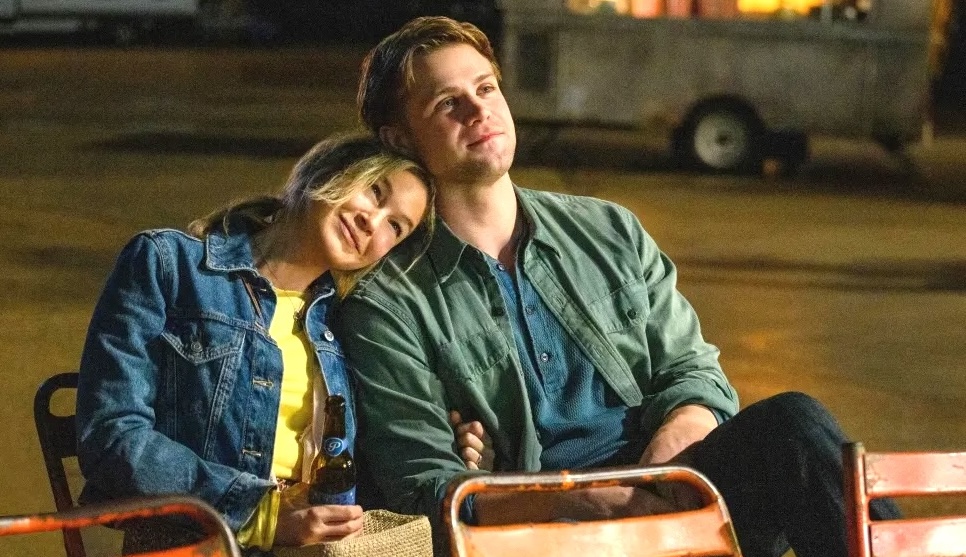
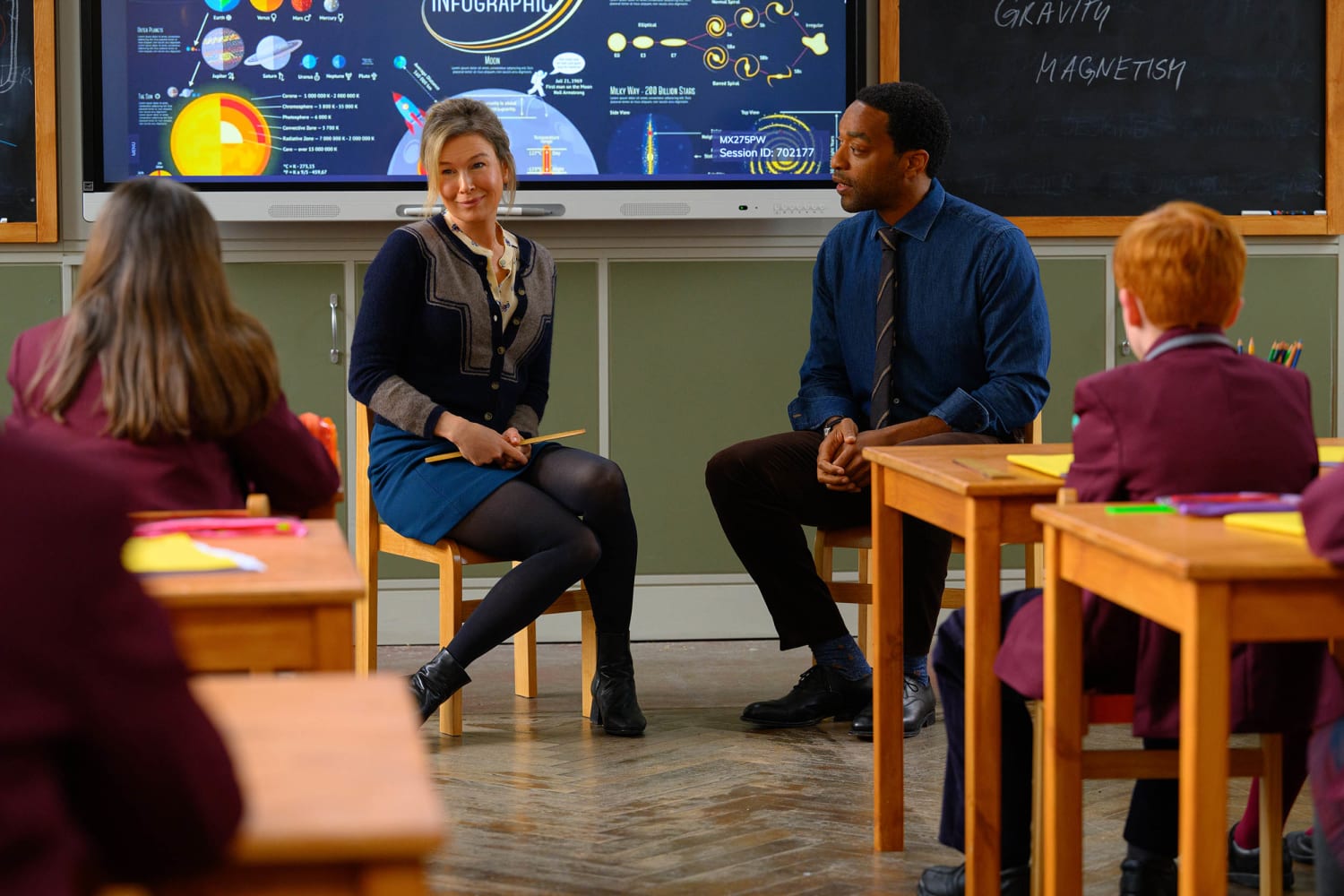
So, if Cleaver’s not a contender for a new relationship, who is? Enter Roxster (Leo Woodall) and Mr Wallaker (Chiwetel Ejiofor). The former is a twenty-nine-year-old PhD student, all rippling muscles and boyish smile; the latter is Billy’s uptight primary school teacher, a stickler for rules and punctuality – although he does turn out to have a decent set of abs as well. It’s no surprise that Bridget finds herself drawn to Roxster – nor that Mr W reveals a softer side, which makes her like him too. Which one will Bridget end up with? (Things might have moved on – at least Bridget doesn’t seem to hate her body any more – but the story hasn’t strayed so far from its ‘happy ending’ cliché that she might conceivably choose to be alone.)

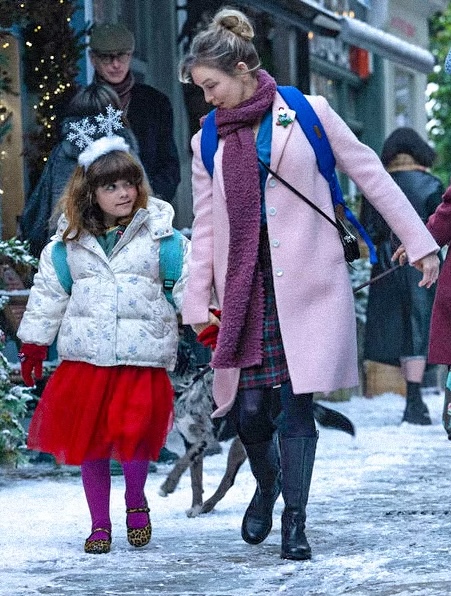
Zellwegger is as likeable as ever, and I have tears in my eyes as I see Bridget emerging from her misery to recover some of her ebullience – dancing and laughing and being silly. It’s great to see her old friends and adversaries pop up as well: director Michael Morris and scriptwriters Helen Fielding, Dan Mazer and Abi Morgan successfully present a parade of ‘greatest hits’ shout-outs without ever making them seem shoe-horned into place. Big knickers? Check. Penguin pyjamas? Check. Falling over? Check. Check. Check. Running after a lover in the snow? Big check.

In short, I like this film a whole lot more than I’m expecting to. Bridget will never be my bestie, but I’d love to check in with her when we’re both in our sixties, and see what scrapes she’s getting up to then…

4 stars

Susan Singfield

Judy

03/10/19

The ‘Judy’ of the title is, of course, Judy Garland, and this rather downbeat film, directed by Rupert Goold and written by Tom Edge, concentrates not on the gloss and glitter of Hollywood, but on a less-celebrated period of her life: her five-week residency at London’s Talk of the Town, which proved to be – quite literally – the end of her career.

It’s 1969, long after her super-stardom and more than a decade after her cinematic comeback with A Star is Born. Judy (Renée Zellweger) is struggling to make ends meet. Addicted to barbiturates and hopelessly in debt to the IRS, she is virtually unemployable in her homeland, reduced to dragging her children, Lorna and Joey, onstage with her to perform song and dance routines for a hundred dollars a night. Judy’s ex-husband, Sid Luft (Rufus Sewell) is understandably concerned for the welfare of his kids, but Judy is determined to prove herself a good mother, despite never having had the luxury of a decent role model in her own childhood.

But then the offer from Bernard Delfont (Michael Gambon) rears its head and, sensing a way out of the corner she’s painted herself into, Judy heads off to England, reluctantly leaving her children in the care of their father. There are problems from the moment she arrives: she refuses to rehearse for the show and keeps complaining of ‘headaches’- but her no-nonsense PA, Rosalyn Wilder (Jessie Buckley), does at least manage to get her onstage for the opening night. Judy goes down a storm and things look promising… but of course, as history attests, from there, it’s anything but plain sailing.

The first thing to say about Judy is that Zellweger is totally convincing in the lead role, nailing Garland’s tragic self-doubt and vulnerability with aplomb and somehow even managing to look and sound uncannily like the real person. But a great performance doesn’t automatically make a great film. That, I’m afraid, is more of a mixed bag.

I like the flashbacks to the Hollywood years, where young Judy (Darci Shaw) does battle with the odious Louis B. Mayer (Richard Cordery), a man who thinks nothing of working a twelve year old relentlessly around the clock, knowing full well that she has to exist on a diet of ‘pep pills’ in order to keep going. Later on, there’s also a charming plot strand where Garland befriends a couple of gay fans (Andy Nyman, Daniel Cerquira) and ends up back at their flat, cooking them an omelette, which makes them, I suppose, the original ‘friends of Dorothy.’

But unfortunately, so much of the narrative is devoted to Garland, the other characters barely get a look-in. The super-talented Jessie Buckley, for instance, is second-billed here, but we learn virtually nothing about Rosalyn; and why bother to employ the mighty Michael Gambon if all he gets to do is sit in the audience and look disgruntled? Finn Whittrock also struggles to make anything of his role as ‘unsuitable husband number five,’ Micky Deans. Was this man a cruel opportunist looking for his own personal rake-off? Was he just lousy at doing business? Did he have genuine affection for Judy? There’s not enough information here to let me make a judgement on any of those questions and that’s a shame.

Still, if, like me, you have a soft spot for the divine Ms Garland, this is worth catching for that sublime central performance. Zellweger does rousing versions of some of Judy’s best-remembered songs and manages to capture her distinctive vocal inflexions perfectly. And, unless you’re made of stone, you’ll probably have a tear in your eye at the film’s unexpectedly redemptive conclusion.

3.8 stars

Philip Caveney