Peter Dinklage

Roofman

26/10/25

Cineworld, Edinburgh

Rarely has Mark Twain’s pronouncement that, “Truth is stranger than fiction… because fiction is obliged to stick to possibilities” felt more apt. Imagine the pitch. “So there’s this really sweet-natured armed robber, who pulls off an inordinate number of heists before being caught. He escapes from prison and then hides out in a busy branch of Toys “R” Us – for six whole months – during which time he also finds himself a girlfriend and joins a church…”

Nah. Way too unlikely.

What do you mean, it actually happened?

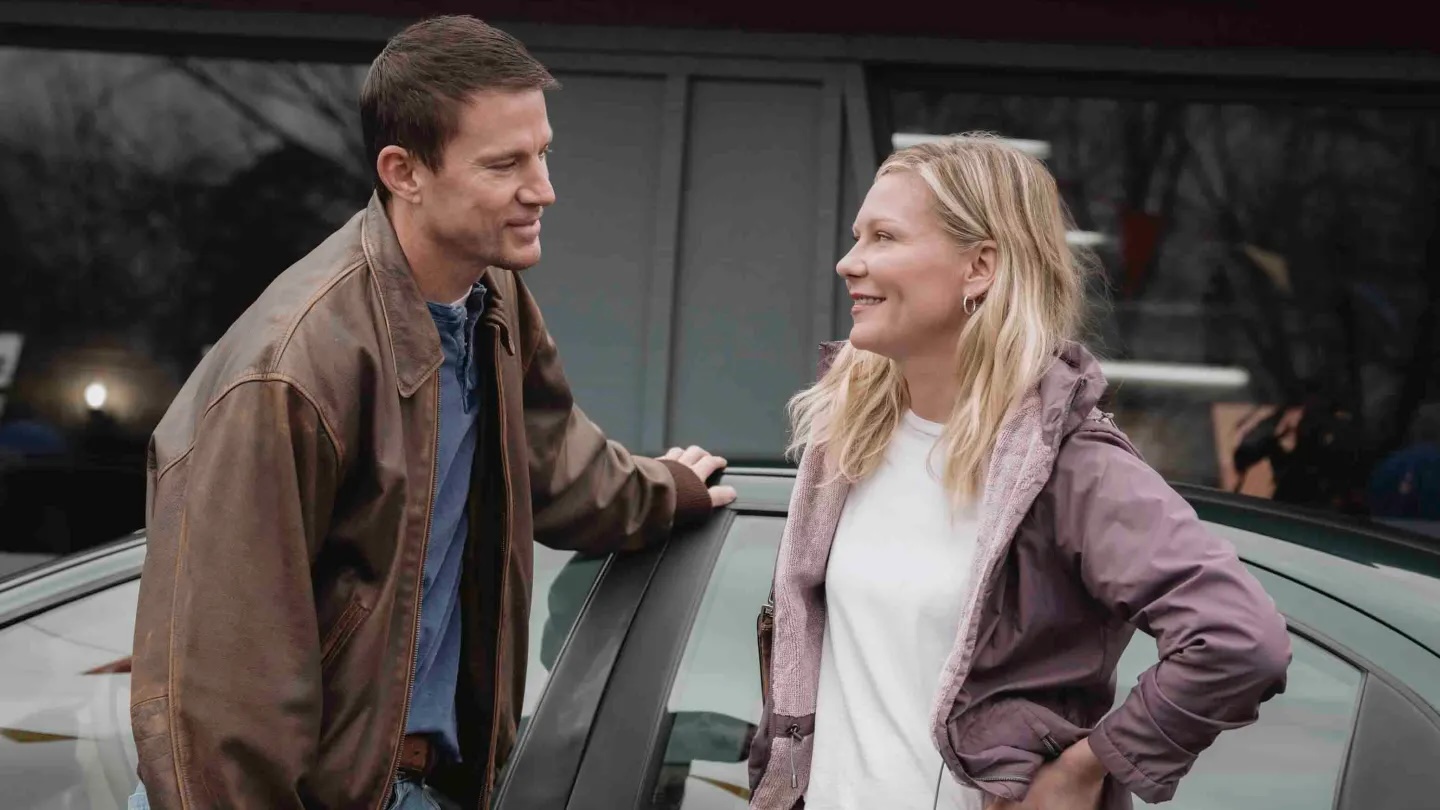
Channing Tatum is perfectly cast as Jeffrey Manchester, the charismatic criminal whose breathtaking chutzpah has us all rooting for him. He exudes the requisite warmth and charm to make us buy into this frankly incredible tale. All he wanted was to buy his daughter a bike, right? It’s perfectly reasonable for a man in his situation to load a gun and raid more than forty branches of McDonald’s. Isn’t it?

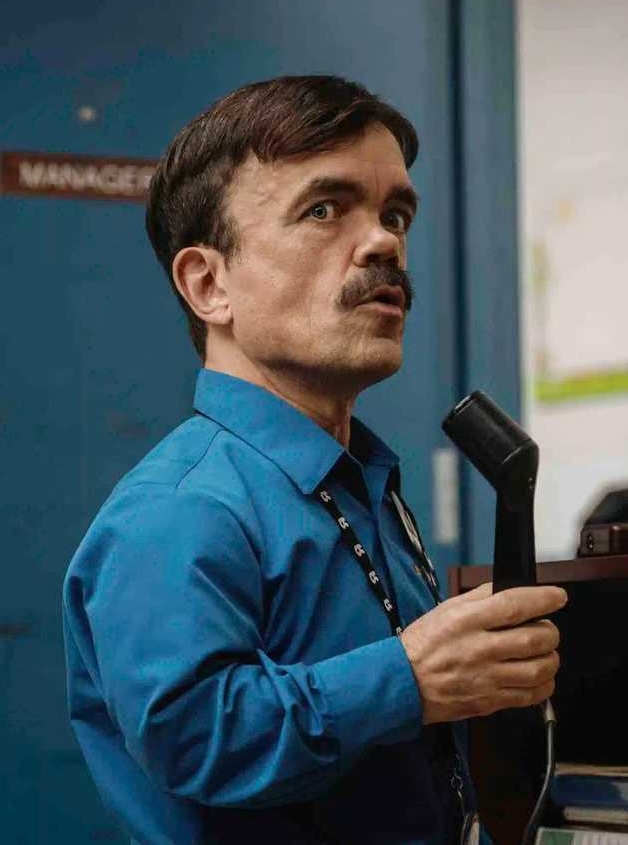
Of course, the key to this story is in the absurdity of Manchester’s hideout. There’s such a disconnect between the escaped convict and his surroundings: the Spiderman T-shirt and Heelys lend him an air of child-like innocence; the den he builds behind a bike display is a boyhood dream of unlimited computer games and bottomless bags of M&Ms. His night-time trolling of tyrannical store-manager Mitch (Peter Dinklage) is also a joy to behold.

Kirsten Dunst plays Leigh, a Toys “R” us employee who falls for “John” (Manchester’s alter-ego), an undercover intelligence officer, who charms both her and her two daughters (Lily Collias and Kennedy Moyer). He becomes an active member of Leigh’s church, forming strong relationships with the Pastor (Ben Mendelsohn) and his wife (Uzo Aduba), which even survive the eventual revelation of his true identity. (Apologies to anyone who thinks this is a spoiler, but the facts are out there in the public domain, so there’s not much point in gatekeeping them here.)

But of course the police haven’t forgotten about the armed robber on the loose and, alongside the fun and games, Manchester is plotting a vanishing act. And people are going to get hurt along the way…

Writer-director Derek Cianfrance’s adaptation of these true-life criminal escapades is a lively, engaging affair, encouraging the audience to goggle open-mouthed at Manchester’s audacity, and his ability to find joy in the most stressful conditions. Sensibly, Cianfrance and his co-writer Kirt Gunn have eschewed any cinematic flourishes in this straightforward, chronological account, the simplicity allowing the strangeness of the situation to speak for itself.

Roofman puts a different spin on ‘cosy crime’ and it’s certainly worth wrapping up and braving the ‘cosy season’ weather to make the trip to your local multiplex. Just keep an eye out for any holes in the ceiling. You never know who might be lurking up there…

4.4 stars

Susan Singfield

Wicked: Part One

22/11/24

Cineworld, Edinburgh

It’s gratifying to see the cinema so busy on this icy cold November evening. There’s been a lot of speculation recently about movie-goers being averse to musicals – indeed, there was a notable absence of songs in the trailer for this very film. But, if tonight’s showing is anything to go by, there’s plenty of life in the genre yet. Just not, perhaps, when it strays into the DC universe (Joker: Folie a Deux, I’m looking at you).

Oddly, considering how often I’m at the theatre, I’ve never actually seen Wicked on stage, so the movie is my introduction to the tale. This is clearly not the case for most of the audience: there’s an abundance of green clothing and nail varnish, a lot of excited pre-film chatter and groups of women in the loos afterwards discussing where the film diverges from the show they know and love. Thankfully for the industry, the reactions I overhear are universally positive.

For me, there are a couple of negatives. First, I’m not super-happy about the fact that this is just ‘Part One’. I always feel cheated by movies that only tell me half a story and, although the central relationship between Elphaba and Galinda has a satisfying arc, the dark hinterland – the genocidal capture and destruction of speaking animals – is barely developed at all. Second, with the exception of Defying Gravity, none of the songs seems particularly memorable.

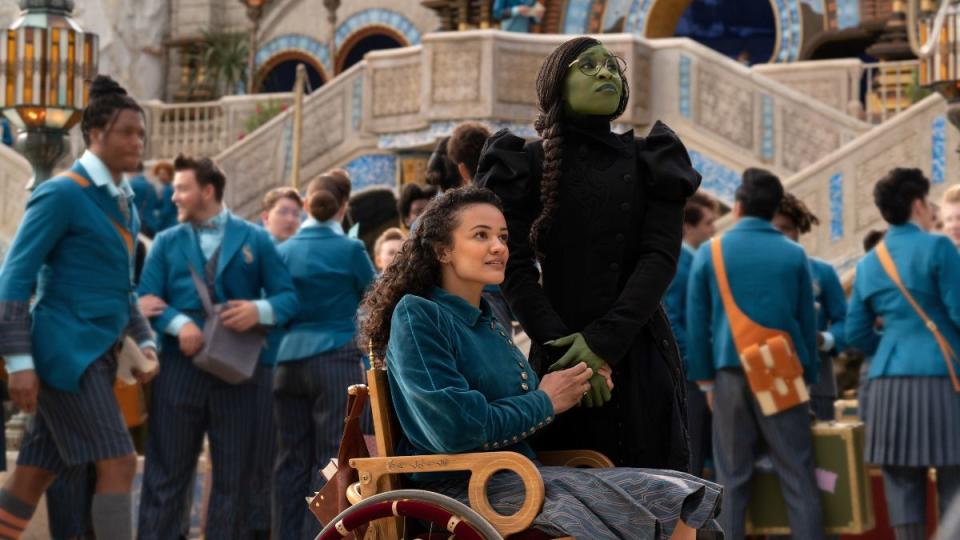
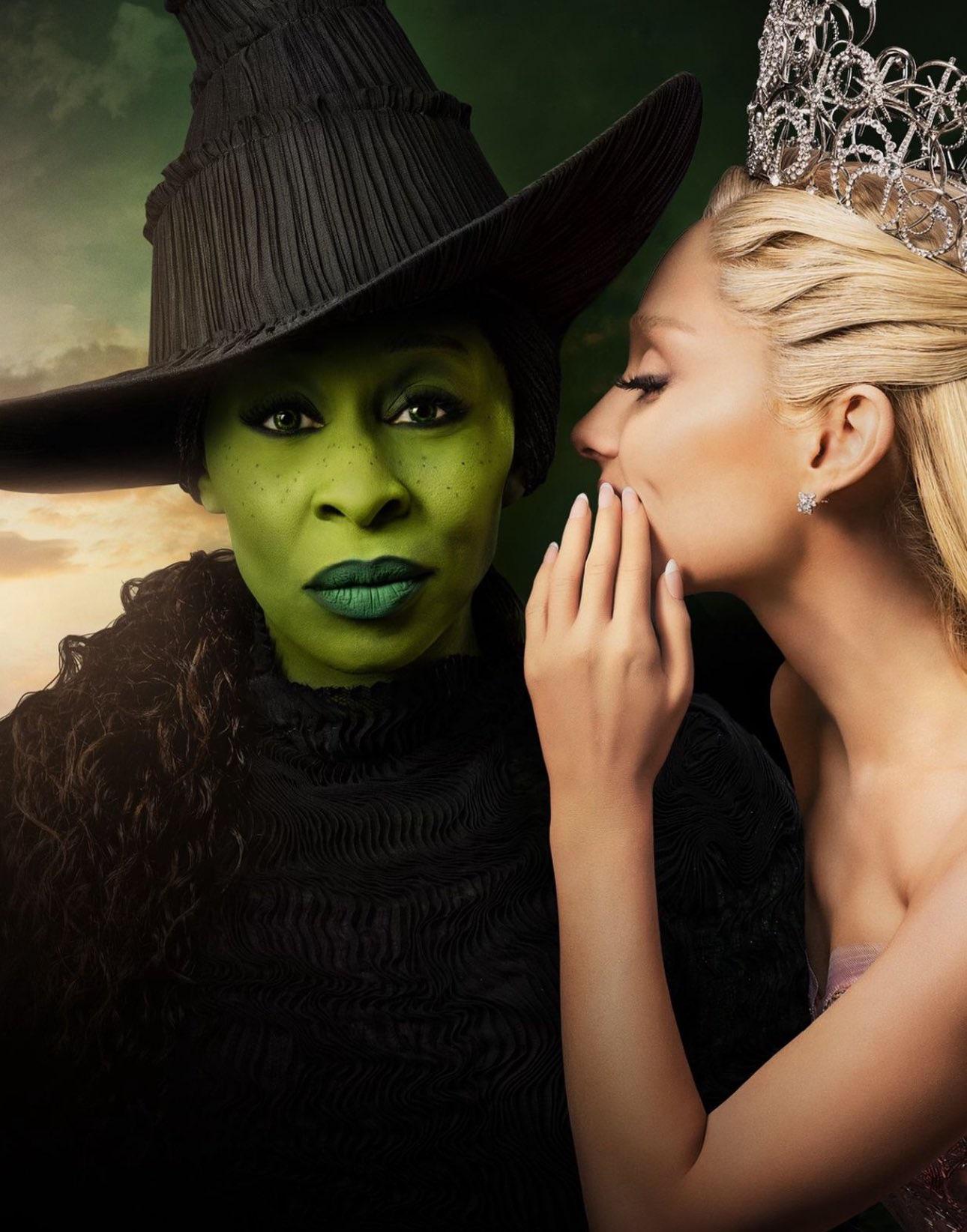
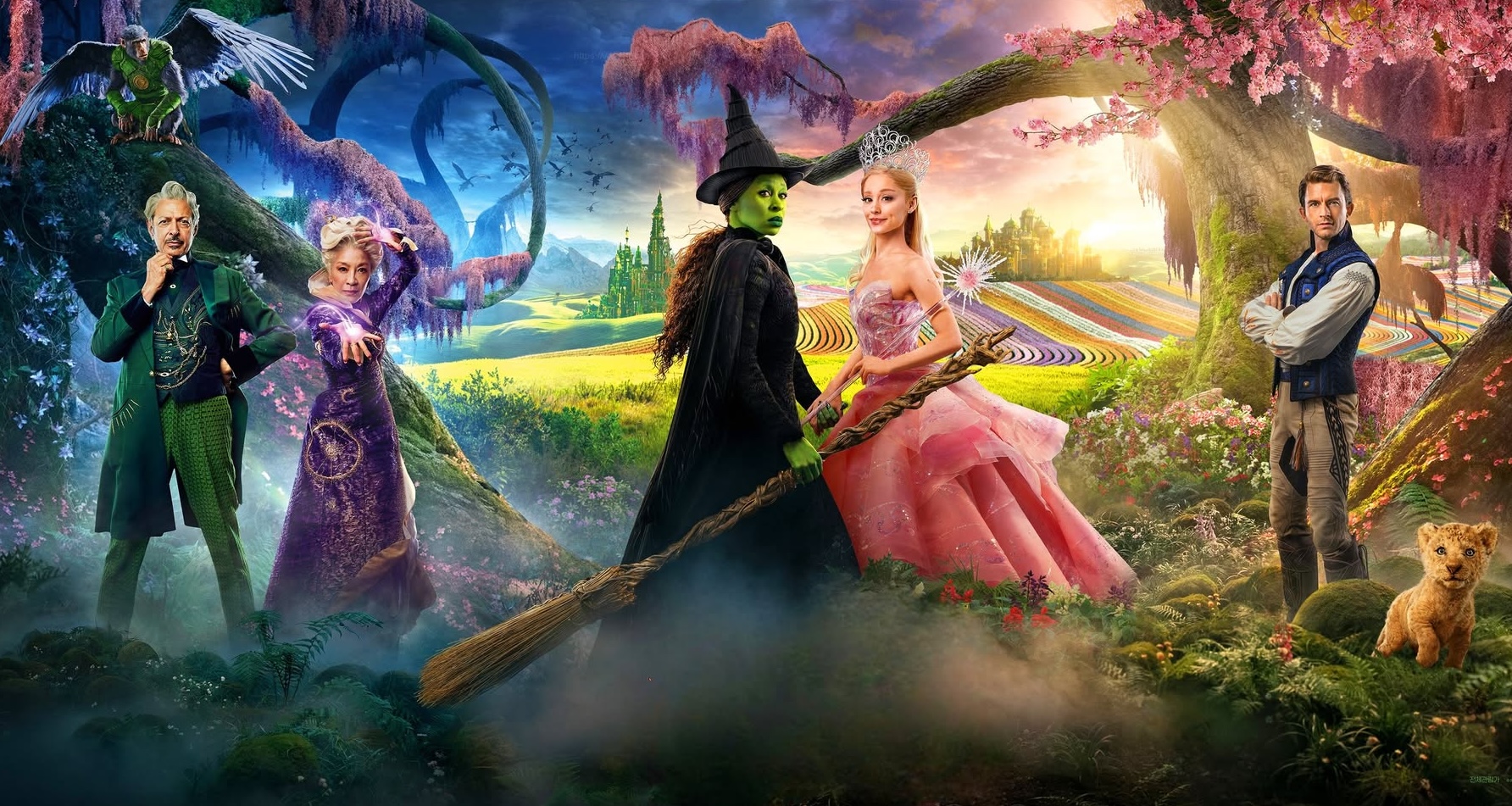
For the most part, though, Wicked is great. For those not in the know, it’s the origins story of the opposing magical forces of good and evil from The Wonderful Wizard of Oz, i.e. The Wicked Witch of the West and Glinda, the Good Witch of the North. In this prequel to L Frank Baum’s novel, Elphaba (Cynthia Erivo) and Galinda (Ariana Grande) meet at boarding school, where they are forced to share a room. Initially, they despise one another: Elphaba is powerful, studious and green, while Galinda is rich, popular and, well… blonde. But opposites attract, and over time they learn to see the good in one another, forging a strong friendship – which even survives the strain of their attraction to the same guy, Fiyero (Jonathan Bailey). When their history professor, a goat called Dr Dillamond (Peter Dinklage), is arrested and forcibly removed from their classroom amid nefarious plans to cage all speaking animals, Elphaba’s sorcery teacher, Madame Morrible (Sandra Yeoh), encourages her to go to the Emerald City, to plead with the Wonderful Wizard (Jeff Goldblum). But all is not as it seems…

Erivo and Grande are perfectly cast as the mis-matched pair, both utterly captivating in their roles. While Erivo provides the emotional depth – Elphaba is a study in suppressed yearning – Grande is the comic relief, all fluffy self-absorption and steely sweetness. It’s a delightful pairing.

Thanks to Alice Brooks’ cinematography, the film looks sumptuous. Oz has been gloriously rendered by designer Nathan Crowley: it’s a little bit steam-punk, a little bit Middle Earth, a truly fantastical land. I love the repeated cog motif, in Shiz academy’s library, on the Oz train and – naturally – in the Emerald City’s Royal Palace. Director Jon M Chu has created a superb stage-screen hybrid, combining established musical theatre-style choreography with a very modern filmic sensibility. LGBTQ+ themes are brought to the fore, with many explicitly queer-coded characters, and lots of deliberate ambiguity, so that we – along with the Ozians involved – are made to ponder where the line is drawn between platonic and sexual attraction, between friendship and love. It works well, emphasising the teenage protagonists’ heightened emotions. No wonder young adults love this story so much.

Judging by tonight’s screening, Wicked: Part One looks certain to be a box office success. I just wish I didn’t have to wait a year for Part Two.

4.1 stars

Susan Singfield

,

Cyrano

25/02/22

Cineworld, Edinburgh

The story of Cyrano de Bergerac is a rather unlikely one; nonetheless, over the years it has fired the imaginations of film and theatre directors alike, sometimes with spectacular results. In 1990, it brought director Jean-Paul Rappeneau and his lead actor, Gerard Depardieu, much acclaim in a movie adaptation of Edmond Rostand’s source play. And, a few years earlier than that, Steve Martin had already turned it into the much-admired contemporary comedy, Roxanne.

In both films, of course, Cyrano was a character with a comically oversized nose – something that his adversaries mentioned at their peril.

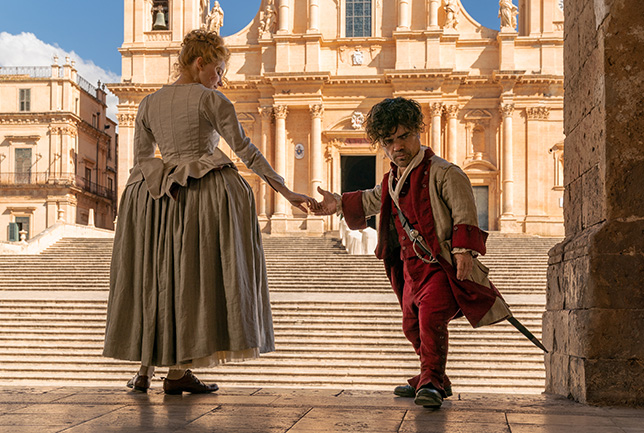
In Cyrano, director Joe Wright adopts a different approach. The hero of his story, though a brave and valiant soldier, is small of stature; and, as portrayed by Peter Dinklage, this simple premise turns out to be a masterstroke, the character’s inner turmoil told mainly through the cleverly nuanced expressions on his face. Everything else about the story stays pretty much the same – though I should probably add that this is a musical version, with songs by Aaron and Bryce Dessner.

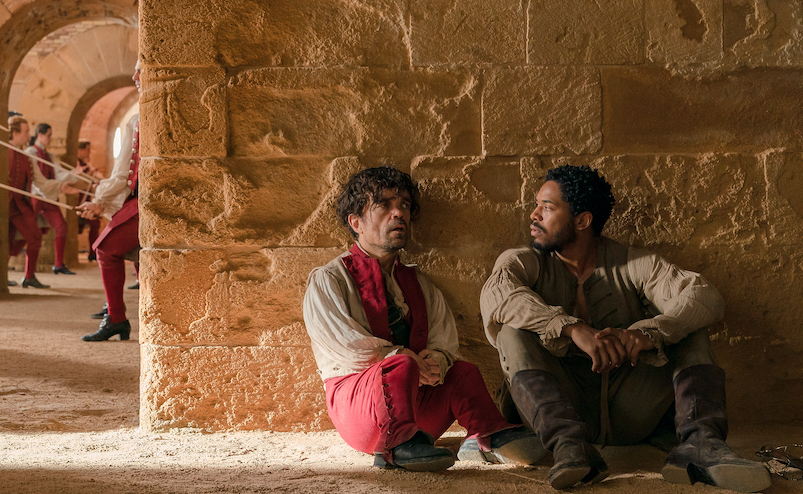
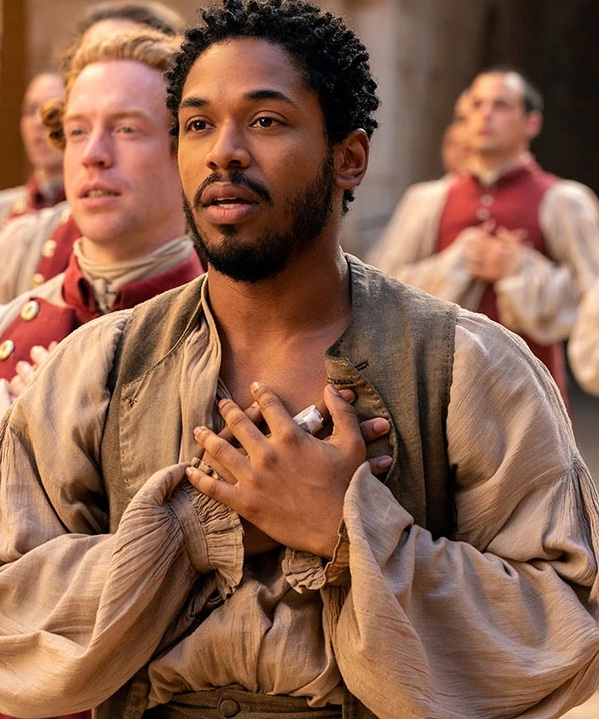
Cyrano is desperately in love with Roxanne (Hayley Bennett), a poor and (it must be said) somewhat shallow young woman, who is considered a great beauty in her home town. She is pursued by many men, among them the rich but odious De Guiche (Ben Mendelsohn). When Roxanne summons Cyrano to meet her in private, he dares to hope that she might have reciprocal feelings for him; instead she confesses that she has fallen in love with Christian de Neuvillette (Kelvin Harrison Jr), a handsome new recruit to Cyrano’s regiment. Could Cyrano keep an eye on Christian and protect him from any harm?

Cyrano is so enamoured of Roxanne that he reluctantly agrees to help – and, when it turns out that Christian isn’t very good with words, Cyrano becomes the man who writes the many love letters that ‘Christian’ regularly sends to Roxanne. As Cyrano unfurls the deluge of longing he has nurtured for so long, the task nearly unhinges him.

Filmed on location in Southern Italy, Cyrano makes few concessions to realism. Instead, Wright’s film plays out through a series of highly stylised backgrounds with garish costumes, masks and makeup used to create a vibrant world that seems to virtually pulse with colour. Soldiers practising with swords move gracefully into dance routines, while large stretches of the dialogue are spoken in rhyme. It’s only when the film reaches its later stretches (and the location switches to the snow-covered heights of Mount Etna) that the brutal reality of war seems to bleach all colour from the screen and the story descends headlong into tragedy.

The songs are distinctive, plaintive and affecting, particularly in the scene where three soldiers, about to go out to their deaths in battle, leave letters to their loved ones, singing the words as they hand the pages to a messenger. It would already have been the film’s most moving sequence, but thoughts of the current conflict in Ukraine seem to lend it extra poignancy, and my eyes fill as it unfolds. If you’re already familiar with the story of Cyrano de Bergerac, you’ll know that there’s also a coda to this tale that isn’t exactly the happy ending you might have wished for.

This is undoubtedly Dinklage’s film, revealing impressive new depths to his acting, but Bennett is good too and her final scenes with Dinklage will probably send you out into the night with tears running down your face. If I’m making it sound like something of an ordeal, it really isn’t. Wright is adept at making every scene look ravishing, as he did in his under-appreciated adaptation of Anna Karenina. It’s the very theatricality of the telling that makes this film so powerful – and, in its own way, unique

4 stars

Philip Caveney

I Care a Lot

21/02/21

Amazon Prime

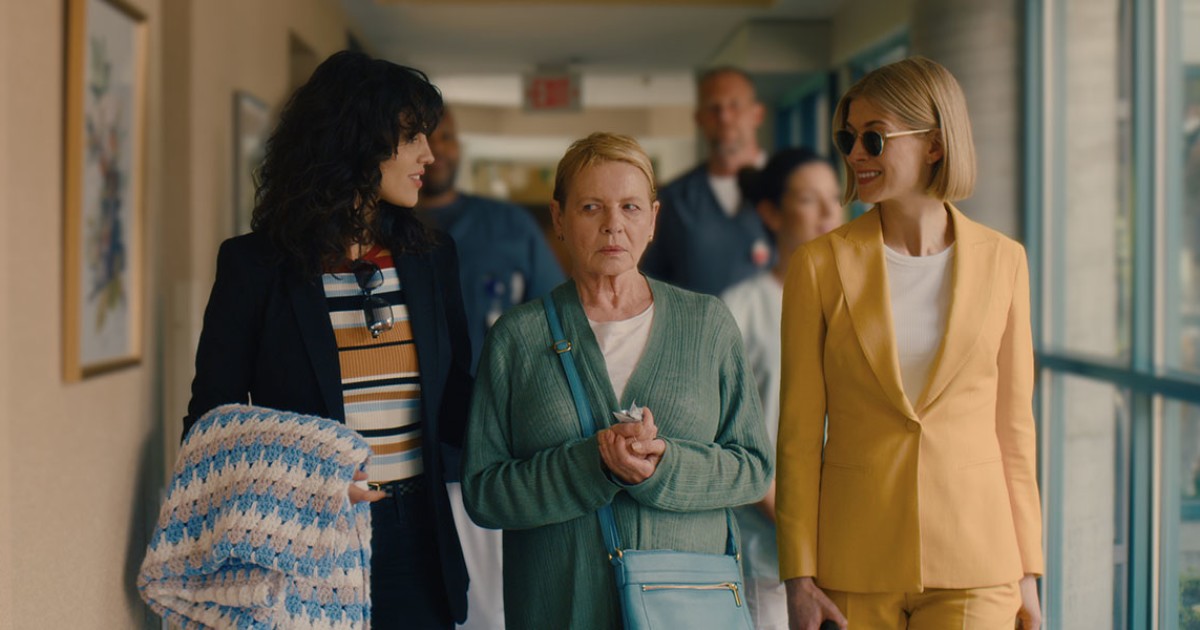
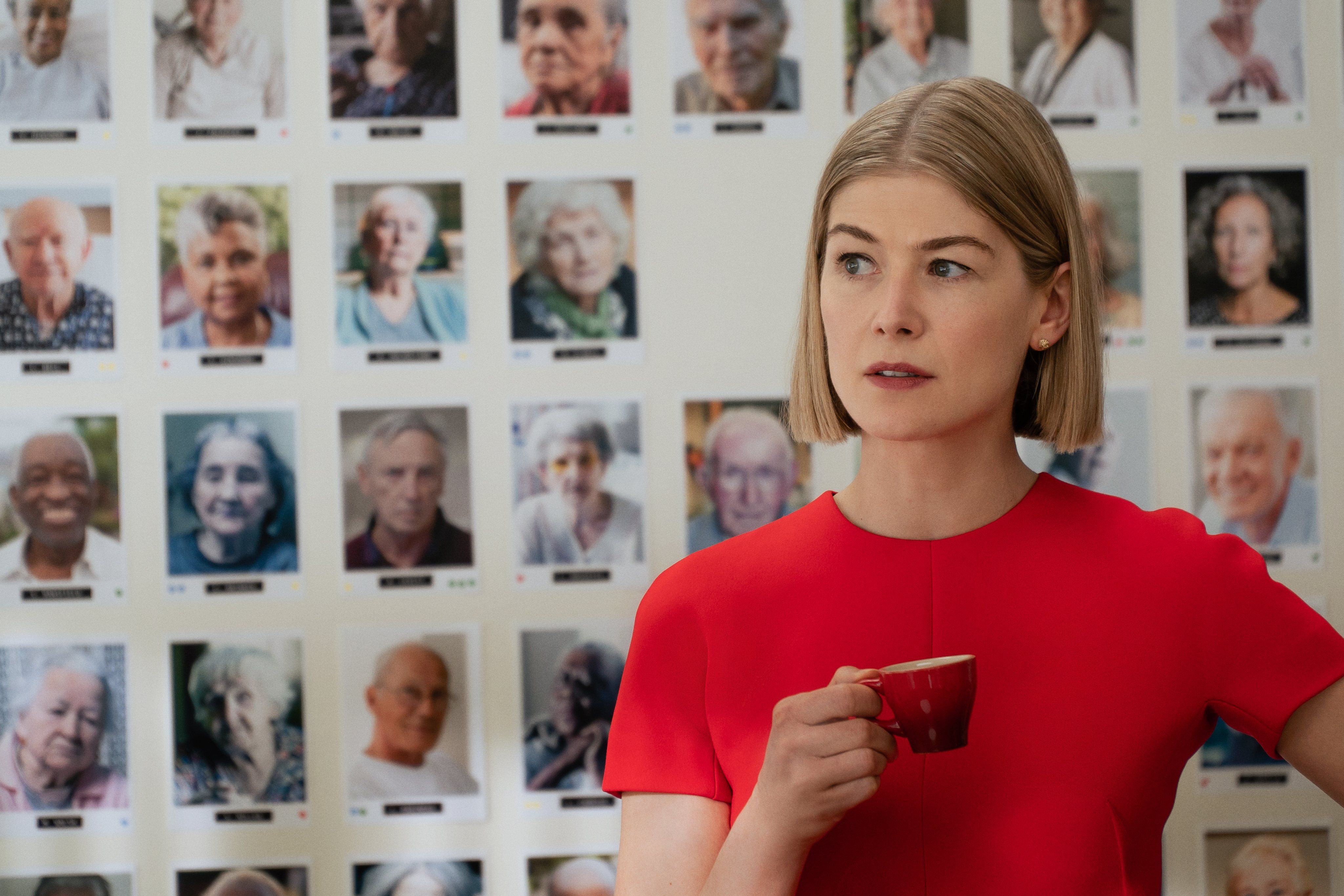
The ‘carer’ in this story is Marla Grayson (Rosamund Pike), a woman who – it soon becomes clear – cares only for herself and her lover, Fran (Eliza Gonzalez). Exploiting the law by bribing doctors, Marla has become adept at identifying vulnerable elderly people and getting herself appointed as their legal guardian, whereupon she is free to exploit them for her own profit. She gleefully sells off their homes, their possessions, the little treasures they have accumulated over the years, paying herself a healthy wage from the proceeds and siphoning off whatever she thinks she can get away with.

If it all seems a bit far-fetched, think again. In America, such shenanigans are perfectly permissible and writer/director J Blakeson has no hesitation in pointing up the iniquities of the system.

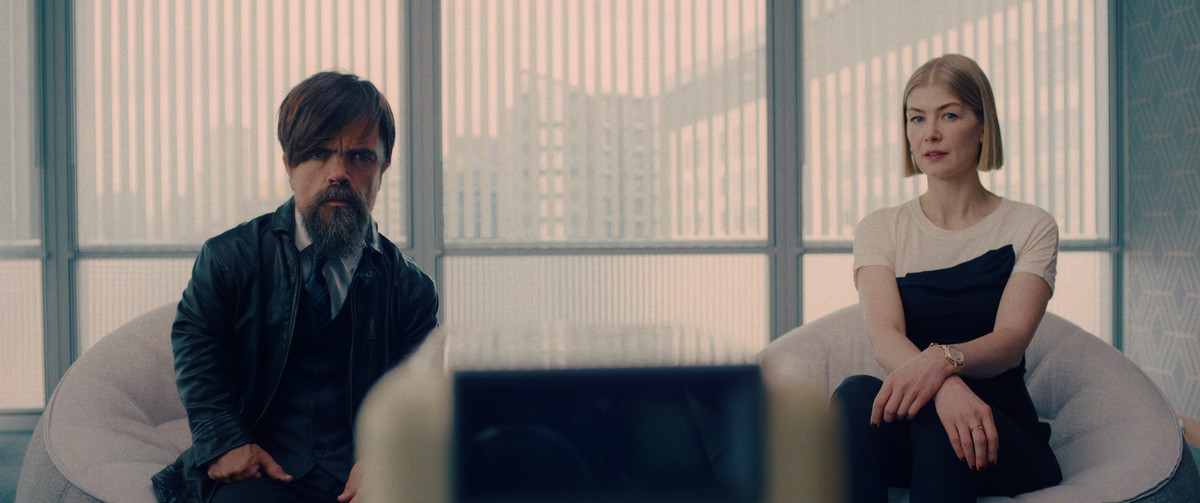
Marla sets her sights on her latest victim: rich loner, Jennifer Paterson (Dianne Wiest). Before Jennifer quite knows what’s happening to her, she is drugged up and incarcerated in a care home. It’s at this point that Marla realises she may have bitten off more than she can chew. The records state that Jennifer has no kin, but it turns out she actually has a secret son, Roman (Peter Dinklage), a man who – though small in stature – is a powerful and ruthless criminal, who will stop at nothing to get his beloved momma back.

I Care a Lot has a great deal going for it, not least what could be a career-best performance from Pike, whose portrayal of Marla is extraordinary. She paints her as a venomous, heartless machine, able to mask her raging avarice behind a dazzling smile and a haircut of such precision it looks like it’s been achieved using a set square. Wiest is pretty good too, but she’s criminally under-used here, which is a shame, because she has been gifted with the film’s finest one-liner. And Dinklage also convinces as a ruthless mafioso, a man you really don’t want to get on the wrong side of.

The main problem for me however, is that there’s really nobody in this story to root for, since every character I’m introduced to is as venal and self-centred as the last. Even Jennifer isn’t the innocent she at first appears to be. It really says something when the people on the right side of the law are even viler than those who are openly flouting it, but it’s not enough for me. I find myself wanting a character – just one – that I can actually relate to.

The film’s middle section boils down to a series of complicated tussles between Marla and Roman, both of them intent on beating the other at all costs. Though these scenes are cleverly staged, they are somehow less interesting than the film’s central tenet. However, just when I think it’s all going off the rails, Blakeson manages to snatch everything back with a conclusion that comes swaggering in out of left field and actually leaves me gasping. I really don’t see it coming.

I Care a Lot isn’t perfect, but when it’s good, it’s very good and – for the best part of its nearly two hours’ running time – it does manage to keep me glued to the screen. It also makes me rage with anger at what can happen to elderly people locked up in the moral maze of the American health care system.

4 stars

Philip Caveney

Elf

11/12/2020

Apple TV

It’s Christmas… or, as Noddy Holder would put it, ‘It’s Christmaaaaaaas!’

It is a fact universally acknowledged that lots of people have favourite Yuletide movies, ones they return to again and again in search of that warm, fuzzy feeling… and it’s also true to say, that there are many such films that I just haven’t got around to watching yet. But I’m gradually ticking the boxes.

Last year, for instance, I finally caught up with The Muppet Christmas Carol and was very glad that I did, because it turned out to be an utter delight from start to finish. True, I got to see it in an actual cinema, but we’ll let that one go, before I start sobbing uncontrollably.

For years now, friends – people whose judgement I generally trust – have repeatedly urged me to watch Elf, assuring me that it belongs in the same category as TMCC and, for the same number of years, I’ve been stolidly ignoring their advice. Maybe it’s the Scrooge in me. But in 2020, locked down and listless as I am, I no longer have a credible excuse not to catch up with it.

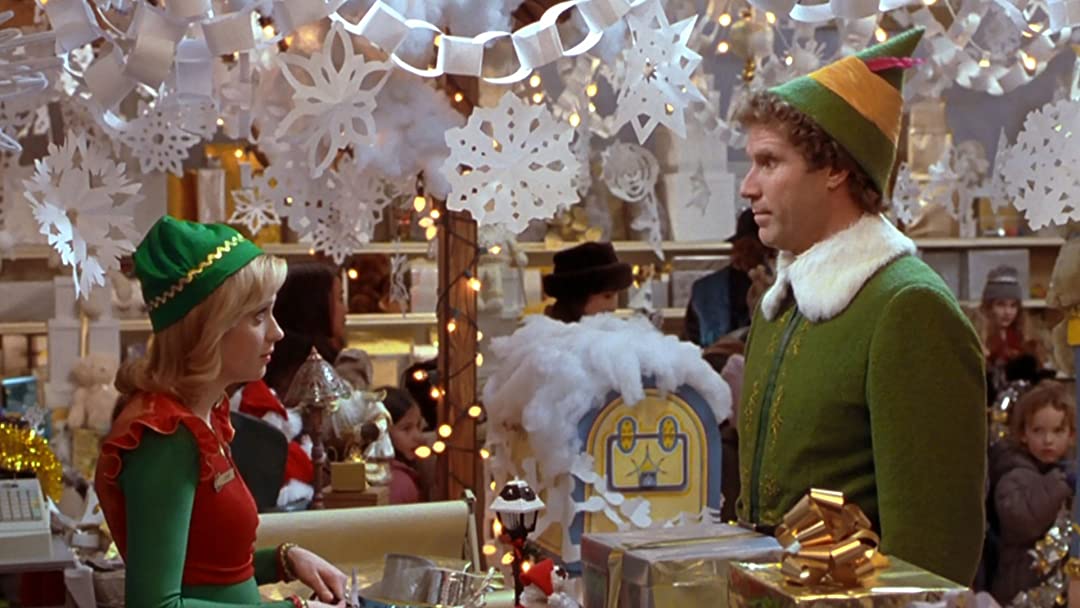
And, yes, my friends were right. It’s easy to see why this film remains a perennial favourite. It’s the story of Buddy (Will Ferrell), who, as an orphaned baby, inadvertently winds up aboard Santa’s sleigh and finds himself whisked off to the North Pole. He grows up alongside Santa’s elves, under the tender care of Papa Elf (Bob Newhart), who acts as narrator for the tale. Of course, being human, Buddy soon towers above his workmates and begins to realise that he’s not like the others. (Buddy clearly isn’t the brightest – I can’t help wondering, what took him so long?)

When he finally overhears the truth about his origins, he’s understandably dismayed. Where has he come from? Where are his roots? Santa decides to send him back to New York city in search of his real father, hard-bitten book publisher, Walter (James Caan).

It’s probably pointless to list the plot in any more detail, since the film came out in 2003 and I’m way behind the wave on this one. It’s interesting to note, however, that the film is directed by Jon Favreau, long before he became the influential actor/director he is today, and that most of the effects utilised here are of the low budget, ‘forced perspective’ kind: simple, but effective. What makes Elf a winner, though, is the brilliant idea that lies at its core. Buddy is an innocent, a naive man-child who’s never been given the opportunity to grow up. His reactions to everything that happens to him in the big city are therefore priceless, genuinely disarming and often laugh-out-loud funny. Ferrell has, of course, enjoyed a varied career in the years since this film, but I doubt he’s ever been more appealing than he is here. Just the sight of him ambling around in that costume is enough to make a viewer smile.

What else do we have? Zooey Deschanel as Jovie, who works as a department store elf and whom Buddy falls for at first sight. Peter Dinklage plays hotshot kids’ author, Miles Finch… and, of course, Favreau can’t resist giving himself a cameo as Walter’s doctor. You want fuzzy feelgood? It’s here in abundance.

So, I admit it. I should have watched this sooner. Anybody who has recommendations for other Christmas movies I might not have seen, please feel free to let me know about them.

There are other boxes yet to be ticked.

4.2 stars

Philip Caveney

Three Billboards Outside Ebbing, Missouri

02/01/18

Martin McDonagh is an interesting writer/director. His plays are always stupendous and his first foray into cinema, In Bruges, is a five star solid gold masterpiece (and one, incidentally, that just won ‘best Christmas movie’ in our recent ‘World Cup of Everything’ game). The follow-up, however – Seven Psychopaths – wasn’t anything like as assured. Indeed, in a recent interview, McDonagh (with refreshing honesty in a business not usually associated with that sentiment) admits that he took his eye off the ball during the making of it. Now Three Billboards outside Ebbing, Missouri arrives amidst much muttering about potential Oscar wins. The truth is, it’s an interesting film but, sadly, not in the same league as In Bruges. Having said that, it’s still worth your consideration.

In the remote town of Ebbing, Mildred Hayes (Frances McDormand) rents three billboards on a lonely stretch of country road and has them papered with three simple slogans. It’s been seven months since her daughter, Angela, was raped and murdered and, enraged by the lack of any progress in the resulting police investigation, Mildred has decided to start pointing the finger of blame, primarily at Chief Willoughby (Woody Harrelson). He’s understandably miffed by this approach, particularly as he’s recently had a cancer diagnosis and knows that his days are numbered. But Mildred is not about to give up on her mission, even if it is set to make her and her son, Robbie (Lucas Hedges), the most unpopular people in the county. Meanwhile, openly racist policeman, Dixon (Sam Rockwell), is not above taking the law into his own hands…

As I said, this isn’t a perfect film but there’s plenty here to admire, not least McDormand’s searing performance in the lead role, brilliantly portraying a woman so obsessed with her daughter’s death that she’s willing to go to any lengths to obtain justice, no matter what the cost. Rockwell too, is splendid, managing to give his initially unsympathetic character some degree of redemption, and Harrelson delivers what just might be his best turn since Cheers. But there are plot strands here that don’t quite convince. Some of the minor characters are never fully developed and others seem to step in for one cracking scene and are never seen again. (I’m thinking here of the scene where Mildred exchanges some crackling dialogue with the town priest. It’s brilliant but it feels unresolved.) Likewise, Peter Dinklage’s turn as (as one character refers to him) ‘the town midget,’ a sweet-natured drunkard who carries a torch for Mildred. And is it just the presence of McDormand and that distinctive Carter Burwell score that make this feel eerily like an early Coen brothers movie?

Whether or not Oscar will come knocking for this film is debatable. Certainly if we’re talking ‘best actress,’ I for one wouldn’t be making any objections – I’ve long been of the opinion that McDormand is one of the best there is. But while this is a huge step up from Seven Psychopaths, it’s perhaps not quite the total masterpiece that many are claiming.

4.2 stars

Philip Caveney