Penelope Wilton

The Unlikely Pilgrimage Of Harold Fry

06/05/23

Cineworld, Edinburgh

Adapted from her own novel by Rachel Joyce, The Unlikely Pilgrimage of Harold Fry is a curious confection, occasionally poignant and life-affirming, but just as often stepping into quasi-religious territory and offering moments that can most charitably be described as ‘twee’. And it must also be said that the most pertinent word in the title is ‘Unlikely’.

Harold (Jim Broadbent ) and Maureen (Penelope Wilton) are living a life of quiet desperation somewhere in Devon, when a letter arrives from Harold’s old friend, Queenie, who is now in a hospice in Berwick-on-Tweed, approaching the end of her life. It’s clear from Maureen’s reaction that there’s something about her husband’s relationship with this woman that disturbs her, but she stays quiet as he pens a hasty reply to Queenie and then sets off to post his letter. But a chance conversation with a young assistant in the garage, where Harold stops to buy milk, prompts him to make a decision. He will deliver his reply by hand – and he will walk all the way there, a distance of nearly five hundred miles, with no special equipment and no preparation.

At various points along the way, Harold encounters a series of strangers, who in various ways help him to accomplish his self-imposed pilgrimage, but none of these characters is given enough to do to make this anything other than a two-hander – and every step of the way, Harold is haunted by memories of the awful tragedy that changed his life forever…

Watching this is a strangely unsettling experience. One moment I’m thinking that it’s doing something really clever, the next I’m close to tears as a genuinely affecting moment tugs at my heartstrings – but then, all too often, I’m wincing as a really banal revelation comes leaping out of left field to slap me right in the kisser. Both Broadbent and Wilton are seasoned performers, and do the best they can with the material, but I can’t help feeling sorry for Wilton, who – as Maureen – is reduced to spending the first half of this film sulking at home while her husband strides off on what feels like a capricious whim.

The uneven tone coupled with the glacial pace conspire to make the film feel longer than its moderate running time. I haven’t read the source novel, so I don’t know how faithful an adaptation this is but, at the end of the day, there’s something here that doesn’t quite come off. File this one under S for ‘Should-Have-Been-Better’.

2.8 stars

Philip Caveney
Eternal Beauty

09/10/20

Curzon Home Cinema

Films that tackle the subject of mental illness are difficult to get right and the ones that do are few and far between. Eternal Beauty, written and directed by Craig Roberts, is more successful than most at capturing the confused and sometimes terrifying world of a schizophrenic.

It does seem odd, though, that a film set in South Wales and financed by the Welsh Film Board should feature such a paucity of Welsh actors in its cast. Robert Pugh, the only cast member with a noticeably Welsh accent, ironically spends the entire film in almost total silence.

Go figure.

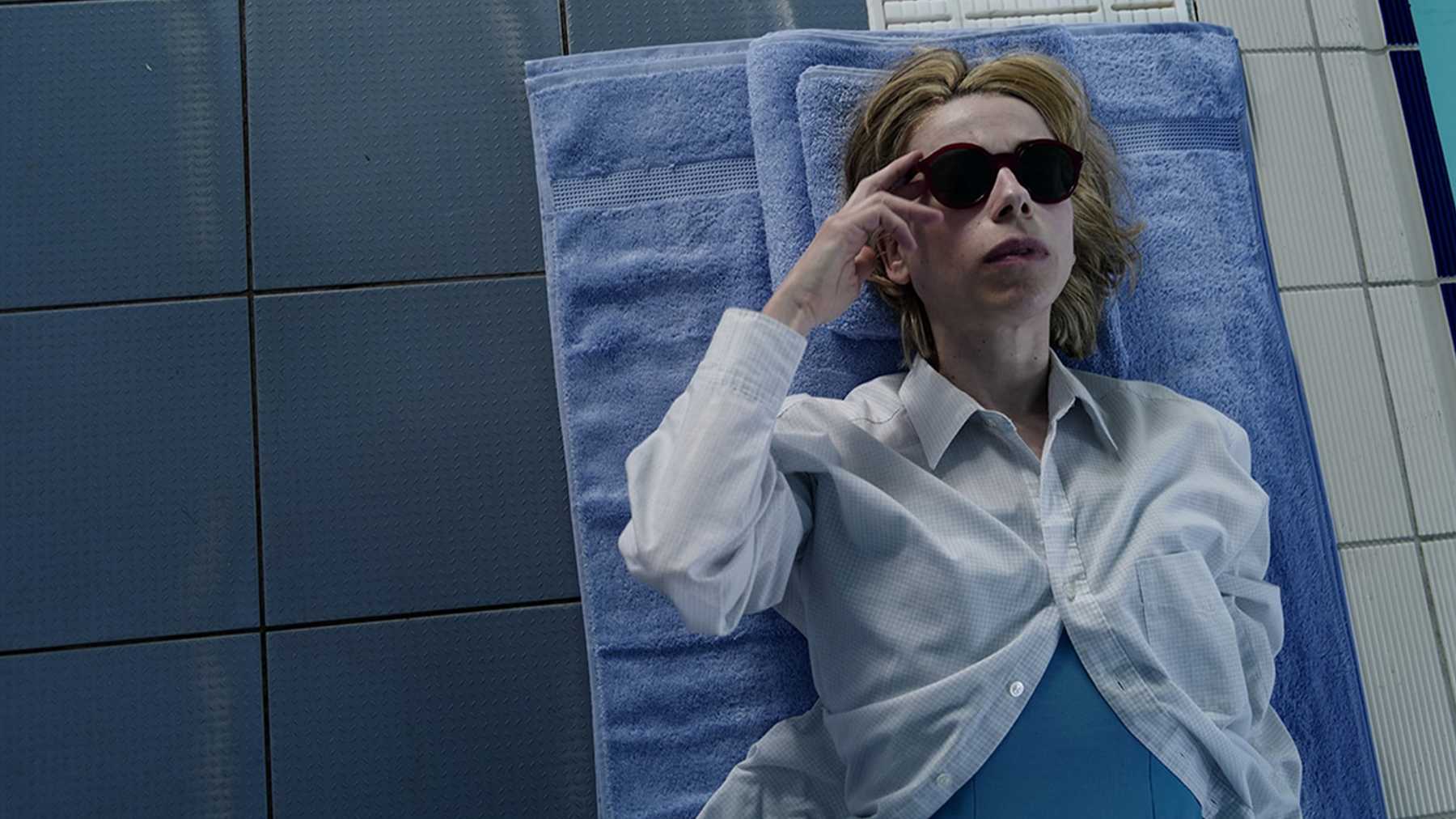
Sally Hawkins is Jane, who, since being left at the altar by her fiancé many years ago, has increasingly drifted into a chaotic world of delusion, much to the bewilderment of her family. (In flashbacks, she’s played by Morfydd Clark, who is great, although she looks nothing like Hawkins.) Jane dwells in a place where ‘reality’ is in very short supply and where the aforementioned fiancé phones her at random times throughout the day and night, to whisper sweet nothings down the line.

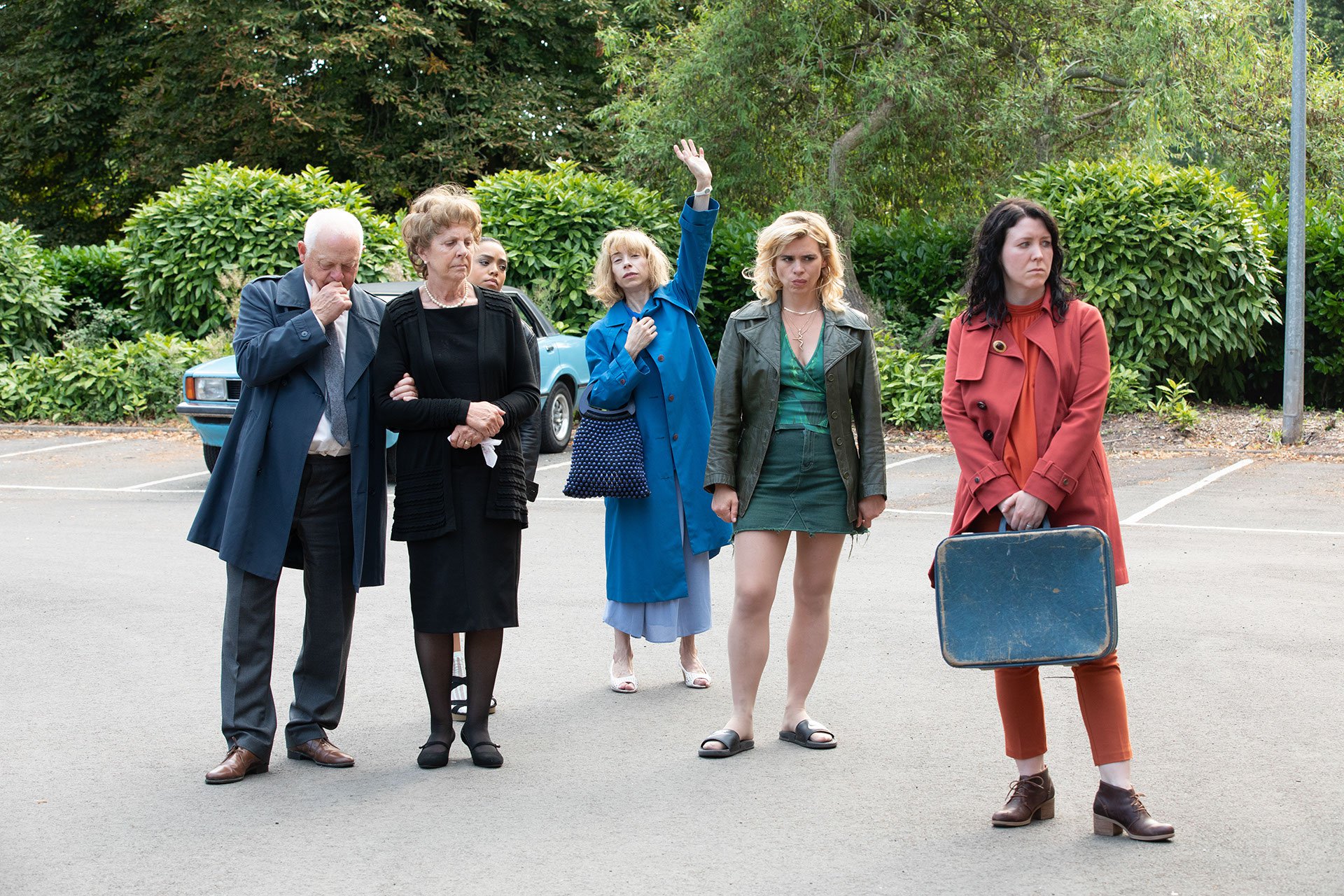
Jane’s singularly unsympathetic mother, Vivian (Penelope Wilton) treats her condition with utter disdain, while her father, Dennis (Pugh), can’t even seem to voice an opinion. Jane’s two sisters, the likeable Alice (Alice Lowe) and the frankly unpleasant Nicola (Billie Piper), each deal with her condition in their own way.

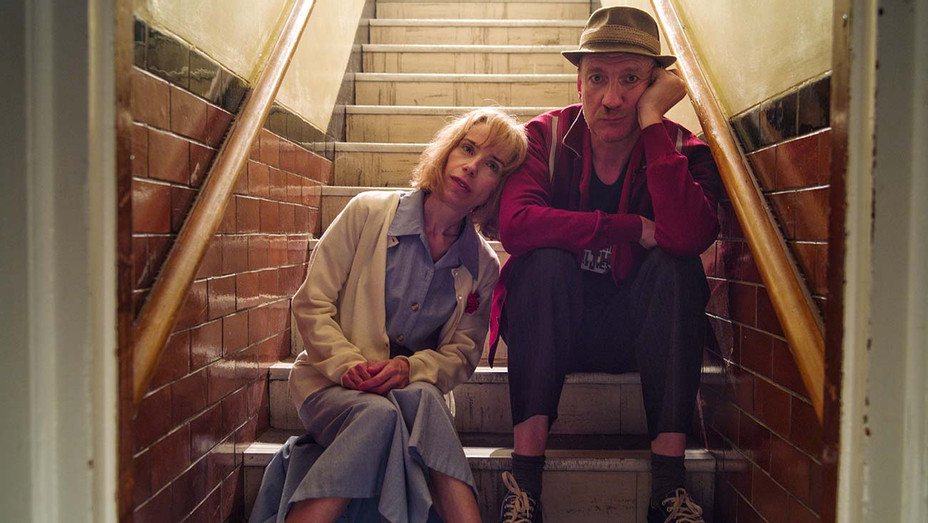
Jane’s fragile existence receives a sudden boost when she reconnects with a friend from childhood. Mike (David Thewlis) styles himself as a musician – though the brief performance we’re treated to suggests that this may not be his true forte. However, his sparky presence revitalises Jane and it begins to look as though he may be just the man to lead her out of the dark labyrinth in which she’s become ensnared. But this is no fairy tale…

As ever, Hawkins submits a brilliantly nuanced performance in the lead role and she’s ably supported by a whole host of excellent performers. Kit Fraser’s cinematography cleverly uses colour palettes to define the different characters and there’s a suitably quirky soundtrack of vintage songs to supplement the action. Niggles aside, Eternal Beauty is well worth a watch, if only to marvel at Hawkins’ ability to take the most demanding roles in her stride – and to wonder how Roberts has somehow managed to make this bleak tale curiously life-affirming.

4.2 stars

Philip Caveney

The Guernsey Literary and Potato Peel Pie Society

23/04/18

Based on a bestselling novel and handsomely filmed on location by veteran director, Mike Newell, it’s hard to dislike this clunkily-titled romance. It’s handsomely produced and nicely acted by an ensemble cast and, if occasionally it wanders a little into the land of the twee, well, that’s no great hardship, because the story is interesting enough to keep us engaged to the end.

It’s 1946 and the world is recovering from the devastating effects of the second World War. Unfeasibly successful young author, Juliet Ashton (Lily James), already has a best-selling book under her belt, and is being vigorously courted by rich and handsome American, Mark Reynolds (Glen Powell). But then a letter arrives from somebody she has never met. Dawsey Adams (Michiel Huisman) has chanced upon her name and address in a second-hand book by Charles Lamb, and mentions that he is a member of the titular society, hastily formed and named back in 1941, when Guernsey was under Nazi occupation.

After exchanging several letters with Dawsey, Juliet decides to head over to the island to attend the society’s next meeting, much to the consternation of her publisher – and best mate – Sidney Stark (Matthew Goode), who needs her on the mainland to do an extensive book tour. Once on Guernsey, Juliet quickly discovers that the events of the war have left many wounds that have yet to heal and a bit of a mystery that’s desperately in need of a solution. Moreover, when she meets Dawsey in the flesh, she finds herself becoming more and more interested in him…

Okay, so there are no great surprises in the story, but when you have actors of the calibre of Tom Courtenay and Penelope Wilton in supporting roles, you aren’t going to be disappointed with their efforts – and Katherine Parkinson is a particular delight as the oddly named Isola Pribby, a member of the society who is constantly tipsy on the homemade gin she distils and sells. The parts of the story that deal with the Nazi occupation could doubtless have been handled with a little more abrasiveness but, more than anything else, this feels like a lushly filmed advertisement for the joys of Guernsey itself, with a host of gorgeous locations that are sure to encourage plenty of tourists to pay the place a visit this summer – which is rather ironic when you consider that all the filming was actually done in Devon!

The Guernsey Literary and Potato Peel Pie Society is unlikely to thrill you, but – if you’re a romantic soul who fancies a nice warm hug of a film – I’m sure this is just the ticket.

4 stars

Philip Caveney