
Parasite

Mickey 17

09/03/25

Cineworld, Edinburgh

After several lengthy delays, Bong Joon-Ho’s follow-up to 2019’s Oscar-winning smash, Parasite, finally makes it into the UK’s multiplexes. Mickey 17 is frankly nothing like its eminent predecessor, closer in tone to the director’s earlier films like Snowpiercer and Okja, the kind of futuristic sci-fi adventures that first helped him build his stellar reputation.

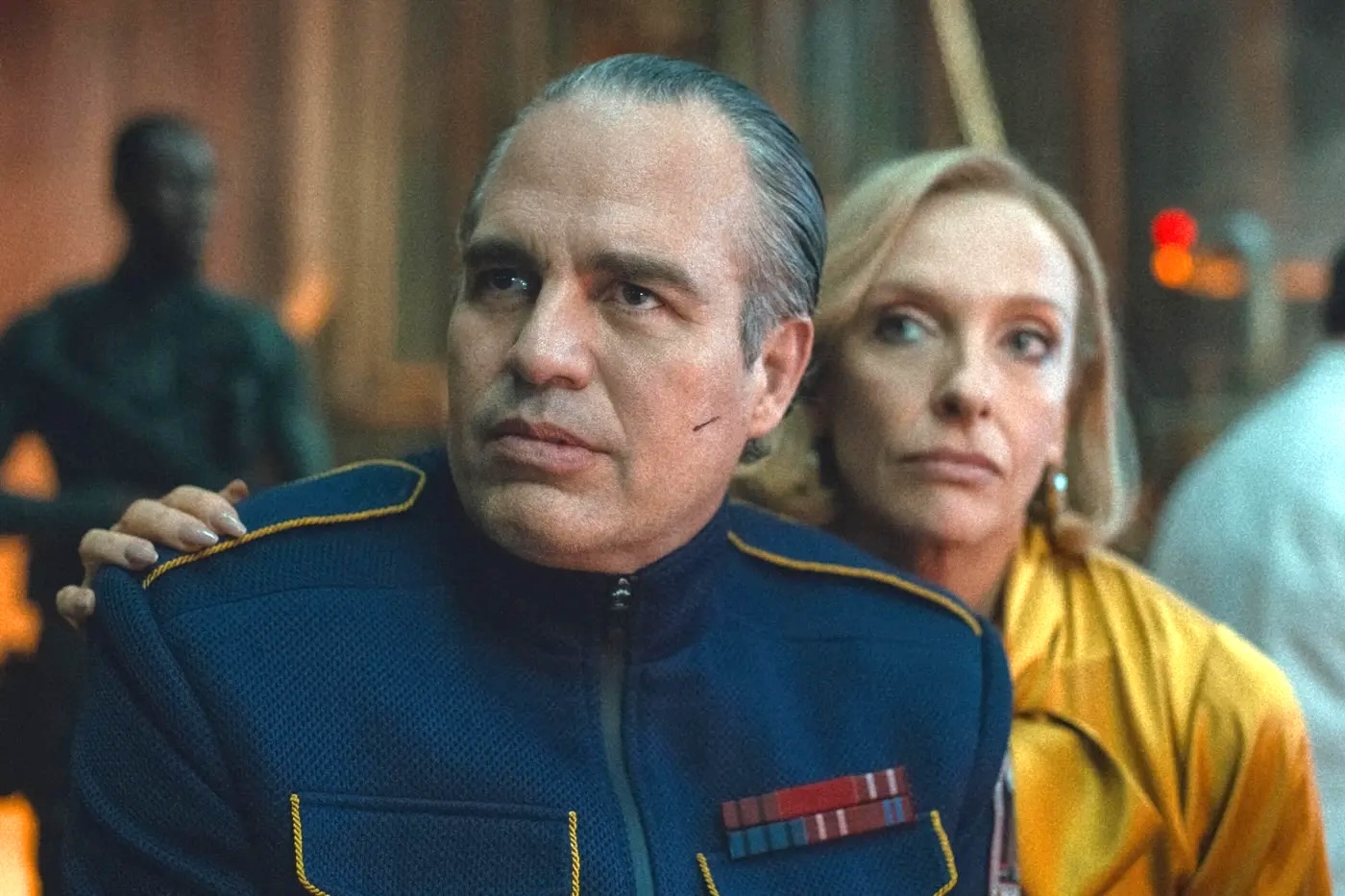
It’s 2054 and the world (as widely predicted) is going to hell in a handcart – so much so that its inhabitants are literally fighting for places on an upcoming space mission to seek out a new habitable planet. The mission is spearheaded by failed Presidential candidate, Kenneth Marshall (Mark Ruffalo), a man so obsessed with his own image he grabs every opportunity to film himself looking suitably heroic. He’s always accompanied by his clingy, sauce-obsessed partner, Yifa (Toni Collette), whose ideas he quickly appropriates and passes off as his own.

Shy, bumbling Mickey Barnes (Robert Pattinson) and his dodgy best friend, Timo (Steven Yeun), have pressing reasons to secure berths on Marshall’s spacecraft. Their recently launched Macaron business has gone tits-up. Timo financed the venture by borrowing money from a famously terse mobster who is known for exacting recompense from defaulters by the liberal application of a chainsaw – so making themselves scarce seems like a good idea.

Timo (typically) manages to land himself a plum role on the mission, but poor Mickey has to resort to signing himself up as an ‘Expendable.’ As the mysterious ‘Red Hair’ (Holiday Grainger) explains, he will be expected to undertake a series of potentially lethal experiments whilst on board, but no matter, because all his genetic information will be stored in a database. In the event of his death, the company will simply print a new version of him, all ready to start over. What could possibly go wrong?

On the long journey, Mickey’s luck appears to change for the better when he clicks with security officer, Nasha (Naomi Ackie), and enjoys a loving and sexual relationship with her, even though such shenanigans are openly discouraged by Marshall. But once the ship has landed on the ice-bound planet of Niflheim, Mickey begins to appreciate how easily his life can be repeatedly snatched away from him, as he is used as a guinea pig to test out the potentially deadly atmosphere. And once that problem is solved, there are the native creatures to deal with: huge woodlouse-like beasts, quickly dubbed by Yifa as ‘Creepers.’ But are they really as ominous as they look?

Mickey 17 has all the hallmarks of Bong’s sci-fi work. It looks astonishing, particularly the footage on Niflheim, where countless numbers of Creepers go on the rampage. Pattison is terrific in the title role and in the scenes where he has to be both Mickeys 17 and 18, manages to subtly convey the tiny differences between them with considerable skill. Ruffalo also shines in a role where the similarities with the USA’s current president are clearly entirely intentional. (Ironically, the fact that the film’s been held back for so long only serves to accentuate the character’s monstrous ego and constant need to self-aggrandise – all familiar from watching the traits play out on the daily news reports.)

I’d be lying if I said that this is a perfect film. For one thing, there are far too many characters and even a running time of two-hours-seventeen-minutes fails to offer enough space for Bong to fully explore them all. You will briefly spot the likes of Thomas Turgoose and Tim Key in cameo roles, but it’s the female characters in particular who are given short shrift. Grainger’s early appearance suggests that ‘Red Head’ is going to be important to the story but she just fades away as the film progresses. Collette does the best she can with what little Yifa is given to work with, but it’s never really enough.

That said, I find the film fascinating and I love the lo-fi nature of the future of space exploration, full of glitches and hiccups – and the ways in which the lust for personal glory will always vanquish the need to act with compassion towards strangers. Bong (who also wrote the screenplay, based on a novel by Edward Ashton) seems to delight in his central premise, that the rights of the individual come pretty low down the pecking order in the pursuit of so-called progress.

Characters constantly ask Mickey Barnes the same question: ‘What’s it like to die?’ To which he is never able to supply a satisfactory answer. And perhaps that’s because the central premise is so elusive – that age-old mystery about mortality and what it really means. To be – or not to be?

Mickey 17 is proof, if ever needed, that even when he’s not quite firing on all cylinders, Bong Joon-Ho is still one of the world’s most downright watchable directors. I have a blast with this. However, those who come expecting Parasite 2 will definitely be disappointed.

4 stars

Philip Caveney
Memories of Murder

11/02/21

Apple TV

2020 will be remembered for many things and, alas, very few of them good ones – but it was the year that Bong Joon-Ho’s extraordinary film Parasite conquered the Oscars, carving its way through the opposition with apparent ease. For the director, it was the culmination of a varied career in cinema. Of course, he had already acquired many fans along the way, myself included. His 2016 monster movie, The Host is one of the best examples of an often underwhelming genre, while his 2013 film, Snowpiercer, though virtually annihilated by studio intervention, and never given a theatrical release, was subsequently adapted into a very successful Netflix series.

So the chance to revisit the director’s second feature, 2003’s Memories of Murder, is an opportunity not to be missed, especially when it comes with a dazzling 4K restoration.

Inspired by South Korea’s first recorded serial killer case and set in the 1980s, the film depicts how a police force in a remote province struggles to come to terms with a series of baffling murders. Detective Park Doo-man (Kang-ho Song) is a rough-and-ready cop, convinced that he can identify a guilty suspect simply by looking at them, and ever ready to beat out a confession, aided by his even more quick-fisted assistant, Cho Yong-koo (Roe-ha Kim). But when Detective Seo Tae-yoon (Kim Sang-kyung) arrives from Seoul, he applies a more sophisticated approach to the investigation, quickly establishing that the department’s current chief suspect could never have committed the crime.

The two detectives find themselves at loggerheads and, as each new lead takes them down a series of bewildering rabbit holes, it’s anybody’s guess which of their approaches will prove most successful…

Memories of Murder manages to take a well-worn cinematic path and reinvent it as it goes. It’s hard to think of a Western serial killer film that so audaciously interweaves slapstick comedy throughout a very serious storyline, but it’s pulled off here with apparent ease. An early sequence, where the poorly-equipped cops flail oafishly around a crime scene, is perfectly judged – and it’s just the start, as Park Doo-man blunders headlong through a series of disasters, always managing to jump to the wrong conclusion, always missing the evidence that dangles right in front of his – supposedly magical – gaze. We really ought to hate him, but Kang-ho Sang somehow makes him immensely likeable – the same trick he managed so effectively in Parasite.

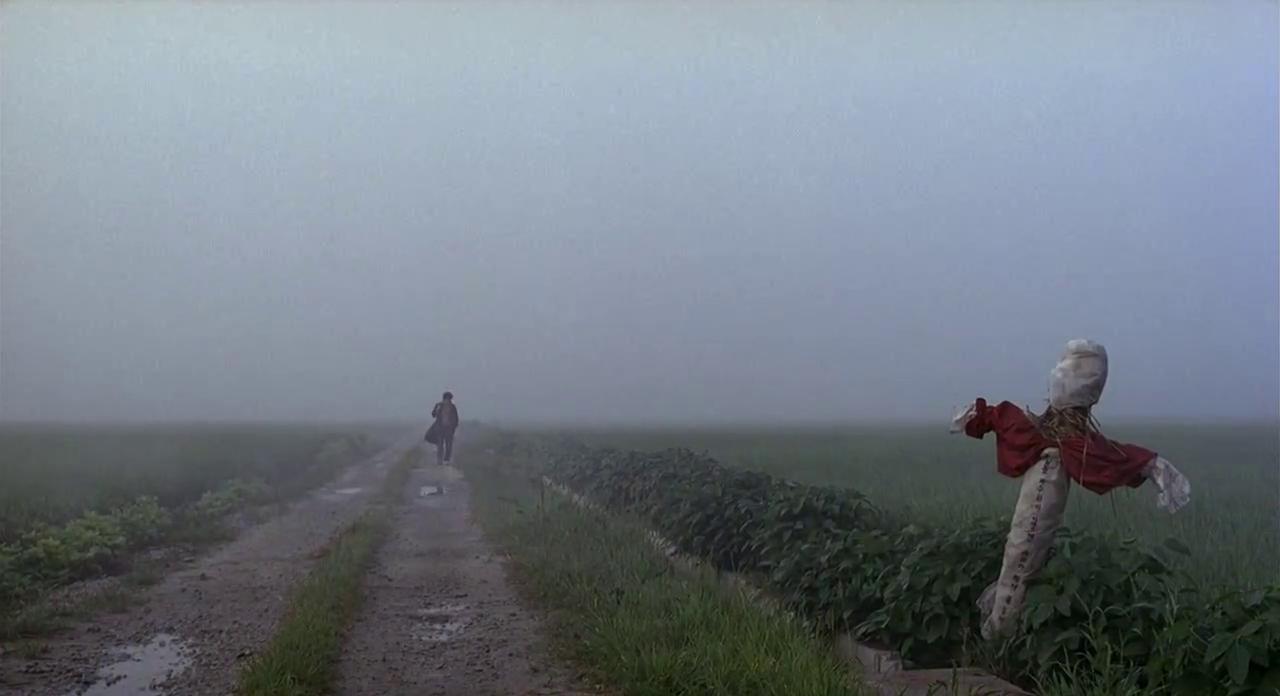
Meanwhile, his supposedly more sophisticated rival, Seo Tae-yoon, is driven by his own internal demons and, when he finally fixes on a possible suspect, finds himself in serious danger of resorting to the kind of approach he so despises. It’s at the film’s conclusion where the story really delivers its most powerful gut-punch, with a final shot that lingers in the memory.

This is far above the usual crime procedural. And, lest I give the impression that it’s a film that was unfairly ignored on first release, don’t be fooled. Memories of Murder won 31 awards at film festivals around Asia.

It’s simply that it took Oscar quite some time to catch on to a good thing.

4.4 stars

Philip Caveney

Parasite

07/02/20

I’ve long been a fan of South Korean director Bong Joon-ho. His 2006 film, The Host remains one of my all-time favourite creature features, while both Okja and Snowpiercer, though not perfect, are the work of a director who’s always ready to break new ground and look for the unexpected in every situation. With Parasite, however, he takes a giant step into the stratosphere. This is filmmaking at its most inventive. Little wonder it’s hotly tipped to lift the Oscar for best international film and, possibly,  the biggest prize of them all.

It’s the story of two families – one poor, one rich – and their interactions with each other. The Ki family are down-on-their luck, all four of them unemployed, living a squalid existence in a stinkbug-infested basement and reduced to hacking the wifi signals of their neighbours in order to find out what’s happening in the world.

Then young Ki-woo (Choi Woo-sik) is unexpectedly handed a lifeline by his student friend, who asks him to take over as English tutor to the daughter of a wealthy family, the Parks, who live in a super-swish uptown house. Ki-woo is not qualified to do the work, but his sister, Ki-jung (Park So-dam), is a dab hand on the computer and easily runs him up some fake documentation. He charms the gullible Yeon-kyo (Cho Yeo-jeong) into employing him and, when he finds out that her troubled young son has artistic aspirations, Ki-woo seizes the opportunity to bring in his sister as an ‘art tutor’ called Jessica.

From there, it isn’t long before the conniving kids have managed to instal their father as the family’s chauffeur and their mother as a replacement for the Park’s long-term housekeeper. So far, what we have is a very enjoyable story about a cunning deception, played for laughs and endlessly inventive as the home invaders, driven by the desperation of their own poverty, use ever more complicated ruses to assert their dominance over their rich employers.

But it’s at this point that the story takes a much darker turn, stepping in out of left field and slapping the viewer hard. It would be a crime to reveal anything more of the plot; suffice to say that what emerges is a brilliant study of class and privilege – an examination of the harsh, uncrossable wastelands that lie between the haves and the have-nots. The brilliance of the script is that you still feel sympathy for the confidence tricksters, no matter what depths they sink to in order to maintain their deception. Neither are the Parks depicted as monsters; they are just over-privileged, and oblivious to the fact that they’re treating their employees as disposable commodities.

As the story gallops towards its shocking climax, there’s barely time to catch your breath – and there’s a wistful, aching coda that has me leaving the cinema with a tear in my eye. Parasite is not only a landmark event for Asian cinema, it’s the work of a brilliant director at the height of his game. Those who are put off by subtitles should note that it really doesn’t matter here. See this version, before the inevitable American remake appears.

5 stars

Philip Caveney