Olivia Colman

The Roses

30/08/25

Cineworld, Edinburgh

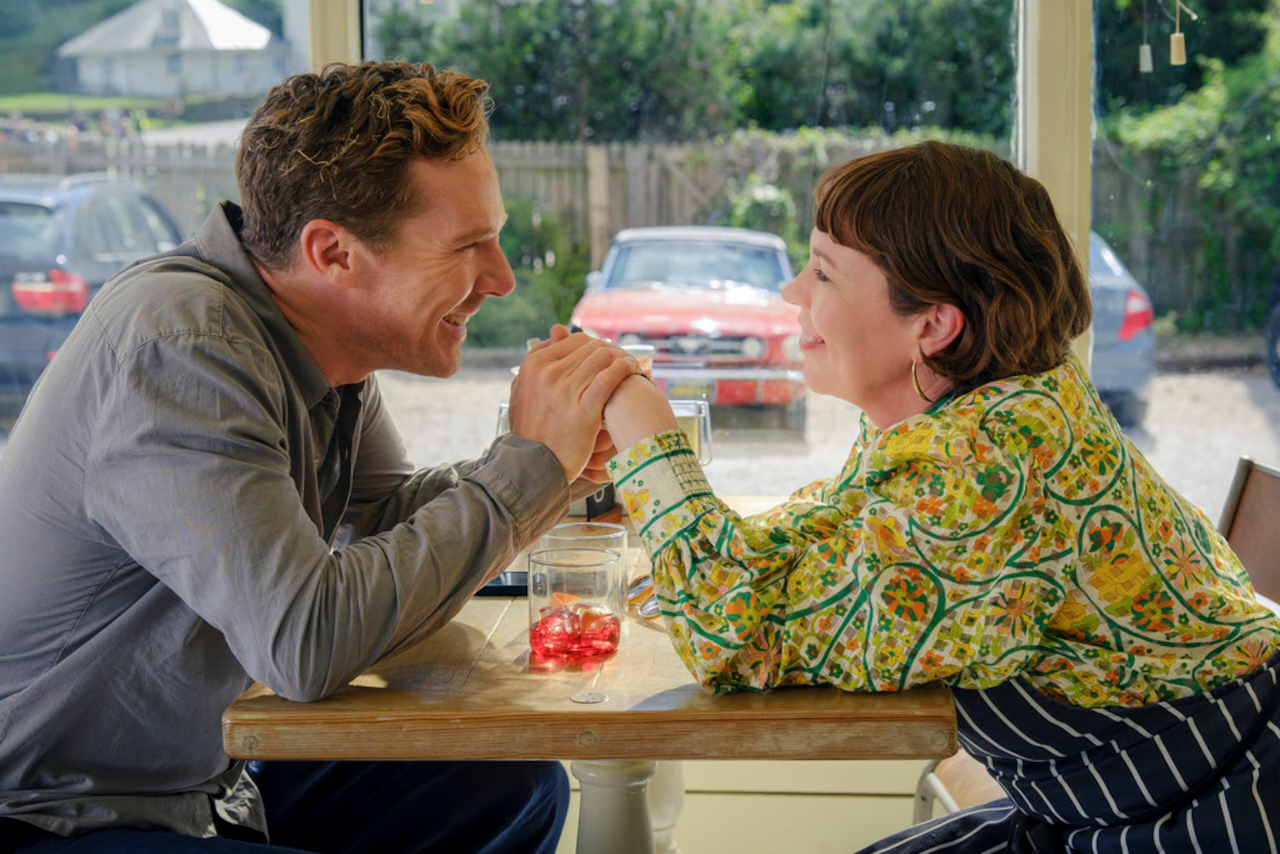
It’s an ill wind that blows nobody any good, so perhaps it shouldn’t come as a surprise to Theo Rose (Benedict Cumberbatch) when the very storm that shatters his career as an architect also heralds a renaissance for his restaurateur wife, Ivy (Olivia Colman).

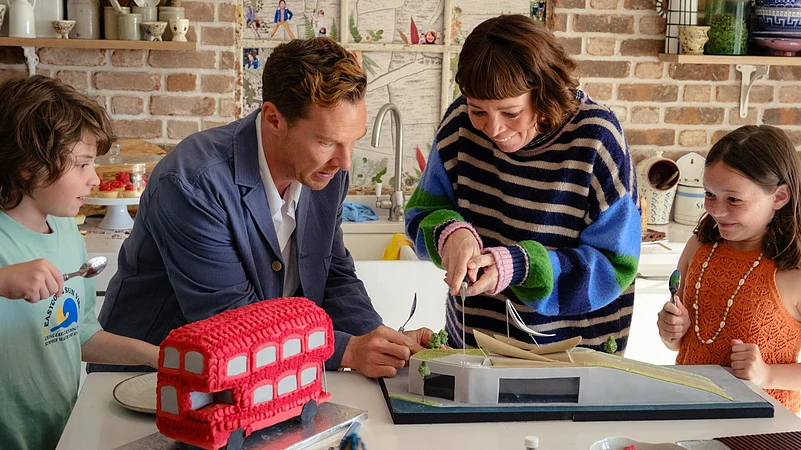
Theo and Ivy have relocated from London to Northern California, where Theo has been commissioned to design a naval history museum. Ivy’s professional aspirations have been on hold since their two kids, Roy (Ollie Robinson/Wells Rappaport) and Hattie (Delaney Quinn/Hala Finley) came along, but now they’re busy with school and friends and she’s starting to get itchy feet. How long can she carry on cooking elaborate tasting menus for a family of four? Theo is nothing if not supportive, encouraging her to set up a new eatery, opening a few evenings a week.

But when Theo’s high-profile building collapses in a hurricane, he finds himself persona non grata in the architectural community, unable to find work. Meanwhile, seeking shelter from the same weather, an influential food critic is blown into Ivy’s restaurant, and her review catapults Ivy to stardom. It makes sense, then, for Theo to take over domestic duties, while Ivy capitalises on her success and expands her business.

But Theo finds it hard to cope with his sense of failure, and Ivy finds it hard not to resent his newfound closeness to their kids. Before long, their relationship begins to sour, their grievances mounting to monstrous proportions…

Directed by Jay Roach, The Roses is laugh-out-loud funny, as the couple’s responses to their problems escalate cartoonishly, their excesses both shocking and exhilarating to watch. At the same time, with such skilful actors in the lead roles, it’s also desperately sad: we’re bearing witness to the disintegration of a once-happy marriage, observing as two people find themselves travelling a path towards mutual ruin, unable to stop as the momentum builds.

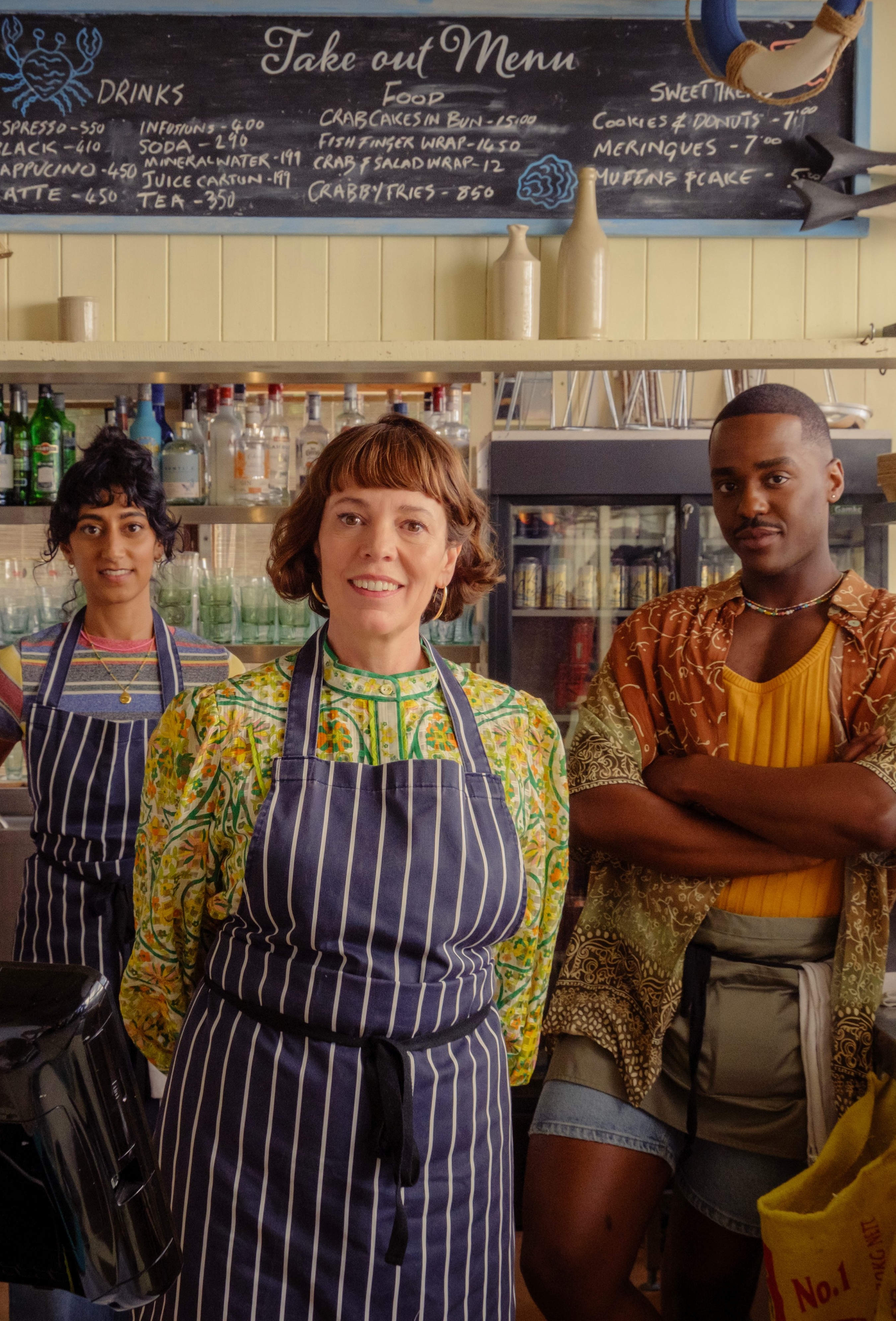
Despite its destructive premise, The Roses turns out to be a feelgood kind of film. Based on the novel by Warren Adler and famously filmed as The War of the Roses in 1989, Tony McNamara’s script is bitingly funny, with lots of arch lines and bitchy humour to lighten the tension. The supporting cast provide some excellent comic relief – particularly Ncuti Gatwa as Jeffrey, Ivy’s loyal waiter, and Kate McKinnon as Amy, the couple’s sex-starved friend.

As for the ending? I don’t think it’s giving anything away to say that it’s best described as “audacious”.

4.3 stars

Susan Singfield

Paddington in Peru

11/11/24

Cineworld, Edinburgh

After the success of Paddingtons 1 and 2, it was perhaps inevitable that a third instalment would eventually amble into view. But previous director Paul King did set a high bar. His films were perfect family-friendly adventures that kept both children and adults thoroughly entertained. King has now transferred his talents to the somewhat under-appreciated Wonka franchise, so this time out, directorial duties fall to Dougal Wilson, while the screenplay is the work of four writers, one of whom is original scribe Simon Farnaby.

As the title suggests, the third film sees Paddington and his adoptive family, the Browns, leaving their London home in search of Paddington’s beloved Aunt Lucy (voiced by Imelda Staunton), who has gone missing from her nun-run retirement village, deep in the jungles of Peru. The alarm has been raised by the Reverend Mother (Olivia Colman, in yet another scene-stealing role). It’s apparent pretty much from the outset that there’s something a bit dodgy about her – though she’s still unmistakably, adorably, Olivia Colman, singing and dancing her socks off. Once in Peru, the Browns – Hugh Bonneville, Emily Mortimer (replacing Sally Hawkins), Madeleine Harris and Samuel Joslin, accompanied as before by Mrs Bird (Julie Walters) – fall in with mysterious riverboat captain, Hunter Cabot (Antonio Banderas) and his daughter, Gina (Carla Tous). Cabot is introduced via an obscure film reference (Werner Herzog’s 1982 jungle odyssey, Fitzcarraldo), that only a few movie buffs are likely to spot.

A convoluted South American adventure dutifully ensues with occasional nods to Indiana Jones and the like, but it must be said that this isn’t quite as sure-footed as the previous offerings. Paddington (Ben Whishaw) is still utterly delightful and just as prone to pratfalls, but the slapstick isn’t as assured and the ‘fish-out-of -water’ premise of the first film doesn’t really work so well in a jungle. Furthermore, with just about every actor that has appeared in the series popping up for an obligatory cameo, plus scenes where Cabot is haunted by no fewer than five of his gold-obsessed ancestors, the film feels too busy and over-stuffed for its own good. There’s also a tendency for the film’s messages to be pounded home with a huge mallet rather than trusting younger audiences to take them on board.

Don’t get me wrong, Paddington in Peru has enough endearing moments to make it worth the watch and I’m sure youngsters will still be suitably entertained by the little bear’s antics but, all things considered, this offering comes in a good distance behind its predecessors.

Make sure you stay in your seats through the lengthy credits for a welcome call-back to (yet another) character from one of the earlier movies. Sadly, although I’m happy to see him, this only serves to emphasise that the latest adventure doesn’t offer anyone else quite as memorable.

3.8 stars

Philip Caveney

Wicked Little Letters

19/02/24

Cineworld, Edinburgh

I’m primed to like Wicked Little Letters. With Olivia Colman, Jessie Buckley and Anjana Vasan as the triumvirate of talent at its helm, what could possibly go wrong?

And yet I find myself struggling to warm to this film. Despite fine performances from the three leads, as well as a stellar supporting cast (including Timothy Spall, Joanna Scanlan and Alisha Weir), it feels somehow both heavy-handed and insubstantial.

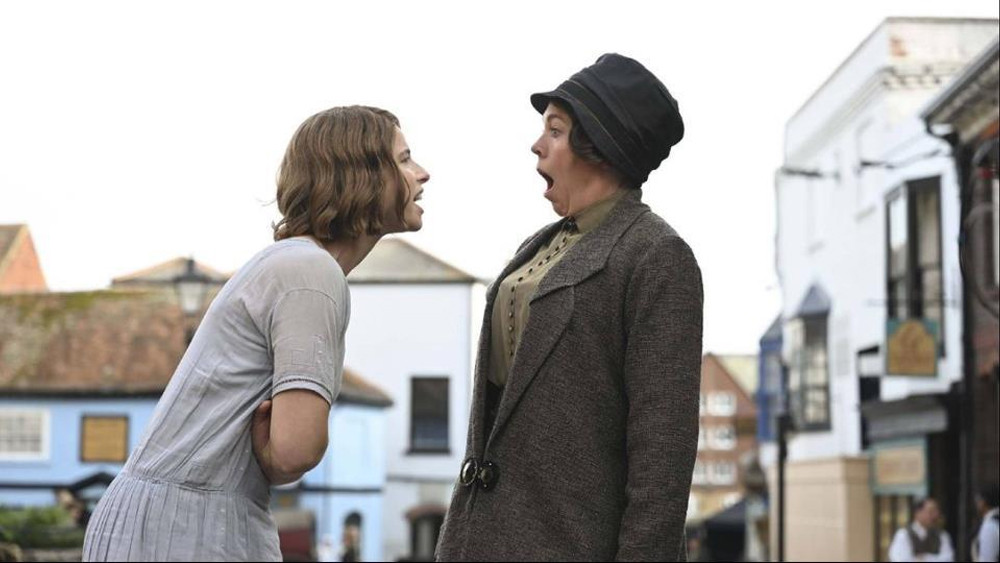
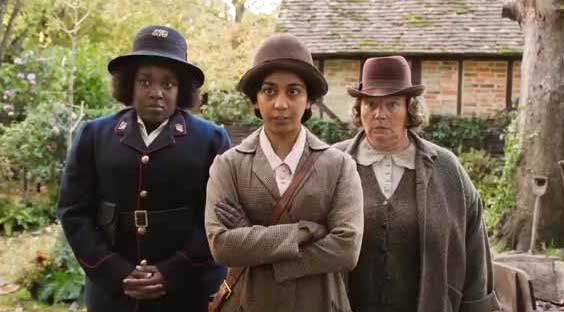
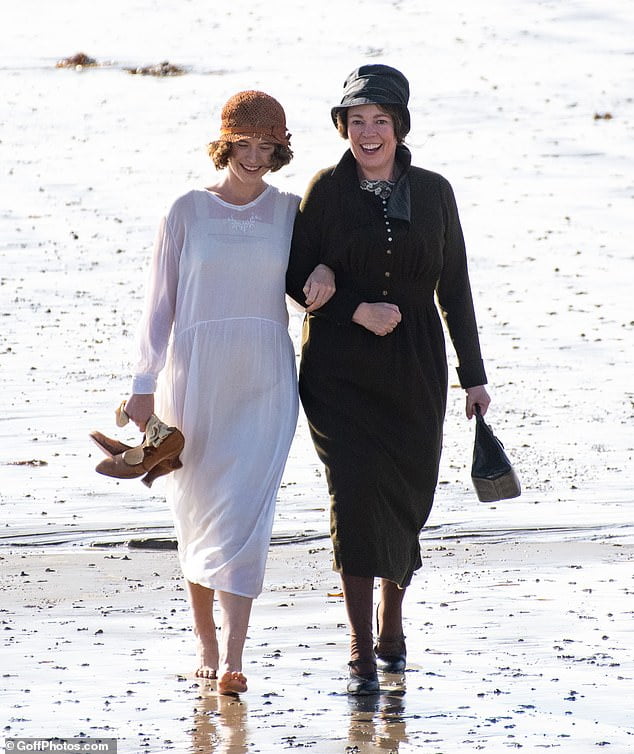
Set in 1920s Littlehampton, Wicked Little Letters is loosely based on a true story. Colman plays Edie Swan, a repressed spinster, unable to escape from her overbearing father (Spall). When a spirited Irish widow (Buckley) moves into the house next door – complete with daughter Nancy (Weir) and new partner Bill (Malachi Kirby) – Edie is delighted, but her friendship with Rose soon turns sour. Then Edie begins to receive poison pen letters, and the local bobbies know exactly where to lay the blame. But Woman Police Officer Gladys Moss (Vasan) thinks they may have jumped the gun…

To quote the very excellent Deborah Frances-White, “I’m a feminist, but…” the misogyny in this movie is cartoon-like, laid on with a proverbial trowel. At the same time, racial politics are completely ignored. I find it hard to believe that the same white male colleagues who openly sneer at Gladys because of her gender wouldn’t also have something to say about the fact that she’s Asian. Likewise, it’s incredible that Rose doesn’t face much anti-Irish prejudice, and no one ever mentions the fact that Bill is Black. I like the fact that the fictional characters are more diverse than their real-life counterparts, but intersectionality matters, and it doesn’t make sense to ignore it here.

At first, I enjoy the humour in Jonny Sweet’s script, but I get bored of the whole “sad stinky fucking foxy arsehole” sweariness; it’s repetitive and the shock value soon wears thin. Director Thea Sharrock does a good job of evoking a sense of time and place, and of allowing her cast to shine, but there’s no getting away from the thin material. It doesn’t help that there are no red herrings, or that what little suspense there is is squandered by revealing the culprit at the halfway point.

Colman, of course, is brilliant, managing to convey a perfect mixture of horror and triumph every time she utters a profanity – and this, along with Buckley’s brittle vivacity and Vasan’s wide-eyed determination, elevates the film. Wicked Little Letters works well as a character study, less so as a compelling narrative.

3.6 stars

Susan Singfield

Wonka

08/12/23

Cineworld, Edinburgh

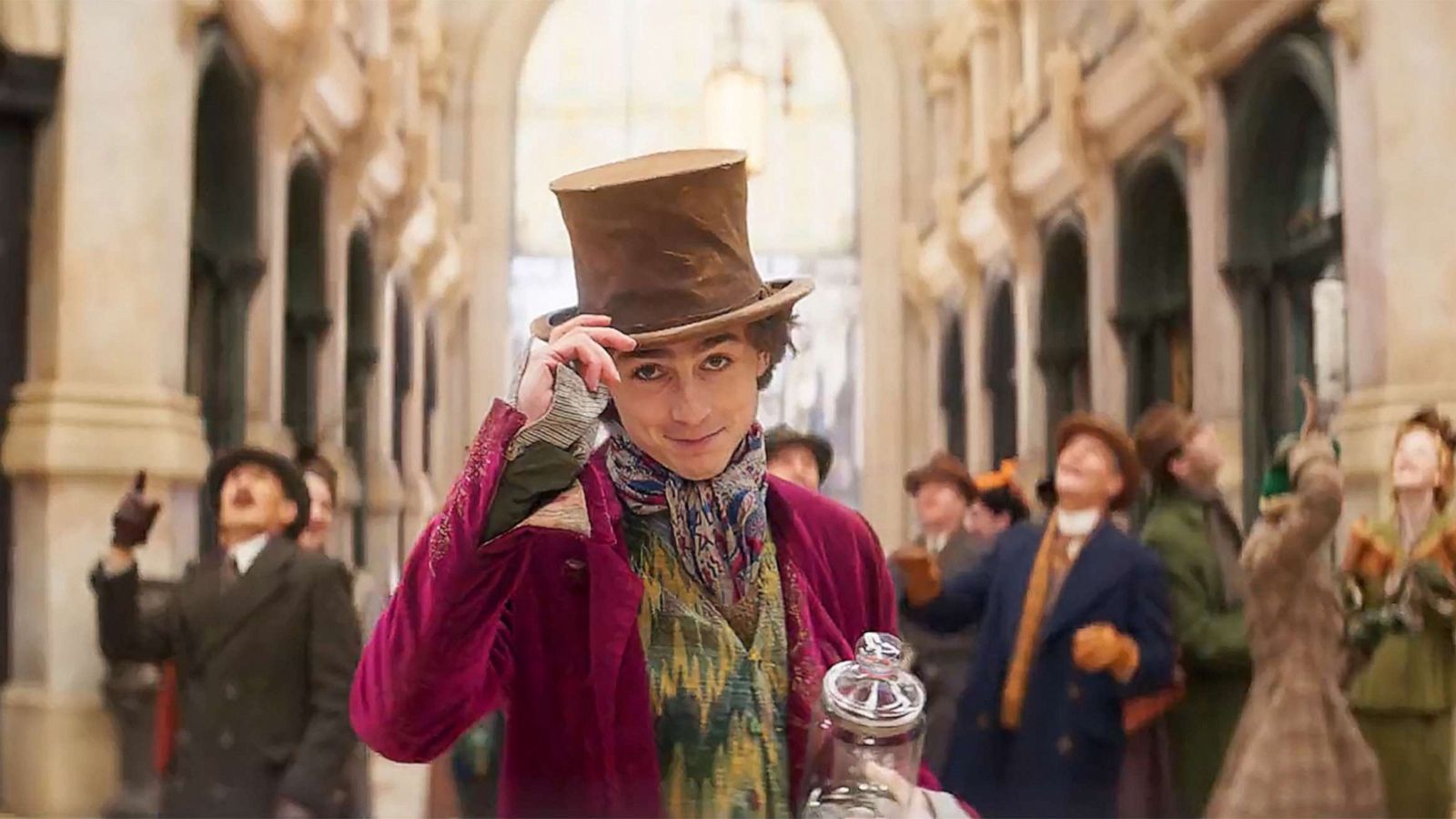
The omens were always good for Wonka. Director Paul King and writer Simon Farnaby have already delivered two brilliant (5 star) Paddington films, but were willing to assign the upcoming Paddington in Peru to other hands in order to focus on this origin tale based around Roald Dahl’s most celebrated character. What’s more, Timothée Chalamet – who seems to have the uncanny ability to choose box office winners with ease – was signed up for the title role right from the very beginning.

And sure enough, Wonka turns out to be as sure-footed as you might reasonably hope, powered by a deliciously silly story and some sparky songs by Neil Hannon, plus a couple of bangers salvaged from the much-loved 1971 film starring Gene Wilder. Laughter, music and magic: they’re all here in abundance.

In this version of the tale, the young Willy Wonka arrives in a city that looks suspiciously Parisian (but is actually Oxford). His masterplan is to pursue an ambition he’s had since childhood: to create the world’s most delicious chocolate.

Armed with an original recipe from his late mother (a barely glimpsed Sally Hawkins) and augmented by some magical tricks he’s picked up along the way, Wonka has mastered the chocolatier’s arts to the final degree, but has somehow neglected to learn how to read. Which explains why he soon ends up as a prisoner, working in a hellish laundry run by Mrs Scrubbit (Olivia Colman, for once playing a convincingly loathsome character) and Mr Bleacher (an equally odious Tom Davis). It’s here that Wonka acquires a small army of workmates, including Noodle (Calah Lane), a teenage orphan who has mysterious origins of her own and who soon proves to be Wonka’s most valuable ally.

When he’s eventually able to sneak out and pursue his main goal, he quickly discovers that the local chocolate industry is dominated by three powerful and devious men, Slugworth (Paterson Joseph), Prodnose (Matt Lucas) and Fickelgruber (Matthew Baynton), who are willing to go to any lengths to protect the stranglehold they currently enjoy. They see Wonka as a potential threat and will stop at nothing to eliminate him…

Mostly, this works a treat. Chalamet is an astute choice for the lead role, capturing the man-child quality of young WW, whilst still managing to hint at the darker elements that lurk deep within him. Lane is suitably adorable and, if the triumvirate of evil chocolate barons never really exude as much malice as you’d like, it’s no big deal. The only real misstep is the fate of the local police chief (played by Keegan Michael-Key), who takes bribes in the form of chocolate and who steadily puts on more and more weight, until he’s almost too big to fit in his car. While this fat-shaming device may be true to the ethos of Mr Dahl, it feels somewhat out of place in a contemporary story.

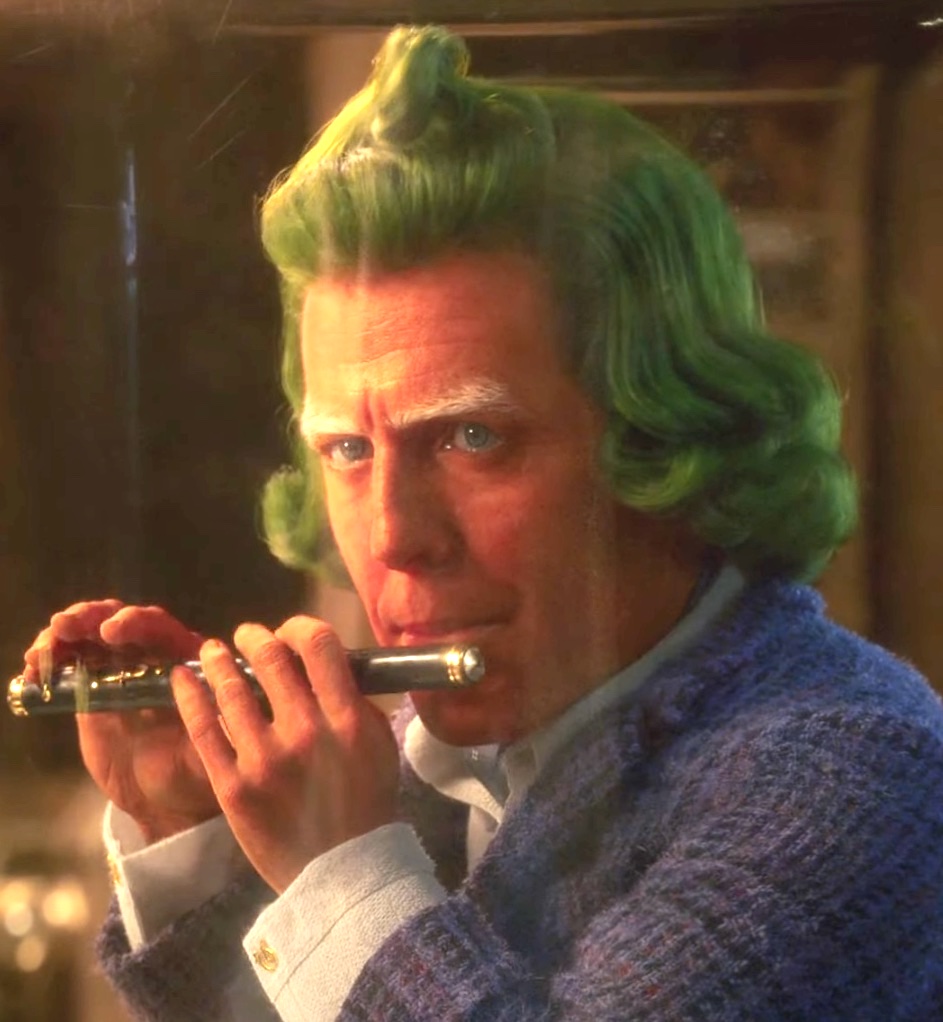
And of course this being a Wonka tale there must be Oompa-Loompas, played here by an orange-skinned, green-haired Hugh Grant, who is wonderfully pompous and self-possessed, yet somehow manages to be quite adorable at the same time. As you might guess, Mr Grant is obliged to dance (again), something he allegedly hates doing. He’s used sparingly through the film but still nearly manages to steal it from under Chalamet’s nimble feet.

All-in-all, Wonka is an enjoyable family film, as bright, glittering and irresistible as a bumper hamper packed with tasty treats. It’s interesting to note, however, that I didn’t come out of this feeling like tucking into some. On the contrary, a scene where Willy and Noodle find themselves drowning in a big vat of molten chocolate actually has me feeling faintly queasy.

Nonetheless, those seeking an enjoyable couple of hours at the cinema, could do a lot worse than buying a ticket for this delightful offering, which will appeal to viewers of all ages.

4.4 stars

Philip Caveney

Dead Man’s Shoes

16/09/23

Cameo Cinema, Edinburgh

Two men stride purposefully across a picturesque stretch of moorland near Matlock, Derbyshire. They are former soldier, Richard (Paddy Considine), and his younger brother, Anthony (Toby Kebbell), who has learning disabilities. As they walk, gentle music plays and we’re given glimpses of them playing together as toddlers. But what we’re about to see is far from gentle. It’s a harsh and unremitting tale of revenge.

Anthony has been wronged and Richard has returned to his hometown to put things right.

Meadows shows us a run-down rural community that is dominated by local kingpin, Sonny (Gary Stretch), and his sorry henchmen, a bunch of hapless deadbeats who drive around in (of all things) a battered Citroen 2CV. They make easy money selling drugs to the hardscrabble locals and treat anyone who opposes them with contempt. They are the big fish in this tiny pond, simultaneously pathetic yet somehow powerful. It’s clear that Gary and his crew wouldn’t last five minutes in the city but here, they see themselves as players.

But Richard has them squarely in his sights. He begins by confronting them, telling them exactly what he thinks of them and they are instantly dismayed. Nobody ever talks to them like that! Richard knows what they have done to his brother and he will make them pay. As he tightens the screws, he begins to expose them for what they are and they begin to understand the true meaning of fear…

Originally released in 2004, Dead Man’s Shoes is a collaboration between writer/actor Considine and director Shane Meadows and it’s now making a welcome return to UK cinema screens.

Part crime-thriller, part horror story, Dead Man’s Shoes brilliantly utilises Meadows’ flair for eliciting naturalistic performances and improvised dialogue, while Considine displays the hard-edged acting chops that soon launched him into the mainstream. Six years later, he directed the extraordinary Tyrannosaur, which in turn provided Olivia Colman with a star-making vehicle. It’s fascinating to contemplate how much has changed since this film’s release. It seems like a world away.

If you haven’t seen Dead Man’s Shoes, here’s your opportunity to correct the situation. It’s an extraordinary, low-budget gem, that still shines brightly nearly twenty years after its first outing.

4.6 stars

Philip Caveney

Puss in Boots: The Last Wish

21/02/23

Cineworld, Edinburgh

All things considered, this must be the least anticipated ‘sequel’ of the year. The Shrek franchise began way back in 2001 and, over the years, there have been three sequels of steadily diminishing quality. In 2011, Puss in Boots emerged as a Shrek spin-off and, it must be said, not a particularly memorable one. So Puss in Boots: The Last Wish is essentially a sequel to a spin-off. But those who take note of such things can’t fail to have missed the fact that the film has been nominated for an Oscar and a BAFTA. This is because it has something up its sleeve that nobody expected. It’s really good.

In the adrenalin-fuelled opening sequence, we meet our titular hero (voiced once again by Antonio Banderas), who is singing and dancing for an adoring audience. Shortly thereafter, he takes on a whole army of warriors single-handedly, and rounds things off by doing battle with an ancient woodland bogeyman.

And then he er… dies. 

Of course, he’s a cat and everyone knows that felines have nine lives, right? But, as a helpful doctor explains, Puss has just used up life number eight. From now on he needs to be very careful indeed, because – if he allows himself to be killed one more time – his heroic escapades will be over for good. So when he encounters the genuinely creepy Wolf (Wagner Moura), he realises that this is an enemy he can never hope to defeat, and for the first time in his life, he’s afraid. Almost before you can say ‘game over,’ he’s hiding out in Mama Luna (Da’Vine Joy Randolph)’s cat refuge and pursuing a quiet, domesticated existence.

What follows is a clever meditation on the subject of death, but if that sounds like something you really don’t want to watch, let me assure you that yes, you actually do! As scripted by Paul Fisher and Tommy Swerdlow, this is a witty – sometimes hilarious -quest tale that never misses an opportunity to propel the franchise headlong into previously uncharted waters, while Joel Crawford and Januel Mercado’s flamboyant direction allows the animation department to steer the visuals into challenging new dimensions. Suffice to say that there are scenes here that challenge Spider-Man: Into the Spider-Verse for eye-popping, jaw-dropping panache and make the original film look positively pedestrian.

There’s a welcome return for Puss’s ex-girlfriend, Kitty Softpaws (Salma Hayek), and a new sidekick in the shape of the criminally adorable Perrito (Harvey Guillén), a wannabe therapy dog who’s just pretending to be a cat, in a desperate attempt to extend his friendship group. And since the Shrek series has always riffed on popular fairy tales, we’re offered a villainous Goldilocks (Florence Pugh), plus her adoptive ursine family (Ray Winstone, Olivia Colman and Samson Kayo). There’s also arch-nemesis, Jack Horner (John Mulaney), a decidedly Trumpian creation, who – despite inheriting an entire pie-factory from his entitled parents – still insists on sticking his grubby thumbs into every opportunity that comes his way.

And did I mention the fabulous Latin American flavoured soundtrack by Heitor Pereira? I leave the cinema dancing.

While PIB:TLW might not be a comfortable fit for younger kids, for everyone from eight years and upwards, it’s a rollicking, rib-tickling adventure that never loses its momentum. My advice? Put aside your expectations and see this on the big screen. You won’t be disappointed.

4.4 stars

Philip Caveney

Empire of Light

03/01/23

Cineworld, Edinburgh

Sam Mendes’ Empire of Light is essentially a passionate love letter to the cinema, the kind of film that could have created with me – or somebody very like me – in mind

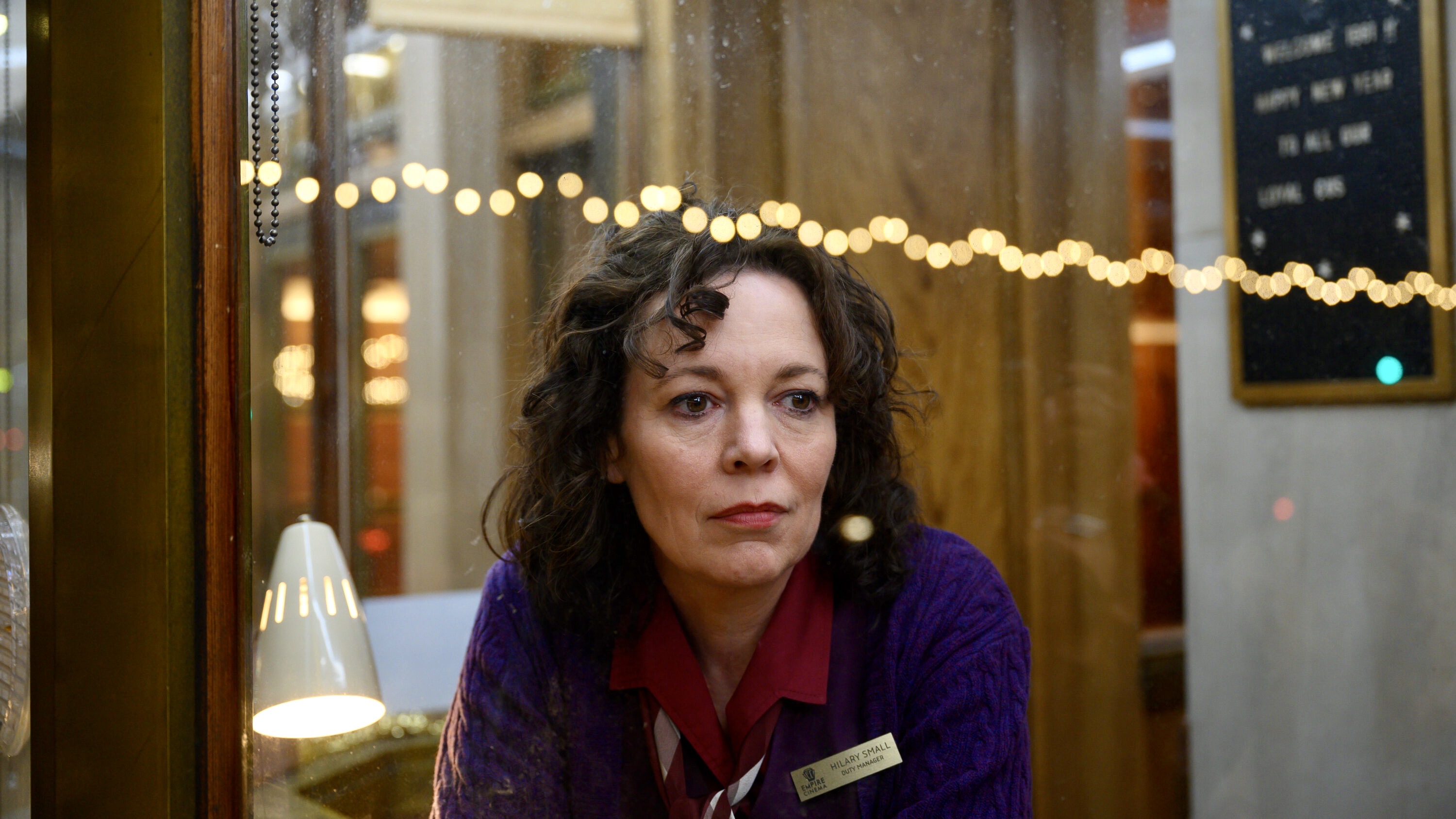
It’s 1981 and, somewhere on the south coast of England, the Empire cinema, a magnificent but now somewhat dilapidated Art Deco picture house, proudly announces its current offerings: The Blues Brothers and All That Jazz. Filmed on location in Margate, the atmosphere of the era is convincingly evoked, right down to the last detail. Here is the age of Thatcherism, a time when fascism, in the form of skin head culture, was in the ascendent. But, within the sheltering walls of the Empire, deputy manager Hilary (Olivia Colman) and her team of social misfits seem inured to change, even though two of their four screens are now permanently closed.

Hilary is occasionally expected to find time to pop up to the office of sleazy manager, Mr Ellis (Colin Firth) – for a joyless sexual fumble on his desk. Ellis is married and it’s supposed to be a secret but – of course – the others are well aware of what’s going on. A change is signalled by the arrival of new employee, Stephen (Micheal Ward), a handsome young Black man with a liking for Two Tone music. When Hilary shows Stephen around the derelict, pigeon-infested ballroom on the top floor, something clicks between them…

At a time when streaming is increasingly becoming the norm, it seems doubly poignant when projectionist Norman (Toby Jones) explains how moving pictures employ a simple trick to deceive the viewer’s eyes into thinking they are watching something more than a long series of still photographs. We occasionally see him in his booth, the walls plastered with images of movie stars from across the eras, meticulously directing images from his 35 mm reels onto a giant screen. The moment is mesmerising and it’s a timely reminder that cinema itself is in danger of suffering the fate of the dinosaurs.

Beautifully shot by Roger Deakins and written by Mendes, Empire of Light is compelling, and at times overpoweringly poignant. I almost get tired of praising Olivia Colman, but – from Tyrannosaur onwards – she has offered up a series of extraordinary screen performances and Hilary may be her best character yet. She’s complex and unpredictable, vacillating from joyful enthusiasm to vengeful anger. You believe in her implicitly and, furthermore, I’ve rarely seen mental illness presented with such skill, such gentle acceptance. Much of this is due to Mendes’ nuanced script, and the fact that the director’s own mother struggled with her mental health may have instructed his writing. Stephen too is a compelling character, somehow managing to operate through the hateful levels of racism he experiences on a daily basis, keeping his gaze firmly fixed on a brighter future.

This charming and affecting movie has me entranced from its opening shot to its final frame and I suspect that anybody with a genuine love of film is going to have a similar experience. Go and see it – in the cinema, please!

5 stars

Philip Caveney

The Lost Daughter

02/01/22

Netflix

I really want to like The Lost Daughter. After all, it’s directed by Maggie Gyllenhaal, and stars two of my favourite actors, Olivia Colman and Jessie Buckley. The reviews I’ve read have all been glowing, so I’m expecting great things. And yet, in the end, it just doesn’t seem to have enough heft: it’s all build up, with weak foundations and no catharsis.

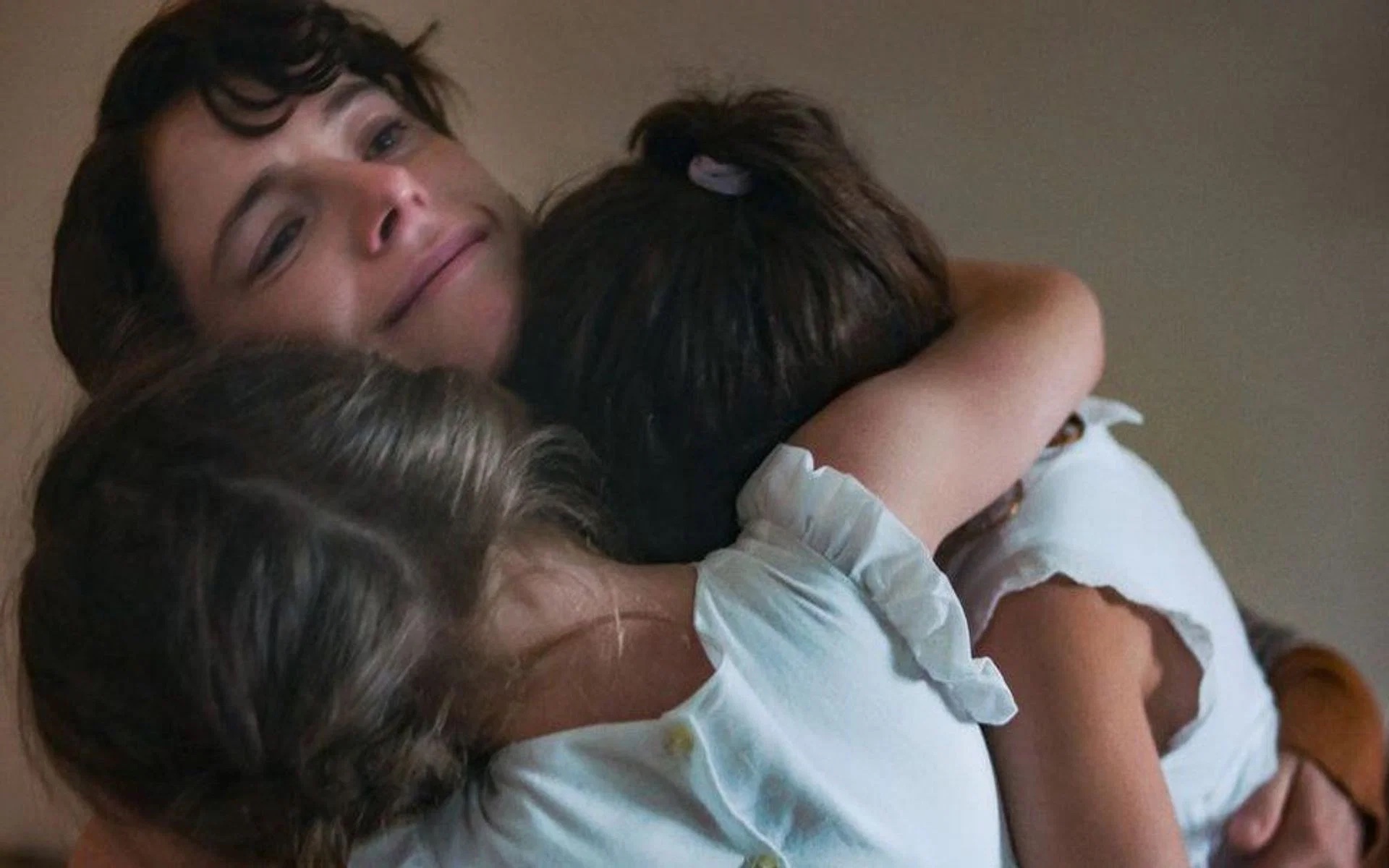
Colman and Buckley both play Leda Caruso. Buckley, of course, plays the younger iteration, a twenty-something post-grad student, struggling to balance her burgeoning academic career with the demands of her marriage and two young children. Time has rendered such issues less pressing for Colman’s Leda, who – approaching fifty – is now a professor, free to spend the summer alone on a Greek island, her adult daughters busy leading their own lives.

The movie opens with Colman’s Leda collapsing on the beach, so we know from the start that something isn’t right. In a series of flashbacks, we are shown what has brought Leda here, from the working-holiday immediately preceding her fall to the ‘crushing responsibility’ of motherhood that overwhelmed her younger self.

At first, the holiday seems idyllic. The island is undoubtedly beautiful; Leda’s apartment is charming; the sun is shining; the beach is quiet. There are hints that something is amiss: the mouldy fruit in the bowl; an insect buzzing on her pillow. But all seems well until a large, brash American family arrives, rudely interrupting Leda’s peace. When their matriarch, Callie (Dagmara Dominczyk), pregnant for the first time at forty-two, asks Leda to move her lounger so that the family can sit together, Leda stubbornly refuses. And an animosity is born that overshadows her whole stay…

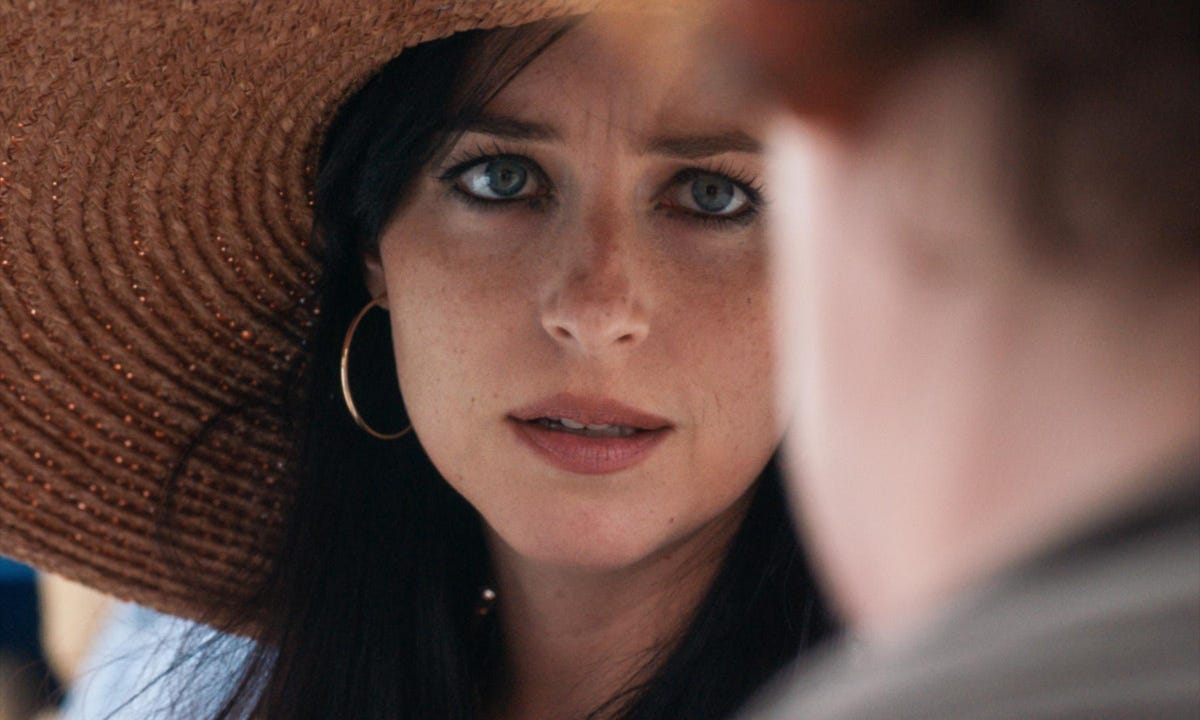
Despite her instinctive dislike of the family, Leda finds herself drawn to Callie’s glamorous sister-in-law, Nina (Dakota Johnson), whose relationship with her daughter, Elena (Athena Martin), reminds Leda of her own past. When Elena goes missing, Leda helps to find her, and the two women form an uneasy bond.

So far, so good. As a character study, this film is wonderful. Leda is a complex and interesting woman, whose conflicting desires and ambivalence towards parenthood make her an all-too-rare sight on our screens. But, though it pains me to say it, the casting doesn’t quite work. No one can reasonably argue that Colman and Buckley aren’t terrific actors, and they both deliver here, offering detailed and nuanced performances. But they don’t cohere: their Ledas are two different people. It’s not just the way they look; audiences are used to suspending their disbelief on that account. They sound so very different though – Buckley’s sonorous tones at odds with Colman’s girlish, higher-pitched voice – and their movement doesn’t match either.

Gyllenhaal’s direction isn’t bad. She utilises close-ups to excellent effect, and really ramps up the tension: a sense of all-pervading menace is cleverly evinced. But what’s the point, I wonder, if it never amounts to anything? I’m left frustrated by the damp squib of an ending, with nothing calamitous ever revealed or resolved.

A little internet searching shows me the missing piece: in Elena Ferrante’s source novel, Leda is from Naples (instead of ‘Shipley, near Leeds’) and the invading family is also Neapolitan. The sense of dread Leda feels when she encounters them isn’t just snobbery, it’s actual fear, based on her own past, and her own experience of a Mafia-style clan. Perhaps it’s this change that makes Leda’s sense of foreboding harder to understand – and weakens the story in the process.

It feels like a squandered opportunity.

3.4 stars

Susan Singfield

The Father

11/06/21

Cineworld

It’s been over a month since the 2021 Oscars, where The Father won awards for best male actor and best adapted screenplay, but somehow it seems I’ve been eagerly awaiting its arrival for much longer than that. It’s finally here, available to view on the big screen, where its powerful narrative pulses from every frame.

Anthony Hopkins is, it seems, the oldest recipient of the best actor award and we know, don’t we, that sometimes such honours are handed out because it’s late in an actor’s career and there might not be another chance to reward him? But make no mistake, his performance in the lead role is a genuine tour de force. As ‘Anthony,’ a widowed man enduring the terrifying, mind-scrambling rigours of Alzheimer’s, he pulls out all the stops, taking his character through a range of moods and manifestations – from grandstanding showoff to sly insinuator – before delivering a final, desperate scene that is absolutely devastating.

Those seeking a rollicking, sidesplitting comedy should be warned: this is not the film for you.

Anthony – when we first encounter him – is living alone in his spacious London apartment, where he’s receiving regular visits from his compassionate daughter, Anne (Olivia Colman). Anthony has recently dismissed his paid carer, claiming that she’s stolen his watch, and he’s adamant that he will not, under any circumstances, move out of the place that he has always regarded as home. But as the story progresses, the touchstones of his life crumble one by one as the familiar things around him begin to change at a terrifying rate. The place doesn’t look the same… items have been moved, rearranged. Anthony’s favourite painting is missing… and why does somebody by the name of Paul (Mark Gatiss) parade around saying that this is actually his apartment? Who is Paul exactly? Anne’s ex-husband? If so, who’s the other Paul (Rufus Sewell), and why does he act like he owns the place? And what’s all this nonsense about Anne moving to Paris?

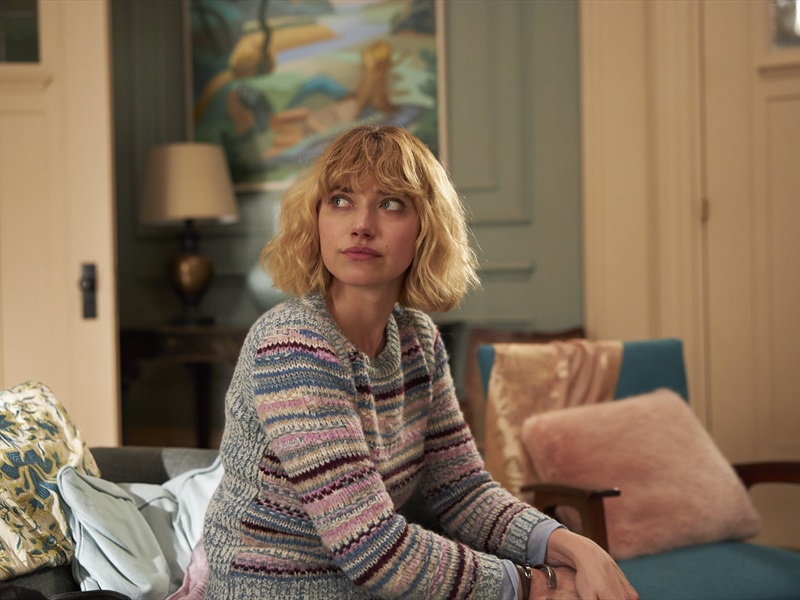
Perhaps the new home help, Laura (Imogen Poots), might be able to put things in order, but why does she remind Anthony so much of his other daughter, Lucy, the one he seems to have lost touch with? And most bewildering of all, why is it that sometimes, even Anne appears to be a different person than she used to be?

Florian Zeller’s astonishing film, adapted from his stage play, unfolds almost like a psychological horror story, as Anthony struggles to take in what’s happening to him. While I expected this to be bleak, I’m not fully prepared for the power with which it hits me. There’s doubtless extra impact because, for the last ten years of her life, my own mother was afflicted by Alzheimer’s and I recognise many of the beats here as being absolutely authentic. Perhaps that’s why the tears are rolling so copiously down my face.

Despite being confined mostly to one set, The Father never feels stage bound, because so much of what I can see onscreen is in a constant state of flux and because, at times, I feel every bit as unsettled as Anthony does. I’m never entirely sure where a scene is taking place, when it it is set and who is present in it – and that’s not meant as a criticism, but as an observation about the story’s unsettling grip on me. While there was aways a danger of The Father being completely dominated by Hopkin’s extraordinary performance, Colman is as excellent as always, managing to kindle the audience’s sympathy with a mere glance. And Olivia Williams is also compelling as the film’s most enigmatic character.

I walk out of the cinema, bleary-eyed from crying and, if I still have a few unanswered questions, well, that feels exactly right. This is an assured film that handles its difficult subject with rare skill.

So, worth the wait? Most definitely. But maybe remember to take some hankies?

5 Stars

Philip Caveney

The Mitchells vs the Machines

06/05/21

Netflix

A sinister organisation enslaves the planet Earth and the only surviving family must fight to free humankind.

It sounds like the plot of a po-faced, dystopian nightmare, doesn’t it? But in the hands of animation veterans, Lord and Miller, what emerges is an irresistibly good-natured romp, replete with funny one-liners and a whole stash of movie references. You’d have to be pretty dour not to enjoy what’s on offer here.

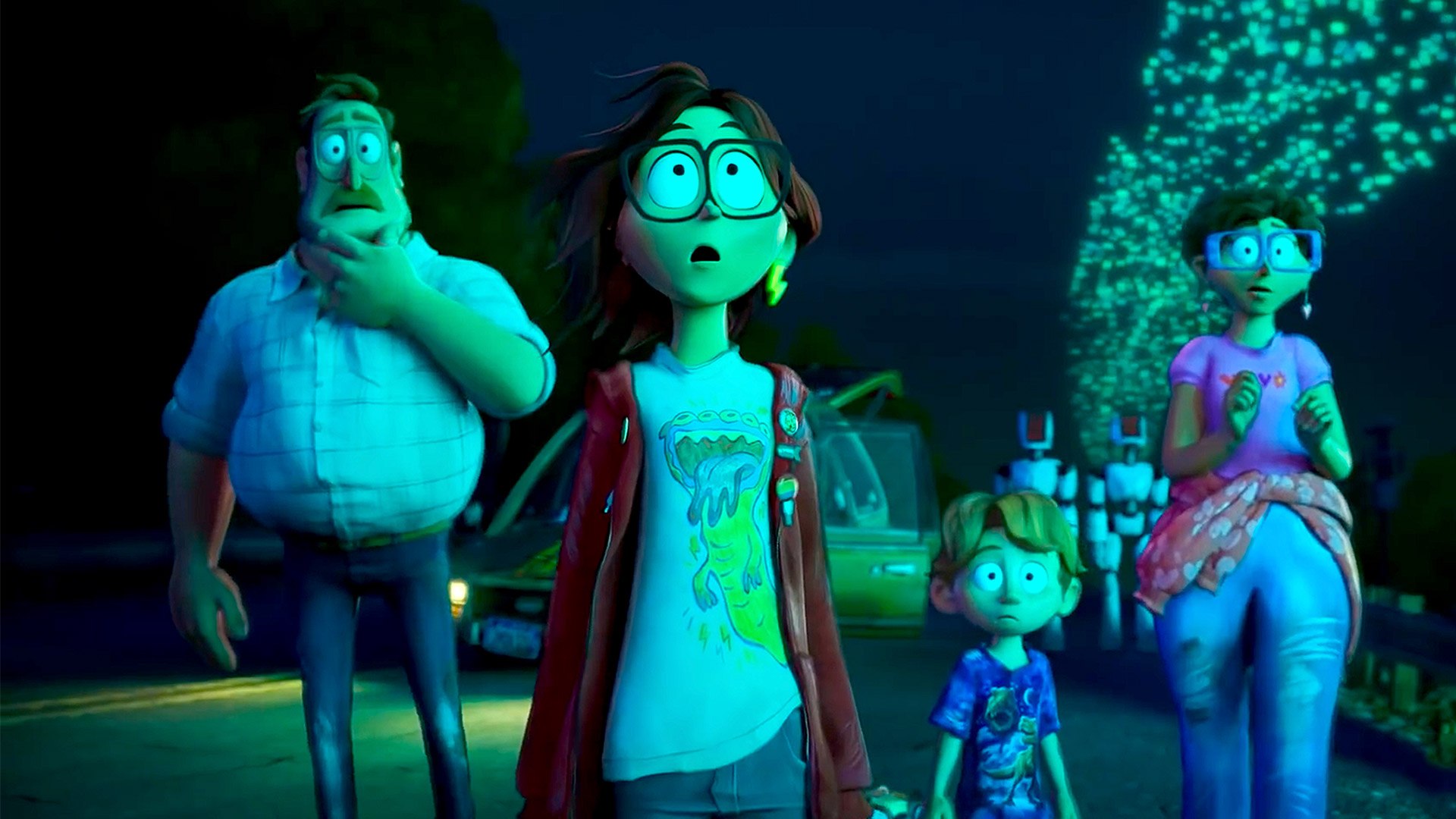
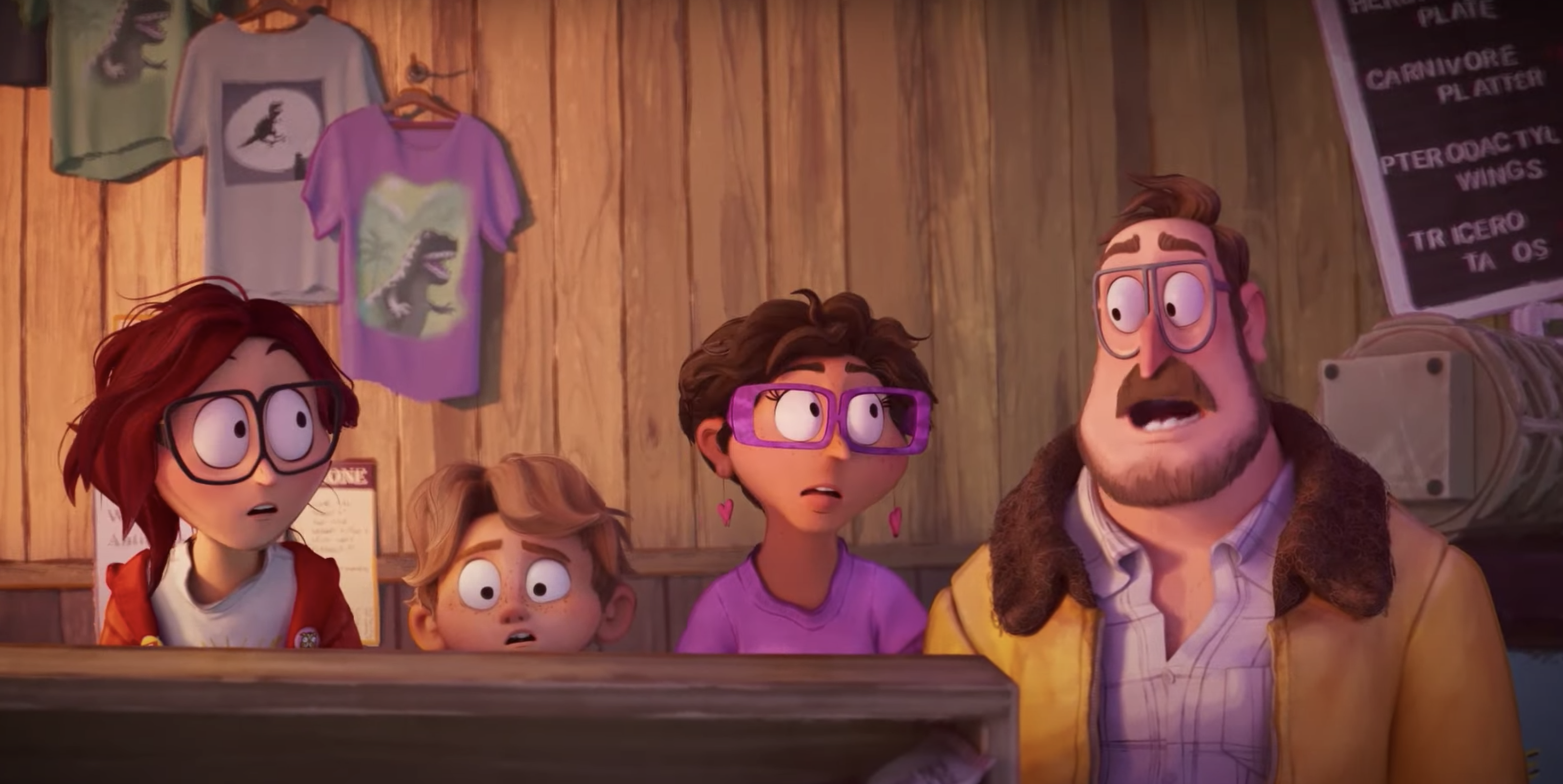
The Mitchells are essentially a family of misfits. Eldest daughter, Katie (voiced by Abbi Jacobson) is a movie-mad teenager (though with that name, you might reasonably have expected her to be more of a theatre fan). She spends every spare minute making films on her phone and is looking forward to going to college in California, where she can study the beloved art full time. Her little brother, Aaron (Michael Rianda), is dinosaur-obsessed and incapable of talking to girls. Mother, Linda (Maya Rudolph) is the family peacemaker, while her husband, Rick (Danny McBride), is so out of touch with the changing times, it hurts. Ask this man to send a simple text message and he struggles helplessly – and his idea of trying to bond with his daughter, as she prepares to leave home for college, is to set up an across country family drive to California, so they can all reconnect.

But, en route to their destination, an unexpected problem occurs. Like most other people in America, the Mitchells use PAL as their provider of all things digital – a brief look at one of the company’s pompous launch events tells you that we could easily substitute the word APPLE or FACEBOOK. Helmed by young social media impresario, Mark Bowman (Eric André), PAL is a complex system that can run every aspect of a human’s life. But, when Mark decides it’s time for an upgrade to a more sophisticated version, PAL doesn’t appreciate being made redundant and decides to initiate a coup. Almost before humankind knows quite what’s happening, they are being becoming slaves to their own creation.

But the Mitchells are not ones to give in easily…

Wittily scripted by writer/directors Michael Rianda and Jeff Rowe, TMVTM takes off at a gallop and rarely pauses to stop for breath. The state of the art animation is cleverly interwoven with more simplistic flourishes, clearly designed to mirror the style we’re shown in Katie’s homemade animations and there’s a sprightly rock soundtrack against which a frantic series of chases and punch ups plays out. For those seeking a little more depth to the proceedings, there are also visual references to famous movies mixed into the formula. I spotted half a dozen on the first watch, and I’ve no doubt repeated viewings would unearth many more. Be warned, some of them are pretty obscure. (Look at the pattern on Katie’s socks, for instance. Do they remind you of a carpet in a famous movie hotel?) Seriously, movie nerds are going to have a field day with this.

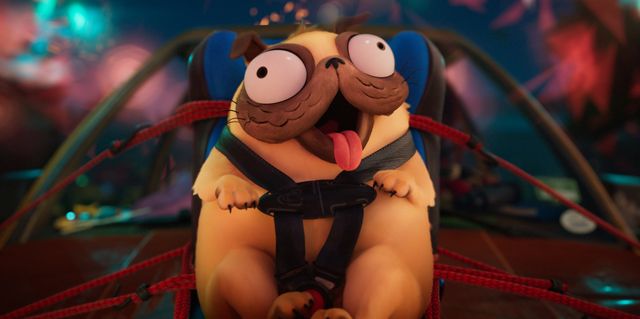
The master stroke though, is having the villainous PAL voiced by Olivia Colman. Hearing her sweet tones wrap themselves around some very nasty commands is probably worth the price of a Netflix subscription all by itself. Oh and the Mitchells are also the owners of an amusing dog called Doug the Pug. Win, win.

Okay, so TMVTM does have a broad sweep of sentimentality running through its core, though it never feels too overdone. While this animation might not be on punching terms with the top rank of Pixar productions, it’s nonetheless a welcome slice of exuberant escapism with a serious message at its core.

4.2 stars

Philip Caveney