National Theatre of Scotland

Protest

27/01/24

Traverse Theatre, Edinburgh

Hannah Lavery’s 2023 play, Protest, makes a brief but welcome return to Edinburgh as part of its new tour, with two performances at the Traverse this weekend. Having missed it at last year’s International Children’s Festival, we’re delighted to have the chance to catch up with this lively, engaging production from Fuel, Imaginate, Northern Stage and the National Theatre of Scotland.

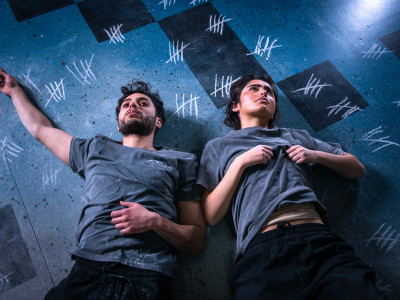
Amy Jane Cook’s set is a brightly-coloured children’s playground, the natural habitat of the P7 girls whose story this is. The climbing frames and running track serve both to entertain and to constrain, opening up possibilities at the same time as imposing limitations.

Through three cleverly-interwoven monologues, we learn about the challenges faced by these very different characters. Alice (Kirsty MacLaren) is a live wire – and the best runner in her class, so she’s outraged when a boy gets chosen for the final leg of the inter-form relay. Jade (Harmony Rose-Bremner) has always been proud of her family history but her happiness is “dented” when she faces racist abuse for the first time; suddenly, she doesn’t feel so secure in her home town. Meanwhile Chloe (Amy Murphy), a quiet, introverted child, has the weight of the world on her shoulders. She’s desperate to save the planet, but how can she do it on her own? She hasn’t got any friends and she can’t even ask her brother to help her any more, because he’s gone all moody since their dad left home.

But is any of these girls prepared to accept what’s happening? No way. They’ve got their Grans on their side, and they’re ready to stand up. To raise their voices. To protest.

Under Natalie Ibu’s assured direction, this is a vibrant, kinetic piece of theatre, the girls’ unselfconscious physicality propelling the action. Rarely still, they’re bursting with energy and enthusiasm, besides themselves with the injustice of it all and delighted with their efforts to put things right. It’s tonally spot-on, embracing the naïve optimism of eleven-year-olds – and reminding us how this might just be what we need to change the world.

Splendidly acted, this is a delightful and inspiring play, and I am pleased to see that it has attracted a young audience today. Children aged 8+ should get a lot from it – and the adults accompanying them are in for a thought-provoking treat as well.

4.3 stars

Susan Singfield
Dracula: Mina’s Reckoning

11/10/23

Festival Theatre, Edinburgh

Bram Stoker’s Dracula is one of those novels, like Alice in Wonderland, that is more famous for its enduring imagery than for its story. Its iconic characters are part of the fabric of our culture, recognised instinctively, even by those who have never so much as picked up the book. Such tales are ripe for retelling, like ciphers waiting to be reshaped for our times.

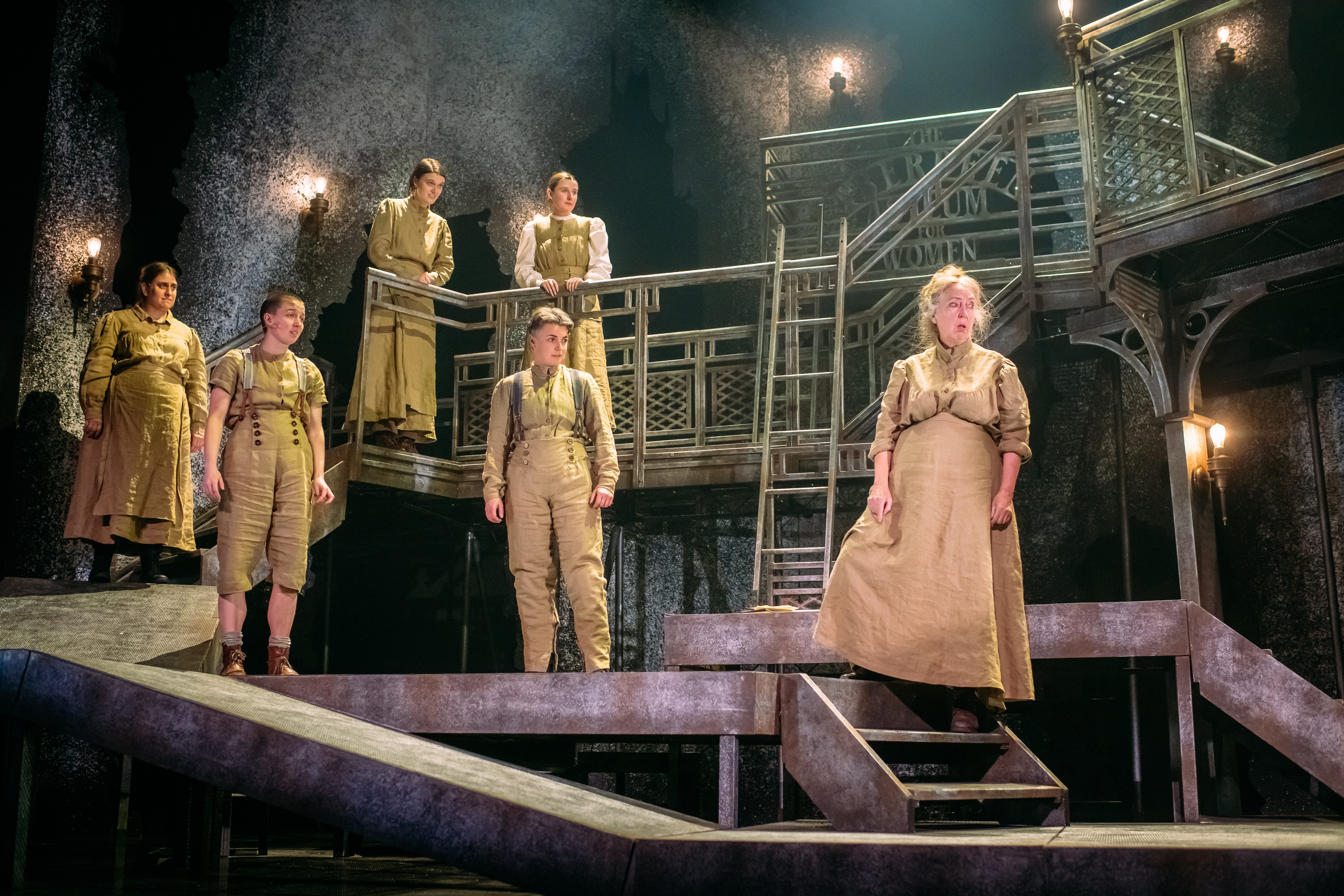
Into that space steps Mina’s Reckoning, a reimagining of the world’s most famous vampire, written by Morna Pearson and directed by Sally Cookson. This all-female and non-binary production redresses the gender imbalances in the source material: here, the women are elevated from mere victims and damsels-in-distress and are actually afforded some agency.

Whitby is out and north-east Scotland is in, justified by the fact that Scots writer Emily Gerard provided much of the inspiration for Stoker’s novel: it was from her work that he learned about the Romanian superstitions that inform some of the most compelling ideas in his book. More specifically, we’re in Cruden Bay, in a women’s asylum, where some of the characters speak in the Doric dialect. The Scots angle works well, the rhythms of the language creating an earthy poetry. The play opens with Mina (Danielle Jam) banging on the asylum door, demanding to be let in. She has Jonathan’s journals and wants Dr Seward (a wonderfully comic Maggie Bain) to help her ward off the evil that’s on its way.

The long first act sticks pretty closely to Stoker’s tale, albeit with more jokes and some judicious pruning (the boring suitor sequences are gone, thank goodness, and so are the details of Jonathan’s interminable journey). The second, shorter, act is much better, precisely because this is where the creative reimagining takes place, allowing Mina to come into her own. It’s a shame that the piece skews this way: it feels unbalanced. I’d like a shorter set-up and a longer unravelling.

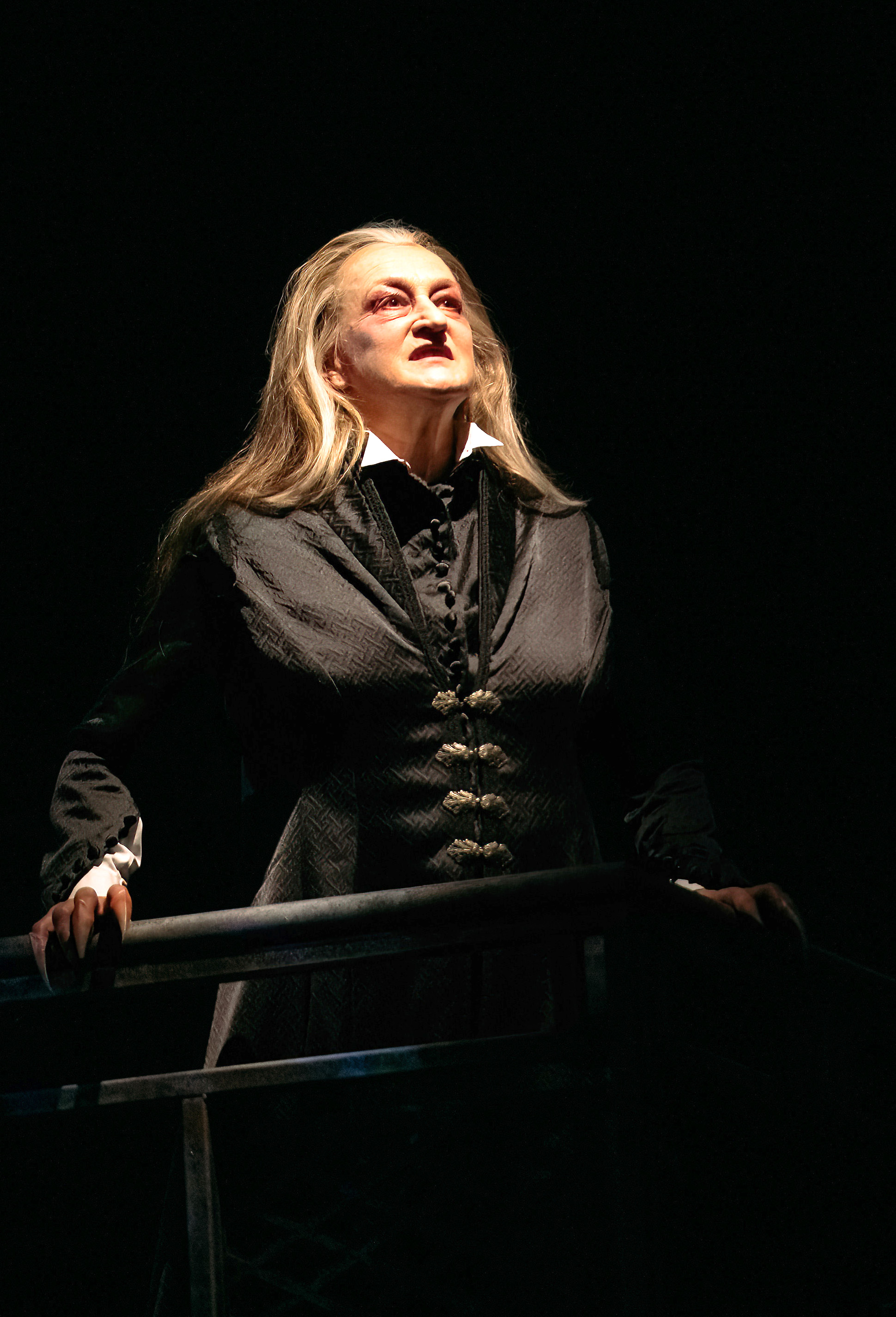
It’s a great idea to recast Dracula as a woman and Liz Kettle clearly relishes the role. She’s a bold presence, at once attractive and repellant, exactly as the Count should be. Here, the blood-sucker is more nuanced than her original incarnation, both supervillain and saviour. As Mina seals her Faustian deal, we recognise what Dracula is offering her, and understand exactly why she makes the choice she does.

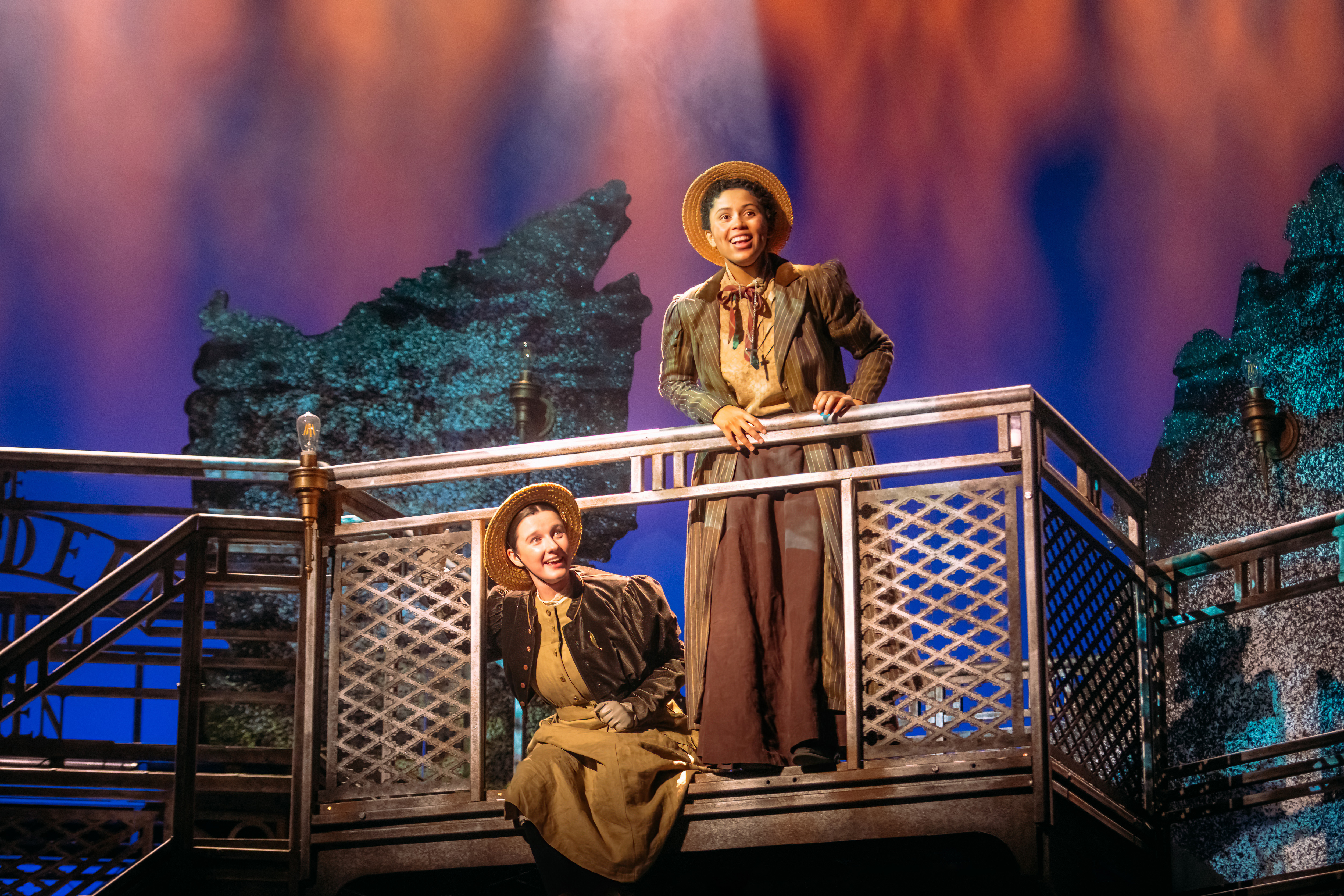
Kenneth MacLeod’s set is both the production’s strength and its weakness. It’s clever and imposing, evoking the chillingly austere asylum as well as the grand gothic castle – all staircases and hidden corners – and I like the use of Lewis den Hertog’s video projections and Aideen Malone’s lights to stain the walls red with blood, turning them into journals, then night skies, then stormy seas. However, the set’s cage-like qualities – the bars and rails imprisoning the women – also create a sense of distance, so that it’s hard to feel close to the characters and to empathise with them. What’s more, it makes the whole play less scary because we’re not immersed in the ghoulish goings-on.

Benji Bower’s music is wonderfully eerie and evocative but the sound drowns out the dialogue at times, which is a shame, as it obscures some of the finer details of the plot. Likewise, the ensemble work is excellent, but comes at the expense of the individual characters, as the inmates of the asylum blend together.

Albeit a little uneven, there’s a lot to like about this NTS and Aberdeen Performing Arts production, in association with Coventry’s Belgrade Theatre. The powerful image of Kettle, striding the ramparts – grey hair flowing, coat tails billowing – is one that will stay with me for a long time.

3.8 stars

Susan Singfield

Adam

15/03/21

BBC iPlayer

Trans men must be one of the most under-represented groups in the UK. I read a lot of news; I watch a lot of films and, when there are no pandemic restrictions, I am an avid theatre goer. But, despite the (anecdotal) fact that I know more trans men than I do women, I very rarely see them referred to; their stories largely seem to go untold.

Adam, then, is important not just because of what it says, but because it exists at all – and on a mainstream platform too. The BBC is under fire at the moment, but we shouldn’t forget what it offers us. If commercial viability is the only factor by which content is judged, marginalised people remain invisible to the masses, their experiences rendered forever ‘fringe.’

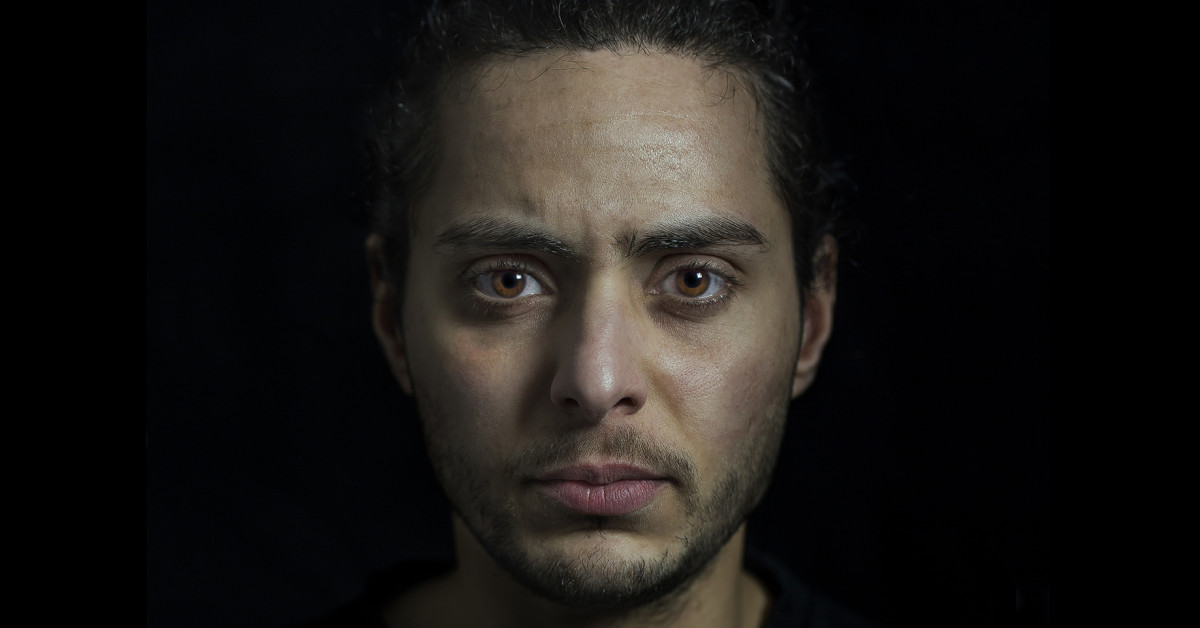
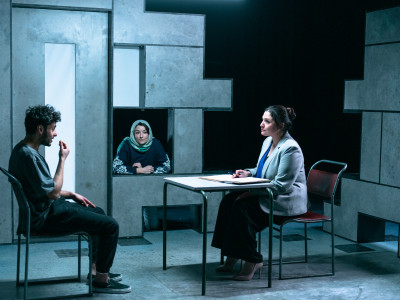
Indeed, Adam premiered at the Edinburgh Fringe in 2017, a National Theatre of Scotland production at the Traverse Theatre, where it was highly acclaimed. This new version, written by Frances Poet and directed by Cora Bissett and Louise Lockwood, again stars Adam Kashmiry as himself, and chronicles his experiences as an Egyptian trans man, alone and frightened in a Glasgow flat, awaiting the results of his asylum application. Adam can’t return to Egypt: revealing his true identity there could result in his death. But he can’t use his gender identity to claim asylum in the UK until he transitions, and he can’t transition until he is granted asylum. Trapped in this double bind, no wonder Adam struggles to cope…

This hour-long film is beautifully constructed. It does always feel more like a play than a movie, but that’s not to its detriment. Yasmin Al-Khudhairi appears as Adam’s female-looking outer self, and offers us an occasional and understated glimpse into how others perceive him. The rest of the supporting cast is strong too, especially Neshla Caplan as a sour-faced immigration officer. But this is Adam Kashmiry’s story, and it is his film too: his performance is compelling, haunting – and heartwarming. Because, although this story is one of unimaginable hardship and pain, it’s also one of triumph over adversity. Here he is: a free man, telling his own tale.

4.4 stars

Susan Singfield

Scenes for Survival

27/08/20

BBC iPlayer/YouTube

Scenes for Survival is a series of short digital artworks created by leading Scottish theatre and screen talent, co-produced by the BBC and the National Theatre of Scotland.

It’s a mixed bag, that’s for sure, a veritable cornucopia of ideas, all inspired by or relating to lockdown. Their variety is their strength; there is a sense of universality, of common suffering. Some of them are frustratingly short: the briefest of glimpses into a situation or psyche, and – inevitably – some are better than others, although they’re all high quality, as they should be, with actors, writers and directors of such calibre.

The obvious standout so far (they’re still being made) is Fatbaws, written by Douglas Maxwell and performed by Peter Mullan. It’s a simple, cheeky little idea – a man being bullied by the birds in his garden – but the writing is exquisite and Mullan’s performance is jaw-droppingly good, a masterclass in character acting. No mean feat when two of the characters are a crow and a pigeon.

I also like Larchview by Rob Drummond, where Mark “Ubiquitous” Bonnar plays a disgraced minister making a public apology for breaking lockdown rules. His progression from phoney contrition to peevish defensiveness is deftly conceived, and there’s redemption too, as he begins to hear the emptiness of his excuses, and a real sense of remorse emerges. It’s cleverly humanising – and Lord knows our politicians need a bit of that.

Alan Cummings stars in Johnny McKnight’s twisty three-parter, Out of the Woods. It’s a shaky hand-cam thriller, depicted as a series of FaceTime calls between a man and his mother and his child. He’s creeping through the woods to his estranged partner’s house; he’s picking up their daughter, but her other dad is not to know…

But honestly, even if these don’t appeal, there are so many to choose from, there’s something here for everyone. Retired Inspector Rebus (Brian Cox – not that one) puts in an appearance, courtesy of Ian Rankin, and there are contributions from many of Scotland’s best-loved creatives, including Val McDermid, Elaine C Smith and Janey Godley.

So, take a peek. See what tickles your fancy. Because strong original content has been a rarity for the past few months, and these are a real treat, as well as a vital documentation of our times.

4.6 stars

Susan Singfield

The Last Queen of Scotland


12/08/17

Underbelly Cowgate, Edinburgh

This powerful production by Stellar Quines Theatre Company, commissioned and supported by the National Theatre of Scotland and Dundee Rep, is written by Jaimini Jethwa, and based on her personal experience. It tells the story of the Ugandan Asians, expelled by Idi Amin in 1972. With just ninety days’ notice, they were robbed of everything they owned and despatched to whoever would give them a home. Jethwa’s family ended up in Dundee. Her story is told by an unnamed young woman (Rehanna MacDonald), a character who has grown up in Scotland but who is still slowly coming to terms with what happened to her family when she was a baby.

MacDonald delivers an incendiary performance, pacing restlessly back and forth across the stage as she recalls her childhood memories, her teenage years running wild on the streets of Dundee and her recent trip back to Uganda to revisit the family home. She’s ably supported by Patricia Panther, who adds some resonant songs to the mix, providing a constant onstage presence, mostly watching in silence as the events unfold. (In truth, I would have liked to have heard a little more from her, but I guess you can’t have everything.)

This is a fascinating slice of history, brilliantly recounted and economically directed by Jemima Levick. Lovers of good theatre shouldn’t miss this one.

4.8 stars

Philip Caveney