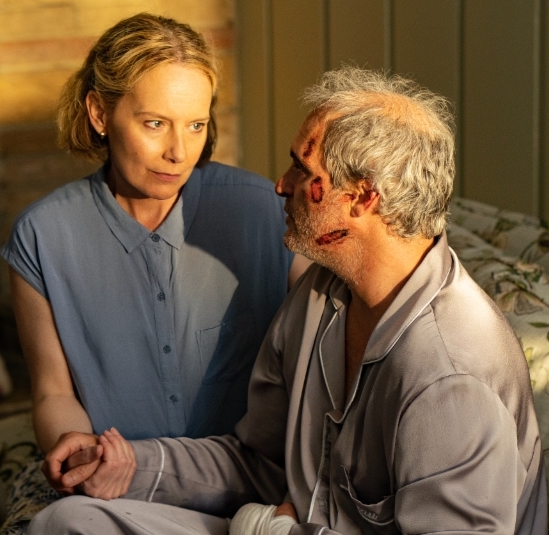
Midsommar

Eddington

18/08/25

Cineworld, Edinburgh

For reasons too boring to go into, tonight’s schedule is clear – and an Unlimited preview of the new Ari Aster film is simply too tempting to ignore. Aster is an interesting writer/director and, though his last film, Beau Is Afraid, was disliked by those who enjoyed Hereditary and Midsommar, I thought there were some very interesting ideas in there.

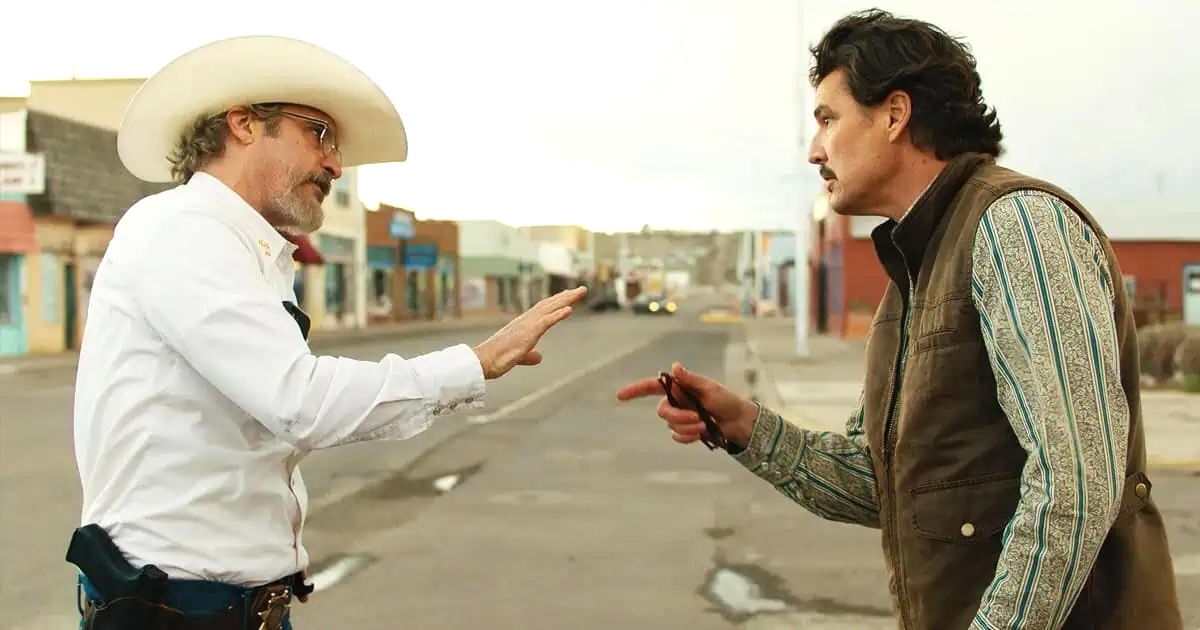
Eddington reunites Aster with Joaquin Phoenix as Sheriff Joe Cross, attempting to keep control of the titular desert town in the midst of the COVID pandemic. (Amazingly, this is perhaps the first film I’ve seen that focuses on the effects of the lockdowns and, for that reason alone, it deserves to be seen.) Cross is asthmatic and does not take well to the constraints of a face mask. Since there have, as yet, been no cases of COVID in Eddington, Cross resists wearing one at all times, even though Mayor Ted Garcia (Pedro Pascal) has made it mandatory that they should be worn whenever people are sharing indoor space.

Garcia is currently running for re-election and there are big posters of him everywhere but Cross has an old grudge against the Mayor, stemming from something that happened to Cross’s wife, Louise (Emma Stone), back when she was a teenager. Louise is now a frail and mentally unstable woman, unable to handle stressful situations, a condition that isn’t helped by the presence of her mother, Dawn (Deidre O’Connell), in the family home. Dawn is addicted to conspiracy theories and openly denounces COVID as fiction.

After a confrontation between Cross and Garcia, Cross suddenly decides that he wants to run for the position of Mayor of Eddington himself, and he enlists a couple of hapless deputies to help with his campaign. But the killing of George Floyd by a police officer during a riot in Minneapolis instigates the local teenagers to launch a Black Lives Matter protest in the town centre. Cross and his two officers head out to confront the kids and, everything begins to spin out of control…

Some films suffer from a lack of original ideas but the problem with Eddington is that it has far too many of them. They virtually fall over each other as they tumble out in all directions and I cannot deny that the result is something of a mess. Furthermore, there are so many characters competing for screen time that great actors like Stone, Pascal and Austin Butler – who appears briefly as deranged cult leader, Vernon Jefferson Peak – are reduced to little more than cameo roles.

That said, I’m never bored by what’s happening onscreen and much of what’s here is darkly funny. It’s clear from early-on that things are destined to become explosive and, once the fuse is lit, I can only sit back and watch appalled as the shit hits the fan.

More than anything else, Eddington is a commentary on American politics and the ways in which online culture – exacerbated by the isolation of the lockdowns – has polarised the opinions of everyday people, resulting in the massive divides that now hold sway in the USA (and closer to home). This may not be a perfect film, but it’s certainly worth a trip to the cinema to watch as the chaos unfolds.

3.8 stars

Philip Caveney
Beau Is Afraid

21/05/23

Cineworld, Edinburgh

Beau would appear to have every reason to be afraid.

When we first encounter Beau (Joaquin Phoenix), he’s living in a run-down flat in the heart of an American city that appears to have been set-dressed by Hieronymus Bosch. There are rotting bodies lying in the street, vicious fights are breaking out on every corner and he can’t even visit the convenience store without being pursued by a naked man who wants to stab him. His ever-smiling therapist (Stephen McKinley) tells him that it’s all the result of anxiety and makes sure he’s topped up with as many unpronounceable drugs as he can swallow – but he must be sure to take them with WATER!

A long-planned and somewhat overdue visit to his domineering mother, Mona (Patti Lupon), is the catalyst for a paranoiac sequence of unforeseen events, that put Beau into the hands of seemingly friendly couple, Grace (Amy Ryan) and Roger (Nathan Lane). But once ensconced in their home in the country, he soon realises that everything there is not as cosy as it seems. Why does the couple’s teenage daughter, Toni (Kylie Rogers), appear to hate him? And what’s the story with Jeeves (Denis Ménochet), the deranged army veteran who lives in a caravan in the garden? Why does he look at Beau in that sullen, threatening manner? The entire film plays like an endlessly protracted nightmare from which its lead character cannot awaken and though Beau still strives to make that all-important visit to his Mom, everything he does is destined to go horribly, catastrophically wrong…

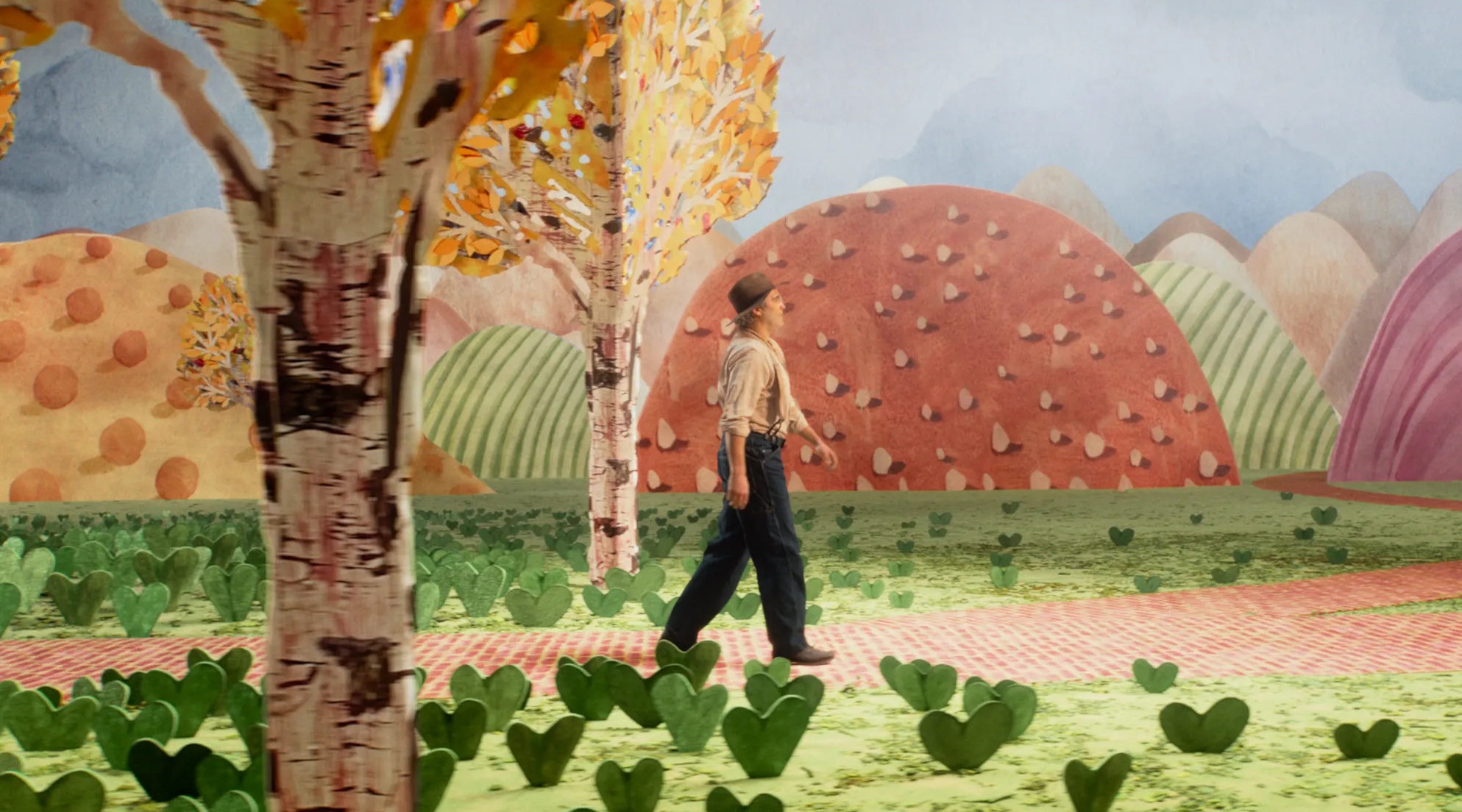
Ari Aster is an interesting director, who excels at amping up an audience’s anxiety levels and, in the process, creating genuinely terrifying scenarios – but I felt his two previous features, Hereditary and Midsommar, both careered out of control in their final stretches and Beau Is Afraid suffers from the same complaint. While there are many memorable scenes here and a degree of invention that puts Aster amongst the forefront of contemporary filmmakers (check out the lengthy sequence where Beau wanders through a series of gorgeous animated landscapes), there’s still the conviction that he’s not quite as in control of his own storytelling as he needs to be.

With a bladder-straining running time of nearly three hours, the film’s conclusion feels needlessly protracted and there are some sections here – particularly a lengthy oedipal confrontation with his mother – that could probably have been edited out to make a tighter, more coherent movie.

Make no mistake, this is still a recommendation, because much of what’s on display here is absolutely dazzling. But you really can have too much of a good thing.

4.2 stars

Philip Caveney

Midsommar

05/07/19

Rising star Ari Aster’s second movie, Midsommar, is a bucolic horror, a direct descendant of The Wicker Man. Starring Florence Pugh as the troubled Dani, it upends as many horror tropes as it embraces, the excesses building gleefully to a riotous, high-pitched finale.

The film opens with Dani worrying about her sister and pestering her reluctant boyfriend, Christian (Jack Reynor), for reassurance. He’s out with his flatmates: Josh (William Jackson Harper), Mark (Will Poulter) and Pelle (Vilhelm Blomgren), frustrated at being disturbed. He wants out of the relationship, he tells his friends, but he’s dithering, loathe to make a decision and act on it.

But then Dani’s parents die suddenly and he can’t ditch her; how can he? She’s clingy and needy, can’t be left alone. Christian feels trapped, compelled to invite her along on the trip he and his pals have planned, to visit the remote commune in Sweden where Pelle grew up, and take part in their midsummer festivities.

The tension here is nicely drawn: Christian caught in the middle between his girlfriend and his friends. Mark does not want Dani there and she is too fragile to let his animosity wash over her. The setup is promising.

From the dingy, gloomy hues of the opening reel, we are suddenly transported to the gloriously colourful and sunlit idyll of Pelle’s home with the Härga people. This is a daytime horror, no murky shadows where monsters lurk: these fiends are hiding in plain sight. Because, of course, not all is as it seems…

This is not a perfect film. There are some clear issues. Christian in particular is underwritten; his behaviour is inconsistent and lacking credible motivation. What we do know (he’s too weak to walk away from a failing relationship; he will deny a friendship, Judas-like) makes him unsympathetic, so it’s hard to care what happens to him. And then there’s Will Poulter. Mark starts off well enough, adding an interesting dynamic to the friendship group. But, once they arrive in Sweden, he seems to slowly fade from the film, a woeful underuse of such a fine actor. Perhaps, though, it’s the unthinking adherence to problematic clichés that causes me the most concern: exoticising the only disabled character; positioning naked elderly women as grotesques; suggesting mental illness is synonymous with violence and murderous intent.

Despite these problems, Midsommar is largely successful, not least for its bravura. Pugh is as compelling as ever, a real physical presence, dominating the screen. And there are some assured flourishes – a sequence where the protagonists’ car seems to quite literally start running upside-down along an inverted highway clearly shows Aster’s directorial chops. The mounting sense of dread is expertly manipulated, with even the silliest scenes adding a genuine disquiet. The fact that it all takes place in this sun-dappled pastoral hideaway only serves to highlight the brutality.

It’s worth noting too that all the horror here is human: we don’t need the supernatural; we are quite evil enough.

4.1 stars

Susan Singfield