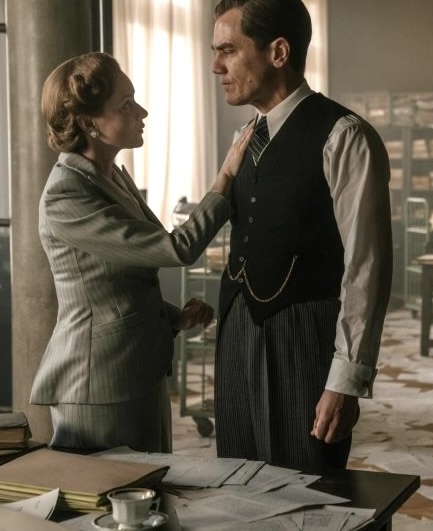
Michael Shannon

Nuremberg

22/11/25

Cineworld, Edinburgh

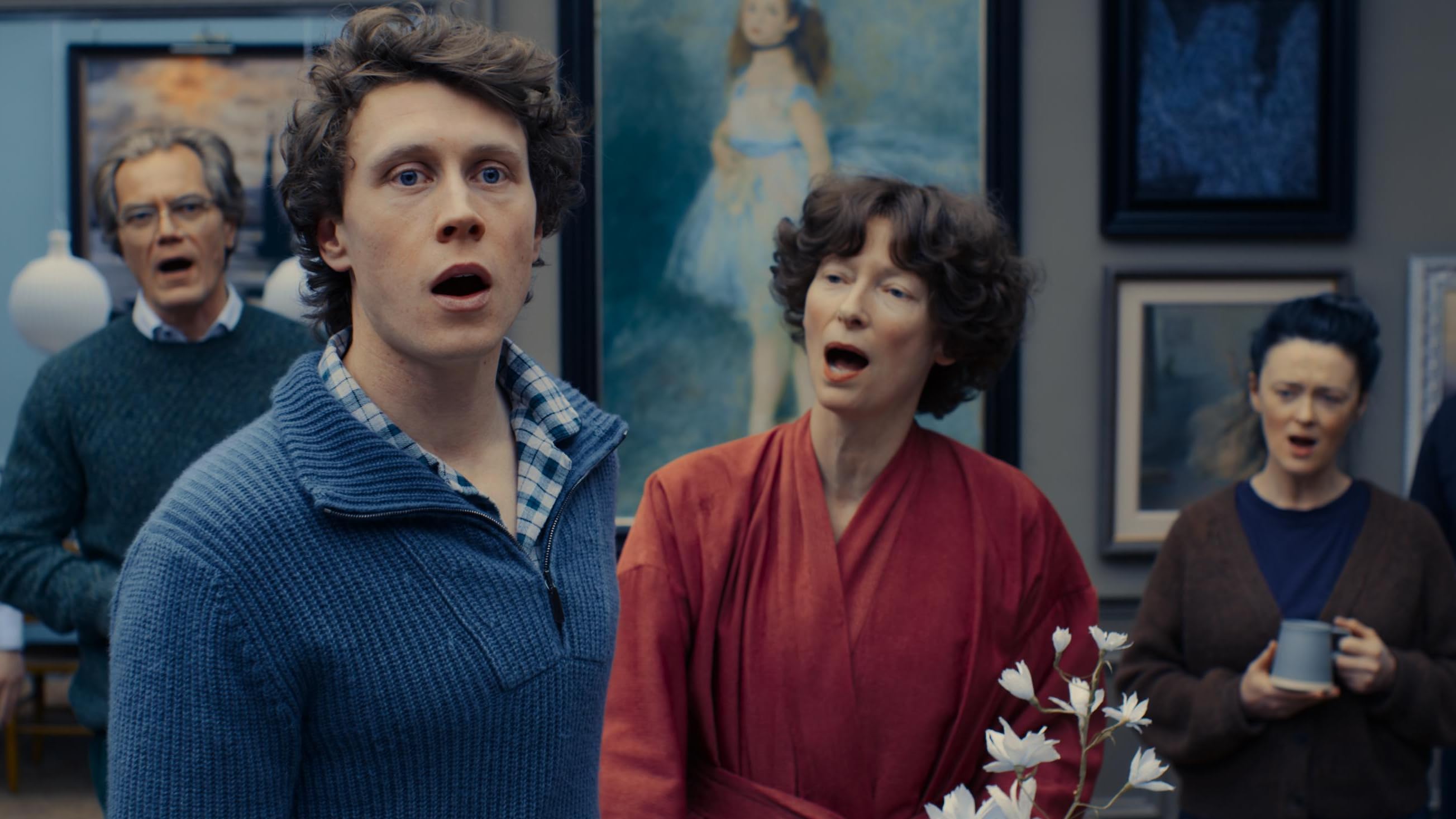
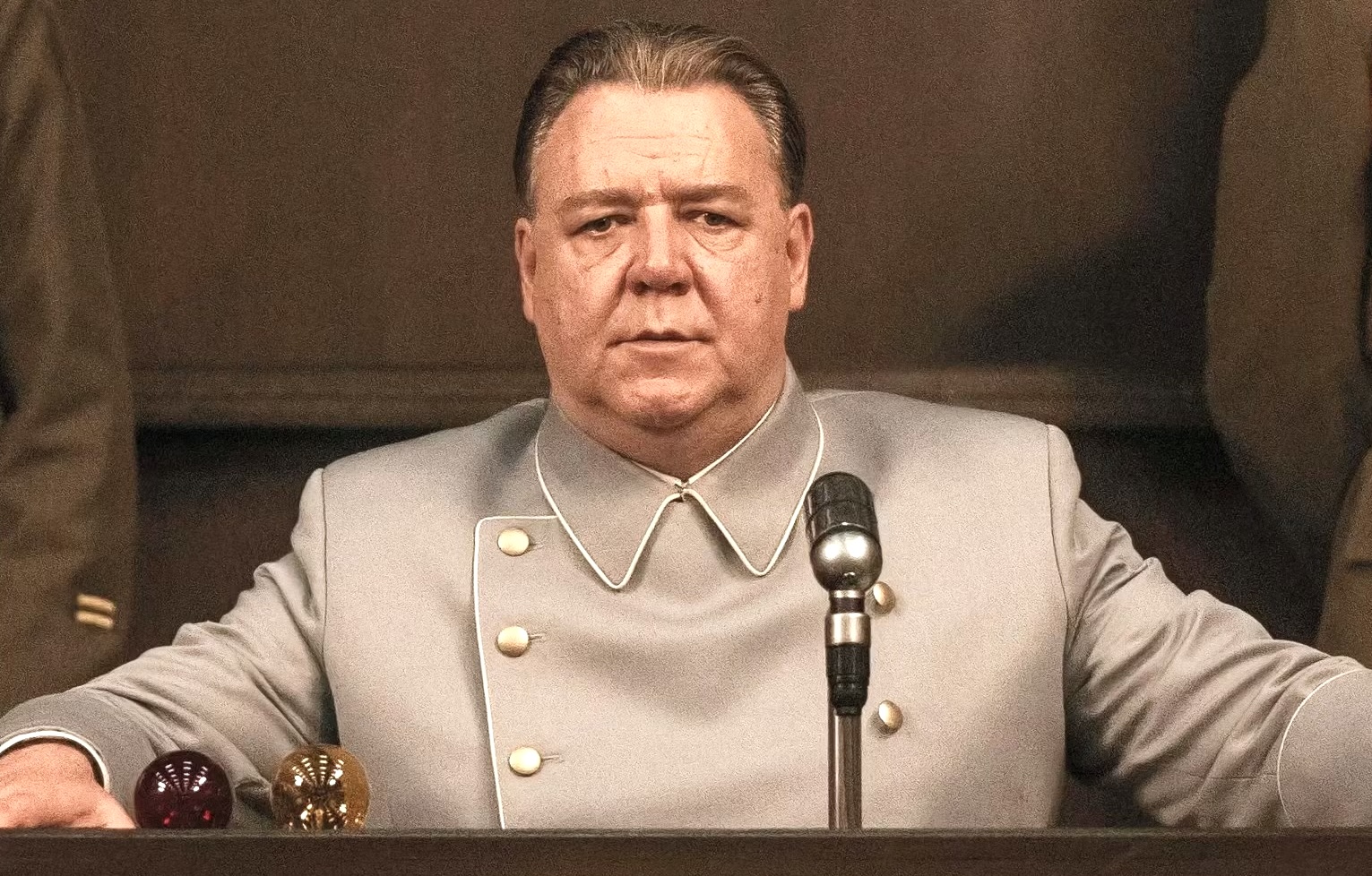
It’s 1945 and, in the midst of the chaos following the end of World War 2, Reichsmarshall Herman Göring (Russell Crowe) surrenders to American troops (although he makes it blatantly clear that he still expects them to carry his suitcases). When the news reaches United States Supreme Court Justice Robert Jackson (Michael Shannon), he begins to draw up plans for an International Military Tribunal, which will charge Göring and other surviving Nazi leaders with war crimes – and what better place to enact this than in the venue where the late Adolf Hitler held his infamous rallies in the 1930s?

Jackson takes a leave of absence from the supreme court and meets up with British prosecutor, Sir David Maxwell Fyfe (Richard E. Grant), who will assist him in trying the case. He also enlists the services of army psychiatrist, Douglas Kelly (Rami Malek), who – assisted by German-English translator, Sergeant Howie Triest (Leo Woodall) – will attempt to get to know Göring and the other captured Nazi leaders before the trial begins. Maybe the old proverb about knowing your enemies will be useful. Besides, Kelly has ideas about writing a best-selling book afterwards.

He begins to make progress with Göring and tells himself that the two of them have established the basis of a genuine friendship – but he will come to learn that Göring has his own agenda…

Nuremberg, written and directed by James Vanderbilt, has some big boots to fill. Many people remember Stanley Kramer’s 1961 movie, Judgement at Nuremberg, long regarded as a cinematic milestone – and I have to admit that, based on his recent screen outings, I have big doubts about Russell Crowe taking on such a difficult role. So I’m both surprised and delighted to say that I’m impressed by the film and by Crowe’s performance which captures Göring’s smirking, confident persona with genuine skill. Shannon is quietly magnificent in his role and Grant is handed a fabulous cameo courtroom scene, which he handles with his usual aplomb. Malek is often accused of over-acting but he does a good job here too, showing how Kelly’s ambitions destroy his own future.

I won’t pretend that this is an easy watch. The latter stages of the trial include the showing of genuine footage from concentration camps and there’s been no attempt to soften or obscure the devastating images they contain. I spend much of the film fighting back tears as I watch the horrors unfold. But the scenes are shown so unflinchingly to make a really important point: that the evils that men do are not carried out through devotion to a cause, nor for the greater good of the world. Such crimes are enacted because of greed, and because there are people who see such brutality as merely a means to an end, a way to further their own unspeakable agendas.

So my advice would be to steel yourselves and go and see Nuremberg. Then think about where the world is now – and how perilously close we are to allowing such horrors to proliferate once again.

4.4 stars

Philip Caveney
The End

30/03/25

The Cameo, Edinburgh

Joshua Oppenheimer might not be the most prolific of directors, but he’s certainly one of the most original. The documentary-maker’s first foray into fiction is a case in point: who else would offer us an unsettling post-apocalyptic… musical?

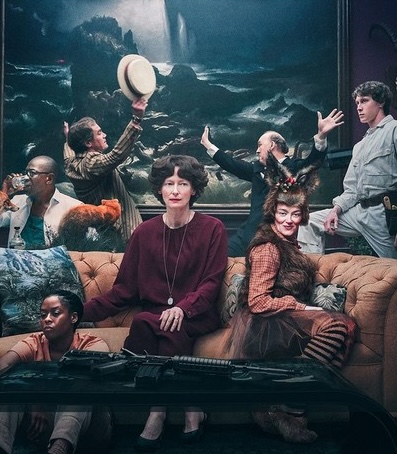
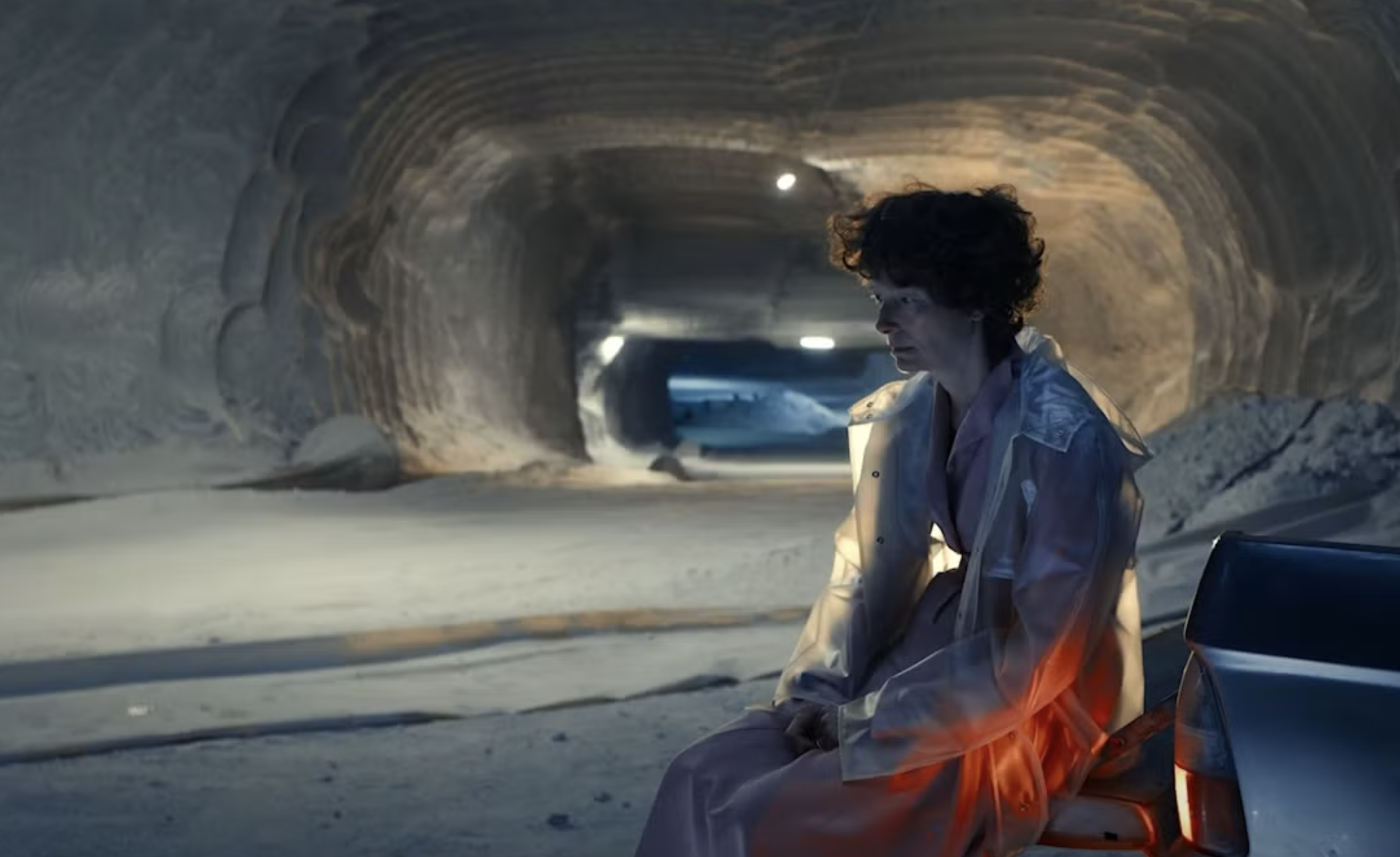
The setting is an oligarch’s nuclear bunker. There’s been some kind of climate disaster, precipitated by the billionaire’s fossil fuel company. Most of humanity is dead, but – decades after the fallout, far below the earth – a chosen few still live in luxury, albeit in the confines of some eerie salt mines.

Father (Michael Shannon) is the oligarch, Mother (Tilda Swinton) his wife and Son (George McKay) their twenty-year-old child, born underground. He has never seen the sky, never met anyone outwith their small circle – and never questioned his parents’ tales about their former lives. Instead, he immerses himself in building an intricate model of all the outside places he’s only ever heard about.

The bunker has three more occupants: Friend (Bronagh Gallagher), Butler (Tim McInnerny) and Doctor (Lennie James). The trio are touted as “part of the family” but it’s pretty clear they’re here to serve, to take care of the cooking, the cleaning and the rich people’s health. Father spends his time working on a self-aggrandising autobiography, resisting Son’s attempts to offer editorial advice, while Mother fusses endlessly over the exact positioning of the priceless artworks on the walls. Life ticks by, one day much like another, an opulence-clad monotony that fulfils none of them.

And then Girl (Moses Ingram) turns up. She’s the first outsider Son has ever met, and he’s smitten. But she’s had to leave her family behind, and her survivor’s guilt opens up new avenues of thought for Son. Why has his family been chosen, out of everyone, to inhabit this haven? And why, when the place is vast, are there so few of them? Once he starts to ask questions, everything changes…

Mikhail Krichman’s cinematography is sumptuous: the scenes in the salt mines are particularly beautiful, but every shot is a work of art, as meticulously framed as the Renoirs and Monets decorating the bunker.

The film is billed as a musical but, despite the lengthy spoken sections, it feels more like an opera, with its formality of tone and portentousness. The music by Marius De Vries and Josh Schmidt amplifies the heightened emotions, but the vocal parts are sensibly kept simple, which suits the non-singers in the cast (such as Swinton). Ingram, Gallagher and McKay are more accomplished, and they are given the most to do.

Despite its bloated running time, The End is a thought-provoking and startlingly unconventional movie, quite unlike anything else on the big screen. It’s not one you’ll find at a multiplex, but it’s definitely worth the price of a ticket at your local indie (or Picturehouse) cinema.

4.3 stars

Susan Singfield

The Bikeriders

27/06/24

Cineworld, Edinburgh

The poster for The Bikeriders might lead a viewer to expect something rather different from what this film actually is: a serious recreation of the misadventures of a motorcycle club, founded in the early 60s and initially memorialised in a 1967 book by photojournalist Danny Lyon.

In Jeff Nichols’ film, we see Danny (Mike Faist) conducting a series of interviews with Kathy (Jodie Comer). She’s the long-term girlfriend of Benny (Austin Butler), a member of `The Vandals’, a Chicago-based group of bike enthusiasts, created and led by Johnny (Tom Hardy). In its early days, the group has a rigid code of honour that none of its members will ever ignore. Indeed, when we first encounter Benny, he’s about to be badly beaten up by a couple of rednecks when he refuses to remove his ‘colours’ in a local bar.

But as the years move on and the Vandals’ numbers inevitably begin to swell, that original code becomes increasingly muddied by the raft of newcomers, each with their own agenda. They include The Kid (Toby Wallace), a tough young wannabe, who has set his sights on joining up and who isn’t about to let anything stand in his path.

While The Bikeriders is light on plot, it’s loaded with characterisation. Comer is extraordinary as Kathy, who chronicles the group’s history in an eerily impressive midwestern accent; and Hardy too is eminently watchable as their leader, channeling early Marlon Brando (at one point we even see Johnny watching The Wild One and virtually taking notes). He’s somewhat mystified to discover that the Vandals are increasingly like a runaway train that, once kicked into life, proves impossible to stop. As Benny, Butler has very little in the way of dialogue, but his chain-smoking, smouldering presence makes it easy to understand why Kathy is so obsessed with him.

The other members of the gang have their own opportunities to shine. Nichols’ regular muse, Michael Shannon, is effective as the dim-witted Zipco, a man who has been repeatedly passed over by society since childhood and who has found his spiritual home amongst this gang of misfits – and Emery Cohen is also effective as Cockroach, who is destined to ride a motorcycle in the future for an entirely different reason. The 60s and 70s settings are convincingly evoked and fans of vintage motorcycles will doubtless be drooling at the sight of scores of bikes thundering in formation along the highways. But the tone of the film is essentially an elegy, a lament for the many ways in which an original idea can be twisted and debased until its original aims have all but vanished.

This won’t be for everyone. There’s no denying that it glamourises thuggery and, with a running time of nearly two hours, it could perhaps have benefitted from a tighter edit, especially around its flabby midsection. Nichols has spent the best part of twenty years putting the film together and it feels very much like a labour of love. Those looking for thrills and action might prefer to look elsewhere. But if it’s classy performances you’re after, you’ve definitely chosen the right vehicle.

3. 8 stars

Philip Caveney

The Flash

14/06/23

Cineworld, Edinburgh

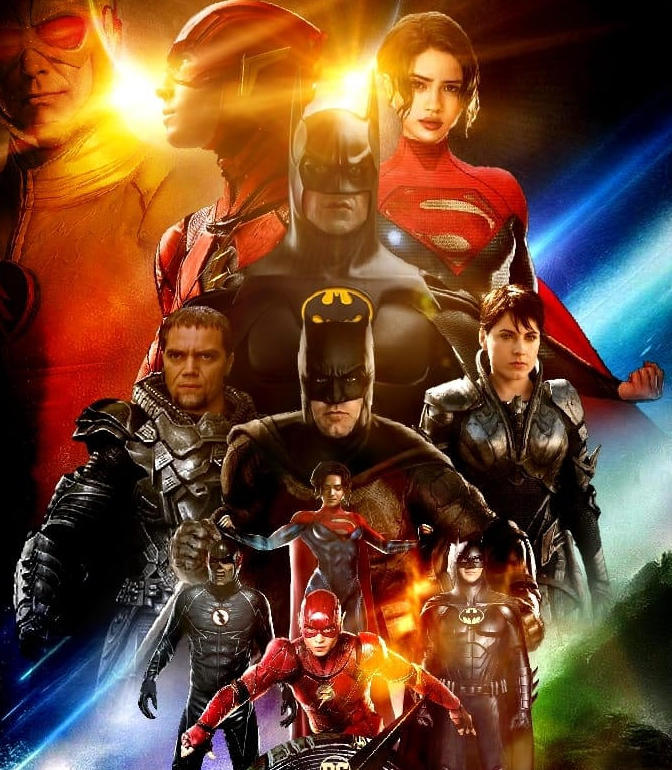
If Marvel Studios are having a thin time of things lately, spare a thought for DC, who have long struggled to establish a coherent onscreen presence for their cohort of superheroes and seem to feel obliged to put Batman into just about every film they produce. Flash is no exception to this rule. As for its titular hero, the producers must have been tearing their hair out when Ezra Miller’s off-screen controversy threatened to blow the whole project out of the water before it even got off the starting blocks. But here it finally is and, largely by virtue of not taking itself too seriously, it’s more entertaining than most of the recent comic book-inspired movies I’ve recently witnessed.

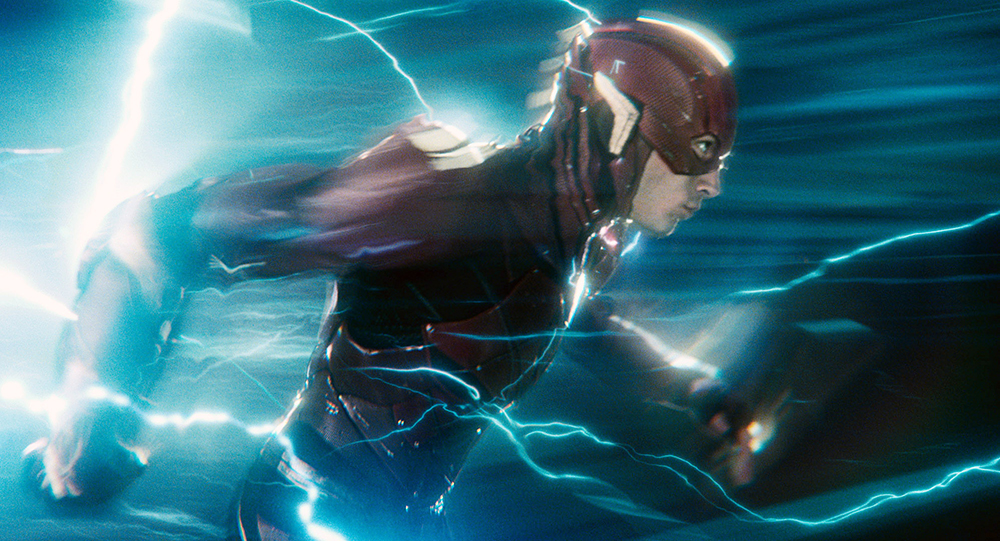
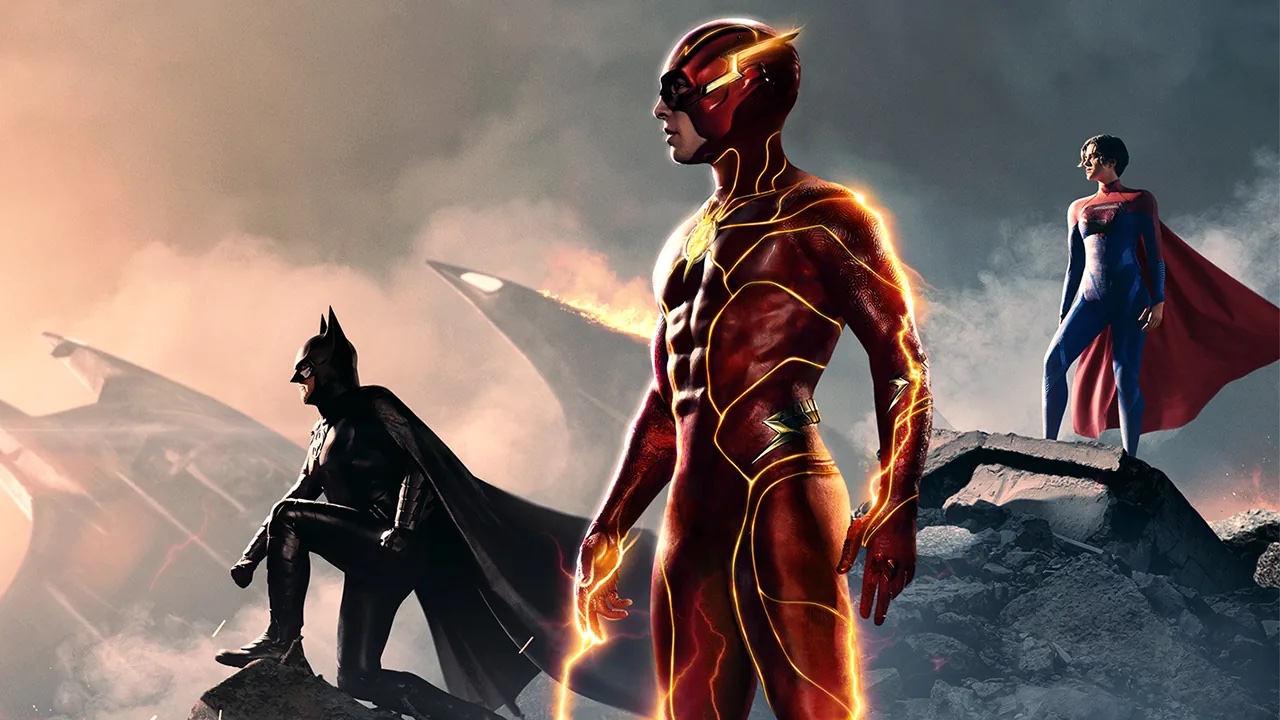
Barry Allen/The Flash (Miller) is managing to strut his stuff around the city, but is mostly playing second fiddle to everybody’s favourite hero, Batman (Ben Affleck). An opening sequence where The Flash saves a series of babies falling from a collapsing building sets the stall out well. But like most superheroes, Barry is haunted by something dark in his past – in his case, the murder of his mother, Nora (Maribel Verdú), a crime for which Barry’s father is currently serving time in prison, though Barry is convinced of his innocence. When Barry discovers that, by running at a particular speed, he can time travel, he hits on the idea of going into the past and changing one small detail, in order to save his mother’s life.

Before you can mutter ‘space time continuum’ the deed is done and suddenly everything is weirdly different. Barry meets his younger, goofier self, reconnects with an entirely different Batman (played once again by Michael Keaton) and learns that Eric Stoltz is now the lead actor in Back To the Future, a clever running gag that’s used to great effect. More worryingly, Barry has now lost his powers and needs to rekindle them if he is ever going to get back to his own time.

And he really needs to because, thanks to Barry’s time-tinkering, General Zod (Michael Shannon) is back, intent on destroying the entire planet…

Look, set down like that, it does sound like utter piffle, but Flash manages to play it all with real panache, thanks to Andy Muschietti’s assured direction and a witty script by Christina Hodson and Joby Harold. It’s only in the final third, that – predictably – the film begins to sag under the weight of its own hubris. The usual apocalyptic punch-up ensues and I can’t help reflecting that, where Across the Spider-Verse managed to juggle literally hundreds of manifestations of its lead character without ever becoming muddled, Flash‘s attempt to do something similar with the character of Superman just becomes incomprehensible. Supergirl (Sasha Calle) is also a player in this film but, apart from supplying a kind of get-out clause when everything is beyond salvation, she remains disappointingly 2D.

Still, there’s a satisfying conclusion to it all and a likeable final joke to send me on my way with a smile on my face. And if you ever wondered what Nicholas Cage’s Superman would have looked like, had it ever got off the ground, here’s your chance to find out.

3.8 stars

Philip Caveney

Knives Out

25/11/19

Rian Johnson’s Knives Out is an Agatha Christie-inspired whodunnit for our times. Although reliant on the tropes and clichés of the murder-mystery, the delivery makes this a thoroughly modern thriller.

The cast is stellar. Christopher Plummer is Harlem Thrombey: a successful eighty-five-year-old novelist with a penchant for games and a vast fortune to bequeath. The morning after his birthday party, he is found dead, his throat cut in an apparent suicide. But just as the police (LaKeith Stanfield and Noah Began) are ready to finalise the cause of death, enigmatic private detective Benoit Blanc (Daniel Craig) turns up, hired by an anonymous client to investigate further.

Thrombey’s children and grandchildren are all present, and it turns out each of them has a motive for his murder – although I won’t reveal the details here. His daughter, Linda (Jamie Lee Curtis), is a forbidding businesswoman, visiting with her husband, Richard (Don Johnson), and their feckless son, Ransom (Chris Evans). Thrombey’s son, Walt (Michael Shannon), is a gentle soul, but a hopeless case, incapable of making it on his own. He has a wife too (Riki Lindome), and an alt-right-leaning teenager (Jaeden Martell), who spends his time perusing questionable websites on his phone. And finally, there’s Thrombey’s yoga-and-crystal-loving daughter-in-law, Joni (Toni Collette), and her student daughter, Meg (Katherine Langford).

As you might expect of the genre, the setting is a remote country house, and so – of course – there are staff too: housekeeper Fran (Edi Patterson) and nurse Marta (Ana de Armas), both of whom prove central to the plot.

There’s an appealing playfulness here, with zingy dialogue and witty repartee, and the performances are as sprightly and assured as you’d expect from these marvellous actors. But the plot is a little predictable: there are no real surprises here, mainly because the various ‘twists’ are too heavily signalled. The middle third sags under the weight of a lengthy red herring, where the focus drifts from the larger-than-life characters and their shenanigans, following instead a more muted, less engaging thread.

Nonetheless, this is a lively and eminently watchable film – just not the masterpiece I hoped that it would be.

3.8 stars

Susan Singfield


The Current War

26/07/19

This biopic concentrates on the rivalry between two famous inventors and their race to be the first to give America the ‘miracle’ of electric light. The film starts in the year 1800, with Thomas Edison (Benedict Cumberbatch) on the verge of a breakthrough with his direct current system. But then up pops George Westinghouse (Michael Shannon), already a rich man from the gas industry, who proposes an alternating current version, which, he insists, will provide a cheaper and more powerful solution to the problem.

In the ensuing struggle to win the contract to light up America, fair play falls by the wayside; meanwhile, a Croatian genius by the name of Nikola Tesla (Nicholas Hoult) struggles to make waves with a series of inventions that have the potential to eclipse the achievements of both Edison and Westinghouse combined.

It’s a fascinating but incredibly complex story, and Michael Mitnick’s script intially feels scattershot as it leaps frantically from location to location in an attempt to nail down all its disparate elements. But it’s worth sticking with, because – after a rather shaky start – the film hits its stride and becomes genuinely compelling, with director Alfonso Gomez-Rejon doing a creditable job of capturing the period. The film highlights a fascinating conundrum when Edison is approached to use his technology to create a ‘humane’ way of executing criminals.

There’s a starry cast here with the likes of Tom Holland, Katherine Waterston and Matthew Macfadyen relegated to supporting roles.

It’s clear where the filmmakers’ loyalities lie. Edison is exposed as a hypocrite, a man obssessed with winning at all costs, at first opposed to using his technology as a weapon, next electrocuting animals willy nilly in order to cast his rival in a bad light. Westinghouse, on the other hand, is portrayed as a much more reasonable type, a man willing to step aside from the glory in order to achieve the greater good. It’s also clear (correctly in my opinion) that Tesla is held up here as the true genius, a man who constantly found his ideas appropriated by his rich financiers and who died destitute, without ever achieving his extraordinary potential.

The Current War isn’t exactly a perfect film, but it does illuminate the difficult birth of something that we now all take for granted, an invention that genuinely transformed the world as we know it. It also depicts the depths that people will sink to in order to see their names go down in history.

4 stars

Philip Caveney

The Shape of Water

30/01/18

The release of a Guillermo del Toro movie is generally a cause for some excitement, but The Shape of Water arrives in the UK already garlanded with 13 Oscar nominations – this year’s most nominated film. It’s an unusual state of affairs because fantasy movies rarely get much of a look in at the Academy Awards, apart from the occasional grudging nod for special effects and cinematography. It doesn’t take long, however, to appreciate how this film has managed to garner so much acclaim. It’s a gorgeous, multi-faceted allegory that isn’t adverse to taking risks – The Creature From the Black Lagoon dancing in a Busby Berkeley routine? Hey, no problem!

To my mind, there are actually two del Toros out there – the one that creates eerie fairytale fantasies like Pan’s Labyrinth and The Devil’s Backbone, and the one that offers us the likes of Pacific Rim, where giant robots punch colossal lizards repeatedly in the head until (eventually) they die. Take a wild guess as to which del Toro I personally favour! I’m glad to report that The Shape of Water falls squarely into the former category.

We’re in Baltimore in 1962 at the height of the Cold War. Elisa (Sally Hawkins), a reclusive mute woman, works as a cleaner in a high security government laboratory, alongside her supportive friend, Zelda (Octavia Spencer). When a mysterious new life form – simply referred to as ‘The Asset’, arrives for safekeeping – it is accompanied by its keeper, Richard Strickland (Michael Shannon, excelling in what must be his most repellant role to date). It turns out that the lab’s new addition is some kind of amphibious man, captured in the jungles of South America, where he is worshipped as a god – and it soon becomes clear that Strickland’s job is less to find out about this new acquisition than to make sure the Russians never do. Resident scientist, Dr Hoffstetler (Michael Stuhlbarg), is interested in studying the creature, but the American military seems determined to view it as a suitable candidate for vivisection. Meanwhile, Elisa is beginning to establish a strange and deepening friendship with it…

The outline of the story itself may sound vaguely ridiculous, but it simply cannot prepare you for how utterly compelling del Toro’s film is. It’s a multi-layered affair, beautifully shot and cleverly scripted. Elisa is an outcast, watching from the edges of society, and her best friend Giles (Richard Jenkins), a graphic designer, is in a similar position, exiled from his regular place of work because he is secretly gay. The claustrophobic atmosphere of the early sixties is brilliantly conveyed. All-American diners seem friendly as they sell their day-glo green pies, but won’t allow black people to eat alongside their white customers. The old-fashioned cinema above which Elisa and Giles live plays to nearly empty houses every night because of the growing power of television, and yet every TV screen we see displays a series of classic movie comedies and sumptuous musicals. The Asset too is an outcast, a creature that doesn’t belong in this blinkered, paranoid world. Little wonder then, that both Elisa and Giles fall under his spell.

I cannot recommend this film highly enough. Every frame of it bursts with creativity, the performances are exemplary (special mentions should go to Hawkins – who manages to convey so much without the luxury of words, and to del Toro regular, Doug Jones – who makes us care deeply about his scaly bug-eyed character and about what will ultimately happen to him).

I appreciate that not everybody is going to love this as much as I do. It requires an almost total suspension of disbelief; this is in no way a realistic film. It’s a fantasy that deals in archetypes, a contemporary reworking of a tale that could have bled from the pens of the Brothers Grimm, juxtaposing scenes of beguiling sweetness with ones of graphic violence. I watch it spellbound. I had thought that del Toro couldn’t possibly improve on Pan’s Labyrinth, but you know what? I rather think he has.

5 stars

Philip Caveney


Loving

03/02/17

Writer/director Jeff Nichols seems to favour outlaws. Take Shelter, Mud and Midnight Special all feature protagonists who, for a variety of reasons, find themselves on the wrong side of the law. Loving is, however, the first time he’s based a film on a true story.

Virginia, 1958. Richard Loving (Joel Edgerton) romances his sweetheart Mildred (Ruth Negga), gets her pregnant and then arranges a hasty marriage. So far, so everyday; but it’s not as straightforward as you might suppose. Richard is white and Mildred, African-American. Though they have travelled to the more enlightened Washington DC to get hitched, such a marriage is still deemed illegal in the state of Virginia and almost before they know it, they have been dragged from their bed in the dead of night and slung into jail. The upshot is that they are faced with a difficult choice. They can get the marriage annulled and forget that anything ever happened; or they can leave Virginia for a minimum of 25 years, risking long jail sentences if they are ever reckless enough to return. But the Lovings are made of stern stuff and they vow to live together in Virginia whatever circumstance may throw at them…

It’s staggering to think that only fifty years ago such laws could even have existed and the Loving’s case was eventually the basis of a major change to the American constitution, so this is an important subject. Nichols relates the story in his signature style, taking his own sweet time, steering clear of sensationalism and coaxing superb performances from his lead actors. Neggar has already been rewarded for her efforts with a well-deserved Oscar nomination, but in many ways it’s Edgerton who has the trickier role, portraying a gruff, monosyllabic man who bears the many crosses he is made to carry with exceptional stoicism.

The film’s gentle pace is clearly something that divides people. We’ve rarely witnessed so many walkouts from a movie as We saw on the Friday evening we viewed Loving. But I found the film powerful and eloquent, an excellent addition to Nichols’ growing canon of work. Nice too to see a cameo from the director’s favourite actor, Michael Shannon, as the photographer who takes pictures of the couple for an article in Life Magazine.

Some people change the world in the glare of publicity. Others do it quietly, avoiding the limelight, but their contributions are nonetheless every bit as valuable. Loving is an accomplished film that’s well worth your attention.

4.4 stars

Philip Caveney


Nocturnal Animals

nocturnal-animals-trailer

05/11/16

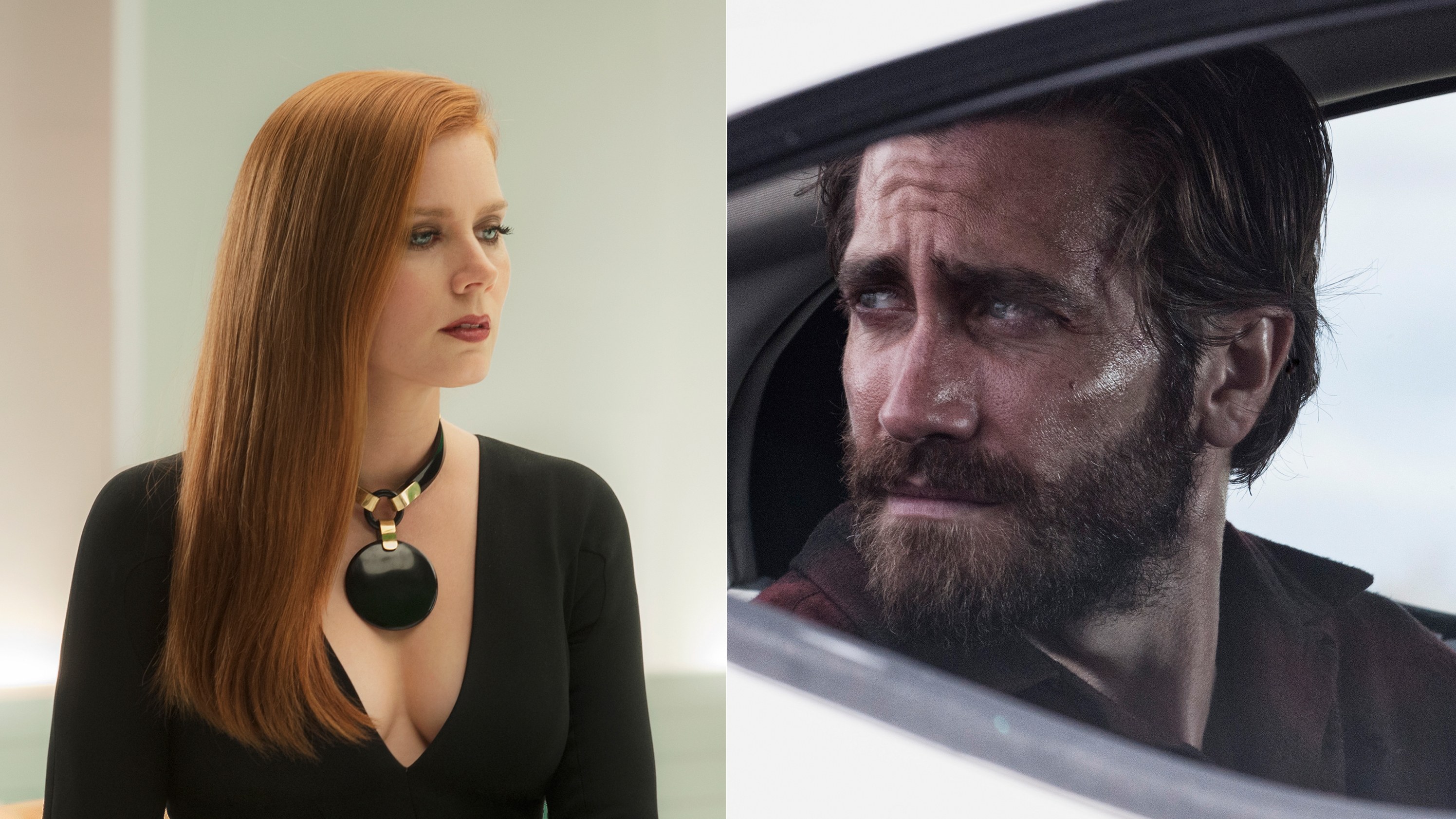
Nocturnal Animals is a spiteful little film, full of bile and petty score-settling. Beautifully styled and well-acted throughout – with a stellar cast of cameos supporting the leads – this film feels like a tragic waste of talent, a plethora of artistic skill funnelled into a project with a vacuum for a heart. The worldview here is warped. The whole thing – not just the inner story of Sheffield’s novel – feels like a sterile revenge plot, the work of an embittered soul with sadistic tendencies.

Amy Adams plays Susan Morrow, a successful but miserable art dealer, trapped in an unhappy marriage where her riches mean nothing; her life is a hollow shell. When she was young, in grad school, she was briefly married to a different man, Edward Sheffield (Jake Gyllenhaal), and he was the true love of her life. But Susan was too greedy, too bourgeois, too much like her mother, to appreciate the creative sensitivity of a man like Edward: she wanted the trappings of a middle-class life, and didn’t support him in his artistic endeavours.

Nineteen years later, a manuscript arrives on her desk. It’s a proof copy of Edward’s novel, soon to be published. It’s dedicated to her, and it tells the tale of a couple just like them, brought to life for us on screen as Susan reads compulsively. The protagonist, Laura (Isla Fisher, styled to look exactly like Adams), is raped and murdered, along with her daughter. Clearly, Edward is still a long way from getting over Susan’s rejection of him.

It’s an ugly, mean-spirited story from start to finish, with a deep misogyny at its core. From the freak-show fat women of the opening credits to the gratuitous nastiness of Laura’s death, it’s lacking any sense of proportion – or of charm. Nor does it work as a study of the dark side of humanity; it’s all too petty and too personal for that. And it’s boring a lot of the time too, all ponderous shots of people in baths, and endless scenes where Adams gasps, startled by what she’s read, adjusts her glasses, then picks up the book again. The novel’s plot is pretty turgid too: after the initial excitement of the murders, it’s a rather dull procedural, where we know exactly whodunnit, and so do the police.

Seriously, this is a disappointing film. It looks fantastic and the cast is a dream-team by anyone’s standards (Adams and Gyllenhaal are joined by Michael Shannon, Laura Linney, Michael Sheen and Andrea Riseborough, among others) but, ultimately, this just leaves a bad taste in the mouth.

2.5 stars

Susan Singfield

Midnight Special

Unknown

10/03/16

Writer/director Jeff Nichols has given us some fine movies over the last few years but one thing he’s not so good at is coming up with a decent title. Take Shelter? Not one of the best. Mud? A terrible title for an excellent film. And now, here’s Midnight Special, a title that for the life of me I can’t see the relevance of when applied to this absorbing story – but I suppose this is a minor niggle. The film this most reminds me of is ET… though I hasten to add, a much more sophisticated, grown up and gritty version of Speilberg’s sci fi tale.

Alton Meyer (Jaeden Lieberher) is a very special boy. It has something to do with his eyes. He must be kept in darkness as much as possible and has to wear special goggles whenever he steps into the sunlight. When we first meet him, he’s been abducted by his biological father, Roy (Michael Shannon) and his friend,  cop Lucas (Joel Egerton) from the religious community that has looked after him for the past two years. Because of the boy’s habit of ‘speaking in tongues,’ the cult’s leader,  Calvin (Sam Shepard) believes that Alton may be some kind of messiah and he and his followers will do just about anything to get him back, even if it means picking up weapons to enforce their will.

Sam and Lucas hook up with Alton’s birth mother, Sarah (Kirsten Dunst) and the four of them set off on a perilous journey to bring Alton to the special destination where he repeatedly tells them he needs to be – but how can they get there when the combined forces of the FBI, the US military and a bunch of religious fruitcakes are intent on intercepting them?

Midnight Special is expertly told, releasing nuggets of information bit-by-bit, just enough to keep you hooked and to make you want to know more. When the solution is finally revealed it is, quite frankly mind-blowing and at this point, will divide audiences into ‘hell yes!’ or ‘no way!’ categories. I, happily, belong to the former. There are compelling performances from all concerned (Adam Driver is particularly good as a baffled boffin trying to work out what’s happening) and the pace never flags.

This is a riveting story about the power of belief and the lengths to which people will go to honour it. It also confirms Nichols as a film maker at the height of his powers.

It will be interesting to see what he does next.

4.5 stars

Philip Caveney