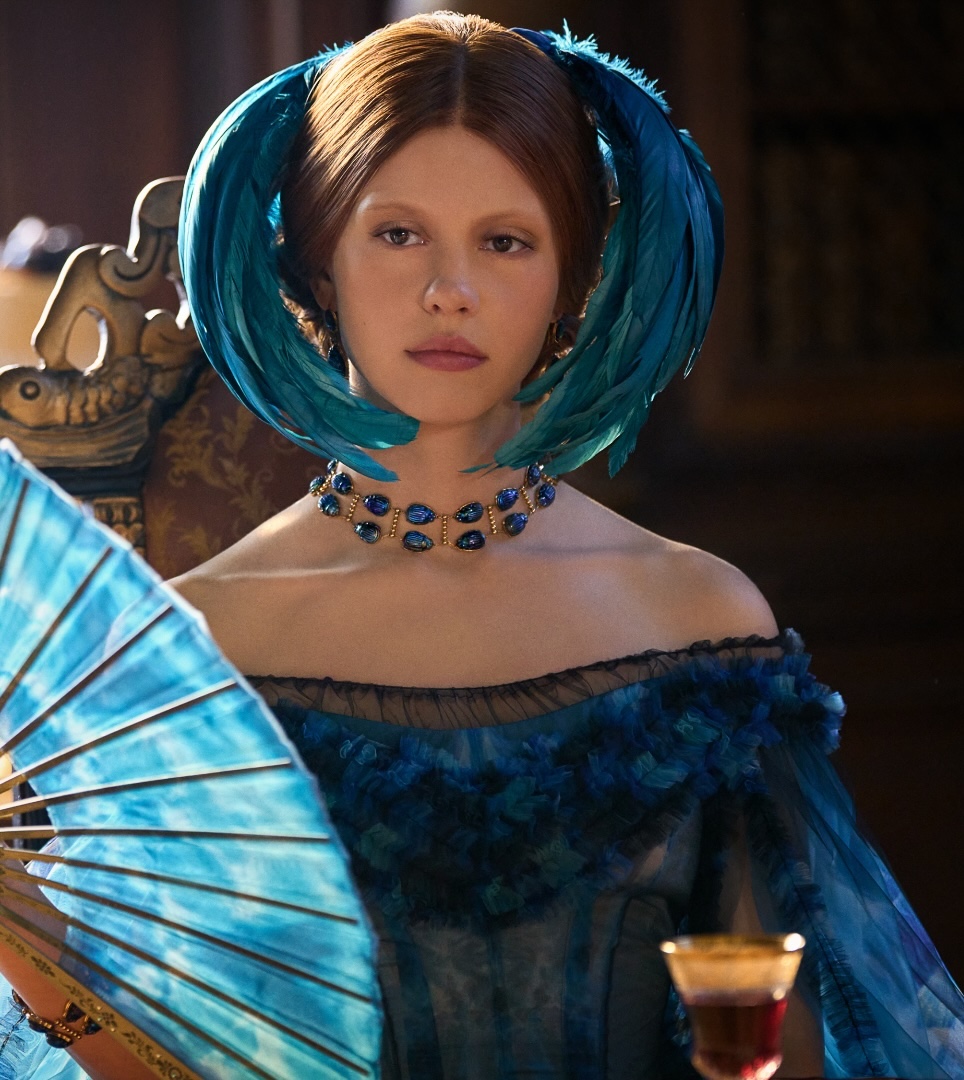
Mia Goth

Frankenstein

25/10/25

Filmhouse, Edinburgh

Guillermo del Toro was always going to make his version of Frankenstein one day – the seeds were sown in his 1992 Spanish-language film, Cronos, the first of his features that I ever saw in the cinema and the one that convinced me he had a big future ahead of him. 

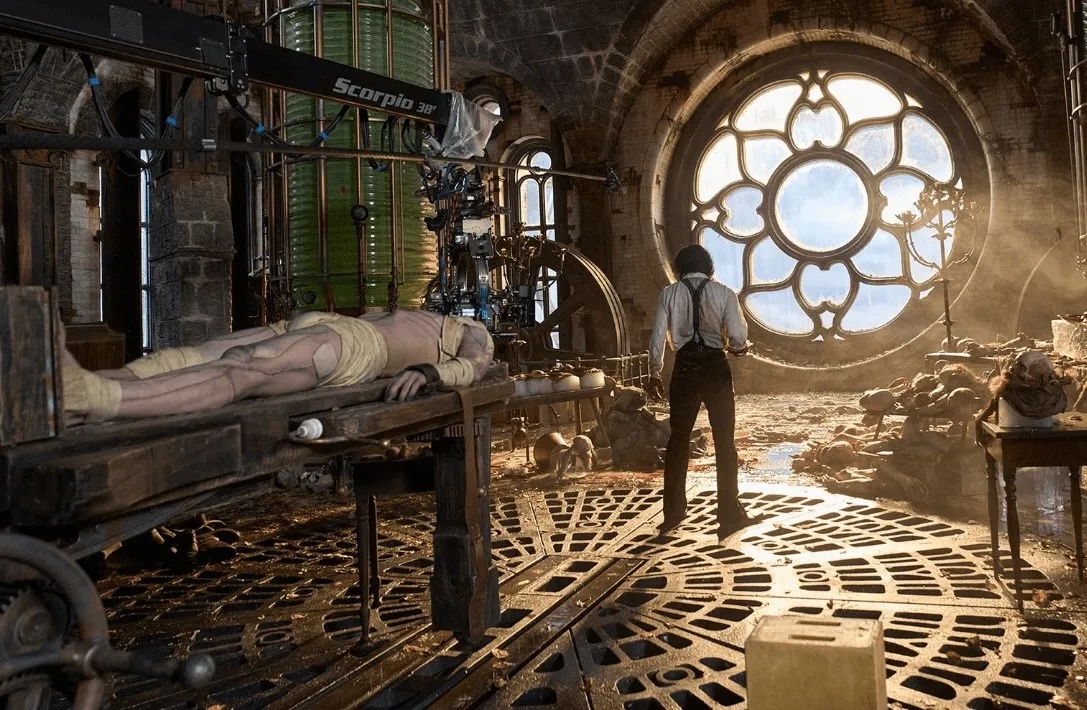
Now he’s finally got around to doing the job properly, courtesy of Netflix, who stumped up the $120m budget. For a while it looked as though there wouldn’t be any chance of seeing it in an actual cinema before the transfer to streaming. This would have been a crime because del Toro’s adaptation of the tale looks absolutely sumptuous on the biggest screen at Filmhouse and I’m delighted to see that the auditorium is  pretty busy for a Saturday afternoon showing.

Frankenstein is, of course, one of the most filmed books in history, but it’s probably fair to say that only a handful of the 423 movie adaptations (not to mention the 287 TV episodes – yes, I did Google it) have come anywhere close to capturing the essence of Mary Shelley’s seminal horror story. While del Toro does throw in a few original twists of his own (of course he does!), he sticks fairly close to Shelley’s narrative – indeed, he’s even credited her as his co-screenwriter. The tale is told in three distinct parts.

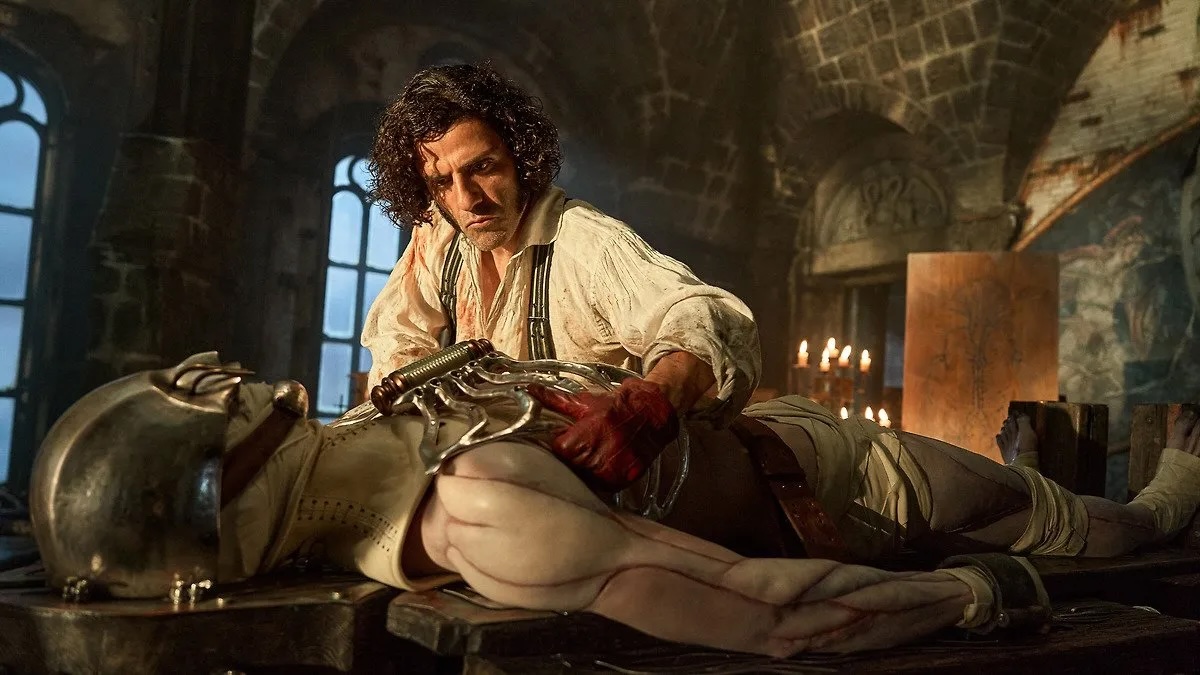
In the opening Prelude, we join Captain Andersen (Lars Mikkelsen) and the crew of his sailing ship, who are stranded on the ice in remote Arctic waters. There’s a sudden explosion nearby, from which the crew rescue Victor Frankenstein (Oscar Isaac), who has been pushed almost to the point of death by a monstrous assailant. After witnessing The Creature (Jacob Elordi) plunging into icy waters, they carry Victor onto the ship – but, once revived, he assures Andersen that his pursuer will not actually be dead and will surely come for him…

Before that happens, he needs to tell his story.

Victor then narrates The Creator’s Tale and we flashback back to his childhood where, under the rule of his despotic father, Leopold (Charles Dance), Young Victor (Christian Convery) first becomes obsessed with life and death. Keen-sighted viewers may spot something familiar about Victor’s barely-glimpsed mother, Claire. Something distinctly Oedipal is happening here.

We then cut to some years later. A grown-up Victor is causing controversy at medical school in Edinburgh with the grisly experiments he’s conducting on cadavers (and I get to revisit some of the sets that were evident around my home city in September 2024). We are introduced to Victor’s younger brother, William (Felix Kammerer), and his fiancée, Elizabeth (Mia Goth). We also meet Harlander (Christophe Waltz), a character created for the film, a wealthy man who, for clandestine reasons, is perfectly happy to finance Victor’s attempts to take his experiments all the way.

But Victor’s account is later contrasted with The Creature’s Tale, where we learn of the years when the monster and his creator were apart: how The Creature lived in a barn alongside a kindly blind man (David Bradley); how he mastered the art of speaking (with a distinctly Yorkshire accent); and how he slowly began to realise how shabbily he’d been treated…

It’s not just because I’m a devout Guillermo del Toro fan that I think this film is a million times better than every other Frankenstein-generated movie I’ve watched down the decades. Isaac is a revelation in the title role, nailing both the character’s sense of privilege and his fatal short-sightedness. Elordi, meanwhile, offers a fresh take on the Creature that really brings out his innate vulnerability and his desperate need to relate to others, something that’s been attempted before with much less success. 

The film is packed with sumptuous locations and thrilling action set-pieces, that have it hurtling through its lengthy running time. Cinematographer Dan Lausten captures every scene with an almost luminous intensity, Kate Hawley’s costume designs are exquisite, and there’s a beautiful score courtesy of Alexander Desplat. If I have a minor niggle it’s that the CGI-generated wolves in one long sequence aren’t quite as convincing as they need to be – and perhaps both Mia Goth and Felix Kammerer might have been given a little more to do?

But these are nitpicks. As ever in these situations, I’m urging people not to wait for this to drop onto streaming, because this level of filmmaking deserves to be watched on the biggest, brightest screen available, one of – dare I say it? – monstrous proportions.

I’ll get my coat.

4.8 stars

Philip Caveney

MaXXXine

08/07/24

Cineworld, Edinburgh

All hail MaXXXine, the third instalment of Ti West’s acclaimed horror trilogy.

Full disclosure: although I loved the second (Pearl), I haven’t seen the first (X). I’m planning to remedy that tonight, courtesy of Amazon Prime Video. Still, I don’t mind watching things in the wrong order – I’m not bothered by so-called spoilers. It reminds me of being a kid and borrowing books from the library based on what was on the shelf, rather than on their position in a series. If they’re good, they usually stand alone. And MaXXXine is very good.

The magnificent Mia Goth returns as the lead and she’s every bit as compelling as I’ve come to expect. Although this sort-of feminist, sort-of arthouse take on an 80s slasher movie isn’t perhaps as exquisite as Pearl, it’s nonetheless irresistible – beautifully crafted and clearly born of real affection for the genre.

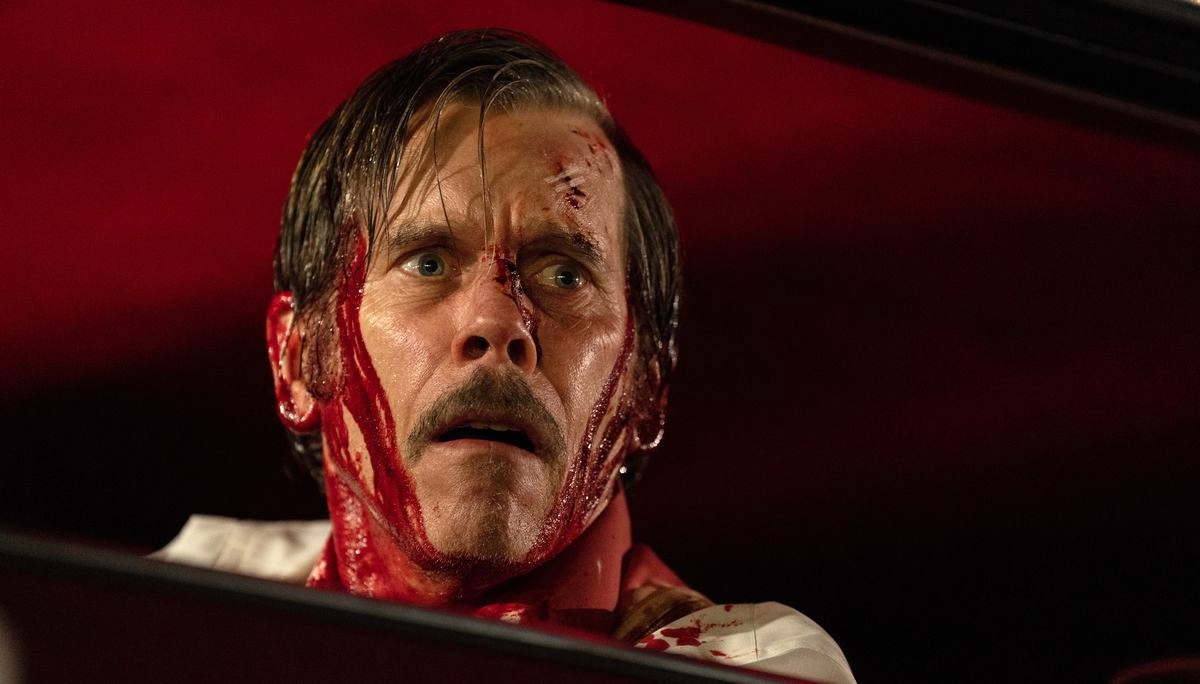
Maxine Minx (Goth) is a successful porn actress, looking to cross over into mainstream movies before her star begins to wane. When she impresses the imperious Elizabeth Bender (Elizabeth Debicki), director of the controversial The Puritan, she lands the lead in its imaginatively-titled sequel, The Puritan 2. But there’s a Satanist serial killer prowling LA’s streets, and a dodgy detective called John Labat (Kevin Bacon) is trying to rake up Maxine’s past. “Whatever’s happening in your life that’s getting in the way of this movie,” says Bender, “Squash it.” And Maxine is determined to do just that…

Cinematographer Eliot Rockett perfectly recreates the low-rent look of 80s movies, all flickering edges and fuzzy VHS. There is a knowing, meta-quality on display throughout, although not in the glib, mocking style of some recent fright flicks, which simply invert the well-worn tropes. This is more of a love letter to Hollywood horror, with key scenes played out in the Bates Motel and behind those big white letters on the hill.

The supporting actors are almost as arresting as Goth, Debicki and Bacon in particular lighting up the screen. I especially enjoy Bender’s self-indulgent rationalisation of The Puritan 2 as a serious piece of art, and the deliciously sleazy Labat’s attempts to assert his dominance over Maxine.

There’s a message here too, and it’s about as subtle as Maxine’s perm: puritanical religion is more dangerous than adult entertainment. Whether or not you agree, the point is seductively made, and MaXXXine is a gory delight.

4 stars

Susan Singfield

Pearl

18/03/23

Cineworld, Edinburgh

The opening scenes of Pearl have the look of a 40s Technicolour Hollywood feature, right down to the swirling calligraphy of the titles. The remote farmstead where the main action takes place is eerily reminiscent of The Wizard of Oz. But it doesn’t take long to establish that the magic generated by rising horror star, Mia Goth, is going to be of a much darker variety than anything witnessed by Dorothy and the Munchkins. What might have happened to the girl from Kansas if she hadn’t been swept up by that whirlwind?

It’s 1919 and teenager Pearl (Goth) is struggling to come to terms with the harsh realities of the Spanish Flu pandemic. Her immigrant mother, Ruth (Tandi Wright), is constantly worried about anti-German sentiment from the people in town, and spends much of her time scolding Pearl for her fanciful notions. Pearl’s unnamed father (Matthew Sunderland) has suffered a stroke and is confined to a wheelchair, unable to move a muscle, while Pearl’s own husband is fighting in occupied France. She’s left with repetitive chores around the farm and, in her spare moments, some powerful fantasises about becoming a star of stage and screen. She’s convinced that she has what it takes to get there, if only somebody will give her a chance.

In town to pick up supplies, she meets a handsome young man (played by David Corenswet), a projectionist at the local cinema, who takes the opportunity to show her some of the pornographic clips from his private collection. He assures her that a girl with her looks has everything she needs to become a sensation. When a church in town announces that they are looking for a dancer for a new travelling show, Pearl senses an opportunity to shine – and Lord help anyone who gets in her way…

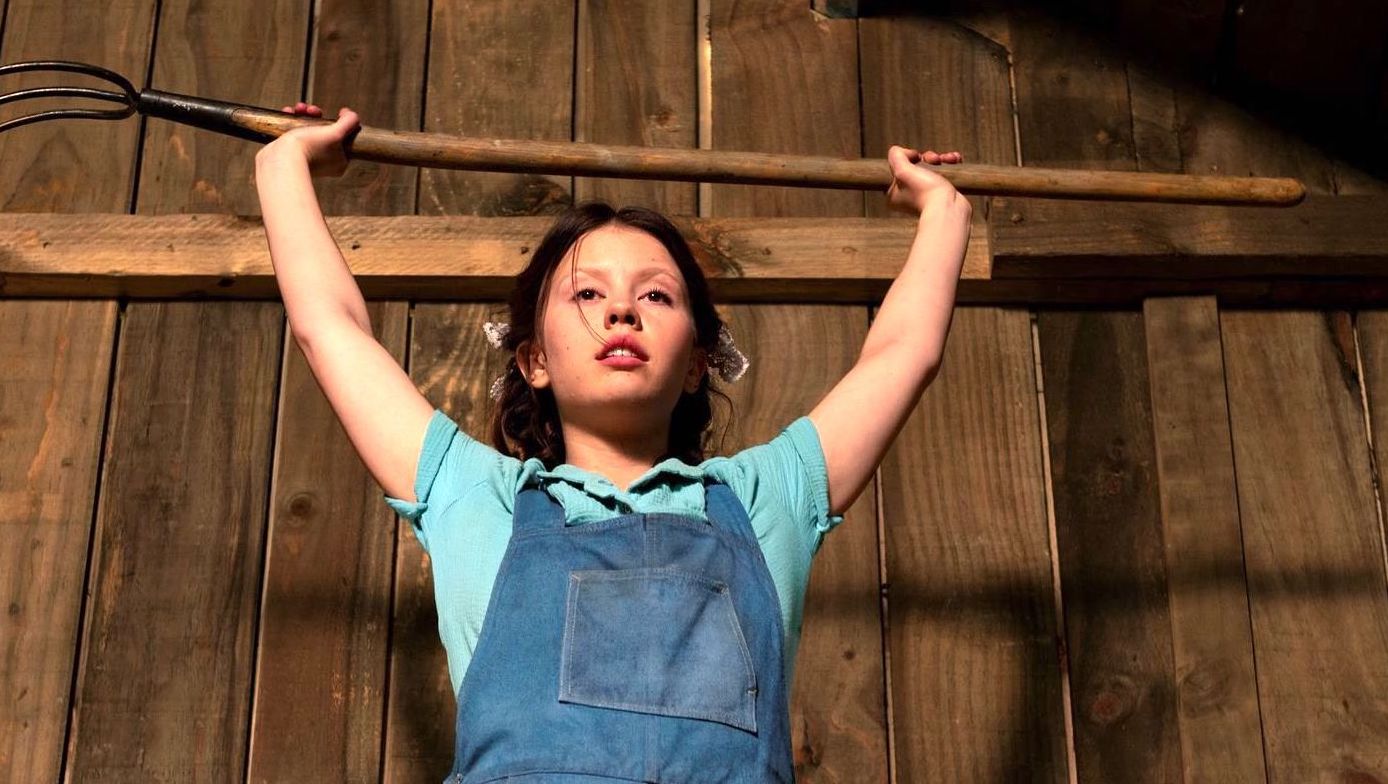
Pearl is a prequel to director Ti West’s earlier offering, X (which I confess I haven’t seen), and it’s eventually destined to be part of a trilogy, but it hardly matters because this assured film, co-written by Goth and West, is strong enough to stand alone. Essentially a vehicle for Goth to strut her stuff, it’s a simple but affecting tale of a young woman afflicted by mental health issues, who becomes increasingly unable to separate reality from dreams. She also has an unfortunate predilection for doing unspeakable things with a pitchfork, aided and abetted by a friendly local alligator – a useful addition when it comes to disposing of evidence.

There are some genuinely unnerving scenes here – a sequence where Pearl enjoys leisure time with a scarecrow is a particular stand out and I also love the dance sequence where what Pearl sees in her head is markedly different from what’s actually occurring. It’s this stark contrast between the real and the imagined that is the true strength of this remarkable feature, and it’s clear from the outset that Goth – if not Pearl – is destined for stardom.

Pearl won’t be for everyone – there are some bloodthirsty scenes in the mix that are not recommended for those of a nervous disposition – but the film is horribly compelling and maintains its momentum right up to its extraordinary final scene.

4.2 stars

Philip Caveney

The House

06/02/22

Netflix

It’s a cold Sunday afternoon, with the threat of snow hanging over it. We’ve nothing pressing to do, and we’ve already braved the elements for a bracing walk. We don’t want to go out again. It’s warm in our lounge, and there must be something worth watching that we haven’t already seen… But what?

The House pops up as a suggestion, and we’re intrigued.

Originally billed as a miniseries, The House appears on Netflix as a portmanteau, and is – I think – all the better for it. Viewed as one, the themes coalesce, and the strange beauty of this piece is given time to develop.

The house in question is a rather lovely one: three storeys of opulence and grandeur. Enda Walsh’s script shows it to us in three different times: the past, the present and the future.

Chapter One, And Heard Within, a Lie is Spun, is an eerie origins tale, directed by Emma de Swaef and Marc James Roels, and brought to life via some very spooky felt dolls. Mabel (voiced by Mia Goth) is a little girl. It’s some time in the 1800s, and her father’s fecklessness means her family is impoverished. Raymond (Matthew Goode) is a decent man; it’s just that he’s not very good at making money or managing his alcohol intake. One night, he wanders drunkenly into the forest, and meets a mysterious being, who offers him a way out. The enigmatic architect, Mr Van Schoonbeek, will build him a house. It is a gift. The only catch is that they have to live there – and that doesn’t seem like a catch at all. What could go wrong?

A lot, as it happens. Mabel is disconcerted to discover that Mr Van Schoonbeek keeps making changes. Big changes. Such as removing the staircases, so that she and her baby sister, Isobel, are trapped on the upper floor. Her parents seem caught up in the house’s spell, lured by its riches, and all too soon are literally defined by what they own…

Chapter Two, Then Lost is Truth That Can’t Be Won, directed by Niki Lindroth von Bahr, takes us to the present day. The house is now part of a suburban row, and is in the process of being renovated.

By a rat.

Said rat, known only as The Developer and voiced by Jarvis Cocker, is a hard-working soul. He has everything riding on the success of what seems to be a solo project, and – as his constant calls to the bank confirm – is relying on a quick sale. At first, he’s confident. His plans are meticulous. He has dedicated his life to this money-making scheme, sleeping in the basement for months, doing the place up room by room. It’s a wonder of high-spec luxury. But when he spies a fur beetle scurrying along the kitchen floor, he realises he has a problem. He fills in gaps in the skirting boards and throws around a liberal amount of beetle-poison, but all to no avail. He has an open viewing scheduled. What is he to do?

In Chapter Three, Listen Again and Seek the Sun, director Paloma Baeza offers us a washed out dystopia, set in the near future. Floods have risen, and the house looms precariously out of the water, an island in a never-ending sea. It’s all studio apartments now, owned by a cat called Rosa (Susan Wokoma), who dreams of restoring the dilapidated building to its former glory. The Pinterest-style boards attached to her wall show an ambitious vision, but she’s fighting a losing battle. All but two of her tenants have left, and those who remain, Jen (Helena Bonham Carter) and Elias (Will Sharpe), pay their rent, respectively, in crystals and fish. Which is all very well, Rosa tells them crossly, but no plumber will accept them as currency so no, sorry, she can’t do anything about the horrible brown water that’s coming out of the taps.

When Cosmos (Paul Kaye) arrives, the truth becomes clear: Rosa needs to let go of her attachment to the house if she wants to survive.

Taken as a whole, these three stories amount to a gentle polemic, an admonishment to us all to realise what really matters before it’s too late to save the world. It’s beautifully done. The tales are fresh, engaging, and quirkily animated – a lovely way to while away an hour and a half.

4.1 stars

Susan Singfield

Emma.

14/02/20

Some people bemoan their prevalence, but I don’t object to remakes of classics, so long as they’re done well. Little Women was one of my favourite films of 2019, with Greta Gerwig demonstrating exactly how worthwhile such revisitings can be. I like the vim and vigour that seems to be on-trend, the opening up of old favourites to a brand new audience.

Admittedly, I’m puzzled – and a little irked – by the addition of a full stop to Emma.. It seems affected, a bit try-hard. I’m hardly mollified by the explanations I find on-line either: there’s a ‘period’ because it’s a period drama (doh!) or – worse – this is the final, definitive version of the tale. (No, that would be the book.)

Still, I’m keen to see Emma., particularly as the poster, trailer and cast list hint at something sprightly and fun. I love Jane Austen’s novel, and have enjoyed a range of adaptations (Clueless, obviously, is the best). Eleanor Catton is also a writer I admire. But, sadly, neither her script nor Autumn de Wilde’s direction offer us anything more than a pretty confection.

Speaking of which, there is a lot of pretty confectionary in this film, with towering four or five-layer cakes present on almost every table (disappointingly, we never see them cut; I’d like to know what they look like inside). The dresses are gorgeous too, and the furnishings. In fact, it’s all rather ravishing, but there’s almost no substance – an empty edifice, just like the cakes.

It never feels real. Every emotion seems transient, every slight soon forgotten. Emma (Anya Taylor-Joy) is, as we know, handsome, clever and rich. She’s unbound by the need to marry, as she is financially secure, and anyway, her father (Bill Nighy) needs her at home. To stave off the boredom of wandering around a big posh house and wearing nice frocks, she decides to indulge in a spot of match-making. But it takes Emma some time to realise that other people aren’t as privileged as her, and that her meddling can cause them actual hardship. For a modern audience, this is a problematic narrative, with its underlying assertion that we should all know our place. But this is never addressed, not even obliquely; in fact, if I didn’t know the source material, I don’t think I’d be able to ascertain the social hierarchy at all. The costumes don’t make it clear, nor do the characters’ interactions. Just sometimes we are told that a character is poor, or that their prospects aren’t too good.

The characters aren’t defined enough, either, especially the men. The differences between Mr Knightley (Johnny Flynn), Mr Elton (Josh O’Connor) and Frank Churchill (Callum Turner) are barely perceptible; in the novel, the three are worlds apart. In fact, although Flynn performs well in the role, I don’t think the script even makes clear who Knightley is; I’ll wager many a newcomer to the story assumes he’s Emma’s brother at first.

Mia Goth is the standout, imbuing the unfortunate Harriet Smith with real charm and naïvety. Her nervous reverence for Emma is perfectly drawn. Miranda Hart also puts in a decent turn as Miss Bates, offering us the film’s only real moment of authentic emotion and poignancy.

All in all, this feels like an opportunity missed, a waste of talent and potential.

2.9 stars

Susan Singfield

High Life

13/05/19

The first English language production by French auteur Claire Denis, High Life uses the conventions of a science fiction film to tell its rather bleak story, though there is little in the way of the kind of visual splendour you might expect to find in this genre. Here is a nuts and bolts future where space ships look like packing crates and space suits resemble things you might pick up in Gap. Monte (Robert Pattison) is a former Death Row inmate who, when we first meet him, is alone on a space ship with a baby. We then learn, through a series of flashbacks, how the two of them came to be there.

Monte, it turns out, was part of a team of prisoners, sent on a journey to a black hole deep in space in order to harness its energy. This crew of misfits is presided over by Doctor Dibs (Juliette Binoche), who – presumably spurred on by the knowledge that the mission is going to take longer than the average human life span – has become obsessed with the idea of starting new life aboard the ship. But instead of letting the crew just pursue things in the usual way of procreation, she keeps everyone heavily sedated. The male crew members have to submit a daily sperm sample to her, which she, in turn,  administers to the females.

Hardly surprising then, that deep resentment begins to simmer, and it’s only a matter of time before things kick off.

Denis has quite a reputation and it might be this, more than anything else, that has initiated the slew of glowing reviews this film has already garnered – but for the life of me, I can’t share this enthusiasm for it. It soon becomes apparent that, while the film’s setting might be futuristic, its sexual politics remain deeply entrenched in the stone age. And this prompts some worrying questions.

Why does Binoche’s character wander around the spaceship in a nurses’s outfit that is clearly several sizes too small for her? And why, in the extended sequence when she pleasures herself in the ship’s ‘fuckbox,’ does it look as though it has been choreographed to please some unseen male gaze, even though it’s been co-authored by Denis herself? There’s also a particularly nasty rape scene, later in the film, which culminates in the bloody death of the perpetrator, but which adds precisely nothing of value to the story. Presented as it is, it just feels salacious.

These are not the only problems I have with High Life. I learn very little about Monte and even less about his crew mates, which makes it hard for me to care about them when they end up as so much flotsam. I think that Monte has some feelings for Boyse (Mia Goth) but can’t be entirely sure – and what exactly is the story behind Monte’s childhood crime, only partially revealed in flashback? Finally… that harnessing of the black hole’s power… how was that supposed to work exactly? It seems a bit cavalier to use the conventions of a genre without properly thinking it through.

If High Life was the product of a debut director, it would be panned and quickly forgotten. But I fear it’s become one of those ‘Emperor’s New Clothes’ movies, with few people prepared to step up to the plate and denounce it as the wrong-headed, misogynistic muddle that it surely is.

Unless I’m missing something? Answers on a  postcard, please…

2.8 stars

Philip Caveney


A Cure for Wellness

24/02/17

Pirates of the Caribbean director, Gore Verbinski sets a course for even darker waters with  this 18 certificate mystery movie, giving us a twisted fairy tale that evokes plenty of other great films, yet still somehow manages to retain its own identity. This is the kind of thing that Tim Burton does, only, dare I say it? Better. Much better.

Ambitious young executive, Lockhart (Dane Dehaan) is sent by his employers to a remote sanitarium in the Swiss Alps, where he is instructed to locate and bring back the company’s head honcho, Pembroke (Harry Groener), who went out there for the ‘cure’ and has subsequently gone AWOL. No sooner has Lockhart arrived than he’s presented with a whole host of unanswered questions. Why is the sanitarium’s mysterious director, Volman (Jason Isaac, sporting a Germanic accent) so oily and evasive? What’s going on with the weirdly enigmatic Hannah (an engaging turn from the appropriately named Mia Goth)? And what exactly is in that special spa water that everybody seems addicted to drinking?

Verbinski takes his time answering those questions and, even if some of the convoluted plot’s loose ends are never satisfactorily tied up, it’s nevertheless an intriguing and sometimes suspenseful journey getting there. Despite a running time of two and a half hours, the film never drags and switches smoothly from one deeply creepy set-piece to the next. A sequence in a dentist’s chair is likely to put you off ever sitting in one again, while other scenes here will doubtless dissuade you from eating jellied eels for life. Along the way, some of the best horror films in history are cleverly recalled – Rosemary’s Baby, Dance of the Vampires, The Shining… and there’s even a strand that put me in mind of vintage TV series, The Prisoner (which to my mind is the ultimate praise).  If everything goes a bit Hammer Horror at the conclusion, it’s by no means a bad thing.

Not everyone will like this. It’s probably far too weird for mass approbation and there’s a complete refusal to take the easy path when the scenic route has so much for offer – and speaking of scenery, the location photography is particularly sumptuous. But be careful. Behind every pretty thing, there’s something sinister waiting to jump out at you.

4.5 stars

Philip Caveney