15/02/22
King’s Theatre, Edinburgh
The Dresser is about a poorly actor. He’s famous – a big draw – and the company fears that his illness might preclude him from appearing on stage as the eponymous King Lear (itself a play where the lead character is afflicted by old age and ill health). It’s somewhat ironic, then, that Julian Clary, in the titular role of Norman, has been obliged to drop out of tonight’s performance, and we have an understudy in his place.
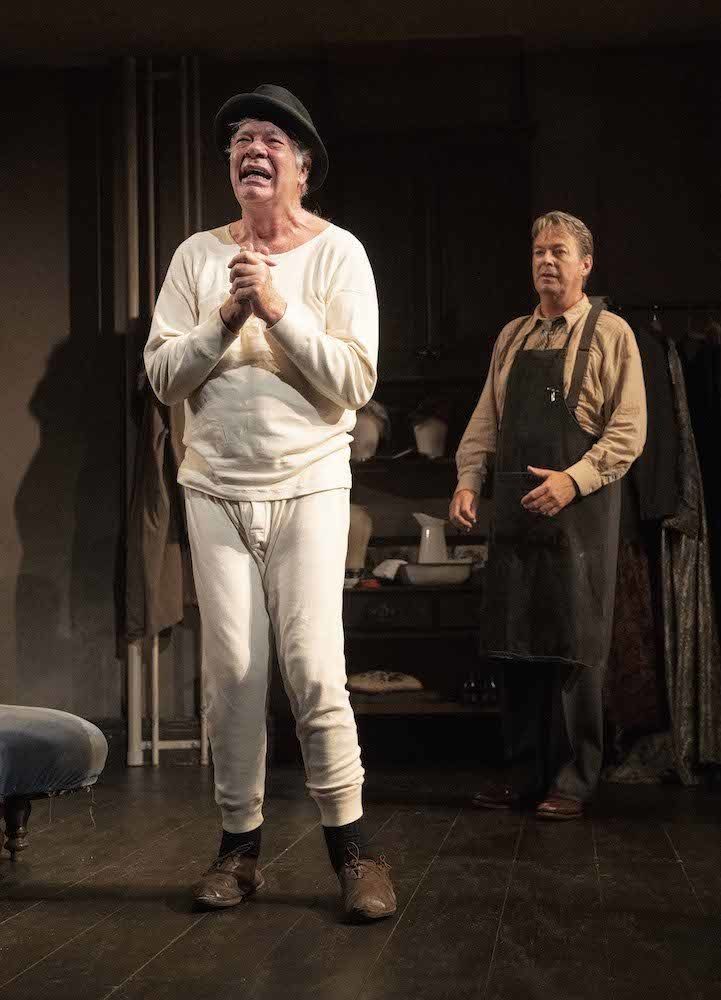
But it’s an ill wind that blows nobody any good and Clary’s absence provides an opportunity for supporting actor Samuel Holmes to step into his shoes and I’m happy to report that he nails the camp, manipulative Norman with aplomb. How would Clary have handled the role? I’ll probably never know. That’s show business.
It’s 1941 and the London theatres are struggling through the rigours of the blitz. As the minutes tick relentlessly by towards yet another performance, actor-manager ‘Sir’ (Matthew Kelly) is nowhere to be found. His wife, ‘Her Ladyship’ (Emma Amos), due to play Cordelia opposite him, tells Norman that she’s just left him on a hospital ward. Stage manager Madge (Rebecca Charles) wants to call off the show but Norman vehemently stalls her, insisting that the man he has been dressing for so many years has never missed a performance yet. He’ll be there.
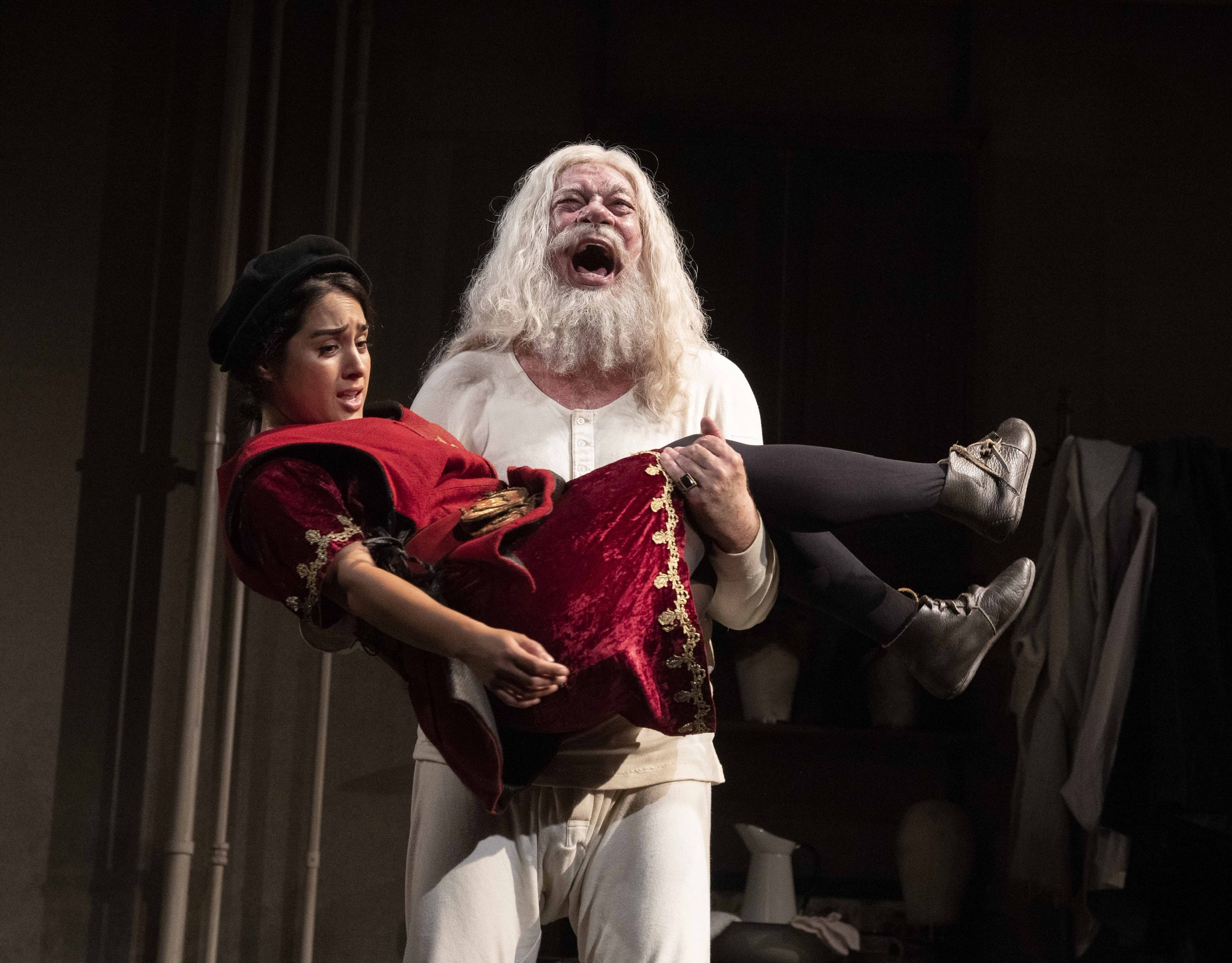
Sure enough, Sir comes plodding dutifully in, looking like he’s gone ten rounds with a heavyweight boxer. Of course he’ll go on! If only he could remember which of the bard’s plays he’s actually supposed to be doing tonight … and if only he was still strong enough to carry his wife onstage for her final scene.
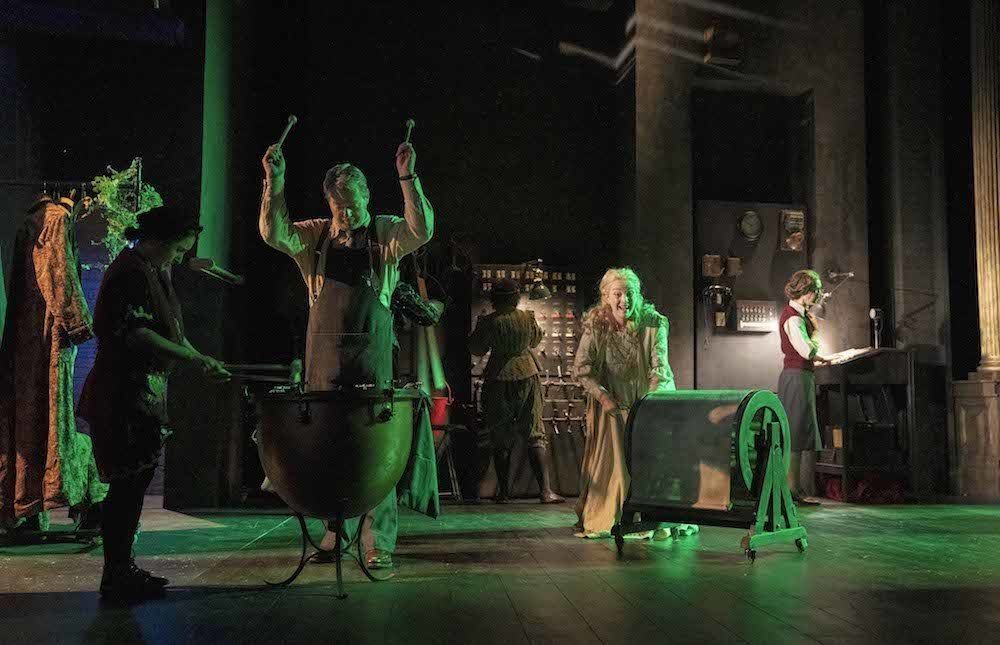
Ronald Harwood’s play (memorably filmed in 1983 with Tom Courtenay and Albert Finney) is inspired by the five years that Harwood spent working as a dresser to Sir Donald Wolfit – a situation I can relate to, as I worked briefly as a dresser to Sylvester McCoy, when he was Puck in Theatr Clwyd’s A Midsummer Night’s Dream. It depicts an age when the term ‘the show must go on’ really earned its stripes, when actor-managers like Sir really did keep the theatrical wheels turning. It’s cleverly staged: a seedy dressing room rises magically to reveal the wings of a theatre, where anxious cast and crew can look out onto whatever’s happening on stage.
While the play feels rather static, full of complex speeches, it’s nevertheless beautifully written and there are some bitterly funny lines to savour, particularly from Norman, who is adept at slaying his adversaries with acerbic one-liners. He also has a faultless memory of every town the company has played in and seems to reserve special contempt for Colwyn Bay (hailing from North Wales, we’re acutely aware of this one!).
The parallels between Sir’s current situation and those of the character he’s depicting are astutely drawn and there’s a brilliant onstage metamorphosis, where Sir, a rambling shivering figure in grubby underwear, gradually transforms into Shakespeare’s king. And of course, there are also the parallels between Lear and his fool – a relationship that’s echoed in the play’s poignant conclusion.
Kelly is terrific in his role – endlessly self-aggrandising but caught in the headlights of his advancing senility – while congratulations should go to Holmes, who must have been rehearsing those lines up to the opening, and who never fluffs one of them.
All the best to Mr Clary for a swift recovery.
4 stars
Philip Caveney


 Bouquets & Brickbats