Mathieu Almeric

The Phoenician Scheme

26/05/25

Cineworld, Edinburgh

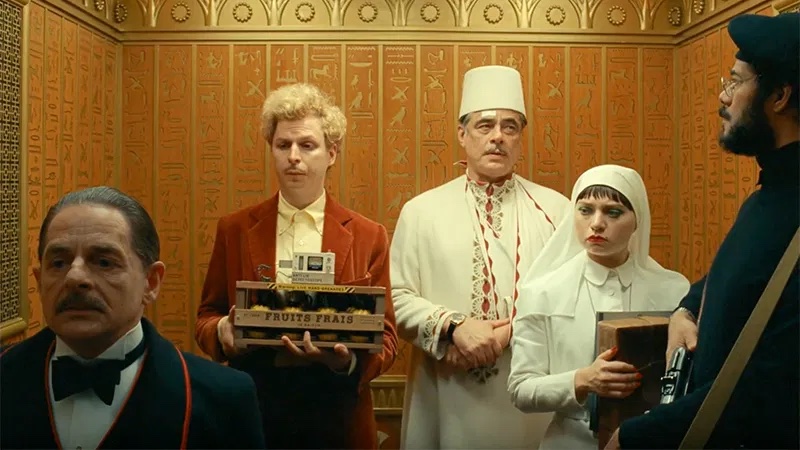
Cinema fans can hardly have failed to notice that a new Wes Anderson movie is on general release. As ever, it features his usual bag of tricks: impeccably-framed images arranged in perfect symmetry on the screen; an extended set of famous faces, all of whom show up for every successive project and seem happy to put in cameo performances for shirt buttons; and, as ever, a plot that appears to have been created simply to redefine the term ‘off-beat.’

Anderson has long been a disciple of Verfremdungseffekt – the distancing technique devised by playwright Bertolt Brecht, employed to prevent an audience from easy identification with his characters. It’s always been there in Anderson’s work to some degree but, this time around, I can’t help feeling that it might have been too enthusiastically applied.

Call me old-fashioned, but I do like a character I can root for. Here, there really isn’t one.

Wealthy and indomitable business magnate Zsa zsa Korda (Benicio del Toro) continues to thrive, despite the many assassination attempts that have been made on him by his rivals. After a near-fatal plane crash, he gets in touch with noviciate nun, Liesl (Mia Threapleton), who may just be his only daughter. (Korda has nine sons, several of them adopted, but he tends to spend as little time with them as possible.) Now, realising that he might be getting close to the end of his life, he has decided to offer Liesl a trial run as the sole heir to his considerable estate. He also takes on a new assistant, Bjørn Lund (Michael Cera), his last sidekick having been blown in half in the aforementioned plane crash.

The threesome must now travel around the fictional country of Phoenicia, where Korda has heavily invested in several major projects. A shadowy cabal of businessmen, led by Mr Excalibur (Rupert Friend), have raised the price of an all-important rivet used in the manufacturing process. This means that, unless Korda can persuade his business associates to take smaller profits, he is at risk of losing everything…

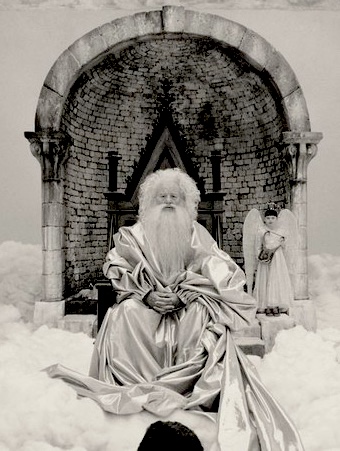
Even as I write this plot outline, I wonder why I’m bothering. Wes Anderson films are like art exhibitions. Some you love, though you cannot exactly pinpoint why. And others leave you flat for no easily-discernible reason. I’m not saying that The Phoenician Scheme is without merit. I sit watching it unfold, approving of its incomparable look and style, occasionally chuckling at some absurd lines of dialogue, even spotting the occasional movie reference. That Moroccan style club run by Marseille Bob (Mathieu Amalric), that’s a nod to Casablanca, right? And the black and white dream sequences, where Korda meets up with God (Bill Murray, naturally), are surely a reference to…

But this is pointless. I loved Anderson’s previous release, Asteroid City, which many viewers dismissed as another exercise in style over content. But this time, even I can’t seem to make myself care enough about the many characters I’m presented with. Korda’s growing relationship with Liesl could perhaps have been the hook that pulled me in, but that element feels somewhat under-developed.

That said, Anderson is one of the few film makers who walks his own path and refuses to compromise his vision. With names like Tom Hanks, Scarlett Johannsson and Benedict Cumberbatch ready and willing to bury their egos in walk-on roles, he’s in the rare position of being free to do exactly as he wishes.

So, why not give this a go? Chances are, you’ll completely disagree with me.

3.6 stars

Philip Caveney
The French Dispatch

23/10/21

Cameo, Edinburgh

The word ‘quirky’ could almost have been invented for Wes Anderson. Since his breakthrough with Bottle Rocket in 1996, the director has relentlessly followed the path less travelled. Along the way, he’s dallied with stop-frame animation and, in his live-action features, has developed a visual style used by nobody else in the business. Take off a blindfold in a movie theatre and watch ten seconds of any one of his films and, chances are, you’ll recognise his style instantly.

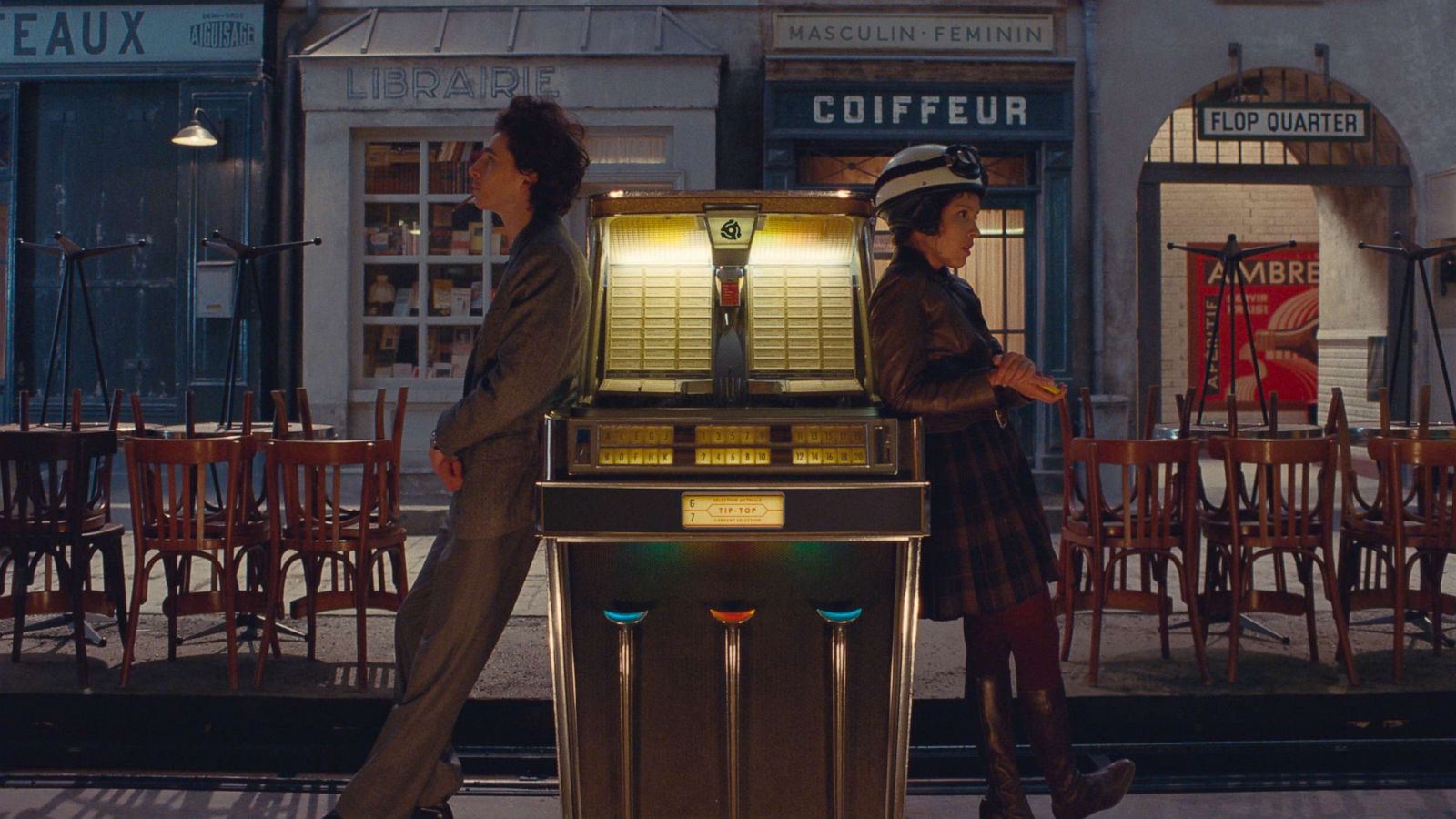
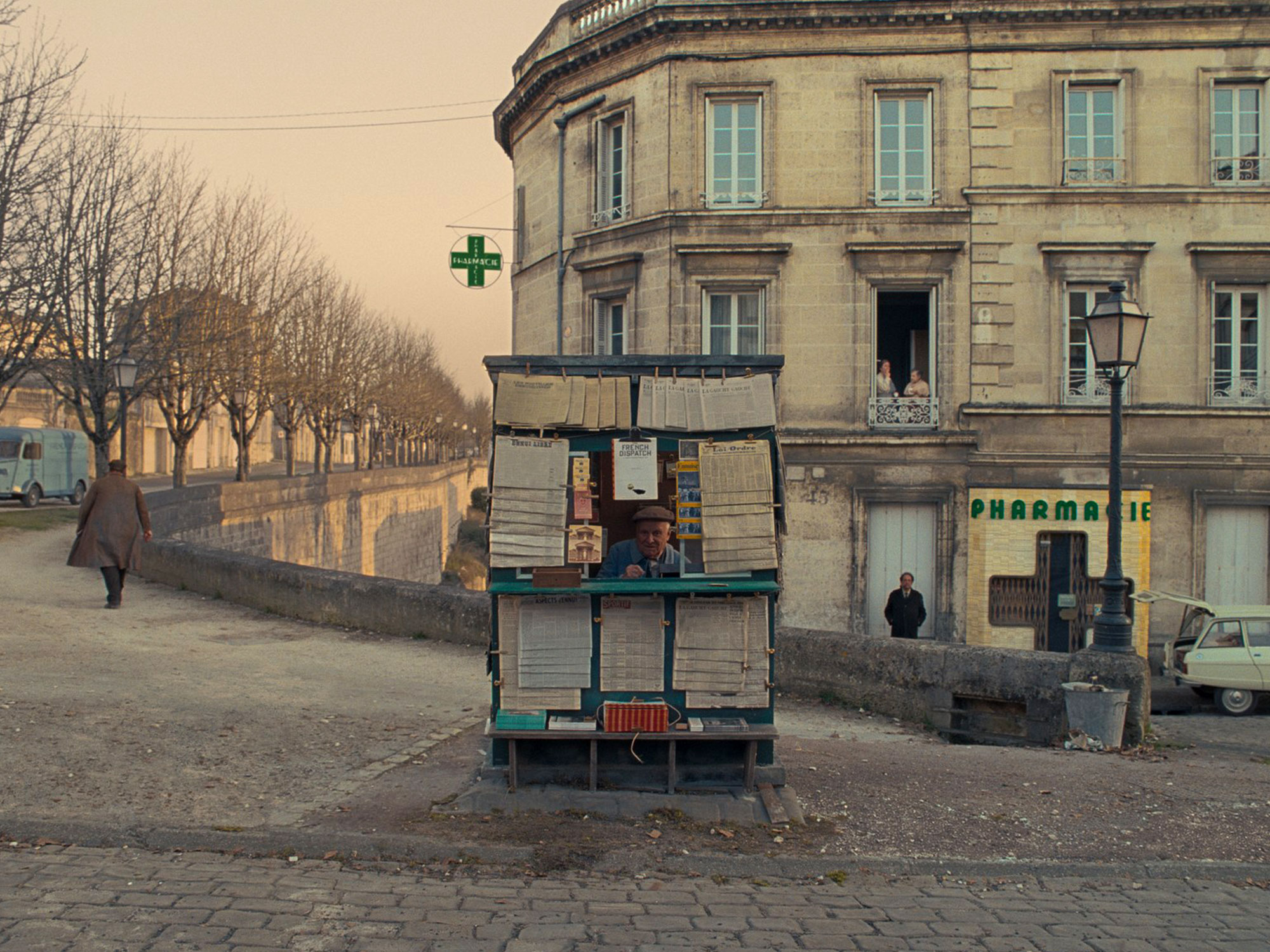
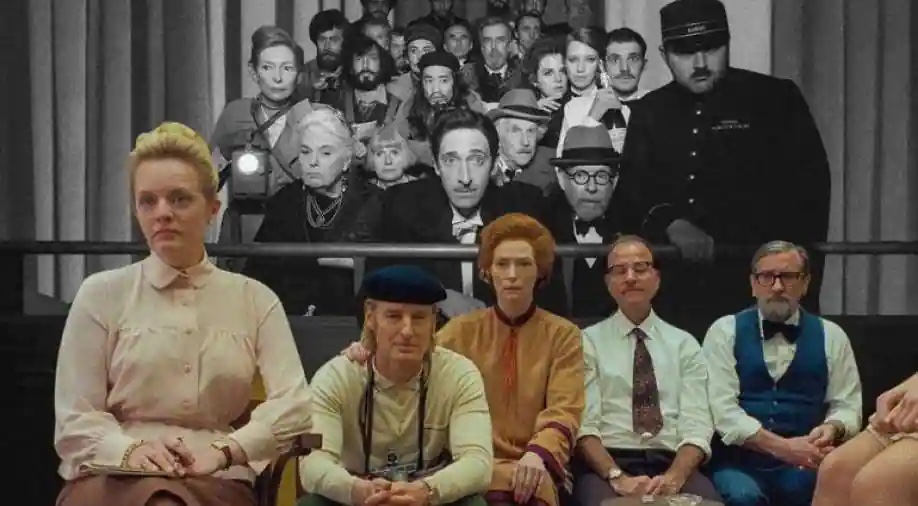
Now here’s the much-delayed The French Dispatch, a portmanteau made up of three short films, linked by a framing device. It probably has a valid claim for being the most Wes Anderson-like film yet as it employs all of the tics and, yes, quirks we associate with him: those bizarre doll house vistas; jarring cuts from colour to monochrome; weird frozen tableaux of action scenes – and characters that are as eccentric as they are amusing. And, of course, there’s also the WA repertory company, a seemingly endless supply of big-name actors, who seem perfectly happy to put their famous mugs in front of the camera, even if they’ve not actually been given much to do.

We begin at the offices of the titular publication, a New Yorker-style literary magazine that is itself an offshoot off a newspaper in Kansas, yet somehow has its headquarters at the top of a ramshackle building in the sleepy French town of Ennui-Sur-Blasé. It’s from here that editor Arthur Howitzer Jnr (Bill Murray) sends his various critics around the country to seek out and document stories of interest – and we are subsequently treated to three of them, all set in the 1960s.

First up we have the tale of convicted murderer, Moses Rosenthaler (Benicio Del Toro), who, inspired by his love for prison warden – and sometime model – Simone (Lea Seydoux), decides to express his love, by creating works of modern art in tribute to her. He inadvertently becomes a cause celebre. Next there’s the story of journalist Lucinda Krementz (Frances McDormand) and her dalliance with dashing young revolutionary, Zefferelli (Timothée Chalamet), whose rebellion against authority is played out as a literal game of chess. Finally, there’s the story of writer Roebuck Wright (Jeffrey Wright), assigned to write a piece about celebrated prison chef, Nescafier (Steve Park), only to find himself caught up in a kidnapping drama involving the adopted son of the prison’s Commisaire (Mathieu Almaric).

The stories are dazzlingly told and the main theme here seems to be one of affection for an age that’s largely gone – a yearning for old-school journalism, when editors cared more about the writing than the money it might generate. Anderson – who co-wrote the story – also has much scorn to heap on the world of art, mocking the ways in which commerce waits greedily in the wings to get its hooks into the next big thing, qualities evidenced by Adrien Brody’s ruthless art dealer, Julien Cadazio. There’s some evident homaging going on here too. The second piece eerily captures the look of French new wave cinema – and did I imagine that little salute to The Twilight Zone’s Rod Serling?

I have to say that I admire The French Dispatch enormously, rather than love it. There’s always an element of grandstanding about Anderson’s work, a celebration of his own uniqueness that can sometimes feel a little too arch – and the parade of characters unleashed here are essentially caricatures rather than people I can believe in. Perhaps that’s entirely the point, but it’s a quality that can polarise audiences.

Suffice to say, if you’re a fan of the director, you certainly won’t be disappointed by what’s on offer here. This is Wes Anderson turned up all the way up to 11. And, in the unlikely event that it’s the first of his films you’ve seen, then enjoy the trip.

4.4 stars

Philip Caveney

Sound of Metal

13/04/21

Amazon Prime

Sound of Metal has been making waves at film festivals around the world and has recently garnered multiple nominations for both BAFTAs and Oscars. It’s easy to see why it’s earned such acclaim. Despite that pugnacious title, this is a surprisingly gentle and reflective film and it’s also, I think, rather unique. It’s fair to say that I’ve never seen another movie quite like it.

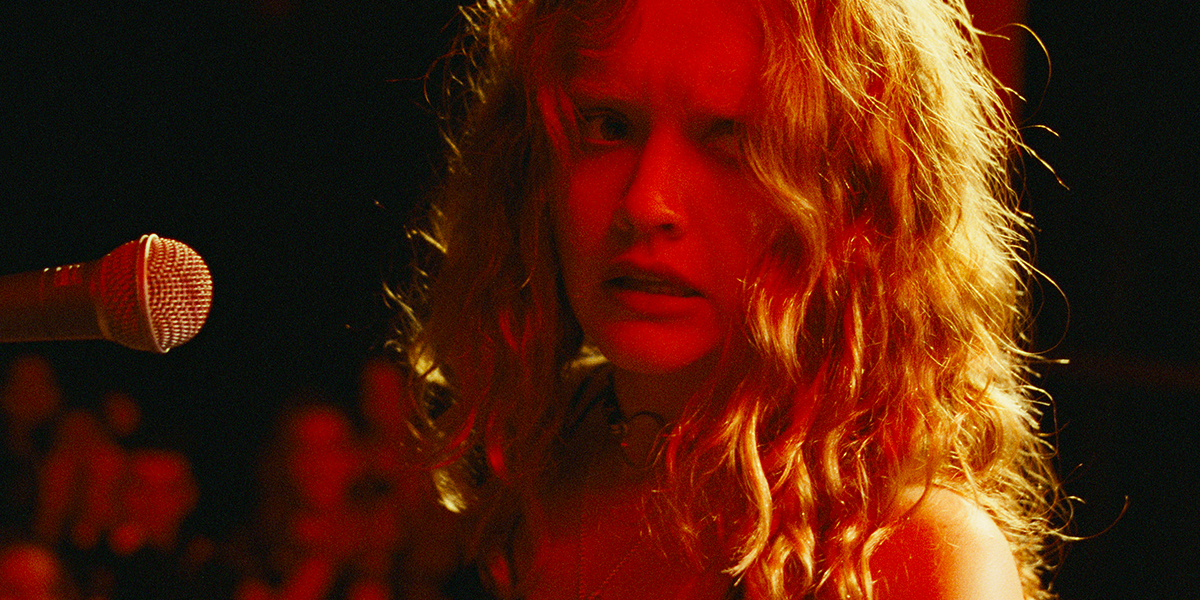
Ruben (Riz Ahmed) is a drummer in a heavy metal duo, providing the beat for his singer/guitarist girlfriend, Lou (Olivia Cooke), to vocalise over. The two of them are in the middle of a big tour, driving around America in Ruben’s RV and looking forward to the releasing of their new album. From the brief performance we witness over the opening credits, it’s clear that Blackgammon devote considerably more attention to their amplification than they do to their songs – but they do manage to create a thumping, propulsive sound that has stirred up a sizeable following.

Ruben and Lou are both former drug addicts, and are just about managing to stay clean, despite all the temptations they encounter on tour.

And then, just before going onstage one night, Ruben suffers a sudden and catastrophic loss of hearing. He has to get through the ensuing performance on autopilot, but it’s evident to Lou that something isn’t right. Afterwards, he confesses his problem to her, and she insists that they contact their sponsor, Hector, to see what can be done about the situation. Meanwhile, Ruben visits a hearing specialist, who advises him that he needs to avoid loud noise at all costs – tricky, to say the least – and also mentions the possibility of cochlear implants, an operation that costs thousands of dollars, but which could give Ruben back some degree of hearing.

In the meantime, he is despatched to a rural shelter for deaf, recovering addicts, run by the taciturn Joe (Paul Raci), who lost his own hearing in the Vietnam War. Joe insists that Ruben can only stay at the retreat alone – or not at all, should he decide to have those implants. Joe is adamant that deafness is not a handicap and that surgery is the wrong approach. He advises Ruben to sit alone, to learn sign language and to experience his own ‘stillness.’

Ruben struggles to engage with the latter and though he starts to make progress at the retreat, he is still torn about the thought of those implants… and he thinks he can see a possible way to pay for them.

Sound of Metal is full of unexpected delights, one of which is – ironically – the soundtrack. Not the song that Blackgammon play, mind, but the incidental effects, which it took fifteen technicians to create. Elaborate soundscapes are featured throughout the film, alternating between the rich textures of nature and the weird, twisted versions that Ruben receives as his hearing begins to deteriorate. The most vivid example is at Lou’s birthday party, hosted by her musician father, Richard (Mathieu Almeric), where the sound cuts from a pretty duet performed by Lou and Richard, to the desecrated travesty that Ruben can actually hear. It’s the film’s most poignant moment.

It’s more than just the sound, though. Ahmed (who currently appears to be one of the busiest actors in the business) does a terrific job of portraying Ruben’s mounting terror as the thing he loves most in the world – the music that he and Lou create together- is cruelly taken away from him.

This won’t be for everyone – and that misleading title doesn’t really help – but it’s well worth the watch.

4 stars

Philip Caveney