28/01/24
Cineworld, Edinburgh
The opening credits roll, the title appears onscreen… and then it slowly fades to black and the screen goes blank. For a very long time. I’m starting to think that something has gone wrong but then I become aware of dull sounds: a hubbub of voices, the occasional twittering of birdsong. And I think I know why director Jonathan Glazer has engineered this.
He is giving the audience an opportunity to relax and take a few deep breaths, something we will doubtless be thankful for later.
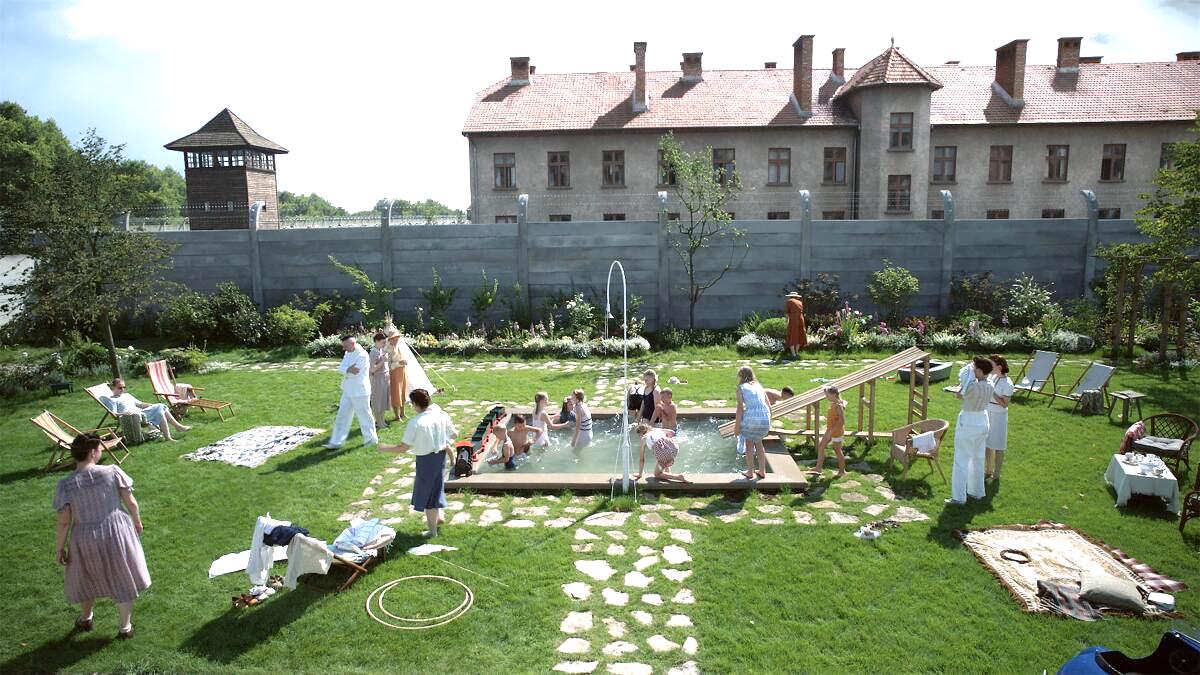
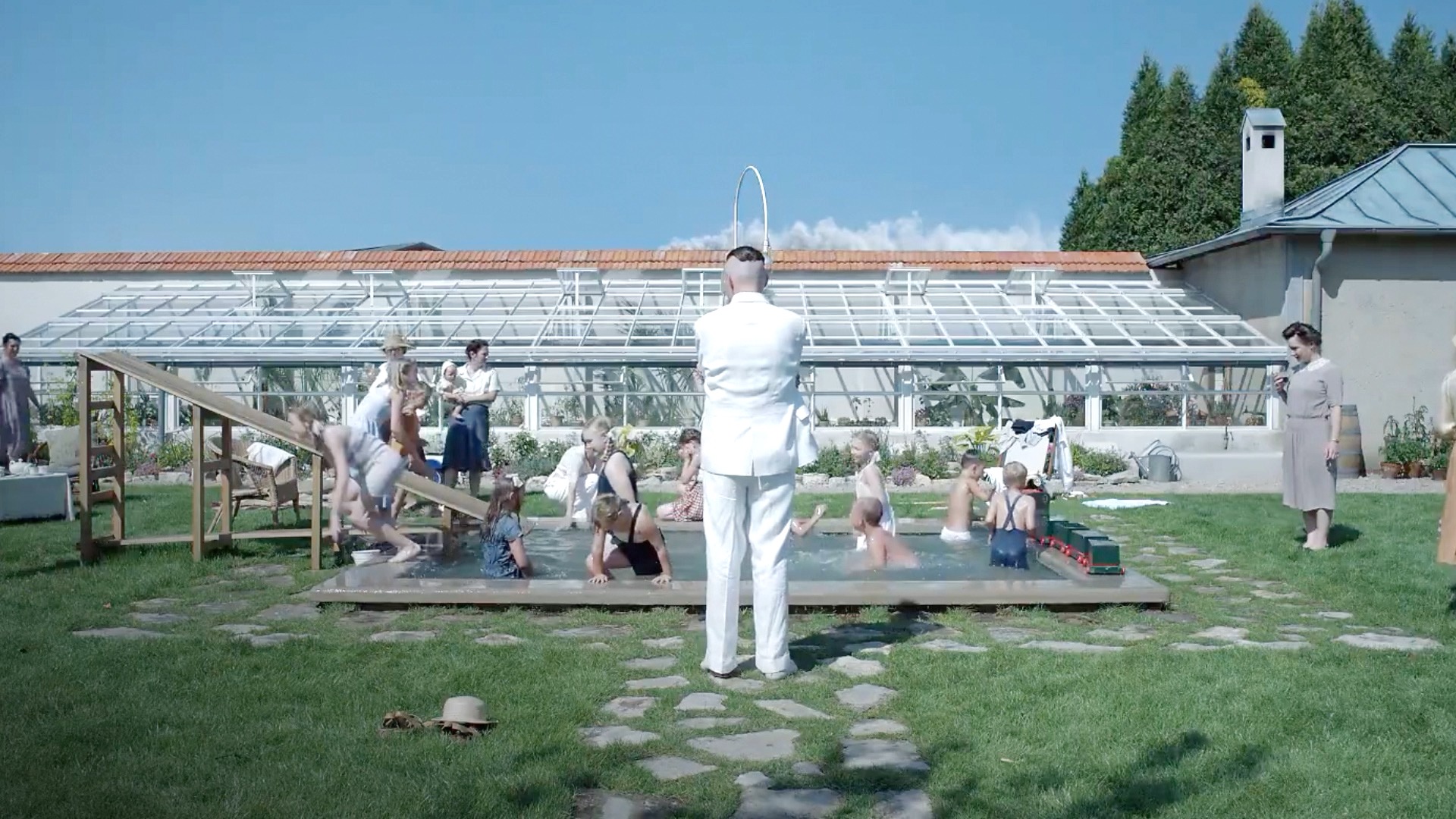
The screen finally illuminates and we observe a family enjoying a tranquil summer picnic on the banks of a river: a father, a mother and their children of various ages. They laugh and splash in the water and chase each other through the trees. And a little while later, the family pack up their things and head back through the verdant countryside to their lovely home with its extensive garden. We can’t help noticing though, that a high wall borders that garden, a wall topped with barbed wire. And on the far side of it, we can just see a tall chimney spouting a thick column of smoke…
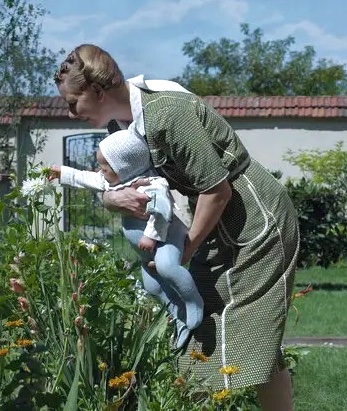
Welcome to the family home of Rudolf Höss (Christian Friedel) and his wife Hedwig (Sandra Hüller). He, of course, is the commandant of Auschwitz and spends much of his time on the other side of the wall, committing atrocities on a daily basis. Meanwhile, Hedwig runs the home, keeping a sharp eye on her many servants and even playing gracious host to her mother, who can’t believe how lucky her daughter is to have such a lovely home and garden to spend her time in. Mother even peers towards the wall and wonders if that woman is in there. You know, the one she used to clean for…
The Zone of Interest, adapted by Jonathan Glazer from the novel by Martin Amis is an extraordinary film – stark, chilling and impossible to dismiss. This is about the mundanity of evil, the bureaucracy of mass murder. It’s a film in which smiling men in business suits sit around a table with charts and statistics and work out the best way they can feed ever more people into the ovens – and how, if the ovens are recharged in rotation, they can, in effect, wipe an entire race of people off the face of the planet.
Rudolph, we see, does not think of himself as a monster; he’s simply a man working to the orders of his Führer, doing his best to accomplish the difficult task he’s been set. He loves his wife, his children, even his horse. But of course, real monsters are just everyday people fuelled by hierarchy, encouraged by their superiors to wade ever deeper into the sewer of depravity. People who obey without question.
Like the best horror films, The Zone of Interest understands that what frightens an audience most is what it doesn’t see. There are no torture scenes here, no images of people burning, starving or fighting for their lives. But there are sounds in the background, a constant mingling of shouts, moans, screams and gunshots – a relentless cacophony that gradually grows in volume as the film progresses, sometimes accompanied by Mica Levi’s hellish soundtrack.
I cannot stop thinking about what’s happening on the other side of the wall, cannot feel anything but appalled that human beings can inflict such savagery on each other. And I’d be a lot happier if I believed that such things could never happen again. But sadly, I don’t.
The film has a coda which I won’t reveal, only to say that it depicts the aftermath of the Nazis’ attempted genocide, showing in a few broad strokes the enduring, poisoned legacy that they left in their wake. This may not be a film to ‘enjoy’ in the traditional sense, but it is undoubtedly a cinematic masterpiece, and one which I would urge every viewer to see.
5 stars
Philip Caveney


 Bouquets & Brickbats