Mark Addy

The Choral

09/11/25

Cineworld, Ediburgh

The year is 1916 and in the fictional Yorkshire town of Ramsden, the local choral society is drawing up plans for its next production – but the depredations of war have taken their inevitable toll. Most of the village’s males are either away fighting or already dead. Yet, ironically, with so many of them buried on the Western Front, the most under-employed person on the society’s committee is Mr Trickett (Alun Armstrong), the local undertaker.

The choral’s leader, Alderman Bernard Duxbury (Roger Allam), is painfully aware that his own voice is at best, average but, as the man who provides most of the funds for these productions – and who badly needs distraction after the death of his own son in the trenches – he presses ahead with his plans for the next show, in which he fully expects to sing the lead. 

With the former musical director recently enlisted, Duxbury is keen to acquire the services of Dr Henry Guthrie (Ralph Fiennes) as his replacement, but here too lie problems. Guthrie makes no secret of the fact that he lived and worked for several years in (whisper it) Germany! There are many locals who feel this taints him irrevocably – and why does he spend so much time in the library checking out news articles about the German navy? But other members of the committee, Mr Fyton (Mark Addy) and Mr Horner (Robert Emms), have to grudgingly admit that the man is a real talent.

But once they have him on board, what piece of music can the society possibly perform? Nearly every title they come up with has been written by a German! Eventually, Guthrie alights upon The Dream of Gerontius by Edward Elgar, a suitably British composer. Duxbury gives the title role his best endeavour, but it’s clear that something’s not working…

This original screenplay by Alan Bennett, directed by Nicholas Hytner, could so easily be one of those traditional feel-good features, with the plucky inhabitants of Ramsden coming together to create a masterpiece and performing it to a packed auditorium of spellbound locals – and, while this isn’t so very far from what’s actually delivered here, the telling steers clear of schmaltz and offers something more gritty, nuanced and realistic. 

Guthrie enlists many of his performers from the local hospital where soldiers, recovering from their injuries, are happy to have something else to concentrate on. And for the role of Gerontius, how about young soldier, Clyde (Jacob Dudman)? He has returned to his hometown minus his right arm, only to find that the girl he loves, Bella (Emily Fairn), has fallen for another boy in his absence. If ever there was someone with a real understanding of loss, here he is – and luckily, he has a decent voice.

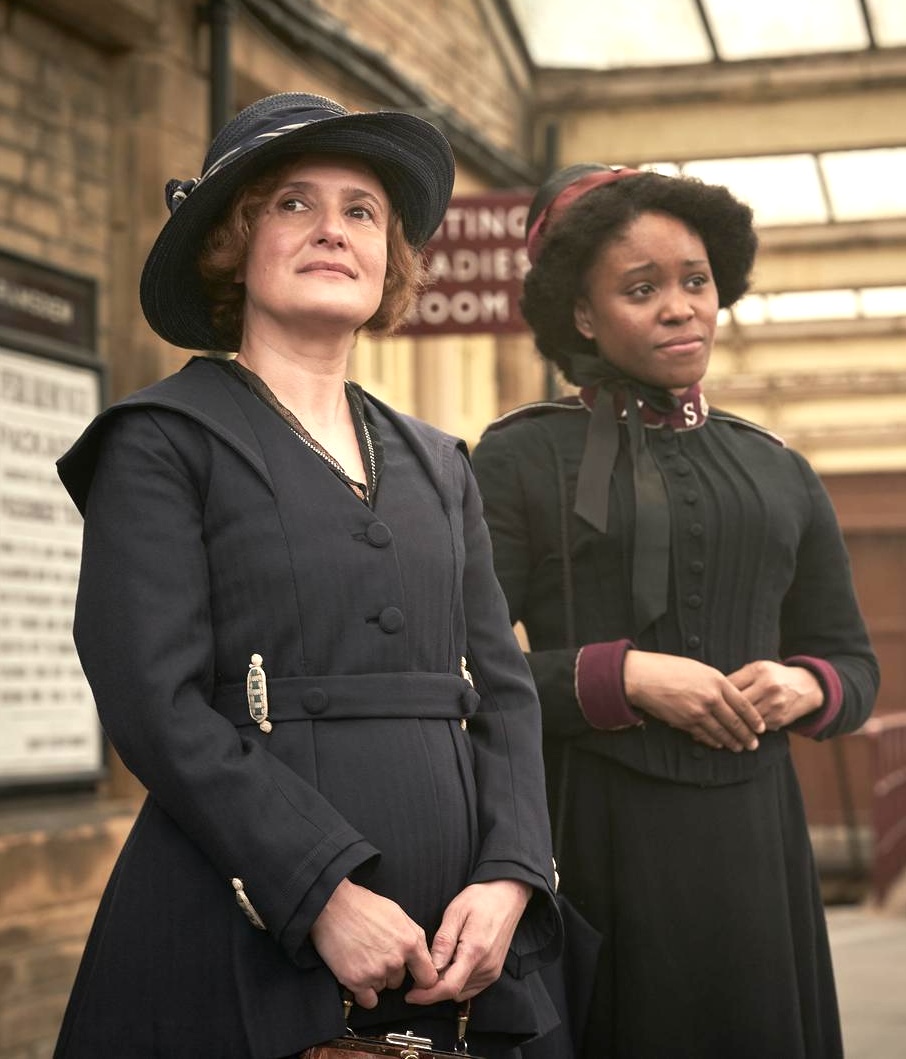
The production gradually starts to come together. When Salvation Army worker, Mary (Amara Okereke), innocently invites Sir Edward Elgar (Simon Russell Beale) along to see a rehearsal, nobody expects that he’ll actually turn up… or that he will turn out to be such a self-aggrandising bellend, maybe the one man who can stop the show in its tracks. There’s a genuine sense of jeopardy as realisation dawns.

But the element of The Choral that I find the most affecting is the depiction of the youths of the town, who use the whole enterprise as a means to meet members of the opposite sex, to have some fun and enjoy a laugh, all the time painfully aware that the clock is ticking, and that their 18th birthdays are fast approaching… along with their call-up papers.

The Choral is an engaging and melancholic piece that serves as a reminder of the awful injustice of war, and the healing power of communal art in times of tribulation.

4 stars

Philip Caveney

The Lost King

07/10/22

Cineworld, Edinburgh

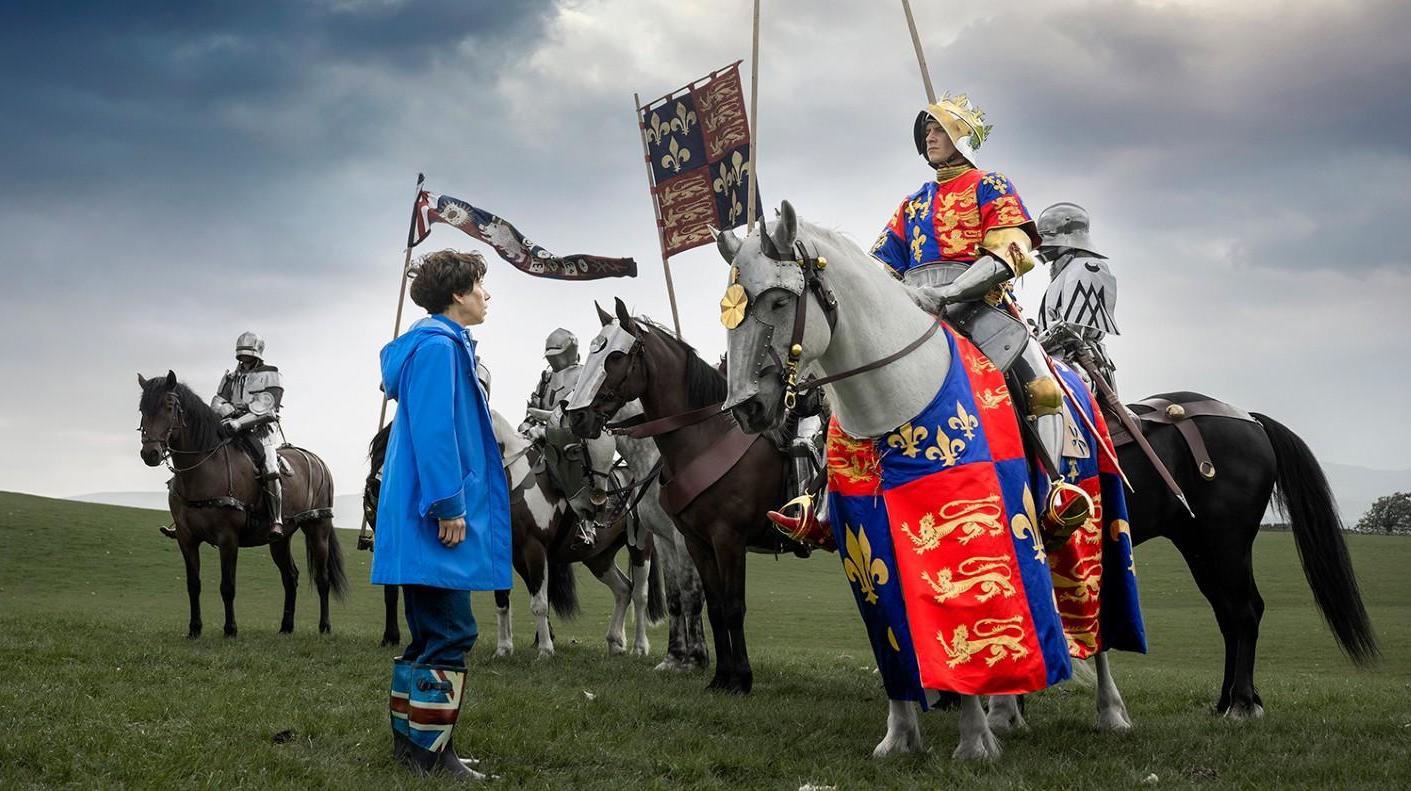
The Lost King is based on a true story – how a woman called Philippa Langley came to be the driving force behind the discovery of the remains of King Richard III… underneath a council car park in Leicester. Written by Steve Coogan and Jeff Pope and directed by Stephen Frears (the team behind the excellent Philomena), the film relates how Langley (Sally Hawkins), an ‘ordinary woman’ living in Edinburgh, first becomes interested in the last of the Plantagenet kings, while watching a performance of Shakespeare’s eponymous play. The titular role is performed by a young actor (Harry Lloyd) and thereafter, Langley experiences visions of ‘Richard’, who seems to be waiting for her to do something.

Much to the bemusement of her ex-husband, John (Coogan), and her two young sons, Langley’s interest quickly develops into a full-blown obsession. She reads everything she can find about Richard, she joins a group of local enthusiasts and, eventually , she finds herself in Leicester and that fateful car park. After making her way a spot helpfully marked by a large letter R, she becomes convinced that she’s standing on Richard’s grave.

I know. If this hadn’t actually happened it would be risible. But it did happen, so get over it.

Convinced she’s right, Langley approaches archeologist Richard Buckley (Mark Addy) at Leicester University, and persuades him to help her to organise an excavation of the car park. But where are the funds going to come from?

The film has stirred up some controversy by suggesting that, although Langley was undoubtedly the prime mover behind the campaign to find Richard – she actually raised most of the money via crowdfunding – she was latterly sidelined by Leicester University, who monopolised the subsequent discovery and dismissed her as an ‘amateur’. One man in particular, Richard Taylor (played here by Lee Ingleby), comes across as especially unpleasant and the real Taylor, former Vice Chancellor of the university, is currently threatening legal action. Surely it would have been kinder at least to give the character a different name? (This would also have avoided having yet another Richard in the story.)

Whatever the truth of the case, this is a fascinating story about self-belief and perseverance. I like the fact that Langley is not deified here, but presented as a far from perfect individual, selfishly devoting everything to her obsession, no matter what the cost to herself or her family. And I like the device of having Richard as part of the ongoing adventure, offering a little more depth to the proceedings.

While the whereabouts of a long-dead body is arguably low-stakes, recent events have shown how pageantry, pomp and circumstance really seem to matter to huge swathes of the population, and it’s always a delight to see Edinburgh (my home city) depicted onscreen in all its glory – even when, in certain scenes, it’s pretending to be Leicester!

3.8 stars

Philip Caveney

The More You Ignore Me

13/07/18

The More You Ignore Me, written by Jo Brand and directed by Keith English, has the potential to be very good. Based on Brand’s 2009 novel, it tells the tale of Alice (Ella Hunt), a teenager struggling to cope with the demands of her mother’s mental illness.

Things at home are tough: her dad (Mark Addy) is a gentle soul, and he does his best to keep things ticking along, but he’s not having much success. Alice’s mum, Gina (Sheridan Smith), spends most of her time immobilised by medication, sedated into a miserable paralysis – relieved only by episodes of psychosis, when she becomes volatile, railing against a world that can’t accommodate her needs. Alice is isolated: she can’t invite friends over to her house, and even though she has a lovely boyfriend, Mark (Alexander Morris), she’s persona non grata as far as his small-minded parents are concerned, the stigma of her mother’s condition being far too much for them to comprehend.

And then, one day, Ella hears The Smiths performing on TV and – like so many 80s teens – identifies with Moz’s lost-boy lyrics, convinced at last that there is somebody who really understands. She writes to Morrissey, pouring out her heart. And – to her delight – he actually replies.

It ought to work. Morrissey himself might have slipped from grace in recent years (oh Moz, I wish you didn’t think the way you do), but The Smiths songs stand the test of time, and I’d rather judge the art than the artist anyway. And Ella Hunt is mesmerising in the lead role, giving a subtle, heart-rending performance that always elicits sympathy. Mark Addy is terrific too, all good intentions and broken heart. Sally Phillips’ turn as the UK’s only under-worked GP is a nice diversion, Alexander Morris is convincingly awkward, and Clive Mantle’s Dunk is a beacon of hope.

But there’s a curious disconnect between these understated, naturalistic characters and the cartoonishly broad strokes applied to Gina and her family. The cast is strong – Sheridan Smith is undoubtedly a fine actor, and Sheila Hancock ought to be a good choice to play her mother. But it doesn’t work: it’s like they’ve wandered in from another, much worse, movie. There’s no nuance here, no sense of who they are and, in Gina’s case, of what’s been lost. Her father and brothers (Ricky Tomlinson, Tom Davis and Tony Way) are even more ridiculous, a trio of stereotypes with no credibility.

In the end, I’m left feeling frustrated by this film, not least because Ella Hunt’s performance deserves a more consistent vehicle.

3 stars

Susan Singfield