Marc Munden

Lord of the Flies

09/02/26

BBC iPlayer

We rarely review TV shows, but Marc Munden’s four-part series (adapted by Jack Thorne from William Golding’s 1954 novel) is undoubtedly cinematic in scope and, since we binge-watch the entire thing in one day, it seems like a no-brainer to register our reaction. The fact that I’ve been obsessed with the story since childhood is another powerful contributor to the ”yes, we should’ imperative.

I read the source novel in the early sixties when I was sequestered in a boarding school in Peterborough, a setting that felt to me every bit as savage as the one I was reading about. Add to the equation that twice a year I was being flown out to visit my parents in Malaysia (my Dad was in the RAF), and it’s hardly surprising that the idea of a passenger plane crashing and leaving me stranded on a remote island seemed entirely within the realms of possibility.

Of course, Lord of the Flies has been previously adapted, most notably by Peter Brooks in 1963, a stripped-back monochrome version of the story that blew me away on first viewing, and which still remains (in my humble opinion) one of the finest literary adaptations in cinema history. I must also grudgingly mention Harry Hook’s lamentable attempt to update the premise in 1990, which got pretty much everything wrong – and featured a Piggy so obnoxious that I felt compelled to cheer when his skull was crushed by that great big rock. (Surely not the effect that Mr Hook was going for…)

But surely no piece of fiction is so sacred that a newcomer can’t be allowed to have a shot at an adaptation. A recent comment I saw online complaining that remakes are ‘never the same’ struck me as particularly odd. Isn’t that the point? If a director hasn’t got something different to say, then why bother?

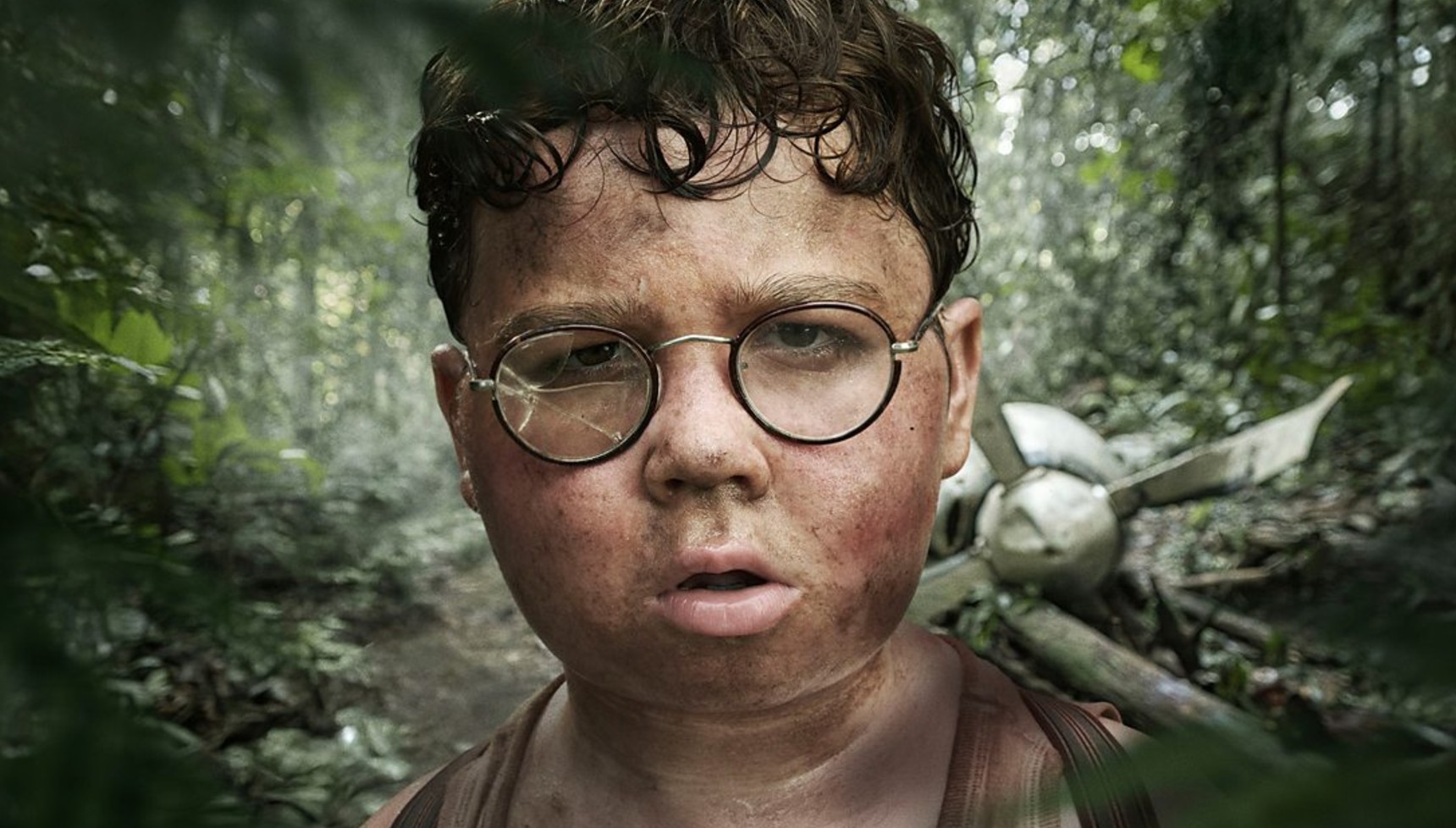
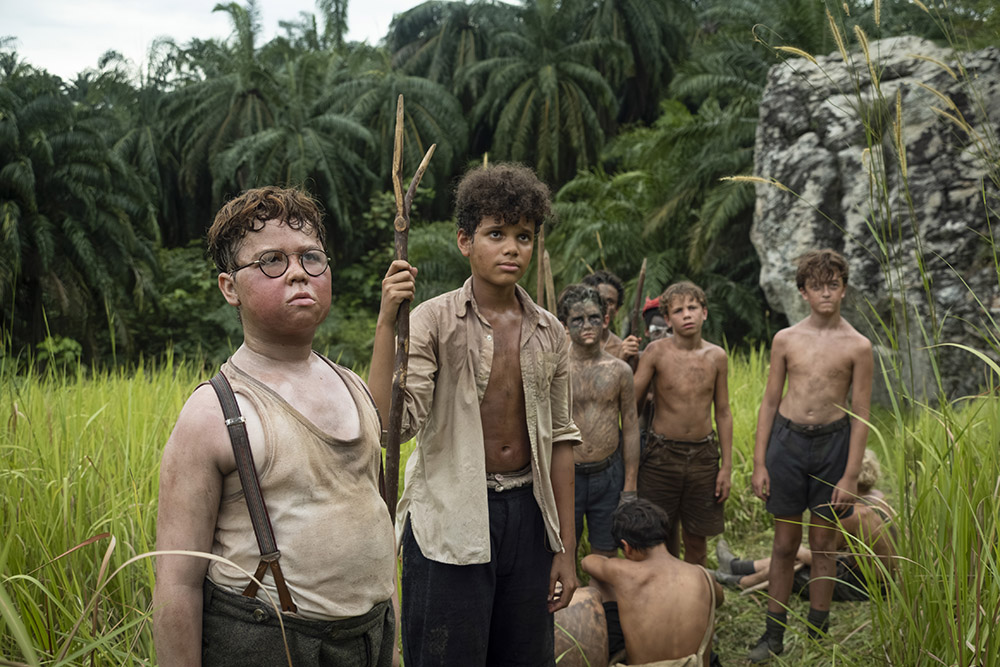
Having said that, this new version does retain a lot from the novel. It’s set in the same era and uses plenty of lines of original dialogue. The episodes are each seen from the perspective of one of the key characters. Piggy (David McKenna) sports a Northern Irish accent and has a predilection for quoting Groucho Marx, which instantly endears him to me (another obsession I developed at boarding school was a love of The Marx Brothers). McKenna emphasises Piggy’s vulnerability and his desperation to avoid being bullied, as well as his evident intelligence. Ralph (Winston Sawyers) is instantly likeable and some nicely-integrated flashbacks in his episode reveal aspects of his earlier life that go some way to explain why he is so nurturing to others.

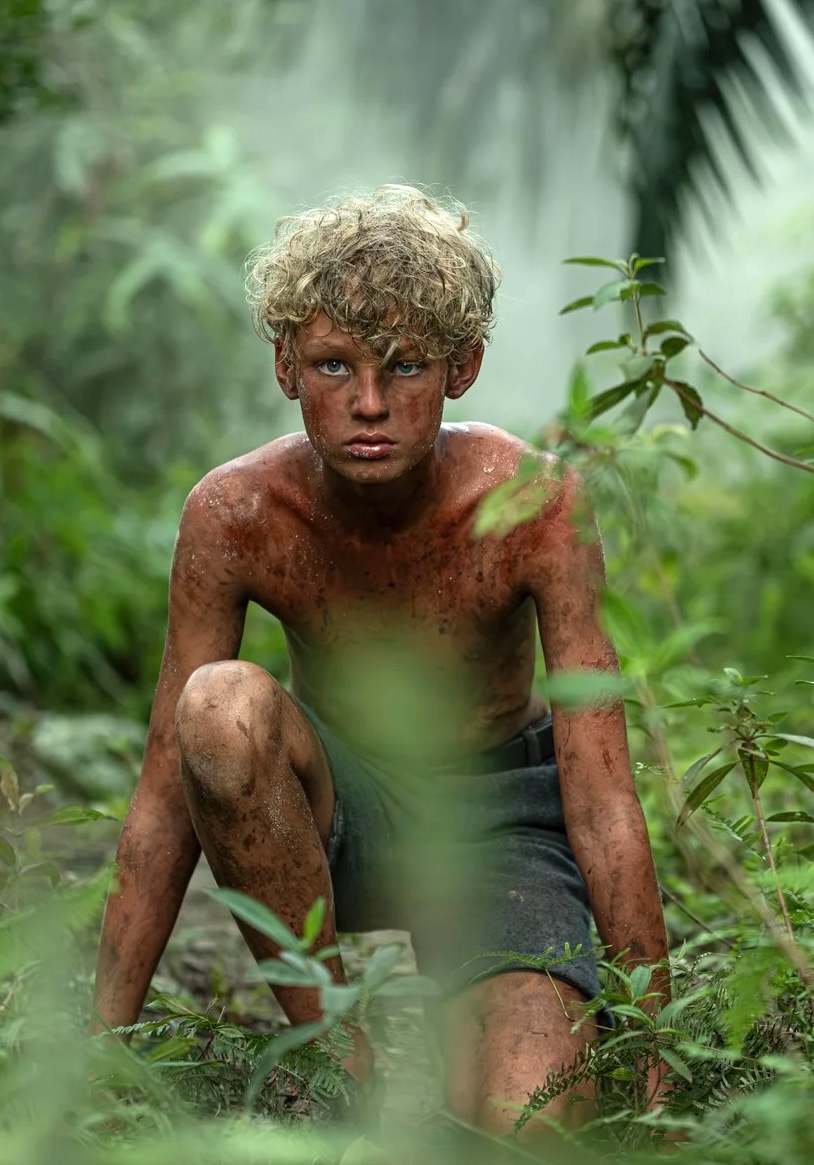
Simon (Ike Talbut), always the most elusive character in the novel, displays elements that help to explain his troubled relationship with Jack (Lox Pratt). And Jack’s innate fear of failure, his rampant desire to be the winner at any cost, is cleverly conveyed. In the story’s latter stages, his ruthless decisions appear to echo the kinds of tyranny we’ve recently seen deployed on the streets of Minneapolis. And Sam ‘n’ Eric (Noah and Cassius Flemyng) surely typify the self-preservationists, who reluctantly go along with heinous events in order to save their own skins.

But the element that really shines in this version of the tale are the depictions of its jungle settings (filmed principally in Malaysia), particularly the night scenes where the surrounding ferns and trees are rendered blood red and occasionally seem to verge on the psychedelic. Likewise, Jack’s ‘hunters’ sport ever more bizarre costumes and adornments, until they begin to resemble creatures from some kind of obscure mythology, looking as if they’ve escaped from the underworld.

Okay, so perhaps this isn’t the perfect adaptation that Brooks delivered all those years ago, but it nevertheless makes for compelling and rewarding viewing. It’s proof, if ever it were needed, that a great piece of literature can always be successfully reinterpreted for a new age.

4.6 stars

Philip Caveney
The Secret Garden

28/02/21

Amazon Prime Video

It’s a hundred and ten years since Frances Hodgson Burnett’s The Secret Garden was first published, but its appeal remains undiminished. I remember fondly the copy I had, part of a collection called ‘Children’s Classics for Girls’ (my brother had ‘Children’s Classics for Boys,’ but we both read all of them, of course, because gender boundaries are stupid, and no one knows that better than kids). I remember my grandad (who worked for MGM) enthusing about the 1949 film version too, because it was mostly shot in black and white, but changed to glorious technicolour in the titular garden. I didn’t actually see it until I was grown up, but I carried that image in my head for years.

Mary Lennox (Dixie Egerickx) is ten years old, and living in India. Her family is rich and British, but their enormous wealth and privilege can’t save them. This latest movie adaptation changes the context, so that it’s 1947, and we see the turmoil outside the Lennox mansion, caused by Partition. In the novel, Mary’s parents die of cholera. Here, it seems, they are victims of understandably violent protest. One by one, the servants leave, and Mary is left alone: orphaned, adrift.

In the novel, Mary is spoiled: a demanding, contrary madam, who needs to be brought down a peg or two. Here, director Marc Munden offers us a more sympathetic perspective: how can a child be held accountable for her bad manners? She has been parented in a distant, remote way; raised to expect others to obey her commands. What this Mary needs is love and attention – but that’s in short supply. Found, eventually, by British soldiers, Mary is shipped off to a cold, grey England she has never seen, to live with an uncle she doesn’t know. And she never gets to know him, really, because Archibald Craven (Colin Firth) is every bit as unreachable as her own parents were, willing to do his duty and provide for his niece, but completely uninterested in actually seeing her. The ancestral home, Misselthwaite Manor, is enormous, so it’s easy for them to live separate lives.

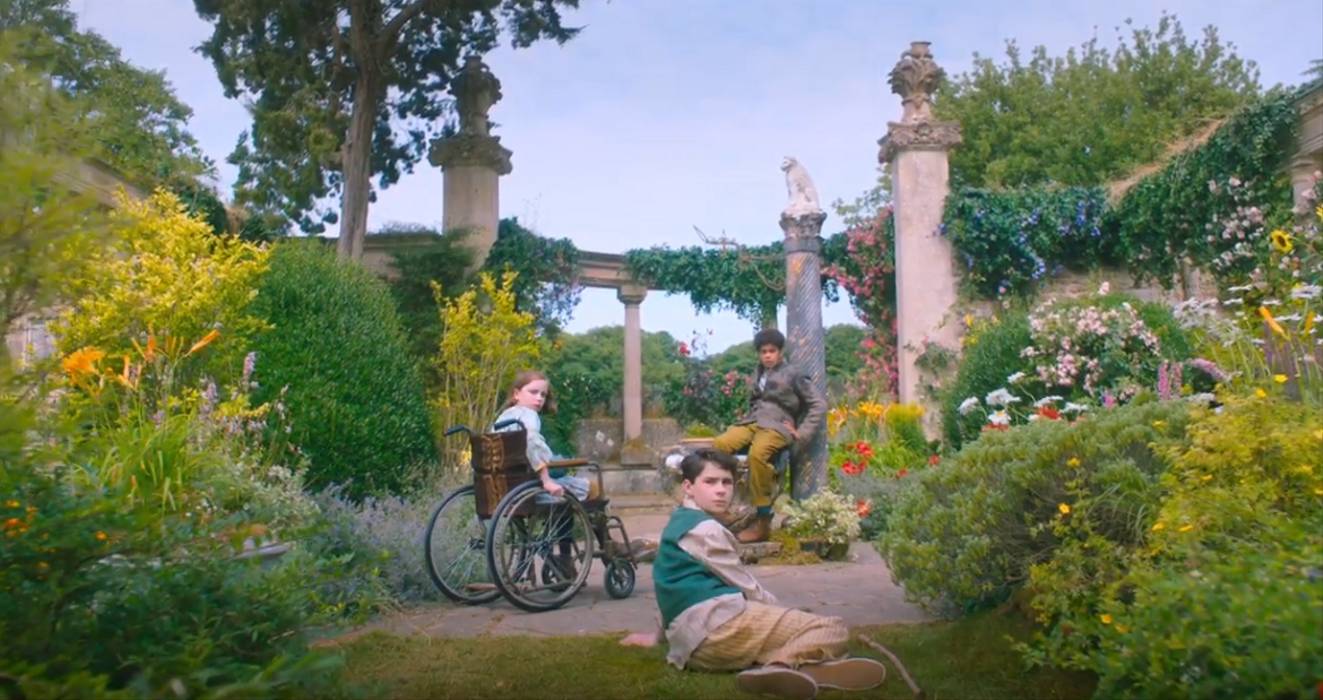
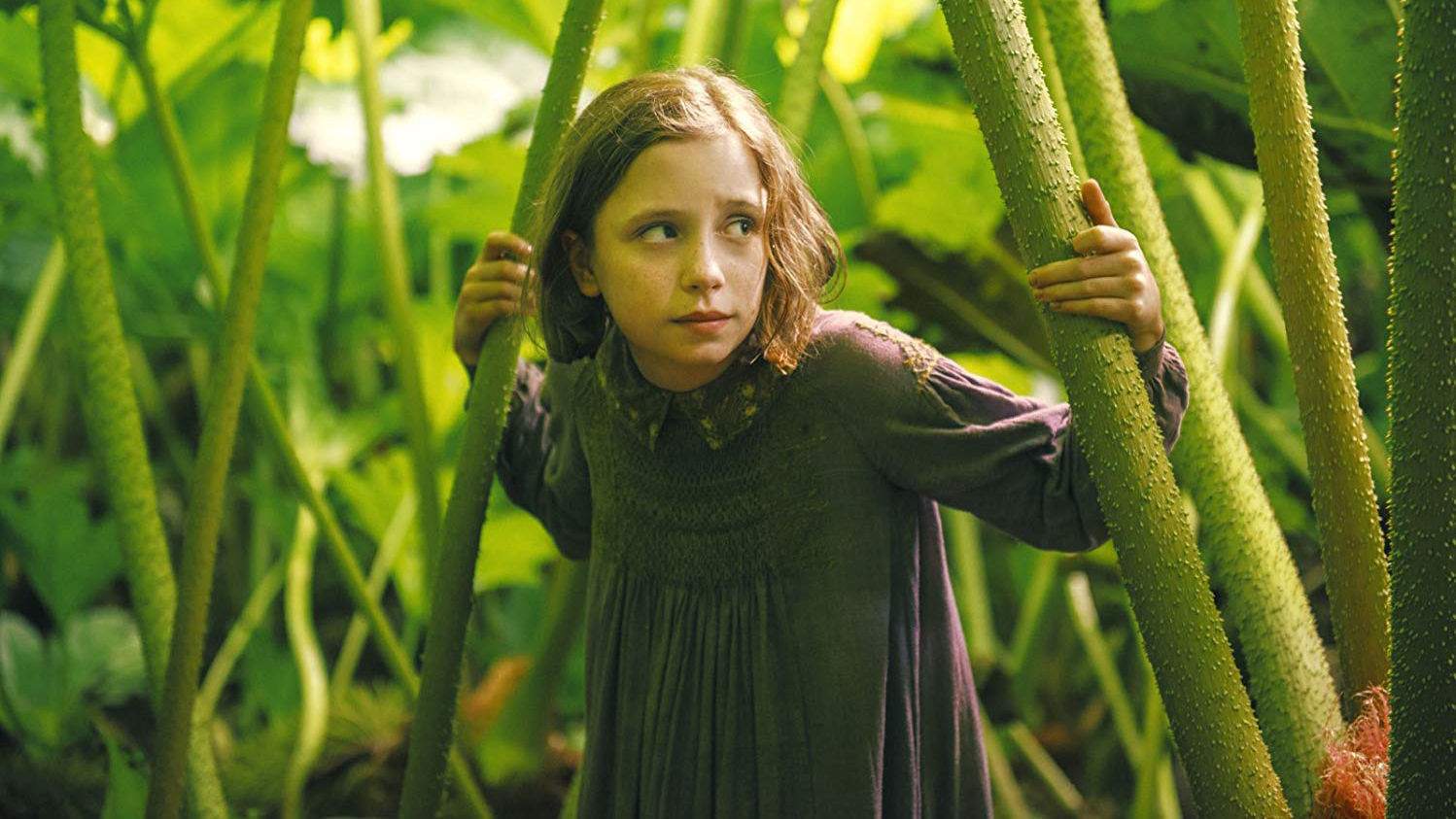
As in India, Mary spends most of her time in the company of servants. Here in Yorkshire, this means the formidable Mrs Medlock (Julie Walters) and the down-to-earth Martha (Isis Davis). While befriending Mrs Medlock is out of the question, Martha proves more amiable, and her brother Dickon (Amir Wilson), whom Mary meets while exploring the estate, soon becomes Mary’s playmate. Together, they roam the vast grounds, take care of a lame dog and, one day, discover a way into a walled garden, which has been locked ever since Archibald’s wife – Mary’s aunt – died, many years ago. This secret, magical place becomes their sanctuary. The idea of transformation is integral to the book, so it’s a little odd that Jack Thorne’s script seems almost to toss this idea aside. Whereas Hodgson Burnett has the children working hard every day to restore the garden to its former glory, here they just play in it. This undermines the central tenet of the story: that gardens (and children) need tending if they’re to grow well.

Take cousin Colin (Edan Hayhurst), who is bedridden, and supposedly out of bounds. He’s another neglected child, trapped by his father’s fears. Archibald thinks Colin has inherited his hunch back, and keeps his son ‘safe’ by cutting him off from the world. Mary hears him crying in the night and decides that what he really needs is to play outside. Like Clara in Johanna Spyri’s Heidi, it turns out that his disability can be ‘cured’ by a bit of fresh air and a positive attitude. (I don’t know if this is as deeply offensive as it seems on the face of things or if it’s a true reflection of poor medical practice at the turn of the last century. Even if the latter is true, does this still apply in 1947?) Still, it’s a transformative move: like the garden, both Colin and Mary become stronger, happier people once they’re shown a bit of love.

This is a good-looking film, and the children all perform well. I like the fact that Mary’s story is contextualised, both by the opening scenes in India and by the old equipment lying around the Manor, a reminder of its recently being requisitioned as a war hospital. But both Walters and Firth are criminally under-used (why cast such great actors if you’re not going to give them anything to do?) and it’s a shame that the garden itself never seems magical; in fact, it’s almost indistinguishable from the rest of the estate, and it’s not clear why this place in particular matters so much to the children. From black and white to technicolour might seem hack nowadays, but I think this movie needs an equivalent trick.

3.6 stars

Susan Singfield