Lyceum

Cinderella: A Fairytale

29/11/25

Royal Lyceum Theatre, Edinburgh

Look, I love a good panto as much as the next drama queen. Still, I have to admit there is something very special about this chance to see a Christmassy rendition of one of the world’s most famous fairy-tales without the distraction of all the boo-hiss-he’s-behind-you-wink-wink-nod-nod stuff. Cinderella‘s plucky orphan narrative is a compelling one, not least because of its moral certainty, where the good are rewarded and the bad are well and truly punished: there’s vengeance at play here, as well as virtue. And, in this version by Sally Cookson, Adam Peck and the Original Company, that dichotomy is writ large.

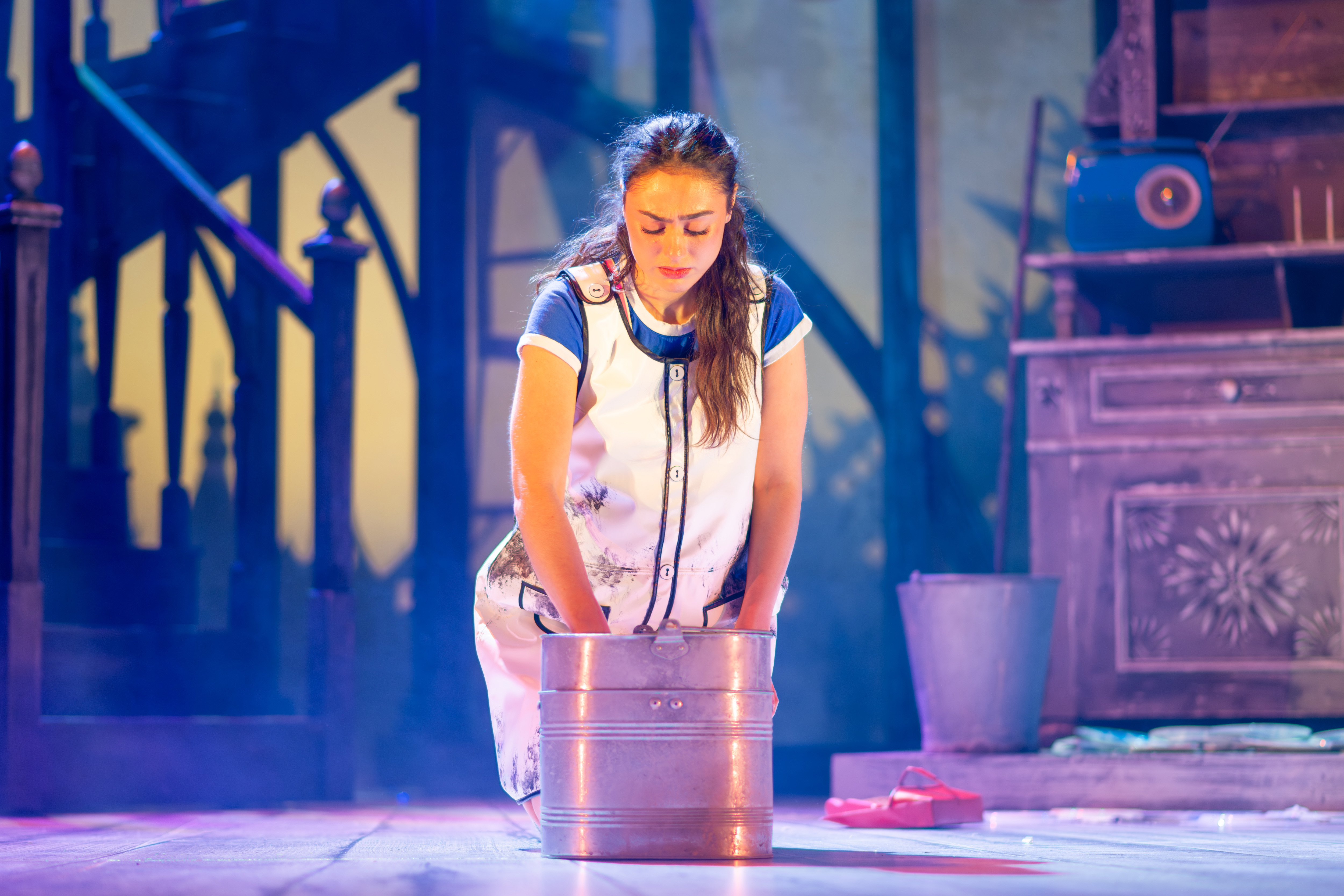
Ella (Olivia Hemmati) lives in a gloriously-realised enchanted forest, all dappled sunlight and multi-coloured birds. The home she shares with her dad (Richard Conlon) is one of those idyllic, romantically-ramshackle cottages where poor people live in story books, and she’s happy there. But when Father marries Mother (Nicole Cooper), everything changes: not only does her step-mum impose a whole raft of irritating rules, she also brings along her own two children, Sister (Christina Gordon) and Brother (Matthew Forbes), who are so priggish and uptight that Ella can’t stand them. And then, just as she’s getting used to the new regime, Father dies, leaving a grieving Ella at Mother’s mercy…

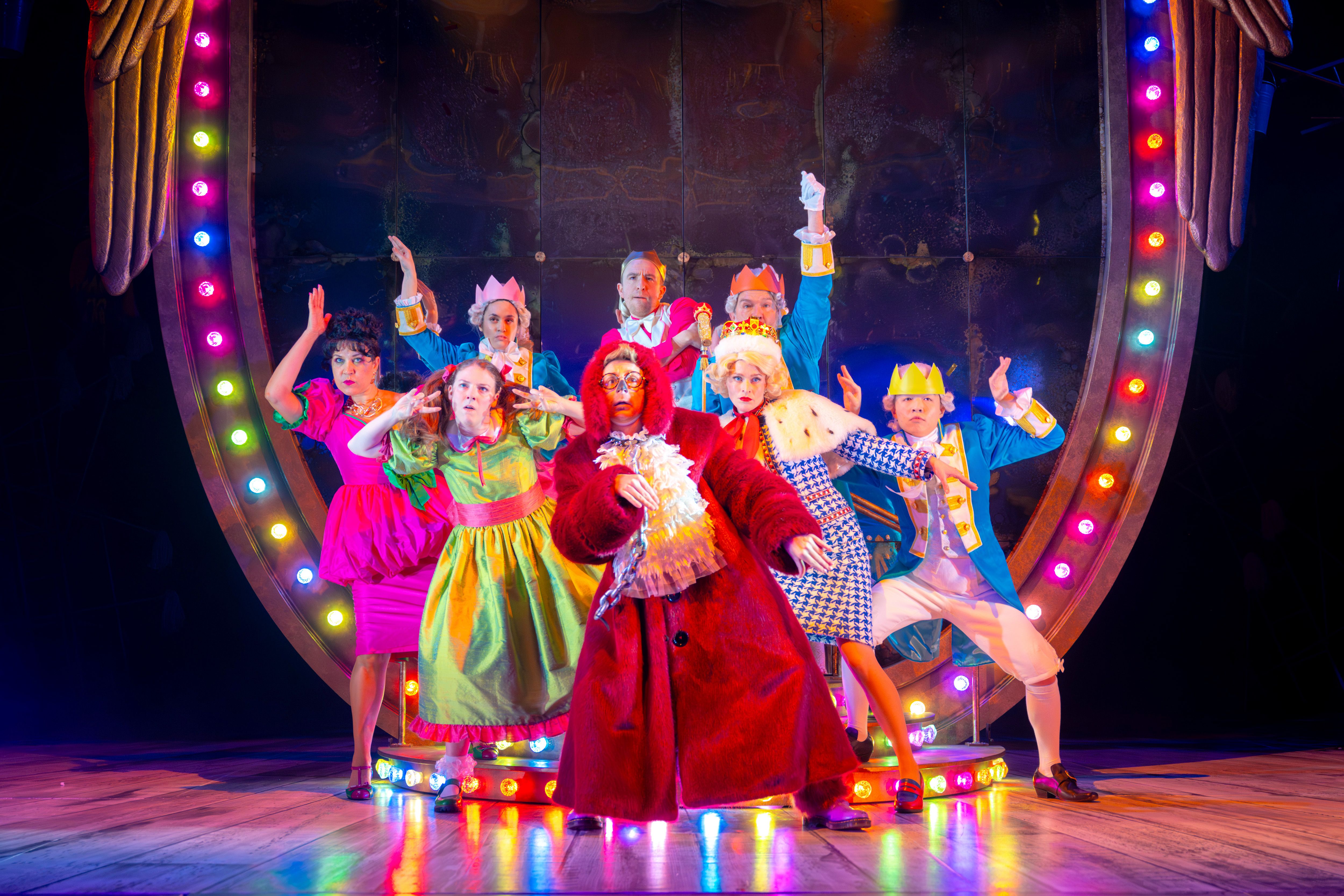
The strength of this show lies in its aesthetic: Francis O’Connor’s set and costume design evoke an ethereal other-worldliness, where magic feels eminently possible. The bird puppets (directed by Forbes and manned by Leo Shak, Stephanie Cremona and the cast) are fabulous, their rainbow plumes as appealing as they are fantastical. Even as a middle-aged woman, I’m completely captivated; how alluring must this staging be for the children in the audience?

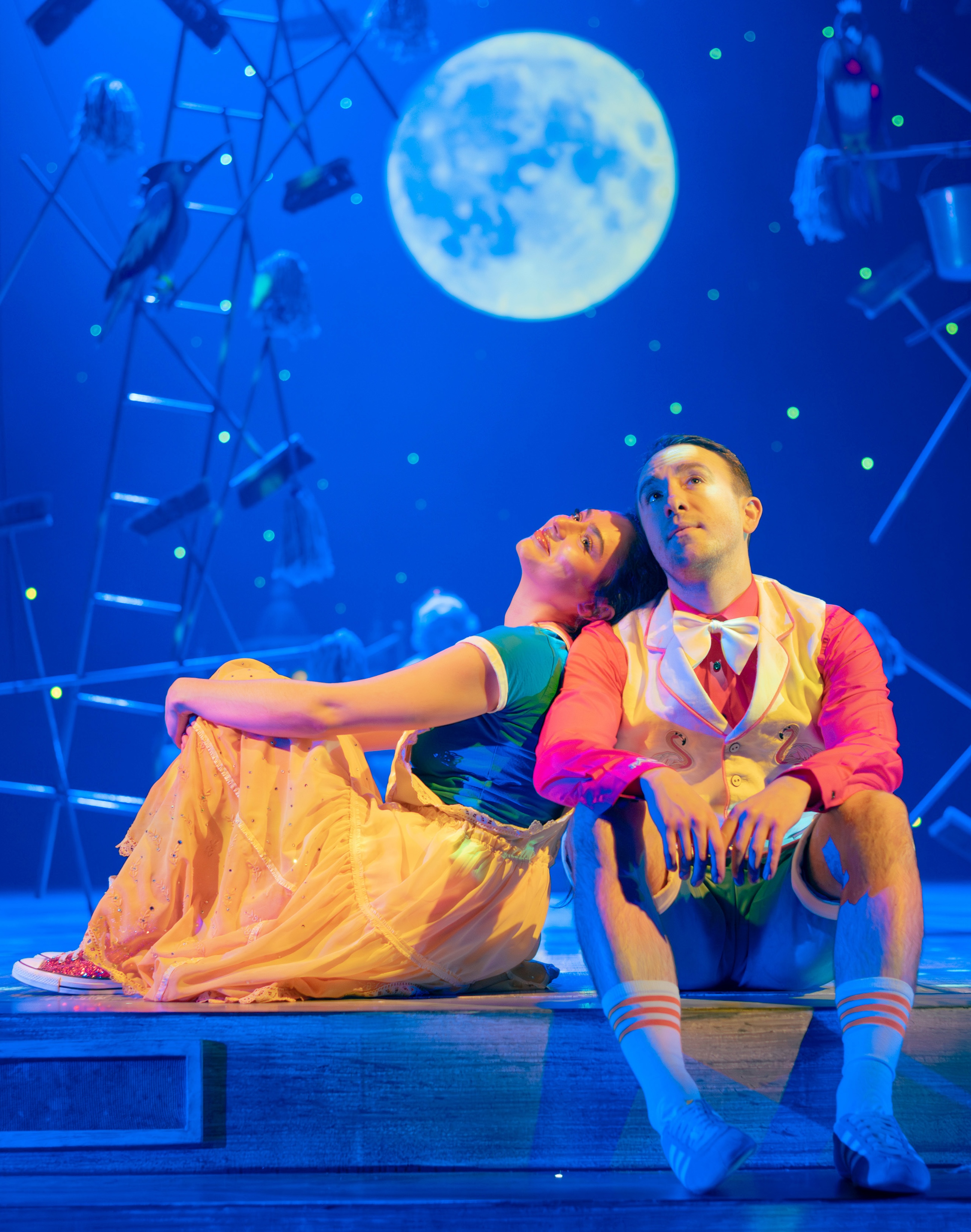
The love story element is underplayed: Prince (Sam Stopford) is a nerdy teenage ornithologist and he and Ella strike up such a lovely, convincing friendship that the idea of their marriage seems jarring and incongruous. Director Jemima Levick wisely eschews any overt wedding pageantry, but I do wonder if it would be better to remove the romance entirely, focusing instead on the simple affection between the pair. After all, it’s not as if there’s the same financial imperative for this Ella, who seems to be living in a whimsical approximation of the contemporary world, as there was for her Grimm progenitor, who needed a husband to escape her servitude.

Cooper is obviously having a whale of a time as the odious Mother, camping up her tantrums and cruelty to create a deliciously-devilish interpretation of the character. The protracted toe-chopping sequence – the production’s only real nod to the folk story’s dark heart – is a gruesome highlight. Meanwhile, Gordon and Forbes’ Ugly Siblings are more sympathetic and nuanced than their traditional counterparts, frightened and corrupted by their toxic mum – and clearly redeemable. Carly Anderson has less to do as Queen, who appears here as a slightly-sozzled, benignly-bemused socialite. It’s an interesting take on the role but she is under-used.

Jon Beales’ music and Emily Jane Boyle’s choreography complement each other perfectly, enhancing the story and ensuring the pace never flags.

All in all, this is a delightful production, and one that is sure to enthral audiences of all ages this festive season.

4.2 stars

Susan Singfield
The Merchant of Venice

22/01/25

The Royal Lyceum, Edinburgh

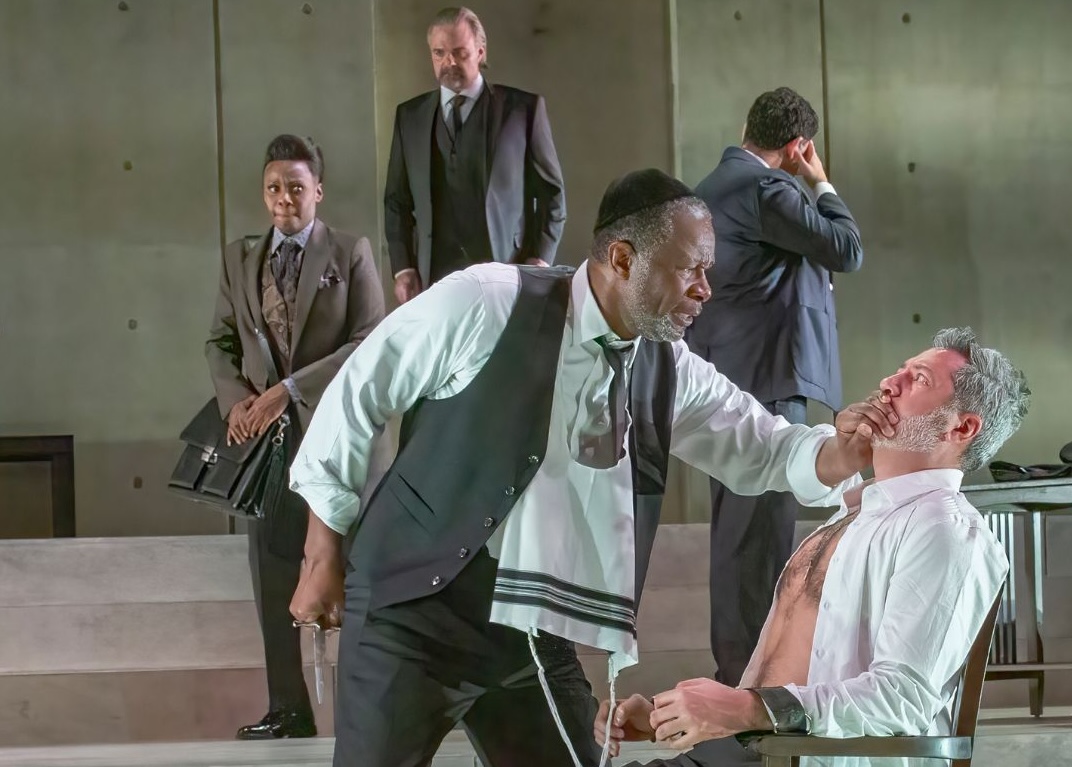
New York’s Theatre for a New Audience brings The Merchant of Venice to Edinburgh’s Royal Lyceum as part of a reciprocal exchange programme. Starring John Douglas Thompson as Shylock, this is a bold and provocative production, drawing explicit links between 16th century Venice and an all-too-believable near-future USA.

Director Arin Arbus says she wants “to discover what this play means to us in the here and now” – and she certainly does that, using Merchant to hold up a mirror to a divided society where people’s views are polarised and entrenched. In Shylock’s Venice, Jews have few rights. They are forced to live in ghettos, prohibited from owning property, limited in the kind of work they are allowed to do. The prejudice runs deep: even Antonio (Alfredo Narciso), widely reputed to be one of the good guys – “a kinder gentleman treads not the earth” – deems it appropriate to spit at Shylock and call him a dog, all while asking him for money. In the modern American dystopia where this production is set, Thompson’s Black Shylock suffers comparable – and recognisable – iniquities.

It feels like a timely reminder of what we need to avoid, of where discrimination and inequality inevitably lead. Who can blame Shylock’s daughter, Jessica (Danaya Esperanza), for wanting to escape the ghetto, for hooking up with Lorenzo (David Lee Huynh) and converting to Christianity? Why shouldn’t she seek a better life? But it’s her desertion that pushes Shylock, already at breaking point, over the edge, fuelling his thirst for vengeance. What has he left to lose? Just as the Christian Venetians treat the Jews as a homogenous group to be despised, so Shylock views them all as one enemy. No wonder he is furious; no wonder he shows Antonio no mercy.

But the odds are stacked against him. The legal system isn’t fair or balanced: the laws are written by the powerful. Plus ça change, plus c’est la même chose. Power corrupts. Even Portia (Isabel Arraiza), who seems a pretty decent sort at first, isn’t immune. She changes when she assumes the mantle of supremacy, swaggering into the court in her borrowed clothes and treating Shylock with cruel contempt. Arbus’s direction highlights this theme; indeed, this version of the courtroom scene is the most intensely horrifying I have ever seen. The auditorium is eerily silent, as if we’re all holding our collective breath, appalled by Portia’s gloating as she humiliates Shylock.

I’m watching this just three days after Donald Trump has issued an executive order dismantling federal diversity, equity and inclusion programmes, which lends this consciously diverse production even more weight and urgency. Shakespeare’s message transcends the centuries; we have to heed its warning.

4.6 stars

Susan Singfield

The Girls of Slender Means

17/04/24

Lyceum Theatre, Edinburgh

Gabriel Quigley’s vivacious adaptation of Muriel Spark’s novel opens in the 1960s. Jane (Molly Vevers) is the editor of Elan magazine. Her bright young assistant, Bluebell (Molly McGrath), nervously pitches a feature, but Jane is distracted by news of a certain Nicholas Farringdon (Seamus Dillane)’s demise. Maybe she can write a piece about him? After all, she knew him, back in the day. And, just like that, she is hurtling down Memory Lane, back to 1945 and the months between VE Day and VJ Day, when she lived in the May of Teck…

The May of Teck is a pithily-straplined boarding house, “for the pecuniary convenience and social protection of ladies of slender means below the age of thirty years, who are obliged to reside apart from their families in order to follow an occupation in London.” The young occupants – who all work as secretaries – share everything: rations, deportment tips, clothes. One dress in particular, a Shiaparelli known affectionately as Scappers, is dear to all their hearts. They each get to wear it on special occasions; there’s a strict rota in place.

The first act is sprightly, frothy, almost determinedly light; the focus is on fashion and friendship, dancing and diets. Beautiful Selina (Julia Brown) carefully monitors her calorie-intake to ensure her hips don’t grow too wide to wriggle through the tiny bathroom window so that she can sunbathe on the roof. Live-wire Anne (Amy Kennedy) provides a caustic running commentary on everything and everyone, while angelic elocution teacher, Joanna (McGrath again), recites poetry and sews. Meanwhile, Pauline (Shannon Watson) never stops prattling about her love affair with famous actor Jack Buchanan, and our Scottish protagonist, Jane, forges fan mail to authors for her publisher boss, and dreams of being a poet herself one day. Her attempts to be taken seriously – her dowdy cardigan, her constant references to “brain work” – are undermined by her goofy awkwardness, wonderfully captured by Vevers.

There’s a tonal shift in the second act. As we get to know the girls better, we begin to see beneath the gilded surface. Their frivolity is revealed for what it is: a distraction from the horrors they have endured during the war. It shouldn’t come as a surprise; it’s been there all along in Jessica Worrall’s set design, the monochrome backdrop of bombed-out buildings a constant reminder that the girls’ colourful chatter belies a darker truth. But it shocks, providing an effective wake-up call. They are survivors. No wonder they cling so desperately to the fantasy Scappers provides.

Under Roxanna Silbert’s direction, the story has a clear contemporary resonance, and not just because we, like they, are living through the dying days of a Tory government, fearful of what might happen next. The production is impressive as a whole, but there are also some stand-out scenes, most notably the droll office sequence and the dance, where the girls’ boyfriends are represented by legless mannequins.

Spark’s lesson is clear. Don’t underestimate people because they seem shallow; you don’t know what’s concealed within their depths.

4.3 stars

Susan Singfield

Two Sisters

15/02/24

Royal Lyceum Theatre, Edinburgh

As the title suggests, there’s more than a nod to Chekhov in David Greig’s new play, Two Sisters, currently premiering at Edinburgh’s Royal Lyceum Theatre, where he’s also artistic director. And it’s not all about the gun…

That’s not to say that this is an adaptation; it’s not. The plot, structure and cast of characters are very different. And yet it is, despite all that, a cleverly updated version of the same idea, embracing the Russian’s major themes – suffering, love, longing, change – and distilling his bitter humour and nihilistic worldview into something immediately recognisable to a modern audience.

Emma (Jess Hardwick) is a corporate lawyer, married to a hotshot businessman with his own plane. She’s also pregnant and sees her impending motherhood as some kind of deadline: if she can’t pen a novel before the baby’s born, then it will be too late. With this in mind, she books herself a caravan at the holiday park she used to visit with her family as a child. A whole week to herself, reminiscing and writing. What could be more perfect?

But she’s reckoned without her flaky older sister, Amy (Shauna Macdonald), who’s always ricocheting from one crisis to another. This time, her long-suffering husband has caught her shagging the plumber, so she’s come to cry on Emma’s shoulder. 

And rekindle an old flame…

Directed by Wils Wilson, this is a slow-paced piece, reflecting the characters’ inertia. The chorus of teenagers embodies this listlessness too, at once pulsing with life and stymied by lethargy. They hang around the park, aloof and watchful. Nothing escapes their attention. It all matters too much, and yet it doesn’t matter at all.

Macdonald and Hardwick are a charismatic duo, the former’s sharp edges and barely-suppressed longing contrasting perfectly with the latter’s languid determination. Their relationship feels real and convincing. 

Lisbeth Burian’s wonderful set is like a brutal mirror, emphasising the grottiness of the seaside resort, with its peeling edges, dingy caravans and rusting climbing frame. Emma might be blind to the park’s fatal decline, indulging in nostalgia-fuelled fantasies of restoration, but we in the audience are all too aware that it is a lost cause. 

There are a few false notes. I find myself distracted by Lance (Erik Olsson)’s assertion that he’s only ever left Fife to visit Ibiza, when he clearly has a Swedish accent. I wonder too why Amy’s been sleeping in her car when she’s got a job in television; surely she can afford a hotel? These are minor points, but they snag, pulling me out of the drama. I also think that the fourth-wall-breaking teenage chorus could be given more to do; the play comes to life whenever they’re involved.

In true Chekhovian spirit, there is no easy take-home message here; the characters are not gifted with a happy ending, and the threads are not neatly tied. Instead we’re left with a sense of  melancholy. “Our life is not ended yet. We shall live! The music is so happy, so joyful, and it seems as though in a little while we shall know what we are living for, why we are suffering… If we only knew – if we only knew!”

4 stars

Susan Singfield

Castle Lennox

31/03/23

Lyceum Theatre, Edinburgh

The titular Castle Lennox is a hospital, but not as we know it. Places like this – providing long-term residential care for people with learning disabilities, shutting them off from the outside world – no longer exist. Here, playwright Linda McLean explores the pros and the cons: the deep, affecting friendships forged and the toxic regime, rife with bullying.

It’s 1969 and teenager Annis (Emma McCaffrey) is proving too much of a handful for her stepmother (Fletcher Mathers). Annis is lively, independent and full of fun, and she also has a learning disability, which means she’s eligible for enrolment at Castle Lennox. Simultaneously entranced and terrified by its fairytale appearance, Annis enters with hope as well as trepidation. But the staff nurse (Mathers again) takes against her, and – as the years tick inexorably by – Annis’s spirit seems to be quashed. Thankfully, there are also some moments of joy, such as her tentative romance with fellow patient, William (Gavin Yule) – but is she too institutionalised to cope when, twenty years later, Castle Lennox finally closes down?

Castle Lennox, directed by Maria Oller, is a joint production between the Lyceum and Lung Ha, Scotland’s leading theatre company for learning disabled actors. It’s a superb example of how empowering and inclusive drama can be, a cleverly-woven narrative that both supports and enables its fine cast, as well as engaging a sold-out house. McCaffrey shines in the lead role, but fellow actors Yule, Emma Clark (Jo) and Nicola Tuxworth (Marie) also stand out, the latter clearly relishing her devilish character.

But, although the individuals are great, it’s the choral scenes that really make this piece. Movement director Janice Parker creates a bold dynamic, evoking the cheerful chaos of the laundry and Saturday tea parties, and the performers are all absolutely on their game, singing and dancing with gusto and aplomb. BSL interpreter Rachel Amey is nicely integrated into the production, subtly assuming the role of Annis’s dead mother, reassuring her daughter when she’s feeling low.

Karen Tennent’s nifty set places us first in an enchanted forest, where a grand gateway yields to an altogether more prosaic and clinical space, where white curtains segregate the patients from outsiders – and from each other. The costume design (by Alison Brown) also helps to locate us both in time and place, and I like the way Annis’s clothes become drabber as the institution wears her down.

All in all, Castle Lennox is a delight, well-deserving of the standing ovation it receives tonight.

4 stars

Susan Singfield

You Bury Me

08/03/23

Lyceum Theatre, Edinburgh

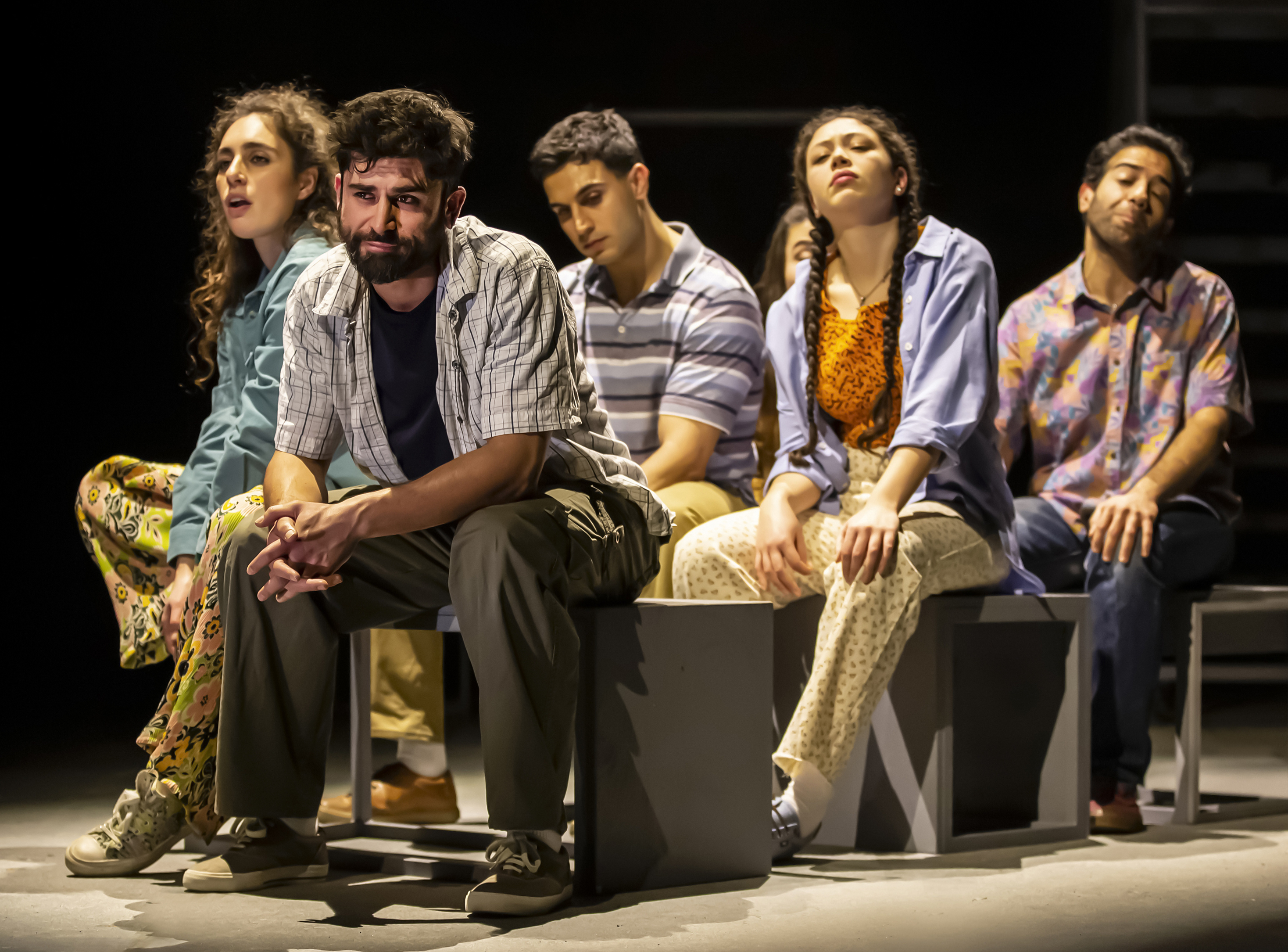
You Bury Me is a play about six young Egyptians coming of age in the aftermath of the Arab Spring – “a generation emerging from a national trauma, determined to live and love freely”. It’s a fascinating premise. I’m aware of the Arab Spring, of course; I read the news. But I don’t know anything about life in modern Egypt, nor of the ‘what happens next’. I’m keen to learn more.

Written by an anonymous playwright – under the alias ‘Ahlam’ – and directed by Katie Posner, the play is a co-production with the ever-dependable Paines Plough (among others), and the winner of 2020’s Women’s Prize for Playwriting. Its strength lies in the verve and vitality of the characters, all brimful of youthful energy, fighting to find their places in a changing world.

Alia (Hanna Khogali) and Tamer (Moe Bar-El) have both just graduated from university, but they’ve little experience of sex and relationships. They’re in love and want to get married, but it’s not as easy as all that. Alia is Muslim and Tamer is Christian; Alia’s family, who all work for the police, will not be pleased – and Cairo is a city where displeasing the police can have serious consequences…

Meanwhile, eighteen-year-old Maya (Yasemin Özdemir) is making the most of her last year of high school, attending every party she can, and making out with lots of guys. She’s bubbly and outgoing, and doesn’t care a jot about her ‘reputation’. New girl Lina (Eleanor Nawal) is shy and insecure, but opposites attract sometimes, and the two soon become firm friends – but is this enough for Lina?

Osman (Tarrick Benham) is Maya’s half brother, and he’s a political writer, publishing a blog that makes him a target for the authorities. We never see his girlfriend, Zeina, but we learn that she’s an activist too, so it’s no surprise to learn that Rafik (Nezar Alderazi) – who’s staying with Osman because his dad has kicked him out for being gay – thinks there are people watching the house. The two men fear for each other: Osman urges Rafik to delete Grindr, while Rafik wants Osman to stop writing his blog. But neither is prepared to sacrifice their sense of self in order to feel ‘safe’.

All six actors deliver lively and spirited performances, and I like the choral narration that provides context. Özdemir in particular really owns the stage; she is very charismatic, and Maya and Lina’s burgeoning friendship is always believable. Khogali and Bar-El make the most of the humour in Alia and Tamer’s fumbling sexual encounters, as well as inviting empathy for the lovers’ plight.

Although Benham and Alderazi both inhabit their roles well, their strand of the play is less satisfying, mainly because it is all told rather than shown. We don’t see any of Rafik’s dates, nor his family disowning him. Neither do we find out anything about what Osman is actually writing: the political discourse here is frustratingly vague. What is he saying that is so inflammatory, and how much danger is he really in? Without these details, Osman’s rage at his blog being deleted lacks context, and Rafik’s big emotional scene doesn’t elicit as much sympathy as it ought.

You Bury Me is eminently watchable – in the same way as an episode of Friends or Skins – and there are plenty of laughs, as well as moments of sadness. Ultimately, however, I don’t think it quite delivers on its political promise.

3.3 stars

Susan Singfield

Hedda Gabler

images images-1

10/04/15

Lyceum, Edinburgh

Edinburgh’s Lyceum is a beautiful Victorian theatre, and a delightful place to visit in its own right; it’s hard to imagine anyone could be unimpressed by the perfectly preserved intricacies of its decor; the sumptuous blues, golds and reds, redolent of old-fashioned luxury. It’s lovely.

If this, along with the choice of an Ibsen piece, suggests a staid, old-fashioned production, then nothing could be further from the truth. This version of Hedda Gabler (adapted by Richard Eyre and directed by Amanda Gaughan) is vivacious and sprightly; as fast and funny as it is heartbreaking and tragic. Nicola Daley, as Hedda, is never less than utterly engaging; she clearly revels in the role, and captures perfectly the awful attractiveness of Hedda’s reckless malevolence. By the end, we feel sorry for Hedda, but we never lose sight of how dangerous she is.

The supporting cast is strong too: I love Sally Edwards’ Aunt Juju – a real Miss Bates of a character – as irritating and vapid as she is charming and kind; Benny Young, as Judge Brack, oozes sly debauchery concealed beneath a layer of respectability so thin that only Juju is taken in. Jade Williams convinces as the outwardly naive – but ultimately hard-headed – Thea, and Jack Tarlton’s swaggering energy makes Loevborg’s wild dissolution a physical, menacing thing.

The set is marvellous too: the light, fresh, open design makes for a queasy juxtaposition with the suffocation Hedda feels in her home, her marriage, her social class. It underscores the point for us that poor George will never be able to give her what she needs; no open window will ever offer enough air.

I loved this play. I can’t fault it. I’m still thinking about the characters twenty-four hours later, contemplating their behaviours and their fates. A fabulous piece of theatre.

5 stars

Susan Singfield