
Linus Sandgren

Jay Kelly

17/01/01

Netflix

Our Netflix catch-up continues with this whimsical and charming film from Noah Baumbach, clearly influenced by Federico Fellini’s . George Clooney stars as the titular Mr Kelly, a handsome and successful movie star, now forced to contemplate the highs and lows of his career and personal life – and the things he could perhaps have handled better. With his latest film wrapped, Jay has been looking forward to spending time with his daughter, Daisy (Grace Edwards), but she tells him she’s heading off to France with friends.

Then veteran film director, Peter Schneider (Jim Broadbent), the man who gave Jay his first break, unexpectedly dies. After the funeral, Jay bumps into an old college-mate, Timothy (Billy Crudup), and goes for a drink with him – where events take an unexpected turn.

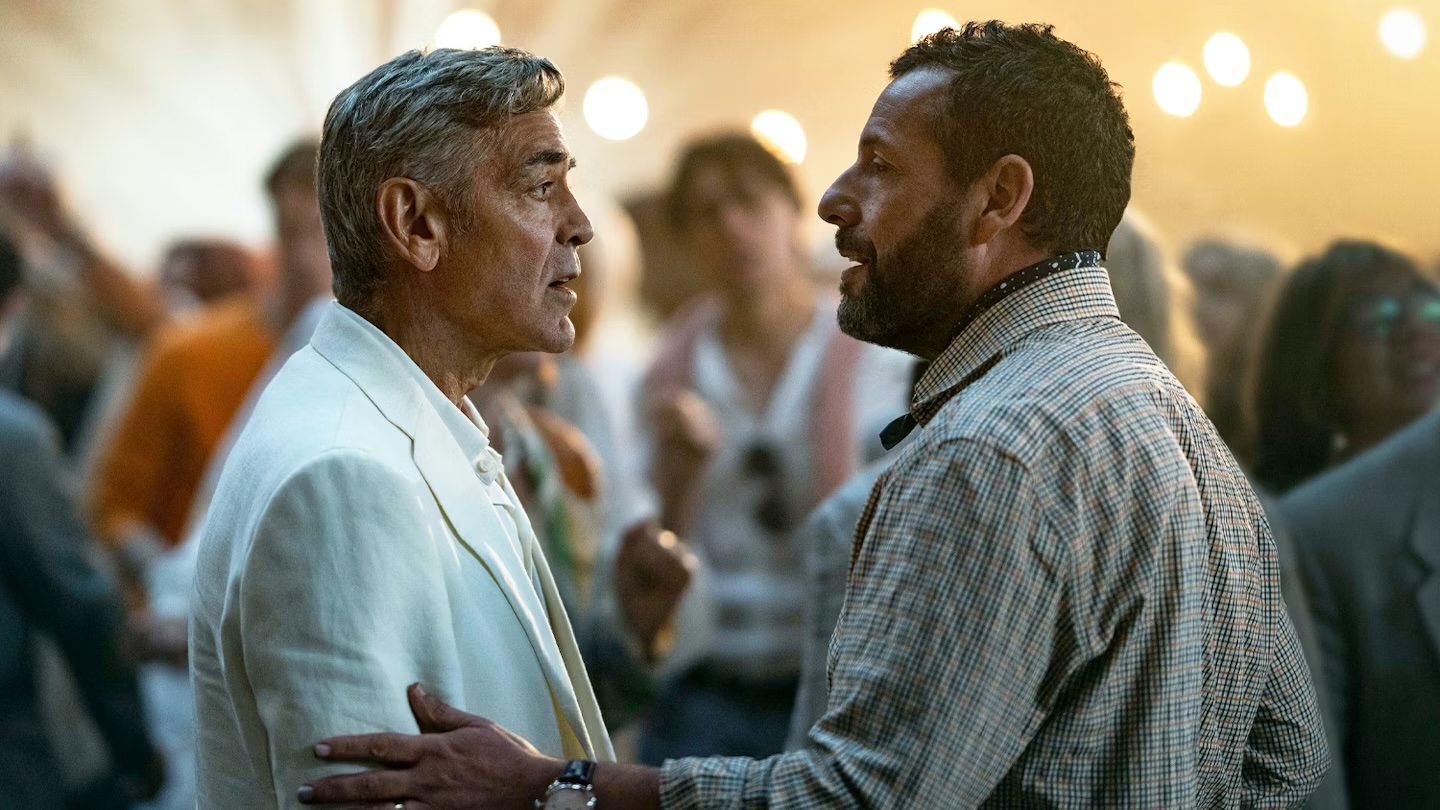
Feeling the need to make himself scarce for a while, Jay instructs his long-suffering manager, Ron (Adam Sandler), to accept an offer on his behalf for a trip to Tuscany to attend a career-tribute award. This is awkward, because Jay has already told them that he’s not interested in attending the event and the trophy has been promised to Jay’s main rival, Ben Alcock (Patrick Wilson). But Ron has spent most of his life dealing with Jay’s unpredictable impulses and manages to persuade the organisers to forge a second statuette, to make it a joint celebration. Jay, Ron and publicist Liz (Laura Dern) set off for Italy, along with a whole entourage of followers.

On the journey, Jay has time to contemplate key events from his past – actually stepping through a series of doors, to revisit them as they happen. It soon becomes apparent that success as a film star comes at a high price. When everyone around you has a stake in your success – even the ever-faithful Ron is taking 15% of everything Jay earns – it’s hard to trust anyone.

And as the prize-giving ceremony looms ever closer, it begins to dawn on Jay that he is in danger of having nobody to share the moment with.

Clooney is the perfect choice for this role – there’s always been something distinctly old-fashioned about his rugged, matinee idol looks – and a final scene where he contemplates different versions of himself from his own stellar career is nicely handled. The film also features some lovely insider details: the shooting of a love scene with Charlie Rowe standing in as the younger JK, reveals how clinical an exercise it is and how the magic is created. Baumbach’s screenplay (co-written with Emily Mortimer) is witty and insightful, while Linus Sandgren’s gorgeous cinematography gives the film a dazzling, sun-drenched sheen.

Some reviewers have been dismissive of Jay Kelly, but Clooney inhabits the lead role with absolute authority. It’s hard to imagine who might have made a better fit. There have been rumours that this could be his final role as an actor (lately he’s been more interested in being on the other side of the camera). Should that prove to be the case, this would seem a fitting way to bow out.

4.2 stars

Philip Caveney
Saltburn

22/11/23

Cineworld, Edinburgh

Emerald Fennell’s second film shares some DNA with her debut: they’re both stories of revenge writ large, of simmering grievance metamorphosing into violence. But, while Promising Young Woman was an out-and-out success, Saltburn is more of a mixed bag.

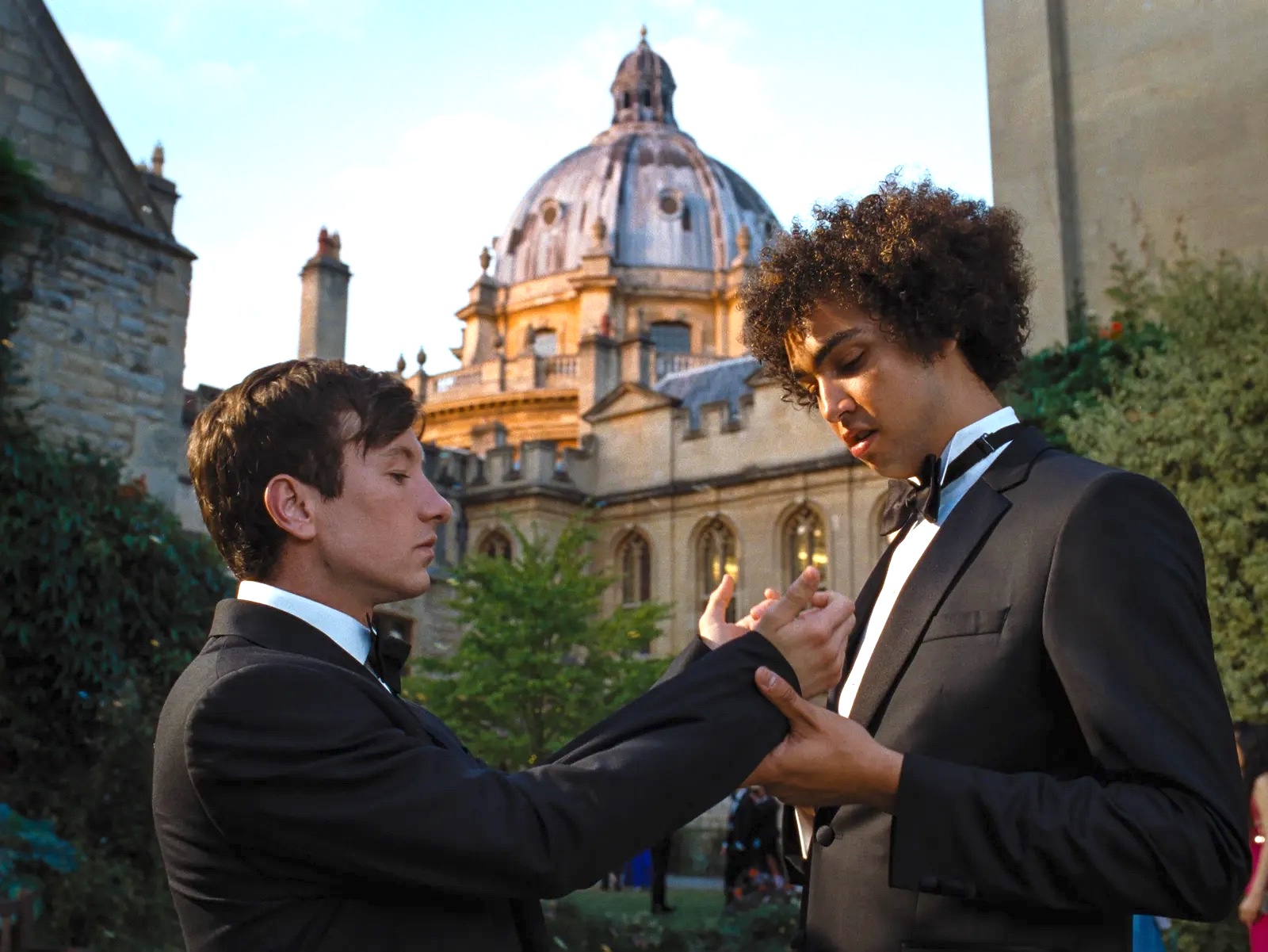
Oliver (Barry Keoghan) is a fish out of water at his Oxford college. Not only has he made the terrible faux pas of devouring every book on the summer reading list, he’s also got a Scouse accent and his tuxedo is rented. “The sleeves are too long,” sneers his tutorial-mate, Farleigh (Archie Madekwe). “Still, you almost pass.” Frustrated by his outsider status and bored rigid by Jake (Will Gibson), apparently the only other non-posh person in the city, Oliver becomes obsessed with Felix (Jacob Elordi), insinuating himself into the young aristocrat’s circle. Felix warms to Oliver, taking him under his wing and inviting him to spend the summer at his family home. Oliver is delighted: the titular Saltburn is a bastion of excess and he is more than ready to indulge himself. But, as the weeks slip by and real life looms, things begin to take a darker turn…

The first third of this film is anachronistic. It’s supposed to be set in 2006, but the Oxford we see here feels like a throwback to the 1920s. Although there’s no denying that the university is still disproportionately posh, by the time the movie’s events occur, about 50% of Oxford undergraduates came from state schools (the figure is 68% now) – and, even among those who were privately educated, only a tiny number were as privileged as Felix and his friends. I find myself rolling my eyes at the idea that Oliver and Jake might stand out amongst their peers, or that anyone would notice them enough to bellow “scholarship boy” as they pass by. It’s unnecessary too: Oliver’s desire to move in Felix’s orbit doesn’t need to be dependent on the absence of any other working or middle-class people.

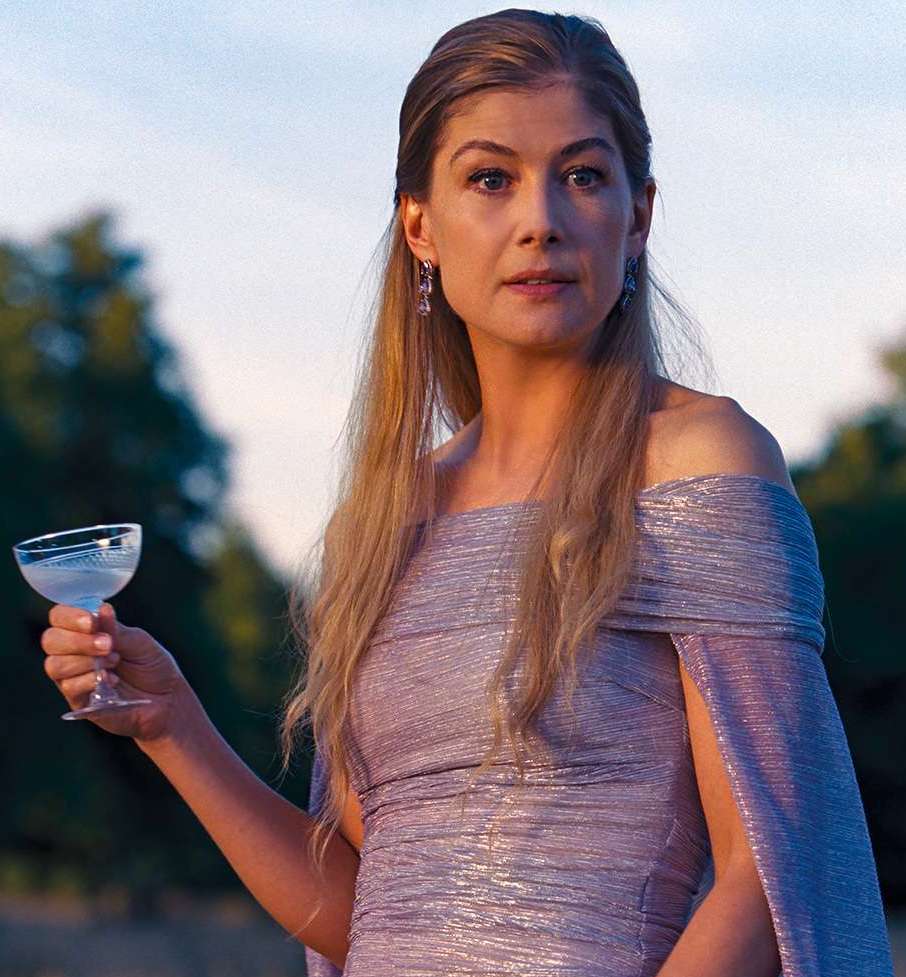
When the action moves to Saltburn, things improve dramatically – although the sense of stepping back in time might be heightened if Fennell were more effective in capturing the early noughties in the opening stretch. Here we meet Felix’s parents, Sir James (Richard E Grant, on top form) and Elspeth (played with obvious glee by Rosamund Pike). “Mummy” is the best thing about the whole movie, delightfully lacking in self-awareness, blithely callous in every word and deed. She gets the funniest lines too, and Pike delivers them with deadly precision: when Elspeth hears of her erstwhile friend’s death, for example, she responds with a scathing, “She’ll do anything to get attention.”

If the revenge, when it comes, is faintly ridiculous, then it’s found a suitable home in Saltburn, where everything is magnified, where there’s too much space, too many artefacts, too many people and too much money. The house and grounds provide a perfect backdrop for this illustration of careless privilege, and Linus Sandgren’s cinematography is almost hallucinogenic, reinforcing the sense of dislocation from the outside world.

Of course, there are many ways to read this sly, allusive story, with its Brideshead references and satirical tone. The most generous interpretation is that the joke is on the upper classes, depicted here as shallow and vacuous, playing games with other people’s lives to relieve their louche ennui. But it also comes across as a warning to the toffs to beware the pesky proles. Give us an inch and we’ll take a mile; we just don’t know our place. Fennell (whose own rarefied life is far closer to the Cattans’ than to Oliver’s) reveals an unfortunate blind spot when it comes to class. Elspeth references Pulp’s Common People early on, refuting the idea that the lyrics refer to her. “No, it wasn’t based on me. She had a thirst for knowledge. I’ve never wanted to know anything.” But there are a few lines later in the song that are perhaps more relevant: “Like a dog lying in a corner, they will bite you and never warn you. Look out! They’ll tear your insides out.” There appears to be an underlying (perhaps unconscious) snobbery at play.

Despite its dodgy subtext, Saltburn is a curate’s egg of a movie, with some very good parts indeed, and the final sequence – set to Murder on the Dancefloor – is utterly glorious. I look forward to what Fennell does next, albeit with some trepidation.

3.3 stars

Susan SIngfield