Lesley Hart

Maybe Tomorrow

14/10/25

Traverse Theatre, Edinburgh

Glamour and strife! Bigger than life!”

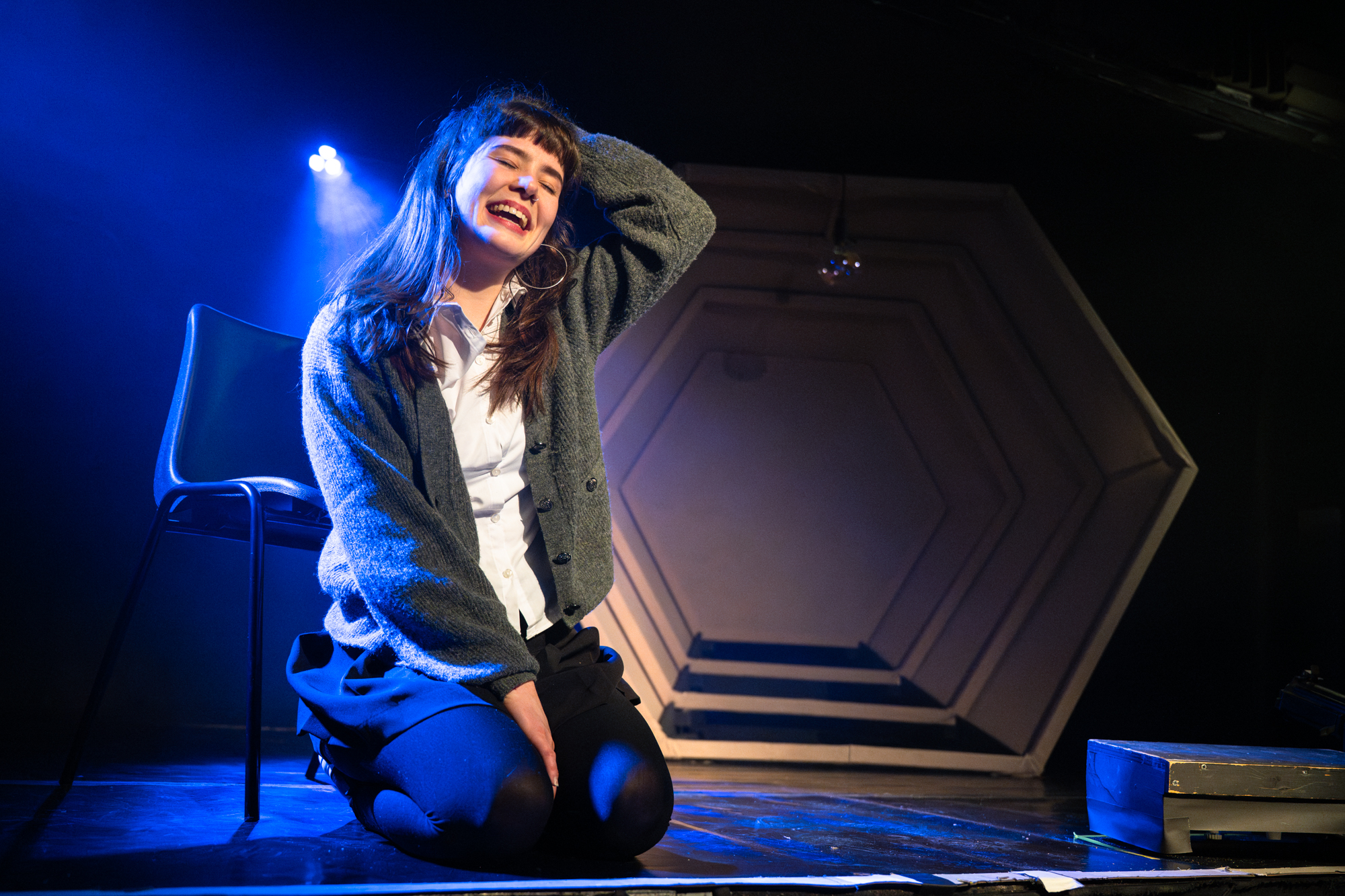
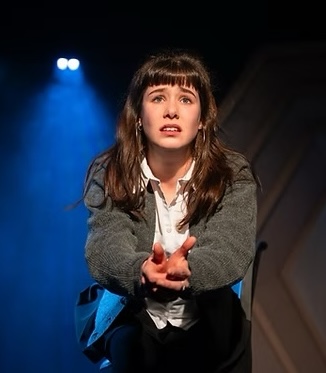
Siân Silver (Liz Ewing)’s showbiz career is careering towards the end of Sunthorpe-on-Sea’s dilapidated pier, where the seventy-five-year-old singer is gamely touting her outmoded razzle-dazzle to ever-smaller audiences for a measly £250 a week. It’s a long way from the stardom she dreamed of, but at least she’s still on stage, performing – until the theatre manager tells her she’s no longer required. Siân doesn’t know who she is if she’s not sparkling in the spotlight. What’s left when even the dregs she’s settled for are so cruelly stripped away?

Forced to confront her failure, Siân is visited by the ghost of Siânny past (Julia Murray). Young Siânny is brimming with hope and vitality, urging her future self to embody the spirit of her long-time heroine, Little Orphan Annie. Instead of bemoaning her hard-knock life, Siânny thinks Siân should focus on making the most of the years she has left. “Maybe now it’s time…”

At first, Siân’s having none of it but she soon realises she has nothing to lose. Why not step into the plucky red-head’s ankle socks and Mary Janes? After all, why should little girls have all the fun? The role of Annie is wasted on a ten-year-old! If she has to bow out, then she’ll do it on her own terms…

Written by Hannah Jarrett-Scott with music and lyrics by Brian James O’Sullivan, Maybe Tomorrow is a decidedly quirky piece of musical theatre, rife with heart and humour. The songs work well, paying homage to Charles Strouse’s original score without allowing it to overwhelm this play. Under Lesley Hart’s direction, Ewing shines as the protagonist (and not just because of her sequinned costumes), imbuing the fading performer with pathos. Siân is talented but unappreciated: of course she’s resentful; of course she’s angry at her producer-ex, who promised her centre-stage but left her in the wings. Murray provides excellent support, not only as the vivacious Siânny, but also as a series of minor male characters, with an impressive range of hats, accents and, um, farts.

An ageing Annie-fan myself, I enjoy this show immensely. It’s undeniably absurd, but somehow rather beautiful. It feels like the start of something that could easily evolve into a full-length musical production, where both themes and characters would have more space to breathe. Why not pop along to the Traverse this week and see for yourself? “You’re gonna have a swell time.”

4 stars

Susan Singfield
Wasps

25/03/25

Traverse Theatre, Edinburgh

Cameron Forbes’ Wasps, the latest offering from A Play, A Pie and A Pint, buzzes along busily, like its  hymenoptera lookalike. Anchored by a gutsy performance from Yolanda Mitchell, this tragic coming-of-age monologue has quite a sting in its tail (sorry, not sorry).

Teenager Rianne (Mitchell) just wants to fit in. At school, she’s perfected the art of invisibility: if she dresses right, wears her make-up exactly so, earns just enough detentions, she can move through the corridors without attracting any attention at all. But there are downsides to never being seen. For one thing, her crush, Oran, doesn’t seem to realise she exists. And for another, not even her best friend notices when her life implodes…

I’m not usually a fan of so-called inspirational quotations but “what doesn’t kill you makes you stronger” serves as a pretty decent précis of Wasps‘ central message. And I mean that in a good way. Rianne faces some really serious problems – including a confrontation with her spheksophobia -which she has to dig deep to face up to. And yes, she emerges battle-scarred, but at least she’s no longer desperate to disappear. She’s bolder, braver and ready to take up space. A bit more… wasp-like.

Director Lesley Hart ensures that the pace never flags, so that the play has a convincingly propulsive teenage energy, and Mitchell does a wonderful job of conveying both Rianne’s turbulent emotions and her evident disdain for many of the people in her life, evinced by her scathing impressions of them.

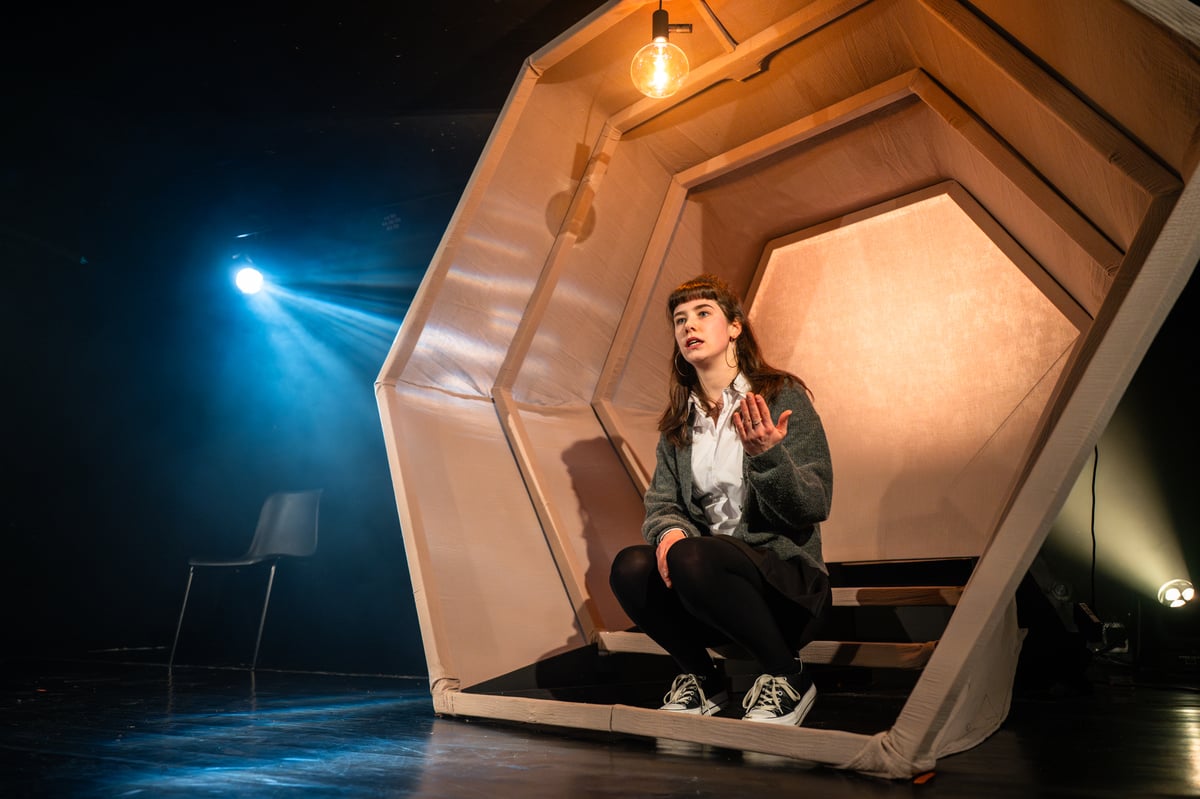
Gillian Argo’s set is visually arresting. I like the hexagonal construction, suggestive of a wasp’s nest, and the flickering projections of the worker wasps . However, I’m not always fully convinced by the wasp analogy; the comparison is perhaps stretched a little too thin. I’m also left with a couple of nagging questions about the plausibility of some of what occurs. (I can’t elucidate without spoilers but let’s just say that, though social care in the UK is undoubtedly in dire straits, Rianne is a vulnerable child and her situation would surely be flagged up; she wouldn’t be left to deal with it entirely alone.)

Nonetheless, this is a sprightly, engaging piece of drama, with some lively writing and a spirited delivery – a worthy addition to the PPP canon.

4 stars

Susan Singfield

Anna Karenina

21/05/23

Lyceum Theatre, Edinburgh

As dares go, this one – from Scottish writer Lesley Hart to British-Russian director Polina Kalinina – has turned out rather well, resulting in this sparky adaptation of Tolstoy’s classic novel. It certainly disproves Kalinina’s original contention that Russian texts tend to “lose vigour and immediacy in translation”: this piece is both vigorous and immediate.

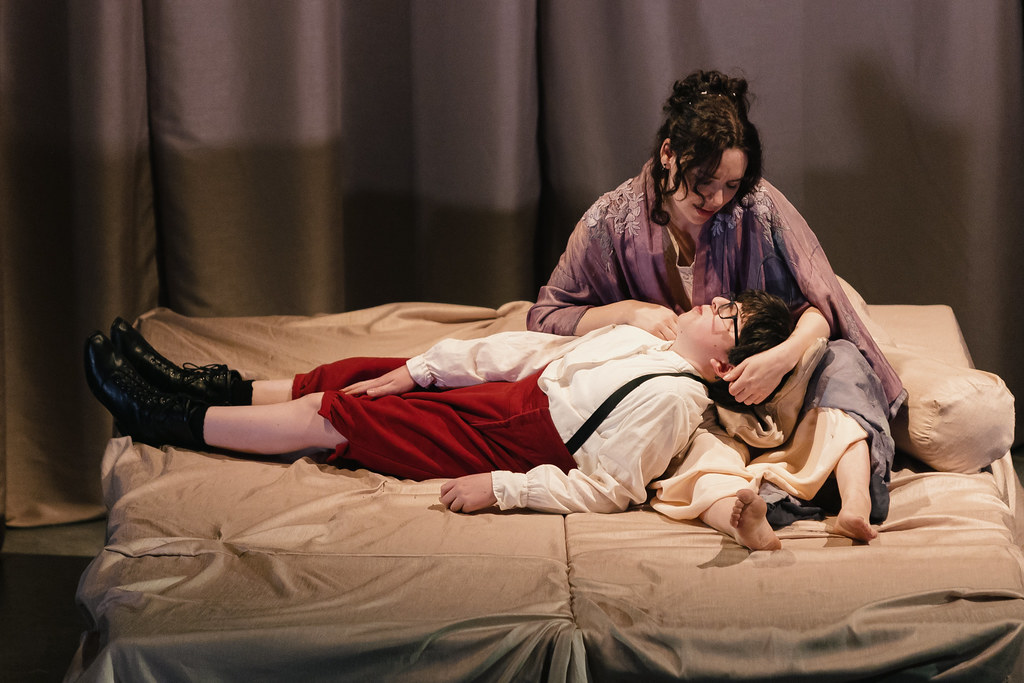
The plot is well-known. Anna (Lindsey Campbell) – bored society wife and loving mother – visits her sister-in-law Dolly (Jamie Marie Leary)’s family estate, hoping to persuade her to forgive Anna’s feckless brother, Stiva (Angus Miller), for his affair with a governess. But it’s a fateful visit, because it’s here that Anna meets Vronsky (Robert Akodoto) – and embarks upon a tumultuous affair that will have a terrible impact. The story is pared back here, of course – four-hundred-thousand words of prose are condensed into a tight two-and-a-half-hours of drama – and it’s all the better for it. The book’s lengthy histrionics are economically conveyed by Xana’s deliberately grating sound design, which feels akin to being in a dentist’s chair, the screeching somehow inside your head. It’s not pleasant, but it’s strikingly effective.

Hart’s script highlights the biting unfairness of a patriarchal order, where Stiva’s many sexual transgressions cause him only minor trouble when they’re revealed, while Anna’s single affair turns her into a social pariah, shunned by her former peers, and – most painfully – banned from seeing her own son (played tonight by Noah Osmani). Her tragic end, prefigured by a brutal train accident at the start of the play, hangs literally over her head throughout: Emma Bailey’s stark design is dominated by this sword of Damocles, a huge screw-like ceiling pendant, each action causing it to turn another notch, embedding itself into Anna’s heart.

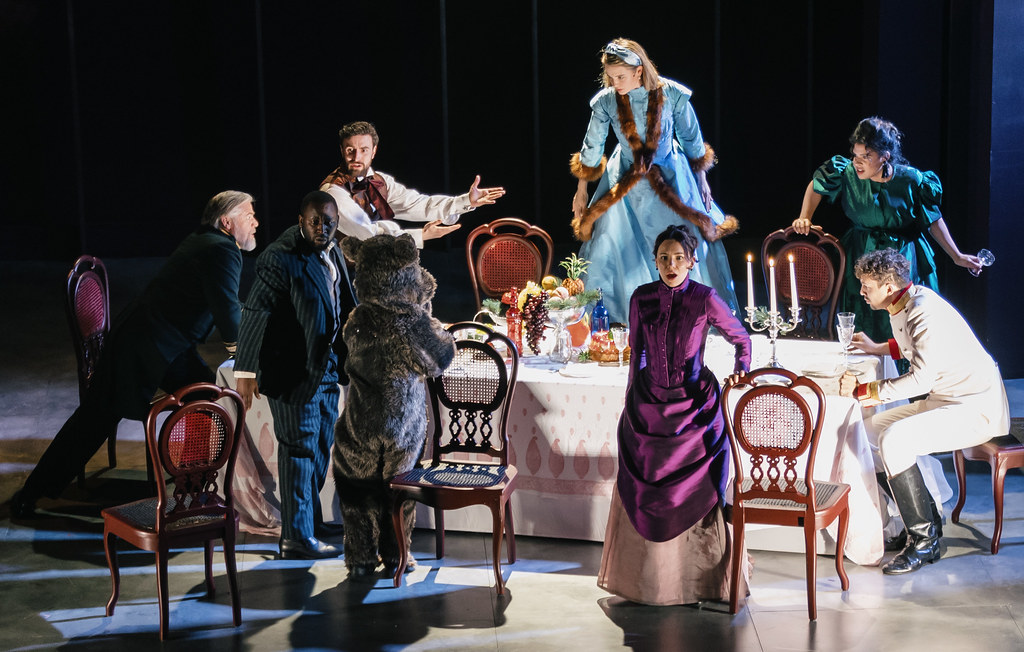
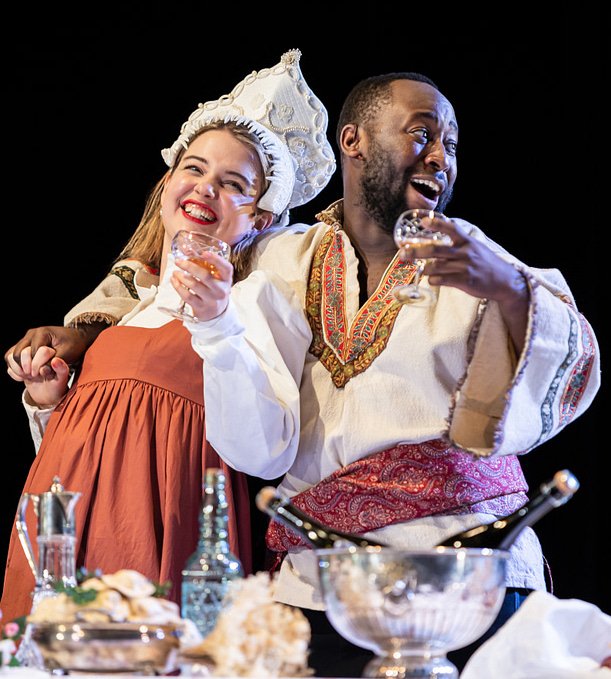
I love the urgency of the opening: a dinner party tableau that stutters and lurches into life. The characters are boldly drawn and instantly recognisable, from Karenin (Stephen McCole)’s supercilious reserve to Stiva’s self-indulgence and Levin (Ray Sesay)’s naïve modesty. The sliding screen upstage is ingenious too, opening to reveal a snowy railway platform, or pastoral wheat fields that seem to offer the hope of a simpler life.

Campbell’s Anna is a believable creation, beautiful and confident and relatively content – until she’s blindsided by her attraction for Vronsky. The tragedy here is as much about the corruption of their love as it about her death. What they have is real, but it’s destroyed by social mores and jealousy. It’s not their relationship that ruins Anna; it’s the stifling rules we humans impose upon ourselves.

So is Tolstoy still relevant and appealing in the twenty-first century? If this Royal Lyceum and Bristol Old Vic production is anything to go by, the answer is a resounding yes!

4.2 stars

Susan Singfield