Lena Olin

Spaceman

06/03/24

Netflix

Adam Sandler. There, I said it.

Sandler is, of course, best known for his comedies, though these can most politely be described as ‘variable’. More often than not, they seem like an elaborate excuse for Sandler to team up with a bunch of mates and improvise something that feels like it has been literally thrown together. And then, every now and again, out of the blue, he decides to star in something more substantial for a quality director. I’m thinking of the likes of Punch Drunk Love, which he made with Paul Thomas Anderson, and the stone cold masterpiece Uncut Gems, written and directed by the Safdie Brothers, which possibly qualifies as the most stressful couple of hours I’ve spent in the cinema.

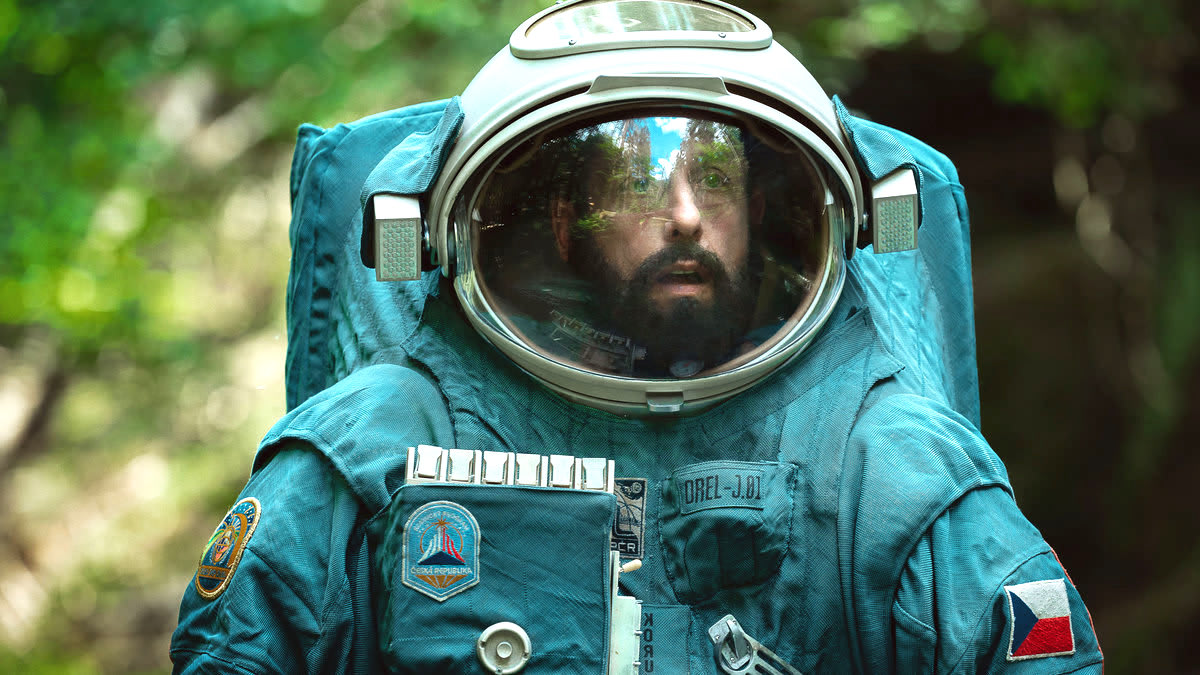
Spaceman, directed by Johan Renck and adapted by Colby Day (from a novel by Jaroslav Kalfar), is not in the same league as those two films and yet it’s a sizeable step up from Sandler’s usual offerings, a slow-moving, thoughtful allegory about the distance that can exist between a man and his wife, even when they are physically together.

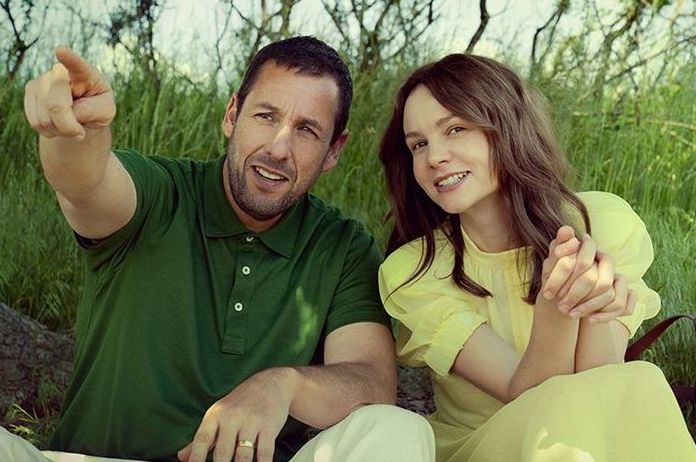
The Spaceman of the title is Jakub, a Czech cosmonaut, currently on a six-month mission to visit (and take samples from) the mysterious Cloud of Chopra, somewhere beyond Neptune. At home, his pregnant wife, Lenka (Carey Mulligan), is falling out of love with him, because he’s been distant in so many ways -even before he set off on his current voyage.

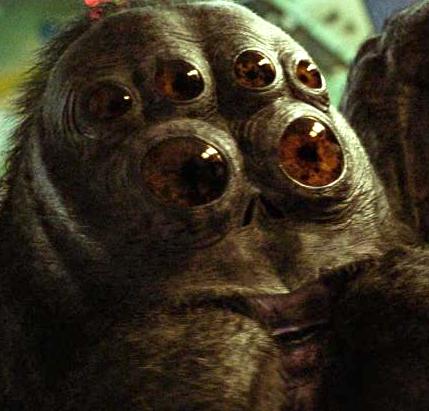
Jakub is nonplussed to discover that his regular calls to Lenka are going unanswered. He’s even more bewildered to learn that he has a stowaway aboard his spaceship – a huge alien spider, who can talk and is memorably voiced by Paul Dano. (Arachnophobes, take note: this film may not be for you!)

Most movies of this kind would pitch the alien as a voracious predator, with no higher motive than to chow down on the spaceship’s other occupant, but this creature (whom Jakub names Hanûs) turns out to be a gentle and communicative beast, who soon takes on the role of a kind of life coach, offering Jakub advice about all manner of things, including his failing marriage. It’s the sheer unexpectedness of this approach that grabs me most. As the mission steadily unfolds, we begin to learn more about the event that caused the rift between Jakub and Lenka. Can it ever be repaired?

Spaceman won’t be for everyone. For one thing, it moves at a glacial pace, Jakub’s journey interspersed with flashbacks to his courtship of Lenka and occasional cutaways to her present day conversations with her mother, Zdena (Lena Olin). There’s a lot of footage of the mysterious Cloud of Chopra, which – though pleasant enough to look at – soon starts to feel suspiciously like filler.

I will also confess to being initially confused by the ending, but with a little thought it soon makes perfect sense. Overall, Spaceman is an interesting little film with a fascinating premise. Though flawed, it’s light years ahead of Sandler’s customary output.

3.6 stars

Philip Caveney
One Life

02/01/24

Cineworld, Edinburgh

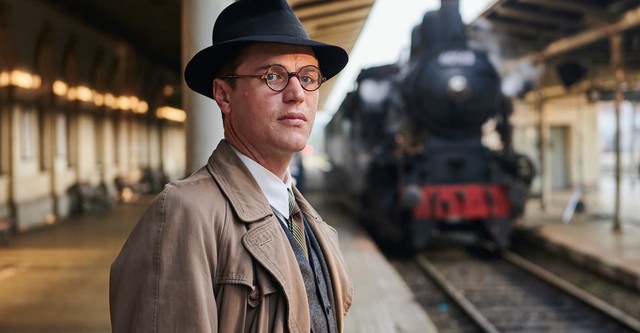
One Life, written by Lucinda Coxon and Nick Drake, is the true story of Nicholas “Nicky” Winton (played at different life stages by Johnny Flynn and Anthony Hopkins), the self-effacing man who orchestrated his own Kindertransport, managing to rescue over six-hundred children from Nazi occupied Czechoslovakia in 1938.

Winton never sought recognition; despite this extraordinary endeavour, he was by all accounts a resolutely ordinary man. But, fifty years on, urged by his wife, Grete (Lena Olin), to tackle the clutter in his study, he finds himself confronted by an old scrapbook, carefully detailing the names and foster homes of the refugees he helped. It’s an important artefact and Winton doesn’t want it to languish unseen in a library. The plight of the Czechs at the start of the war must not be forgotten; the scrapbook must be seen, must be used as a reminder that it’s our duty to help those in need.

Winton approaches his local press but they don’t know what to do with it. Undeterred, he calls on his erstwhile colleague, Martin Blake (Ziggy Heath/Jonathan Pryce), to see if can pull any strings and, before long, Elizabeth Maxwell is on board. From there, it’s not a great leap to the pages of the Daily Mirror, owned by her husband, and thus to wider recognition. Readers of a certain age might remember the 1988 episode of the always tonally-uneven That’s Life! where Esther Rantzen (played with gusto by Samantha Spiro) veered from tittering about nominative determinism to reuniting Winton with some of the youngsters he helped, now middle-aged and keen to meet their saviour.

But Winton was always quick to point out that he didn’t work alone, that he was just one member of a team, so I shouldn’t neglect to mention the others here. Along with Blake, Doreen Warriner (Romola Garai) and Hana Hejdukova (Juliana Moska) worked tirelessly in Prague, identifying those in need of refuge and sorting out their paperwork. Meanwhile, Nicky’s mother, Babette (a rather magnificent Helena Bonham Carter), slogged away in the UK, fundraising, finding foster families and chivvying the government.

Hopkins’ performance is heartbreaking. It’s hard to convey the inner turmoil of a quiet and unassuming man, but Hopkins makes it look easy. In his face, we see how Winton’s sadness about the children he couldn’t save clouds his whole life, even as he’s lauded for what he has achieved. Flynn is a surprisingly good physical match for Hopkins, and he perfectly encapsulates the younger Winton’s clarity and sense of purpose. The children need saving. So he saves them.

I don’t know how anyone can sit through this film without weeping. The cruelty inflicted on the Jews is breathtaking. Director James Hawes doesn’t dwell long on any one act of inhumanity. Instead, he shows us snippets of frightened faces, close-ups of guns, a family huddled together under a blanket, the thin arm of an evacuee stretching piteously towards a parent. Heightened by Volker Bertelmann’s moving score, the cumulative effect is devastating. I don’t want to believe that such evil is possible.

669 only accounts for a small percentage of those who needed help, but every one of those is a person; every one of those matters. Winton’s stoic “Save one life, save them all” mantra stands, and this clear-eyed, unsentimental film shows us why.

4.3 stars

Susan Singfield