Laila Noble

Lost Girls/ At Bus Stops

15/10/24

Traverse Theatre, Edinburgh

Lost Girls/At Bus Stops is my favourite so far in this PPP season: I love the marriage of Róisín Sheridan-Bryson’s fragmented, non-linear writing with Laila Noble’s kinetic direction. 

At its heart there’s a simple will-they/won’t they love story. Ever since Jess (Catriona Faint) approached Iona (Leyla Aycan) at a bus stop with a flyer for a Fringe show several years ago, the two have been friends, meeting up every August to make the most of the Festival buzz, weaving their way from show to bar to show again, navigating the crowds, the hills, the closes, the booze. On the surface, theirs is an easy alliance, born of a shared hedonism and an openness about who they are. Underneath, they’re a mess of repressed longing, each too nervous to risk their precious friendship by declaring how they really feel. And this time, with Iona about to leave for pastures new, there’s an added pressure. If neither of them makes a move, it’ll be too late.

Sheridan-Bryson’s script skips nimbly between dialogue and narration, the protagonists referring to themselves in both third and first person, almost mythologising the city, their accounts of various Edinburgh nights colliding as they disagree about details and bring different moments to the fore. The disrupted timeline mirrors a real-life conversation, almost stream-of-consciousness in its construction, bouncing back and forth through their shared memories.

The two actors portray the contrasting characters with aplomb, Aycan’s gentle stillness a perfect foil for Faint’s more manic, agitated demeanour. As Jess reacts to the pressure by downing drink after drink, snogging random men and trying to start fights, Iona – while matching her on the booze front – is altogether calmer, trying time and again to make Jess stop and talk, to say the things they need to say. Their emotions are palpable and it’s impossible not to feel engaged, not to sit silently urging them to take the plunge. 

Zephyr Liddell’s set is simple but effective, the grimy bus stop and disco lights echoing the superficial glamour of a sequin-clad performer in an archetypal dingy Fringe venue. 

Sheridan-Bryson pulls off the difficult task of creating a play that is at once meta-theatrical and down-to-earth, complex in structure but easy to follow. It’s an impressive piece of work. 

4.6 stars

Susan Singfield
Bread and Breakfast

05/03/24

Traverse Theatre, Edinburgh

The latest production in the A Play, A Pie and A Pint season offers a distinct change of pace. Who’s up for a good old-fashioned British farce? You know, the kind of vehicle that Brian Rix would have had a field day with back in the 1960s – slapstick characters painted with broad strokes and even broader dialogue.

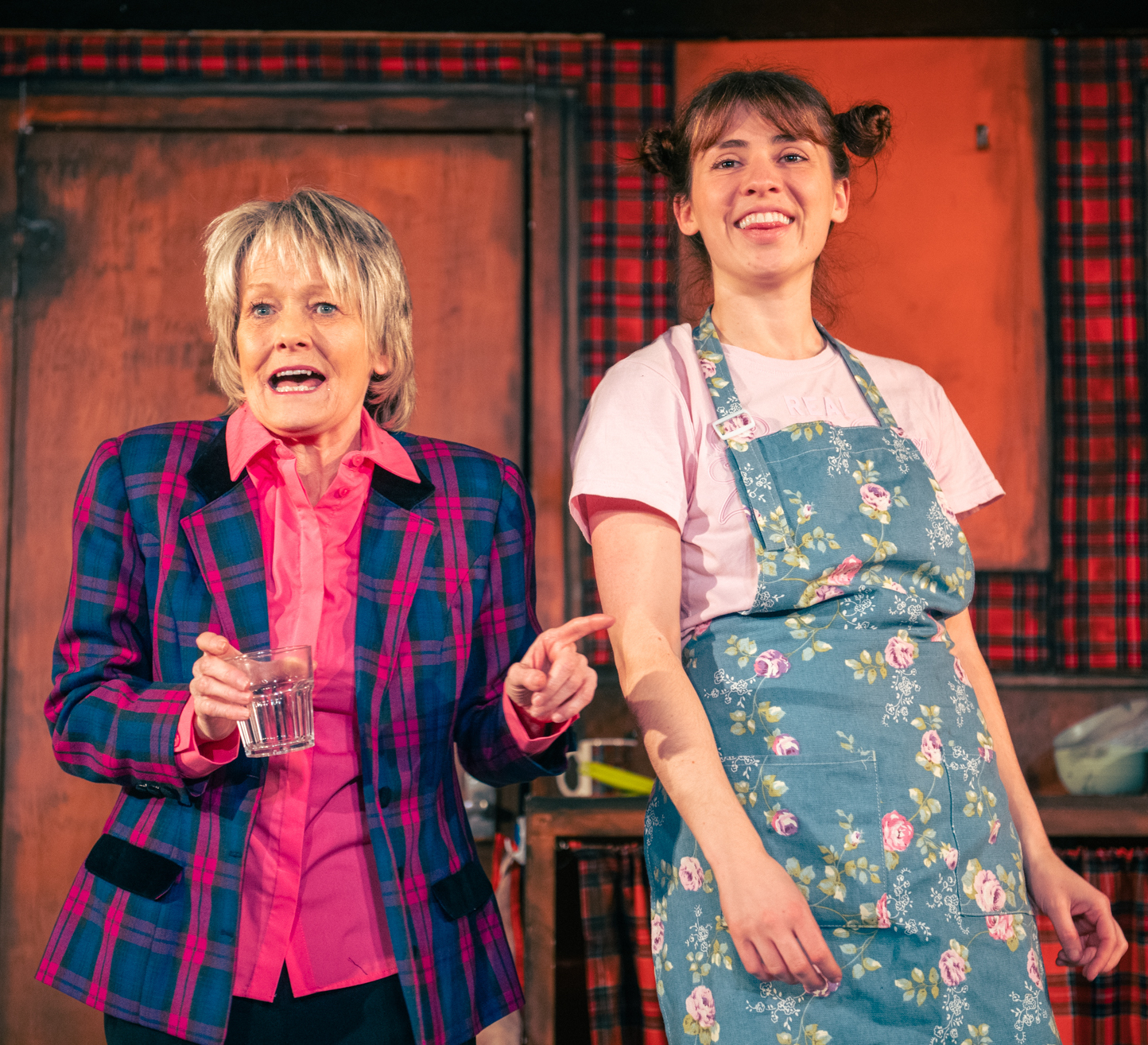
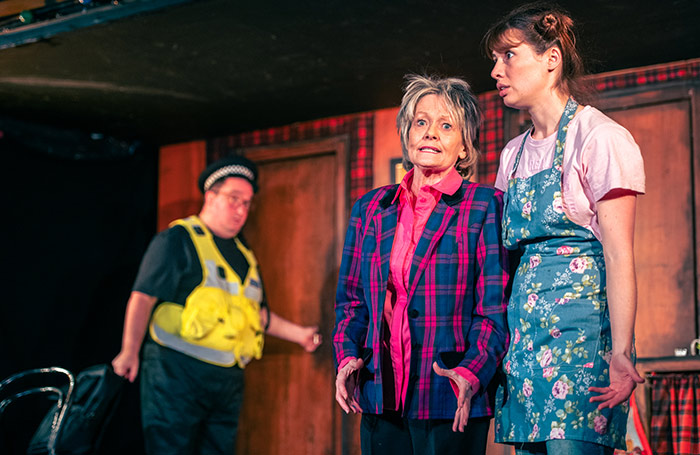
Welcome to Nessie’s Lodge, a bed and breakfast somewhere in the Highlands, a place where holidaymakers can relax in real style – provided they turn a blind eye to the indigestible food and the bedbugs… not to mention the rats. I said not to mention them! Proprietor Irene (Maureen Carr) is growing rather tired of the business, even though it boasts a single star from the AA. She dreams of selling the establishment to anybody who’s dumb enough to shell out money for it. But she’s continually hampered by her dimwitted young employee, Jo (Erin Elkin), who somehow manages to misinterpret every instruction she’s given. 

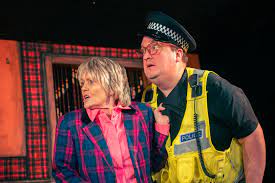
Then, in a distinctly Fawlty Towers twist, an AA restaurant inspector (James Peake) arrives out of the blue and the writing’s on the wall for Nessie’s Lodge. Also on the wall is a possibly priceless work of art that might just save Irene’s bacon…

Bread and Breakfast, written by Kirsty Halliday and directed by Laila Noble, has some genuinely funny lines in the mix, though there’s a worrying tendency to over-signal and over-explain them. Furthermore, it should also be said that those classic Whitehall farces were always anchored by absolute precision and excellent production values – which we can’t really expect from a modestly-budgeted lunchtime show.

The packed crowd at this afternoon’s show are clearly enjoying themselves, laughing throughout. As ever, stalwart actor Carr generates her own brand of potty-mouthed good humour; she’s a natural comic and has the audience in the palm of her hand. Elkin is excellent as Jo, giving her an edgy, almost manic appeal, as she flails from one hapless misunderstanding to another. Meanwhile Peake has the funniest moment of the show, as he delivers a spirited rendition of God Save Our Gracious Quing!  

If Bread and Breakfast isn’t quite to my taste, it’s nevertheless interesting to see a play so tonally different from anything I’ve previously seen at PPP.

3 stars

Philip Caveney

Meetings with the Monk

17/010/23

Traverse Theatre, Edinburgh

Meetings With the Monk, this week’s offering from A Play, A Pie and A Pint, is a gentle affair, a study in both mental health and the limitations of live drama. Deceptively simple in tone, it explores these two issues in some depth – although the meta-theatricality arguably hogs the show.

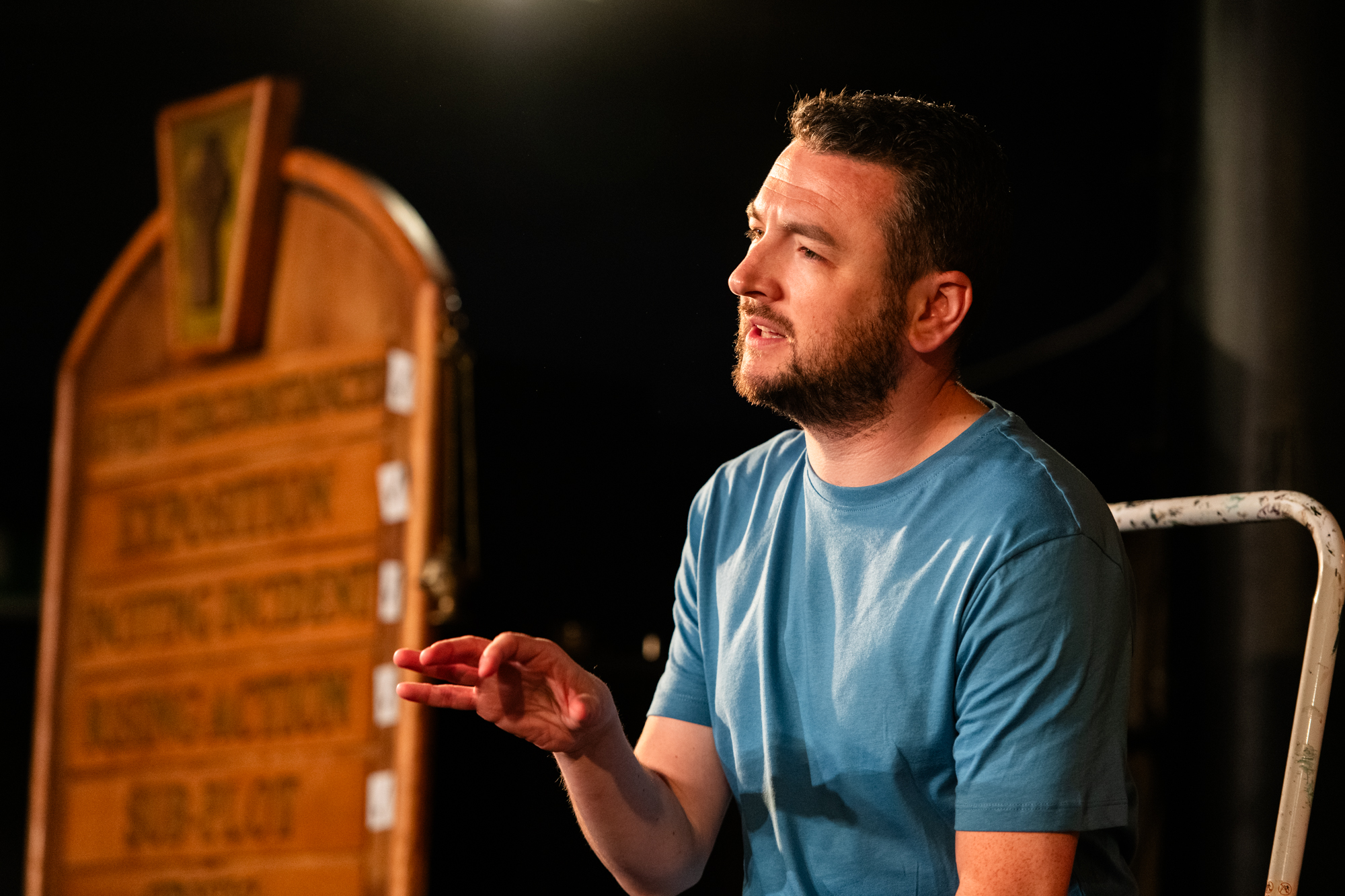
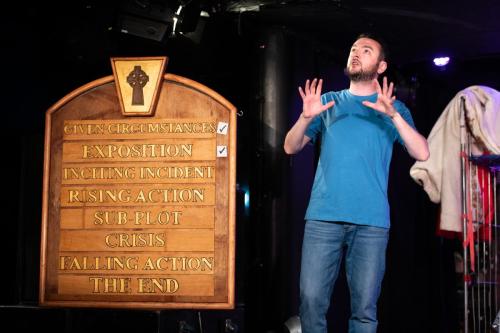
Brian James O’Sullivan is our guide, the elision between writer, actor and character established right from the off, as he assumes the role of the front of house staff, pointing out the emergency exits and informing us about next week’s play. He’s chatty and friendly, explaining what’s going to happen, breaking down the performance into its component parts, ticking them off on a list as they occur. Introduction? Check. Exposition? Check. Rising action? Bring it on.

The story is almost incidental. The title sounds enticing (what do monks talk about?) but, actually, the meetings with the brothers are the least interesting things about this piece. It turns out that people who live cloistered lives don’t have all that much to say. Still, their soothing words have a profound effect on ‘Brian’, who’s struggling with depression, and thinks that taking a leaf out of his Granny’s book and going on a retreat might help. The Abbey is very different from his home in Glasgow and, in this quiet place, he finds the space to clear his head. 

O’Sullivan is a stand-up comedian and he uses that skill to his advantage. Although this piece isn’t a comedy by any means, his easy interaction with the audience means that we’re immediately on his side, and he knows just when to undercut a difficult topic with humour, so that it never feels too much, even when he’s talking about suicide. 

The set (by Gemma Patchett and Johnny Scott) is monkishly austere, while Ross Nurney’s lighting – appropriately – lightens the mood, a simple coloured spot indicating an abbey or the goodness that shines from Brother Felix.

Nimbly directed by Laila Noble, this is an enjoyable and thought-provoking play, although I do find myself wishing for a little more substance. I really enjoy the exploration of theatrical storytelling, but I’d also like a bit more plot or at least a bigger climax. Father Felix, who appears as a recorded voice – apparently, there are several different recordings, and O’Sullivan doesn’t know which will be played on the day – feels like a wasted opportunity. I keep waiting for him to say something memorable. 

Nonetheless, I applaud the experimental nature of Meetings With the Monk. It’s a quirky, original piece of writing, and one that invites much discussion afterwards..

3.6 stars

Susan Singfield

Ship Rats

19/09/23

Traverse Theatre, Edinburgh

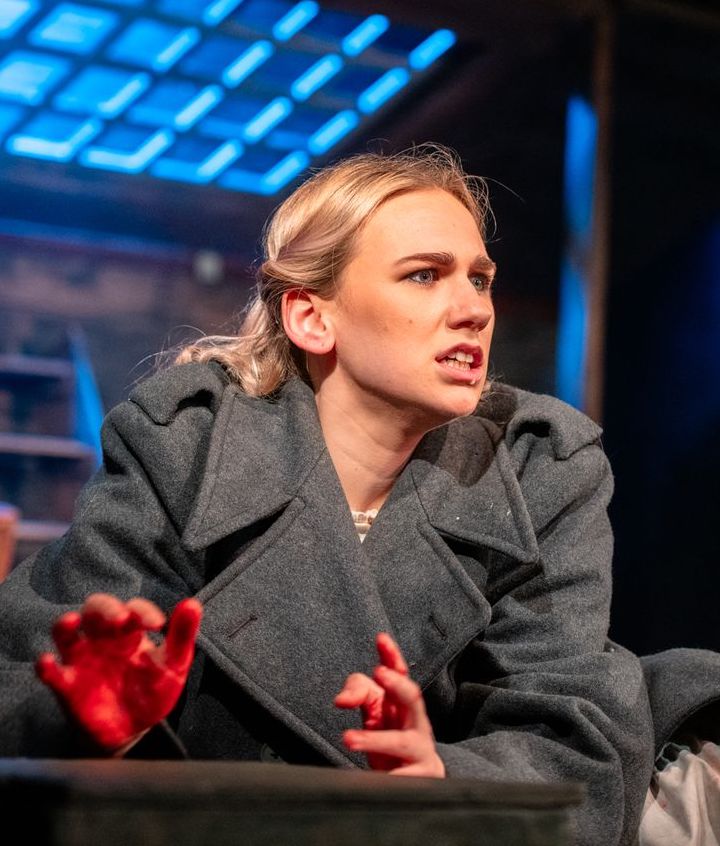
It’s the year 1880 and Jessie (Madeline Grieve) is in big trouble. She’s just murdered her husband and she’s covered in his blood. He’s the captain of the ship she’s currently aboard, a cruel tyrant who recently condemned an innocent cabin boy to fifty lashes for stealing a biscuit. He probably had it coming, but still, his crew are unlikely to be sympathetic.

To make matters worse, Jessie has sought refuge in the cabin of the ship’s Chinese cook, Jin Hai (Sebastian Lim-Seet), a man with probelms of his own. Shunned by the other members of the crew, he is planning a daring escape from the ship – but, try as he might, he cannot find the box of matches he needs in order to make his departure go with a bang.

When the inevitable hue and cry kicks off, Jessie and Jin Hai realise that they’ll have to ignore their respective differences and hide out together. In doing so, they begin to realise that they actually have quite a bit in common. Their conversation takes in a range of subjects: colonialism and Chinese medicine; murder and morning sickness; ginger and gunpowder.

Alice Clark’s spirited two-hander, a co-production between Òran Mór and the Traverse Theatre, is inspired by the adventures of the playwright’s own great-great-grandmother, a seafaring lass with a colourful backstory. The fact that the two protagonists in Ship Rats speak like contemporary Glaswegians out on the lash is initially jarring but, once I settle into the rhythm, it makes for a fun-filled fifty minutes, even if the tone is sometimes relentlessly frenetic.

Grieve offers a rollicking turn as the amusingly foulmouthed Jessie, while Lim-Seet makes an astute foil for her bawdy barrage of invective. If occasionally Jessie and Jin-Hai seem to possess the kind of insight that really only comes with the advantage of historical perspective, well that’s acceptable, given that this wants more than anything else to be a commentary on the toxic nature of Empire.

Director Laila Noble keeps the action propulsive enough to ensure that the pace never flags and Ship Rats has me entertained right up to the final scene.

3.4 stars

Philip Caveney