Lady Gaga

Joker: Folie à Deux

04/10/24

Cineworld, Edinburgh

Todd Philips’ 2019 film, Joker, was cinematic Marmite. For every viewer that loved it (and I was firmly in that camp), there was an equal number of comic book fans who detested it, largely because the film had no truck with the conventions of the genre that inspired it. Instead, here was an unflinching exploration of a mentally ill man, abandoned by the healthcare system and ultimately championed by a bunch of deluded followers. It was grubby, brutal and utterly devastating.

Folie à Deux is equally divisive, though this time around what has incensed most social media pundits is the fact that the film is… well, there’s no other way to say this: a musical. In 2024, the genre appears to have fallen into total disrepute with movie fans, to the extent that even films like Wicked are reluctant to depict any actual singing and dancing in their trailers in case it puts off potential viewers.

Go figure.

It’s two years after the events of Joker and Arthur Fleck (Joaquin Phoenix) is languishing in Arkham State Hospital, overseen by callous prison warder Jackie (Brendan Gleeson), who seems to delight in humiliating him at every opportunity. (Interestingly, it’s Jackie who tells the nearest thing to an actual joke in this story and, it has to be said, it’s a corker.)

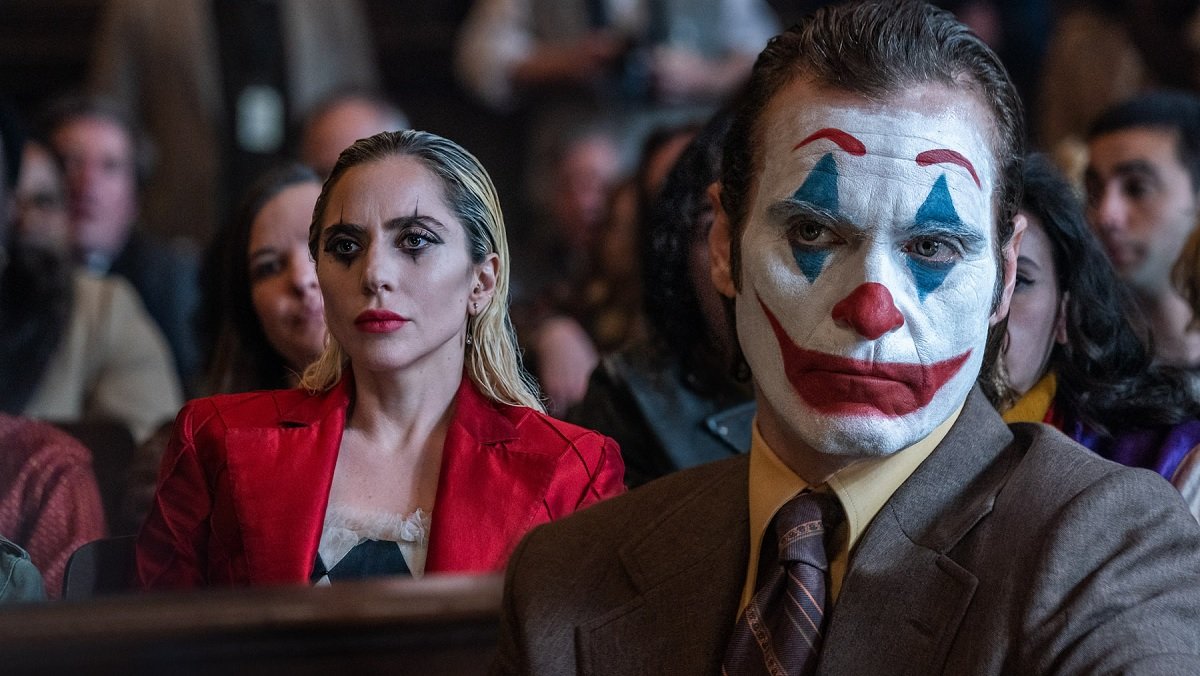
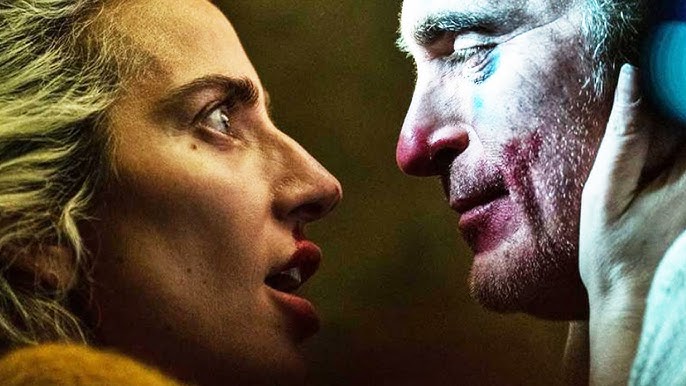
Arthur is fast approaching his day in court, schooled by his defence lawyer Maryanne (Catherine Keener), who is pretty sure that a plea of ‘dissociative identity disorder’ will save him from the death penalty. And then, attending an in-prison musical therapy session where inmates are encouraged to sing their troubles away, Arthur meets Harleen ‘Lee’ Quinzel (Lady Gaga) and, for the first time in his life, he has a reason to want to survive… and to slap that makeup back on his gaunt visage.

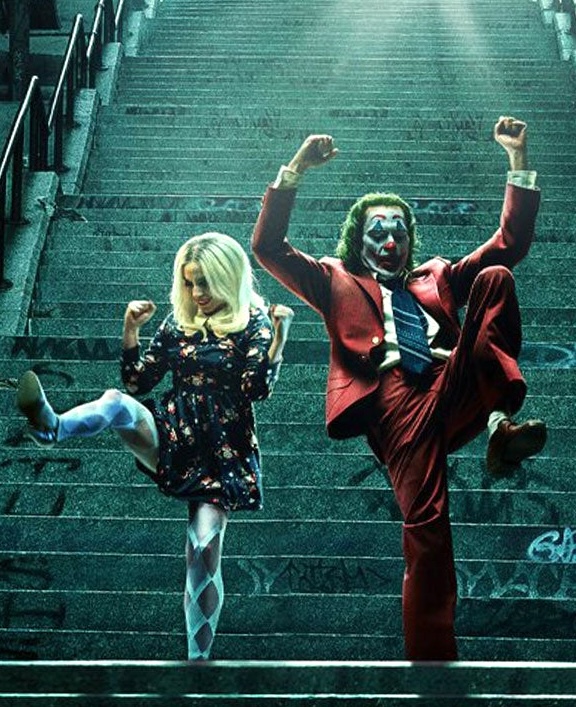
The term ‘musical’ is used quite loosely here. Phoenix and Gaga work their way through a series of solid gold bangers from the likes of Sinatra and Jaques Brel, but it’s made clear from the outset that these sequences occur in the cerebral landscape of Arthur’s head, his way of making sense of what’s happening to him. (Those with long memories may be reminded of Dennis Potter’s Pennies from Heaven, which adopted a similar approach.) A scene where Arthur is being interviewed by TV journalist Paddy Meyers (Steve Coogan) is a good case in point. Midway through the interview, Arthur suddenly breaks into song and dances around his cell – but Paddy remains blissfully unaware of his antics.

Phoenix is an actor of extraordinary ability and he slips into this unfamiliar discipline with his usual aplomb, using his newly slimmed-down frame to accentuate every move. Gaga, who has much more experience in the field, is also sensational, able to imbue an old chestnut like Get Happy with a strangely sinister edge, making me feel that I’m hearing it for the first time. As with the previous film, Philips steadfastly refuses to moderate his approach for the spandex brigade, doubling down on the grime and squalor. Folie à Deux is every bit as unsparing and unforgiving as its predecessor, whilst somehow managing to retain a beautiful humanity.

This may not be the perfectly-honed movie that was Joker, but for my money, it runs it a close second and is far (very far) from the embarrassing misfire that so many are describing it as. Some irate comic fans seem to have been hoping for a rerun of its predecessor, but what would be the point of that? I can’t help feeling they’ve somehow missed the point.

But then, I’m always happy to admit that I love a good musical.

4.6 stars

Philip Caveney

House of Gucci

02/12/21

Cineworld, Edinburgh

A talented young man is motivated by his manipulative wife to take hold of the power that lies within easy reach. He just needs to be ruthless in order to obtain it. Despite his qualms, he follows her advice and is led onwards to his own destruction.

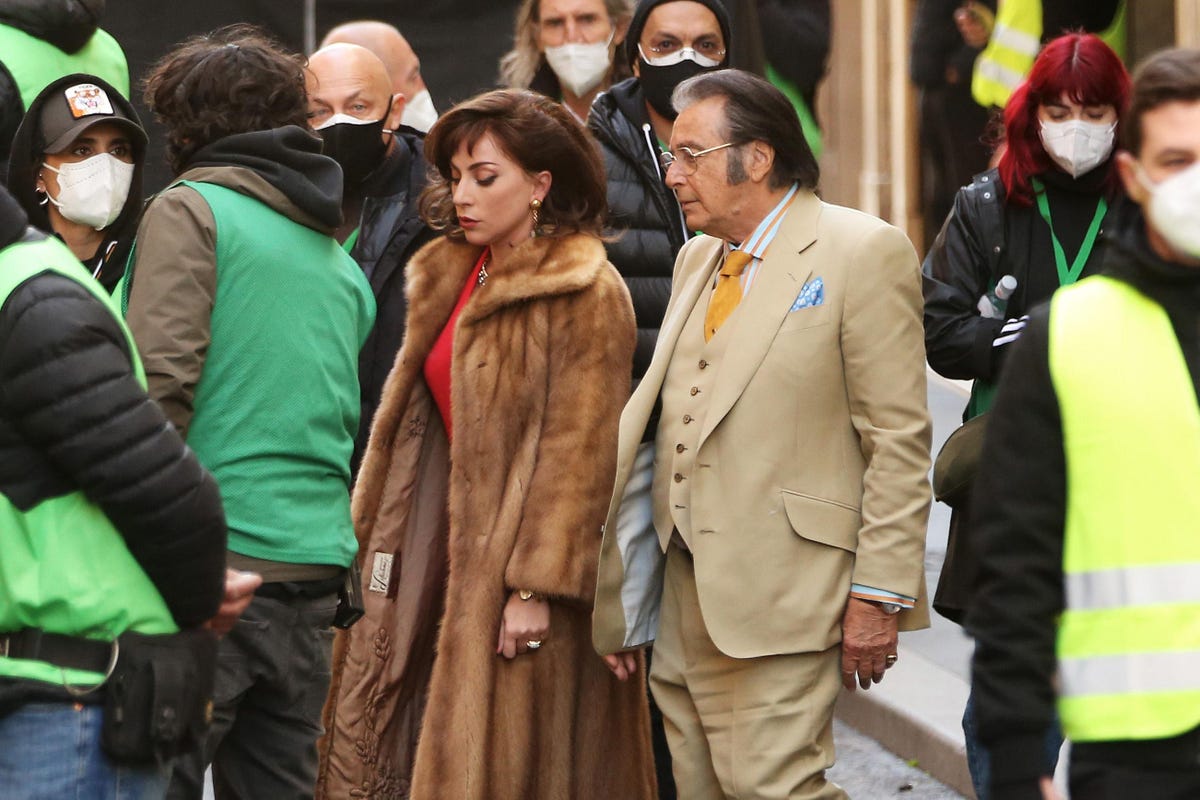
This is, of course, the plot of Macbeth, but it’s also one that fits House of Gucci like a perfectly designed leather glove. Ridley Scott’s film, based on the book by Sara Gay Forden, relates the true life events that led up to the assassination, in 1995, of Maurizio Gucci, the major shareholder in one of the world’s most successful fashion brands. If proof were ever needed that real life can be weirder than fiction, then here it is, writ large.

When we first meet Maurizio (Adam Driver) it’s the 1970s and, though he’s well aware that he’s the potential heir to the Gucci fortune, he’s already decided he wants none of it and is training to be a lawyer. Then, at a party, he meets Patrizia Reggiani (Lady Gaga), who – having recognised the possibilities that Maurizo’s surname offers – has soon romanced him to the point where he wants to marry her.

Maurizio’s sickly father, Rodolfo (Jeremy Irons), decides she’s a ‘gold-digger’ and advises his son to steer clear, but Maurizio is smitten enough to renounce the family fortunes in order to be with her. It isn’t long before Maurizio and Patrizia are married and a baby daughter is on the way. Meanwhile, she keeps reminding Maurizio that he needs to step up to the plate and take control of his inheritance…

After the assured (but sadly unsuccessful) The Last Duel, this film feels like another Ridley Scott body- swerve. He’s always been a director that refuses to be pigeon-holed and this really couldn’t be more different from its predecessor, but where TLD felt perfectly judged, HOG is just flabby and unfocused, a parade of caricatures cavorting in a series of fancy locations. It rarely feels like these people are real and have actual lives.

While Lady Gaga certainly puts in a game performance as the success-obsessed Patrizia, even Al Pacino as Maurizo’s Uncle Aldo struggles to rise above the clunky dialogue he’s been given.

And then there’s the enigma of Jared Leto as Aldo’s deluded son, Paolo, who fancies himself as a fashion designer but has no evident talent to back him up. It’s panto season, so perhaps that explains why Leto feels the need to deliver his lines in a kind of high pitched sing-song fashion, but it just seems… really odd. What’s more, with a two-hour-thirty-eight minute running time, there’s a lot here that should have been cut back. The film doesn’t really find its mojo until the final third, but by then it feels like a case of too little, too late. There’s a welcome appearance by Call My Agent‘s Camille Cottin as the new woman in Maurizio’s life, but she’s not given enough to do.

It certainly doesn’t help that most of the people involved are venal, unscrupulous capitalists and it speaks volumes when Pacino’s Aldo – an unapologetic tax dodger – emerges as the film’s most sympathetic character.

In the end, this is something of a disappointment.

3 stars

Philip Caveney

A Star is Born

03/10/18

What is it about A Star is Born that makes filmmakers so keen to revisit it?

It first saw the light of day in 1937, when Janet Gaynor and Fredrick March played the original star-crossed thespians. In 1954, Judy Garland spectacularly relaunched her career with it, starring opposite a ‘never-better’ James Mason. In 1976, Barbra Streisand and Kris Kristofferson moved the action from the movie studios of Hollywood to the world of rock music (a version that I have yet to catch up with.) And now Bradley Cooper makes his directorial debut with a version that seems hewn from the same cloth as the the latter outing. Cooper stars opposite Lady Gaga, whose previous big screen appearances have amounted to a guest appearance on Muppets Most Wanted and the lacklustre sequel to Sin City. 

Cooper plays ageing rock star, Jackson Maine, still gamely gigging around the world but beset by the twin demons of tinnitus and rampant alcoholism, with a few lines of cocaine chucked in for good measure. Stopping off at an LA drag bar one evening for a post-concert drink, he witnesses Ally (Lady G) performing a spirited rendition of La Vie En Rose and is instantly smitten by her. Fortunately, she is equally attracted to him. A whirlwind courtship ensues and, almost before we can draw breath, Ally and Jackson are an item, and the pair of them are performing at concerts across the USA, with Ally submitting some of her own songs to each show. Which is all well and good. But then, after one gig, she is approached by Rez (Rafi Gavron), a big time music promoter and a character so repellant that he manages to make us hate him before he’s even uttered so much as a word. Rez offers to make Allie a star. It will mean being styled and packaged, of course, but still, it’s what she’s always wanted, so… what could go wrong?

There are no great surprises here, mainly because the storyline is so familiar – and it’s hardly a spoiler to say that events are soon heading in the direction signposted ‘Tragedy, Arizona.’ Cooper does a great job with Maine, making us care about him even when he’s deep in the throes of his own self-destruction. Sam Elliott as his older brother/manager, Bobby, is good too, somehow managing to look not a day older than he did in The Big Lebowski, twenty-frickin’ years ago.

Okay, so this may not be the five star masterpiece that Garland’s version is. (This one does make me cry a couple of times, while the 1954 movie never fails to reduce me to a blubbering wreck.) But it is, nonetheless, a palpable hit, with decent songs that sound convincingly like proper chartbusters, some nicely sketched supporting characters – I particularly like Allie’s Sinatra-obsessed father, Lorenzo (Andrew Dice Clay) – and a timely updating from the Academy Awards to The Grammys, with an appearance on Saturday Night Live added to the mix.

The biggest revelation here is Lady Gaga, who is simply mesmerising, both when she’s singing and when she’s acting. At one point, Ally bemoans the fact that potential employers simply haven’t seen her as a good fit for a particular role. Is this what’s happened to Gaga herself in previous attempts to move her career into film? Whatever else occurs from hereon in, it would seem a bright future on the big screen is hers for the taking, if she decides she wants it.

A movie star is born.

4.7 stars

Philip Caveney