15/05/25
Lyceum Theatre, Edinburgh
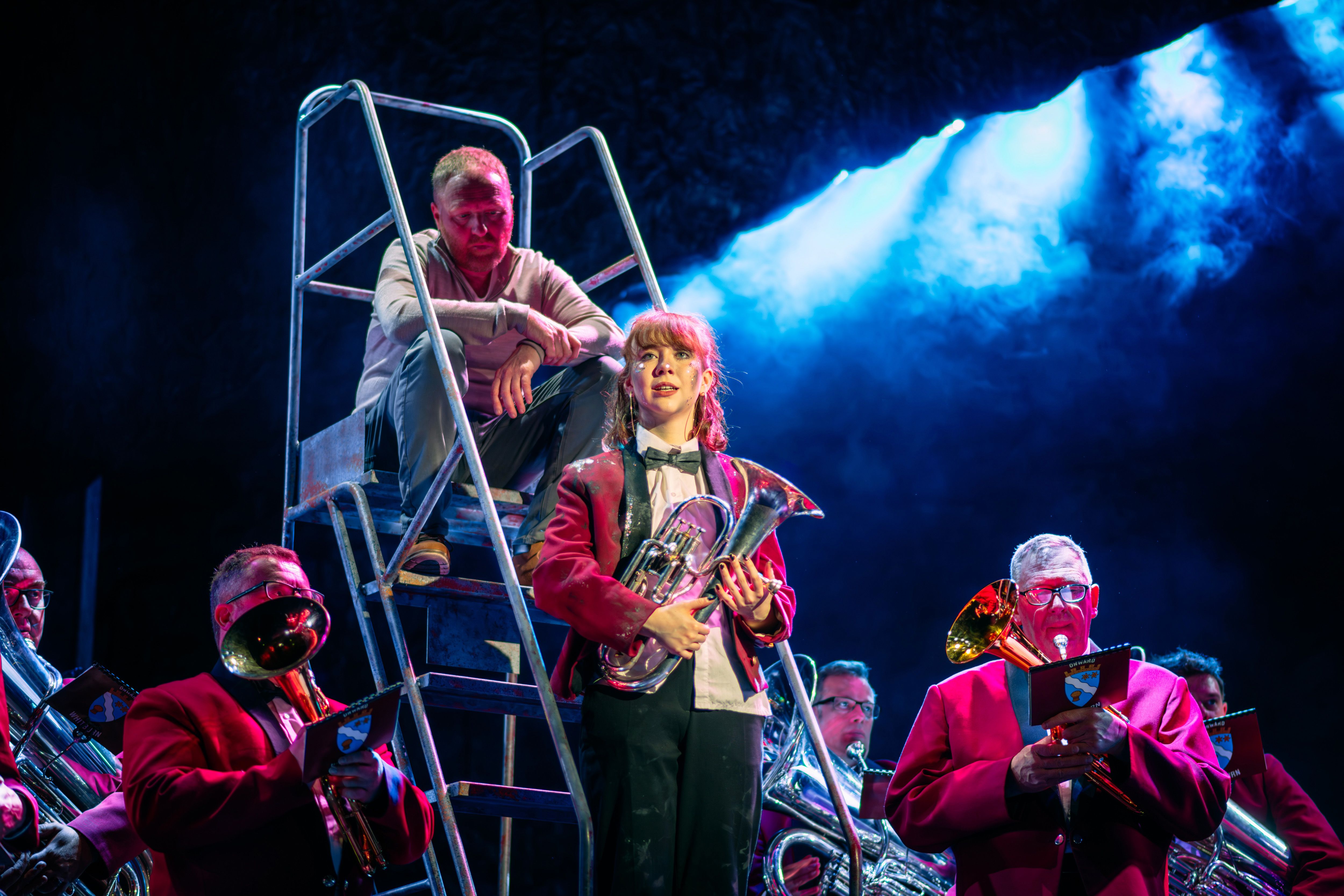
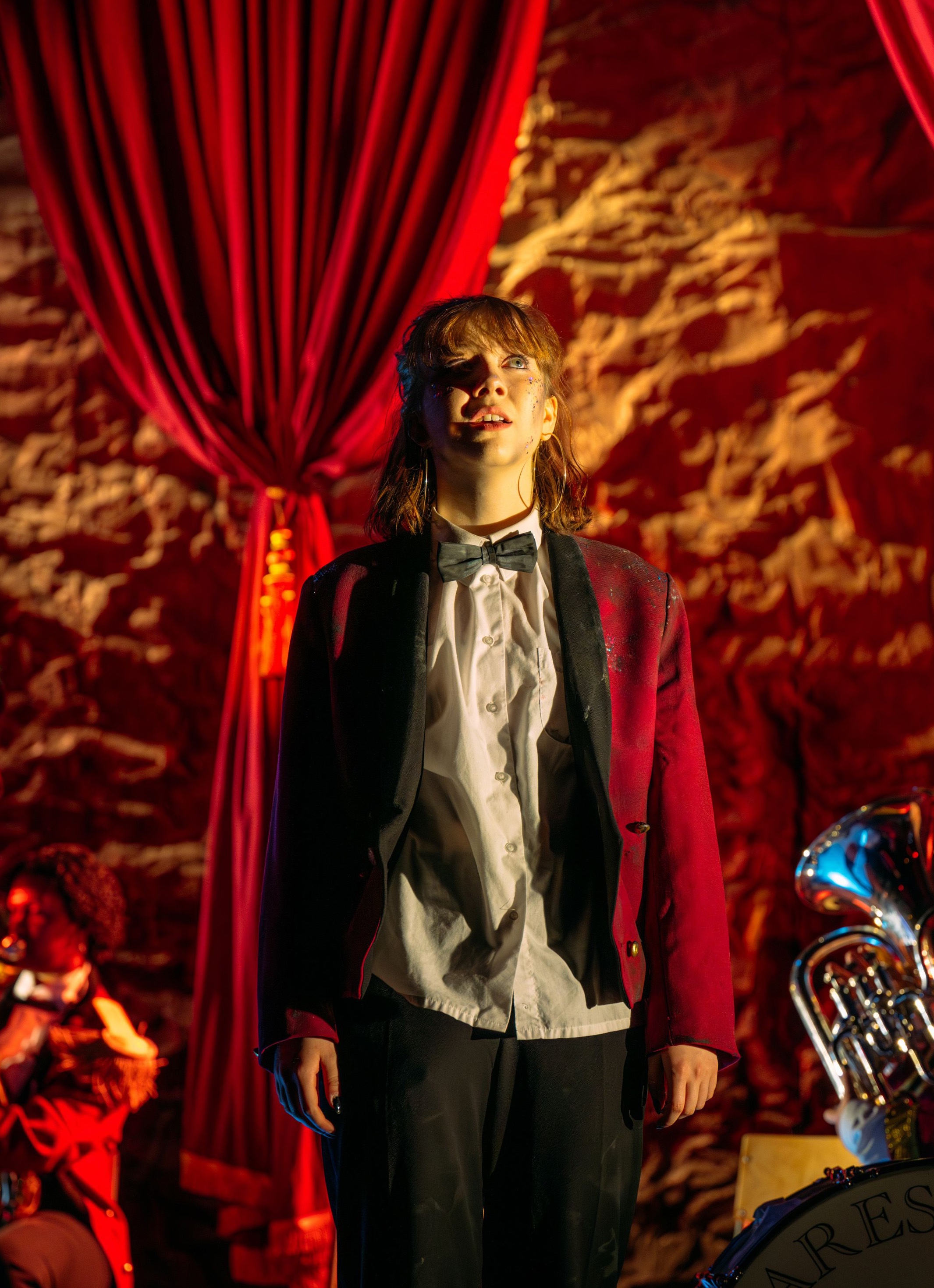
Not so much a musical as a play in which music is an intrinsic part of the production, Keli is set in the fictional Anston (based on the real-life Whitburn), where the titular character – a motor-mouthed seventeen-year-old played by Liberty Black – lives with her agoraphobic mum, Jane (Karen Fishwick). Keli is doing her business HND and works part time at the local Scotmid. She’s also a member of the Anston brass band; indeed she’s their star player, even if she does find it hard to get to rehearsals on time. Bandleader Brian (Phil McKee) needs her there because the band has been chosen to perform in a national competition at the Royal Albert Hall, and he’s depending on Keli to nail a particularly tricky solo.
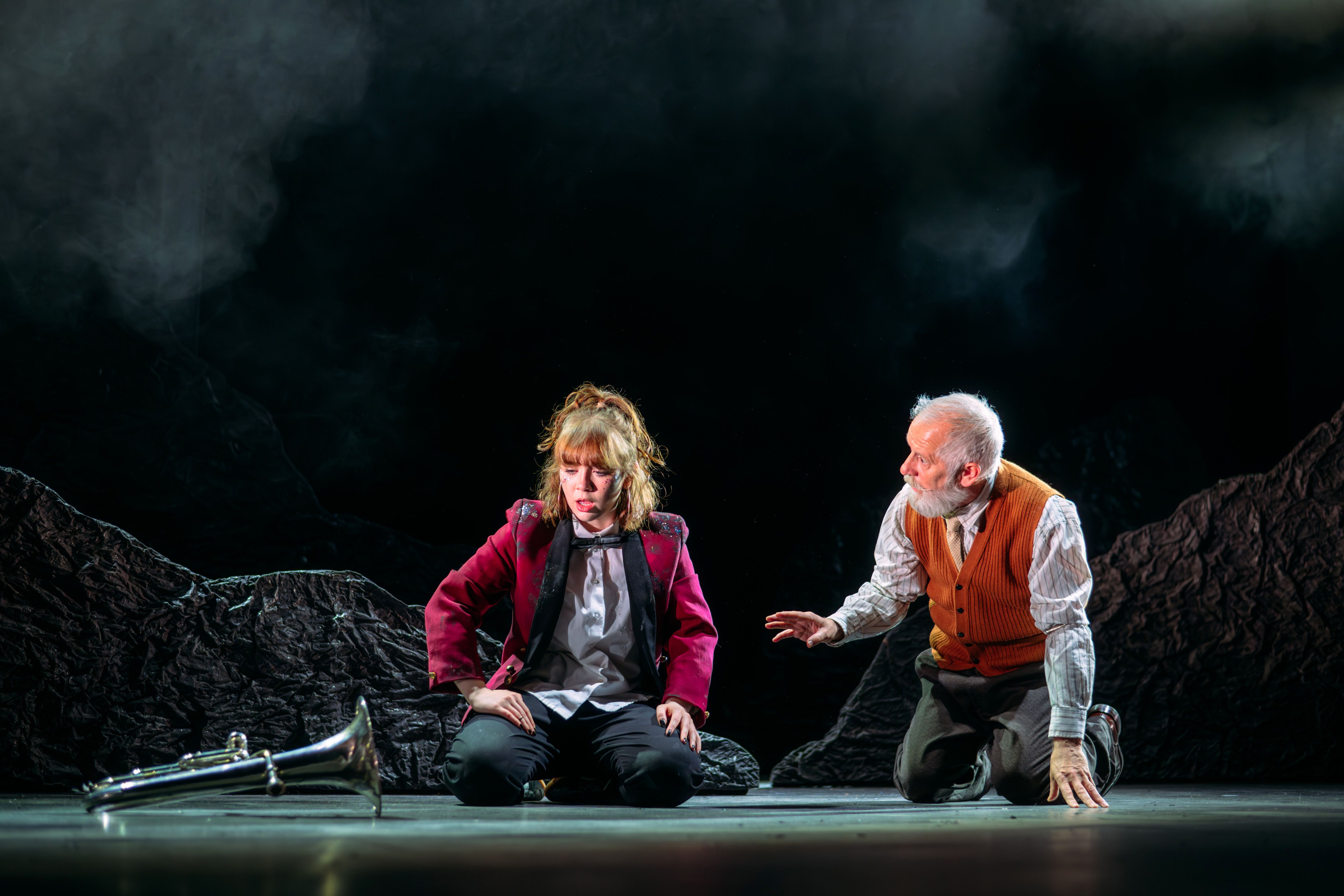
When we first meet her it’s clear that something has gone horribly wrong. She’s in the act of stealing a tenor horn from a glass case in a nearby country home. The last thing she’s expecting is for the ground to give way and send her plunging into the labyrinths of the old coal mine that runs beneath the property – and she certainly doesn’t expect to find an old man lurking down there, waiting to ask her some very perplexing questions…
Keli, written by Martin Green, began life as an audio play. In this theatrical version the music (also composed by Green) still provides a constant counterpoint to the drama. In fact, occasionally the score obscures parts of the dialogue, but that’s probably something that will settle in as the run progresses.
The combination of brass band music and coal mine closures inevitably evokes comparisons with the 1996 film Brassed Off (indeed, it’s even mentioned at one point) but Keli is a different beast entirely, a strange blend of kitchen sink reality and contemporary fantasy. While I’m not sure all the elements work – a lengthy sequence set in a sexy London nightclub feels oddly misplaced – there’s still lots here to enjoy. Black is sassy and vivacious in the title role, while Billy Mack submits a charming performance as the mine’s mysterious inhabitant, William. Olivia Hemmati is terrific in the twin roles of Amy, Keli’s Scotmid supervisor, and Saskia, a free-spirited woman Keli meets in a pub in London, who shows her how to embrace her inner self.
Set designer Alisa Kalyanova and lighting supervisor Hana Allan make the production look sumptuous – the evocations of the coal mine are particularly effective. Director Bryony Shanahan keeps the momentum bubbling as the piece moves effortlessly through a series of different locations.
And there’s no denying that the play’s final scene offers a thrilling crescendo as – on alternating nights – the massed ranks of the Whitburn/ Kingdom brass bands file onto the stage and let rip. Worth catching? You’re darned tooting it is!
3.6 stars
Philip Caveney


 Bouquets & Brickbats