Julia Garner

Weapons

15/08/25

Cineworld, Edinburgh

Yes, I know it’s the Fringe and I do appreciate that cinema is supposed to be taking a back seat this month, but anyone who caught Zach Creggar’s debut movie, Barbarian, back in 2022, will doubtless be as fired up for his sophomore feature as I am. Like its predecessor, Weapons is a wild ride, one that has more twists and turns than a passenger could ever anticipate. I sit spellbound as I am thrown this way and that, sometimes mystified, occasionally terrified, but never ever bored.

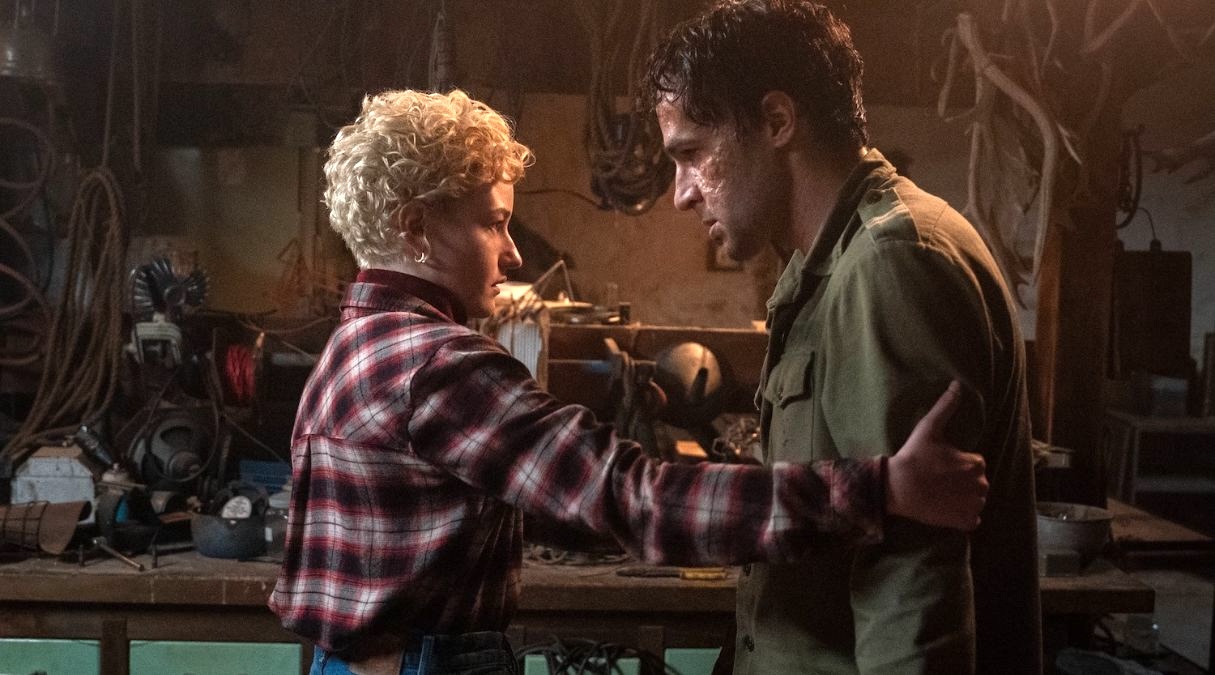
The story begins with an inexplicable event. In the little town of Maybrook, Pennsylvania, teacher Justine Gandy (Julia Garner) arrives at school, ready to teach her class – to find only one pupil waiting for her. He’s Alex (Cary Christopher) and he’s the only kid left because, earlier that same morning (at 2.17am precisely), all his classmates woke up, got out of their beds and ran off into the night with their arms held out at their sides.

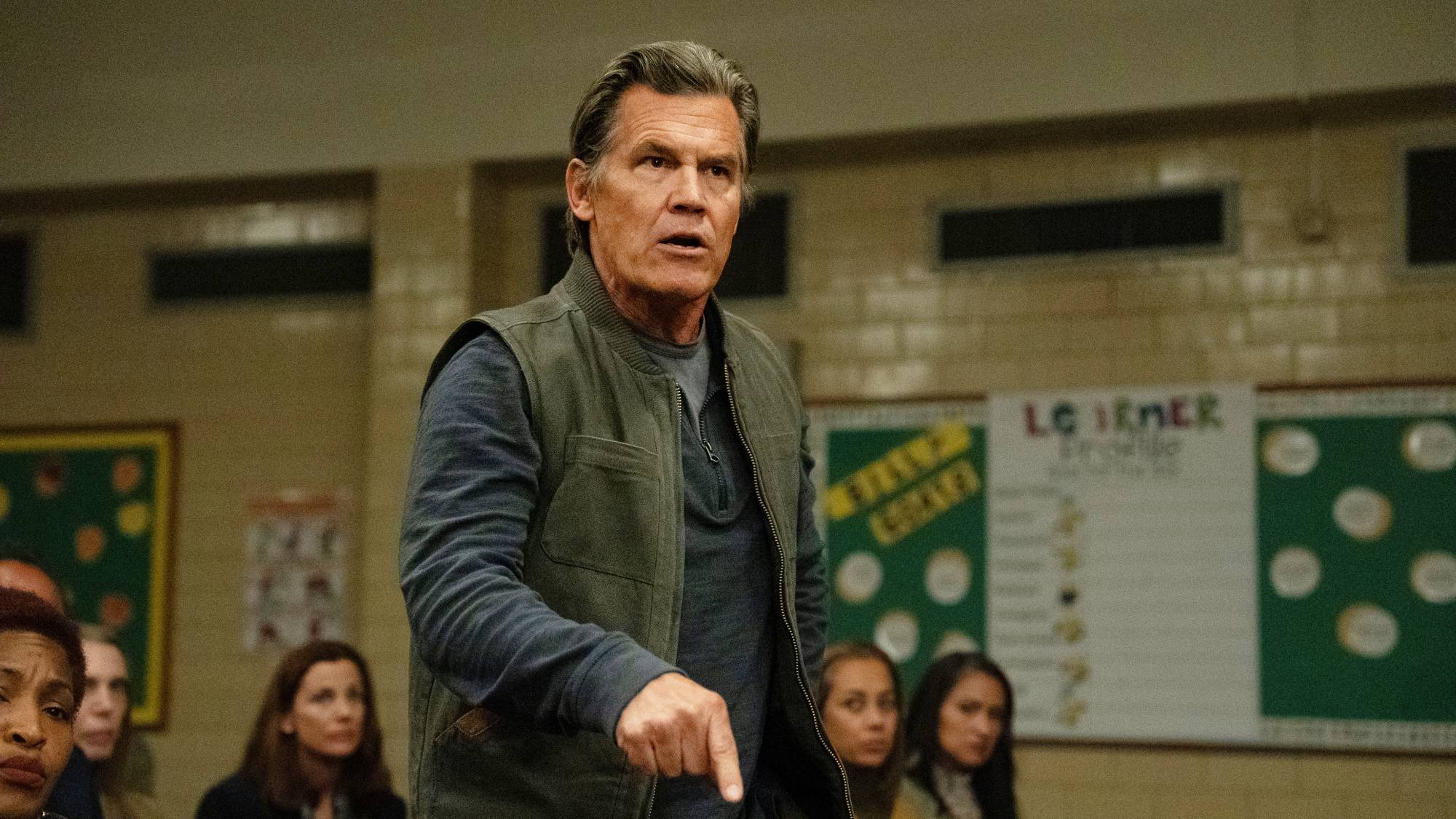
Now, nearly a month after that event, the children still haven’t been located. Archer Graff (James Brolin), the father of one of the pupils, wants to know why Justine hasn’t been arrested. After all, it’s only her class that has vanished; she must know more than she’s letting on!

Archer wants an explanation and so does the film’s audience, but, just as he did in Barbarian, writer/director Creggar refuses point blank to offer a straightforward, linear narrative. Instead, he gives us seven different points of view, allowing us to gradually piece the events together as we are flung back and forth in time.

As well as Justine’s and Archer’s observations, there’s the story of what happens to mild-mannered school principal, Marcus Miller (Benedict Wong); the misadventures of Justine’s old squeeze, police officer, Paul Morgan (Alden Ehrenreich); there’s Paul’s clash with vagrant drug addict, James (Austin Abrams); and, of course, Alex’s account. Dare I mention a propitious visit by Alex’s Great Aunt Gladys (a bone-chilling performance by veteran actor, Amy Madigan), who provides the final piece in the puzzle?

I really can’t say any more about the plot without giving too much away; suffice to say, Weapons is an absolute smorgasbord of delights, by turns poignant, tense, bloody and, in its later stretches, darkly comic. It keeps me enthralled from start to finish and, happily, my initial fears that the central premise would remain unexplained prove to be completely unfounded. The explanation might be as mad as the proverbial box of frogs, but it’s right there, waiting to punch you in the kisser, then run gleefully away with its arms held out at its sides.

If Barbarian was a promising debut, Weapons is proof that horror has a brilliant new exponent. Creggar has created one of the most downright unmissable films of 2025 and I’m already hyped to see whatever he comes up with next.

5 stars

Philip Caveney
The Fantastic Four: First Steps

24/07/25

Cineworld, Edinburgh

The world of superhero movies has become an unpredictable place. DC’s recent Superman film was dismissed as a sprawling mess by the majority of critics (me included), but proved to be a palpable hit with the public – which makes me somewhat nervous to announce that, for my money, Marvel’s latest offering is the studio’s best effort since Guardians of the Galaxy. Which probably earns it a one way ticket to ignominy.

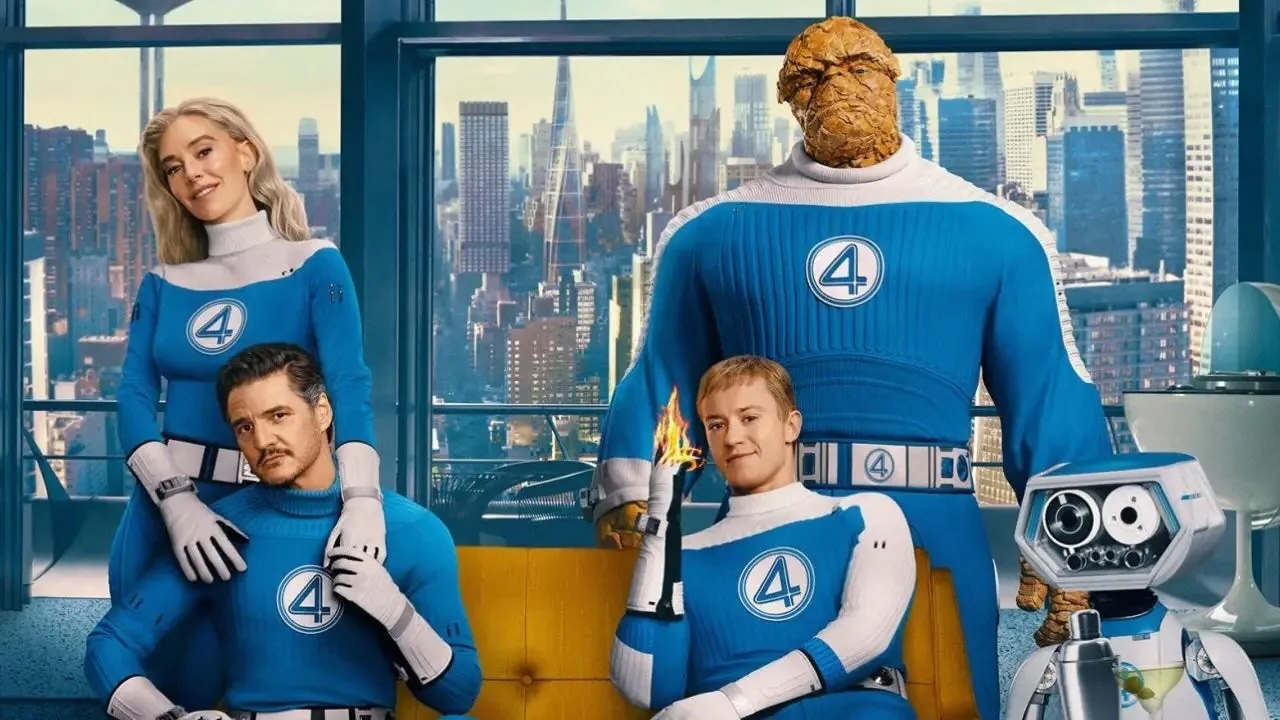
Stan Lee and Jack Kirby’s first superhero team, The Fantastic Four, have had a pretty rocky ride on the big screen. Previous attempts to capture their antics have been met with howls of derision from Marvel fans and a distinct lack of bums on seats at the box office. First Steps might suggest an origins movie, but this film begins four years after the space flight that dramatically changed the lives of its four crew members. That mission is only alluded to in a brief television interview, introduced by Ted Gilbert (Mark Gatiss). Now, Reed Richards (Pedro Pascal), Sue Storm (Vanessa Kirby), Johnny Storm (Joseph Quinn) and Ben Grimm (Ebon Moss-Bachrach) have been widely accepted as the Earth’s protectors. But, in a shot of realism rarely seen in this genre, married couple Reed and Sue are about to have their first child and are going to have to learn to go about their super-business with a baby on board.

New York City receives an unexpected visit from Shalla-Bal (Julia Garner as the ex-girlfriend of The Silver Surfer, Stan Lee’s oddest hero), who points out that Earth is soon to be… ahem… eaten by Galactus (Ralph Ineson). He’s a suitably gargantuan alien, who has already gobbled up several other luckless planets and has made sure to leave room for pudding. It’s up to the four superheroes to devise a plan to save the world and carry it out, whilst taking care of new arrival, baby Franklin.

So… no pressure.

While the storyline is as batty as we’ve come to expect from Marvel, what really works here is the film’s overall aesthetic, which locates the story in an alternate nineteen-sixties (the era in which the source comics were conceived and created). The ensuing world-building is delightful, with that kooky style applied to every last detail. This results in a futuristic world where, for instance, mobile phones don’t exist. Cinematographer Jess Hall ensures that everything is filmed in vivid, eye-popping hues, while director Matt Shakman keeps the action propulsive enough to ensure that audiences don’t have time to consider how silly the storyline is.

The characterisations of the four leads are nicely handled, particularly by Pascal, who makes his Reed Richards a nerdy number-cruncher, who loves nothing better than scribbling equations on a chalkboard. The dialogue achieves just the right mix of funny and heartfelt, even if it did take seven writers; and for once, there aren’t too many characters to get a handle on. While I generally complain when everything comes down to a climactic punch-up – and this film is no exception to the rule – this one doesn’t overstay its welcome and, in its final furlong, manages to crank up some genuine moments of suspense. Mission accomplished.

So yes, it’s been a while since I enjoyed a Marvel movie to this degree. We’ll see how it fares over the following weeks but, in my humble opinion, First Steps deserves to succeed. Make sure you stay in your seats for the mid-credit sequence announcing… well, you’ll have to go and see for yourselves.

4.2 stars

Philip Caveney

Wolf Man

18/01/25

Cineworld, Edinburgh

Director Leigh Whannell last plundered the vaults of Universal Studios with his reboot of The Invisible Man (2020), where he managed to completely reimagine the 1933 source film (starring Claude Rains) as a twisty-turny nail-biter with Elisabeth Moss. The Wolf Man, a 1941 fright flick for Lon Chaney, has had plenty of remakes over the years, but few of them have ever managed to unleash the story’s full potential. While Whannell makes a spirited attempt here, framing this as an allegory about a man trying to escape from the toxic influences of his late father, the telling is poorly-paced and runs out of steam long before it ends.

It begins with an effective flashback. A young boy called Blake (Zac Chandler) heads out on a hunting expedition into the forests of Oregon with his authoritarian father, Grady (Sam Jaeger). The two of them live alone in a remote cabin (in the woods, naturally) and Blake has overheard Grady talking on the CB radio, making ominous remarks about something ‘dangerous’ that lurks in the forest, so the kid is understandably pretty nervous. Sure enough, in a thoroughly gripping sequence, the two hunters find themselves becoming potential prey as they are pursued by an unseen creature…

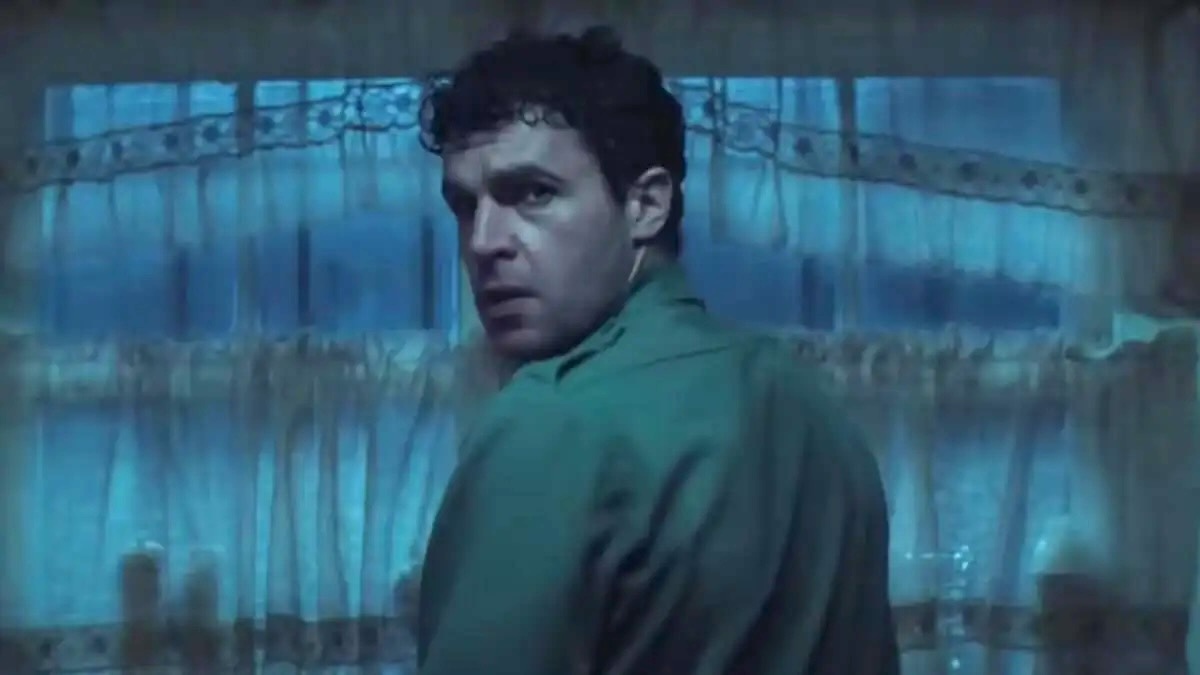
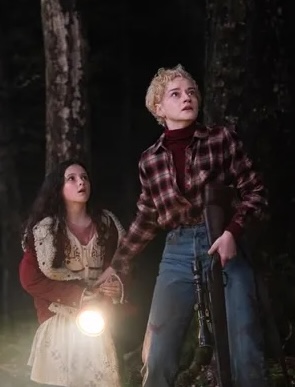
40 years later, Blake (now played by Christopher Abbott) is living in San Francisco. He’s a would-be writer who has lost his mojo and is playing the role of house-husband while his journalist wife, Charlotte (Julia Garner), puts food on the table. Blake is constantly worried about their young daughter, Ginger (Matilda Firth), and sees his sole reason for existence as a mission to protect her from harm.

Grady, meanwhile, has been missing presumed dead for a very long time. When news comes through that the authorities have officially pronounced him ‘deceased,’ Blake comes up with an idea. Why don’t the three of them hire a van, drive out to Oregon and clear out his father’s cabin, whilst having a relaxing holiday in the process? At this stage, I’m not sure which is most unlikely – Blake’s suggestion or his wife and daughter’s decision to say ‘Hey, why not?’

But it happens anyway and, in what feels like a rather rushed narrative, the three of them drive to Oregon and find themselves menaced by a mysterious upright beast even before they properly arrive at their destination…

To give the film its due, Whannell manages to cook up impressive levels of suspense for the film’s first hour. Stefan Duscio’s murky cinematography and Benjamin Walfisch’s eerie music add to the steadily mounting sense of dread. When Blake suffers an injury and begins to transform into – well, take a wild guess – his situation seems to mirror a whole series of possible references from drug addiction to generic inheritance. But just as I’m thinking that this is going to be a triumph, there’s a major development (I’m confident you’ll spot it when it arrives) where the story reaches its logical conclusion, and where it really ought to end.

Except that there’s still another half hour to fill – and so the action continues, squandering most of the Brownie points earned so far, in what feels like a series of completely superfluous extra scenes. As is so often the case, the more we see of the titular creature, the less menacing it becomes. A last, thought-provoking scene arrives a little too late to undo the damage.

A shame, because that first hour definitely takes the viewer to some very uncomfortable places – and it’s hard not to conclude that, if it had only taken the family a little longer to get to the cabin, this could have been a much more satisfying experience.

3.4 stars

Philip Caveney

The Royal Hotel / Hotel Coolgardie

04/11/23

Cineworld, Edinburgh / Amazon Prime

We watch The Royal Hotel in the cinema. It’s fascinating. We know it’s based on a documentary, but how much of it is true? We head straight home and seek out Hotel Coolgardie.

Wow.

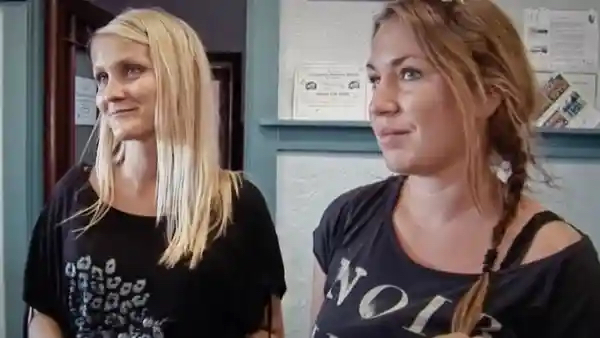
Hotel Coolgardie centres on two Finnish backpackers, Lina and Steph. When their wallets are stolen in Perth, they need to work to earn some money. An agency finds them a job serving drinks in a remote mining town. “You have to be able to cope with male attention,” they are warned. They don’t seem to notice the flashing red light. (Or perhaps they just feel reassured by the mitigating presence of a filmmaker.)

The pub is run by an odious landlord, who proudly informs the agency that it’s okay if the girls are inexperienced so long as they’re good-looking, and then takes great delight in bellowing at them when they arrive, belittling them for not understanding the local dialect and for not instinctively grasping the idiosyncrasies of his business. His clientele are heavy drinkers, and lewd behaviour is encouraged. “My customers grow an extra leg when new girls come into town,” he leers, as he puts out a sign announcing their arrival. In the bar, the men discuss who’ll be the first to ‘bag’ one of them. They know they’re being filmed; clearly, they don’t think they’re doing anything wrong.

Pete Gleeson’s documentary serves as a salutary lesson: when sexism and xenophobia are normalised, they thrive, especially within an isolated community. Coolgardie is not a safe place for Lina and Steph and, because they’re not willing to play along with the roles they’ve been assigned, they’re mocked and resented by the locals.

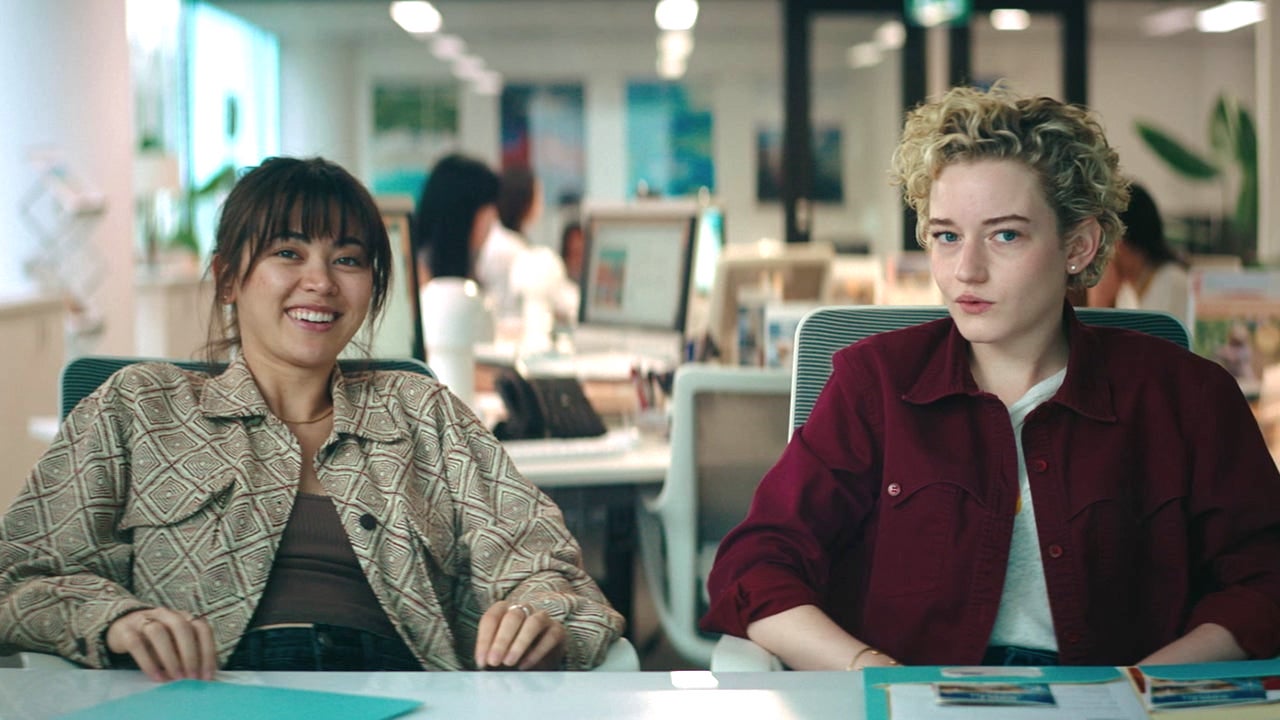
Writer-director Kitty Green seizes on the horror elements of this real-life set-up, highlighting the remoteness of the location as Canadian backpacking duo Hanna (Julia Garner) and Liv (Jessica Henwick) make their arduous bus journey through the empty desert. The Royal Hotel is dirtier and dingier than its counterpart; its customers nastier and more deliberate. The score, by Jed Palmer, ramps up the disquietude, and tension mounts as first Liv begins to assimilate, and then their only ally, Carol (Ursula Yovich), departs, leaving Hanna to face her adversaries alone.

Somehow, Green’s amplification makes the story less menacing. Gleeson’s documentary shows a more nuanced view of the community: we see the men’s vulnerability as well as their defensiveness, the insecurities that fuel their misogyny. This doesn’t excuse them or diminish their threat; in fact, it makes them more frightening because, unlike the cartoonish bad guys in Green’s film, they’re all-too recognisable. In the Royal Hotel, the men are uniformly terrifying; in the Hotel Coolgardie, there is a scale. “Canman” John Joseph Lowe, for example, has a genuinely sweet side. Sure, he’s a rambling drunk who demands too much of the girls’ attention and creeps them out by showering them with unwanted gifts, but he also looks out for them, drives them where they want to go and truly wants to help. On the other hand, “Pikey” – reincarnated in The Royal Hotel as Dolly (Daniel Henshall) – is a terrifying man, spewing hatred towards all women because no one wants to sleep with him. “It’s because I haven’t got a driving licence,” he says. “That’s not the reason,” Lina tells him. Henshall’s Dolly is horrible, but nothing he does is as scary as Pikey’s quiet, all-consuming rage.

What’s more, while Hotel Coolgardie‘s bogeyman is sexism, The Royal Hotel‘s seems to be Australia. The difference is subtly drawn, but it’s there. In the documentary, we see the magnification of a bigoted culture, flourishing in this particular spot thanks to an enabling landlord. In the movie, the implication is that Canada is somehow different, that the problem is specifically Australian working-class men.

Still, I wish that Gleeson had acknowledged his presence in Hotel Coolgardie; there’s something disingenuous in the way the film suggests the women are in real danger, when we know that he’s always there with them, filming everything, reducing their risk. But I still prefer it to Green’s film, which undermines the truth of Hanna and Liv’s situation by allowing them to ‘win’. The coda at the end of The Royal Hotel is far more chilling.

It makes sense to view these two films as a pair. My dearest hope is that the job agency stops sending young women out to places like Coolgardie. It’s not enough to warn them that they have to be okay with male attention. They need to warn the landlords instead: our clients have human and employment rights.

The Royal Hotel3.4 stars

Hotel Coolgardie – 4 stars

Susan Singfield

The Assistant

06/05/20

Curzon Home Cinema

Writer/director Kitty Green’s The Assistant is a quietly troubling movie, a queasily believable insight into the machinations of the film industry, where venerated individuals are afforded too much power.

Julia Garner is Jane, a high-flying graduate who aspires to become a producer. For now, she’s stuck in an entry-level post, a lowly assistant to a movie mogul. Her duties include making coffee, photocopying, and removing evidence of his excesses. She throws away used syringes, wipes white powder off his desk, returns a stray earring to his lover, babysits his children and placates his crying wife. Her colleagues collude; they’re all fully versed in the kind of apologetic email she should send in response to being screamed at by the un-named boss, and a meeting with HR manager, Wilcock (Matthew Macfadyen) – sought because of Jane’s concern for a ‘very young’ and naïve new recruit – reveals the unsurprising fact that there’s absolutely no support available. There are four hundred other people waiting to take her job, Wilcock tells Jane. She needs to put up and shut up – or she’s out.

The cleverness here is all in the understatement. We see how tedious and soul-destroying Jane’s role is: the brutal pre-dawn commute, the punishingly long hours, the personal nature of much of what she’s asked to do. She orders lunch for the whole office but doesn’t get a break herself; indeed, we’re always aware of how hungry she is, never managing more than a single bite of anything she tries to eat. Garner conveys Jane’s anxiety and brittle desperation most eloquently, despite  saying very little. We can feel her gritting her teeth, determining to get through this phase so that she can, eventually, have the career she wants. What’s less clear is whether she’ll be able to endure, and, if she does, what she will lose in the process.

The movie is claustrophobic and tense; there is little action but much revelation. I like that we never see the boss. His absence makes him universal – not a capricious individual who needs to be replaced, but a symbol of a rotten system that’s ripe for revolution.

And the Janes are starting to speak out.

#MeToo.

4 stars

Susan Singfield