Judy Garland

Elio

23/06/25

Cineworld, Edinburgh

Here’s the thing: despite all the ‘gorgeous’ artwork and ‘fantastic’ world-building, on the whole, Elio is better described by adjectives like ‘generic’ and ‘forgettable’. It’s a shame because there’s a lot to like. It’s just that it all gets drowned in a sea of schmaltz.

Elio (Yonas Kibreab) is a lonely eleven-year-old orphan, obsessed with extra-terrestrial life forms. Since his parents’ death, he’s been living with his Aunt Olga (Zoe Saldaña), an ‘orbital analyst’ on a military base, where there is plenty of tech for studying the night sky. He’s convinced that Olga doesn’t really want him, and dreams of being abducted by friendly aliens and finally fitting in. It’s a sweet enough idea, although – dressed in his superhero cape and colander hat – Elio seems a lot younger than eleven. Have the film-makers ever talked to anyone that age?

It’s not much of a spoiler to say that Elio’s dearest wish comes true, transporting him to the Communiverse, an interplanetary organisation, where representatives from every galaxy meet to ensure the smooth running of the universe. He announces himself as Earth’s ambassador, befriends a slug-like creature called Glordon (Remy Edgerly) and embarks on the adventure of a lifetime. So far, so good – until the preachy life-lessons start to overwhelm the plot.

Directed by Adrian Molina, Elio is a frustrating film, nowhere near as sophisticated as Pixar’s usual output – not as funny, not as smart. It looks lovely: the bright colours are sure to appeal to kids (indeed, it almost seems designed with merch in mind) but there’s not much here to engage an adult audience. Julia Cho’s script dances around some interesting ideas – such as gender stereotypes and toxic masculinity – but wimps out of fully exploring them. The ultimate message seems to be ‘there’s no place like home’, which is disappointingly regressive, falling back on that same-old, same-old. Has nothing changed since Judy Garland’s day? Are we still supposed to give up on our dreams and choose the bleak monochrome of Kansas over the vibrant colours of Oz?

Elio is a watchable movie with enough excitement to hold the interest of younger viewers, although I doubt it’s sufficiently refined to appeal to those of Elio’s own age. It needs more edge, more bite, more jeopardy.

2.8 stars

Susan Singfield
The Last Cabaret on Earth

17/09/24

Traverse Theatre, Edinburgh

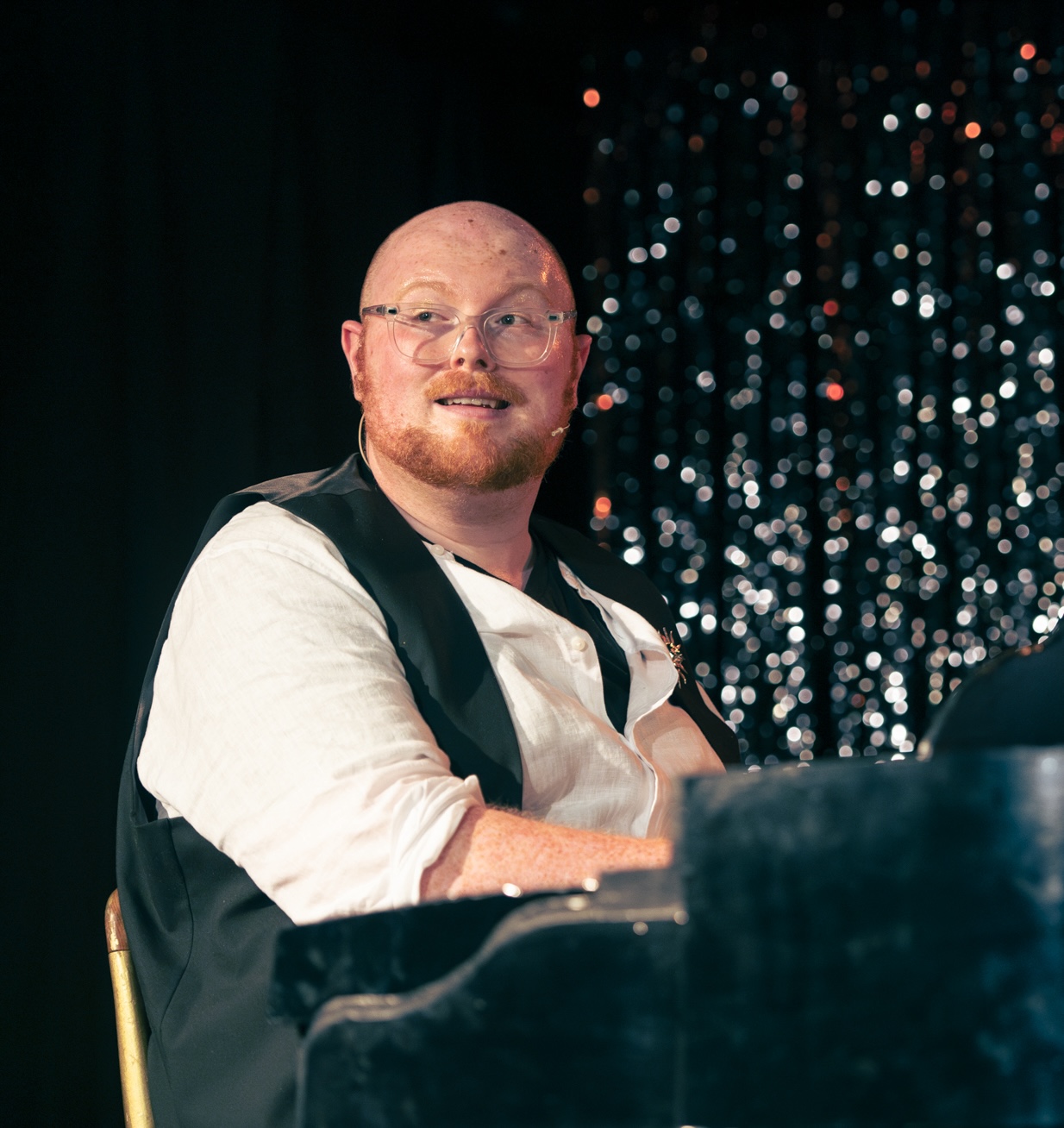
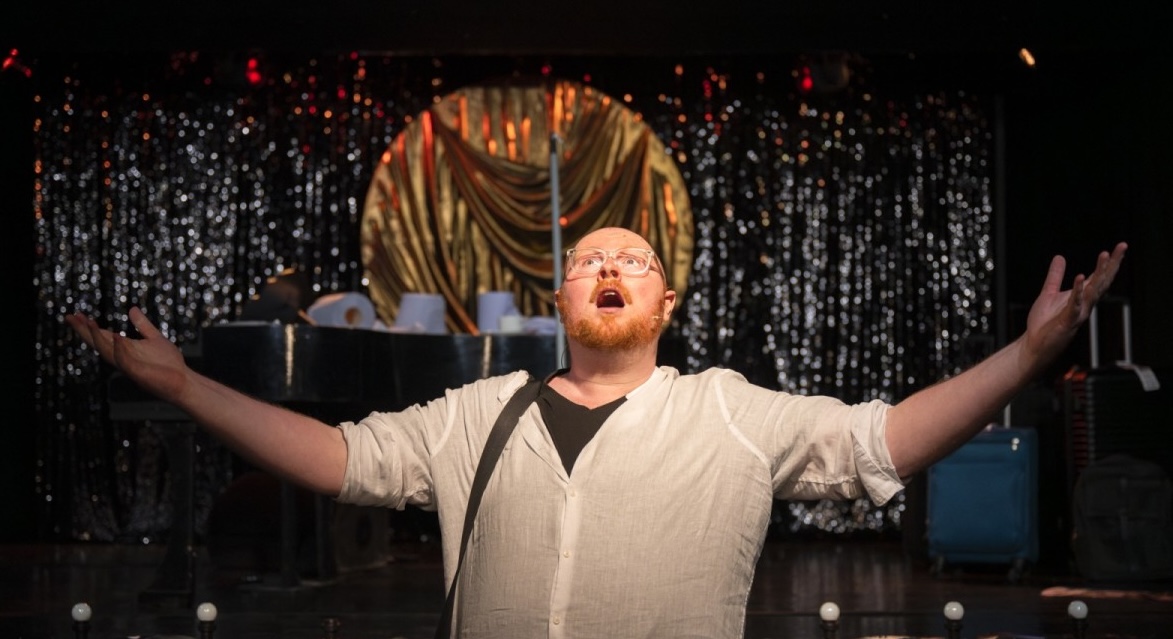
Almost before we know it, a new season of A Play, A Pie and A Pint is upon us for its – gasp! – 20th Anniversary run. This opening piece is part-play, part-cabaret and the title is not – as you might suppose – metaphorical, but quite literal. Due to a catastrophic solar event, the world is due to end in one hour (don’t panic!) and Sam (Marc Mackinnon) is stuck in a locked-down airport hotel, delivering his final show to a captive audience. That’s us, in case you were wondering.

He’s stranded hundreds of miles away from his longtime partner and co-creator, Mel, who can only contribute to the performance via a series of jumbled text messages. As the final hour ticks relentlessly away, Sam offers us some insight into his tortuous path into show-biz: the people who helped him on his way, the others who stood in his path.

One thing’s for sure: when the end finally comes, he’ll greet it with a song and a smile…

Mackinnon is an engaging actor and he delivers Brian James O’Sullivan’s script with considerable skill, performing a series of classic songs in a wonderfully distinctive style. Under Joe Douglas’s direction, Mackinnon lures the audience into his prematurely fading orbit. A sequence utilising an old glitter-ball and the torch from a mobile phone is particularly affecting.

I do have one reservation. Although the songs – ranging from Judy Garland to James Taylor – are beautifully sung and Mackinnon has a strong, plaintive voice, there isn’t much original material here. There is a charming little ditty about a man who lives in a house made of pasta (!) but I would like to hear more new compositions.

However, this apocalypse is weirdly captivating and a strangely delightful way to spend your last hour – even if the tragic conclusion seems horribly prophetic.

3.8 stars

Philip Caveney

Judy

03/10/19

The ‘Judy’ of the title is, of course, Judy Garland, and this rather downbeat film, directed by Rupert Goold and written by Tom Edge, concentrates not on the gloss and glitter of Hollywood, but on a less-celebrated period of her life: her five-week residency at London’s Talk of the Town, which proved to be – quite literally – the end of her career.

It’s 1969, long after her super-stardom and more than a decade after her cinematic comeback with A Star is Born. Judy (Renée Zellweger) is struggling to make ends meet. Addicted to barbiturates and hopelessly in debt to the IRS, she is virtually unemployable in her homeland, reduced to dragging her children, Lorna and Joey, onstage with her to perform song and dance routines for a hundred dollars a night. Judy’s ex-husband, Sid Luft (Rufus Sewell) is understandably concerned for the welfare of his kids, but Judy is determined to prove herself a good mother, despite never having had the luxury of a decent role model in her own childhood.

But then the offer from Bernard Delfont (Michael Gambon) rears its head and, sensing a way out of the corner she’s painted herself into, Judy heads off to England, reluctantly leaving her children in the care of their father. There are problems from the moment she arrives: she refuses to rehearse for the show and keeps complaining of ‘headaches’- but her no-nonsense PA, Rosalyn Wilder (Jessie Buckley), does at least manage to get her onstage for the opening night. Judy goes down a storm and things look promising… but of course, as history attests, from there, it’s anything but plain sailing.

The first thing to say about Judy is that Zellweger is totally convincing in the lead role, nailing Garland’s tragic self-doubt and vulnerability with aplomb and somehow even managing to look and sound uncannily like the real person. But a great performance doesn’t automatically make a great film. That, I’m afraid, is more of a mixed bag.

I like the flashbacks to the Hollywood years, where young Judy (Darci Shaw) does battle with the odious Louis B. Mayer (Richard Cordery), a man who thinks nothing of working a twelve year old relentlessly around the clock, knowing full well that she has to exist on a diet of ‘pep pills’ in order to keep going. Later on, there’s also a charming plot strand where Garland befriends a couple of gay fans (Andy Nyman, Daniel Cerquira) and ends up back at their flat, cooking them an omelette, which makes them, I suppose, the original ‘friends of Dorothy.’

But unfortunately, so much of the narrative is devoted to Garland, the other characters barely get a look-in. The super-talented Jessie Buckley, for instance, is second-billed here, but we learn virtually nothing about Rosalyn; and why bother to employ the mighty Michael Gambon if all he gets to do is sit in the audience and look disgruntled? Finn Whittrock also struggles to make anything of his role as ‘unsuitable husband number five,’ Micky Deans. Was this man a cruel opportunist looking for his own personal rake-off? Was he just lousy at doing business? Did he have genuine affection for Judy? There’s not enough information here to let me make a judgement on any of those questions and that’s a shame.

Still, if, like me, you have a soft spot for the divine Ms Garland, this is worth catching for that sublime central performance. Zellweger does rousing versions of some of Judy’s best-remembered songs and manages to capture her distinctive vocal inflexions perfectly. And, unless you’re made of stone, you’ll probably have a tear in your eye at the film’s unexpectedly redemptive conclusion.

3.8 stars

Philip Caveney


A Star is Born

03/10/18

What is it about A Star is Born that makes filmmakers so keen to revisit it?

It first saw the light of day in 1937, when Janet Gaynor and Fredrick March played the original star-crossed thespians. In 1954, Judy Garland spectacularly relaunched her career with it, starring opposite a ‘never-better’ James Mason. In 1976, Barbra Streisand and Kris Kristofferson moved the action from the movie studios of Hollywood to the world of rock music (a version that I have yet to catch up with.) And now Bradley Cooper makes his directorial debut with a version that seems hewn from the same cloth as the the latter outing. Cooper stars opposite Lady Gaga, whose previous big screen appearances have amounted to a guest appearance on Muppets Most Wanted and the lacklustre sequel to Sin City. 

Cooper plays ageing rock star, Jackson Maine, still gamely gigging around the world but beset by the twin demons of tinnitus and rampant alcoholism, with a few lines of cocaine chucked in for good measure. Stopping off at an LA drag bar one evening for a post-concert drink, he witnesses Ally (Lady G) performing a spirited rendition of La Vie En Rose and is instantly smitten by her. Fortunately, she is equally attracted to him. A whirlwind courtship ensues and, almost before we can draw breath, Ally and Jackson are an item, and the pair of them are performing at concerts across the USA, with Ally submitting some of her own songs to each show. Which is all well and good. But then, after one gig, she is approached by Rez (Rafi Gavron), a big time music promoter and a character so repellant that he manages to make us hate him before he’s even uttered so much as a word. Rez offers to make Allie a star. It will mean being styled and packaged, of course, but still, it’s what she’s always wanted, so… what could go wrong?

There are no great surprises here, mainly because the storyline is so familiar – and it’s hardly a spoiler to say that events are soon heading in the direction signposted ‘Tragedy, Arizona.’ Cooper does a great job with Maine, making us care about him even when he’s deep in the throes of his own self-destruction. Sam Elliott as his older brother/manager, Bobby, is good too, somehow managing to look not a day older than he did in The Big Lebowski, twenty-frickin’ years ago.

Okay, so this may not be the five star masterpiece that Garland’s version is. (This one does make me cry a couple of times, while the 1954 movie never fails to reduce me to a blubbering wreck.) But it is, nonetheless, a palpable hit, with decent songs that sound convincingly like proper chartbusters, some nicely sketched supporting characters – I particularly like Allie’s Sinatra-obsessed father, Lorenzo (Andrew Dice Clay) – and a timely updating from the Academy Awards to The Grammys, with an appearance on Saturday Night Live added to the mix.

The biggest revelation here is Lady Gaga, who is simply mesmerising, both when she’s singing and when she’s acting. At one point, Ally bemoans the fact that potential employers simply haven’t seen her as a good fit for a particular role. Is this what’s happened to Gaga herself in previous attempts to move her career into film? Whatever else occurs from hereon in, it would seem a bright future on the big screen is hers for the taking, if she decides she wants it.

A movie star is born.

4.7 stars

Philip Caveney