Jeremy Strong

Springsteen: Deliver Me From Nowhere

29/10/25

Cineworld, Edinburgh

Many people who, like me, purchased Bruce Springsteen’s Nebraska on its release in 1982, must have experienced the same bewilderment as I did. How had the Boss gone from the stirring, upbeat anthems of Thunder Road and Hungry Heart to this bleak, introspective slice of Americana? And, perhaps more importantly, why? Okay, after a few listens, a couple of those ballads did eventually get their hooks into me but, as a career move, it seemed a spectacularly ill-judged decision.

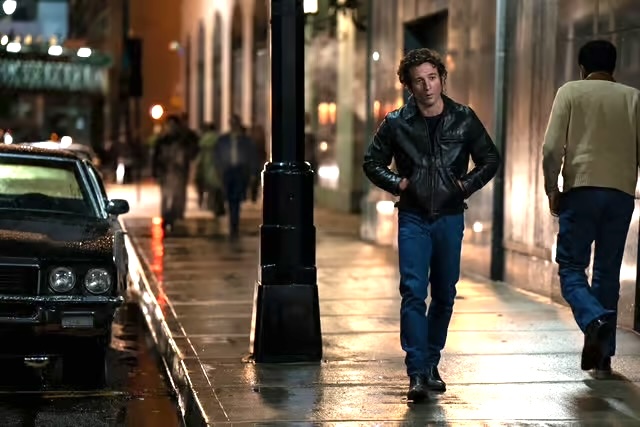
Scott Cooper’s film, based on Warren Zane’s book, sets out to explain exactly what happened and, in choosing to concentrate on that difficult album, runs the risk of alienating itself from those fans who were anticipating an upbeat celebration of the great musician’s life and work (much like the record itself). True, when we first see Bruce (Jeremy Allen White) onscreen, he’s powering through a blistering performance of Born to Run. Coming off stage, he’s informed by his manager and close friend, Jon Landau (Jeremy Strong), that, with his latest album (The River) at number one in the charts, he is standing on the edge of superstardom.

But in the following break from touring, Bruce appears to be heading into a depression. He happens to catch a glimpse of Terence Malik’s 1973 film, Badlands, on TV, featuring newcomers Martin Sheen and Sissy Spacek – and in that moment a spark is ignited. Pretty soon, he’s reading up on Charles Starkweather and the killing spree he and his teenage girlfriend, Caril Anne Fugate, embarked on back in 1958. Bruce starts to write the lyrics of what will become Nebraska’s title track.

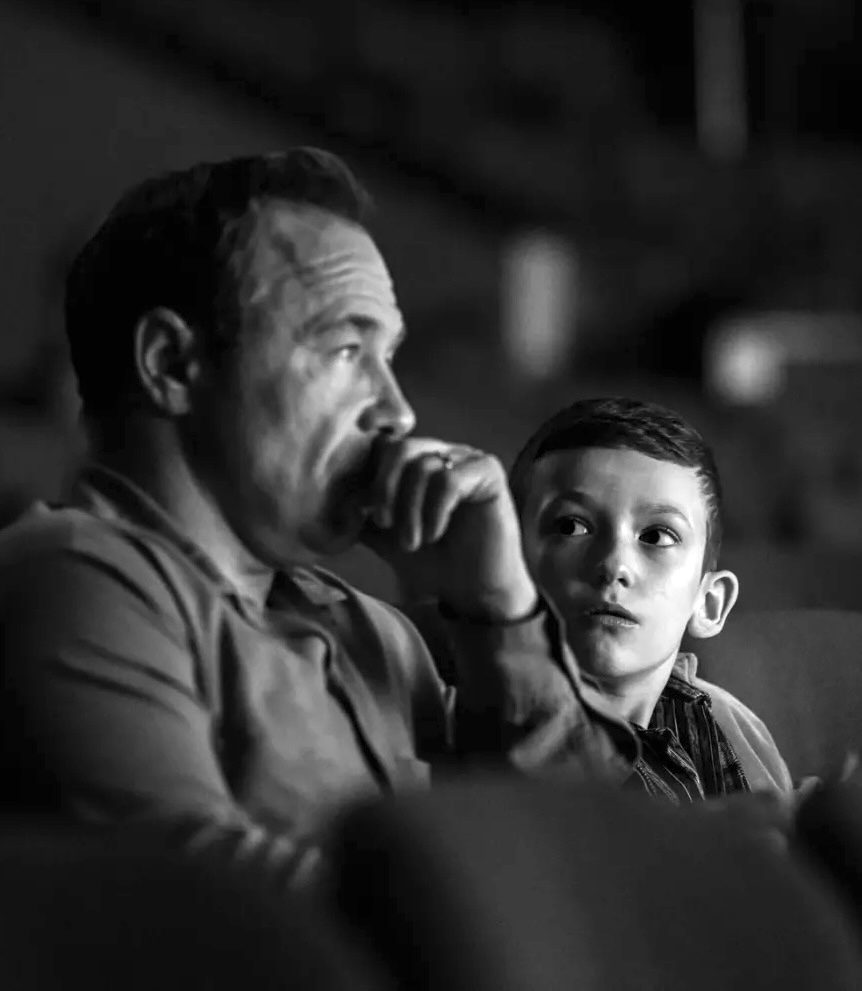
He’s driven by powerful memories of his own childhood, the issues he experienced with his abusive father, Douglas, played in flashback by Stephen Graham, who gives a brooding, mostly silent performance opposite an intense turn from Matthew Antony Pelicano Jnr as Young Bruce. Something that happened between father and son in those formative years is clearly behind Bruce’s current malaise.

Back in the present, he enlists the help of recording technician Mike Batlan (Paul Walter Hauser) to capture the new songs as they emerge on a simple 4-track deck at home. But, as his obsession with the new project steadily grows – and his record label continually pester him for new product – so he becomes increasingly determined that the resulting album must be as stripped-back as the songs on the ‘demo’ cassette he’s already recorded…

Deliver Me from Nowhere is essentially about a kind of exorcism, an artist’s attempt to cleanse himself of the emotional baggage he’s carried around since childhood. While the story offers an interesting angle on a lesser-known aspect of Springsteen’s career, it’s not the kind of material that biopics are traditionally built upon. Several viewers at the screening I attend decide to vote with their feet around an hour in. While I’m engaged enough to stay in my seat till the closing credits, I have to admit that overall the film is a mixture of the good, the bad and the downright puzzling.

Jeremy Allen White, it must be said, doesn’t look an awful lot like Springsteen, but still manages to portray the man with absolute conviction and, perhaps more importantly, he captures the Boss’s distinctive voice with evident skill. Strong is an exceptional performer and makes the softly-spoken, nurturing approach of Landau interesting to observe. The man clearly had the patience of a saint.

But the female performers are less well-served. Gaby Hoffman, as Bruce’s mum, Adele, and Grace Gummer as Landau’s wife, Barbara, are granted barely enough dialogue to justify their presence. Elsewhere, we witness Bruce’s on-off romance with waitress Faye Romano (Odessa Young), a fictional character who is a composite of several girlfriends he had around this time. Young does her best with what’s she given which is, to be honest, nowhere near enough.

There’s a frankly exasperating moment where Bruce is finally about to unburden himself to a psychiatrist, to explain exactly what’s been haunting him all these years… only for the camera to suddenly cut away, leaving the audience literally in the dark. On the plus side, there are a couple of upbeat scenes set in New Jersey club, The Stone Pony, that celebrate the energy and excitement of the early 80s rock scene. And a recreation of the original recording session for the song Born in the USA, is a definite high point.

But too often, Deliver Me From Nowhere struggles to justify its considerable running time. Hardcore Springsteen fans will find enough elements here to pique their interest but those with only a passing knowledge of the man and his work may soon start running out of patience.

3.4 stars

Philip Caveney
The Apprentice

19/10/24

Cineworld, Llandudno

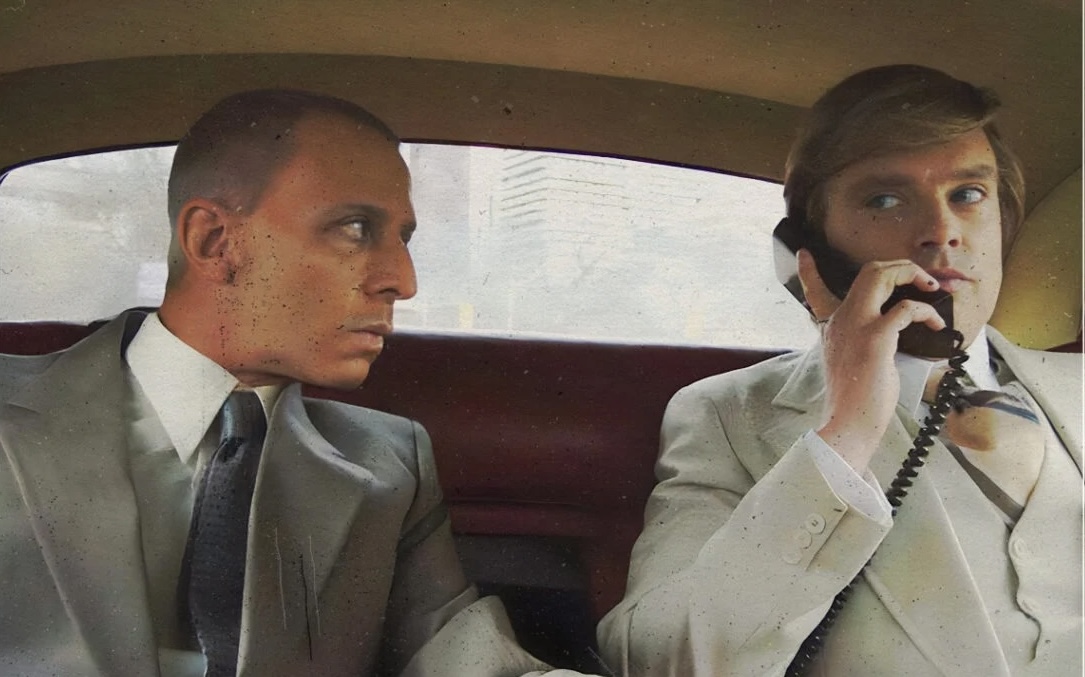
We’re in Wales, visiting Susan’s mum, but Brenda is a bit of an anti-Trump-obsessive and like us, she’s been eagerly awaiting the release of The Apprentice. It’s clearly time to flex the Unlimited card. Abi Abbasi’s biopic couldn’t have come at a more inopportune time for Trump. Of course he’s threatened legal action, though I’m pretty sure that Abbasi’s film doesn’t feature anything that isn’t already common knowledge to those who’ve read some of the numerous books about the man – but what it does, very effectively I think, is to illustrate how the Trump-monster was made and shaped.

Like most beasts, he’s learned his craft through imitation.

When we first meet Donald (Sebastian Stan) it’s 1973 and he’s essentially a slum landlord in New York City, trying his level best to please his ever-critical father, Fred (Martin Donovan), and deal with his alcoholic older brother Freddy (Charlie Carrick). The family fortune has already been made and the Trumps are currently fighting allegations that they have been discriminating against their African-American tenants – but Donald is looking for ways to better himself and has a vision of turning the long-derelict Gulf and Western building into a gleaming new construction called Trump Tower. But he knows he can’t do it alone.

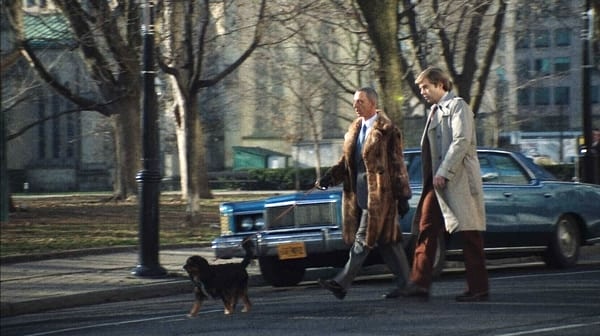
Then he falls into the company of Roy Cohn (Jeremy Strong), a ruthless lawyer, best known at this point for securing the death penalty for the Rosenbergs, a man who will stop at nothing to get his own way. He takes Donald under his wing and quickly drills into him his personal mantra. Never admit defeat, the truth is what you say it is and always act as though you’ve won, even if you haven’t.

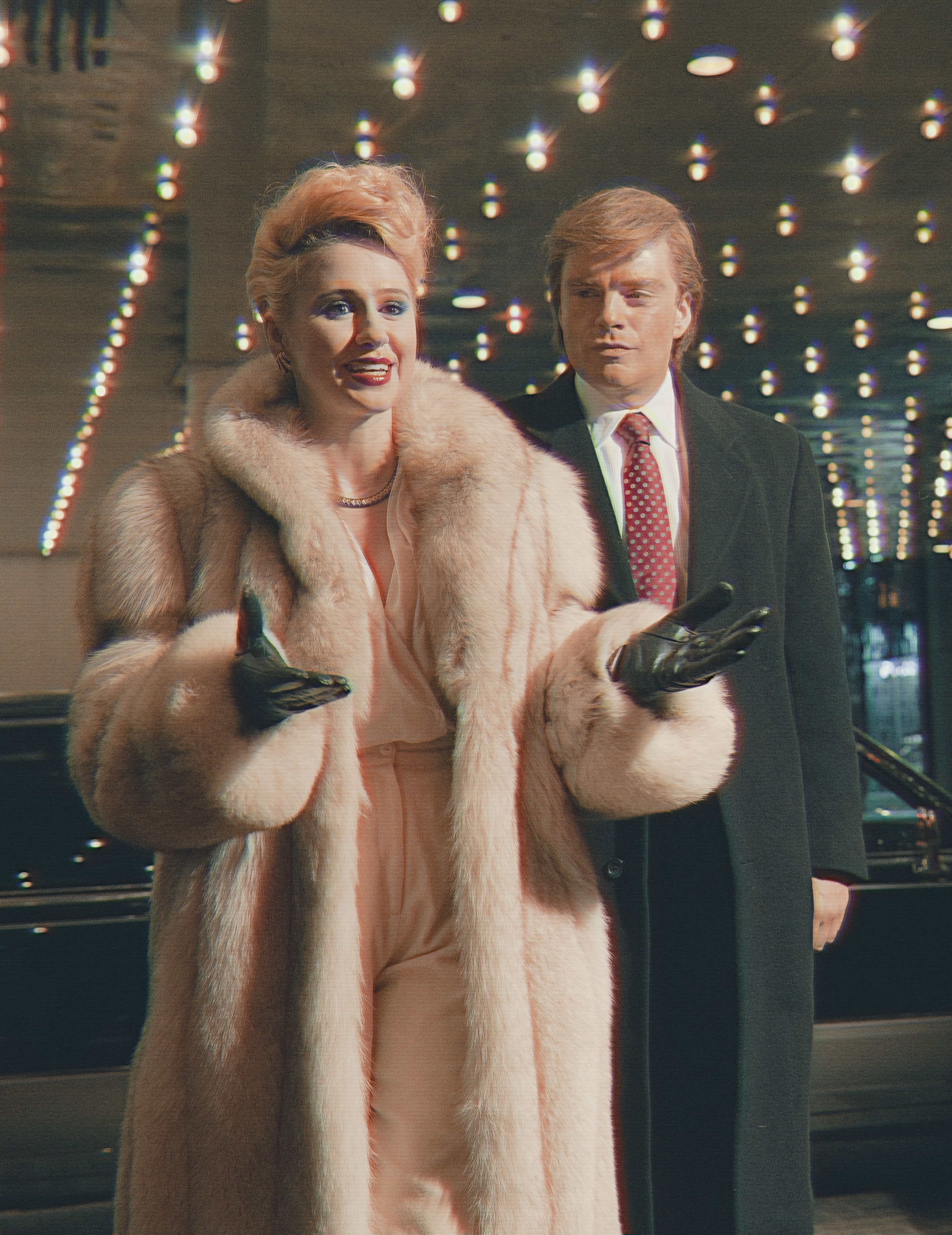
Pretty soon, Trump has become the perfect acolyte, copying all of Cohn’s traits and even doubling down on them. When Donald meets and falls for Ivana Zelničková (Maria Bakalova), there’s a moment where it seems as though the film might be about to let him off the hook. His clumsy attempts to seduce her make him seem almost… relatable – but the feeling is short-lived. The monster soon comes back to the fore and the scene where his affectations turn against his former love is shocking to say the least.

Sebastian Stan does a pretty good job of capturing Trump’s gradual deterioration into the beast we know. Holding back the man’s distinctive hand gestures and vocal affectations until the film’s final furlong, he literally grows into the role. Strong, meanwhile, submits an extraordinarily chilling performance as Cohn: lean, cadaverous, almost alien, he surveys everyone he meets with the same dead-eyed stare. Here is a man who hides his real identity behind a mask, who puts down his enemies with a barrage of verbal abuse, while secretly pursuing a dissolute life with complete abandon. He’s totally toxic and yet, his ultimate treatment by Trump, when he has outlived his use, is all the more shameful because of that toxicity – and it’s hard not to feel some sympathy for him.

Abas meanwhile, captures the look and feel of the changing decades with a skilful combination of found footage and reimagined scenes. His use of music is inspired. Using Yes Sir, I Can Boogie as Ivana’s unofficial theme tune is particularly effective.

Trump can (and surely will) protest that releasing The Apprentice when he is gearing up for the fight to become the US President for a second term is inexcusable – but, as this film so clearly portrays, when it comes to a dirty, underhand fight, this is a man with considerable experience of his own.

4.3 stars

Philip Caveney

The Trial of the Chicago 7

16/10/20

Netflix

Those people who despair about the current state of the judicial system in America should take a long, hard look at The Trial of the Chicago 7 – if only to remind themselves that it was just as rotten in the late 60s.

The titular trial is, of course, one of the most outrageous miscarriages of justice in relatively recent history, and here it is in all its shocking detail. Presented as fiction, this would inevitably raise eyebrows. The fact that it’s all true only intensifies the sense of shame the story generates. This is a damning narrative in the truest sense of the word.

It’s the story of a bunch of radicals who, in 1968, organised a peaceful protest against the Vietnam War. On the night of the protest, a large contingent of the protesters were cornered by the police and subjected to a brutal physical assault. Many of the officers removed their identification before striking out with their batons.

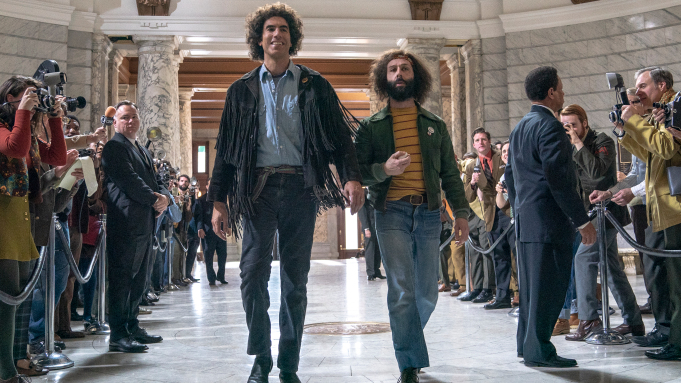
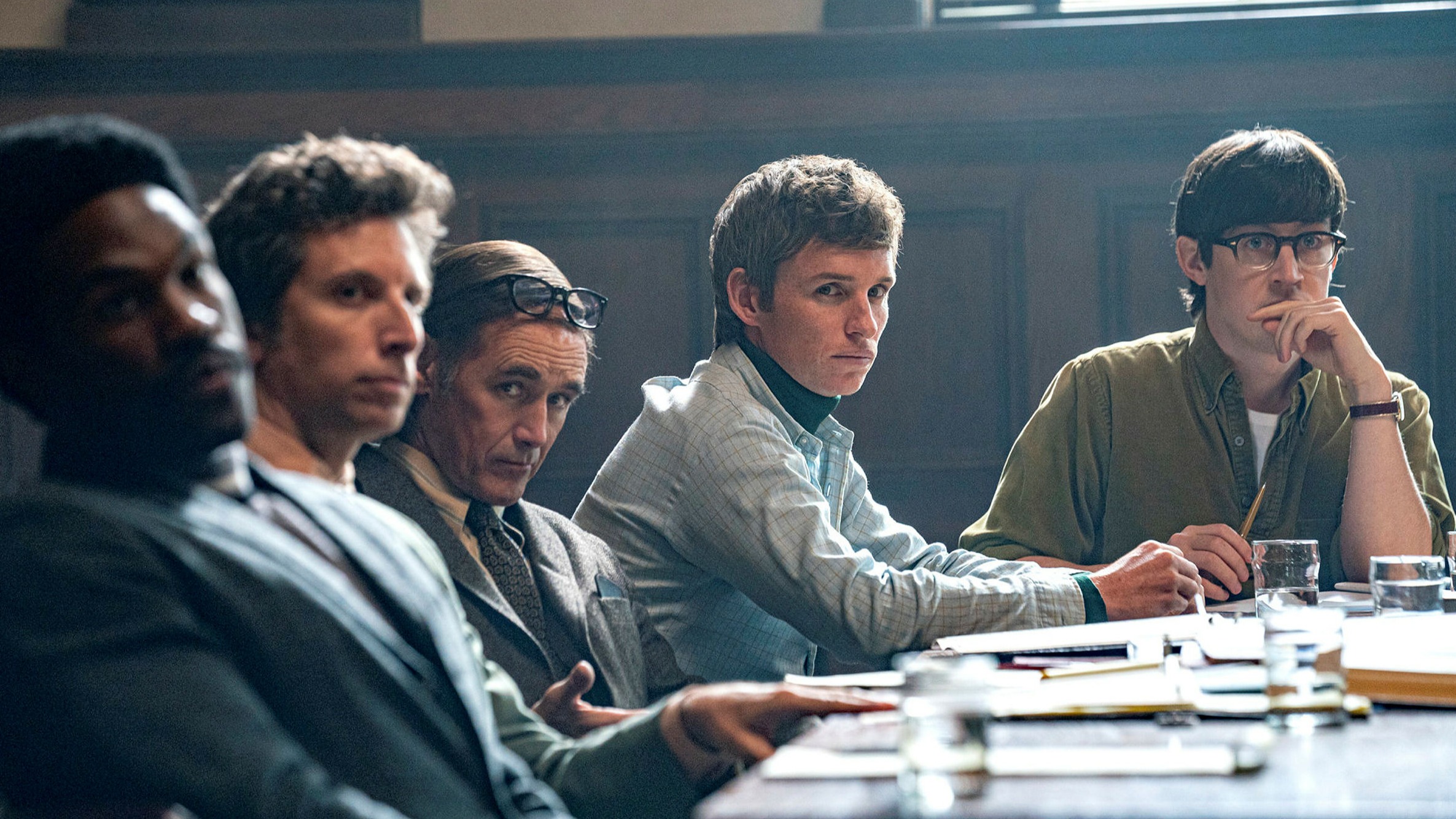
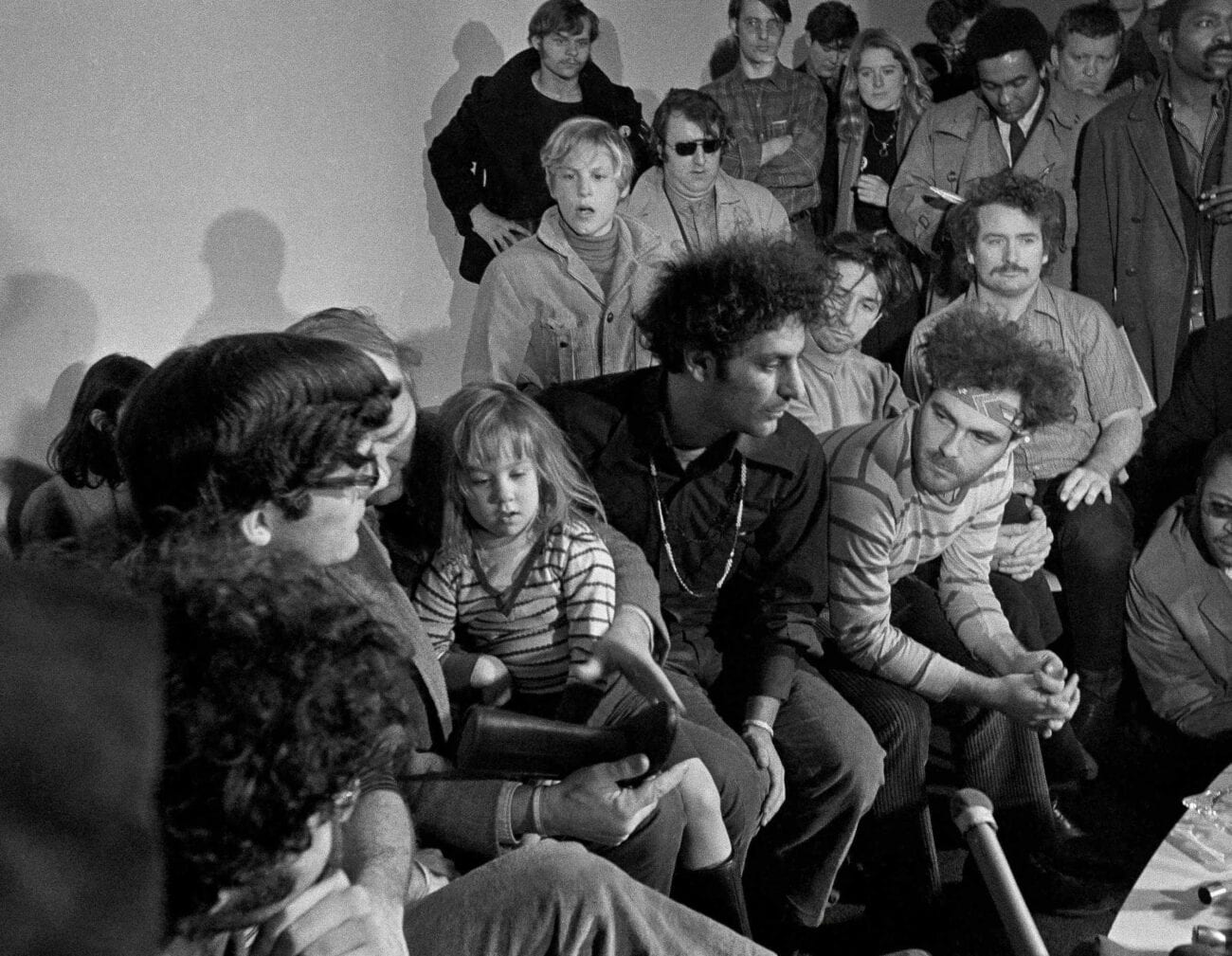
The upshot should surely have been that the Chicago police were the ones on trial, but no such luck. Tom Hayden (Eddie Redmayne), Abbie Hoffman (Sacha Baron Cohen), Jerry Rubin (Jeremy Strong) and four of their friends find themselves up before Judge Julius Hoffman (Frank Langella), a rampant hardliner who clearly deems them guilty on the length of their hair alone. Their crime? Hard to say, really. Obstructing police batons with their faces?

Just to complicate matters, Black Panther member Bobby Seale (Yahya Abdul-Mateen II) is on trial alongside them, for no apparent reason other than he happened to be in Chicago on the same night. He has no legal representation in the court and, when he tries to speak for himself, he’s escorted outside, beaten, shackled and brought back in wearing a gag.

Think about that for a moment…

Writer/Director Aaron Sorkin has been working on this film for several years and it’s clearly a passion project. At first glance, some of the casting seems questionable but, as it turns out, Redmayne is perfectly convincing as Hayden, and Baron Cohen – hardly the go-to person for a credible acting performance – really captures the spirit of Abbie Hoffman, delivering what just might be his best film performance so far.

There are plenty of other sterling actors in smaller roles – Mark Rylance, Joseph Gordon-Levitt and Michael Keaton to name but three – and the era is reproduced in almost forensic detail. It’s evident that Sorkin has designed this as a salutary lesson, a plea for the USA to ditch the kind of values exhibited here.

Some of that will be decided in the upcoming Presidential election but, in the meantime, here’s a chilling testament to the iniquities of the law and a stark warning of what happens when the judiciary isn’t held to proper account.

Hard-hitting stuff.

4.3 stars

Philip Caveney

The Gentlemen

01/01/20

When Guy Ritchie first burst onto cinema screens in 1998 with Lock, Stock and Two Smoking Barrels, his felt like a genuinely fresh voice and, two years later, Snatch served to consolidate his reputation. But his output over the intervening years has not been as assured. (Anybody who had the misfortune to witness his attempt to reinvent King Arthur as a diamond geezer will know where I’m coming from here.) While his recent box office crowd pleaser Aladdin doubtlessly put him back into the black, it could have been directed by just about anybody. So, perhaps it’s no surprise that The Gentlemen is an all too-obvious attempt by Ritchie to return to his glory days. It’s all here, complete with an 18 certificate and enough C bombs for ten films. Take that, Walt Disney!

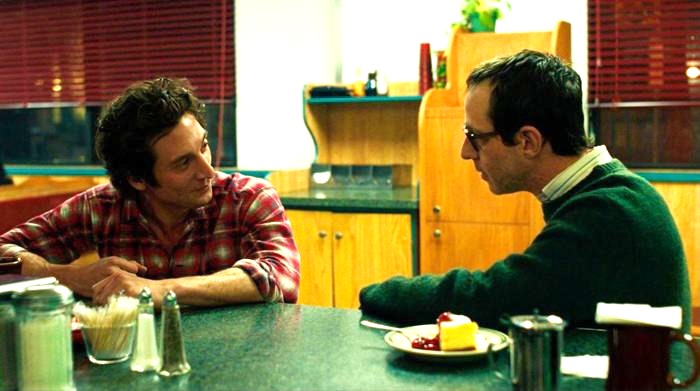
The lead ‘gentleman’ of the story is Rhodes scholar turned pot dealer, Mickey Pearson (Matthew McConaughey), who is the top drug baron of the realm. He mingles with the aristocracy, who cheerfully help him to grow his crop, and is rich beyond the dreams of Croesus. But he’s looking to get out and spend quality time with his wife, Roz (Michelle Dockery), so he offers to sell his business to Mathew (Jeremy Strong) for a cool 200 million dollars. As you do. But of course, other ‘gentlemen’ are sniffing around, including Dry Eye (Henry Golding) and, naturally, there are various attempts by various others to muscle in on the deal. On reflection, maybe the film should have been entitled The Scumbags, because there’s nobody here to root for, each successive character as nasty and depraved as the previous one. McConaughey, by the way,  has very little to do here except wander listlessly around in a tuxedo.

The story is related by seedy private eye, Fletcher (Hugh Grant, entertainingly playing against type) to Raymond (Charlie Hunnam), Mickey’s right hand man. Fletcher, it seems, has blackmail on his mind, and has written a ‘screenplay’ about the whole thing. He pitches it to Raymond (and the audience) as if trying to get us on side. A convoluted shaggy dog story ensues…

Sadly, Ritchie’s attempt to get back to his former strengths misfires horribly. Despite a pleasing turn from Grant and another from Colin Farrell as ‘Coach,’ this comes across as one of the most unpleasant and racist films of recent years. ‘I’m an equal opportunities offender,’ boasts one character and sure enough, all the non-caucasian characters in the film – black, Jewish, Asian – are treated with the same insulting, tone-deaf approach. Furthermore, poor Michelle Dockery, who has pretty much the only speaking role for a woman in the entire film, is horribly served, her one scene of any consequence marred by a spurious and gratuitous sexual assault. The main problem, of course, is that Ritchie is doubtless blissfully unaware of these shortcomings, a privileged white man still trying to prove his ‘street’ credentials.

Society has moved on considerably since the 1990s, but Ritchie, it seems, has not. He’s still stuck in that decade. And this is not a promising start to 2020.

Philip Caveney

2.6 stars

Molly’s Game

04/01/18

As a screenwriter, Aaron Sorkin has certainly earned his stripes. From The West Wing to The Social Network, he’s proved his abilities as an ace screenwriter. For his directorial debut, he’s seized upon the real life story of Molly Bloom (not that Molly Bloom) portrayed here by Jessica Chastain on excellent form and based upon Bloom’s autobiography – which probably explains how she is be presented here as a bit of a saint, rather than the ruthless enabler she so clearly was.

The film opens with an extended voiceover that explains how Bloom’s youth is spent as a competitive downhill skier, schooled by her hard-assed father, Larry (Kevin Costner) and constantly in the shadow of her more successful brother, a downhill champion. When a terrible injury puts a premature end to her sporting ambitions, Bloom looks around for alternative forms of employment and more by accident than design, ends up helping to host a series of ‘slightly’ illegal poker games where celebrity players gamble (and generally lose) obscene amounts of money. When her boorish employer, Dean (Jeremy Strong) decides to cut her out of the games, she immediately sets up in competition with him, hiring swankier venues and stealing all of his regulars. From there, she goes all out to tempt in more affluent players. When, two years after quitting the business, she is arrested by the FBI she goes in search of a lawyer and finds Charlie Jaffey (Idris Elba) who despite his initial reluctance to represent her, is soon won over by Bloom’s charms… (Jaffey, by the way, isn’t a real character, but an invention, intended to represent the various lawyers she was associated with before coming to trial).

It’s perhaps inevitable that Sorkin the director fails to fully rein in Sorkin the writer – with a running time of two hours and twenty minutes, Molly’s Game becomes somewhat lumpen in the middle section and could surely have lost half an hour in the editing suite. Furthermore, those viewers (like me) who know or care nothing about the rules of poker may find their attention wandering during these stretches – but the film gathers momentum as it heads into its final stretch and has me hooked to its conclusion.

Sorkin’s dialogue is as delicious as ever, but if there’s an overall problem here, it’s simply that it’s hard to sympathise with any of the major characters – Elba’s fictional one aside. The once cute Michael Cera (of Juno) is really unpleasant as the mysterious Player X and even the usually affable Chris O Dowd is irritating as perennial loser Douglas Downey. And no matter how eloquently Chastain plays that lead role, its hard to feel warmth for a woman who doesn’t think twice about exploiting the needs of gambling addicts in order to earn herself considerable sums of money.

In the end, Molly’s Game is watchable if flawed. Poker fans will doubtless see this as a royal flush, whereas to me it’s more like three of a kind.

3.8 stars

Philip Caveney