
Jason Schwartzman

Oh. What. Fun.

15/12/25

Amazon Prime Video

Honestly, we’re not the target audience for Michael Showalter’s Oh. What. Fun. There are lots of lovely people out there who just revel in a Christmas movie – but we’re not them. Still, as reviewers, it falls to us to watch as wide a range as possible, and – as it’s charting well on Amazon Prime – we feel we really ought to give this one a go. Also, Chloë Grace Moretz is in it, and we’ve liked everything else she’s done. So that’s how we find ourselves snuggled up under a blanket watching a festive film on a Monday afternoon, the very model of the cosy winter aesthetic we usually reject (because summer and sunshine are just better, right?).

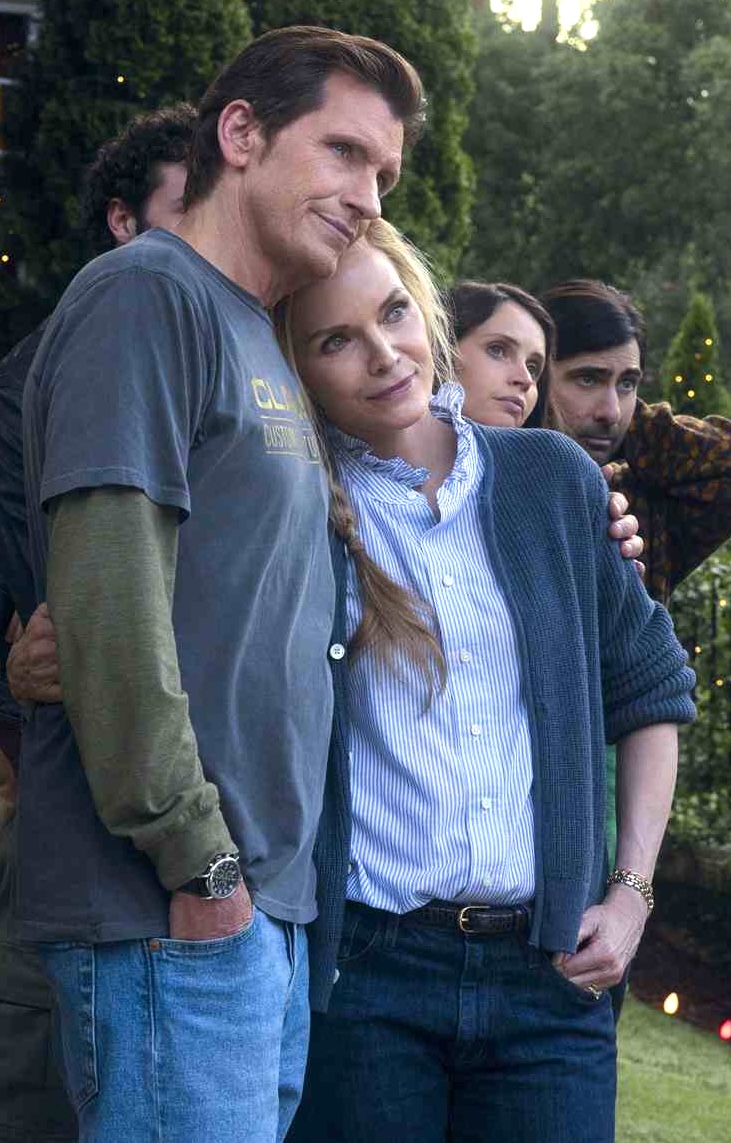
Anyway. This is basically Home Alone in reverse. Every year, Claire (Michelle Pfeiffer) puts vast amounts of effort into creating the perfect middle-class American Christmas for her husband, Nick (Denis Leary), and their grown-up family. The trouble is, her kids (Felicity Jones, Dominic Sessa and Moretz respectively) kind of resent the pressure she puts on them: they don’t want to feel obliged to come ‘home’ every year, exaggerating their appreciation for all those extra, unasked-for flourishes Claire insists on. It’s the opposite of relaxing, the antithesis of fun.

Needy Claire isn’t happy either. She desperately wants one of her kids to nominate her as a ‘Zazzy Tims Christmas Mom’ so that she can win a ticket to a recording of her favourite TV show, hosted by her role model, Zazzy (Eva Longoria). But of course, Channing (Jones), Sammy (Sessa) and Taylor (Moretz) fail to respond to her many hints, so it seems a trip to California is not on the cards…

…until Christmas Eve, when Claire’s entire family – husband, kids, partners, grandkids – fail to notice that she’s not with them at the theatre for the So You Think You Can Dance tour, which she arranged (and paid for) as an extra surprise. Alone and forgotten in an empty house, Claire decides it’s time to do something for herself. And off she heads to Hollywood.

If it’s nuance you’re after, this is not the film for you. There’s no subtlety at all: everything is laid on with the proverbial trowel, from Taylor’s over-the-top rudeness towards Channing’s well-meaning husband, Doug (Jason Schwartzman), to the unfiltered bitchiness of Claire’s ‘perfect’ neighbour, Jeanne (Joan Chen). What’s more, it’s hard to feel much sympathy for Claire, with her massive McMansion and basically decent kin. There’s never any real jeopardy or heartbreak here.

Oh. What. Fun. hasn’t changed my feelings about Christmas films, but it’s not a bad movie. In fact, it’s very watchable. So why not pour yourself a glass of mulled wine, switch on the fairy lights and enjoy a bit of lighthearted… well… fun.

3 stars

Susan Singfield

Queer

19/12/24

Cineworld, Edinburgh

The writing of William Burroughs is notoriously hard to film. (David Cronenberg came closest with The Naked Lunch in 1991.) Now Luca Guadagnino chances his arm with this adaptation of Burroughs’ 1985 novella, a belated sequel to his most celebrated novel, Junky. Queer, as adapted by Justin Kuritzikes, deviates dramatically from its source material in its second half and heads off in a startling new direction.

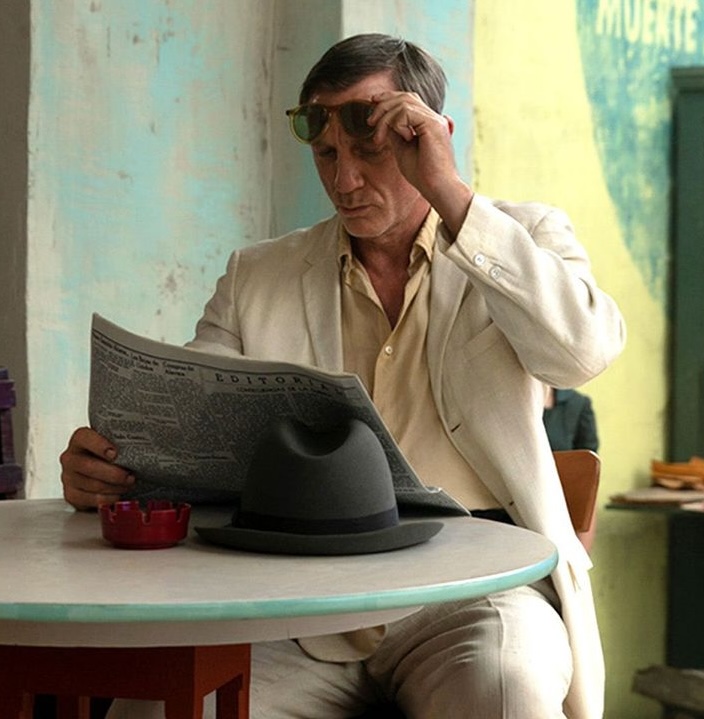
Daniel Craig, who seems determined to move as far away from his Bond persona as is humanly possible, plays Lee, a writer (but we never actually see him practising his craft). Craig does give the role his best endeavour, though it must be said it’s hard to believe that anyone could maintain such a buff physique on Lee’s daily diet of mescal, heroin and endless Camel cigarettes. He wanders the streets of Mexico City – which for the purposes of this film has been recreated in Rome’s Cinecita studios – and occasionally hires whichever young man catches his eye for rough sex in a sleazy hotel. But when his gaze falls on handsome young American, Eugene Allerton (Drew Starkey), he becomes hopelessly smitten and spends every waking hour attempting to get him into the sack.

Eventually, he succeeds in this mission but thereafter, Allerton treats him with such cool indifference that Lee becomes determined to learn more about him, so in the film’s second half, the duo set off to the jungles of Ecuador in search of a fabled drug called ayahuasca which is reputed to endow the user with telepathic powers…

Guadagnino is certainly an industrious filmmaker and I never know where he’ll go next. He’s already released the brilliant Challengers this year and I usually enjoy his work, but for me, he is prone to the occasional misstep. Suspiria felt puffed up with its own self-importance and Queer falls into that same category, a film that initially feels full of promise but ultimately delivers very little. Yes, it captures Burroughs’ seedy, nihilistic worldview, but like the source material, it’s strangely distancing and lacking in jeopardy and, frankly, none of the characters have qualities that an audience can root for – unless perhaps you count Jason Schwartzman’s fleeting appearance as Joe, Lee’s occasional drinking companion, who keeps being robbed by the young locals he sleeps with.

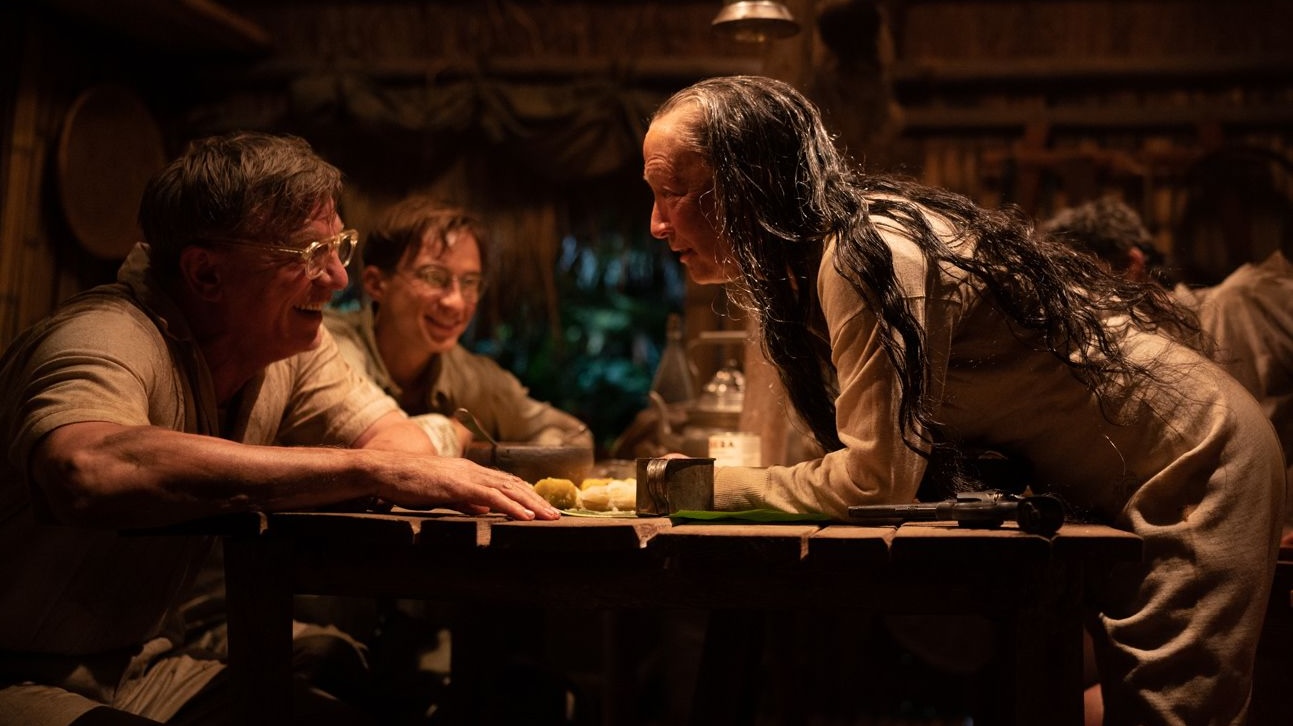
Lesley Manviile makes a late (almost unrecognisable) appearance as the feral, jungle-dwelling scientist, Dr Cotter, an expert in the aforementioned hallucinogen, and she helps Lee to achieve his goal of finding his inner self – but by this point I am already becoming uncomfortably aware of the film’s lengthy running time.

In its closing stages, Queer mostly feels uncomfortably reminiscent of Kubrik’s 2001: A Space Oddysey, which is not something I expected to say. And yes, it’s fine to refer to one of the more notorious episodes of Burroughs’ life, but to do so twice feels suspiciously like overkill. Kudos to Craig and Starkey who give this everything they have but, in the end, I just don’t care enough about what I’m watching to make this feel worth the effort.

2.8 stars

Philip Caveney

Asteroid City

25/06/23

Cineworld, Edinburgh

If you were ever looking for the film director equivalent of Marmite, Wes Anderson might just be your best bet. His detractors delight in pointing out that he always makes the same film, but that’s a ridiculous over-simplification. While I’d be the first to admit that his films do have an unmistakable look – that you can see one frame, taken at random from any one of his many features, and know instantly that it’s his work – we rarely make that complaint about artists who work with paint and canvas.

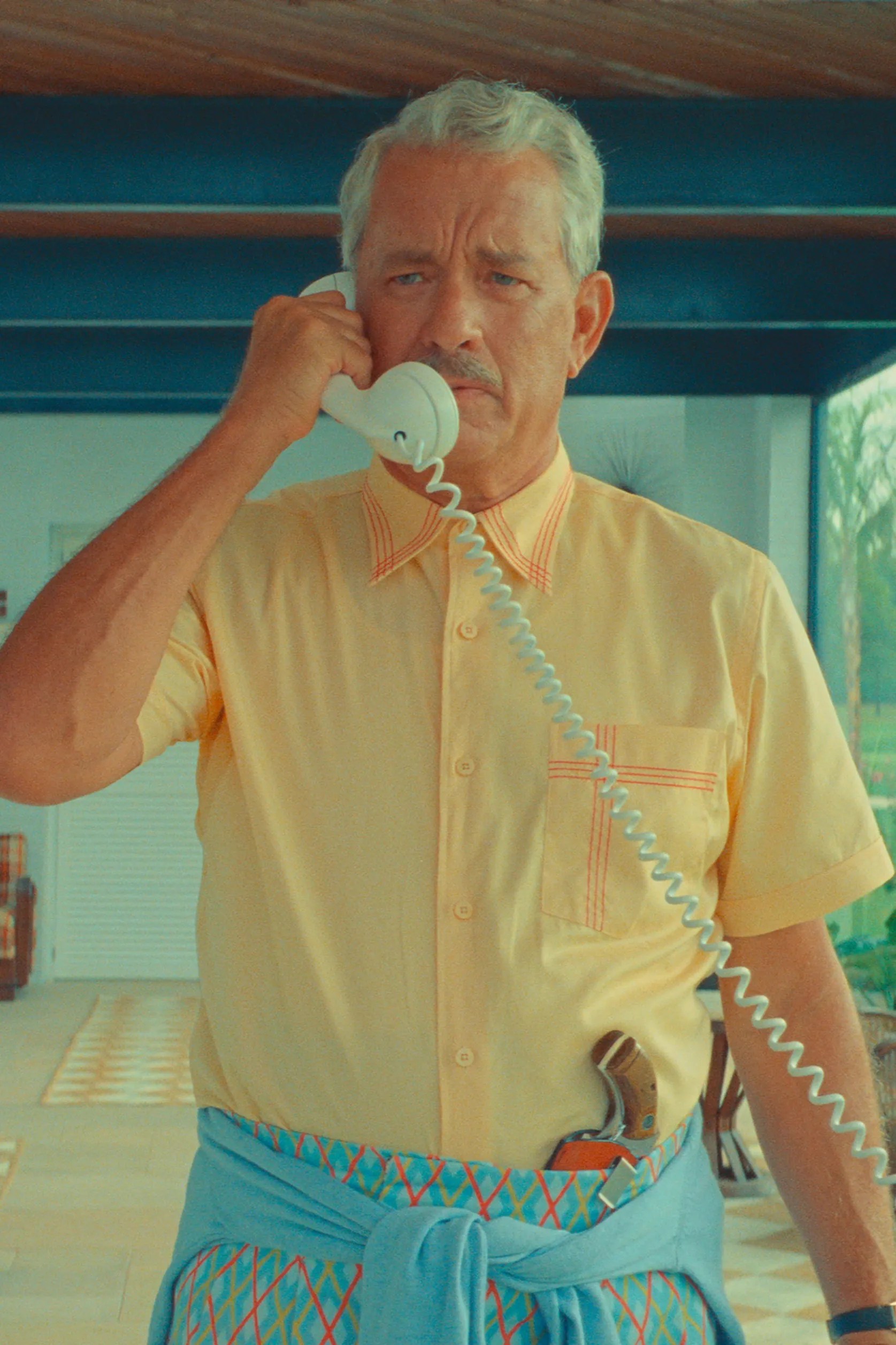
Asteroid City has all of the man’s familiar hallmarks: those sumptuous, vividly-coloured landscapes dotted with unlikely looking ramshackle buildings; a massive roster of A listers, all of them prepared to swallow their pride in return for delivering just a line or two of quirky dialogue; and that weird detachment from reality, those bizarre situations seemingly created to point up the artificiality of the whole undertaking. For me, these are the elements that confirm Anderson as a unique and brilliant filmmaker. But then, I’ve been a fan ever since Rushmore in 1998.

The film opens in stark black and white with an earnest narrator (played by Bryan Cranston) talking about the creation of a new play by hotshot writer, Conrad Earp (Edward Norton), and the play’s tortuous path to production – and then we cut to the full-colour, wide-screen film adaptation of the same story. War photographer Augie Steenbeck (Jason Schwartzman) arrives at the titular desert town with his son, Woodrow (Jake Ryan), who is one of five gifted children invited to attend a ceremony where one of them will be presented with a prize for their latest invention.

Woodrow and his three little sisters have some devastating news to deal with first, but their father seems far more interested in the presence of screen actor, Midge Campbell (Scarlett Johansson), who has her own gifted daughter, Dinah (Grace Edwards), in tow. It’s not long before Dinah and Woodrow begin to develop an interest in each other…

But this is about as far as any rational plot outline can take us. From this point, madness ensues in the form of a group of singing cowboys, the aforementioned weird childhood inventions and a WTF alien visitation. And, as the tale enfolds, we are treated to regular visits back to the monochrome world of the original theatrical version, where we see the actors in the film actually being the actors and learning to handle their roles, whilst commenting on the artificiality of the whole experience. Meta? Well yes, but clearly that’s the point.

If this sounds hard to get your head around, don’t despair, because the sparky script by Anderson and Roman Coppola keeps the pot bubbling happily away as the story unfolds. I find myself laughing at the wonderful absurdity of some of the situations – and is the director making a comment on cinema’s general inability to handle theatrical material with any sense of conviction?

It’s heartening to see that a sizeable audience has come out for this on a rainy Sunday afternoon and also to read that Asteroid City has enjoyed a bigger opening weekend than the latest Transformers movie. Perhaps a lot more people out there are acquiring a taste for Marmite.

4.6 stars

Philip Caveney

Spider-Man: Across the Spider-Verse

04/06/23

Cineworld, Edinburgh

In 2018, Spider-Man: Into the Spider-Verse caught a lot of people napping. At that time, the Marvel Universe pretty much dominated the public movie-going imagination and here was something completely unexpected: Lord and Miller’s animated extravaganza – which had the temerity to take on the big guys. It was, quite literally, like nothing we’d seen before.

A lot has happened over the intervening years. Marvel are not quite the force they once were, with recent offerings (though still profitable) failing to reach the dizzy heights they’ve previously climbed to. And the weight of expectation for Across the Spider-Verse is palpable. Can this Sony Studios sequel really hope to put lightning into the bottle a second time?

Well, yes, as it turns out, it can. The credit sequence alone offers more imaginative filmmaking than we’re used to seeing in the average Marvel feature.

Sixteen months after the events of Into, Gwen Stacy (Hailee Steinfield) is having a hard time getting on with her life on Earth-65. After accidentally killing Peter Parker (Jake Johnson), she’s understandably depressed – and she can’t help but miss her old pal Miles Morales (Shameik Moore), who is inconveniently stranded in a completely different dimension. On Earth 1610, he’s still negotiating everyday life with his cop father, Jefferson (Brian Tyree Henry), and his nurse mother, Rio (Luna Lauren Vélez), whilst continuing his secret adventures as our friendly neighbourhood Spider-Man.

But when Gwen is visited by another couple of Spider-People, Miguel O’Hara (Oscar Isaac) and Jessica Drew (Issa Rae), they give her a handy bracelet that allows her to slip easily between dimensions. Time to give Miles a quick visit? Well, why not? Doing so couldn’t possible mess up the old twisty-turny-timey-wimey configurations… could it?

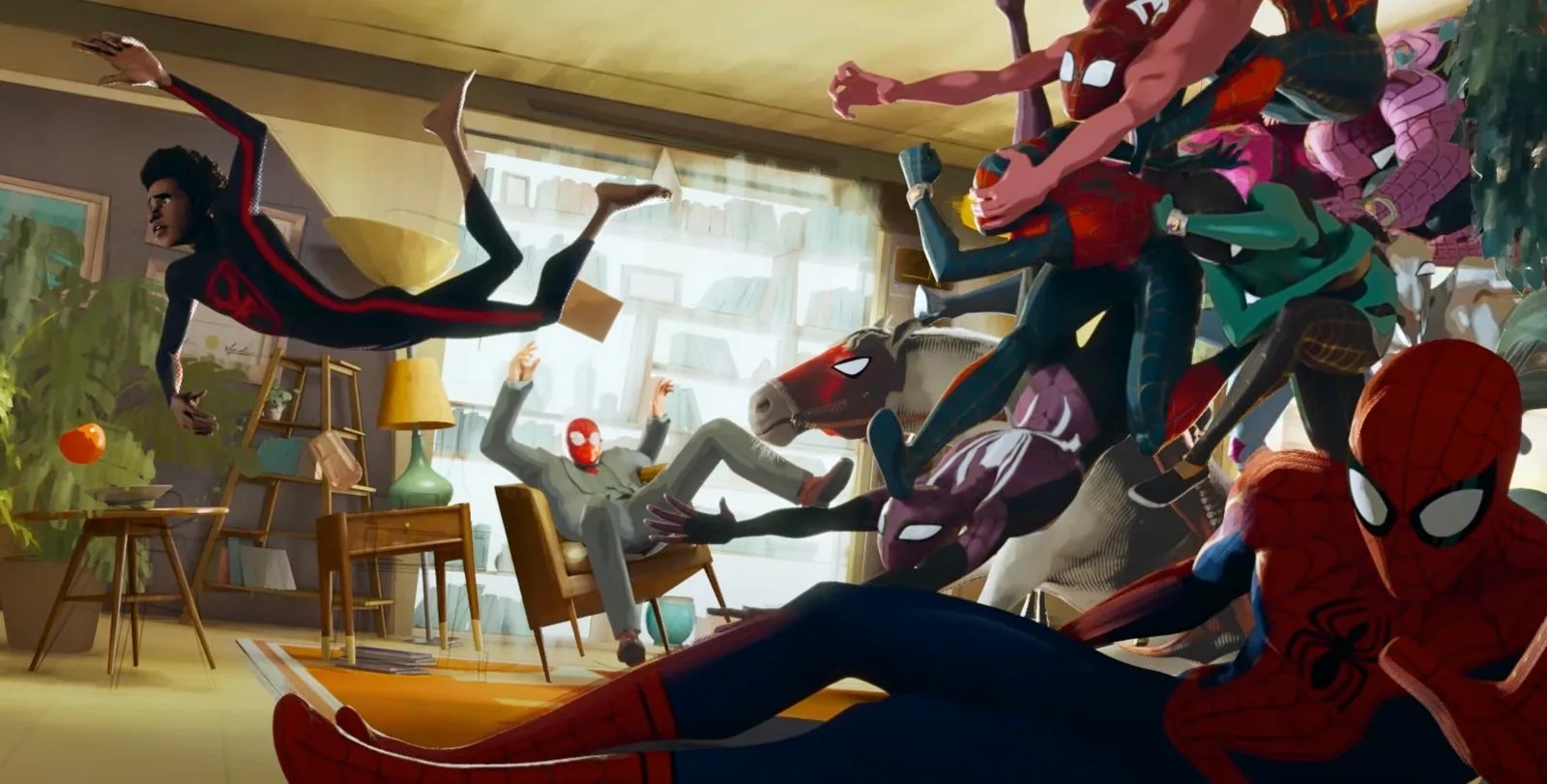
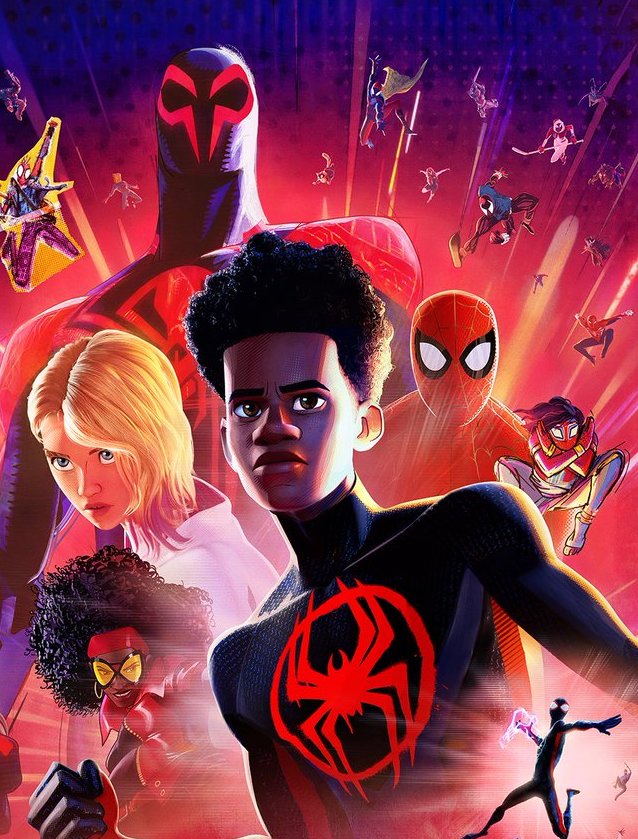
It would be pointless to try and convey more of the plot here because it’s complicated and mind-bending in the best possible sense. It’s to Lord and Miller’s credit (they wrote the script with Dave Callahan) that at no point do I feel bewildered by what’s happening onscreen. The true triumph, however, is the ever-changing beauty of the many different art techniques used to illustrate the story: from realist to impressionist; from pastel shades to psychedelia. Across the Spider-Verse is a mesmerising, eye-popping spectacle that feels like being plunged headlong into a fabulous maelstrom of sonic fury.

And it’s also more than that. The sprightly script keeps throwing snarky one-liners at me, the story counterpoints teenage angst with the minefield of parental responsibility and, with the arrival of The Spot (Jason Schwartzman), I’m offered a super-villain like none I’ve ever seen before. Best of all, I’ve rarely seen a film that feels more inclusive than this – that gleefully throws in a pregnant, afro-wearing, motorbike-riding Spider-Woman, just because it can.

My only real criticism? In a film with a running time of two hours and twenty minutes, surely the story arc could have reached some kind of standalone conclusion? When the ‘To Be Continued’ message hits the screen, I let out an audible groan. I can only hope I won’t have to wait another five years for part three, because I’d be happy to sit down and watch it right now. But hey, if my one negative comment is that I am left wanting more, that’s a good thing, surely?

Miss this one and weep. And folks, I know I say this a lot but please, please don’t wait for streaming. If ever a film was designed to be seen on the biggest screen possible, this is the one.

5 stars

Philip Caveney

Rushmore

12/01/18

Wes Anderson is one of contemporary cinema’s most original talents. Although his subjects are diffuse and far-ranging, his movies are always shot through with an idiosyncratic sensibility that marks him out as a true auteur. With his new release, Isle of Dogs, looming on the horizon, this is clearly a great time for a retrospective of his work and Edinburgh’s Cameo Cinema have seized the moment by devoting Monday evenings to showings of all his full length films in chronological order. It also gives me the welcome opportunity to see the one Anderson film that has thus far eluded me.

After the incendiary calling card of Bottle Rocket, 1998’s Rushmore is the film that cemented Anderson’s reputation as a force to be reckoned with but, for a whole variety of reasons, I have never managed to catch up with it until now. It’s the story of Max Fischer (Jason Schwartzman) a fifteen-year-old student at the titular preparatory school who has an obsessive genius for organising clubs and societies, even if this means that his actual school work consistently falls short of its potential. He also writes and directs hilariously over-ambitious school plays – his adaptation of Serpico needs to be seen to be believed.

Max chances upon what he feels is a kindred spirit in Herman Blume (Bill Murray), a dispirited businessman who, despite considerable wealth, has become disillusioned with his loveless marriage and the antics of his two oafish sons. He is quite happy to fund some of Max’s madcap enterprises. Max’s acquisitive eye also falls on a new teacher, Rosemary Cross (Olivia Williams), whom he starts to pursue in reckless fashion, even attempting, as a declaration of his love for her, to build a massive aquarium on the school sports field, without even bothering to seek permission. When Rosemary and Herman start an affair, Max is devastated – and takes out his anger in ways that will have disastrous consequences for his future…

Rushmore is an unqualified delight from start to finish and Schwartzman’s performance in the lead role is an extraordinary tour de force. Max is an inspired creation, a charming maverick who, despite a surfeit of confidence, still has an appealing vulnerability. Bill Murray puts in a sanguine and understated effort as the jaded businessman and, as the film progresses, I find myself wondering why we haven’t seen a lot more of Olivia Williams on the big screen, because she offers a beguiling presence as Rosemary.

For me this is up there with Anderson’s finest work (and that’s praise indeed). The completist side of me is very happy to have finally had the chance to tick this off my ‘to see’ agenda. Any other Anderson fans who fancy catching up (or reconnecting) with his work on the big screen should keep their eyes peeled for subsequent showings. Even his slighter efforts are never less than interesting.

4.6 stars

Philip Caveney