Jason Reitman

Saturday Night

11/01/25

Cineworld, Edinburgh

It’s Saturday night, so this Unlimited screening of er… Saturday Night feels entirely appropriate. Directed by Jason Reitman, who also co-wrote the screenplay with Gil Kenan, it tells the inside story of a turbulent midnight production at NBC studios, New York, on the 11th October 1975. Saturday Night Live is of course, still running, a major American institution, but Reitman’s film shows how close it came to never being transmitted in the first place.

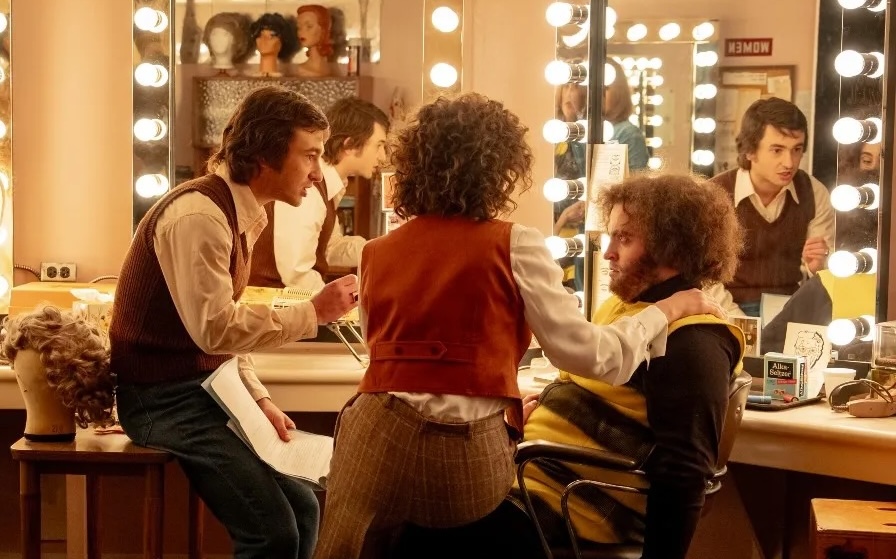
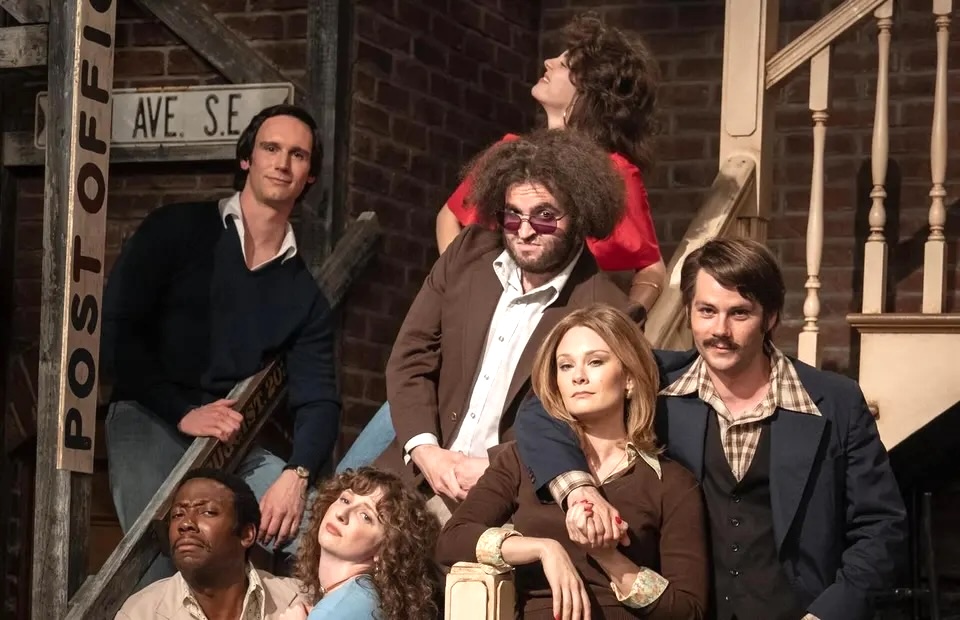
Ambitious young TV producer, Lorne Michaels (Gabrielle LaBelle), his wife and lead writer, Rose Schuster (Rachel Sennot), and their understandably nervous co-producer, Dick Ebersol (Cooper Hoffman), find themselves trying to control an anarchic bunch of comedians and musicians. They include the assured front-runner, Chevy Chase (Cory Michael Smith), the ever-adaptable Dan Ackroyd (Dylan O’ Brian) and the doomed, drug-raddled John Belushi (Matt Wood), who hasn’t even managed to sign his contract.

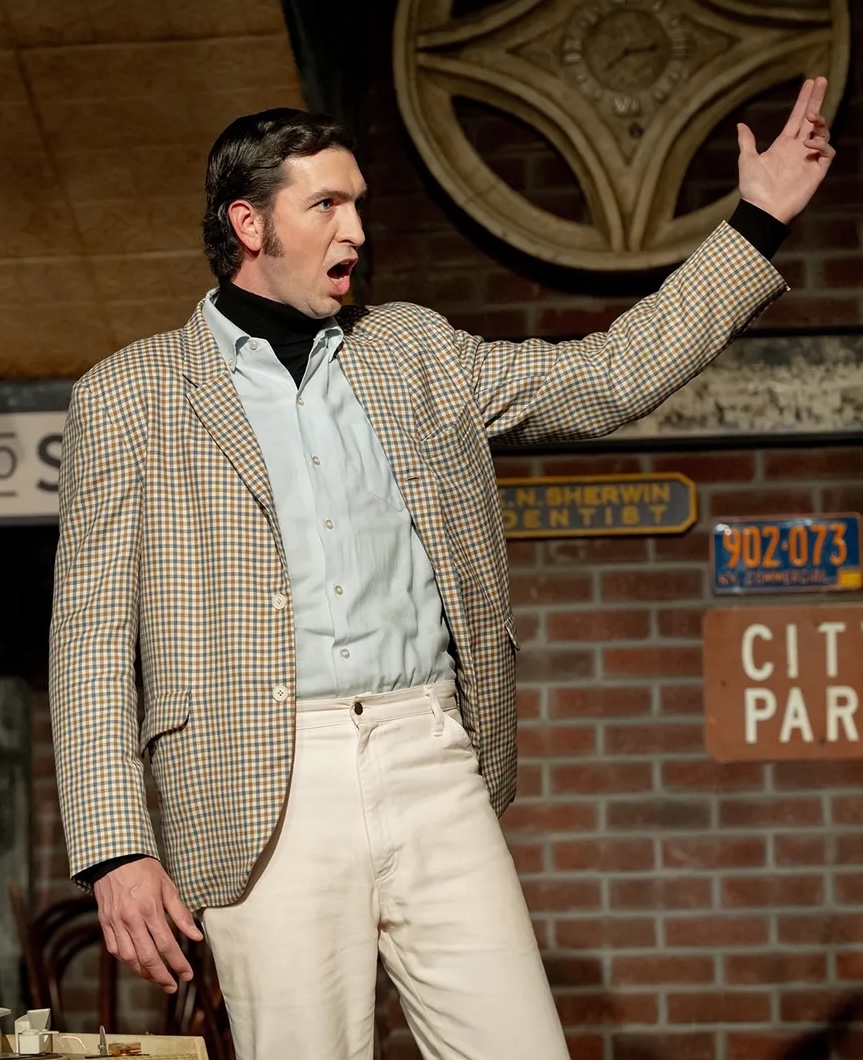
As Michaels wanders disconsolately around the studio, trying to instil some kind of order to the deranged proceedings, he’s uncomfortably aware of old hands gleefully anticipating a disaster of Titanic proportions. Sneering TV producer Dave Tebet (Willem Dafoe) and legendary presenter Milton Berle (JK Simmons) both offer scene-stealing cameos. A special nod should also go to Succession’s Nicholas Braun in the duel roles of Andy Kaufman and Jim Henson, the former weird and inexplicably funny, the latter dismayed and strangely puritanical about the ways in which his Muppet creations have been despoiled by their co stars.

There’s a terrific sense of urgency about Saturday Night. I’m alerted to the fact that time is ticking away from the opening scenes onwards and the various confrontations, problems and disasters that occur are initially well handled – but it’s hard to instil any sense of real jeopardy when the world knows that everything is going to turn out fine in the end. And, while that sense of propulsion works well at the beginning and end of the film, there’s a somewhat lumpen middle section that never seems entirely sure which direction to take.

American viewers will be invested in the story, but it doesn’t mean as much here in the UK where SNL isn’t as well-known – and audiences whose only connection to any of these stars is via the National Lampoon and Ghostbusters films may struggle to identify with it.

But that said, there’s plenty here to enjoy. I particularly relish Jon Batiste’s spirited impersonation of Billy Preston and Naomi McPherson’s turn as Janis Ian, singing At Seventeen. LaBelle’s performance as Michaels is also assured, pinning down the inner struggle between the man’s vulnerability and his soaring ambition.

This film won’t be for everyone, but for those who were enthusiastic cinema-goers in the 1970s, it’s fascinating to witness how many stellar (and sometimes spectacularly short-lived) acting careers were launched by what happened on that fateful Saturday Night.

3.6 stars

Philip Caveney
Ghostbusters: Afterlife

18/11/21

Cineworld

The original Ghostbusters movies were undemanding fun, I suppose, but I’m often astonished by the reverence with which they’re regarded, as though they are some kind of cinematic holy relics. The 2016 reboot, which featured female protagonists, may not have been wonderful, but it certainly didn’t deserve the levels of derision that were piled upon it from all quarters, with some observers complaining that their childhoods had been ‘destroyed.’ Really? At any rate, the events of that film have been brushed under the carpet and, for the purposes of this story, all has been quiet on the haunting front since the mid 1980s.

A lot of careful thought has clearly been put into Afterlife well before the cameras rolled. Directed by Jason Reitman (son of Ivan Reitman, who helmed the first two movies), this clever reboot places teenage protagonists at the heart of the story and it makes for such a perfect fit, I find myself thinking that this would have been a much more sensible approach back in the day. After all, the Ghostbusters films were clearly aimed at young audiences in the first place and that’s where they found their success. So why not make kids the driving force behind this new iteration?

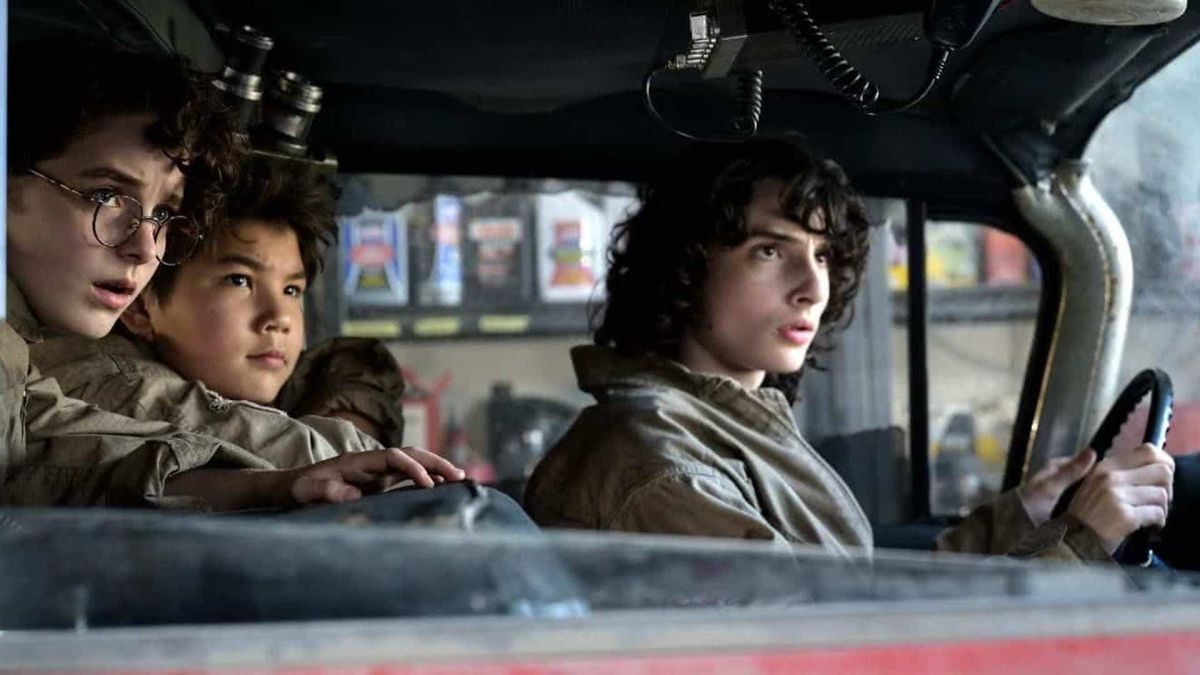
After the breakup of her marriage, Callie (Carrie Coon) finds herself in dire financial straits, unable to pay the rent on the apartment she shares with her two kids, Phoebe (McKenna Grace) and Trevor (Finn Wolfhard, still able to pass for a fifteen-year-old at the grand old age of eighteen). Providence seems to provide an answer when Callie’s estranged grandfather dies, leaving her an old farmhouse in Summerville, Oklahoma. Soon, the three of them are attempting to settle in to the near derelict property, which is still stocked with familiar-looking equipment and, which Phoebe quickly discovers, seems to be haunted by a ghostly presence.

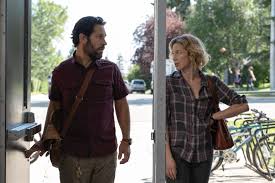
Phoebe enrols at the local summer school, where she encounters the affable ‘Podcast’ (Logan Kim), named because of… well, his obsession with recording podcasts. She also impresses likeable science teacher, Mr Grooberson (Paul Rudd), who has a proclivity for showing his classes highly inappropriate movies on VHS, while he gets on with his own singular obsession, that of studying the strange seismic activity that’s currently afflicting the area.

But of course, we all know that these are no ordinary earthquakes – and that, deep in an abandoned mine, supernatural forces are steadily gathering power…

The witty script (co-written by the director) effortlessly captures the nerdy humour of today’s teenagers and I like the fact that the film takes its time introducing the young leads before heading off into more spooktacular territory. The original films are suitably homaged (The Stay Puft Marshallow Man? Check! The Ectomobile? All present and correct!) and while there are inevitable guest appearances in the film’s final furlongs, this is never allowed to be ‘old-guys-coming-to-the-rescue-of-the-kids.’ No, Phoebe, Trevor and Podcast are running this operation, ably assisted by Sheriff’s daughter, Lucky (Celeste O’ Connor).

The film’s emotional conclusion could so easily have been mishandled but, like pretty much everything else here, it’s astutely done, managing to steer clear of mawkish pitfalls and just feeling warmly appropriate. When that familiar theme music kicks in, don’t be in too much of a hurry to leave the theatre. There’s a charming post-credit scene you won’t want to miss.

I like Ghostbusters: Afterlife a lot – in fact, at the risk of destroying a few more childhoods, I’d go so far as to say that, for my money, this might just be the best film of the franchise.

4.4 stars

Philip Caveney

The Front Runner

07/01/19

It’s 1988 and Gary Hart (Hugh Jackman) is the voice of hope for a new generation of American liberals. He’s the clear front runner for the Democratic presidential nomination, and young people are queuing up to work on his campaign, relinquishing their jobs and moving away from their families, believing they can help to secure real change. Hart has a clear vision of what he wants to achieve in four key areas – economics, education, employment and ethics – and the charm and charisma to pose a threat to the incumbent Reagan-led Rebublicans.

But he’s naïve about the extent to which he will be held personally accountable to the public, believing his private life irrelevant to the political sphere. So, when he has a casual and ill-advised affair right in the middle of this most crucial campaign, the resulting press exposure completely kills off his career.

Jason Reitman’s film focuses mainly on this moral conundrum: where do we draw the line? Does it matter if politicians betray their spouses if they’re steadfast in their duties to the state? Or can we infer from their domestic infidelities a sense of how they will treat us, the people that they serve? Does the press have a duty to focus more on policies than peccadilloes? What matters most, in the end?

We’re not really offered any answers here and, while I applaud the lack of sensationalism, it does mean that there’s a certain lack of drama too. The storytelling is so nuanced and subtle that it verges on the dull. It seems a little dated too: in this era of Trumpian excess, an extra-marital fling seems almost too quaint to care about. Where are the porn stars and the Russian oligarchs, the pussy-grabbing and the bogus charities? Ah, maybe that’s the point. Have the tabloids so inured us to scandal that we’re unable to see when it crosses into something truly worrying?

There are some strong performances here. Jackman, of course, excels in the lead role, and Mamoudou Athie and Molly Ephraim stand out as the journalist and intern who, respectively, witness their idol’s fall, forced to recognise reluctantly both the limitations of the man and the demise of their Democratic dream. But Vera Farmiga (as Hart’s wife, Lee) and JK Simmons (as campaign manager, Bill Dixon) are criminally underused, and the whole film feels as if it needs a shot of caffeine or adrenaline.

In the end, this just isn’t compelling enough to make the trip to the cinema worth the effort. Close, but no cigar.

3.4 stars

Susan Singfield


Labour Day

MV5BMjMxODE0NTUxNV5BMl5BanBnXkFtZTgwNTkzNzY1MDE@._V1_SY317_CR0,0,214,317_AL_

11/09/14

Watching this slice of sweaty, deep-fried Americana, one thought kept recurring. What was Jason Reitman thinking? The director of Juno and Up In The Air is clearly capable of good things, but here he’s given us a slice of overheated hokum that seems largely designed to enforce every outmoded sexual stereotype in existence.

Adele (Kate Winslett) is a depressed mother, separated from her husband and trying to raise her teenage son, Henry (Gatlin Griffiths) to the best of her ability. On a shopping expedition, the two of them are confronted by Frank (Josh Brolin) a wounded criminal on the run and forced to take him back to their house, where he informs them he’s going to be staying for the long weekend of Labour Day. Just so there’s no misunderstanding, he starts by tying Adele to a chair, before cooking her a nice bowl of chilli and spoon-feeding it to her. Frank, it turns out, was in prison for the murder of his girlfriend (a sequence of events explained in clunky and at first, rather baffling flashbacks) but unlike most killers, he’s the extremely helpful sort and it isn’t long before he’s mending leaky taps, waxing the floors and instructing Adele in the fine art of making a peach cobbler. In fact, Frank is so patronising, it’s a wonder Adele doesn’t tell him to sling his hook, but since she seems to have the disposition of the average doormat, she’s soon falling in love with him and making plans to elope across the border to Canada. Meanwhile, she comes in handy for the occasional bit of sock darning and wound tending…trust me, I’m not making this up, it really is what happens.

The events are seen through the eyes of young Henry, who already seems to have a distinctly creepy attitude towards his Mom and there’s the definite feeling that he thinks he’s being in some way usurped by Frank. An early sequence where he gives Adele a card offering to be her ‘husband for a day’ was doubtless intended to be cute, but it’s actually rather worrying and scenes of him shopping for masturbatory material don’t help matters one bit.

Just when you think things can’t get any worse, the film offers a conclusion of such saccharine sweetness, you imagine you can actually feel your teeth rotting. It’s always tricky when an admired director offers a less than satisfying film, but for Reitman, this is a disaster he’ll have to work very hard to expunge from my memory. Winslet and Brolin must be wishing they’d never signed their contracts.

1 star

Philip Caveney