James Norton

Joy

23/11/24

Netflix

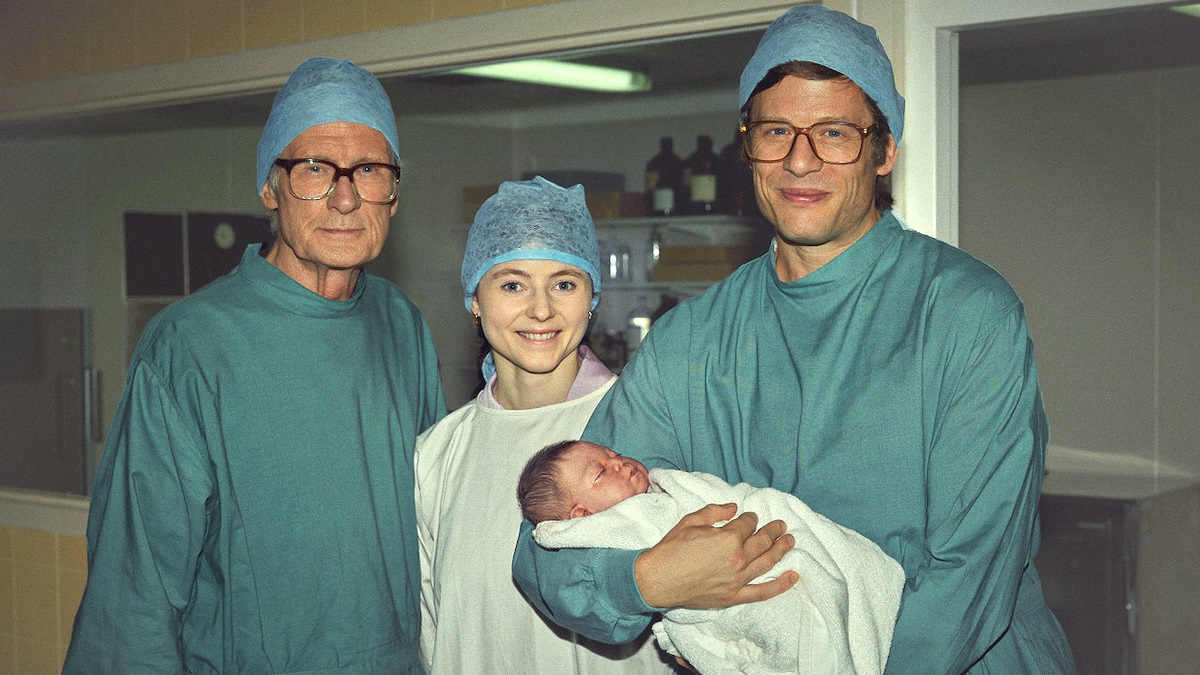
For people of a certain vintage, the name of Bob Edwards might ring a bell. He was, of course, the doctor who came up with the concept of Invitro Fertilisation and who, after years of tireless work, was behind the birth of Louise Brown – the first ‘test-tube baby’ as the press of the era dubbed her. You’ll probably also have heard of Patrick Steptoe, the surgeon whose advances in keyhole surgery made the whole process a possibility.

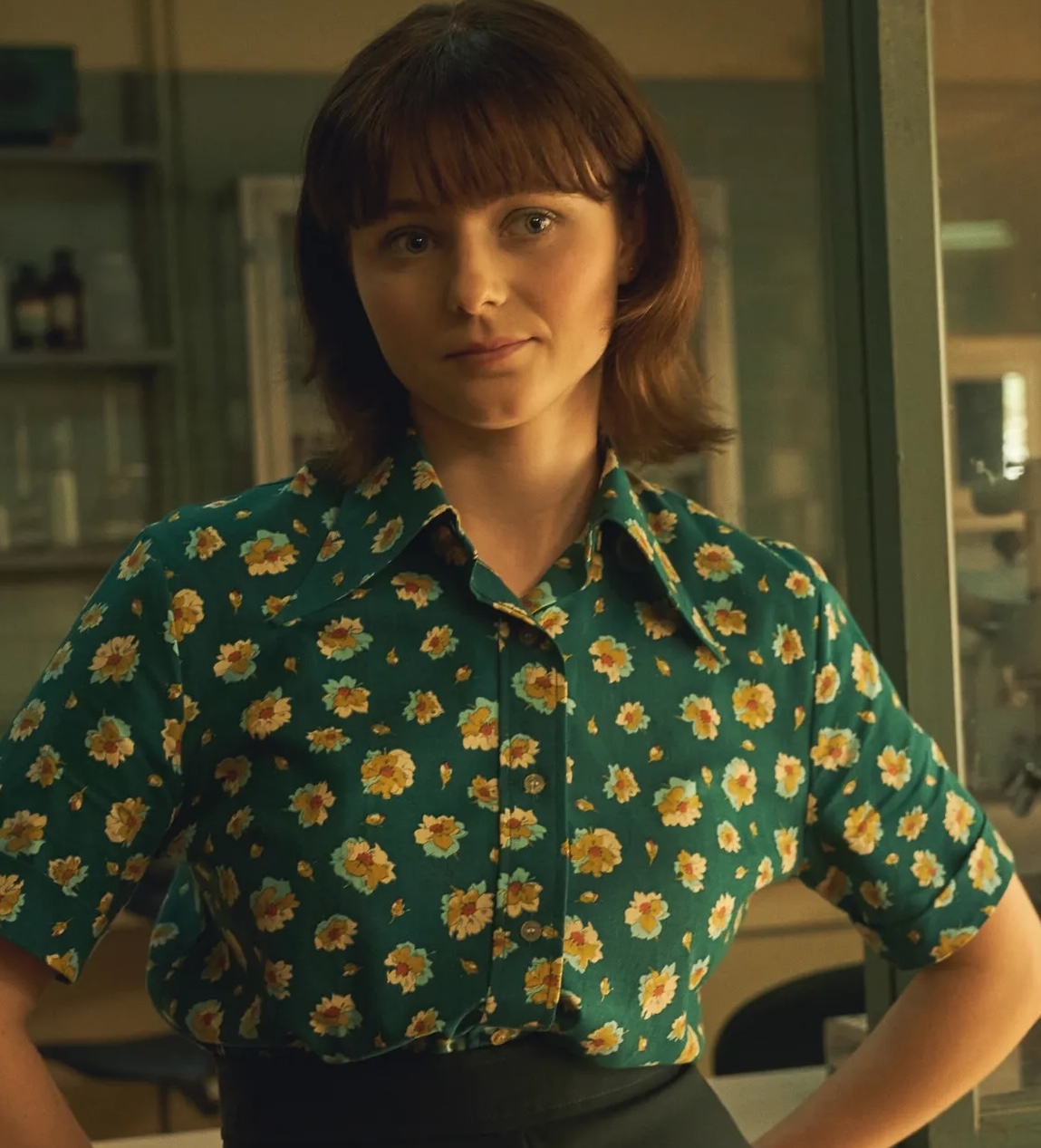
But the name Jean Purdy is certainly not as familiar. The third member of the team, an embryologist, Purdy worked alongside the two men (and, indeed, as this film suggests, was ultimately the driving force that brought their work to completion). And yet, to a great degree, her contribution has been largely airbrushed from history. She didn’t even merit a mention on the memorial plaque at Oldham General Hospital (Louise Brown’s birthplace) until 2015.

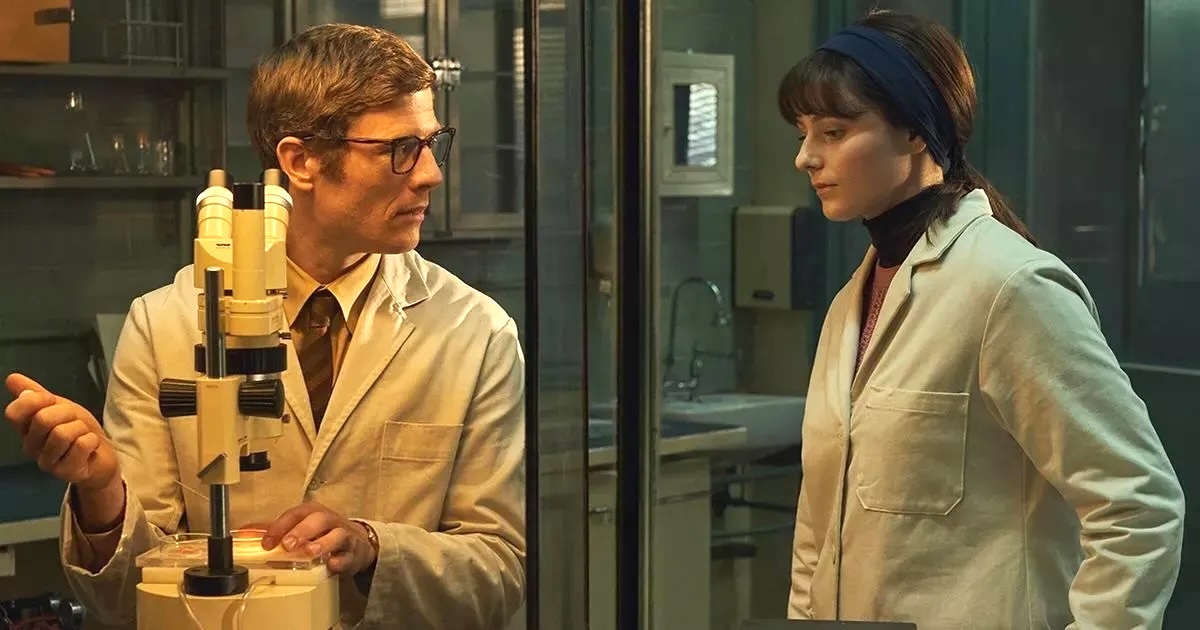
This story begins in 1965 when we meet Purdy (Thomasin McKenzie), freshly graduated from nursing school, being interviewed by Edwards (James Norton), who has recently embarked on the project that will occupy him for many years. His aim is simple: to provide an answer to all those would-be parents who have been prevented from having children because of a simple quirk of nature. Edwards and Purdy quickly become a duo. But their first goal is to enlist the help of Steptoe (Bill Nighy), who – though brusque and dismissive at first – is soon won over, largely by Purdy’s direct, no-nonsense approach.

The trio duly embark on years of experimentation as they work towards their ultimate goal. Underfunded and mocked by the tabloid press (who dub Edwards ‘Doctor Frankenstein’), it’s a long hard road – and it’s not until 1978 that their years of work finally bear fruit. Along the way, Jean’s relationship with her own mother is broken. Gladys (Joanna Scanlon) is deeply religious and sees this whole endeavour as ‘sinful’ and ‘unnatural.’ She cuts her daughter out of her life and even asks her not to attend the church they have both gone to for years. It’s only when Gladys falls ill that an uneasy alliance is finally established.

Purdy also nurtures a secret: she herself suffers from endometriosis and is unable to have the child that she has always longed for…

Jack Thorne’s screenplay is beautifully understated, as is Ben Taylor’s direction, which effortlessly catches the drab look and feel of the 60s and 70s. The three leads handle their roles with considerable aplomb and McKenzie in particular is wonderfully affecting, managing to convey her character’s inner turmoil with little more than a wistful look and a sidelong glance. As somebody who has personal experience of the benefits of IVF in the form of my much-loved daughter (and I fully appreciate how easy it was for me as the male in the relationship), I don’t mind admitting that some of the scenes here have me filling up.

Joy is a ‘small’ film, which probably accounts for the fact that it’s not competing with the likes of Gladiator 2 at your local multiplex and, instead, has gone straight to streaming. But it’s really worth the watch. It tells a fascinating true story of courage and determination.

And in its own quiet way, it’s a remarkable film.

4.3 stars

Philip Caveney

Bob Marley: One Love

18/02/24

Cineworld, Edinburgh

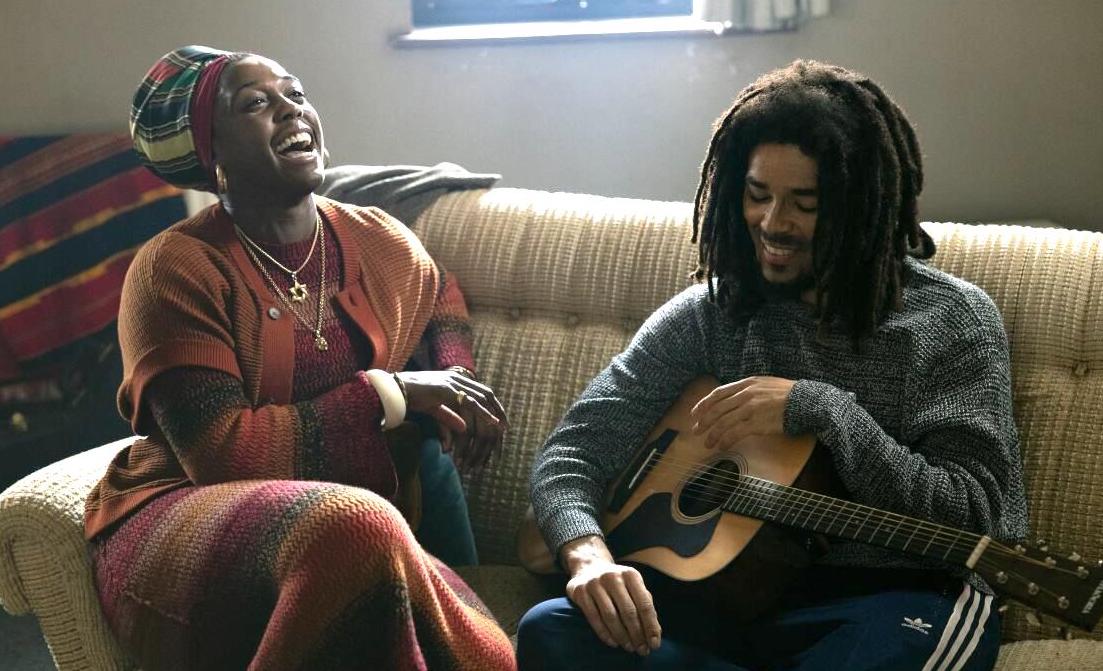
It’s been a long time coming, but finally Bob Marley has his biopic. While it does a pretty decent job of capturing the era in which he rose to prominence and makes you appreciate how many insanely ear-wormy hits he created, there is a slight tendency here to sanitise his offstage antics. But perhaps, with no less than four of his immediate family onboard as executive producers, that’s no great surprise.

We first meet Marley (Kingsley Ben-Adir) when he’s already successful, married to Rita (Lashana Lynch) and watching bewildered as his home town teeters on the edge of a brutal civil war. When a house invasion results in Bob being shot and Rita rushed to hospital, Bob takes the advice of his record producer, Chris Blackwell (James Norton) and heads off to London, where he develops plans for Exodus – the record that will propel him to superstardom. Along the way, he experiences recurring visions of his childhood years under colonial rule, and of the white father he never really knew.

The film is at its best when it’s showing us recreations of the stage shows that would cement Marley’s reputation as an electrifying live presence – and I particularly enjoy the scene where the title track of Exodus is taken from a single idea, through a series of rough improvisations with the band, until it finally comes close to the finished article. I’ve rarely seen a better recreation of the way a band works together to develop a song.

If Ben-Adir is a little too handsome for the role (something that’s accentuated by the post-credit sequences featuring the real Marley), he nevertheless nails the man’s dance moves, gestures and affectations with aplomb. Ironically, it’s Lynch who has more opportunity to generate genuine emotion. In a scene where she berates her husband about the various sexual indiscretions she’s had to tolerate over the years and the way her own singing career has been sublimated in order to help him achieve his goals, she really shines.

In the end, One Love is an enjoyable movie, that could perhaps have benefitted from a grittier approach. Lovers of Marley’s music will have a field day, as one belter after another blasts from the speakers. Like me, fans will doubtless find themselves foot-tapping and twitching in their seats. More than anything else, this is a celebration of the man’s musical accomplishments and his unwavering quest for peace, rather than a warts-and-all investigation of his private life.

4 stars

Philip Caveney

A Little Life

08/10/23

Cineworld, Edinburgh

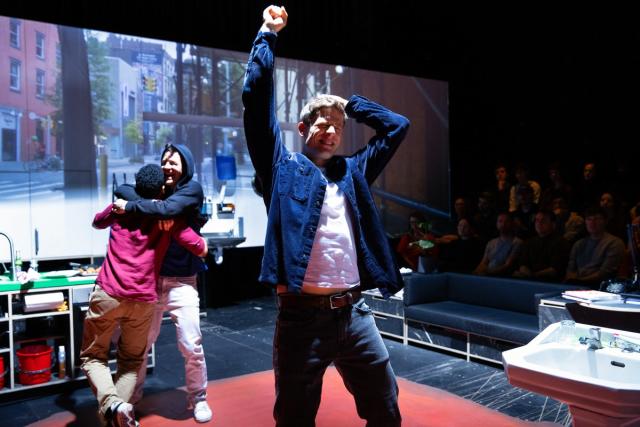
Beamed live from the Harold Pinter Theatre in London’s West End, A Little Life has recently been the subject of some controversy – not least the fact that its star, James Norton, spends much of the three-hours-and forty-minute duration stark naked. As a gruelling depiction of sexual exploitation unfolds, Norton’s performance is extraordinary, a genuine tour de force.

But there are issues that override that performance.

Jude lives in New York’s trendy Tribeca district and we’re to believe he is a high-flying lawyer (although we are never shown anything of his professional life). He has a trio of equally high-flying friends (a movie star! an artist! an architect!) and is – weirdly, at the age of thirty – about to be adopted by Harold (Zubin Varla), a wealthy professor, who sees Jude as the son he’s never had.

If this sounds too good to be true, don’t be fooled – because most of what ensues is frankly too bad to be true. Jude, it turns out, has endured a childhood of unbelievable cruelty. Abandoned as a baby, he is put into the care of sadistic monk, Brother Luke (Elliott Cowan), who – in the finest Catholic tradition – farms him out as a child prostitute. And it doesn’t end there. He stumbles from one awful experience to the next, exploited at every turn by a string of monstrous abusers (all played by Cowan). Could anyone really be as unlucky as Jude?

But here in the present day, people are queuing up to worship him! Willem (Luke Thompson), the aforementioned movie star, is deeply in love with Jude and wants the two of them to become a couple. But, because of those childhood experiences, Jude cannot enjoy anything like a healthy relationship, preferring instead to spend his time slicing himself open with a razor (something we are repeatedly shown in sickening detail).

Adopted from her own novel by Hanya Hanigihara, with the assistance of Koen Tachelet and the play’s director, Ivo van Hove, A Little Life is, it has to be said, cleverly presented. All the characters are constantly onstage, slipping effortlessly between the various scenes while, on two walls, slow-motion tracking shots of New York offer a sense of place.

But the story feels increasingly like torture porn, a relentless slice of sheer misery. I’m sure the highbrow audiences watching this play would never lower themselves to watch a film like Saw, for instance, yet A Little Life displays the same kind of world view, a callous and prurient invitation to wallow in somebody else’s misery. It feels manipulative, a coldly contrived feel-bad experience, which ultimately adds up to not very much at all.

A section of the audience is seated onstage, behind the action, presumably so that we can see our own reactions reflected in theirs. However, while many are holding handkerchieves to their faces, I feel curiously unmoved because it all feels too callous for comfort. Norton is terrific, but the vehicle he’s starring in really doesn’t stand up to scrutiny.

2.8 stars

Philip Caveney

Things Heard and Seen

08/05/21

Netflix

Many films can be accused of not having enough going on but, in the case of Things Heard and Seen, there’s the opposite problem. There’s so much happening here the movie’s creators can’t seem to make their mind up exactly what they want this to be. In its early stages, it looks like it’s setting out its stall as a straightforward haunted house tale – but, as the convoluted storyline unfolds, it becomes much more than that. And really, this should be a positive development, because, let’s face it, there’s hardly a shortage of those. Ultimately, however, it’s TH & S’s ambition that makes it overreach itself.

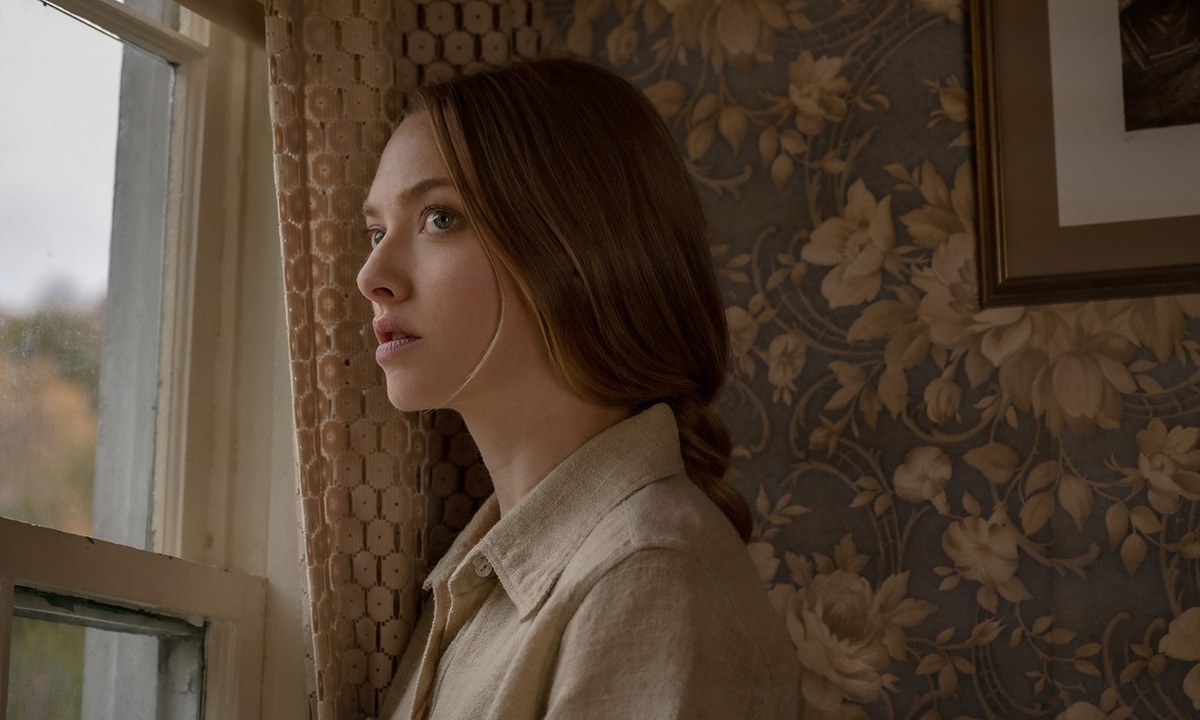
It’s 1980 and Catherine Claire (Amanda Seyfried) is working happily as an art restorer (though she’s experiencing an ongoing battle with an eating disorder). Then her husband, George (James Norton), qualifies as a lecturer in fine art and promptly lands a job in Chosen, upstate New York. Almost before Catherine knows what’s happening, the couple and their young daughter have relocated to a remote farmhouse, one that by all accounts comes with a sinister backstory. Catherine feels isolated here, but is determined to make the best of things. The couple have the house renovated and even find part time jobs for Eddie Vayle (Alex Neustaedter) and his younger brother, Cole (Jack Gore), who actually grew up in the house – though George keeps this fact a secret from his wife.

George starts his classes and is an instant hit, both with his young female students and with his department head, Floyd DeBeers (F. Murray Abraham), who, it turns out, has a bit of a passion for the occult. Catherine starts experiencing troubling visions in the homestead – flashing lights, eerie whispers and glimpses of a sinister woman. And then it emerges that George might not be quite the charming, artistic academic that Catherine has always believed him to be…

Writers/directors Shari Springer Berman and Robert Pulcini never seem quite sure which direction they want to head in next, and opt instead to veer left and right, trying to cover all the bases. The acting is mostly good (Norton in particular is deliciously villainous) and even minor characters are afforded plenty of characterisation, right down to Karen Allen’s realtor, Mare Laughton and Rhea Seahorn’s inquisitive neighbour, Justine. And, to the film’s credit, there are some scenes here that are genuine surprises.

But somehow the overall story arc fails to gel and several of the plot developments we’re asked to accept are frankly pushing credulity a little too far.

As it thunders headlong into its final third, all credibility has pretty much gone out of the window, and the last scene demonstrates a conceit that must have been in the author’s mind from the very beginning. It feels shoehorned in and makes for a disappointing conclusion to what has mostly been a decent enough entertainment. 

2.8 stars

Philip Caveney

Flatliners

29/09/17

If there was a prize for the least anticipated remake ever, Flatliners would probably be pretty high on the list. On its release, Joel Schumacher’s 1990 original was roundly drubbed by most critics as ‘pretty but vacuous’ and this new version seems to have reached the big screen with very little trumpeting from its makers. On the face of it, not much has changed from the original story.

A bunch of medical students based in an American hospital, all of whom are haunted by incidents in their past, decide to run a series of experiments where they deliberately stop each other’s hearts in order to try and discover the answer to an age old question: is there life after death? Ring leader Courtney (Ellen Page) is tormented by the fact that, nine years ago, she inadvertently caused the death of her younger sister in a car accident. Rich-kid Jamie (James Norton) ran out on his pregnant girlfriend. Sophia (Kiersy Clemons) was the ringleader of a bullying campaign on a vulnerable girl at her high school, and Marlo (Nina Dobrev) accidentally caused the death of a patient at the hospital and then falsified the records. Only Ray (Diego Luna) appears to have no skeletons rattling in his closet but, luckily, he’s the one who always knows what to do in any given emergency – and, inevitably, things go wrong fairly often.

From the word go, viewers are asked to swallow a rather unlikely premise – that there’s a fully equipped and functioning operating theatre down in the hospital’s basement, one that isn’t guarded and is only ever to be used ‘in an emergency.’ (Yes, I know.) However, if you can accept that, what follows is entertaining enough in a kind of breathless, galumphing sort of way. Each character undergoes a freaky near-death experience – and afterwards, is haunted by ghostly visions and inexplicable events. The jump scares are expertly handled by director Niels Arden Oplev and the first two thirds of the film whizz by quite entertainingly. It’s only as it thunders into the final furlong that things begin to run out of steam and I find myself with the conviction that the writers haven’t really thought the story through properly. To be haunted by a dead person is one thing. To be haunted by somebody who is still demonstrably alive and existing happily in the world, is quite another. And to me, that’s a problem. Because, if the ‘spirits’ are only a manifestation of an already guilty conscience, why do the young doctors need to flatline in order to awaken them?

The acting from the ensemble cast is consistent throughout and it’s interesting to see Happy Valley’s James Norton making what looks like a pretty assured transition to Hollywood. Just for the sake of tradition, Kiefer Sutherland (who had a lead role in the original) throws in a cameo performance as a rather grumpy teacher, prone to snarling at his pupils and banging his walking stick on their desks whenever they fail to answer his questions correctly. The film’s somewhat cheesy conclusion – that people need to be ready to ‘forgive themselves’ – kind of blows what’s left of the credibility.

Ultimately, I think, this is one to watch when there isn’t much else on offer – and, come to think of it, that’s exactly why we’re seeing it. It’s decent enough entertainment but, in the end, forgettable and a bit… dare I say it? Flat.

3.2 stars

Philip Caveney