


Jack O' Connell

28 Years Later: The Bone Temple

15/01/2026

Cineworld, Edinburgh

The ’28 Years’ trilogy moves confidently into its second act, with Danny Boyle handing the directorial reins to Nia DaCosta. She rises to the challenge with her customary zeal and delivers a film that, for my money, comes close to equalling its predecessor. This time out there’s less emphasis on the blood and mayhem and more on the interplay between characters. Gore-hounds may complain they’ve been short-changed but, ironically, there’s still enough spine-ripping and brain-munching to ensure that this episode earns itself an 18 certificate. Young actor Alfie Williams is, once again, unable to officially attend the film’s premiere. (He was thirteen for the last one’s 15 classification.)

Did he get a private viewing? I hope so.

We pick up pretty much where we left off with Alfie (Williams) now a captive of ‘The Jimmys,’ the track-suited, blonde-bewigged followers of Sir Lord Jimmy Crystal (a malevolent Jack O’Connell, sporting a pretty convincing Scottish accent). Alfie soon learns that, if he wishes to remain alive, he’s going to have to fight for his place in the gang and, once a member, somehow embrace the heinous cruelty that Crystal likes to inflict on anyone he encounters – including, if the mood takes him, his own followers. Luckily, one of the gang, Jimmy Ink (Erin Kellyman), seems to have taken a sisterly shine to Alfie.

Meanwhile, Dr Ian Kelson (Ralph Fiennes) continues his gruesome work in the titular temple, with particular emphasis on trying to develop his growing ‘friendship’ with Samson (Chi Lewis-Parry), an infected Alpha. Kelson is attempting to tame the angry giant with regular doses of morphine, applied via a strategically-aimed blowpipe. Could it be that these experiments are leading Kelson tantalisingly closer to finding a cure for the deadly infection that has overtaken the world? More bafflingly, why is he listening to so much Duran Duran?

If the two main story strands are frankly bonkers, they nonetheless make for riveting viewing. DaCosta’s strong visual style combines with Alex Garland’s storytelling and the powerful music of Hildur Guǒnadóttir, to exert an almost hypnotic spell. There are kinetic action sequences, some astutely-handled flashbacks (Samson’s recollections of a childhood experience on a crowded train is particularly powerful), and Fiennes’ outrageous climactic dance routine, backed by Iron Maiden’s The Number of the Beast, is something I never expected to see – a slice of pure theatre writ large on a cinema screen. I also respond strongly to the film’s obsession with religion and the way that Kelson cleverly uses it to his own advantage.

And then, just when you think it’s all over, we’re treated to a short coda which neatly flips the whole concept back to its origins and reintroduces a character I had pretty much given up hope of ever seeing again – all of which ensures that I leave the cinema already looking forward to part three.

Job done. Bring it on.

4.6 stars

Philip Caveney
Trial by Fire

08/03/21

Netflix

Trial by Fire belongs in what’s fast becoming a familiar category in cinema – a based-on-a-true-story account of a person’s lamentable dealings with the American judicial system. Inspired by David Grann’s article in the New Yorker in 2009, Edward Zwick’s movie adaptation had its premiere in May 2018 and thereafter got somewhat lost in the shuffle. Now it’s getting a second chance on Netflix, and it’ thoroughly deserves to be seen, even if the story is unremittingly bleak and feels uncomfortably similar to recent releases like Just Mercy and Clemency. The overriding message, however, is crystal clear: capital punishment is a bad idea, especially in a system where the poor and under-privileged have the odds so heavily stacked against them.

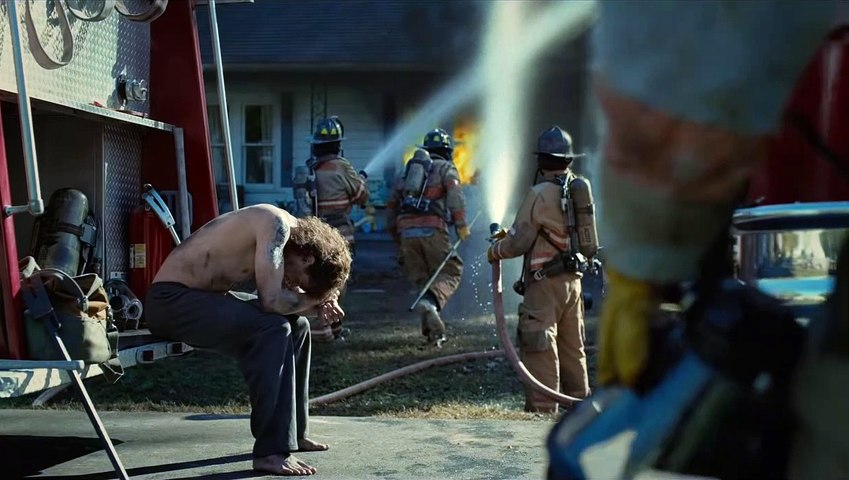
Cameron Todd Willingham (Jack O’ Connell) is a mouthy young man with a predilection for heavy metal and infidelity. He’s maintaining a stormy relationship with his wife, Stacy (Emily Meade), and struggling to care for his three young kids. He’s not particularly likeable, is constantly quarrelling with Stacy (generally over his affairs with other women), and has a history of violence. But everyone who knows him agrees on one thing: he loves his kids. When a devastating house fire takes their lives and he manages to survive the conflagration, the investigating officers have no doubt in their minds that he set the fire deliberately – and, in the absence of any proof, they’re perfectly happy to fabricate some.

So Cameron winds up on Death Row, sitting in a cell and waiting for his turn for the lethal injection…

Years drift by. Cameron mellows a little, he learns how to maintain friendships with fellow prisoners and acquires an education. A chance meeting between playwright Elizabeth Gilbert (Laura Dern) and a prison reformer affords him the first real visitor he’s had in years. Elizabeth is surprised to find him a compelling and likeable character, so she decides to visit him on a regular basis. As the two of them grow closer, she is encouraged to start looking into the flimsy case that sent him to prison in the first place. It doesn’t take her long to discover some shocking irregularities in the prosecution’s account of what went on.

But she is to discover that finding proof of a man’s innocence – and getting the powers-that-be to reopen his case – are two very different things.

In fiction, of course, this story would be depicted as a desperate race against time, with a phone call offering a pardon coming through at the last possible moment, but Geoffrey S. Fletcher’s screenplay sticks doggedly to the facts of the case. Consequently, the final stretches of this film are an angry howl of protest, a cogent plea for sanity to prevail. Sadly, it’s unlikely to change anything, but you’ll be hard-put to sit through this without feeling a mounting sense of resentment simmering within you. Both O’ Connell and Dern offer compelling performances, and Chris Coy does excellent work in the role of a prison guard, who starts off as an arrogant bully but is gradually redeemed.

But, like I said – this is grim stuff, not for the faint-hearted. On this evidence, can the USA really continue to claim that it has anything resembling a functioning system of justice?

4.2 stars

Philip Caveney