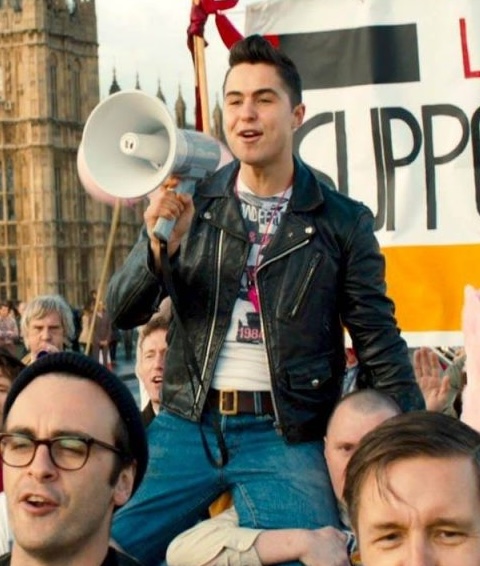
George MacKay

Pride 10th Anniversary

30/06/24

Mareel, Lerwick, Shetland

We reviewed Pride on its initial release in 2014 and, ten years later, it’s given this timely rerelease. What strikes me most about it now is how relevant it still feels, the same – or similar – battles still needing heroes to fight them. I’m fascinated too by the stellar cast, many of whom have on to even greater things, notably Andrew Scott and George MacKay – and also Jessica Gunning, who (thanks to Baby Reindeer) has recently been catapulted to wider recognition.

If Pride made me weep first time around, it leaves me in floods today.

I post my original review here and absolutely stand by the observations, though in retrospect I might be tempted now to boost those stars to a full 5.

14/09/14

Cineword, Didsbury

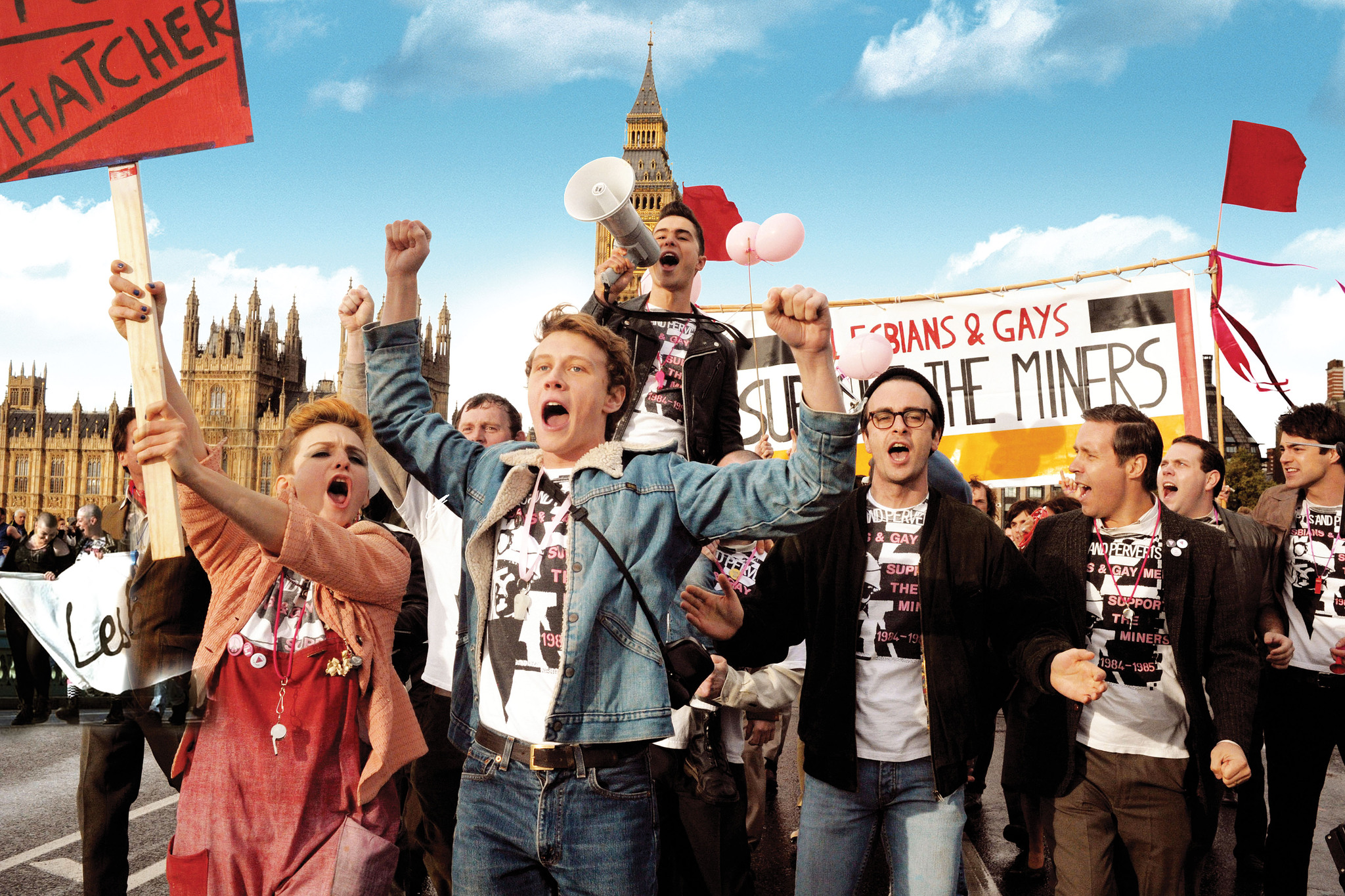
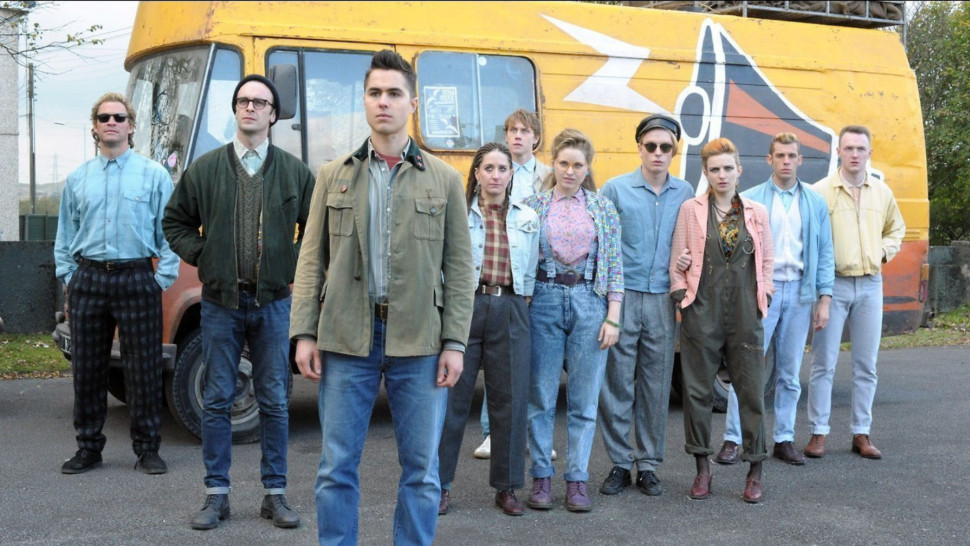
Set in 1984, at the height of the miners’ strike, Pride tells the true-life story of Mark Ashton (Ben Schnetzer), a young gay activist who manages to persuade a group of like-minded friends to form LGSM (Lesbian and Gays Support the Miners). They start to collect money on behalf of one particular group of strikers in South Wales and are so successful, it’s not long before the group meets up with likeable Union man, Dai (Paddy Considine).

He invites them to the sleepy village of Onllwyn, to meet the miners in person – where inevitably, they encounter resistance from some of the more reactionary inhabitants. But after a frosty initial reception, they start to find allies in some rather unlikely places…

Pride is simply irresistible. Cut from the same cloth as films like The Full Monty and Brassed Off, it features a terrific ensemble – Bill Nighy, George MacKay, Imelda Staunton and Dominic West are undoubted highlights, but the overall casting is note-perfect. While it occasionally plays for easy laughs (‘Dai, your gays have arrived!’), it’s never less than entertaining and also takes the opportunity to slip in some genuinely thought-provoking moments.

It would be a cold heart indeed that doesn’t shed tears at the film’s emotional conclusion. Like most ‘true-life’ stories, there remains the conviction that a little dramatic licence may have been exercised on some of the actual events, but nevertheless, this is a successful slice of drama, snappily directed by Matthew Warchus, wittily scripted by Stephen Beresford and one that manages to keep itself just the right side of sentimentality.

4.5 stars

Philip Caveney
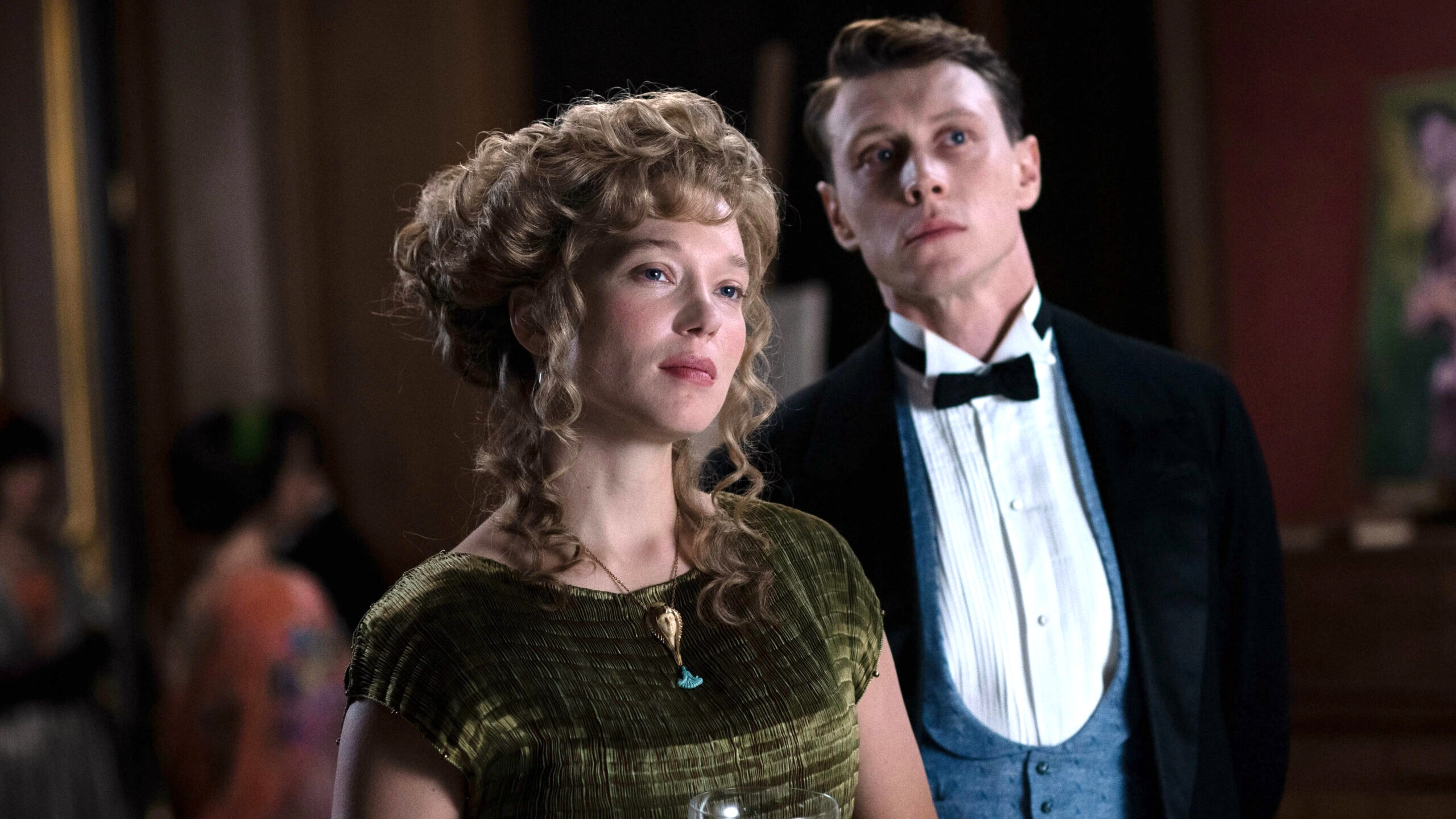
La Bête (The Beast)

08/06/24

Cameo Cinema, Edinburgh

Some films almost defy logical analysis and Bertrand Bonello’s La Bête is one such er… beast, depicting as it does three distinct time-strands, each one featuring different versions of the same two characters. We first meet Gabrielle (Léa Seydoux) in a green-screen room, where the film’s director is talking her through a scene where she must pick up a knife from a kitchen table. This instantly alerts the audience to the fact that what we are about to see is an elaborate construct.

The story begins in 2044, where AI has pretty much taken over everyone’s lives, leaving them with precious little to do. Gabrielle is struggling to come to terms with a thankless job, which requires her to put her hand on a glass screen every so often. She decides to undergo ‘purification’, a procedure which will remove all of her troublesome human emotions. Meanwhile, she is offered the companionship of a doll, Poupée Kelly (Guslagie Malanda), who will do anything that Gabrielle asks of her.

As the purification begins events flash back to Paris in the year 1910, where Gabrielle meets Louis (George McKay) at a society party. In this version of her life, Gabrielle is a talented musician and she’s happily married to Georges (Martin Scali), a doll-maker, but her chance encounter with Louis clearly strikes a significant chord with both of them.

Have they already met somewhere else? Gabrielle confides to Louis that for most of her life she has lived with the fear that something terrible is going to happen to her. And just when that’s starting to sink in, we flash forward again to the year 2014, where Gabrielle is trying to make a living as a model and Louis is a terrifying incel, spewing hatred onto social media, intent on destroying all those women who have so callously spurned him over the years…

Bonello’s film is the very definition of a slow-burner, a whole series of events and repetitions gradually building to relate a mystifying narrative. Gina (Marta Hoskins), a blank-eyed clairvoyant, keeps popping up to put an even more disturbing spin on what’s happening. If I claimed to absolutely understand everything that happens in the film’s two hours and twenty-six minutes, I’d be exaggerating. I’m also unsure if a climactic scene, which appears to echo David Lynch’s Blue Velvet, is an intentional homage or just a coincidence.

Whatever, as the story moves assuredly through its many (often startling) twists and turns, I find myself increasingly fascinated with what I’m watching. Seydoux is fabulous in all of her versions and McKay (who took over the role of Louis at very short notice – and also learned to speak French into the bargain) continues to be a chameleon, seemingly able to transform himself into whatever is asked of him.

La Bête arrives heavily laden with five-star reviews and, though I’m not quite in that camp, I do feel this is a bold, ambitious film that goes to places where few others have dared to tread. I also readily accept that it won’t be for everyone.

Please note, in place of the usual rolling credits, viewers are offered the opportunity to scan a QR code instead, something I did for the purposes of this review. I urge everyone to do the same, only because there’s also a short clip on there that offers yet another piece to this enigmatic puzzle of a film.

4.2 stars

Philip Caveney

Munich: The Edge of War

06/02/22

Netflix

History has not been kind to Neville Chamberlain. He’s generally depicted as the naïve fool who, despite good intentions, utterly failed to put the stops on Adolf Hitler. It’s interesting to note that this Netflix film, based on a novel by Robert Harris, chooses to view his actions in the lead up to World War 2 in a more sympathetic light. Could it be that the man actually knew what he was doing?

This is a handsomely mounted production that struggles to create any real sense of suspense, because… well, unlike say Quentin Tarantino, director Christian Schwochow decides to stick closer to the truth. Plot spoiler: Hitler does not get mown down in a hail of bullets by the film’s heroes a la Inglourious Basterds. Just so you know.

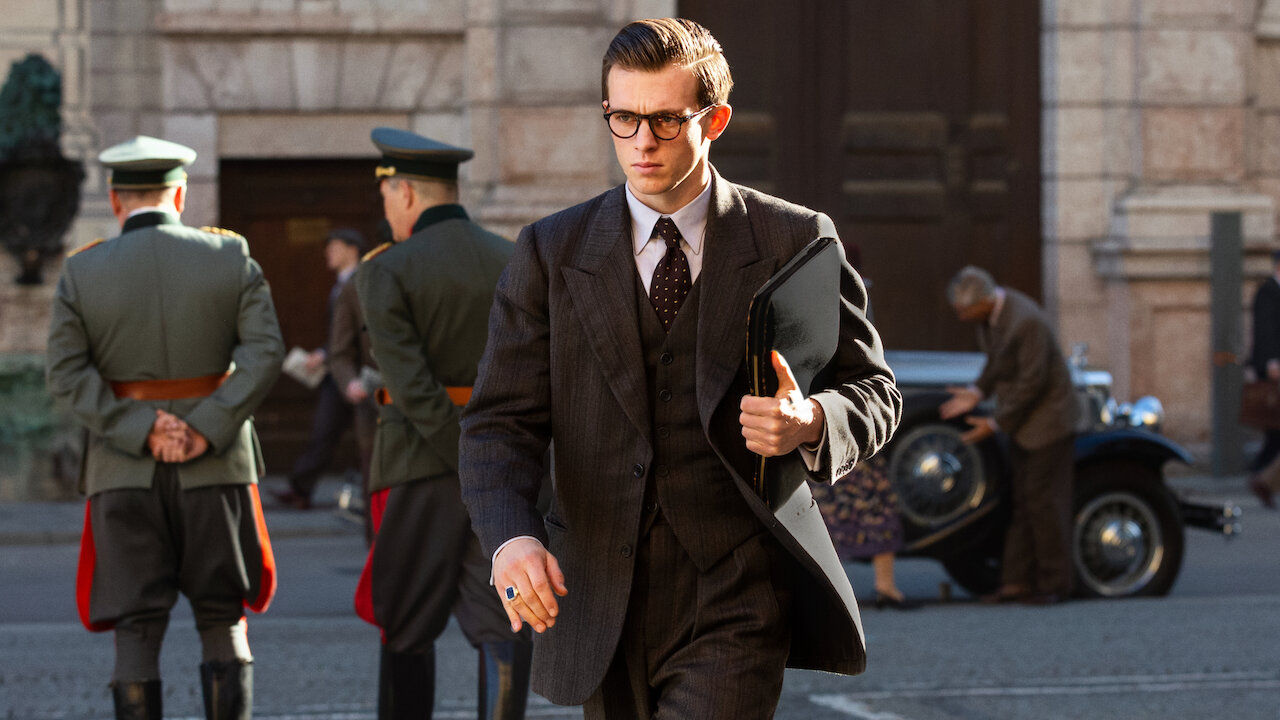
We first meet Hugh Legat (George McKay) and his friend, Paul Von Hartmann (Jannis Niewöhner), in 1932, when they are celebrating their graduation from Oxford, along with Paul’s Jewish girlfriend, Lena (Liv Lisa Fries). Paul is singing the praises of a certain Adolf H, who – he genuinely believes – represents the best future for his homeland. Hugh is understandably horrified. Shortly thereafter, Hugh visits Paul in Munich, where the latter seems even more bullish about his adulation for the Führer – and the two friends fall out with each other.

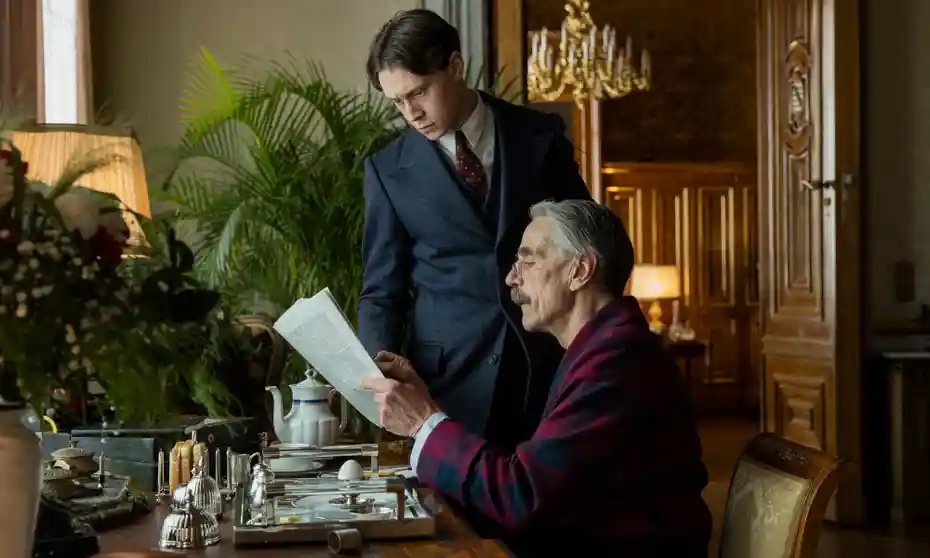
The action moves on six years, and Paul’s views have changed for the better. He’s realised that his earlier beliefs were short-sighted to say the very least and is now involved in a clandestine plot to bring Hitler down before he can do any more damage. When he discovers that his old pal, Hugh, has become private secretary to Neville Chamberlain (Jeremy Irons), Paul spots an opportunity to get to the British PM, in order to urge him not to sign the upcoming Munich agreement.

Hugh, somewhat reluctantly, finds himself once again on his way to Germany.

McKay, having spent a lot of time running like the clappers to avoid impending carnage in 1917, finds himself doing something similar here, only this time, he’s attempting to head off an entire World War. (So no pressure there.) He’s very engaging as a young man trying to do his level best, whilst struggling with tantrums from his wife, Pamela (Jessica Brown Findlay), who seems to take it personally that her husband thinks preventing a World War is more important than ensuring he’s home for dinner every evening.

Niewöhner has a smouldering James Dean-ish quality that augers well for his future, while Irons is typically assured in his depiction of Chamberlain, giving us a bumbling, frightfully British sort of chap, who is obsessed with making recordings for the good old BBC and won’t tolerate anybody speaking out of turn. Ulrich Matthes, meanwhile, gives us one of the most terrifying screen Hitlers I can remember.

Matters become more complicated when Paul discovers that a childhood acquaintance, Franz Sauer (August Diehl), is now a leading officer in the SS and that the two of them are going to be spending a lot of time together. What’s more, Sauer is also clearly suspicious about his former schoolfriend’s intentions and has an unfortunate habit of turning up in all the wrong places.

Munich: the Edge of War offers an entertaining couple of hours, but the protagonists never seem to be really imperilled. While this may work in the source novel, it prevents the film from ever going into the kind of overdrive its final stretches require.

3.6 stars

Philip Caveney

True History of the Kelly Gang

28/02/20

True confession. When I was a much younger man, I was obsessed with the story of Ned Kelly. I read several accounts of his exploits, which gripped my imagination and, in 1970, saw Tony Richardson’s underrated biopic, which – once I got used to Mick Jagger’s alarming ‘Oirish’ accent – had me fully onboard. I even watched Heath Ledger’s fairly forgettable attempt to embody Australia’s best known folk hero in 2003. What is it about the infamous outlaw that continues to exert such a powerful hold?

In True History of the Kelly Gang (loosely based on Peter Carey’s Booker-winning novel, which I’ve also read), director Justin Kurzel doesn’t so much reinvent Kelly’s history as place a bomb under all that we know about the man and blow it to smithereens.

To give him his due, the resulting film, which is neatly divided into three chapters, is for the most part gripping. We open in the 1860s, where a young Ned (Orlando Schwert) is living in the outback in absolute squalor. He’s in thrall to his manipulative mother, Ellen (Essie Davis), who is turning tricks for the local constabulary in the shape of Sgt O’ Neil (Charlie Hunnam) in order to put food into the mouths of her children. Ned soon finds himself apprenticed to the outwardly charming bush ranger, Harry Power (an excellent Russell Crowe), and is schooled in the ways of the outlaw and the doctrines of toxic masculinity.

In the second section, the adult Ned (George Mckay) returns from a long spell in prison to find his mother still ruling the roost and living with a Californian horse thief, who has enlisted Ned’s brother into his trade. During a visit to the local brothel, Ned meets up with Constable Fitzpatrick (Nicholas Hoult) and with Mary Hearn (an underused Thomasin McKenzie), with whom he promptly falls in love. This second section is already starting to feel rather strange. Ned appears to be dressed in suspiciously contemporary style: he sports a dodgy mullet and has a predilection for writhing around half naked, like an embryonic Iggy Pop. Kurzel seems to be invoking parallels with the British punk rock movement here and images of Kelly looking suitably aggressive in front of a Union Jack reinforce this notion. Still, so far, the conceit works brilliantly.

It’s in the third section where everything becomes spectacularly unhinged. Kelly’s sudden descent into apparent madness overwhelms the material. The Kelly gang run around in dresses – seemingly a reference to groups of Irish agrarian rebels, known as The Sons of Sieve. They blacken their faces, enlist followers and launch an ill conceived attempt to attack a train full of police officers. The famous suits of armour (always, I think, the most fascinating aspect of Kelly’s story) barely get a look in. Mayhem descends but, unfortunately, so does bewilderment.

In the end, it all feels too self-consciously weird – and apparent luminosity of the ranks of police officers, appearing in the climactic gun battle, is just too opaque for comfort. While I applaud Kurzel for having the guts to take on such a revered Australian institution in so fearless a manner, I have to conclude that this feels like a bold experiment that doesn’t quite work.

3.6 stars

Philip Caveney 

1917

10/01/20

Blame Orson Welles. 

In his 1958 film, Touch of Evil, he decided to kick proceedings off with a twelve minute continuous tracking shot and, in doing so, opened future filmmakers up to the idea of what might be done with the concept once technology had made it easier to accomplish such marvels. 

In 2016, Sebastian Schipper finally took the idea to its logical conclusion with his low-budget thriller, Victoria, a nail biting two hours and 18 minutes filmed in one continuous take. Surely, there was nowhere else left to go?

Clearly, nobody told Sam Mendes. 1917, based on stories told to him by his grandfather, a World War 1 veteran, isn’t quite a single take movie – it really couldn’t be, not on the scale envisaged for this epic drama – but it is composed of several lengthy tracking shots, cunningly spliced together to make it look like a seamless sequence. There’s only one (intentionally) obvious cut in its entire run, which – given the story’s circumstances – seems entirely justified. 

There’s no time wasted on needless exposition. We are quickly introduced to the two protagonists who will lead us through the story. They are Blake (Dean-Charles Chapman) and Schofield (George MacKay), two young soldiers, who – within minutes of the film opening – have been charged with a monumental task: to travel miles across enemy-occupied territory to call off a planned attack by another division, set to occur the following morning. Aerial surveillance has exposed the endeavour as a carefully laid trap, the Germans forces giving the appearance that they are in retreat when, in fact, they are primed to exact a punishing slaughter. To add extra jeopardy to the situation, Blake’s older brother is serving with the battalion that is about to go over the top. If the message doesn’t get through in time, sixteen hundred men will be needlessly massacred…

And, in terms of plot, that’s all you need to know. With the clock ticking, the two men set off along the crowded trenches until they reach the final outpost and are obliged to walk across no-man’s land, weighed down by the awful knowledge that every moment of delay brings disaster a step closer.

Roger Deakins’ cinematography is a thing of wonder. I soon forget the gimmick (because a gimmick; it most certainly is) and find myself caught up in the almost unbearable suspense of the situation. 

This is a war movie that feels horribly immersive. The distance between the screen and my seat seems non-existent and I am in those trenches along with the protagonists, wading through mud and across rat-ravaged corpses. I am dodging bullets and bursts of shrapnel; I am shivering with cold and running frantically past blazing buildings, stranded amidst the architecture of a world gone mad. Yes, this is undoubtedly a technological marvel but, more importantly, it is a riveting, pummelling experience that drives home the horror and futility of war. Lest I make it all sound unbearable, let me add that there are a couple of instances of unexpected beauty in this film, scenes where elements of nature and the resilience of humanity shine like jewels amidst the smoke and devastation.

A whole host of top-flight actors put in cameos as commanding officers, but it’s the two young leads who carry this film and it’s easy to see why it has already earned itself a well deserved ‘best picture’ award at the Golden Globes. 

For all the razzmatazz of its structure, it’s inevitably story that comes first and this delivers at every level, resulting in the first truly unmissable film of 2020.

5 stars

Philip Caveney


Captain Fantastic

maxresdefault

14/09/16

The ‘Captain’ of the title is Ben (Viggo Mortenson) a former hippie who now lives off grid in the wilds of North America with his six children. There, he drills them in a hard and uncompromising lifestyle, equal parts physical exercise, reading quality literature and discussing philosophy. Living in homemade tipis, the kids hunt deer, make music and wait for their mother to return from the hospital. She’s been there for several months, suffering from a bipolar disorder.

But then some terrible news arrives. She isn’t coming back. In the grip of depression, she has committed suicide. Of course, there must be a funeral, so Ben loads the kids onto his trusty bus, “Steve”, and heads for civilization. But what will Ben’s kids make of the ‘real’ world? How will they ever interact with kids whose idea of ‘the wild’ is based entirely on what they’ve seen in violent  video games.

This is an appealing, engaging film, wittily scripted by writer/director Matt Ross, and Viggo Mortenson excels in the lead role. Much of the humour here comes from the culture-clash between Ben’s feral offspring and the more sedate family members they encounter who cannot grasp what Ben has been doing with them. His major adversary is his father-in-law, Jack (Frank Langella) who clearly thinks he’s a prize asshole – which to some degree, he probably is, refusing to compromise on any of his dearly-held beliefs, even when he discovers that his eldest boy, Bo (a delightful performance from George MacKay), secretly longs to go to university, where he can experience something that he hasn’t merely read about in books.

If there’s a criticism, it’s that the family’s wild lifestyle is perhaps too romanticised. Occasionally, their day-to-day existence resembles an improbable Eden, where the worst thing they can encounter is scratching themselves on a rock. But that’s a minor niggle – on the whole, this is hugely entertaining from start to finish. It’s probably worth the price of admission, just for the scene where Bo plights his troth to a teenage girl he meets on a campsite, working from ideas he’s encountered in classic fiction, while Ben’s oration at his late wife’s funeral is another toe-curling highlight.

Catch this before it escapes back into the wilds.

4.2 stars

Philip Caveney