Gemma Chan

The Creator

30/09/2

Cineworld, Edinburgh

Director Gareth Edwards made an impressive feature debut with Monsters in 2010, but followed it with a lacklustre Godzilla reboot and, in 2016, an underrated Star Wars standalone, Rogue One. The Creator marks a significant step up for him. This epic sci-fi adventure is set on a war-torn planet Earth in the year 2070 and its story – about the struggle between humans and AIs – could hardly be more topical, particularly as Edwards (who co-write the screenplay with Chris Weitz) takes it in an entirely unexpected direction. Who are the bad guys in this story? Wait and see.

Twenty-six years after a nuclear explosion has ravaged Los Angeles, Joshua (John David Washington) is an American Army operative, working under deep cover amidst AI forces, who are based in New Asia. He’s fallen in love with and is married to enemy scientist, Maya (Gemma Chan), which is complicated to say the very least, particularly as she’s now pregnant by him. But when the mission goes badly awry, Maya is caught in the crossfire and Joshua only just manages to escape with his life.

Some time later, he’s approached by Colonel Howell (Alison Janney), who has compelling evidence that Maya is still alive and wants Joshua to join a new mission to hunt her down. What’s more, she assures him, Maya is deeply involved in the creation of a new AI ‘super weapon’, something that American forces are desperate to eradicate. Sensing an opportunity to be reunited with his wife, Joshua agrees to the mission – but when he comes face to face with the new weapon, he is understandably bewildered. Alphie (Madeleine Yuna Voiles) is a child, possibly the most adorable-looking creature in the universe – and she may even contain Joshua’s own DNA.

What ensues is a fabulous slice of world-building, a series of breathless action sequences set against majestic eastern landscapes. There may be a little too much gunplay here for some – and the 12A certificate means that punches are occasionally pulled to try and constrain all that violence – but it’s impossible not to be swept up in the steadily rising suspense, as Joshua desperately tries to get Alphie to safety.

The Creator looks like a big expensive project but Edwards has brought the film in for a comparatively miserly eighty million dollars (it sounds like a lot but is a third of what these sci-fi extravaganzas usually cost). What’s more, the story, which sounds like broad strokes on paper, is considerably more nuanced than most sci-fi adventures and I find myself constantly impressed by the film’s invention, the grubby reality of the AI creations that populate this imagined world. Edward’s script fearlessly challenges our expectations about America. The usual Hollywood message is completely subverted and the age-old macho-saviour complex revealed as a toxic sham.

John David Washington makes a compelling hero (and, after Tenet, he must be relieved to star in a film that viewers can actually understand), while Madeleine Yuna Voiles is quite simply mesmerising as Alphie. If you like action and you like sci-fi, chances are you’ll enjoy The Creator. And happily, you won’t have to pay fifty million dollars to see it.

4.4 stars

Philip Caveney
Don’t Worry Darling

23/09/22

Cineworld, Edinburgh

Don’t Worry Darling. Well, it’s hard not to worry. Specifically, it’s hard not to worry about the missing comma. You know, the ‘direct address’ comma? I don’t like writing Don’t Worry Darling without it. It looks wrong, but I can’t add it in because it’s not there in the official title. Don’t tell me it’s not important or not to sweat the small stuff. I can’t help it. Punctuation matters, Grandma.

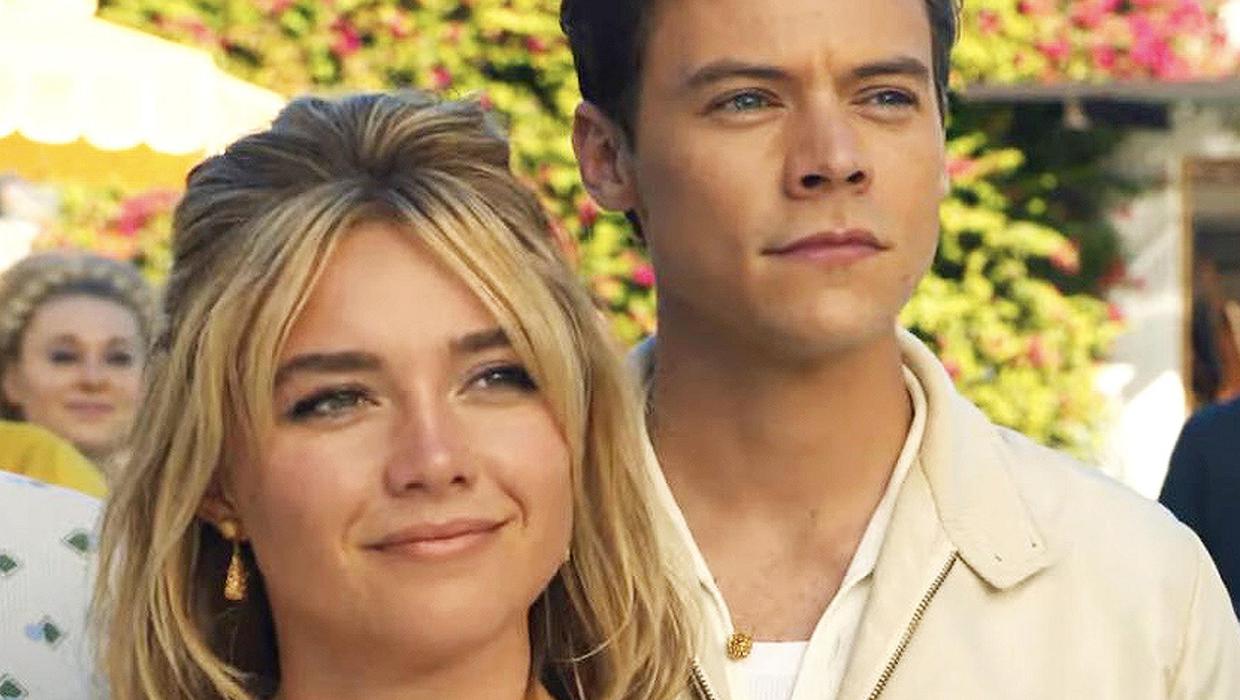
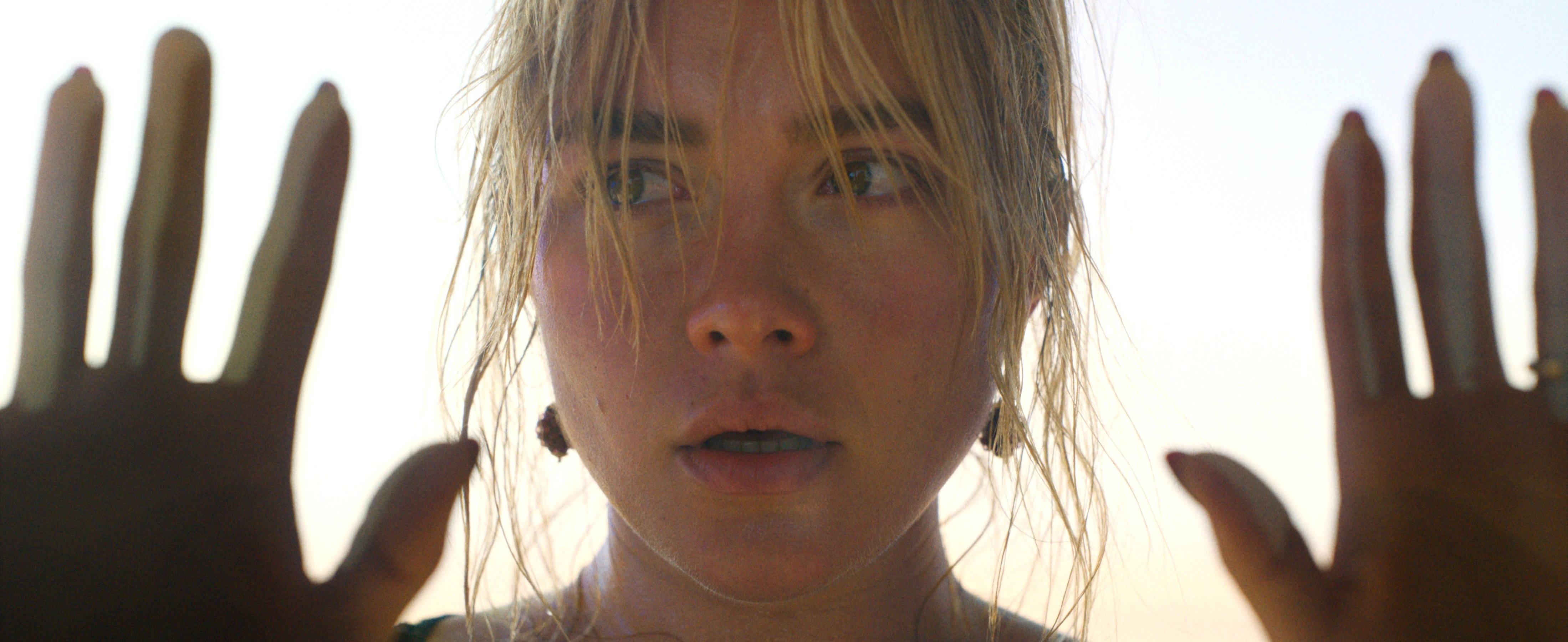
Still, taking a deep breath and moving past the title, Don’t Worry, Darling (sorry) is – for the most part – a very engaging film. Florence Pugh stars as Alice, a Stepford-style wife living in the Stepford-style town of Victory, an idyll in the middle of an unforgiving desert. That is, if your idea of an idyll is the sexist 1950s, where the men go to work (all at the same place, the – er – top secret Victory project) and the women stay at home, their daytime hours spent shopping, boozing and ballet dancing. Oh, and cooking and cleaning, which might sound like a downside, but these women really, really enjoy their household chores…

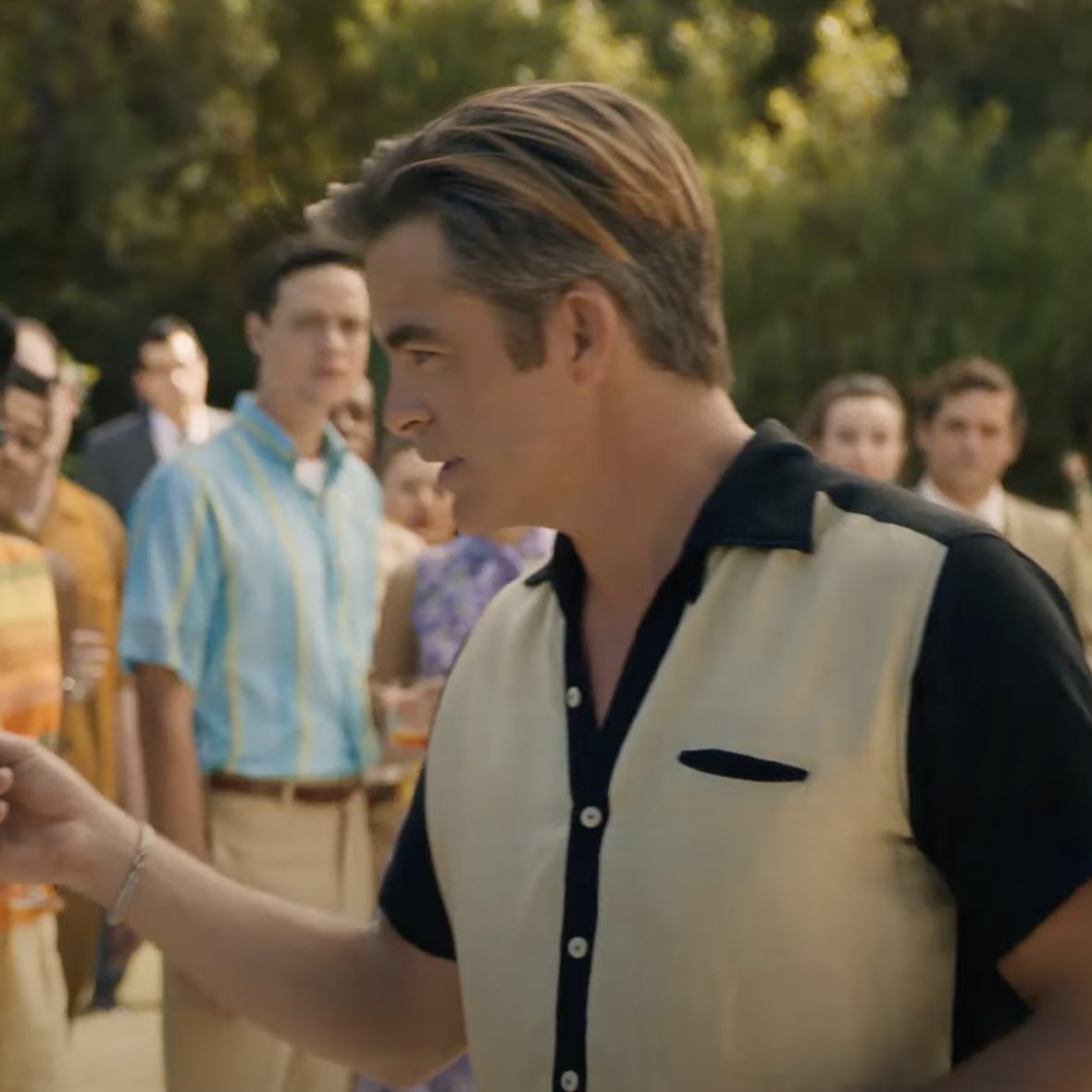
Alice and her husband, Jack (Harry Styles), seem even happier than all the other happy people – they can’t keep their hands off each other, and who cares if dinner ends up on the floor, when there’s frantic sex on the menu? Okay, so there are regular small earthquakes disrupting their peace, and Alice’s friend, Margaret (KiKi Layne) keeps trying to tell everyone that something’s wrong, but Dr Collins (Timothy Simons) assures them all that she’s not well; there’s nothing to worry about. Darling. Victory’s founder, Frank (Chris Pine), has everything in hand. Aren’t they lucky to be here? They can trust him. Can’t they?

But then Alice witnesses a plane crash, and – desperate to help – she ventures up to the forbidden Victory HQ. And what she sees there changes everything…

Olivia Wilde’s sophomore movie isn’t quite up there with Booksmart, but there’s a lot to admire here. It’s an ambitious project, riffing on The Matrix as much as the aforementioned The Stepford Wives, as well as The Truman Show and Valley of the Dolls. The script (by Katie Silberman) is also thematically close to Laura Wade’s similarly-titled stage play, Home, I’m Darling, in that it exposes the myth behind the glamorous image of the 1950s – the pastel colours, stockings and champagne cocktails (perfectly evoked by cinematographer Matthew Libatique) mask myriad miseries, particularly for women trapped in the domestic realm.

Pugh’s performance is flawless, and Styles does well in the supporting role. Pine is genuinely scary, his slick smile doing little to conceal Frank’s coercive nature, and Gemma Chan, as his wife, Shelley, is a suitably chilling accomplice. Wilde herself plays Bunny, a playful, hard-drinking woman, and Alice’s closest friend. It’s an interesting dynamic, and the set up is beautifully managed.

Unfortunately, the unravelling is less well-handled, and several gaping plot holes emerge along with the revelations. This is a shame, because the first two thirds promise so much, but the complex unveiling is too quick, too told. I am left with too many questions, and not in a good way.

Another half hour, a little more detail, some attention paid to the ‘but how?’ and Don’t Worry Darling could be much better than it is.

3.6 stars

Susan Singfield

Crazy Rich Asians

19/09/18

I’m conflicted about this movie before I even enter the cinema.

On the one hand, I’ve been reading a lot about representation, and how stupidly rare it is for mainstream American movies to feature Asian characters in lead roles, despite Asian-Americans making up a sizeable minority (5.6%) of the population there. So Crazy Rich Asians, with its Asian cast, writer and director, is a welcome reminder that the US is a diverse place, and that there are different cultural perspectives from those we’re offered time and time again.

On the other hand, the trailer has alarmed me. It seems to be wealth porn, revelling in images of lavish houses and designer clothes, first class this and diamond that – not so much aspirational as simple showing off. I’m alarmed rather than impressed by the excesses showcased here.

True, the film makes some attempt to comment on the over-abundance of everything, to dismiss as shallow the trappings of the 1%. But it’s never very convincing in its condemnation, luxuriating as it does in expensive frippery.

Based on Kevin Kwam’s novel of the same name and directed by Jon M Chu, Crazy Rich Asians is a romantic comedy. Rachel Chu (Constance Wu) is an economics professor at NYU. When her boyfriend, Nick (Henry Golding), invites her to Singapore – to attend his best friend’s wedding and meet his family – she’s excited: she’s never travelled before, and she’s keen to see the world beyond America. What she hasn’t realised, however, is that Nick is super-rich: his family are property magnates, the wealthiest in Singapore. And they have very definite ideas about the kind of girl that Nick should marry: American is bad enough, but working-class and fatherless? That’s too far beyond the pale.

Characterisation is this movie’s major strength: the actors are all accomplished and the roles are distinct and largely believable. Wu and Golding make an appealing central pair, and there are some delightful supporting characters, notably Rachel’s college friend, Peik Lin Got (played with relish by the charismatic Awkwafina), and Nick’s fashion-forward cousin, Oliver T’sien (Nico Santos).

But the storyline is clichéd and – dare I say it? – dull. It’s also very American-centric, despite its Asian credentials. The underlying message seems to be that the American way  (the pursuit of individual happiness, following individual passions) is right, and that the Singaporean ideal (at least as espoused in this movie) – of destiny, of family ties and responsibility – is wrong. Rachel has nothing to learn from the people of Singapore, but they have much to learn from her. And this makes me quite uncomfortable.

I’m also bored by all the depictions of excess wealth, and irritated that this movie tries to have its cake and eat it, mocking the vulgarity of Charlie (Harry Shum Jr)’s stag do, whilst revelling in his ludicrously OTT wedding. I’m not sure what I’m supposed to make of Nick’s cousin, Astrid (Gemma Chan), whose defining moment seems to be the ’empowering’ realisation that she doesn’t have to hide her million dollar earrings from her husband, nor of the final, celebratory party – complete with rooftop synchronised swimmers, because what’s a party without them? – which seems to contradict entirely the sentiments preceding it.

All in all, I’m frustrated by Crazy Rich Asians. I don’t know how it can appeal to anyone who’s even slightly socialist. In its favour, it has showcased a plethora of Asian actors, and I hope that we’ll see them again – in better films than this.

2.7 stars

Susan Singfield