Filmhouse Edinburgh

Die, My Love

16/11/25

Filmhouse, Edinburgh

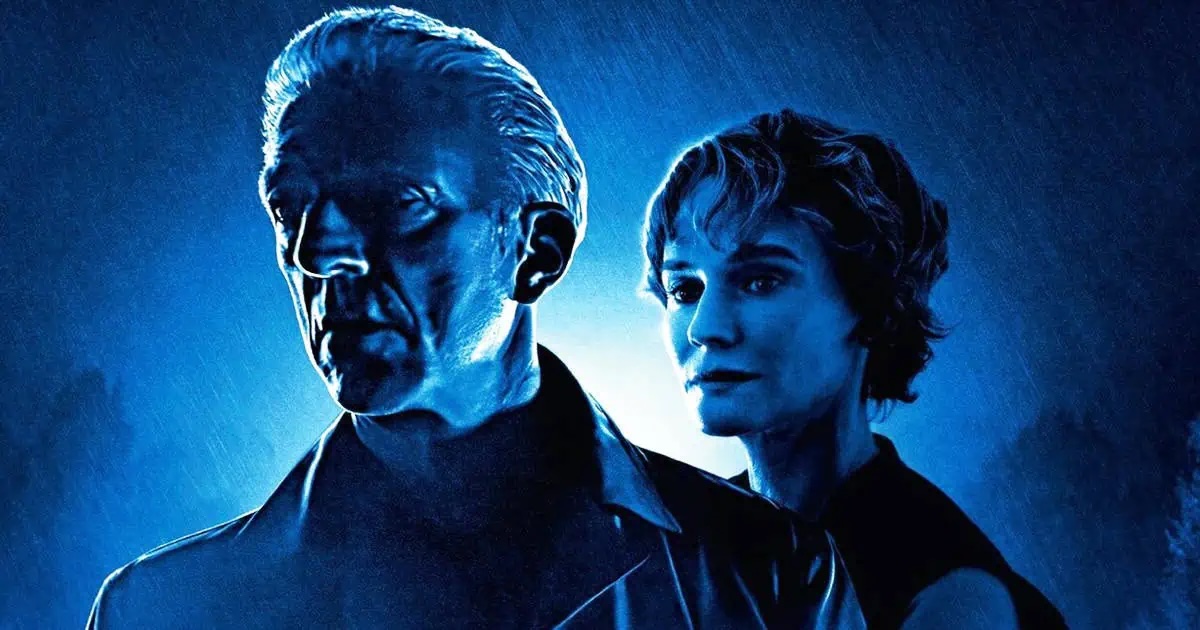
Die, My Love, based on Ariana Harwicz’s acclaimed novel, is another irresistible movie from Scottish director, Lynne Ramsay. With a script by Ramsay, Enda Walsh and Alice Birch, this unflinching study of a woman’s postpartum psychological breakdown is as compelling as it is harrowing – and Jennifer Lawrence is frankly wonderful in the lead role.

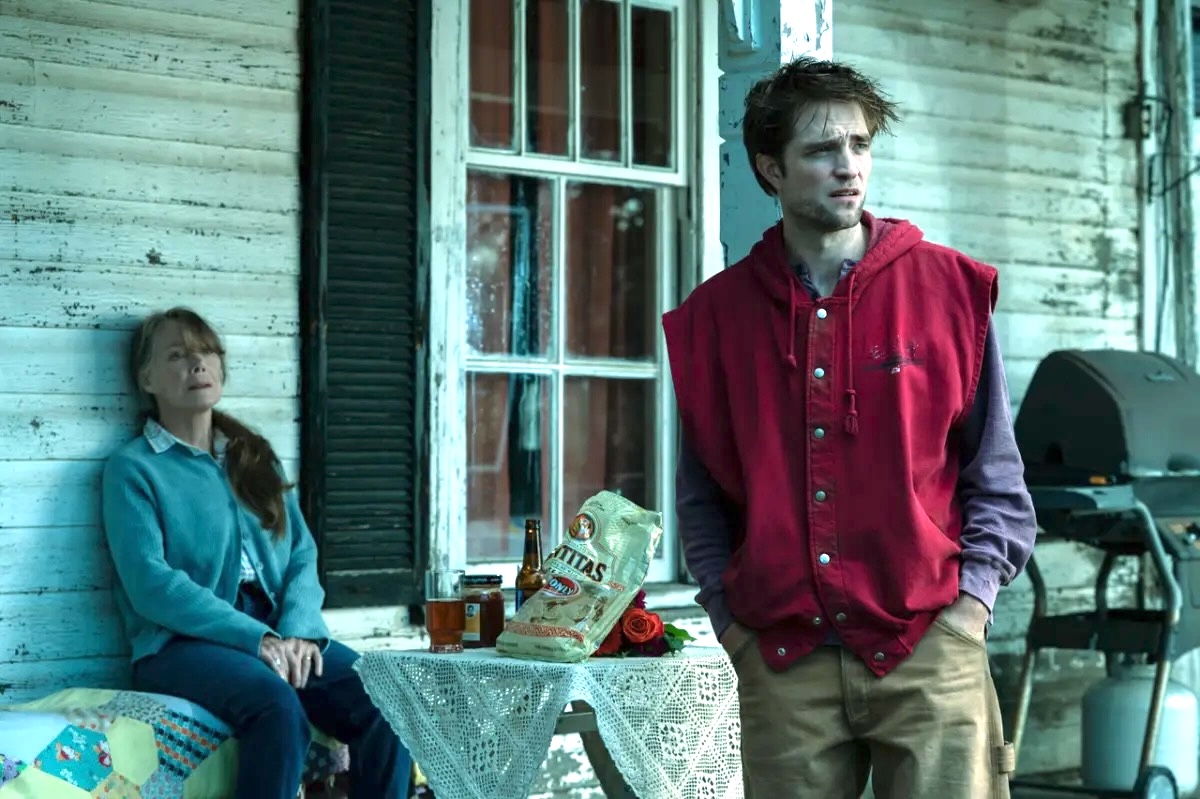
Grace (Lawrence) and Jackson (Robert Pattinson) are expecting their first baby and, in preparation for this new chapter of their lives, they move into Jackson’s deceased uncle’s house. They’re not fazed by the piles of leaves in every room, the old-fashioned decor or even a minor rat infestation: they’re young, excited and in love. They’ll make it work.

But once Grace gives birth to Harry, the spark between her and Jackson dies. She’s stuck at home: bored, resentful and unable to cope. Jackson’s job means that he can escape from the oppressive confines of their isolated house, but Grace’s work is writing; it doesn’t get her out and she can’t focus on it anyway. “I don’t do that any more,” she says.

She loves her baby but she feels trapped and abandoned. Jackson never wants to have sex with her any more, although the box of condoms in his car seems to be getting lighter by the week. She refuses to be just Harry’s mother: why can’t she also still be Grace-the-writer, Grace-and-Jackson, Grace-the-wild, the-impulsive, the-let’s-have-fun? With only Jackson’s bereaved mother, Pam (the fabulous Sissy Spacek), for company, Grace’s mental health begins to deteriorate, her behaviour becoming ever more erratic and dangerous.

Ramsay’s film is undoubtedly dark, but it’s bleakly funny too. Grace’s blunt responses to the platitudes she’s offered often fall into the “things-we-all-wish-we-could-say-but-can’t” category, and – if it weren’t for all the damage they cause – her devil-may-care actions are almost inspirational. I feel sorry for both Grace and Jackson, a couple trapped in a relationship that no longer works, dragging each other down in their attempts to meet society’s expectations of them. “Let’s get married,” says Jackson in desperation. Maybe a wedding is the glue they need to stick them back together?

Or maybe not…

More than anything, this movie reminds me of Charlotte Perkins-Gilman’s The Yellow Wallpaper; indeed, there are several overt references here to the 19th century short story, not least in Grace’s frantic stripping of the heavily-patterned wallpaper with her fingernails, or her crawling through the long grass just like Perkin-Gilman’s “creeping woman”. It’s not just the remote house and the remote husband, nor even the medicalisation of female emotions or the retreat into a fantasy world. More than any of that, it’s the mind-numbing boredom of the protagonist’s existence, and her refusal to accept this as her lot.

A real contender for my film of the year, Die, My Love is a bravura piece of movie-making: stark, beautiful and as uncompromising as its heroine.

5 stars

Susan Singfield

Frankenstein

25/10/25

Filmhouse, Edinburgh

Guillermo del Toro was always going to make his version of Frankenstein one day – the seeds were sown in his 1992 Spanish-language film, Cronos, the first of his features that I ever saw in the cinema and the one that convinced me he had a big future ahead of him. 

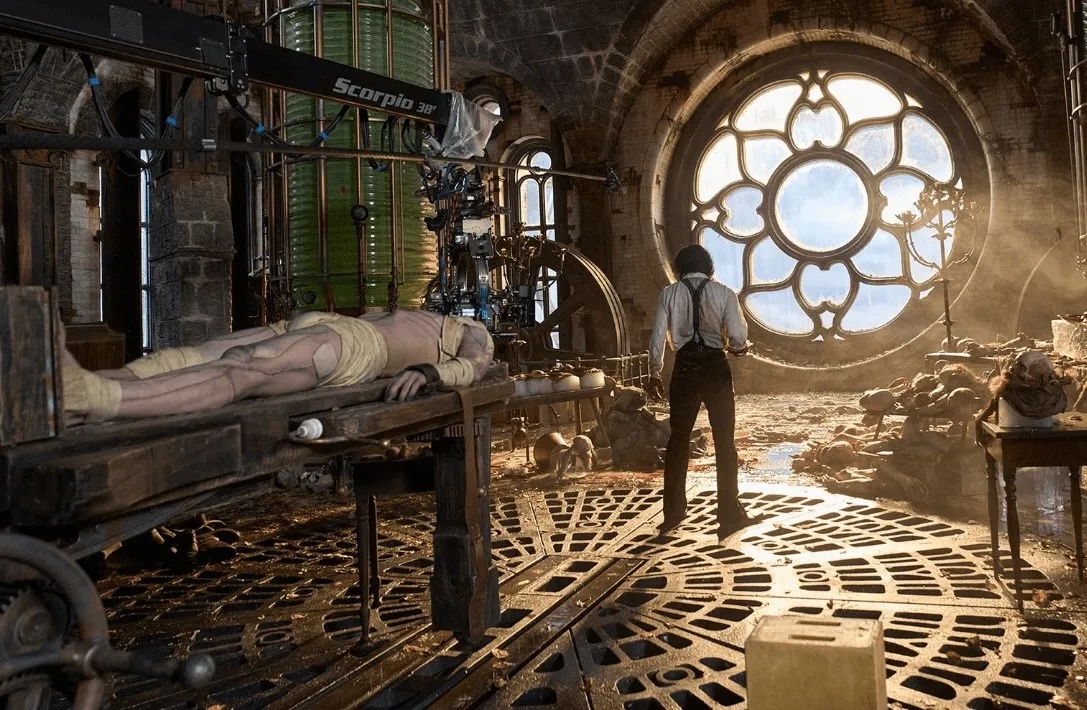
Now he’s finally got around to doing the job properly, courtesy of Netflix, who stumped up the $120m budget. For a while it looked as though there wouldn’t be any chance of seeing it in an actual cinema before the transfer to streaming. This would have been a crime because del Toro’s adaptation of the tale looks absolutely sumptuous on the biggest screen at Filmhouse and I’m delighted to see that the auditorium is  pretty busy for a Saturday afternoon showing.

Frankenstein is, of course, one of the most filmed books in history, but it’s probably fair to say that only a handful of the 423 movie adaptations (not to mention the 287 TV episodes – yes, I did Google it) have come anywhere close to capturing the essence of Mary Shelley’s seminal horror story. While del Toro does throw in a few original twists of his own (of course he does!), he sticks fairly close to Shelley’s narrative – indeed, he’s even credited her as his co-screenwriter. The tale is told in three distinct parts.

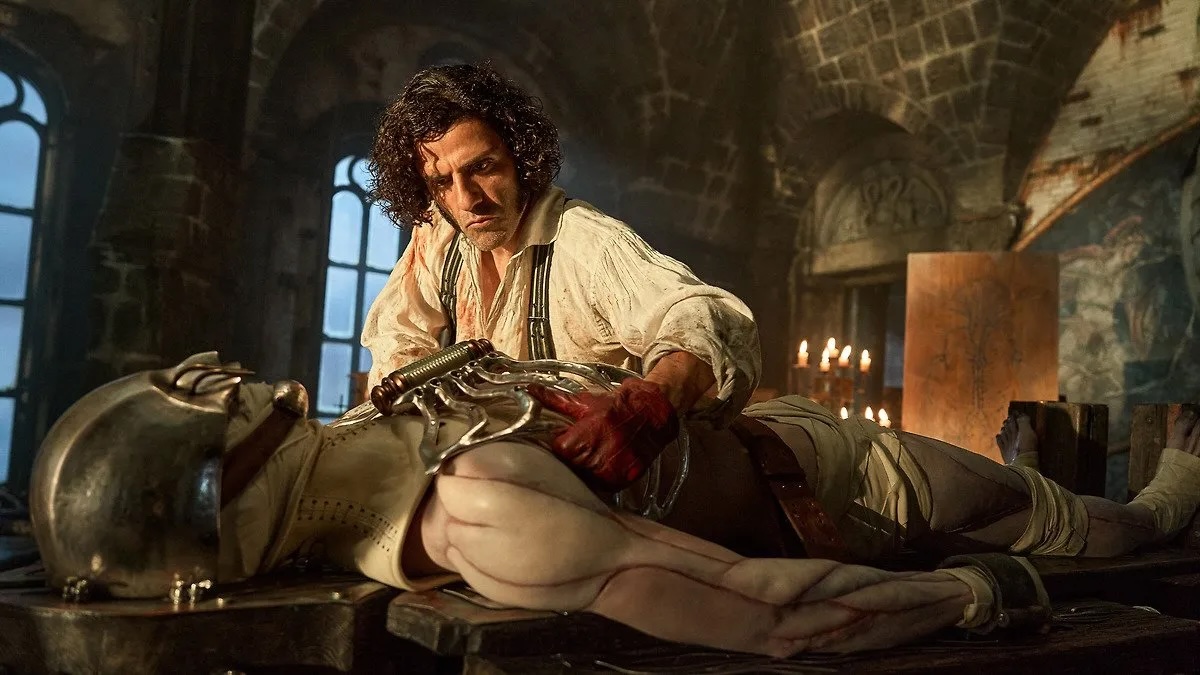
In the opening Prelude, we join Captain Andersen (Lars Mikkelsen) and the crew of his sailing ship, who are stranded on the ice in remote Arctic waters. There’s a sudden explosion nearby, from which the crew rescue Victor Frankenstein (Oscar Isaac), who has been pushed almost to the point of death by a monstrous assailant. After witnessing The Creature (Jacob Elordi) plunging into icy waters, they carry Victor onto the ship – but, once revived, he assures Andersen that his pursuer will not actually be dead and will surely come for him…

Before that happens, he needs to tell his story.

Victor then narrates The Creator’s Tale and we flashback back to his childhood where, under the rule of his despotic father, Leopold (Charles Dance), Young Victor (Christian Convery) first becomes obsessed with life and death. Keen-sighted viewers may spot something familiar about Victor’s barely-glimpsed mother, Claire. Something distinctly Oedipal is happening here.

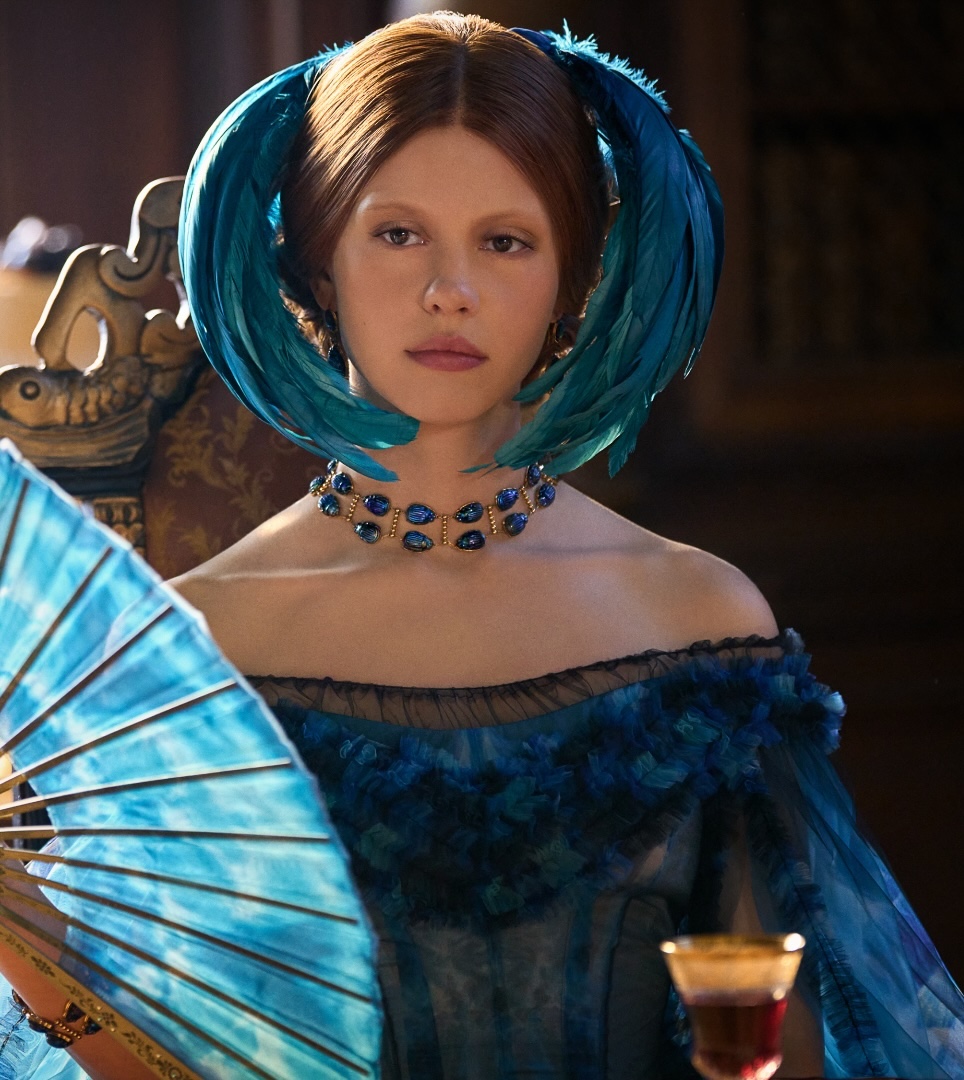
We then cut to some years later. A grown-up Victor is causing controversy at medical school in Edinburgh with the grisly experiments he’s conducting on cadavers (and I get to revisit some of the sets that were evident around my home city in September 2024). We are introduced to Victor’s younger brother, William (Felix Kammerer), and his fiancée, Elizabeth (Mia Goth). We also meet Harlander (Christophe Waltz), a character created for the film, a wealthy man who, for clandestine reasons, is perfectly happy to finance Victor’s attempts to take his experiments all the way.

But Victor’s account is later contrasted with The Creature’s Tale, where we learn of the years when the monster and his creator were apart: how The Creature lived in a barn alongside a kindly blind man (David Bradley); how he mastered the art of speaking (with a distinctly Yorkshire accent); and how he slowly began to realise how shabbily he’d been treated…

It’s not just because I’m a devout Guillermo del Toro fan that I think this film is a million times better than every other Frankenstein-generated movie I’ve watched down the decades. Isaac is a revelation in the title role, nailing both the character’s sense of privilege and his fatal short-sightedness. Elordi, meanwhile, offers a fresh take on the Creature that really brings out his innate vulnerability and his desperate need to relate to others, something that’s been attempted before with much less success. 

The film is packed with sumptuous locations and thrilling action set-pieces, that have it hurtling through its lengthy running time. Cinematographer Dan Lausten captures every scene with an almost luminous intensity, Kate Hawley’s costume designs are exquisite, and there’s a beautiful score courtesy of Alexander Desplat. If I have a minor niggle it’s that the CGI-generated wolves in one long sequence aren’t quite as convincing as they need to be – and perhaps both Mia Goth and Felix Kammerer might have been given a little more to do?

But these are nitpicks. As ever in these situations, I’m urging people not to wait for this to drop onto streaming, because this level of filmmaking deserves to be watched on the biggest, brightest screen available, one of – dare I say it? – monstrous proportions.

I’ll get my coat.

4.8 stars

Philip Caveney

The Shrouds

07/07/25

Filmhouse, Edinburgh

I first saw a David Cronenberg film way back in 1975. His low budget debut, Shivers, announced the arrival of a precocious new cinematic talent and, over the decades, the Canadian auteur has pretty much invented and shaped the concept of body horror. Films like The Brood, Videodrome and Scanners felt like one powerful punch after another – and I was always first in the queue to see them.

But somewhere down the years, I lost touch with the man’s work. Checking back through my reviews, I’m surprised to see that the last film of his I saw in the cinema was Maps to the Stars, and that I noted in the review that it was ‘not one of his best efforts.’ The recent re-opening of Filmhouse, after years of shuttered doors, seems the perfect opportunity to view The Shrouds, and it’s lovely to recline in one of the venue’s extra-comfortable seats and watch the film in razor-sharp definition on the big screen.

But if I am hoping to rekindle my old passion for Cronenberg’s work, I am somewhat disappointed.

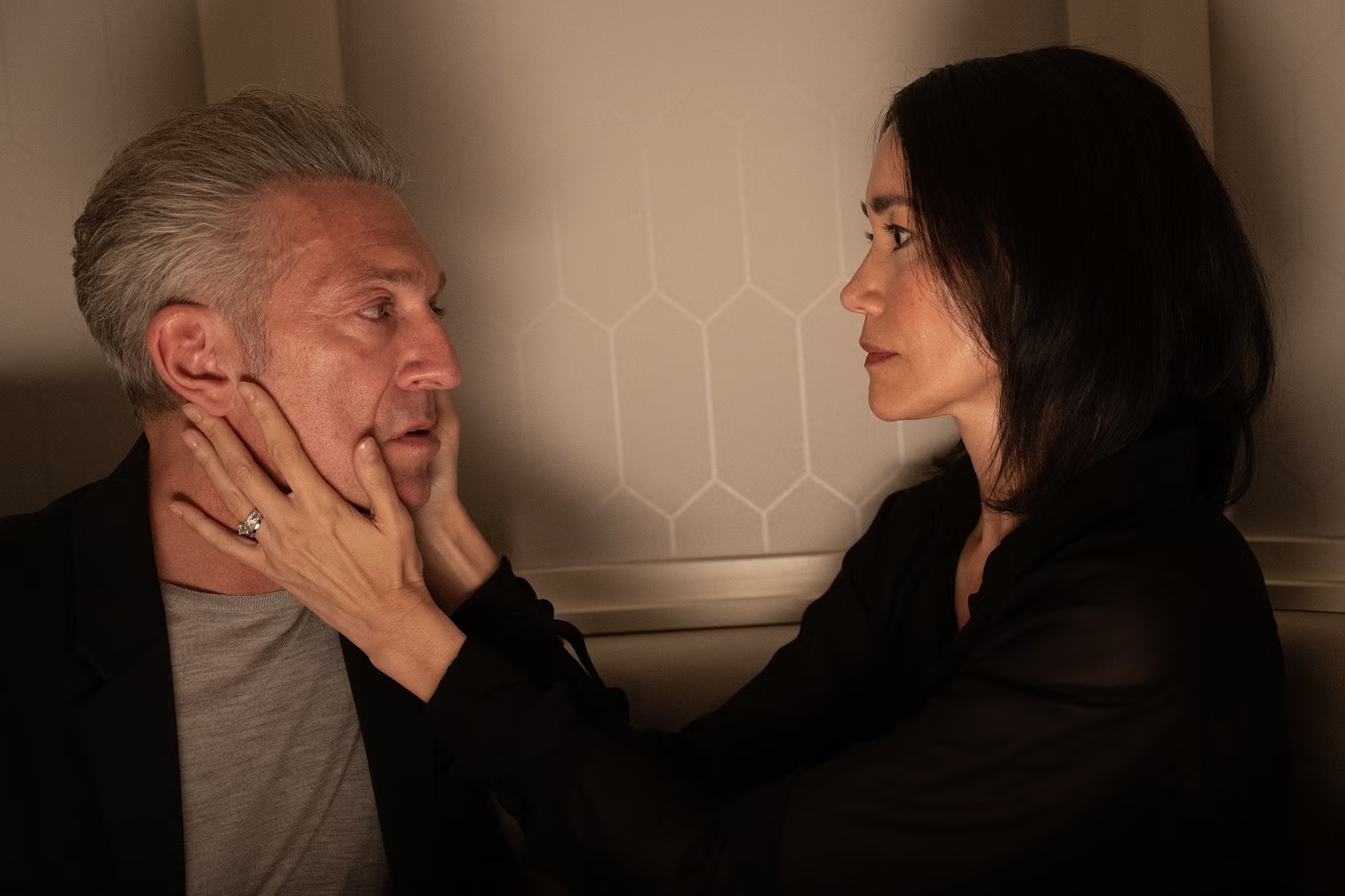
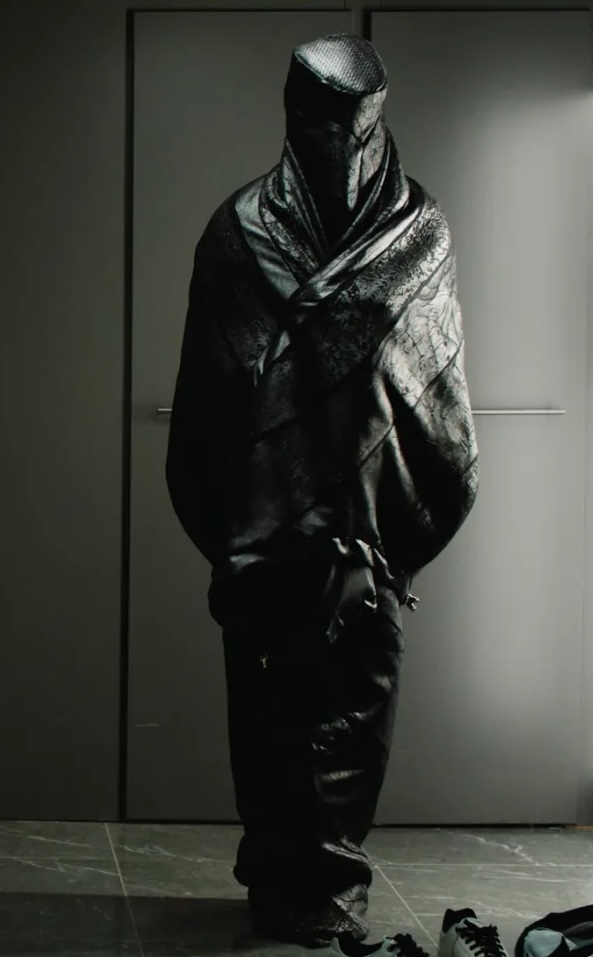
We first meet Karsh Relikh (Vincent Cassel) on a blind date with Myrna Shovlin (Jennifer Dale). He’s taken her to a posh restaurant to eat and, as they dine, he casually announces that he owns the place and, what’s more, he also owns the adjoining graveyard. He goes on to explain that he is the inventor of the titular shrouds, burial robes that contain hundreds of tiny cameras. With the aid of a screen on the gravestone – and a handy phone app – the bereaved can watch the gradual disintegration of the deceased. His company, Gravetech is establishing other souped-up burial sites across the globe.

Karsh suggests that perhaps Myrna would like to pop out after they’ve finished eating and have a look at Becca, Karsh’s recently deceased wife, to get an overview of her gradual disintegration? Strangely enough, Myrna isn’t keen on the idea. (Spoiler: there’s no second date.)

As the film continues, we learn that Becca has gradually succumbed to cancer and that her doctor had to remove one of her arms and a breast before she finally died. Karsh tells this to Becca’s twin sister, Terri (Diane Kruger), whose reaction to the news is… well, let’s just say it’s not what you might expect. Karsh also begins to develop a relationship with Soo-Min (Sandrine Holt), a blind woman, who seems to know more about him than she really should and is determined to get him into bed.

A slow-paced meditation on death and grief, it’s no great surprise to learn that the story has been inspired by the real-life demise of Cronenberg’s wife; and viewers can hardly fail to notice that tall, skinny Cassell with his snow white hair and perfectly-tailored suits is a dead ringer (no pun intended) for the director himself. Cronenberg has acted in quite a few films but seems to have drawn the line here, sensing perhaps that he’s already uncomfortably close to the material.

Both Cassel and Kruger give this their all but, apart from some decidedly dark humour, the funereal pace of proceedings and the general unpleasantness of the storyline serve to work against it. And yes, I appreciate it’s a bit rich complaining about unpleasantness in a David Cronenberg movie, but I find myself longing for a bit of the old-school shock-horror that used to be his trademark. If there’s a major issue here, it’s that everything is too polite, too considered, too… tasteful?

There’s a lot of emphasis on dreams and a blurring of the lines between what might be nightmares and what’s actually happening, but at times I feel confused by what is (or isn’t) real. Most damning of all in my eyes is the fact that the film’s ending leaves everything muddled. I’m genuinely surprised when the closing credits come up.

I take no pleasure in giving this film such a critical mauling. As I’ve already said, Cronenberg has given me tons of grisly entertainment over the decades, while recent films like The Substance show that his influence is still out there. But sadly, The Shrouds leaves me as cold as a Gravetech corpse.

2.8 stars

Philip Caveney

The Tragedy of Macbeth

01/01/22

Filmhouse, Edinburgh

I’m not sure what to make of the writing credit for this latest adaptation of Macbeth. The wording – ‘written for the screen by Joel Coen, based on the play by William Shakespeare’ – seems a tad… hubristic. Because this is mostly Shakespeare’s work, albeit deftly sprinkled with some movie dust. Coen’s direction here is sublime, and his pared back adaptation works really well. It’s just, y’know. ‘Play by William Shakespeare; adapted for the screen by Joel Coen’ would sit better.

But it’s my only real gripe (if I overlook the absence of a single Scottish accent in the, ahem, Scottish play). This is the best movie version I’ve seen – and I have seen a lot. Although Shakespeare never specifies the Macbeths’ ages, I’ve tended towards the view that they ought to be young: all that swagger and ambition and impatience. When they’re portrayed as middle-aged, something seems to be lost. Here, both lord and lady are actually old: they’re in their sixties; nigh on retirement age. And it all starts to make sense again: this is a last-ditch attempt to fulfil their dreams. Time and place “have made themselves” and the Macbeths can’t resist the temptation to finally realise their desires.

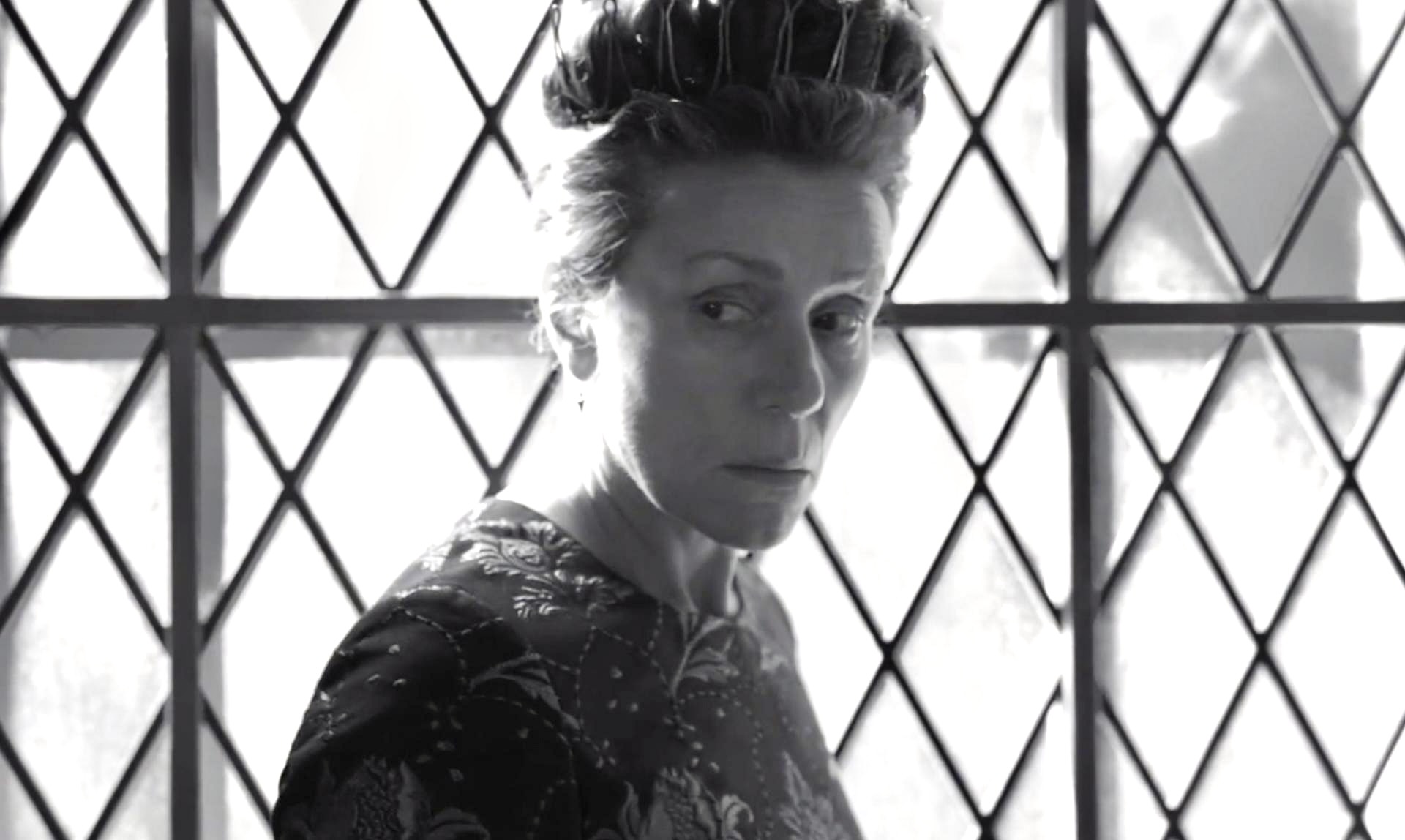
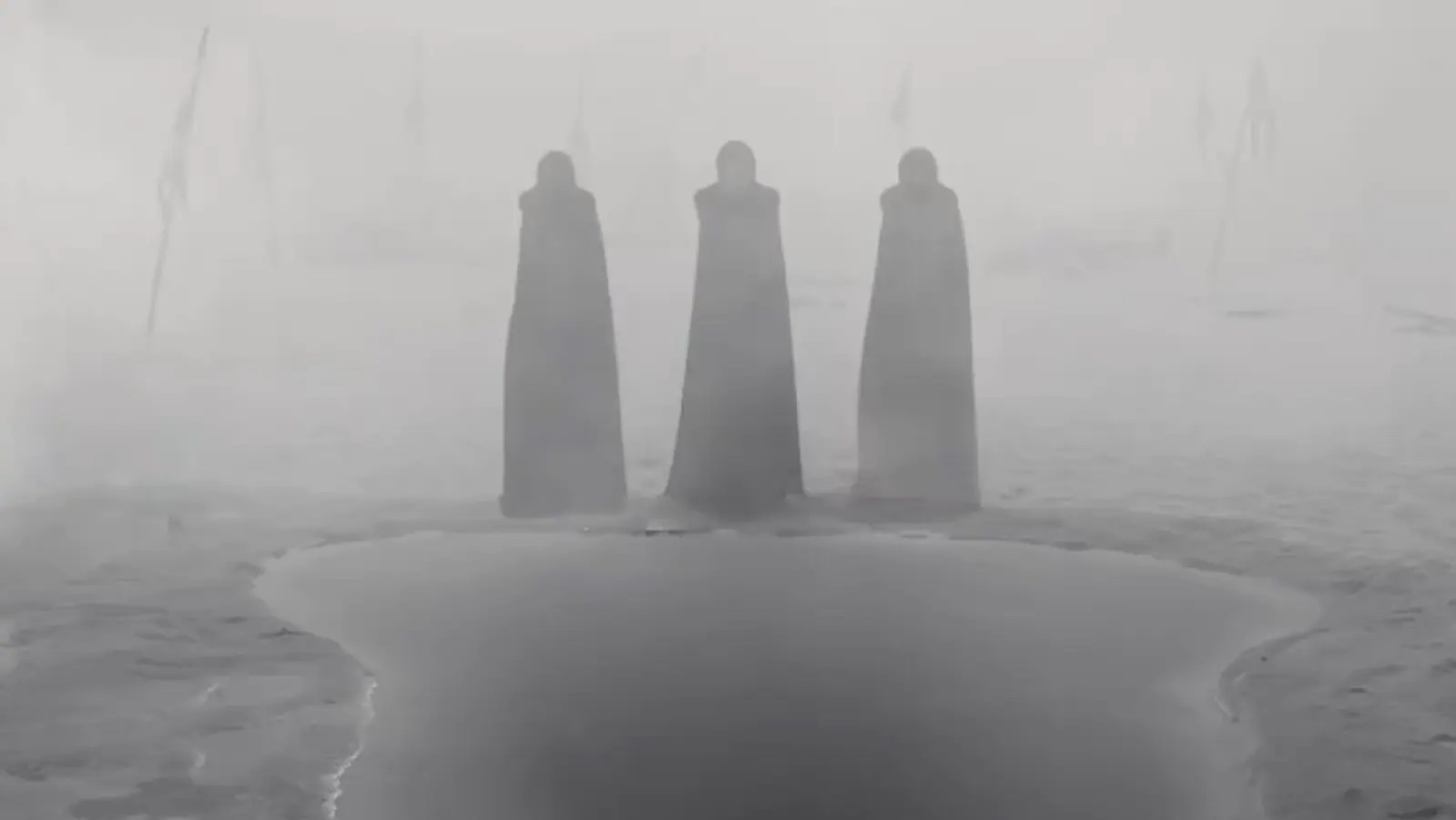
Shot in black and white, Coen’s Macbeth is a claustrophobic affair, with none of the epic battle scenes I’ve grown used to seeing in big-screen adaptations. Indeed, it feels very theatrical, the castle walls as contained and constraining as any stage could be. We rarely venture out of Macbeth’s castle; when we do, it’s into countryside so swathed in mist that very little is visible. This is a stripped back version of the play, shining a spotlight on the key elements and emotions.

Denzel Washington is magnificent as the flawed hero: this is a towering performance, at once imposing and accessible. We can believe in him as a good man corrupted by greed, unable to live with his own actions. Likewise, Frances McDormand gives us a Lady Macbeth we can understand: she’s not presented here as a temptress, leading Macbeth to his doom, but as his partner, his equal, persuading him to indulge in a shared fantasy. The consequences are as devastating to her as they are to him.

Kathryn Hunter – playing all three witches – is perhaps my favourite thing about this production. She’s a gifted physical performer, and lends the shape-shifting ‘weird sisters’ a wonderful unearthly quality. Again, Coen’s judicious employment of theatrical devices (it can’t be incidental that Hunter has worked extensively with Complicité) makes for a compelling and unusual movie; this is a successful hybrid.

Coen only deviates from Shakespeare when it comes to Ross (Alex Hassell). A minor character in the original play, he appears here as a Machiavellian schemer, sidling up to where the power is, with one eye always on what might happen next. He’s Iago; he’s Tony Soprano; he’s Dominic Cummings. The additional layer really works.

In short, this is a triumph. It lays bare the heart of Shakespeare’s play. So, proceed further in this business; be the same in thine own act and valour as thou art in desire, and get yourself to the cinema. This is too good to miss.

4.8 stars

Susan Singfield

Roma

18/12/18

At first, our aims are simple enough. We want to view Alfonso Cuaron’s Roma on a big screen, rather than on the iMac that is the closest thing we have to a TV – but finding a cinema in Edinburgh that is actually showing this Netflix Original is problematic. Then we discover that The Filmhouse has managed to obtain it for a few days, so we book seats. Our first attempt to view it is effectively snookered by a badly-timed power cut in our area and it takes some pretty frantic rejigging to get ourselves booked in for the following day, but we manage it; and I’m happy to report that the effort is worthwhile, not least because of the film’s stunning deep focus black and white cinematography (Cuaron acting as his own DP in the absence of regular collaborator, Emanuel Lubezki), but also because the film’s catharsis is so powerful when it finally hits, that I sit in the darkened cinema quietly sobbing away.

This autobiographical story is set in the early seventies in the Colonia Roma district of Mexico City. It concerns a middle class family and their young, live-in maid, Cleo (Yalitza Aparicio) who goes placidly through her daily grind of washing clothes, preparing food, and wiping up the seemingly endless mounds of dog poo deposited by the resident mutt, whilst giving as much time and attention as she can, to the family’s four children. For the first twenty minutes or so, this is pretty much all we see and beautifully filmed though it is, I find myself wondering what all the fuss is about. Why all the Oscar buzz? But then, more important issues begin to rear their heads and pretty soon, the film is stretching its muscles and I am totally hooked.

The first incident of note is when the father of the family, university lecturer Pepe (Marco Graf) goes off to a conference in Quebec and decides not to return to his wife and children. In the ensuing uncertainty, his wife, Sofia (Marina de Tavira) struggles to make ends meet and hides the truth from her kids, telling them that Pepe’s work in Canada is taking longer than expected, even though he is occasionally glimpsed running around the city with his latest conquest. Cleo, meanwhile, becomes emotionally entangled with Fermin (Jorge Antonio Guerrero), an aggressive young man who is obsessed with martial arts. It’s clear that the relationship is going precisely nowhere but before that realisation sinks in, Cleo is confronted with an unforeseen problem of her own.

As the film steadily unfolds, so events become ever more dramatic – there’s a New Year’s Eve forest fire, that must be coped with by a collection of (mostly drunk) party guests – a violent student protest that is bloodily overpowered by the local military – and a heart-stopping sequence in a hospital where the mounting drama of a situation spills over into absolute tragedy. Through the escalating chaos, Cleo moves with incredible calm and dignity and Roma is quite clearly a love letter to her, (or rather, to ‘Libo,’ the real life woman who cared for the young Cuaron and his siblings), showing that despite her perilous position as an employee, she is an important member of the family unit, indeed, the very hub around which it operates. Aparicio’s performance is extraordinary. A schoolteacher, who has never acted before, she is quite simply enchanting in the central role and it will be interesting to see where she goes from here.

Roma is undoubtedly a slow-burner, but it’s lovingly and lavishly mounted, the era evoked in a whole series of scenes that capture the essence of what it must have been been like to live in 1970s Mexico. It’s interesting to note that one sequence depicts a family visit to the cinema where the film on the screen is Marooned, a low budget space adventure that was clearly a huge influence on Cuaron’s blockbuster, Gravity. There’s every reason to suspect that Roma could very well be rewarded with a gong at next year’s Oscars, an occurrence that would  undoubtedly raise interesting questions about the future of movie-making itself.

Meanwhile, if no cinema near you is showing it, then do watch it on the biggest TV you have access to. It’s a fabulous piece of work and proof, if it were needed, that Cuaron is one of our most interesting and gifted filmmakers.

5 stars

Philip Caveney