Feminism

Road

27/02/25

Bedlam Theatre, Edinburgh

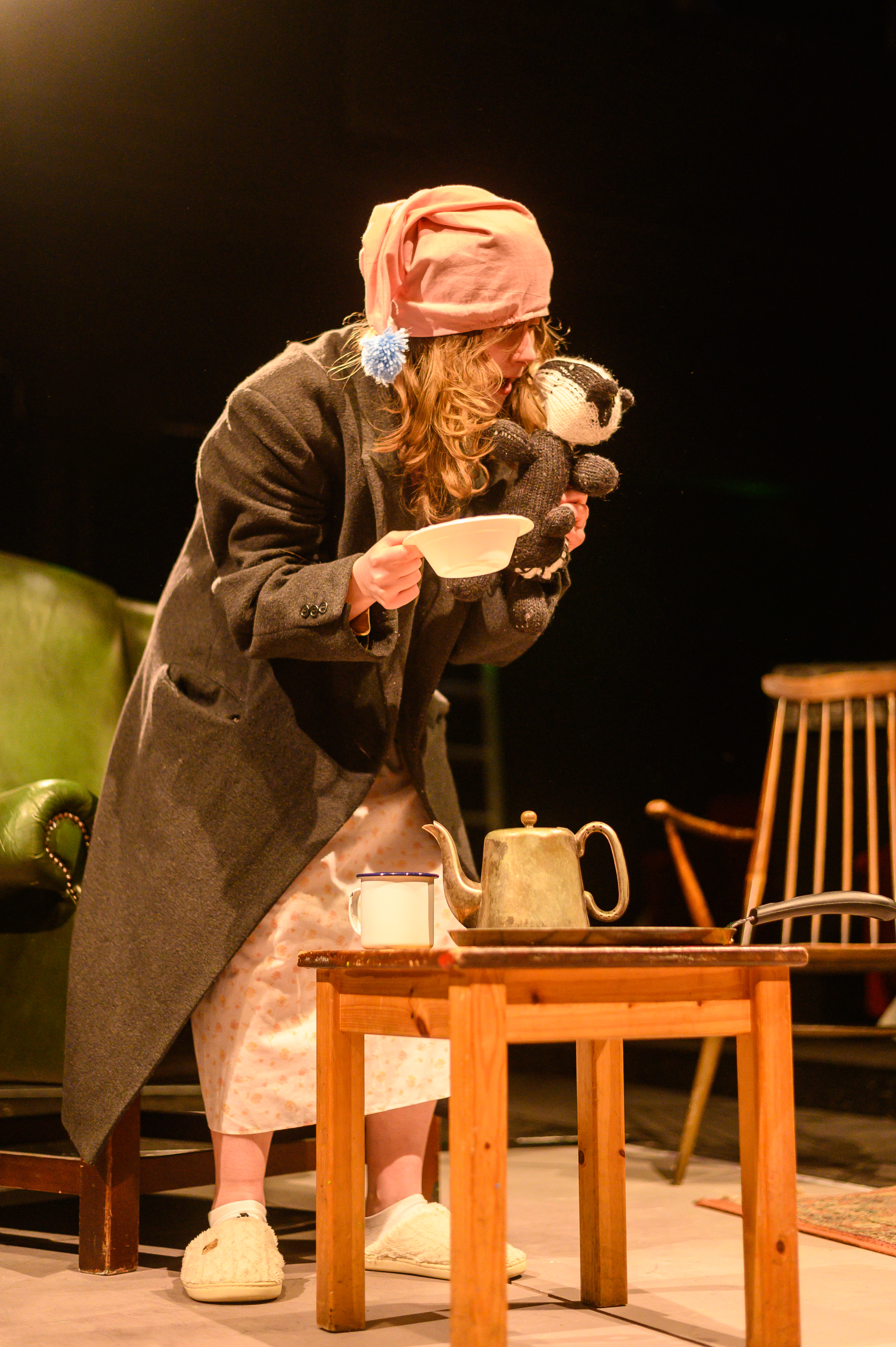
We enter the auditorium to the strains of Jarvis Cocker warning a rich girl of what it’s really like to be common, to “watch your life slide out of view / and dance and drink and screw / because there’s nothing else to do.” Okay, so tonight’s play – Jim Cartwright’s Road – is set in the mid-80s, a whole decade before Pulp’s song was released, but the lyrics couldn’t be more apt. It’s a fitting anthem to what is essentially a series of bleak vignettes: snapshots of the residents of a Lancashire road as they navigate their way through another grim weekend, trying to find some glimmers of joy in Thatcher’s broken Britain.

This is a sprawling, kaleidoscopic play, but EUTC’s students do an impressive job of wrangling it into shape, creating a vibrant, cohesive show. I especially enjoy their commitment to world-building, with actors in character as the audience files in, as well as throughout the interval, when some chat to people in the toilet queue, while others invite us to join them on stage to dance at Bisto’s Beatoven Disco with DJ Ronan Lenane. (There’s also a pre-show in the bar, but there’s not a lot of room in there, so we don’t get to experience what that’s like.)

I have mixed feelings about Cartwright’s script. Groundbreaking when it premiered in 1986, there’s no denying its continued relevance, as the UK struggles with a cost-of-living crisis and a hollowed-out job market. It’s an elegy for the working-class, and I like its bold spirit and the stylised way the characters voice their despair, saying all the things that usually remain unspoken, masked by politeness and a “chin-up” mentality. However, while the issues sadly haven’t aged, the writing style has: it seems heavy-handed compared to more recent polemics, hitting the audience repeatedly over the head with a message we understand from early on.

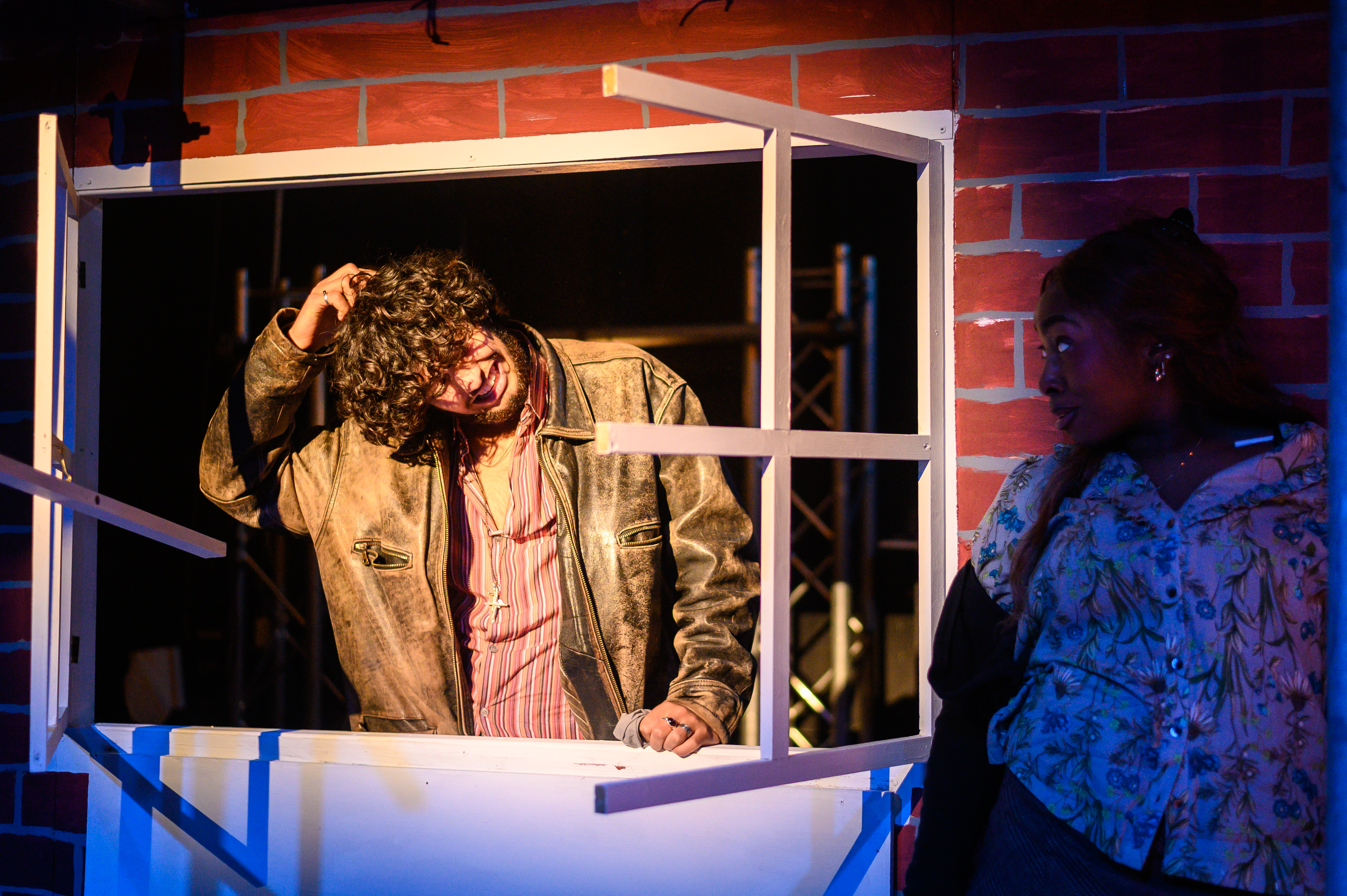
Nonetheless, this is an impressive production, and the array of talent in the room is undeniable. Under Moses Brzeski-Reilly and Dan Bryant’s inventive direction, Bedlam’s performance space is almost unrecognisable. Instead of the usual end-on stage, we have a thrust, the audience positioned around three sides. The fourth side sports a door, a big window and some scaffolding, and the gallery above is also pressed into use. The square performance space is divided into four distinct areas, the road, a ginnel, a living room and a bedroom, the latter pair representing the interiors of several different homes. Miki Ivan’s complex lighting design is crucial in guiding the audience to the various locations.

The sound design – by Millie Franchi – is admirably detailed, the ambience convincing and evocative. However, thanks to a combination of the thrust staging and the venue’s vaulted ceiling, there are moments when I find myself struggling to hear what some of the characters are saying, especially those who are facing away from me on the far side of the room.

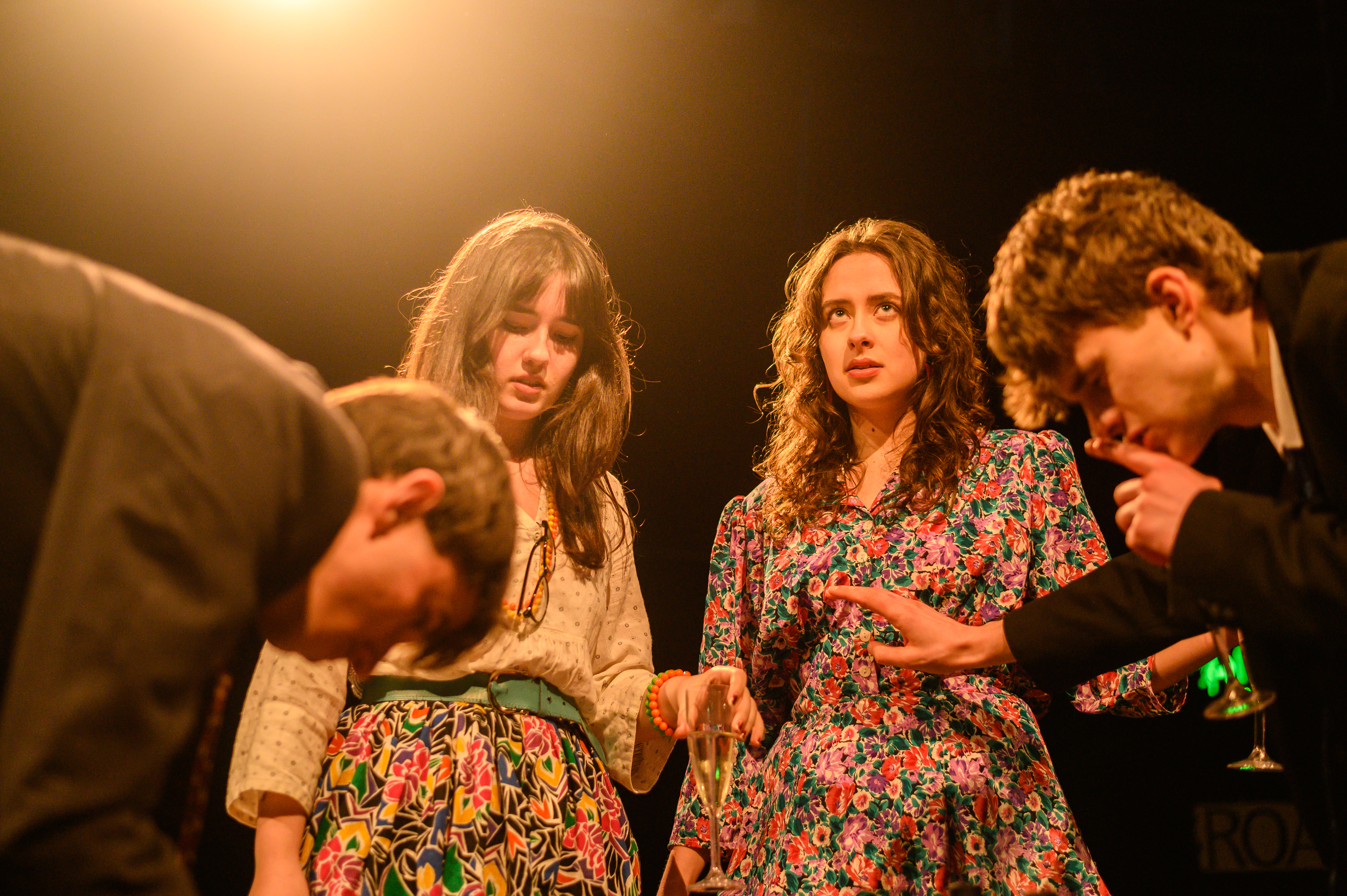
It’s hard to single out individual performers in an ensemble piece like this, but there are a few standouts. Ava Godfrey, Amelia Duda, Will Grice and Sam Gearing absolutely nail the climactic scene where Louise and Carol’s double date with Brink and Eddie transforms from a nihilistic drinking session into an almost spiritual attempt to conjure up some happiness. Ava Vaccari is compelling as Molly, an elderly woman suffering from Alzheimers, while Noah Sarvesvaran provides the centre point as Scullery, the drunken vagrant who guides the audience through proceedings.

Once again, EUTC have succeeded in putting their own inimitable stamp on a classic production. There are just two more chances to see this before it closes, so why not head on down to Bedlam and join in the mayhem.

4 stars

Susan Singfield

Danielle Ward: Seventeen

2016DANIELL_JE

06/08/16

Just the Tonic at The Caves, Edinburgh

Ugh, I don’t like this venue. The rooms are small and damp, with all the inherent charm of a medieval dungeon. But this is the Fringe, so it’s par for the course.

And I do like Danielle Ward. I’ve never seen her live before, but I’m a fan of her Do The Right Thing podcast, loved her musical, Gutted, and have heard a lot of her work on Radio 4. I’m excited to see what she does live, and she doesn’t disappoint.

The show’s premise is a simple one: what advice can Ward, at the ripe old age of thirty-seven, offer to a new generation of young women? What wisdom can she share with seventeen-year-old girls, on the cusp of adulthood? Can they learn from her experience?

Part reminiscence, part polemic, this is a fascinating show. Ward has a warm, natural appeal, and is so at ease on stage that she has no problem engaging the audience’s trust. She takes us with her effortlessly, through a list of topics as diverse as female masturbation and Donald Trump, chocolate oranges and red loo roll. It’s a feminist show, albeit one that eschews bold claims, and there are some delightful lines. “Back in 1996,” she tells us, “The Spice Girls invented Girl Power, which was to feminism what Dairylea is to a strong, mature Cheddar.” Some bits are very accessible, while others are more challenging; it’s a good balance and we’re laughing throughout. She’s right, it’s not really a two-in-the-afternoon show, but I can’t think of many better ways to spend an hour at any time. Today’s show was close to sold out, so don’t wait too long to book a ticket for this one!

4.6 stars

Susan Singfield


If There’s Not Dancing at the Revolution, I’m Not Coming

2016IFTHERE_9S

04/08/16

Summerhall, Edinburgh

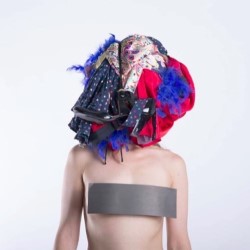
Julia Croft’s ‘performance collage’ is an unconventional piece of theatre, laying bare  -quite literally – the representation of women’s bodies in contemporary popular (western) culture. Swathed in an extraordinary number of layers, Croft’s exploration evokes the shedding of skins, as she sloughs off costume after costume to reveal yet another unpalatable image of womanhood. Finally, she stands before us, naked and silent. The preposterous outfits are now heaped on her head, disguising her face, but exposing the truth: this is a female body.

It’s a serious, disturbing and thought-provoking production, but there is laughter here too: Croft is an engaging performer, interacting with the audience, prolonging eye contact and forcing us from our comfort zones. But the apparent simplicity is deceptive; our expectations are subverted here. The familiar is exposed as absurd; what we have come to accept is clearly unacceptable. The juxtaposition of The Ying Yang Twins’ The Whisper Song with Taylor Swift’s Love Story makes for a particularly discomfiting vignette, as does a mirroring of a scene from horror movie House of Wax: while Paris Hilton, clad improbably in underwear, flees a serial killer on screen, Croft, similarly dressed, crawls around the small performance space, climbing over and under the audience, bringing the horror far too close for comfort, showing how brutal the scene really is.

This is an important piece, I think, that a lot of people should see. Be one of them. You won’t regret it.

4.2 stars

Susan Singfield

Suffragette

Unknown-3 Unknown

17/10/15

Suffragette feels like an important – and timely – film. There’s a bit of a feminist backlash going on at the moment, with cries of “feminazi” and “what about the men?” drowning out the fact that all feminists have ever really asked for is equality, which shouldn’t be too much to ask.

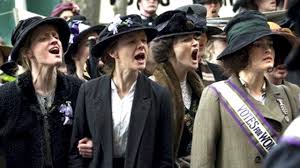
Suffragette brings to the screen the stories of the unknown women who fought the cause. The casting of Meryl Streep as Emmeline Pankhurst cleverly highlights this shift in focus: the most high-profile actor has a cameo role, as does the figurehead of suffrage. This film is all about the less-exalted stars of the women’s movement: working-class washerwomen like Maude and Violet (Carey Mulligan and Anne-Marie Duff) and middle-class professionals such as Edith, a pharmacist (Helena Bonham Carter). Their lives are tough and unforgiving, and they have little control over anything. Their husbands own their property, their children. No wonder they want something more, or at least the right to have a say.

But, as ever, change is difficult to effect: the beneficiaries of the status quo are reluctant to let go, and others are afraid to rock their fragile boats. Here, we see Maude vilified and reviled as she begins to speak up for herself, and the reality of what she’s lost hits home – both for the character and the audience – when we see her son adopted because her now-estranged husband, Sonny (Ben Whishaw) thinks she will corrupt the boy. Sonny is bereft too: he’s threatened and undermined by Maude’s assertion of her rights; he’s a decent man who doesn’t understand. His tragedy is real as well. Everyone’s trapped by the rigidity of societal norms: Brendan Gleeson’s Inspector Arthur Steed feels some sympathy for the women, but that doesn’t stop him locking them up or allowing them to be force-fed.

Abi Morgan’s script is well-balanced: dispassionate and informative as well as emotive and personal. It’s a truly moving tale of the past with a message for the future: as Maude says, speaking tentatively to Lloyd George, “This life… I thought there might be a better way to live it.”

4.7 stars

Susan Singfield