Erik Messerschmidt

The Killer

13/11/23

Netflix

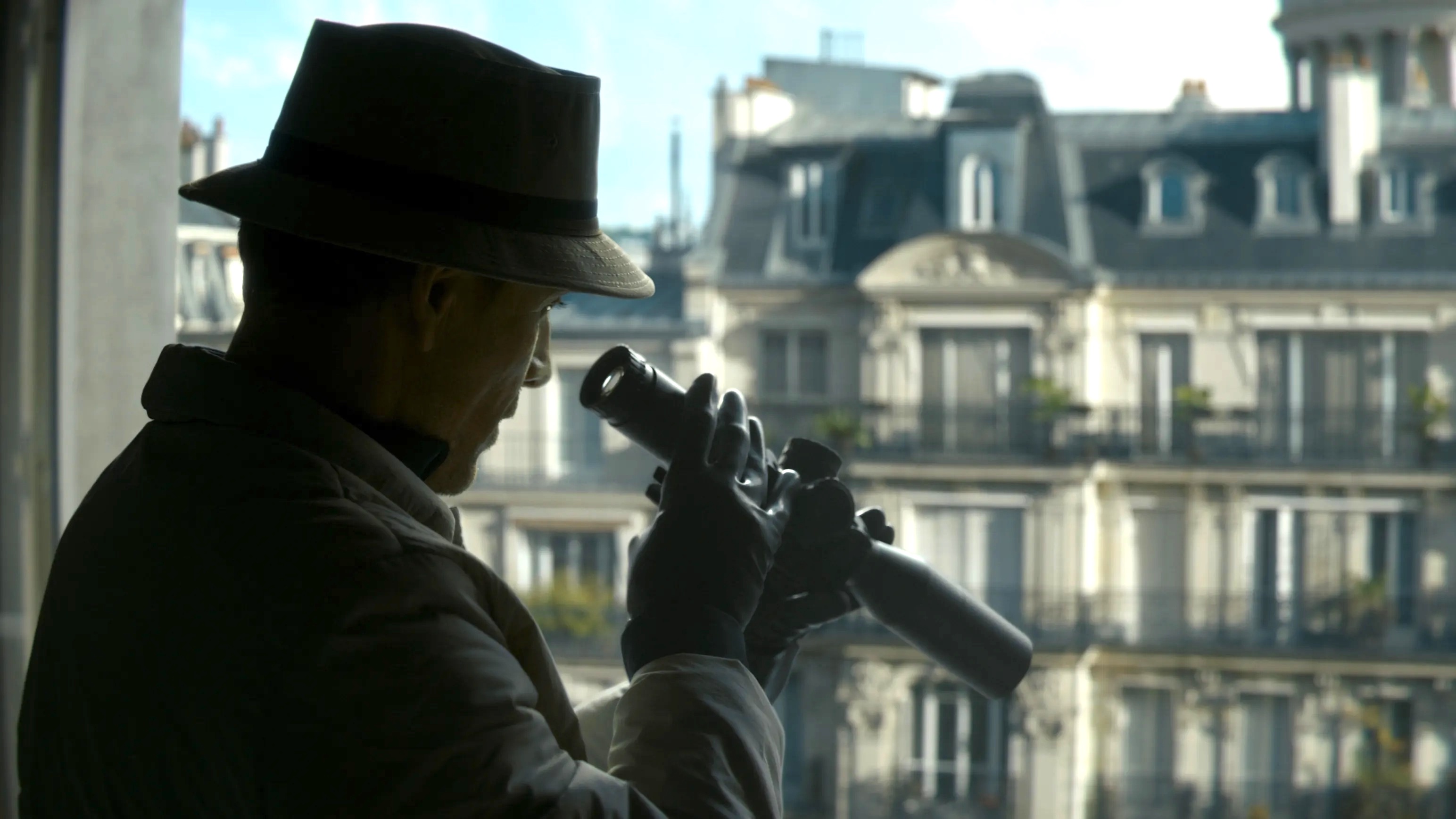
The arrival of a new film by David Fincher is always of interest, but apart from limited screenings at a few independent cinemas, The Killer has quietly dropped onto Netflix without much trumpeting. Based on Alexis Nolent’s graphic novel of the same name, this sees Michael Fassbender as the titular assassin, who, when we first encounter him, is stalking his latest target, whilst simultaneously providing a running commentary. This comes across as a self-help manual for would-be professional murderers and would perhaps be more impressive if the projected hit didn’t go spectacularly awry.

But it does and, shortly afterwards, a revenge attack is carried out on our psychopathic hero’s nearest and dearest, whereupon (cliché alert!) he is obliged to travel around the world ensuring that those who were hired to clean up after his errors are brought to book in the severest manner possible.

Fincher is an accomplished director and the long opening sequence is beautifully handled, the tension and suspense steadily mounting as the seconds tick by. Likewise, an extended fight sequence in an apartment somewhere in Florida is brutally and viscerally captured in bone-crunching detail. The assassin’s preoccupation with listening to The Smiths as he works provides a wonderfully quirky detail and Erik Messerschmidt’s sleek cinematography is a delight.

But there’s an inherent problem here and it’s one of empathy. It’s hard for a viewer to care about a sociopath and even harder to sympathise with him when he’s given the kind of rough treatment he generally doles out to his victims. We never really learn anything about them – or him for that matter – and the only other person we meet in any detail, The Expert (Tilda Swinton), isn’t on screen long enough to make her presence felt.

Ultimately, this is an exercise in style that needs more content to back it up. Yes, the various components are masterfully assembled, and yes, it’s an example of skilfully-constructed images, but I’m left chasing shadows for the best part of two hours and, no matter how artfully that’s depicted, it’s really not enough to make this a satisfying piece of cinema.

3.4 stars

Philip Caveney

Mank

04/12/20

Netflix

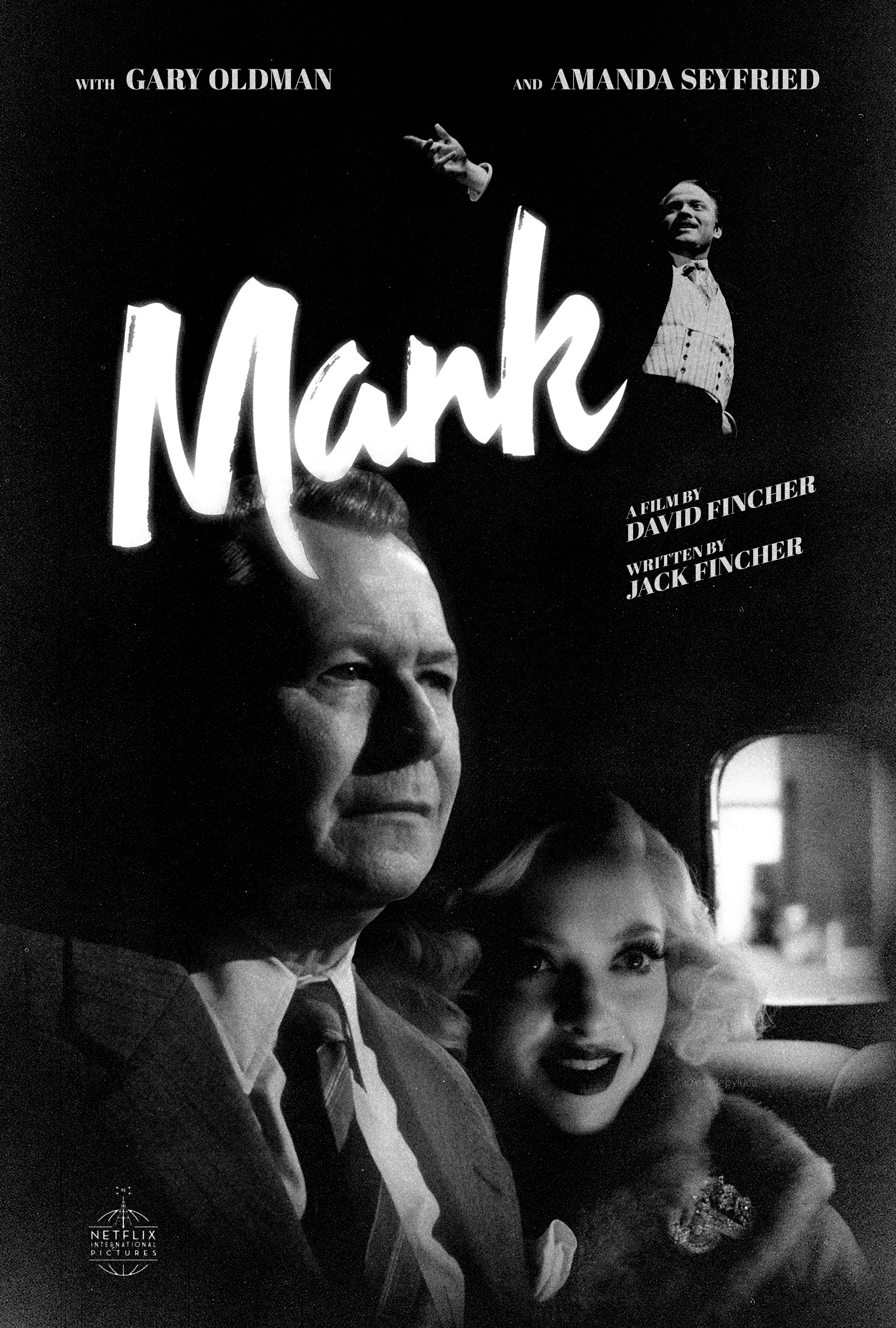
It seems I’ve been waiting for this film for just about forever. Director David Fincher first mentioned it as a possible follow up to Alien3 way back in 1992. With a screenplay by his father, Jack, it would focus on the creation of Citizen Kane. It would provide an answer to how much involvement Orson Welles actually had in the writing of that Oscar-winning screenplay and it would, of course, look into the allegations that the film was besmirched by the machinations of powerful newspaper tycoon, William Randolph Hearst.

Was I up for this? Yes, big time, because this is a story that has fascinated me since my youth. But, as it turned out, I was going to have to be patient…

And now, in one of the bleakest years in human history, it finally turns up, virtually unannounced on Netflix. Needless to say, I don’t allow a great deal of time to elapse before I tune in.

And it’s worth the wait. This is absolutely sumptuous, oozing class from every beautiful monochromatic frame, courtesy of cinematographer Erik Messerschmidt. Here is a faultless recreation of an era, right down to the visible scene descriptions, written clickety-clackety on a manual typewriter. From the opening credits onwards, Mank puts the viewer slap-bang in the early 1940s and keeps them immersed in that turbulent era right up until the final credits.

Washed-up screenwriter Herman J Mankiewicz (Gary Oldman) finds himself installed in a remote desert location, shortly after suffering serious injuries in a car crash. Sternly monitored by John Houseman (Sam Troughton) and ably assisted by English secretary, Rita Alexander (Lily Collins), he has been given the daunting task of writing the debut motion picture for Mercury Theatre’s Wunderkind, Orson Welles (Tom Burke). And he has just sixty days in which to do it.

It doesn’t help that Mank (as he is known to his friends) is an alcoholic. But he sets about the task with as much vigour as he can muster and, as he writes, his mind skips back and forth (rather like the screenplay he’s working on) over his changing fortunes in the Hollywood film industry.

We encounter Mank’s hostile relationship with muck-raking press baron, Hearst (Charles Dance), his platonic friendship with Hearst’s wife, Marion Davies (an almost luminous Amanda Seyfried), and his pugilistic dealings with the extremely unlikable Louis B. Mayer (Arliss Howard). There’s more – much more – in a packed two hours and eleven minutes; indeed, it’s probably fair to say that this is a story as rich and multi-layered as Kane itself. It’s also surprisingly prescient. The realisation that a super-rich newspaper proprietor can exert a powerful influence over the politics of a country, even going so far as to film fake news items to help steal an election, seems like a decidedly contemporary notion… but clearly that kind of thing has been going on for decades.

The film isn’t quite perfect. A scene where Mank goes on a (very long) drunken diatribe at one of Hearst’s lavish parties stretches credulity, and there are a few leaden missteps around the middle section, but these are minor blips in something that’s a giant step up from much of the so-so fodder that gets made. Fincher has created a warm, and moving testimonial to his late father’s memory, one that deserves to stand alongside the infamous movie it commemorates. Of course, it helps if you’re a fan of Kane in the first place, but it’s by no means essential.

If you’ve a couple of hours to spare, why not spoil yourselves? This is a superb piece of cinema.

4.8 stars

Philip Caveney