Emma Stone

Bugonia

02/11/25

Cineworld, Edinburgh

Yorgos Lanthimos must qualify as one of the hardest-working directors in the business – and one of the most consistently brilliant. Since his breakout with The Lobster in 2015, he’s unleashed a whole string of knockout films and, as I’ve observed elsewhere, he has the gift of turning the wildest, most experimental ideas into palpable hits at the box office. If, in its opening scenes, Bugonia seems like his most straightforward story yet, don’t be fooled. Eyebrow-raising revelations are waiting an hour or so further down the line.

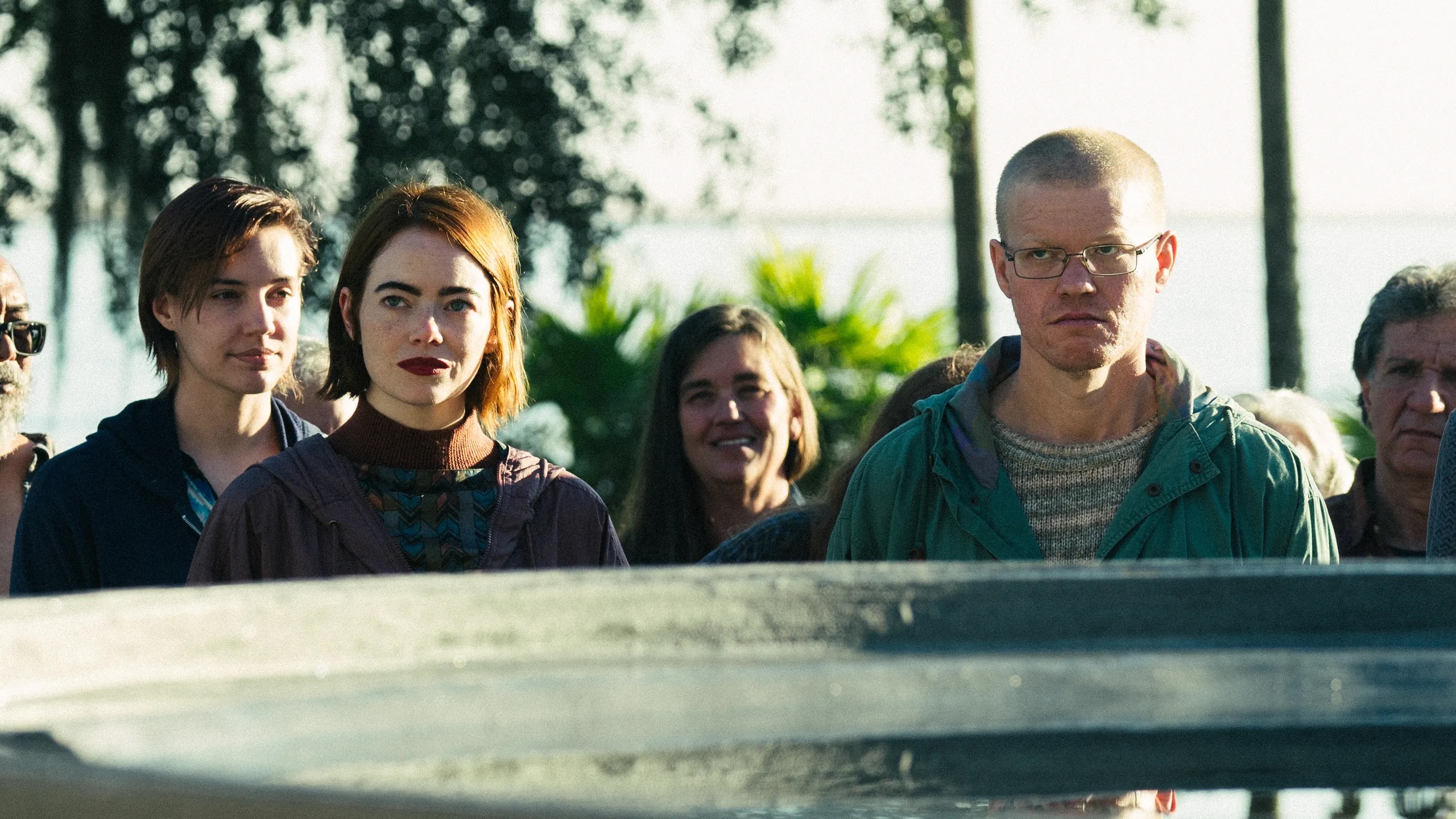
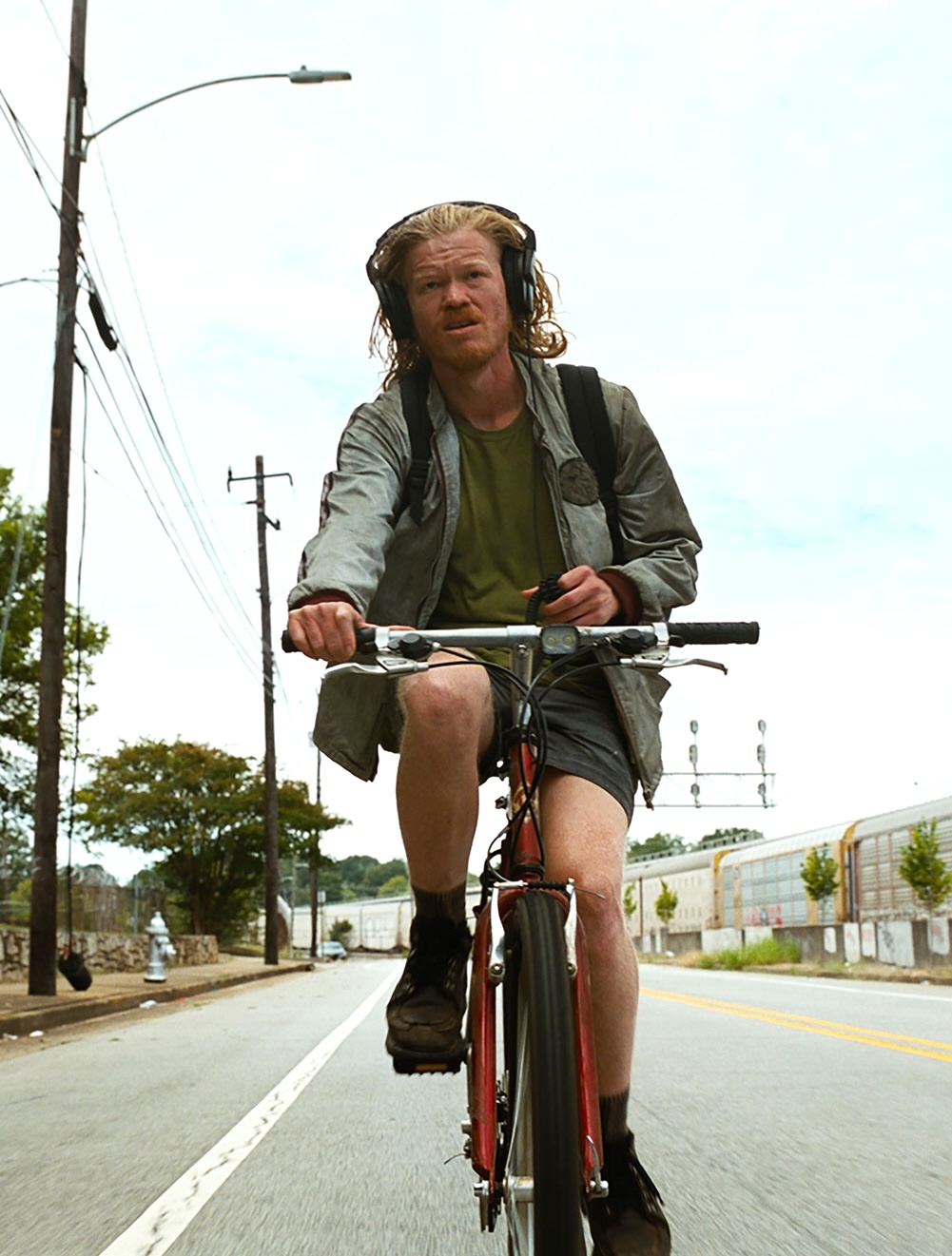
Michelle Fuller (Emma Stone) is the CEO of pharmaceutical megacorporation, Auxolith, located in an unspecified area of the USA – though surprisingly, much of the film was actually shot in and around High Wycombe. As she goes about her business, she’s blissfully unaware that her movements are being studied by Teddy Gantz (Jesse Plemons), a lowly worker at her company’s packaging warehouse.

In his spare time, Teddy studies internet conspiracies and has come to the conclusion that Michelle is actually an ‘Andromedan’ – an alien creature responsible for many of the problems currently facing humanity. She’s also indirectly responsible for the plight of his mother, Sandy (Alicia Silverstone), who is on life support after being used as a test case for one of Auxolith’s experimental drug projects. Worst of all, in Teddy’s mind, is the fact that Michelle is also directly responsible for the decline of the honeybee, which is key to the world’s survival.

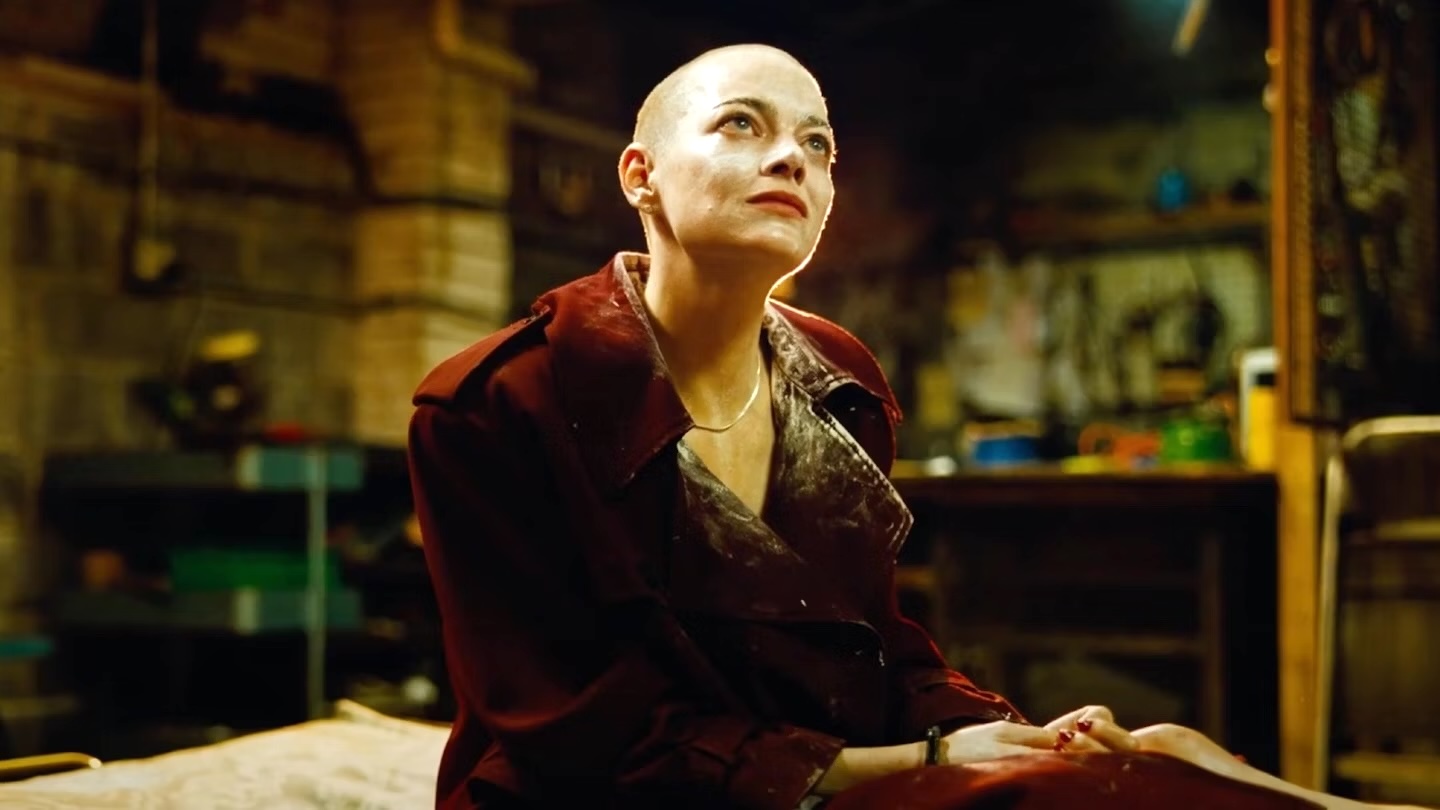
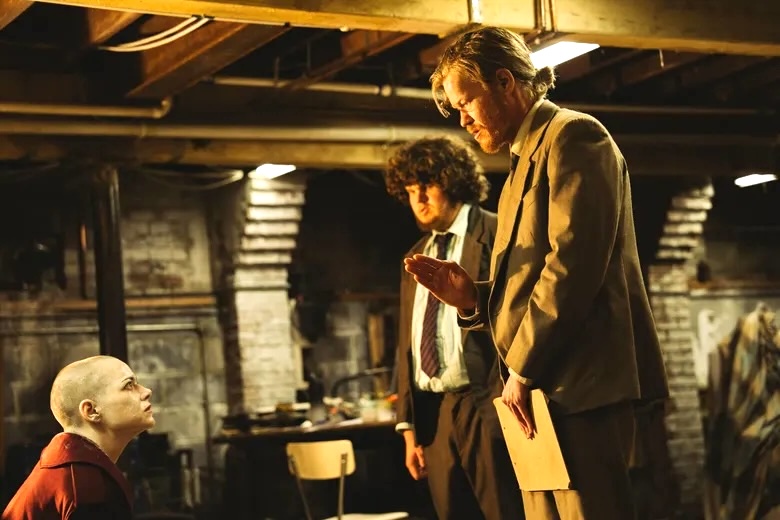
Assisted by his vulnerable cousin, Don (Aiden Delbis), Teddy kidnaps Michelle and the two men take her to their ramshackle home in the middle of nowhere. They take the precaution of shaving her head and covering her with antihistamine cream – to prevent her from contacting her ‘mothership’. Teddy wants to use Michelle as a bargaining tool with the Andromedan Emperor, so he can negotiate freedom for the human race. But first, Michelle must be interrogated…

It would be a crime to reveal any more about the plot but, once again, I find myself marvelling at Lanthimos’s ability to manipulate me as a viewer, leading me first in one direction, then in an entirely different one before dashing all my assumptions. There are moments here where I have to restrain myself from gasping out loud. Inspired by Save the Green Planet by South Korean filmmaker, Jang Joon-hwan (which I haven’t seen), Bugonia has been adapted by Will Tracey and, in its latter sections, incorporates elements of a high-stakes thriller as Michelle is obliged to use all her considerable skills to stay alive.

Both Stone and Plemons are utterly captivating in the central roles and it’s easy to see why they’ve become members of Lanthimos’s repertory theatre – while there’s something utterly adorable about Delbis as the hapless Don, unable to challenge the commands given to him by Teddy, even when it’s evident that they disgust and confuse him.

But the film’s true triumph is only revealed in a final extended sequence, where Lanthimos brings all the different strands of the story together to create a shattering, thought-provoking conclusion. The director has announced that he’s ‘taking a rest’ after this and, following a run that includes The Favourite, The Killing of a Sacred Deer, Poor Things and Kinds of Kindness, I’d say he’s definitely earned one.

5 stars

Philip Caveney
Eddington

18/08/25

Cineworld, Edinburgh

For reasons too boring to go into, tonight’s schedule is clear – and an Unlimited preview of the new Ari Aster film is simply too tempting to ignore. Aster is an interesting writer/director and, though his last film, Beau Is Afraid, was disliked by those who enjoyed Hereditary and Midsommar, I thought there were some very interesting ideas in there.

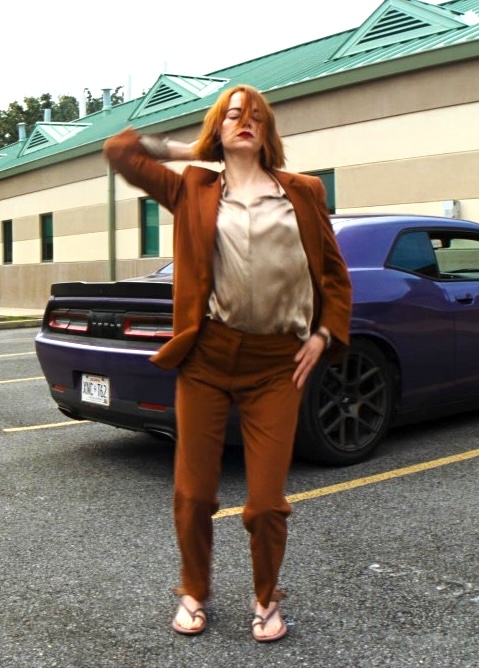
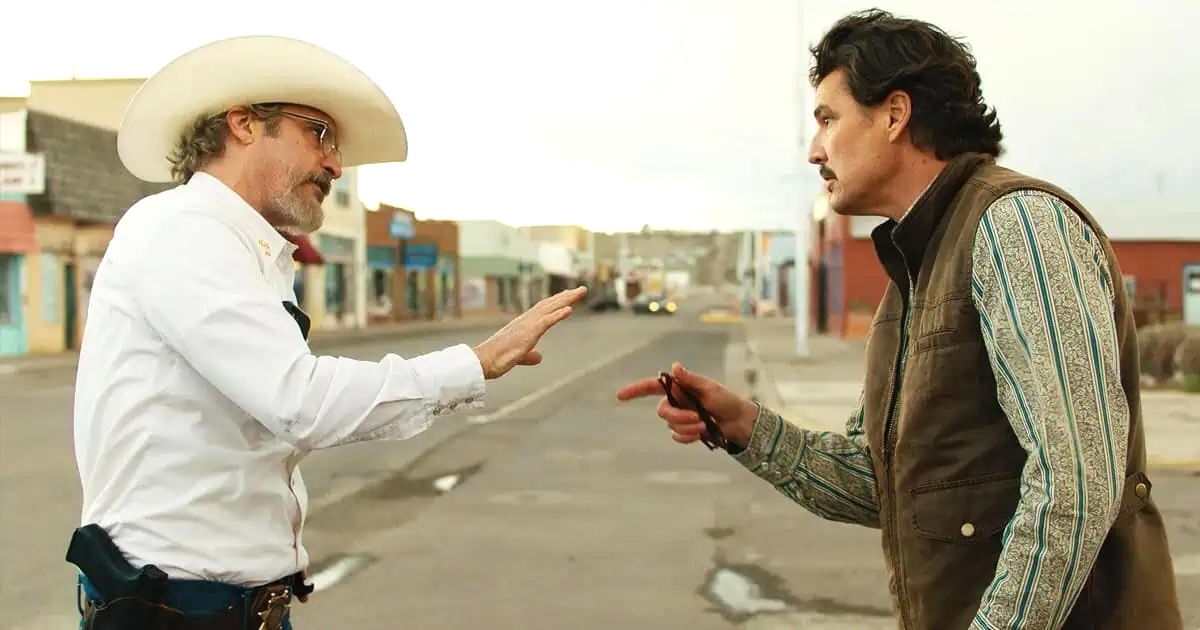
Eddington reunites Aster with Joaquin Phoenix as Sheriff Joe Cross, attempting to keep control of the titular desert town in the midst of the COVID pandemic. (Amazingly, this is perhaps the first film I’ve seen that focuses on the effects of the lockdowns and, for that reason alone, it deserves to be seen.) Cross is asthmatic and does not take well to the constraints of a face mask. Since there have, as yet, been no cases of COVID in Eddington, Cross resists wearing one at all times, even though Mayor Ted Garcia (Pedro Pascal) has made it mandatory that they should be worn whenever people are sharing indoor space.

Garcia is currently running for re-election and there are big posters of him everywhere but Cross has an old grudge against the Mayor, stemming from something that happened to Cross’s wife, Louise (Emma Stone), back when she was a teenager. Louise is now a frail and mentally unstable woman, unable to handle stressful situations, a condition that isn’t helped by the presence of her mother, Dawn (Deidre O’Connell), in the family home. Dawn is addicted to conspiracy theories and openly denounces COVID as fiction.

After a confrontation between Cross and Garcia, Cross suddenly decides that he wants to run for the position of Mayor of Eddington himself, and he enlists a couple of hapless deputies to help with his campaign. But the killing of George Floyd by a police officer during a riot in Minneapolis instigates the local teenagers to launch a Black Lives Matter protest in the town centre. Cross and his two officers head out to confront the kids and, everything begins to spin out of control…

Some films suffer from a lack of original ideas but the problem with Eddington is that it has far too many of them. They virtually fall over each other as they tumble out in all directions and I cannot deny that the result is something of a mess. Furthermore, there are so many characters competing for screen time that great actors like Stone, Pascal and Austin Butler – who appears briefly as deranged cult leader, Vernon Jefferson Peak – are reduced to little more than cameo roles.

That said, I’m never bored by what’s happening onscreen and much of what’s here is darkly funny. It’s clear from early-on that things are destined to become explosive and, once the fuse is lit, I can only sit back and watch appalled as the shit hits the fan.

More than anything else, Eddington is a commentary on American politics and the ways in which online culture – exacerbated by the isolation of the lockdowns – has polarised the opinions of everyday people, resulting in the massive divides that now hold sway in the USA (and closer to home). This may not be a perfect film, but it’s certainly worth a trip to the cinema to watch as the chaos unfolds.

3.8 stars

Philip Caveney

Kinds of Kindness

28/06/24

Cineworld, Edinburgh

You have to hand it to Greek director Yorgos Lanthimos – he doesn’t let the grass grow. His sublime adaptation of Poor Things only aired in January, bringing with it a well-deserved Oscar for Emma Stone – and already, here’s his next creation, a more stripped-back, contemporary tale: a kind of portmanteau featuring three different stories with the same actors playing different roles.

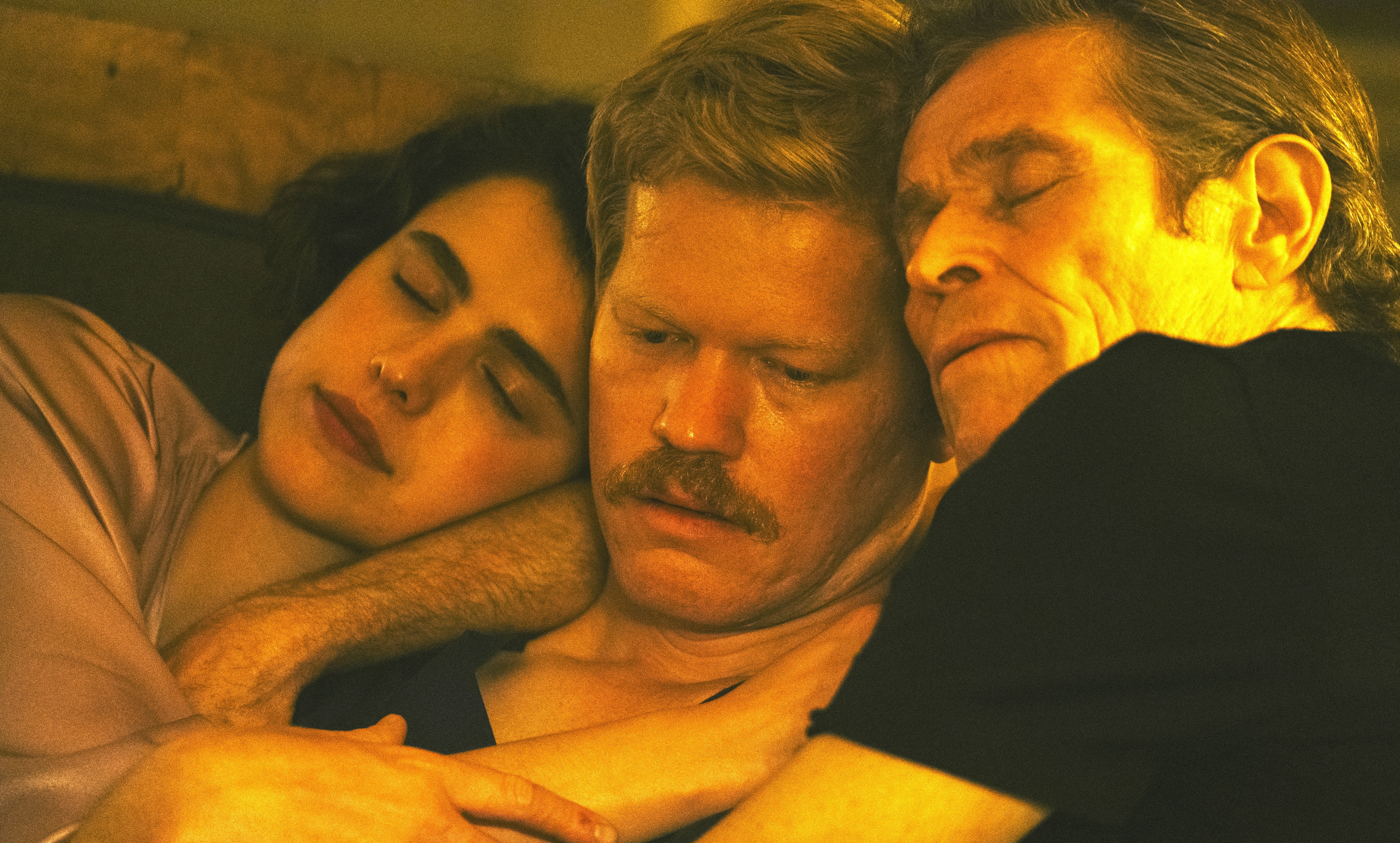
Kinds of Kindness, co-written by Lanthimos with long-time collaborator Efthiminus Filippou, begins with The Death of RMF. This is the story of Robert (Jesse Plemons), a submissive office worker who is compelled by his ruthless boss, Raymond (Willem Dafoe), to carry out a series of humiliating duties. He finally baulks at committing an extraordinary act of violence and is consequently cast out of Raymond’s orbit. Seeking solace, he attempts to forge a relationship with chance encounter, Rita (Emma Stone), but soon makes an unsettling discovery…

In the second tale, RMF is Flying, Plemons plays cop Daniel, whose wife, Liz (Stone), is missing, shipwrecked on a desert island. When she finally returns, Daniel starts to notice changes in her character and, in order to test her, he asks her to to prove her love for him.

In the concluding story RMF Eats a Sandwich, Plemons and Stone play Emily and Andrew, disciples in a weird cult run by Omi (Dafoe again). The two of them have been assigned a difficult task – to locate a mysterious woman who has the power to re-animate the now dead RMF (Yorgos Stefanakos). Could veterinarian Ruth (Margaret Qualley) be the woman to accomplish the impossible?

If this all sounds incomprehensible on paper, fear not, because Lanthimos takes enough time to delineate every character arc with such skill that there is never any confusion about what’s happening onscreen, even when it’s totally mind boggling. These stories are allegories focusing on three of life’s greatest preoccupations: work, marriage and religion – and, as the bizarre events unfold, audiences are led fearlessly through a series of interactions that alternate between harsh reality and haunting dreamscapes.

If I claimed I understood everything that happens here I’d be lying. I only know that this is exciting, unpredictable filmmaking, and – as I was with Poor Things – I’m fascinated to see large numbers of people turning out to see what Lanthimos has come up with. I can think of few other directors who have this ability to push boundaries and simultaneously satisfy the box office. I’m already excited to see what he will come up with next.

While this may not be the exquisite slice of cinematic perfection that was its predecessor, it’s nonetheless the work of a gifted director at the top of his game. Don’t miss it.

4.6 stars

Philip Caveney

Poor Things

12/01/24

Cineworld, Edinburgh

What is Yorgos Lanthimos’ secret? Since 2015’s The Lobster, he has released a string of wild, absurdly funny and generally unhinged films, the kind of projects you’d expect to see consigned to little art house cinemas, but – as we saw withThe Favourite – his inventive offerings are pulling in the big crowds and attracting top-flight performers to star in them. Tonight’s early evening screening is packed with a predominantly young crowd, who spill out afterwards, excitedly discussing what they’ve just watched. In an age where predictable comic-book films have ruled the roost for far too long, this is heartening to see.

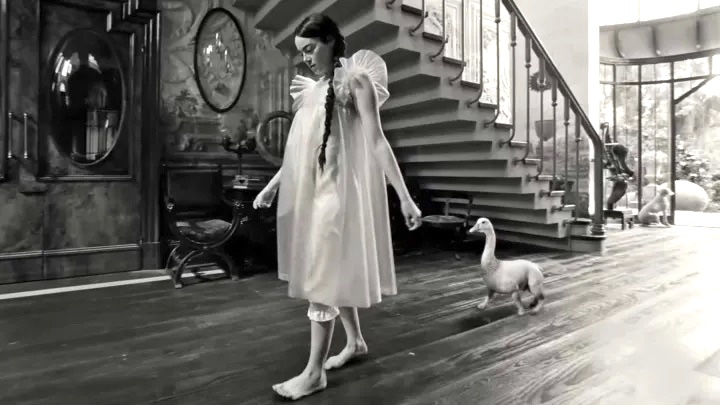
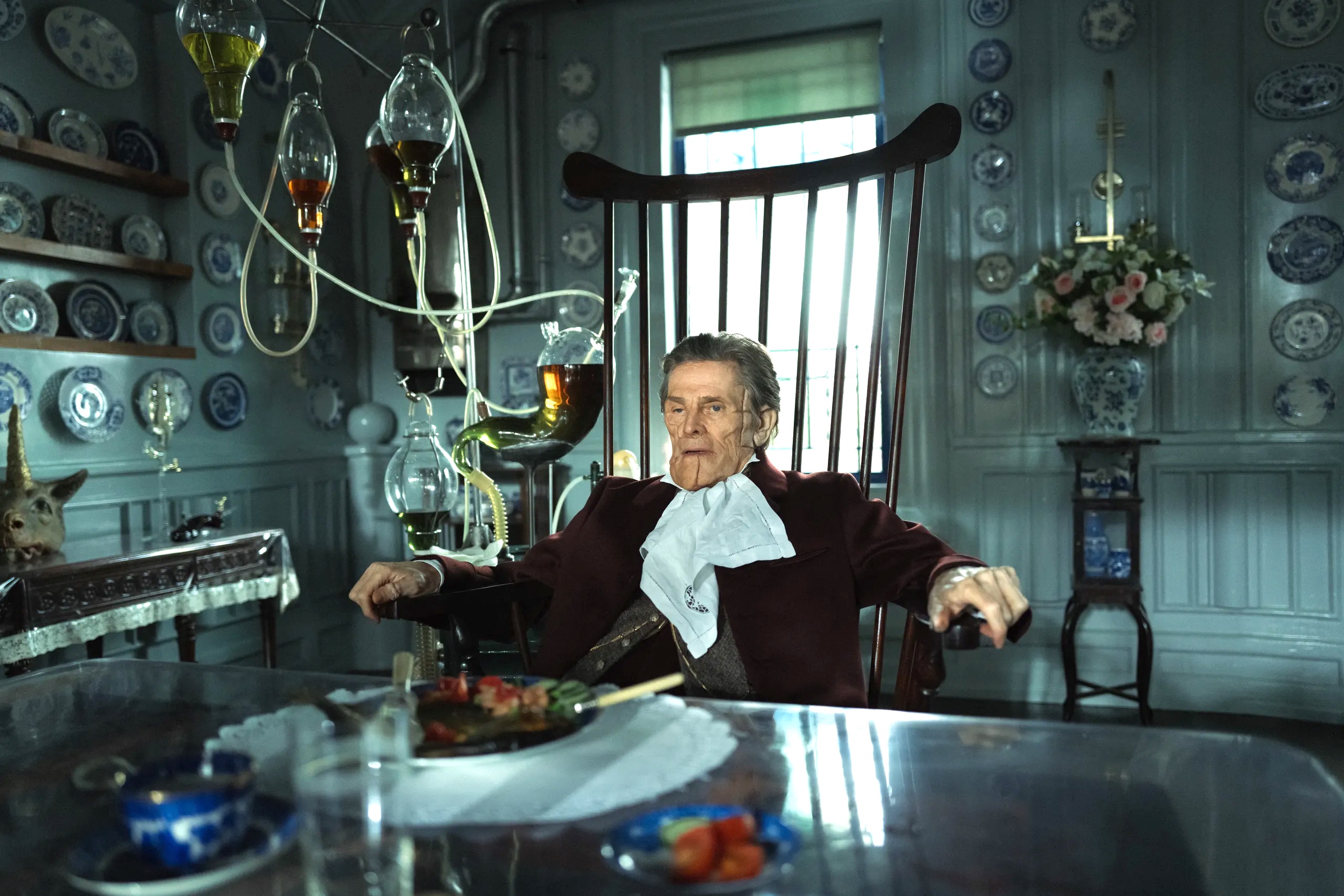
Poor Things, adapted by Tony McNamara from the novel by Glaswegian author Alasdair Gray, is surely Lanthimos’ most surreal piece yet. It’s been relocated to London (much to the ire of Gray’s fans) and relates the story of Bella Baxter (Emma Stone), a woman who, in the film’s opening scene, throws herself from a bridge into the River Thames. Her corpse is found by Dr Godwin Baxter (Willem Dafoe), a scientist in the Victor Frankenstein tradition. He carries her to his laboratory, reanimates her and makes a few radical adjustments, creating a new being who has to completely relearn how to speak, walk and generally comport herself.

Godwin is assisted by his young protégée, Max (Ramy Youssef), who quickly falls in love with Bella, but into this already weird scenario wanders caddish lawyer, Duncan Wedderburn (Mark Ruffalo). He spots an opportunity and promptly purloins Bella for his own nefarious purposes. He whisks her away on a whistle-stop tour of the world, calling in at some of the strangest cities you’ll ever witness on the screen…

It’s hard to know where to start throwing superlatives at this, but I’ll try.

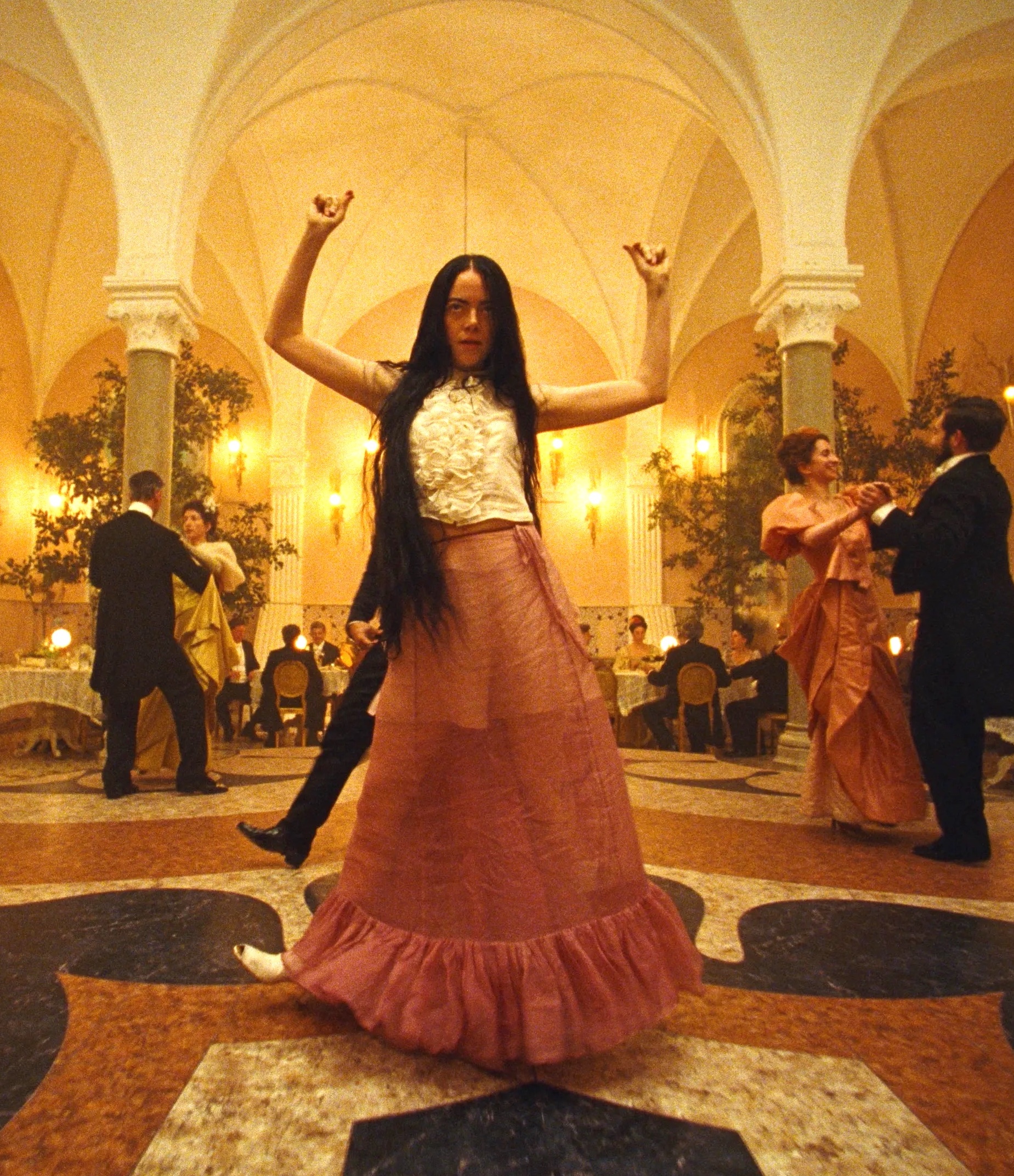
Poor Things simply vibrates and hums with pure invention, switching from black and white, to heightened colour, from fish-eye lens interiors and cramped city streets, to majestic – almost hallucinatory -landscapes, every frame so packed with ideas that I’m convinced I could watch this a dozen times and spot something new with every viewing. Stone, in a performance that has already claimed a Golden Globe and seems a good bet for an Oscar, is extraordinary here, uncannily inhabiting the character of a naïve woman. She is subjugated and exploited by the vicissitudes of toxic males, but somehow manages to assert her own agency and emerge victorious. Dafoe, who could so easily have been a clichéd horror figure, emerges as a sympathetic and weirdly adorable character, who has devoted his life to exploring the mysteries of science but still cares about his ‘daughter”s happiness. Hats-off also to composer Jerskin Fendrix for the suitably eerie score, which complements the action perfectly.

A word of warning: Poor Things has an 18 certificate and some of the content – especially those sections set in Paris – are unapologetically sexual in nature, but the film somehow never feels prurient. These scenes only serve to fuel the essence of the story: how the inherent nature of mankind is to corrupt and destroy everything of value. This may sound po-faced, but I’ve seldom seen a message delivered with such unfettered exuberance.

This is Lanthimos’ best feature yet (after The Favourite, that’s praise indeed). I’m already excited to hear about where he’s headed next. Just name the date, Yorgos; I’ll be first in the queue.

5 stars

Philip Caveney

Zombieland: Double Tap

27/10/19

It’s hard to believe that ten years have passed since the first Zombieland film – and, while the original came as a breath of fresh air amidst the unseemly scramble of leaden undead movies that hit the screens around that time, it’s probably fair to say that there weren’t too many punters desperate to see a sequel. But you have to take your hat off to director Ruben Fleischer, who not only persuaded somebody to finance this, but also got the four lead players to reprise their roles.

A decade has passed for the quartet of survivors too, who – when we first encounter them – are moving into their new headquarters: the White House. Columbus (Jesse Eisenberg) and Witchita (Emma Stone) are now a couple, while Tallahassee (Woody Harrelson) has taken on a fatherly role towards Little Rock (Abgail Breslin). But LR’s at a difficult age, starting to long for a little ‘me time’ and, when Columbus rashly proposes marriage to Wichita, she too feels a little hemmed in. So the two women hit the road, looking for new horizons.

Complications occur when LR encounters a wandering hippie (Avan Joggia) with a guitar and a repetoire of popular rock songs, which he claims to have written. She falls promptly under his spell and runs off with him to a hippie community where weapons are banned, dumping Wichita in the process. Wichita returns to the two men but, in her absence, Columbus has hooked up with Madison (Zoey Deutch), an airheaded valley girl, who has improbably managed to stay alive (and meticulously clean) in the midst of all the carnage. Despite the awkward situation, the four of them head out on LR’s trail.

Double Tap is undoubtedly fun – a silly, good-natured addition to what went before – but, like so many sequels, it struggles to add anything new to the mix. Here, there’s an attempt to suggest that the zombies are evolving from the simple shuffling ‘Homers’ of the original story to ‘T-800s,’ leaner, meaner and harder to kill – and there’s a loosely knit story arc about the importance of family – but, ultimately, that’s not really enough to justify this as a film in its own right. And some of the internal logic of the tale really doesn’t stand up to scrutiny.

The laughs come easily enough and there are sly references to things that occurred in episode one. The cartoon violence is unashamedly visceral (unleash these levels of slaughter at human victims and that 15 rating might need to be raised a notch) and there’s an interesting new character in the shape of Rosario Dawson, as a woman with a major Elvis Presley fixation.

So yes, it’s no hardship to watch – but it isn’t destined to linger very long in the memory.

3.6 stars

Philip Caveney

The Favourite

01/01/19

Since 2015’s The Lobster, Greek director Yorgos Lanthimos has established a reputation for quirky and enigmatic films that approach their subject matters from completely unexpected directions. Take The Favourite for instance. This sumptuously dressed costume drama offers us a story that seems as mad as a box of frogs – but it only takes a cursory Google search to establish that most of what happens here cleaves fairly close to established historical truth – proof if ever it were needed that fact can be a lot stranger than fiction. That said, Lanthimos finds ways of amping up the oddness to the max.

We are in the early 18th century, in the court of Queen Anne (Olivia Colman), a troubled monarch plagued by recurring bouts of gout, who wanders about the place like a sulky teenager. She is totally under the control of the manipulative Lady Sarah Churchill (Rachel Weisz), who – as well as being Anne’s secret lover – also uses her to further her strong political ambitions. Into the court comes Sarah’s cousin, Abigail (Emma Stone), whose family have fallen on hard times and who is now looking for gainful employment. Sarah grudgingly takes her in as a servant, but Abigail soon tires of a life of drudgery, and decides instead to insinuate herself into the Queen’s good graces, something she proves to be rather adept at.  It isn’t long before a powerful rivalry is ignited between Sarah and Abigail and it’s clear that both women are prepared to do whatever it takes to gain the upper hand.

Lanthimos manages to convey an atmosphere of cold suspicion beautifully and his regular use of a fish eye lens amplifies the claustrophobic ambiance of this troubled court. The film is built around three superb performances from the female leads, with Colman already nominated for a best actress Oscar, and Stone and Weisz for best supporting actress. Indeed, the three of them dominate the film to such a degree that few of the male characters get much of a look in, though I do enjoy Nicholas Hoult’s sardonic turn as Harley, leader of the Tories, who forms a sneaky alliance with Abigail in order to oust his political opponents from power. Those of a prudish persuasion should note that the film is rumbustious enough to fully earn its 15 certificate – some of the scenes here are a bit saucy, to say the very least.

With a running time of just under two hours, The Favourite positively gallops along, making me laugh out loud and, occasionally, gasp in surprise. It would be very hard to think of a more enjoyable way to begin a new year’s viewing.

4.7 stars

Philip Caveney


Battle of the Sexes


20/11/17

It’s the early 1970s and rising tennis star Billie Jean King (Emma Stone) is fighting to establish equal pay for female players. Why is it, she reasonably asks, that the men are being paid eight times as much as the women? American Lawn Tennis president Jack Kramer (Bill Pullman), tells her that it’s simply because the men are just ‘more interesting to watch.’ King’s answer is to pull all women players out of Kramer’s organisation and to help them to form their own, seeking sponsorship wherever they can find it. It’s mostly because of her unprecedented efforts that such appalling sexism in the sport was challenged and soundly defeated, even though it meant getting involved with some strange partners. A scene where Billie Jean’s agent, Gladys (Sarah Silverman) urges the players to smoke cigarettes because they are being sponsored by Philip Morris is a particular delight.

This fascinating film, scripted by The Full Monty’s Simon Beaufoy, is based around a real event in 1973, when King was goaded into playing a match against ex-champion player, Bobby Riggs (engagingly played here by Steve Carell), whose vociferous claim that no woman could ever beat a man at tennis, still resonates today – people are forever trying to push Andy Murray and Serena Williams into playing against each other. Beaufoy’s script cleverly displays the levels of inherent sexism that existed at the time – most of the remarks and attitudes of the commentators of the period now seem positively prehistoric. The film is aided by the fact that Stone and Carell look so convincing as their characters that genuine footage of the original match is used in long shot with the actors effortlessly spliced in for close-ups. Weirdly, although I already know the outcome of the game, the footage still somehow manages to generate considerable levels of suspense. For my money, this is perhaps the best attempt thus far to put my favourite sport up on the big screen.

The film is about more than just tennis, though. Riggs is struggling with personal demons – a powerful addiction to gambling is pushing his marriage to his socialite wife, Priscilla (Elizabeth Shue) onto the rocks – while King, married to the incredibly supportive Larry (Austin Stowells), finds herself irresistibly drawn to hairdresser, Marilyn Barnett (Andrea Riseborough). Their burgeoning romance is sensitively handled by directors Jonathan Dayton and Valerie Faris, who never fall into the trap of sensationalising it.

But perhaps what the film does best of all is to display the unbelievable levels of all-American razzmatazz that accompanied the contest, right down to Riggs being sponsored by a lollipop company called… wait for it… ‘Sugar Daddy.’ (And if you think the filmmakers have exaggerated for comic effect, you only need to glance at footage of the real event  to see that it has been reproduced with extraordinary attention to detail.)

It would be all too easy to paint Riggs as the villain of this piece, but he actually emerges as a likeable clown, whose outrageous comments are mostly done to generate interest (and large amounts of money) for the match. It’s the everyday, ingrained sexism of characters like Jack Kramer where the real problem lies – and it’s particularly satisfying to watch him get his comeuppance.

Do you need to be a tennis fan to enjoy this film? Well it certainly helps, but I don’t think it’s essential. Its powerful message about equal rights for everyone, regardless of their sexuality, rings out loud and clear. In tennis terms, this one serves an ace.

4.4 stars

Philip Caveney

La La Land

08/01/17

Remember movie musicals? You know, the big sweeping MGM-style pictures, the kind they really don’t make any more? Well, clearly nobody told director Damien Chazelle, because, apart from a few subtle nods to the modern age, that’s pretty much what he gives us here. Apparently this is a long-cherished project for him, one that predates Whiplash, the picture that first propelled him into the public eye. Essentially, La La Land is a great big glittering love letter to LA and the creative industries that serve it.

The opening sequence pretty much sets out Chazelle’s stall. There’s a freeway full of gridlocked traffic. A girl in  a car begins to sing a song. She gets out of the car and dances a few steps and then the guy in the next car steps out and joins her. Pretty soon, hundreds of people are following their example, offering a brilliantly choreographed routine that is as audacious as it is delightful. It’s a wonderful start.

Soon we meet our protagonists and wouldn’t you know it, at first they hate each other on sight. Sebastian (Ryan Gosling) is a musician, a jazz obsessive who dreams of opening his own club. Mia (Emma Stone) is a would-be actress, a barista by day, who slogs hopefully through an endless series of auditions for roles she appears to have no real chance of attaining. After their initial conflict, the two start to strike sparks off each other. And before too long, of course, they’re hoofing up a storm and singing most of their dialogue.

And if there’s a bit of this film that isn’t fully realised, it’s the songs. Don’t get me wrong, the jazz-inflected score is strong, yes, but the so-called big numbers aren’t exactly memorable. It says a lot when the tune you come out humming is the Flock of Seagulls song, that’s only there as an example of ‘bad pop’ by the cover band in which Sebastian is forced to play in order to pay his rent. And while you might be able to recall one of the film’s original melodies, chances are that the lyrics will escape you. But look, that seems an almost churlish observation in the midst of so much invention, so much undoubted chutzpah.The cinematography is ravishing and the film simply bristles with invention.

There are echoes here of some of the great movie musicals: A Star Is Born, An American in Paris… and then there are other scenes that are refreshingly original. Stone is particularly good, especially in an early scene where she auditions for a character receiving bad news over the phone and you feel like shouting at the casting directors who aren’t taking enough notice of her!

Of course, these kind of movies traditionally have a happy ending and I have to applaud Chazelle for resisting that temptation, even if the alternative he offers may be a cleverly devised way of him having his cake and eating it.

But what a cake! Delicious, delightful and ultimately satisfying. If you miss those old-time musicals, this one is undoubtedly for you.

4.4 stars

Philip Caveney